Need OEM supplier support for this product type?
Contact KOLARWIN Tools for OEM mechanic tools, private label packaging, wholesale quotation and product range support. This gives overseas buyers a clear path from article reading to supplier discussion.
Choose a saw by the cut it must make before choosing a stroke direction. Timber sizing, crosscut joinery and trimming a plug call for different teeth and clearances. Push and pull designs can both be useful, but a thin plate or a familiar handle does not guarantee the finish you need.
1. What is a push saw?
A push saw cuts as the user pushes the blade away. Its blade and back support are designed to tolerate cutting force in that direction. Western-style hand saws commonly use push strokes, though designs differ by tooth form, plate thickness, and frame. Buyers should identify material, cut type, blade length, and intended finish rather than treating “push” as a complete specification. Compare the broader hand saw types before narrowing the choice to cutting direction.
- Identify whether the listed blade is a panel saw or a backed saw.
- Check the available stroke clearance around the workbench.
| Push-saw construction | Useful task question | Selection limit |
|---|---|---|
| Unbacked panel saw | Does the plate length suit the stock? | Control and support still matter |
| Backed saw | Is a guided fine cut needed? | Back limits cutting depth |
Check the full working stroke. Position the proposed saw beside the work before ordering a longer blade.
2. What is a pull saw?
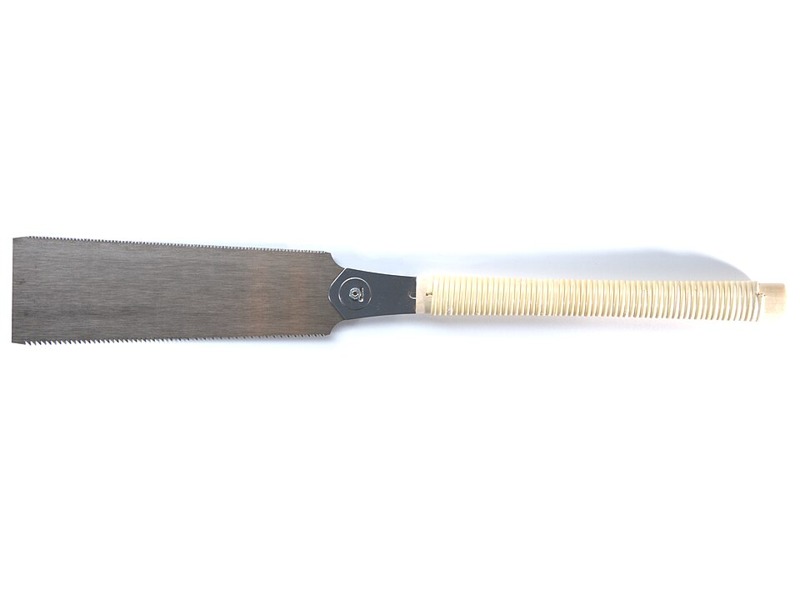
A pull saw cuts as the user draws the blade toward the body. Pull-stroke designs can use a thinner blade because tension helps keep it straight during the stroke. Japanese saw makers offer crosscut and other tooth patterns for specific work. Thin blades can produce narrow kerfs, but they require controlled handling and may be more vulnerable to twisting or sideways force. For a woodworking kit, plan complementary chisel types for waste removal that a saw cut alone cannot complete.
- Read the tooth designation on each edge of a double-edged saw.
- Check whether the blade is replaceable and identify its spare code.
| Pull-saw form | Typical selection purpose | Check before ordering |
|---|---|---|
| Ryoba with two tooth patterns | Rip and crosscut options | Correct edge for each cut |
| Backed dozuki | Fine joinery candidate | Depth below the back |
Choose a tooth pattern with the stroke. Use SUIZAN's model descriptions to distinguish the intended cuts instead of ordering by Japanese style alone.
3. How does stroke direction change technique?
Push-stroke sawing applies force away from the user; pull-stroke sawing applies tension toward the user. The workpiece must be secured and the cutting line visible for either method. Start with light strokes to establish a kerf, then maintain a consistent angle and avoid twisting the blade. Follow the saw maker’s technique guidance, since tooth geometry and blade construction vary. Choose suitable woodworking clamps so the stock remains secure through the full stroke.
- Secure the stock so the cutting stroke cannot pull it out of position.
- Keep the return stroke light and aligned with the established kerf.
| Stroke problem | Likely adjustment | Stop condition |
|---|---|---|
| Blade catches at entry | Reduce pressure and establish the kerf | Repeated tooth snagging |
| Blade twists in the slot | Reset stance and alignment | Permanent bend or damage |
Practice on an offcut first. Make a short test cut before approaching the marked dimension on the finished part.
4. Which saw suits crosscuts?
Crosscuts sever fibers across the grain. Tooth geometry intended for crosscutting differs from rip patterns that follow grain. SUIZAN’s crosscut saw collection provides a manufacturer example of pull saws designed for crosscut applications. Confirm exact model purpose and material limits before recommending a saw. A push or pull label alone does not tell whether teeth suit crosscutting, ripping, or finish trim. If the work changes to metal, review hacksaw use instead of applying a woodworking tooth pattern to it.
- Identify whether each planned cut crosses or follows the grain.
- Check the maker's classification when a saw claims general-purpose teeth.
| Planned cut | Tooth pattern to request | Evidence |
|---|---|---|
| Across board grain | Crosscut | Model application data |
| Along board grain | Rip or suitable combination pattern | Maker's stated use |
Label the task on the order. Include a sketch of grain direction when asking suppliers to recommend a model.
5. Which is better for fine work?
A thin pull saw may suit fine joinery where a narrow kerf and controlled cut matter. However, finish depends on tooth profile, sharpness, user skill, workpiece support, and grain. Some push saws also make clean cuts when properly selected. Compare actual kerf and finish on representative stock. Avoid claims that one stroke direction always produces a better surface. When a cut requires subsequent shaping, select the appropriate hand file profile for that finishing operation.
- Inspect both entry and exit faces after the sample cut.
- Measure how much finishing allowance the result needs.
| Fine-work requirement | Candidate feature | Tradeoff to inspect |
|---|---|---|
| Shallow joinery cut | Back-supported thin blade | Depth clearance |
| Deep trim cut | Suitable unbacked blade | Lateral control |
Judge the joint surface. Fit the trial pieces together and record gaps or cleanup needed before approving the saw.
6. How do blade thickness and kerf compare?
Blade thickness influences kerf width and stiffness, while tooth set and geometry also affect the material removed. A thin blade can reduce waste but may flex if pushed sideways. A thicker blade can feel more rigid but leave a wider kerf. Manufacturers may publish blade dimensions; use exact model data. Do not assume a thinner blade is automatically more accurate. Metal-saw buyers should make a separate hacksaw tooth-pitch selection; woodworking categories do not supply that specification.
- Ask for kerf and plate thickness as separate dimensions.
- Check whether tooth set changes the width of the resulting slot.
| Dimension | What it describes | Buying use |
|---|---|---|
| Plate thickness | Metal blade body | Construction comparison |
| Kerf | Width removed in cutting | Allowance and joint planning |
Measure the cut as well as the blade. Use a test slot to confirm the practical allowance when the joint design depends on kerf.
7. What should users consider for safety?
Secure the workpiece, keep hands away from the cut path, and use steady strokes. Pull saw users should account for the blade moving toward them; push saw users should prevent the blade from buckling under excessive pressure. Wear suitable eye protection and keep blades guarded during storage. Replace or service damaged tools according to manufacturer guidance. Compare C-clamps and F-clamps for holding access around the intended saw path.
- Support the offcut so it cannot pinch the blade as it separates.
- Check the guard or sleeve before carrying the saw between stations.
| Hazard at the cut | Control to arrange | Inspection point |
|---|---|---|
| Workpiece movement | Appropriate clamping | Stock remains secure |
| Loose offcut near completion | Separate support | Blade path remains clear |
Plan the final stroke. Check where the offcut will move before beginning the cut, not while it is separating.
8. How do buyers assess handle and tooth design?
Handle angle, grip, blade length, tooth pitch, and replaceability affect control and maintenance. A pistol grip may encourage a different wrist position than a straight handle. Tooth pitch must suit stock thickness so enough teeth engage. Ask suppliers for intended materials, crosscut or rip classification, tooth pitch, blade dimensions, and replacement blade availability. For a supplied kit, use the household tool kit guide to check whether the saw size fits the planned storage.
- Compare handle clearance from the bench over the whole stroke.
- Ask whether the supplied teeth are serviceable or intended for blade replacement.
| Maintenance plan | Catalog detail | Stock implication |
|---|---|---|
| Replaceable blade | Exact spare code and attachment | Keep replacements available |
| Sharpenable teeth | Maker-approved servicing method | Arrange suitable maintenance |
Include maintenance in the comparison. Price the first replacement or service alongside the saw before choosing a product line.
9. Which saw should a distributor stock?
Stock push and pull designs where customer workflows justify both, and separate models by cut type and material. A crosscut pull saw should not be labeled merely “Japanese saw” without explaining its task. Organize product pages by cutting direction, tooth pattern, blade length, and replacement availability.
- Separate rough sizing, joinery and flush cutting in the assortment.
- Avoid describing all pull saws as interchangeable fine-cut tools.
| Customer task | Stock category | Distinct listing field |
|---|---|---|
| General timber preparation | Suitable panel or general saw | Material and cut type |
| Joinery finishing | Appropriate fine saw | Kerf and cutting depth |
Stock by job before style. Create a short application label for each SKU so buyers can select without interpreting regional names.
10. What should an RFQ specify?
State push or pull stroke, crosscut or rip use, wood or other material, blade length, tooth pitch, kerf target if known, handle style, and replacement needs. Request a drawing or sample when dimensions matter. Compare cut quality using the same stock and technique.
- Specify the wood or other approved material and its usual section size.
- Request replacement availability for the proposed blade attachment.
Use one comparison workpiece. Give competing suppliers the same cut description and evaluate the resulting kerf, surface and handling on matching stock.
Frequently asked questions
Q1: Which direction does a pull saw cut? It cuts on the draw stroke toward the user.
Q2: Why can pull saw blades be thin? The pull stroke places the blade in tension, helping it stay straight during a controlled cut.
Q3: Does stroke direction identify crosscut teeth? No. Tooth geometry and model instructions determine cut type.
Q4: Which saw always gives a finer finish? Neither universally; tooth form, sharpness, stock, and technique determine finish.
Q5: What should a buyer specify? Stroke direction, cut type, material, blade length, tooth pitch, and replacement needs.
For a quotation, contact our team with the selected configuration and sample acceptance requirements.
Looking for a reliable mechanic tools manufacturer in China?
If you are sourcing hand tools, socket tools, automotive repair tools, mechanic tool sets or OEM private label tools, contact KOLARWIN Tools for factory-direct quotation, customization support and product consultation.