Need OEM supplier support for this product type?
Contact KOLARWIN Tools for OEM mechanic tools, private label packaging, wholesale quotation and product range support. This gives overseas buyers a clear path from article reading to supplier discussion.
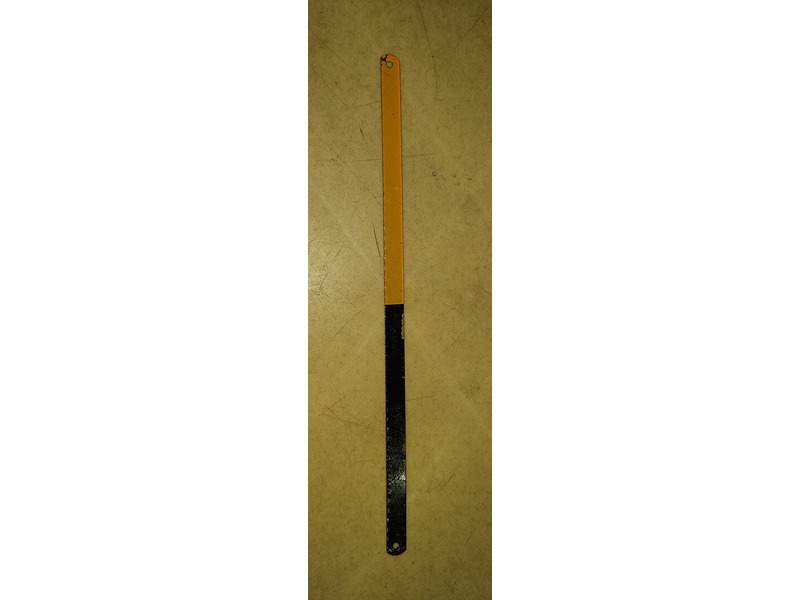
Hacksaw blade teeth per inch (TPI) describe tooth spacing, but that number alone cannot select a blade. Match pitch with material, solid or hollow section, frame fit, and cut requirements. This guide helps workshop buyers and distributors compare 18, 24, and 32 TPI options without relying on a one-size-fits-all thickness chart.
1. What does hacksaw blade teeth per inch mean?
TPI is the number of tooth points counted along one inch of a blade. A higher number places more teeth within that distance, so spacing between successive teeth becomes finer. For an evenly spaced blade, nominal pitch can be estimated as 25.4 millimeters divided by TPI: 18 TPI is about 1.41 mm, 24 TPI about 1.06 mm, and 32 TPI about 0.79 mm.
That calculation describes spacing, not the blade’s kerf, tooth set, gullet capacity, or cutting performance. Tooth geometry and material also affect how a blade behaves. Bahco lists 18, 24, and 32 TPI versions of a 300 mm hand hacksaw blade, showing common options in one product family. A range listing does not by itself say which pitch suits every job.
Treat TPI as one specification field. Start with the stock and cut, then check pitch against the blade maker’s guidance. For operating technique, see the separate how to use a hacksaw guide.
- Confirm whether TPI is stated for the exact blade.
- Convert TPI into approximate spacing only for comparison.
- Keep pitch separate from blade length, width, thickness, and material.
TPI and approximate pitch
| Marking | Teeth in one inch | Approximate pitch | Practical reading |
|---|---|---|---|
| 18 TPI | 18 | 1.41 mm | Coarser spacing among these examples |
| 24 TPI | 24 | 1.06 mm | Intermediate spacing among these examples |
| 32 TPI | 32 | 0.79 mm | Finer spacing among these examples |
| Formula | TPI | 25.4 ÷ TPI | Nominal spacing only; not a capacity rating |
2. How does tooth pitch affect a hand hacksaw cut?
Pitch influences how many teeth can meet the work over a given length and how much space separates adjacent teeth. Coarser spacing can provide larger gullets, while finer spacing offers more closely spaced teeth. Those features interact with material, tooth shape, blade construction, stroke control, and section geometry.
Do not turn that relationship into a universal speed or finish promise. A finer TPI does not automatically guarantee a smoother edge on every material; a coarse blade does not automatically cut faster when teeth catch or the work shifts. Bahco’s catalog establishes available pitch choices, while PILANA publishes application examples for its own blade range. Those maker-specific examples show that recommendations belong with the product and application, rather than a universal chart.
Look for the cause behind the result. If a sample grabs, skips, or leaves an unacceptable edge, check blade condition, material identification, support, alignment, and pitch together. Do not change pitch without recording what the trial showed.
- Use maker data as a starting point, not an unqualified guarantee.
- Track cut feel, stability, edge condition, and blade wear in trials.
- Keep observations tied to the exact blade and material lot.
What pitch can and cannot tell you
| TPI helps describe | TPI does not specify by itself |
|---|---|
| Tooth spacing along a blade | Material capacity or maximum section size |
| Relative coarseness or fineness | Blade material or hardness |
| A field for comparing blade options | Cutting rate, life, or finish guarantee |
| A starting point for a maker’s selection chart | Frame compatibility or safe tension |
3. Which TPI should you compare for solid stock?
For solid bar, rod, or plate, record the cross-section the blade will actually pass through, then consult the blade maker’s application table. A round bar’s diameter is the section depth at the cut; a flat bar presents its thickness or width depending on orientation. Material type and required edge condition also affect selection.
PILANA lists application guidance for its HSS all-hard blades: its 18 TPI option is listed for material above 6 mm, its 24 TPI option below 5 mm, and its 32 TPI option below 2 mm. These are specific PILANA product recommendations. They do not define cut limits for other brands, blade materials, or work conditions, and gaps between listed ranges should not be filled by guesswork.
Compare the maker’s range with your actual dimension. If your stock falls between published recommendations or differs in alloy, hardness, or finish requirement, ask the blade supplier for guidance and test a sample.
- Identify solid section shape and the cut orientation.
- Record material grade or a reliable material description.
- Compare measured section with the exact product’s selection data.
- Mark unlisted combinations for supplier review.
Manufacturer example, not a universal chart
| PILANA HSS all-hard example | Maker-listed application | Buyer interpretation |
|---|---|---|
| 18 TPI | Material above 6 mm | Applies to this product family |
| 24 TPI | Material below 5 mm | Applies to this product family |
| 32 TPI | Material below 2 mm | Applies to this product family |
| Any other blade or material | Not established by these rows | Obtain current maker guidance |
4. How should you choose TPI for thin-wall tube or hollow sections?
Do not choose by outside diameter alone. A tube’s outside size can be large while its wall remains thin. At the contact point, a blade crosses the wall rather than cutting a solid section equal to the tube diameter. Record outside diameter, wall thickness, material, and cut orientation separately, then ask the blade supplier which product options suit that combination.
Finer-pitch blades are often included in hand hacksaw ranges intended for thinner material. PILANA’s cited HSS and flexible hand-blade pages list 32 TPI for material below 2 mm, but that guidance is specific to those products. Do not turn it into a universal threshold, and do not apply a fixed tooth-engagement rule unless a suitable primary source or the blade maker documents it for the application.
Let a sample answer the unresolved part. A short trial on representative tube can reveal catching, tooth damage, wandering, or an unsuitable edge. Keep support and technique consistent so the blade comparison remains useful.
- Record wall thickness, outside diameter, and section shape.
- Specify whether the cut crosses a tube wall, profile, or layered assembly.
- Request a model-specific pitch recommendation for thin sections.
- Trial the approved candidate on representative stock.
Thin-wall tube information for an RFQ
| Field | Record | Why it matters |
|---|---|---|
| Outside diameter or profile size | Actual dimension | Describes overall clearance and shape |
| Wall thickness | Drawing or verified measurement | Describes material at the cut wall |
| Material | Grade or reliable description | Affects blade recommendation |
| Cut orientation | Cross-cut, angle, or access constraint | Changes the section presented to teeth |
| Trial result | Catching, tooth condition, edge, and stability | Documents model-specific fit |
5. Does higher TPI always give a better finish?
No. Finish depends on more than tooth count. Blade sharpness, tooth form and set, material, support, alignment, and pressure all influence the cut. A fine pitch may be a sensible candidate for a thin section, yet a worn or mismatched blade can still produce a poor edge. A coarse option may suit a different solid section, but only if the maker lists it for that work.
Define “acceptable finish” before choosing a blade. A maintenance cut may permit later filing; a prepared edge for assembly may need tighter control. Record whether burr removal, dimensional allowance, or surface condition matters. If the part drawing specifies an edge requirement, use that requirement during the blade trial rather than judging only by speed.
Make finish a measurable acceptance point. Compare cut edges under the same lighting and inspection method. Keep a sample or photograph with its blade specification if a range will be reordered.
- State edge condition and dimensional needs before trial.
- Inspect with the same method for each candidate.
- Separate blade effects from workholding and operator variation.
- Use a suitable finishing tool when the process requires it.
For hand-file shape and selection after a cut, see the hand file types guide.
Finish-trial record
| Observation | How to record it | Do not infer |
|---|---|---|
| Edge and burr | Compare with drawing or approved sample | A TPI alone guarantees finish |
| Cut alignment | Note deviation from marked or measured path | Blade pitch caused every deviation |
| Blade condition | Inspect teeth before and after trial | Wear life from one short cut |
| Rework | Record filing or deburring needed | Production cost without a defined trial |
6. What blade details must match the hacksaw frame?
TPI does not tell you whether a blade fits a frame. Confirm blade length, width, thickness, end-hole arrangement, and mounting orientation against the frame manual or product sheet. Some frames support alternate mounting positions; those features are model-specific. The BAHCO TAH225 frame page, for example, specifies a supplied 300 mm, 24 TPI blade and an alternate 55-degree position for that frame family.
Check package identification before ordering replacements. A blade may share a nominal length with another product yet differ in end geometry, width, or intended application. Confirm whether the frame accepts the candidate and whether the maker permits its alternate mounting position for your cut. Never adapt an incompatible blade by drilling, bending, or modifying parts unless the manufacturer explicitly approves that method.
Fit comes before pitch preference. Match the blade to the frame first, then compare compatible pitches for the material. The types of hand saws guide gives broader saw-family context, while this article stays with hand hacksaw blades.
- Verify length and both end fittings.
- Confirm width and thickness against frame limits.
- Check approved mounting positions and orientation.
- Keep frame and replacement blade model references together.
Frame compatibility checklist
| Compatibility field | Verify from maker data | If unclear |
|---|---|---|
| Blade length | Nominal length accepted by frame | Request frame-specific blade reference |
| End fittings | Hole size and end style match pins | Do not force or modify the blade |
| Blade section | Width and thickness suit holders | Confirm limits with frame maker |
| Mounting position | Approved orientation for the task | Use standard position until confirmed |
7. What other blade features matter besides TPI?
Blade material, construction, tooth set, tooth form, and flexibility can affect suitability. For example, Bahco describes its Sandflex hand hacksaw blade as a bi-metal construction with a flexible spring-steel back and a high-speed-steel tooth line. PILANA lists separate HSS all-hard and flexible high-carbon steel product families. These descriptions apply to the named products; they do not establish a universal ranking for toughness, life, or cut quality.
Consider the work environment and handling requirements. A blade used on a shared bench may need durable packaging and clear identification. A distributor building a range may want a controlled mix of pitches, but assortment choices should follow customer applications and documented demand. Do not promise blade life or performance from construction labels alone.
Compare complete specifications, not one number. Put TPI beside length, material, construction, tooth details, frame fit, and maker application notes. For fixture support while sawing, the types of clamps guide offers a separate workholding overview.
- Record blade construction and material exactly as listed.
- Check tooth configuration and stated application.
- Confirm packaging and identification needs for repeat supply.
- Ask the maker to clarify any unsupported performance claim.
Blade specification fields
| Field | Why buyers track it |
|---|---|
| TPI | Compares nominal tooth spacing |
| Length, width, thickness | Checks frame fit and replacement identification |
| Blade construction | Distinguishes product families without assuming performance |
| Tooth form and set | Captures maker-described cutting geometry |
| Application notes | Connects exact product to documented use |
8. How should buyers test candidate TPI options?
Choose stock that represents the actual application, including material, profile, and wall thickness. Keep the frame, setup, operator instruction, and cut path consistent. Change one blade variable at a time when possible, such as comparing two compatible TPI choices within the same product family. Record blade condition, time only if measured consistently, cut alignment, tooth damage, edge condition, and rework.
A short test does not establish service life or long-run production performance. It can show whether a blade fits the frame and whether its first cuts meet a defined requirement. For repeated purchasing, retain the sample specification, lot or product reference, and approval notes. If two options perform similarly, let availability or assortment strategy decide only after technical fit is established.
Agree on the test before opening the pack. Define what counts as a pass, who inspects the cut, and what happens if the blade fails. Broader industrial maintenance tool buying guidance can support category planning beyond blade selection.
- Use representative stock and a compatible frame.
- Define cut and edge acceptance criteria in advance.
- Record the exact blade code and TPI.
- Avoid inferring wear life from a small sample.
Sample test record
| Test field | Record |
|---|---|
| Workpiece | Material, dimensions, profile, wall thickness |
| Blade | Maker, product code, length, construction, TPI |
| Frame | Model and mounting configuration |
| Result | Alignment, edge, tooth condition, rework, operator notes |
| Decision | Accept, request another sample, or reject with reason |
9. What should a distributor include in a hacksaw blade RFQ?
A useful RFQ describes the material and section instead of asking for “a fine blade.” Include material grade where known, solid or hollow profile, dimensions, wall thickness, cut direction, desired edge condition, frame model, and any packaging or labeling requirements. Ask the supplier to identify compatible product codes and maker-supported pitch recommendations.
Request current product data and samples where the selection is uncertain. Keep claims tied to a named model: do not infer maximum capacity, blade life, manufacturing method, certification, stock, or delivery terms from a general catalog range. State any required documentation and define who approves the sample. For cuts that need a different method, compare bolt cutter sizes only after confirming the cutter matches material and section limits; the separate bolt cutter safe-use guide covers its operating procedure.
A complete workpiece description shortens the selection loop. Send a drawing or representative sample when dimensions or access are hard to communicate. Keep approved product references with the order record.
- Identify stock, dimensions, and cut requirements.
- Provide the hacksaw frame model and compatible blade length.
- Request TPI guidance and product code in writing.
- Define sample review, acceptance, packaging, and labels.
RFQ information set
| RFQ field | Example of useful detail |
|---|---|
| Workpiece | Material grade and solid, tube, or profile form |
| Geometry | Cross-section, wall thickness, and cut orientation |
| Frame | Maker/model and blade length/end requirements |
| Performance need | Edge condition and measured acceptance method |
| Supply | Product code, package quantity, identification, and sample plan |
10. How do you choose hacksaw blade TPI for a repeat order?
Use a documented decision path: identify material and geometry, verify frame compatibility, consult the exact blade maker’s guidance, then test any unresolved option against agreed criteria. Record TPI alongside blade code, length, construction, and workpiece dimensions. A bare “24 TPI” line on a purchase order may still leave the supplier unclear about frame fit or application.
For an established job, reorder the approved model and revision where available. If material or wall thickness changes, reopen selection rather than carrying over the old pitch automatically. Keep operating instructions separate from selection data; the how to use a hacksaw article covers setup and safe cutting steps. A larger mechanic tool list for distributors can place blades within an assortment plan.
Keep the evidence with the item. Store a product sheet, sample approval, and application note beside the purchase record. For sourcing questions, use KOLARWIN’s contact page with the workpiece dimensions and frame model.
- Reorder the approved product code, not only the TPI.
- Recheck fit when stock or frame changes.
- Retain the sample decision and supporting data.
- Ask for clarification where maker guidance does not cover the job.
FAQs
Q1: What does 24 TPI mean on a hacksaw blade?
It means 24 tooth points per inch. For evenly spaced teeth, nominal pitch is about 1.06 mm.
Q2: Is 32 TPI always best for thin-wall tube?
No universal rule applies. Check the blade maker’s recommendations for the exact material, wall, and product.
Q3: Can I use outside diameter to choose TPI for tube?
No. Record wall thickness and section geometry as well as outside diameter.
Q4: Does a higher TPI guarantee a smoother cut?
No. Blade condition, tooth form, material, support, and alignment also affect the result.
Q5: Will any 300 mm hacksaw blade fit my frame?
Not necessarily. Confirm end fittings, width, thickness, and mounting positions against frame data.
Looking for a reliable mechanic tools manufacturer in China?
If you are sourcing hand tools, socket tools, automotive repair tools, mechanic tool sets or OEM private label tools, contact KOLARWIN Tools for factory-direct quotation, customization support and product consultation.