
Need OEM supplier support for this product type?
Contact KOLARWIN Tools for OEM mechanic tools, private label packaging, wholesale quotation and product range support. This gives overseas buyers a clear path from article reading to supplier discussion.
U.S. distributors and importers can receive a “complete” tool-set quotation that hides gaps behind a large piece count. One case may contain repeated bits, miss common drive accessories, or mix hand sockets with powered-use products. A useful mechanic tools list starts with customer jobs, then names each interface, size, use class, inspection point, and refill path. This guide gives buyers a category framework for retail, repair-shop, fleet, and private-label programs. Use it to build a bill of materials before comparing prices.
1. What should a complete mechanic tools list cover?
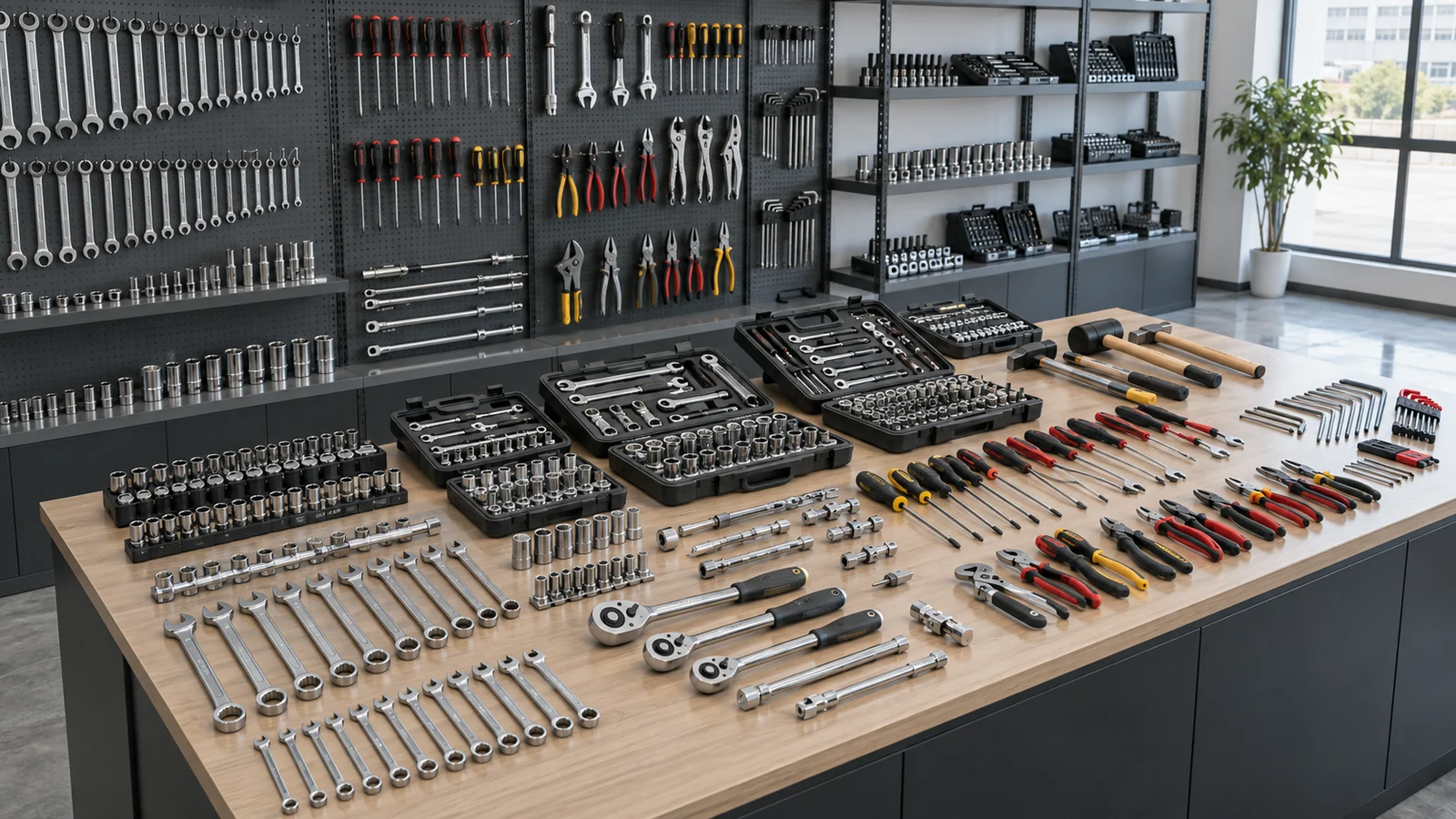
A complete range covers fastening, gripping, striking, measuring, diagnostics, specialty service, storage, and replenishment. It does not require every possible tool. The correct boundary follows customer vehicles, workshop tasks, sales channel, and service level. A compact retail kit may center on one drive system, while a fleet program may add larger drives, controlled-fastening tools, diagnostics, and modular specialty kits.
Start with the work, then count pieces. Each product family should have a purpose and a sales format.
- Socket and drive tools for common fasteners and access conditions.
- Wrenches, pliers, screwdrivers, bits, hex keys, cutters, and striking tools.
- Torque, measurement, inspection, and diagnostic equipment.
- Brake, timing, puller, bearing, steering, suspension, engine, and electrical tools.
- Cases, foam trays, cabinets, markings, spare parts, and refill packs.
Buyer scope table
| Buyer program | Core emphasis | Add when demand supports it |
|---|---|---|
| Retail starter | One drive, common sockets, basic wrenches, pliers, drivers, bits, case | Refill packs and a second unit system |
| General repair | Two drives, shallow/deep sockets, access tools, torque tool, service basics | Separate impact and specialty modules |
| Fleet or heavy duty | Application-led larger drives, impact tools, large wrenches, diagnostics | Cabinets, 12/24 V tools, planned spares |
Practical action: create one BOM row per SKU. Record family, intended job, exact size, package, replacement status, and required evidence.
2. Which socket and drive tools form the core range?
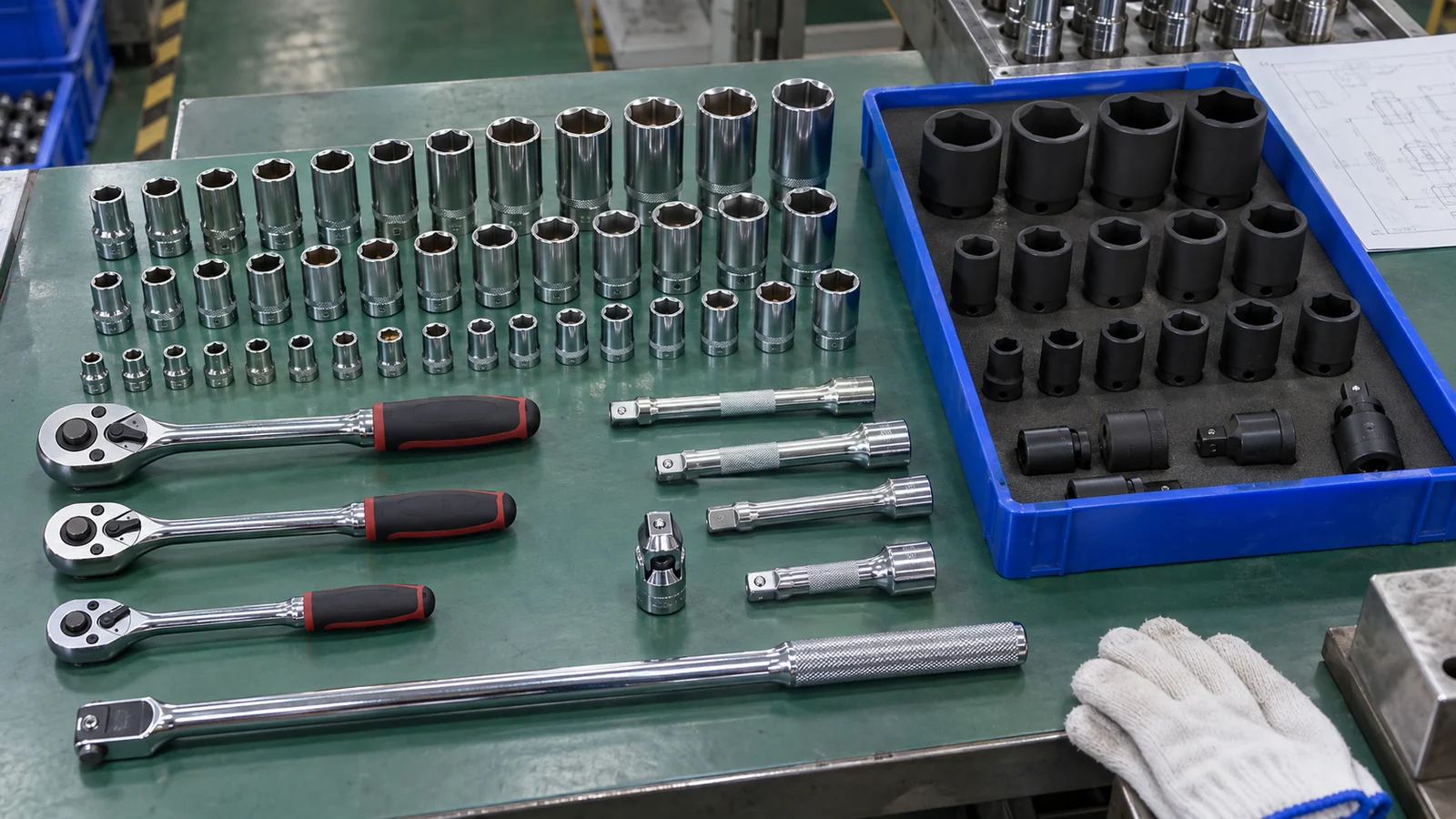
Socket planning requires five separate decisions: square drive, size system, fastener profile, depth, and use class. Many general-service programs use 1/4, 3/8, and 1/2-inch drives. Larger drives belong where target vehicles or equipment justify them. Metric, SAE, or mixed coverage should come from customer demand rather than a “full range” label.
Ratchets and sockets also need an access system. Add breaker bars, extensions, adapters, universal joints, sliding T-bars, spark-plug sockets, bit sockets, and application-specific profiles where the BOM calls for them. Buyers can use a socket tools range as a category reference, then build their own exact size matrix. Packaged socket set configurations require a separate cavity map and refill plan.
A socket that fits the drive can still miss the job. Depth, outside diameter, and approach path often decide whether it seats.
- Separate 6-point, 12-point, bit, spark-plug, and specialty profiles.
- Record shallow, deep, and extra-deep construction separately.
- State extension lengths plus adapter input and output drives.
- Give every component a replacement part number.
Socket-system specification table
| Field | RFQ entry | Common failure |
|---|---|---|
| Drive | Square-drive size and compatible handle | Mixed connections or weak adapter chains |
| Profile | Point count or named specialty interface | Poor engagement or blocked access |
| Depth | Depth class, total length, internal clearance | Socket bottoms out on a stud |
| Size system | Exact metric or SAE list | Missing fast-moving sizes |
| Accessories | Type, length, drive, retention, use class | Incomplete working system |
Practical action: send a numbered socket matrix with drive, nominal size, profile, depth, length, marking, and intended use.
3. Which wrench families belong in a distributor assortment?
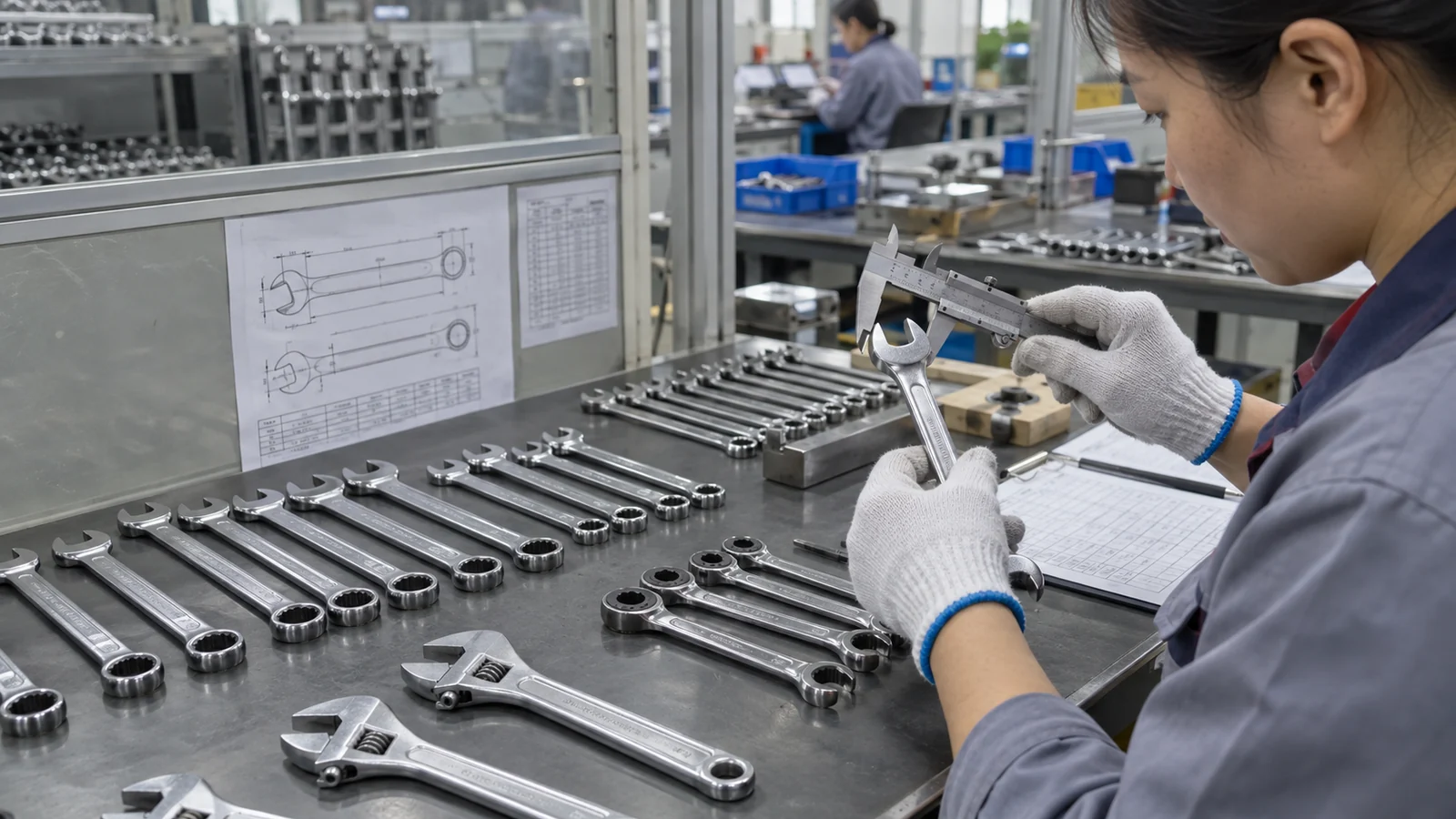
Combination wrenches form the basic line, yet one style cannot cover every fastener. Buyers may also need open-end, box, ratcheting combination, adjustable, flare-nut, line, crowfoot, pipe, and application-specific wrenches. Exact coverage depends on vehicle population and workshop access.
Dimensions matter beyond nominal opening size. Head width, head thickness, throat depth, offset, total length, ratchet direction, and service parts can change usability. Torque wrenches belong in a controlled-fastening family with their own evidence. A detailed torque wrench selection and calibration guide can support that narrower purchase.
Check head geometry before approving the size list. A broad range can still fail when its heads cannot enter the working space.
- Specify metric and SAE lines separately.
- Record point profile, offset, reach, head size, and finish.
- Treat flare-nut and line wrenches as application-led items.
- Keep torque ranges, directions, and test records outside ordinary wrench claims.
Wrench selection table
| Wrench family | Primary buying field | Sample check |
|---|---|---|
| Combination | Size, point count, offset, length | Opening fit and head dimensions |
| Ratcheting | Size, mechanism, direction, service parts | Backdrag, engagement, and access |
| Adjustable | Opening range, jaw geometry, scale | Jaw movement and parallel contact |
| Flare-nut or line | Application, opening, head geometry | Fastener and line clearance |
| Torque wrench | Range, unit, drive, direction, test points | Serial identity and report match |
Practical action: approve representative sizes from each wrench geometry instead of relying on one finish sample for a full range.
4. Which pliers, screwdrivers, cutting, and striking tools are core?
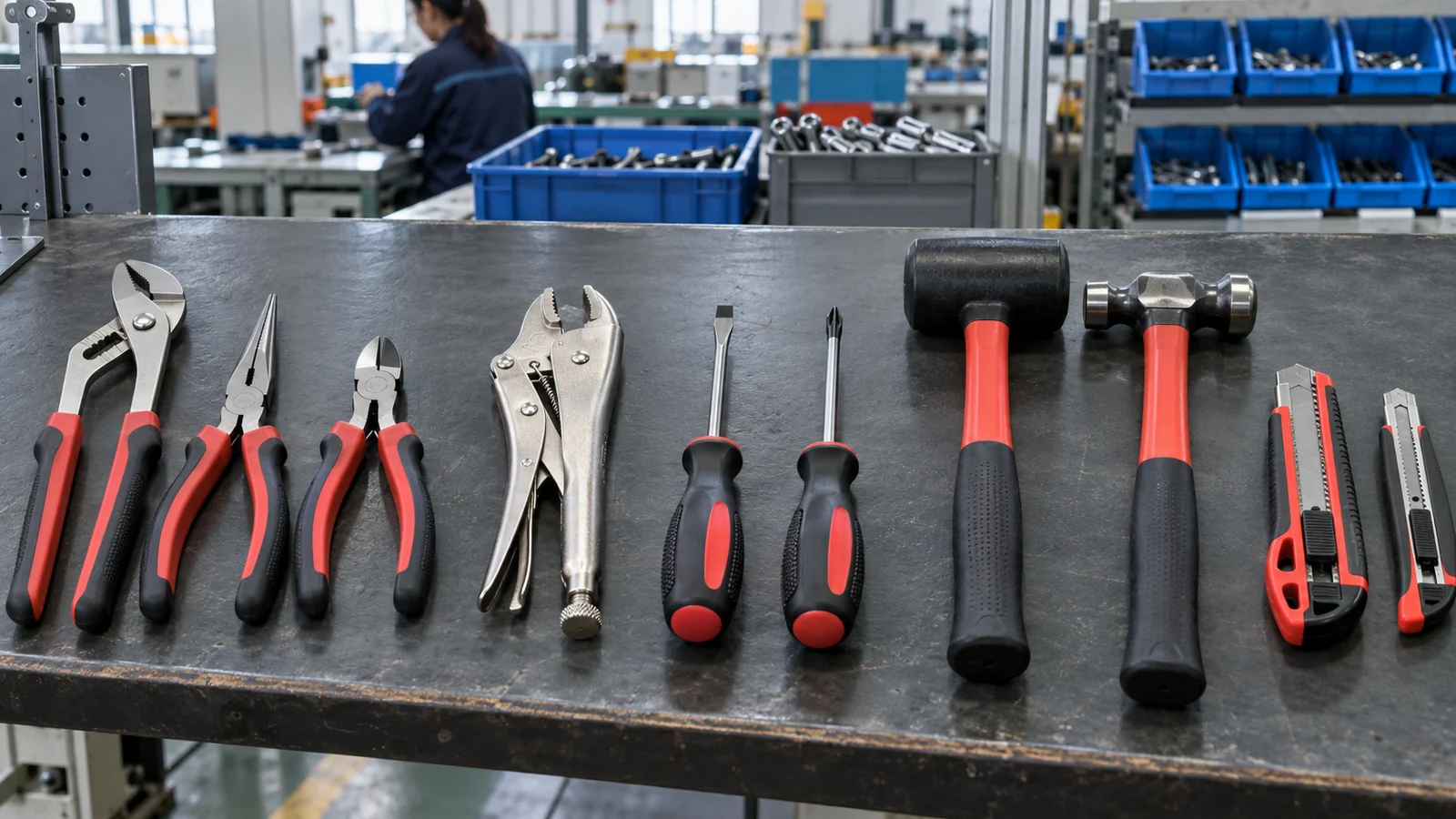
These families handle daily work that sockets cannot. A core plier line may include combination, long-nose, diagonal, slip-joint, water-pump, locking, circlip, hose-clamp, crimping, and stripping designs. Screwdriver coverage may include Phillips, slotted, Pozidriv, Torx, hex, nut drivers, ratcheting handles, precision tools, and replaceable bits.
Striking and cutting products need clear working interfaces. Hammer-head material, striking face, handle construction, cutter capacity, jaw shape, tip geometry, shaft length, and manual or powered use belong on the specification. Electrical or insulated variants require a defined application and suitable product evidence; handle color alone proves nothing.
An unclear tip or jaw specification can produce the wrong tool. Clear profiles and refill numbers make replacements easier to control.
- Name each screwdriver or bit profile and size.
- State plier jaw form, reach, pivot, spring, grip, and cutting material.
- Separate manual bits from products intended for powered drivers.
- Define hammer face, handle, weight class, and warning needs.
Core hand-tool table
| Family | RFQ focus | Approval check |
|---|---|---|
| Pliers and cutters | Jaw, reach, joint, spring, grip, cutting capacity | Movement, edge, fit, marking |
| Screwdrivers and bits | Profile, size, shaft, handle, interface, use | Tip engagement and shaft condition |
| Hammers and mallets | Head, face, handle, weight, intended work | Handle security and face condition |
| Picks and pry tools | Tip, reach, shaft, grip, use limit | Access, deformation, visible defects |
Practical action: connect every loose refill SKU with its exact tray position, kit revision, and replacement packaging.
5. How should torque, measurement, and diagnostic tools be specified?
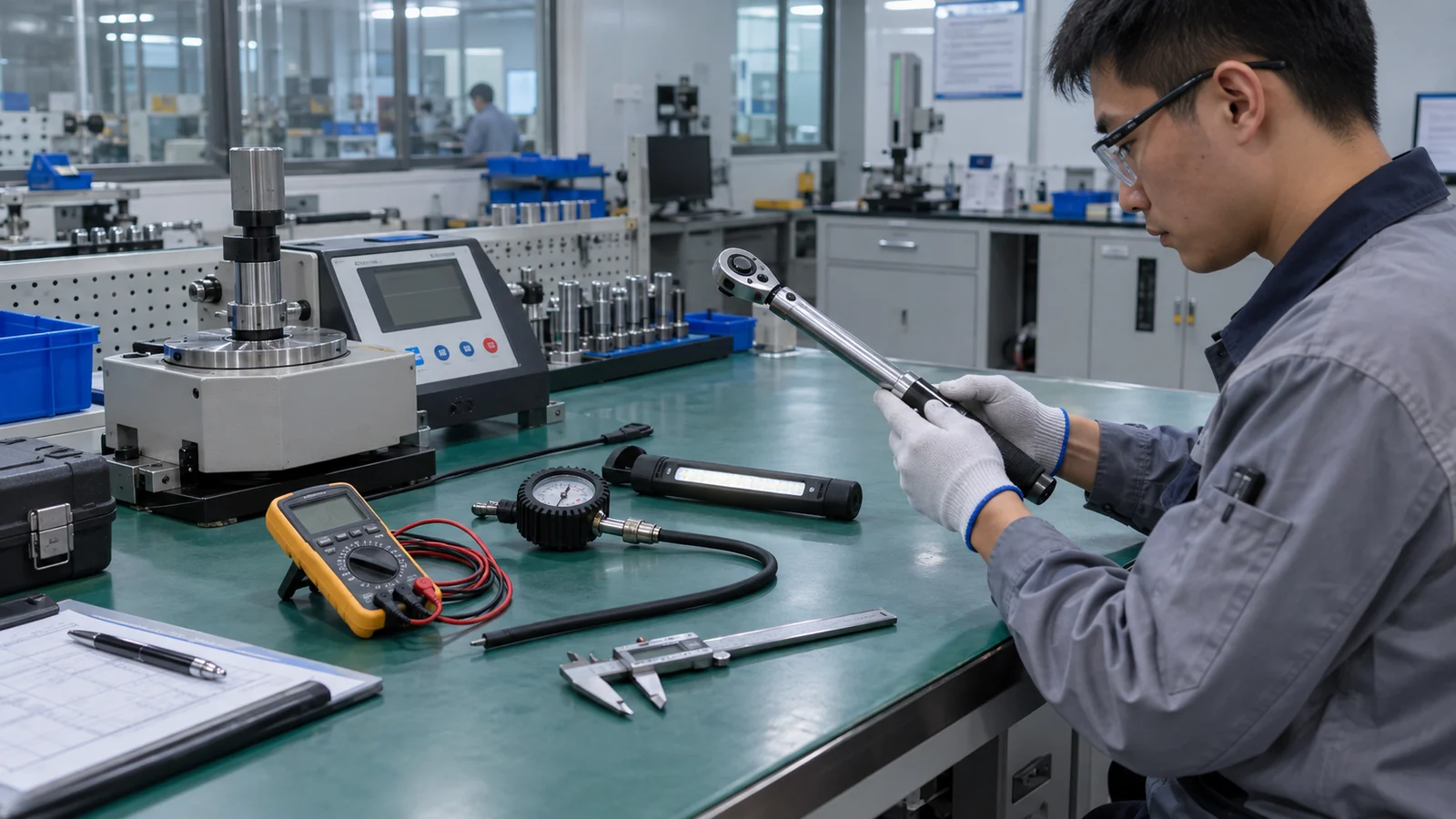
Controlled-fastening and diagnostic products need more documentation than a standard hand-tool line. For torque tools, record unit, range, drive, direction, tolerance claim, test points, serial identity, calibration method, date, uncertainty, and traceability. A standards reference can define a test or document request, but it does not prove that a quoted tool conforms.
Diagnostic products should be purchased by coverage and software conditions. Define vehicle makes, models, years, protocols, systems, connector set, voltage, update path, subscription term, report functions, regional support, and data handling. Broader automotive repair tools can support the mechanical program, while each scanner still needs its own application matrix.
Do not let a headline coverage number replace a test plan. Hardware and software must work on agreed vehicles and functions.
- Separate basic code readers, full-system scanners, heavy-duty tools, and testers.
- Record 12/24 V needs and connector kits.
- Approve software version and renewal terms with the hardware sample.
- Keep measuring range, unit, resolution, and method visible.
Controlled-tool table
| Product | Buyer must define | Approval evidence |
|---|---|---|
| Torque wrench | Range, unit, drive, direction, test points | Serial-linked conformance or calibration record |
| Torque tester | Range, fixture, method, uncertainty | Traceable test record and instructions |
| Scan tool | Vehicles, systems, functions, protocols, updates | Demonstration matrix and software record |
| Battery/electrical tester | Battery types, range, leads, report format | Sample report and operating instructions |
| Measuring tool | Unit, range, resolution, reference method | Dimensional check and identification |
Practical action: attach separate torque and diagnostic annexes to the RFQ. Approve evidence fields before commercial comparison.
6. Which automotive specialty tools deserve separate modules?
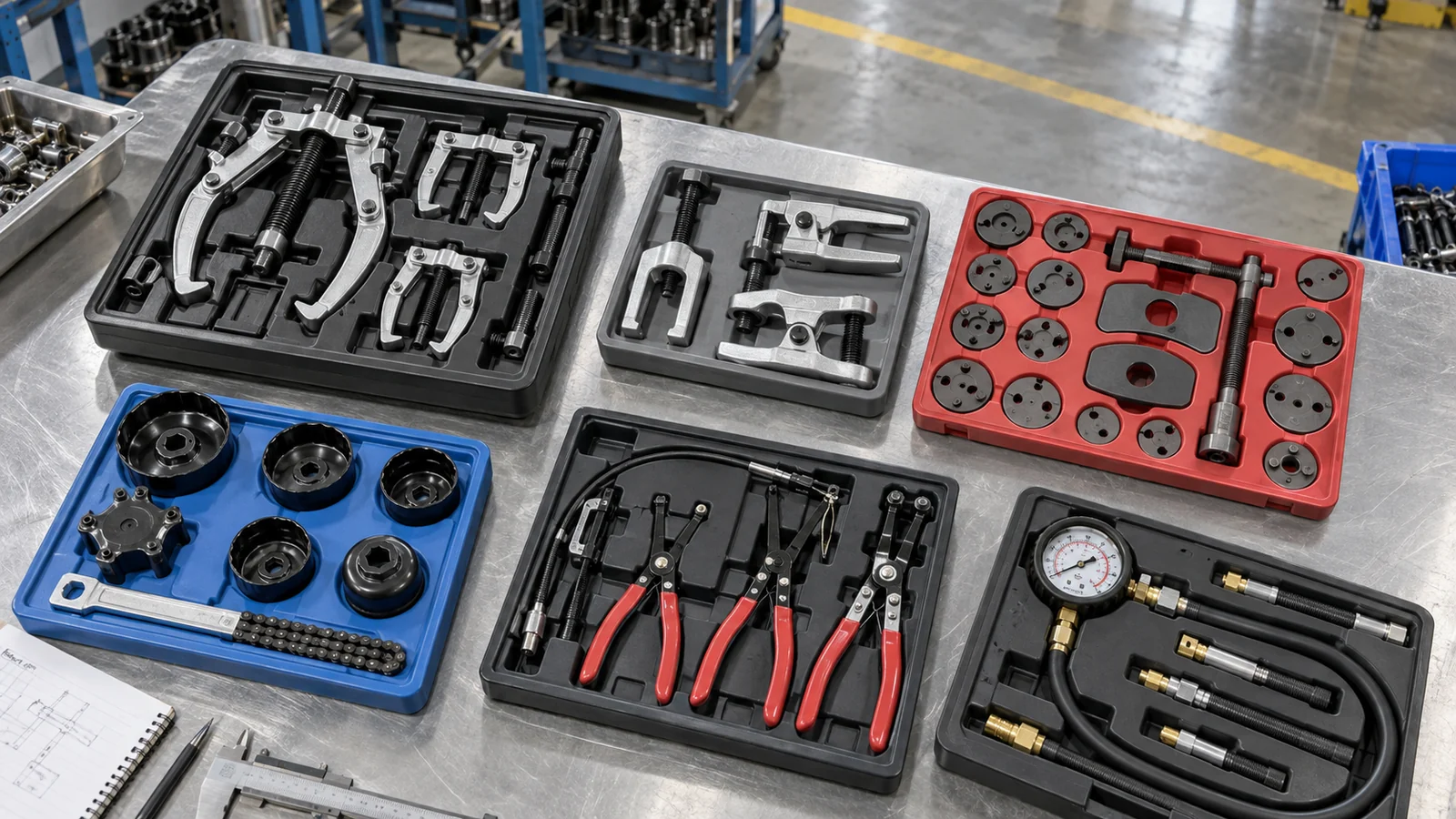
Specialty tools solve a named service operation. Useful modules may cover brakes, timing, pullers, bearings, steering, suspension, engine service, filters, fuel lines, seals, terminals, and fluid systems. Their value depends on component fit, access, instructions, and spare parts. Broad “universal” language should never replace an application list.
Pullers show why this separation matters. Jaw reach, spread, forcing screw, separator geometry, hub interface, and available working space change the correct choice. Buyers can compare automotive bearing puller types before writing a puller module.
Fit carries more weight than piece count here. One correct adapter can be more useful than ten unrelated parts.
- Brake tools: component, contact points, reach, adapters, instructions.
- Timing tools: engine codes, alignment points, storage, revision control.
- Pullers: target component, reach, spread, interface, spares, evidence.
- Electrical service: terminal type, die geometry, crimp range, replacement dies.
- Seal and fluid tools: diameter, connection, pressure or use limit where documented.
Specialty-module table
| Module | Define before quotation | Sample approval |
|---|---|---|
| Puller or separator | Component, geometry, reach, interface, spares | Fit on reference assembly |
| Timing kit | Engine/application, alignment points, instructions | Controlled application check |
| Brake service | Vehicle/component, contact, reach, adapters | Functional fit and case map |
| Electrical terminal | Terminal, die, range, handle, spares | Crimp section and repeatability |
Practical action: require one application line, one sample test, and one instruction reference for every specialty SKU.
7. Why must hand and impact tools stay separate?
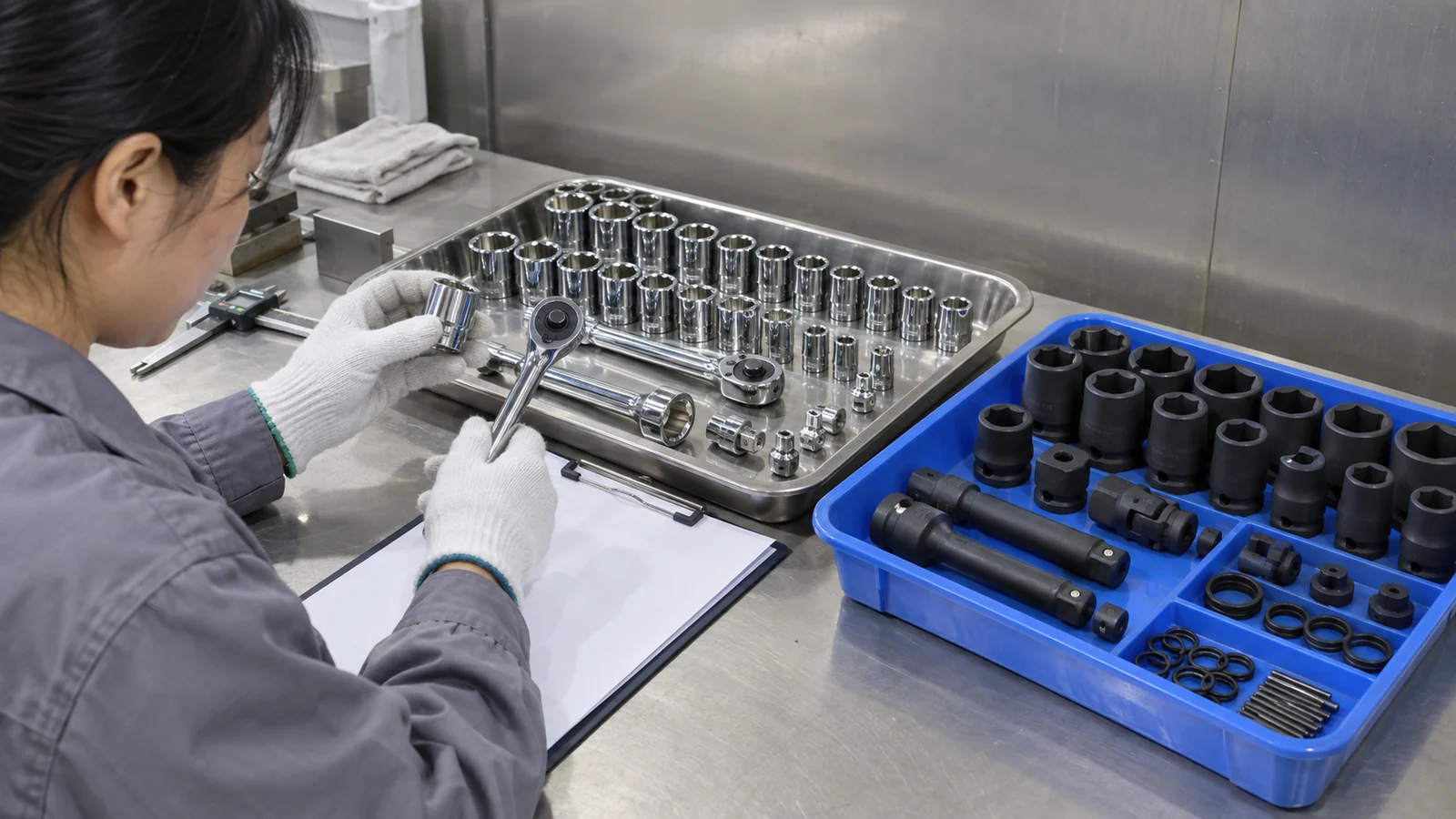
Hand and impact sockets may share nominal sizes, but they serve different tool paths. Powered impact use requires accessories identified for that application by the relevant manufacturer or specification. Finish color, wall appearance, or an alloy abbreviation cannot establish suitability by itself.
Keep sockets, extensions, adapters, and universal joints within their intended systems. Mark cases and cartons clearly. The impact socket range can help buyers define a separate product family, though exact material, heat treatment, dimensions, retention, and test evidence remain order-specific.
This split protects both users and inventory data. It also prevents a replacement hand socket from entering a powered kit.
- Give hand and impact products separate SKU prefixes.
- State intended use on drawings, BOMs, packaging, and listings.
- Match square drive across tool and accessory.
- Inspect cracks, distortion, drive fit, retention, and markings.
- Keep powered accessories out of hand-tool refill bins.
Use-class control table
| Control point | Hand-use line | Impact-use line |
|---|---|---|
| Tool path | Ratchet, breaker bar, hand attachments | Impact wrench and rated accessories |
| Specification | Drive, profile, fit, finish, service parts | Use class, drive, retention, wall, length, test basis |
| Storage | Clearly marked hand-tool row | Separate case, tray, or bin |
| Receiving | Engagement and attachment fit | Identity, defects, retention, agreed test |
Practical action: audit every mixed socket set and remove any item whose intended use cannot be traced to a controlled record.
8. How should distributors build starter, professional, and workshop tiers?
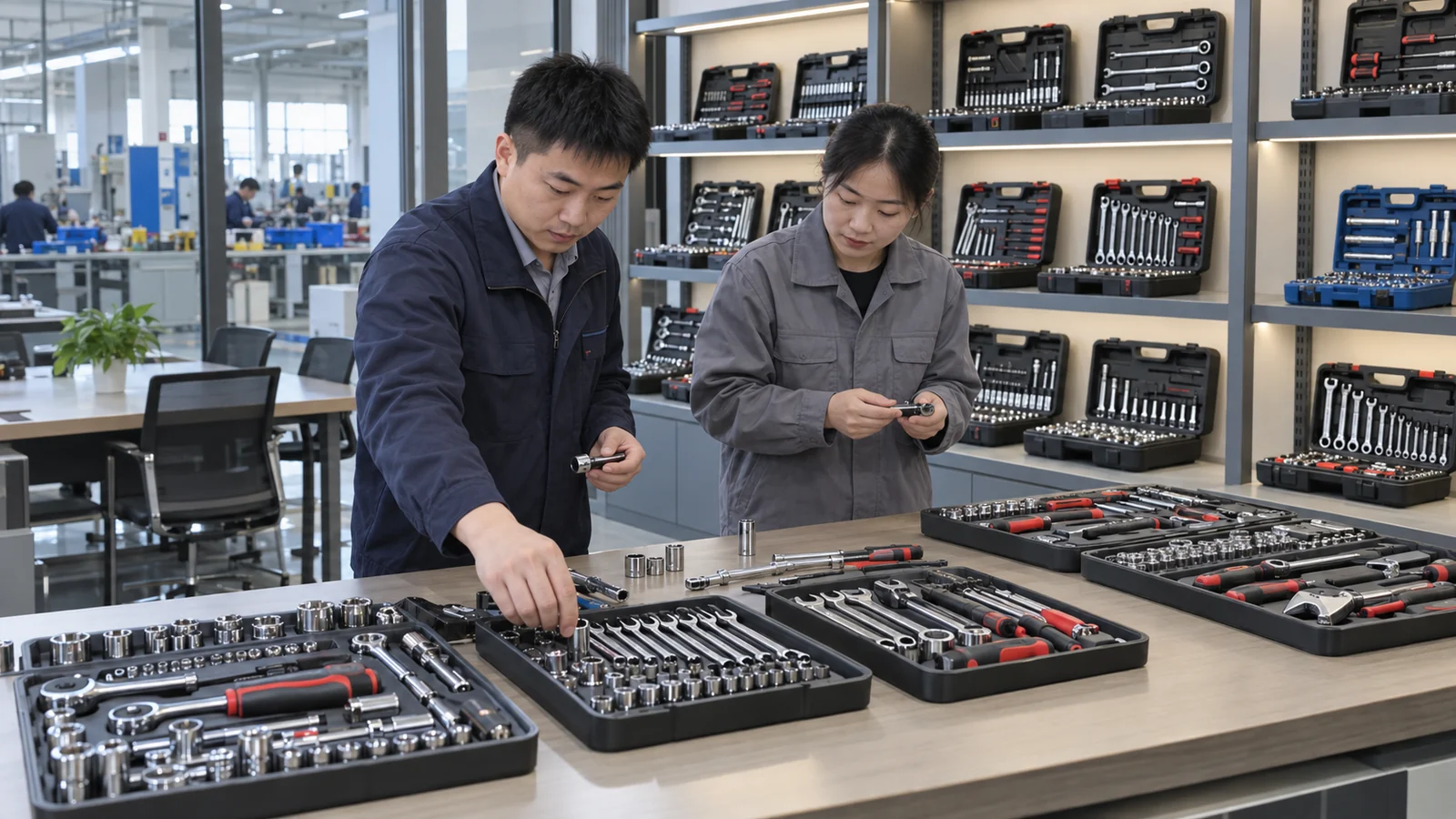
Piece counts are merchandising choices, not technical standards. A smaller set with clear coverage and refill support can outperform a larger case filled with duplicate bits. Build tiers from customer jobs, price band, carrying cost, case size, and replacement behavior. Keep specialty and diagnostic tools modular so buyers can add them without repurchasing a core set.
The guide to mechanic tool set selection for distributors offers a narrower set-planning handoff. Your own sales and warranty data should still decide sizes and quantities.
A set becomes a program when every component has a refill path. Singles and small packs protect customer retention after loss or wear.
- Starter: one drive, common sizes, basic hand tools, compact case.
- Professional: two drives, shallow/deep coverage, access tools, expanded hand tools.
- Workshop: core set plus impact, torque, specialty, diagnostics, and storage modules.
- Refill: common sockets, ratchets, extensions, bits, pliers, and case inserts.
Assortment-tier table
| Tier | Planning purpose | Commercial control |
|---|---|---|
| Starter | Entry retail or first technician kit | Exact size list and low-complexity refill pack |
| Professional | General repair, fleet bay, distributor mid-range | Component matrix, replacement SKUs, case revision |
| Workshop | Multi-bay, fleet, industrial or project use | Modular quotes and storage plan |
| Replenishment | Replace loss, wear, or damage | Stable part numbers and reorder packaging |
Practical action: compare sell-through and replacement history by component. Change future BOMs from evidence rather than equal piece counts.
9. What should an RFQ, inspection plan, and packaging brief contain?
An RFQ should identify every product, revision, intended use, size, interface, material requirement, finish, marking, case position, quantity, and evidence request. Avoid generic “ANSI compliant,” “OSHA approved,” or “ISO-certified product” language. Name an applicable standard and edition only when it fits the item and contract.
Sampling supports a lot-release decision; it does not prove every item defect-free. Define lot, inspection level, defect classes, acceptance rule, measurement method, and failed-lot response. A socket-set manufacturer checklist can support wider supplier review.
Packaging also needs its own approval. Specify cavity map, retention, rust protection, barcode, country-of-origin marking, carton dimensions, weight, pallet pattern, and any required transport test.
Price comparison only works after scope freezes. Otherwise, a cheaper quote may hide missing sizes, weaker packaging, or fewer reports.
- Approve drawings, BOM, sample ID, test results, and open deviations.
- Link material and process records with production lots where required.
- Photograph case layout and packing sequence.
- Require notice before material, tooling, software, or packaging changes.
RFQ and release table
| File | Minimum content | Release question |
|---|---|---|
| BOM and drawing | Part, revision, size, interface, material, finish, marking | Does sample match approved design? |
| Inspection plan | Lot, checks, method, sampling, defect class, response | Can QC make a repeatable decision? |
| Evidence pack | Test method, result, product/lot identity, date | Does evidence apply to ordered SKU? |
| Packaging brief | Case map, labels, protection, carton, pallet, test need | Will products arrive complete and saleable? |
Practical action: issue one controlled RFQ revision and require suppliers to return the same BOM with deviations marked line by line.
10. How can a buyer approve the final mechanic tool program?
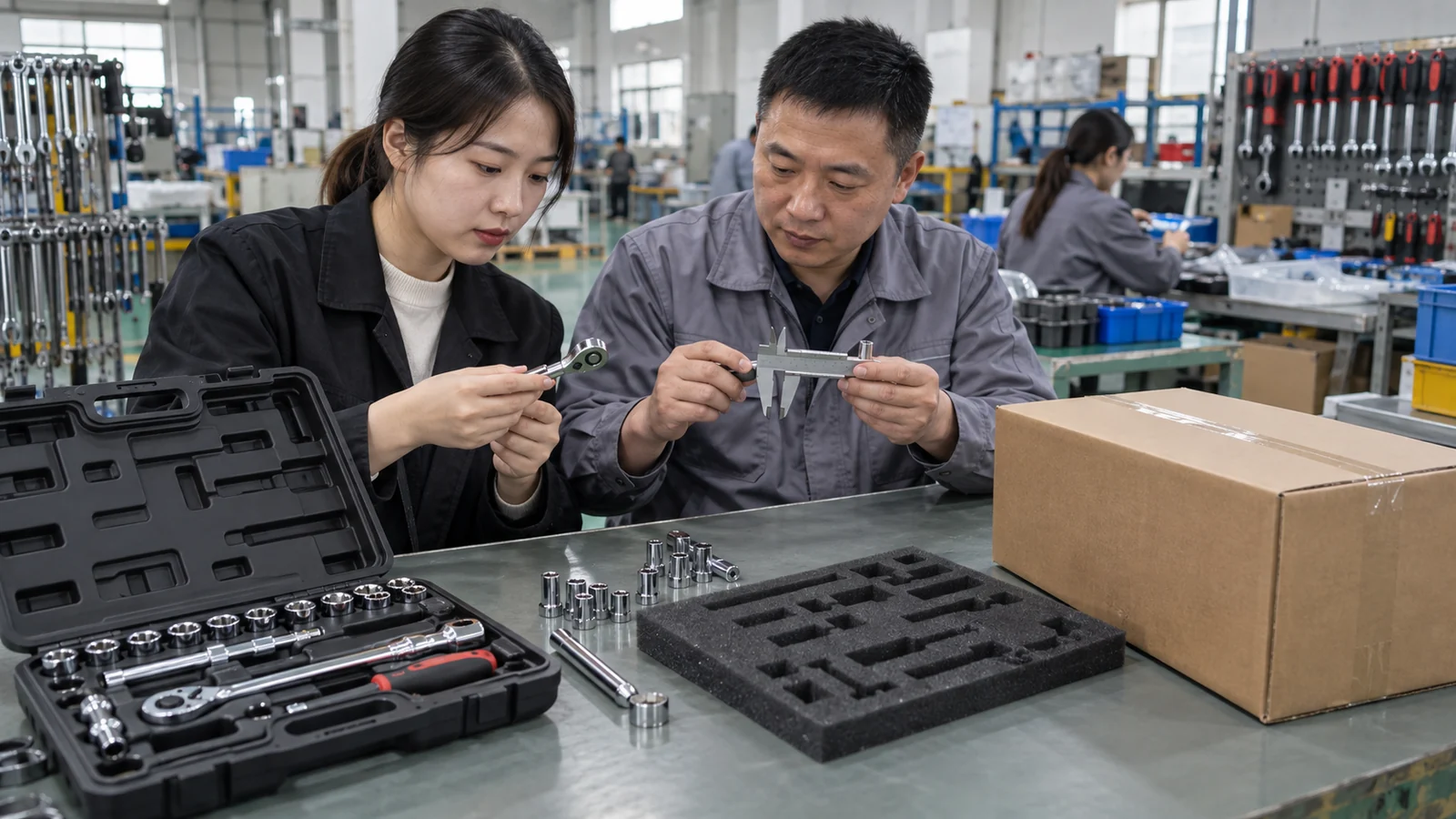
Approval works best in stages. Confirm customers and service jobs, freeze category coverage, approve drawings and samples, verify packaging, agree inspection rules, then close commercial terms and replenishment. Open deviations need an owner and a due date before production release.
Buyers can review complete mechanics tool sets when converting this framework into packaged programs. Send exact categories, size systems, quantities, branding, packaging, market, and evidence needs when you request an OEM mechanic tools quotation.
Keep every team on one controlled revision. Purchasing, quality, sales, and supplier staff should share the same BOM, drawings, and package brief.
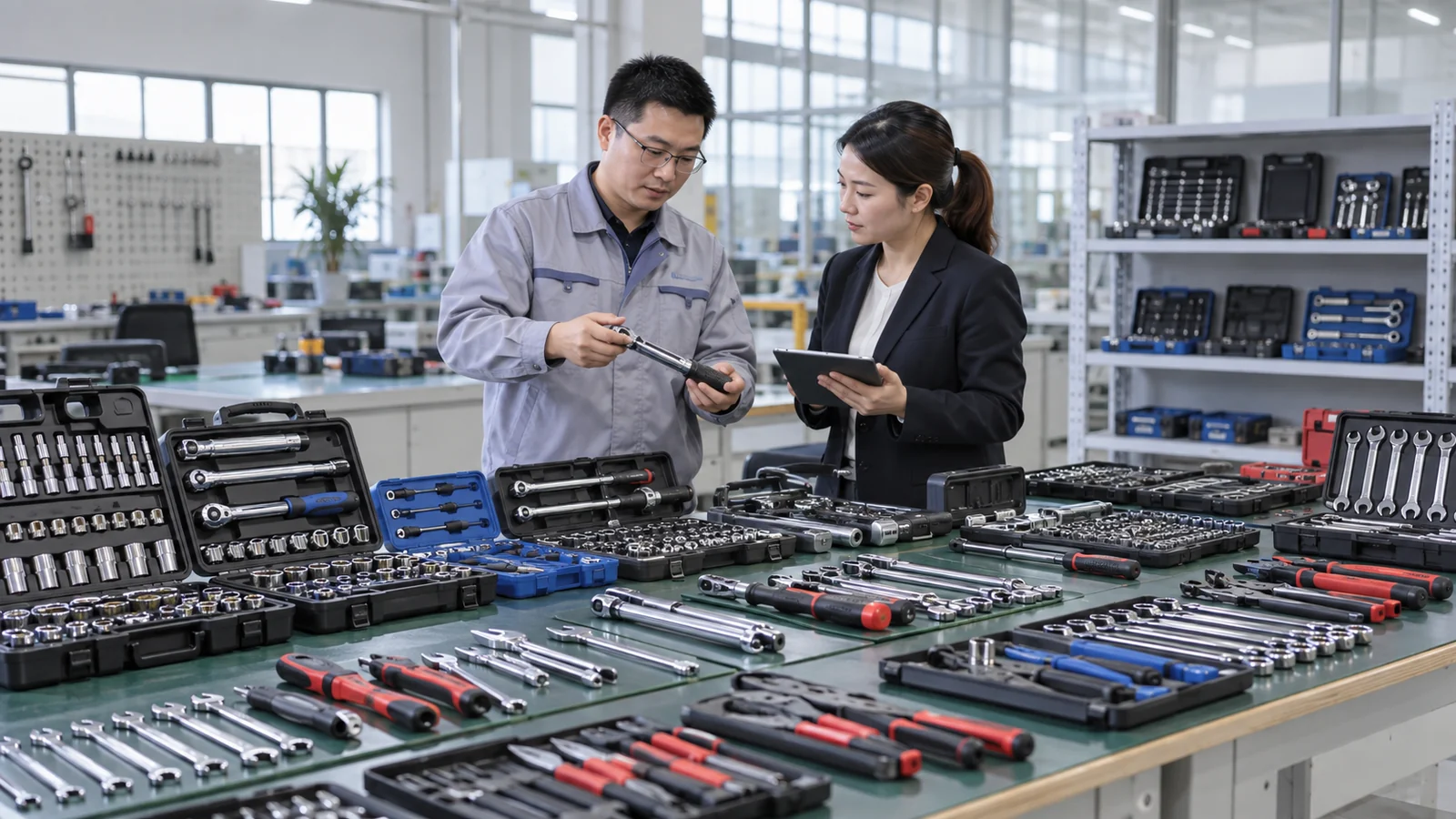
- Core module: sockets, handles, wrenches, pliers, drivers, bits, and case.
- Impact module: rated sockets, extensions, adapters, retention, and instructions.
- Controlled module: torque tools, testers, records, and storage instructions.
- Specialty and diagnostic modules: application matrices, software terms, and spares.
- Replenishment module: singles, refill packs, cases, inserts, and service parts.
Practical action: release production only after one packet contains BOM, drawings, sample report, packaging proof, inspection plan, quotation, and action log.
FAQ 1: How many pieces should a complete mechanic tool set contain?
No universal count exists. Build coverage around target jobs, vehicles, drives, sizes, storage, and refill support. Attach an exact BOM and treat piece count as a commercial description of that approved configuration.
FAQ 2: Should metric and SAE tools be sold together?
Use customer and market data. Mixed sets suit some U.S. service programs, while a focused fleet may prioritize one system. List every size so buyers can see actual coverage.
FAQ 3: Can hand sockets be used with an impact wrench?
Use accessories identified for powered impact service and matched to the tool's square drive. Keep hand and impact families separate throughout catalog, packaging, instructions, and replenishment.
FAQ 4: Does a CR-V or CR-MO label prove tool quality?
No. Material designation is one specification field. Verify composition, heat treatment, dimensions, markings, use class, and relevant product evidence for each ordered SKU.
FAQ 5: What should an importer send with a mechanic-tool RFQ?
Send target applications, exact BOM, sizes, interfaces, intended use, drawings, markings, packaging, inspection plan, evidence requests, quantities, commercial questions, and replacement expectations.
Looking for a reliable mechanic tools manufacturer in China?
If you are sourcing hand tools, socket tools, automotive repair tools, mechanic tool sets or OEM private label tools, contact KOLARWIN Tools for factory-direct quotation, customization support and product consultation.


