Home/Blog/ Mixed-Drive Impact Socket Sets: A Distributor RFQ Guide

Mixed-Drive Impact Socket Sets: A Distributor RFQ Guide

Get OEM Tool Catalog + Quote Back to Tool Sourcing Blog
Mixed-drive sockets and accessories arranged in an open red case
This KOLARWIN Tools article is written for overseas distributors, wholesalers, importers and private label tool brands sourcing mechanic tools, automotive repair tools, socket tools, hand tools and OEM tool sets from China. Use this guide to compare product options, check supplier quality points and move from reading to a faster B2B inquiry.

Need OEM supplier support for this product type?

Contact KOLARWIN Tools for OEM mechanic tools, private label packaging, wholesale quotation and product range support. This gives overseas buyers a clear path from article reading to supplier discussion.

A mixed-drive set can cover a broad size range while combining sockets, reducers or adapters, ratcheting components, and storage. That flexibility also creates more interfaces to verify. The supplied catalogue shows a 26-piece set combining 3/4-inch and 1-inch drive sockets with accessories. Its carton weight and accessory wording should not be copied into a buying record without confirmation. For a distributor, the main task is to turn the assortment into an auditable BOM and confirm that every powered-use component suits its intended tool.

1. What makes a mixed-drive impact set different?

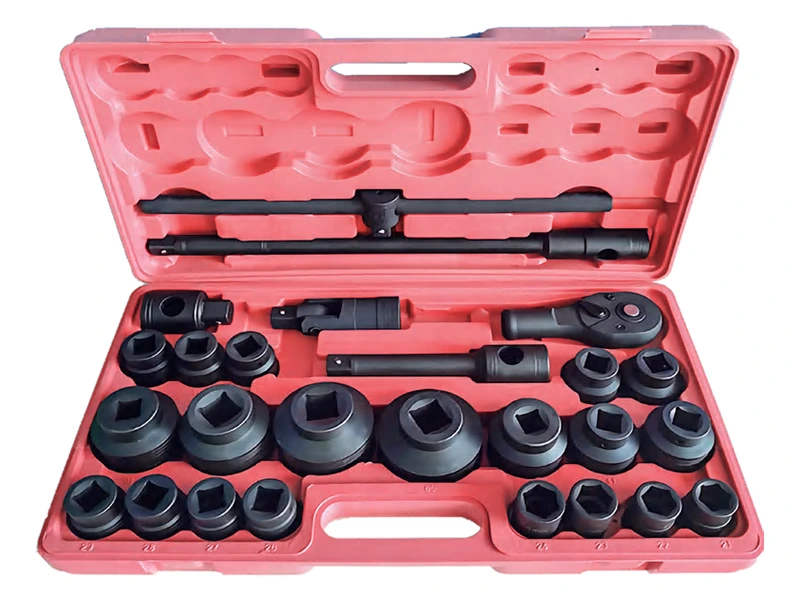
A mixed-drive set contains sockets or accessories using more than one square-drive size. The 26-piece catalogue example lists 17 sockets under 3/4-inch drive, three under 1-inch drive, and accessories. That configuration can serve applications with different fastener sizes or tools, but each transition requires a compatibility check. A piece count alone does not describe the set’s coverage or safe use.
Mixed-drive sockets and accessories arranged in an open red case
Supplier catalogue photo of the listed 26-piece mixed-drive set.
  • Separate socket pieces from adapters and operating accessories.
  • Record each square drive independently from fastener opening.
  • Identify which pieces are impact-rated and which are hand-operated.

Start with the complete bill of materials. Use the catalogue’s 26-piece label as a source-supplied set description, then reconcile each physical item with the final list. For a wider impact socket assortment, keep drive families visible at line-item level.

Set composition fields

Component group Catalogue example Buyer check
3/4-inch-drive sockets 17 sizes listed Confirm each size and profile
1-inch-drive sockets 3 sizes listed Confirm drive and opening mapping
Accessories 6-piece group stated Reconcile names and physical count
Case Plastic case shown/listed Confirm layout, label, and retention

Action: request a numbered BOM with one line per physical component and a total that reconciles to the package count.

2. Why combine 3/4-inch and 1-inch drives?

Different drive sizes connect to different wrench anvils and accessory systems. A set containing both may suit a fleet, maintenance department, or distributor customer using more than one impact-tool class. It should not imply that an adapter makes every socket appropriate for every tool. Tool anvil size, output, retention, and manufacturer instructions still govern each combination.
Mixed-drive sockets and accessories arranged in an open red case
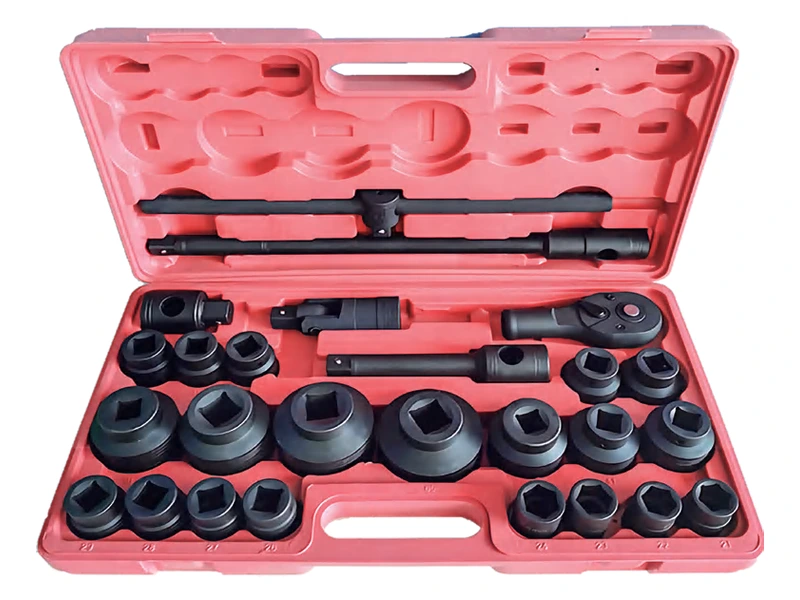
Supplier catalogue photo of the listed 26-piece mixed-drive set.
  • Assign each socket to its drive family.
  • Identify the wrench anvil and retention system for intended use.
  • Keep adapters as explicit components with female and male ends.

Match the set to the tools already in service. A 3/4-inch socket does not become a 1-inch-drive socket because an adapter is added; the adapter creates another interface that needs approval. Buyers comparing socket drive sizes should specify the connected tool model or its anvil requirements.

Drive-family planning

Drive family What it defines Do not confuse it with
3/4-inch square Accessory connection size Socket opening or fastener size
1-inch square Larger connection family A universal torque rating
Adapter transition Female-to-male connection Proof of impact compatibility

Action: map every SKU to a compatible wrench and retention method before approving a mixed-drive package.

3. How should the distributor verify the piece count?

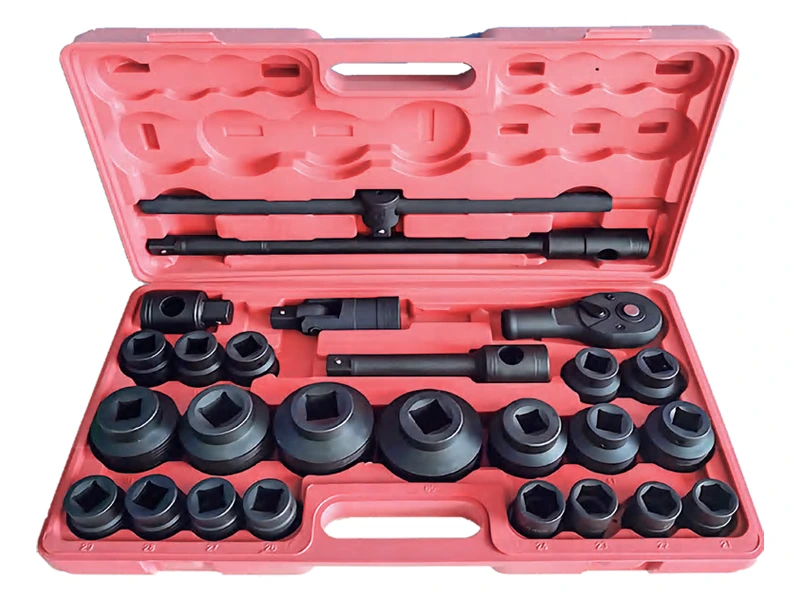
Count every physical item once, including each socket, bar, head, joint, adapter, and case only if the supplier defines the case as a piece. The source listing states 26 pieces and gives a breakdown of 17 sockets, three additional sockets, and a six-piece accessory group. Its accessory description includes an “adding-force bar,” a big/small slide head, a heavy ratchet head, an impact universal joint, an extension bar, and a heavy sliding bar. Buyers should confirm whether the “big/small slide head” is one combined item or two separate items, since that affects arithmetic.
Mixed-drive sockets and accessories arranged in an open red case
Supplier catalogue photo of the listed 26-piece mixed-drive set.
  • Ask the supplier to label every part in a set photo or drawing.
  • Reconcile stated count against the BOM and carton insert.
  • Confirm whether case, labels, and loose accessories count toward the advertised total.

Make the count auditable before packaging approval. This is especially important for marketplace listings, where buyers compare headline piece counts. A socket set configuration should present a count convention that matches the physical pack.

Count reconciliation

Source description Count treatment to confirm
17 sockets, 3/4-inch drive Count each socket individually
3 sockets, 1-inch drive Count each socket individually
Six accessory pieces stated Resolve whether combined head entry is one or two pieces
Case and insert State whether excluded from piece total

Action: approve artwork only after supplier, BOM, and physical pack show the same counted set.

4. Which socket sizes should the set cover?

Size selection depends on the target applications and customer base. The source example lists 3/4-inch-drive metric sockets from 21 mm through 50 mm with gaps, plus 1-inch-drive sizes of 55 mm, 60 mm, and 65 mm. That list is a catalogue configuration, not a claim that it covers every heavy-duty vehicle or industrial application. Distributors should compare local fastener standards, service data, and their existing inventory before choosing a mix.
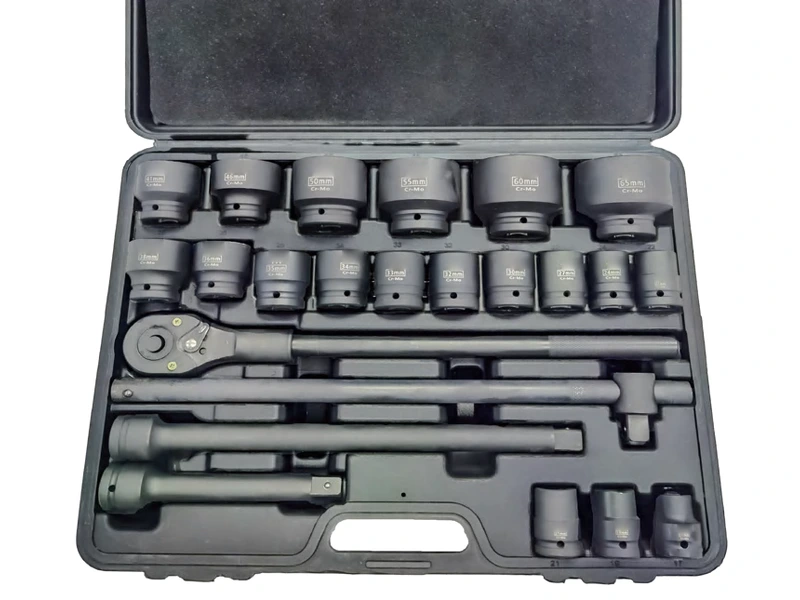
Sockets and operating accessories arranged in an open gray case
Supplier catalogue photo of a separate 3/4-inch drive metric set.
  • Review demand by application and unit system.
  • Identify frequent sizes and expected gaps.
  • Avoid implying continuous coverage when sizes are selective.

Use actual demand to justify each size. If the package mixes millimeter openings and drive sizes in inches, label those fields clearly. A metric-to-SAE size chart can help buyers compare nominal openings, but it does not make adjacent sizes interchangeable.

Size coverage review

Decision point Buyer question
Unit system Metric, SAE, or a deliberate combination?
Coverage Which sizes are included and which are omitted?
Application Which repair or maintenance jobs justify each opening?
Stock overlap Does the set duplicate existing core inventory?

Action: attach a size matrix to the RFQ and ask the supplier to flag every omission or substitution.

5. Are all pieces in the case intended for powered impact use?

Not necessarily. A mixed kit may contain sockets designed for impact use alongside manual bars, sliding heads, or ratchet components. The source catalogue calls the sockets an impact set, but buyers should verify every accessory’s intended use. In particular, a ratchet head or hand-operating bar should not be treated as an impact-wrench accessory simply because it shares the case with impact sockets.
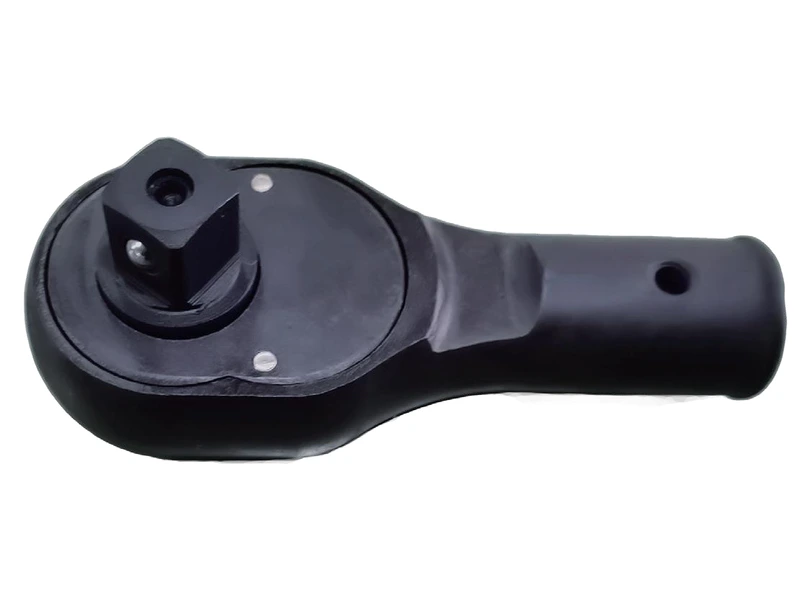
Manual ratchet head with square drive and handle socket
Supplier catalogue photo of a manual ratchet head, shown here as a hand-tool example.
  • Mark each item as powered-impact, hand-operated, or unresolved.
  • Check tool-maker instructions for every intended assembly.
  • Keep a manual tool’s use and powered tool’s use in separate directions.

Classify every component, not only the case title. Page 14 of the catalogue also lists ratchet-wrench accessories separately. A mechanics tool set may include hand-drive components, so product labels should make the tool class unmistakable.

Intended-use matrix

Item type Verify before use
Impact socket Exact model documented for impact service
Adapter or joint Impact compatibility and retention stated
Ratchet head Hand operation and use limits stated
Sliding bar Manual operation and correct drive family stated

Action: require a per-component intended-use matrix and keep hand-use pieces off impact-wrench instructions.

6. What compatibility risks come with adapters and joints?

Adapters and joints add length, interfaces, and possible misalignment to the drive path. A reducer changes connection size; it does not validate a wrench/socket pairing by itself. A universal joint or swivel also changes access and loading conditions. Buyers need the exact female and male drive sizes, retention method, and use classification for each accessory.
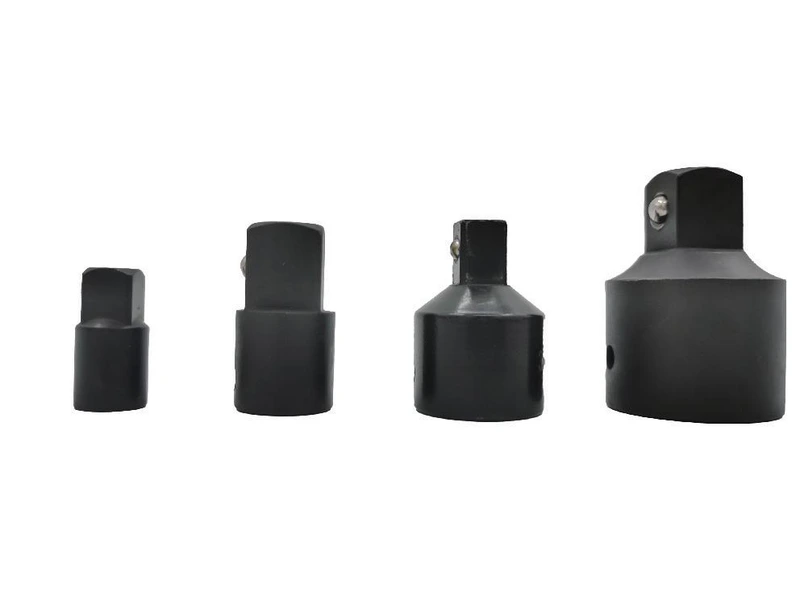
Four square-drive reducers in different body sizes
Supplier catalogue photo of separate square-drive reducers; their inclusion in the mixed set is not established.
  • List each adapter transition in order from wrench to socket.
  • Confirm pin, ring, or detent retention for the nominated tool.
  • Request dimensions for length and clearance around nearby components.

Review the assembly as a chain. The source-listed impact universal joint deserves its own line in the set BOM and compatibility documentation. For repair-focused assortment planning, connect the set to actual automotive repair tool needs, rather than adding accessories for piece-count appeal.

Accessory chain record

Position Example field Approval question
Wrench Anvil drive and retention Does the tool maker allow this accessory?
Adapter Female-to-male sizes Is each interface compatible and rated?
Joint Joint style and dimensions Is intended use documented?
Socket Drive, opening, profile, depth Does it fit the fastener and access?

Action: require a complete chain drawing for any configuration using adapters or a universal joint.

7. How should case layout and packaging be specified?

A case should keep pieces identifiable, retained, and countable during shipment and use. A photograph can show arrangement but cannot prove parts stay seated through transport. Distributors should specify labels, size markings, layout, and how replacement pieces will be identified. Carton packing also needs a separate check against the intended channel and handling conditions.
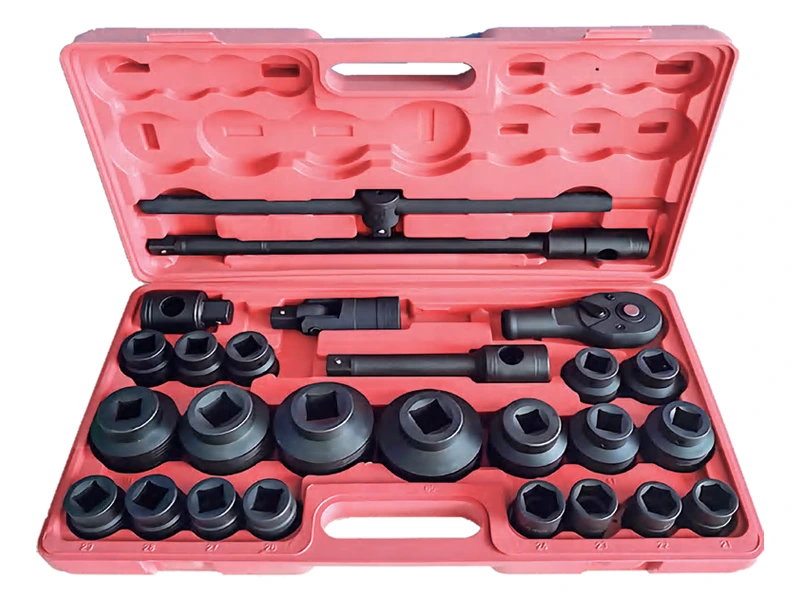
Mixed-drive sockets and accessories arranged in an open red case
Supplier catalogue photo of the listed 26-piece mixed-drive set.
  • Specify material and layout expectations for the case.
  • Confirm each cavity matches the actual tool dimensions.
  • Require readable labels, size markings, and replacement-part references.

Approve the pack as a product, not decoration. Ask for a finished sample with all pieces seated and a packing list inside. A complete mechanics kit may create additional packaging constraints, so standardize case labels across the related range.

Packaging checks

Area Acceptance check
Tool retention Pieces remain in assigned positions during handling trial
Identification Size and drive markings remain visible
Case structure Hinges, latches, and handle suit distribution needs
Pack list Printed BOM matches actual contents
Outer carton Quantity and protection match shipment plan

Action: approve a pre-production packed sample before releasing packaging artwork.

8. Which catalogue packing details should buyers reconfirm?

Packaging quantities, gross and net weights, carton size, and set contents can change with case design or accessory configuration. The source catalogue’s packing values around this mixed set are visually unclear; they should not be copied into a quote, freight calculation, or listing without supplier confirmation. Use the stated 26-piece label only with a reconciled BOM, and request current shipment data for the final packed configuration.
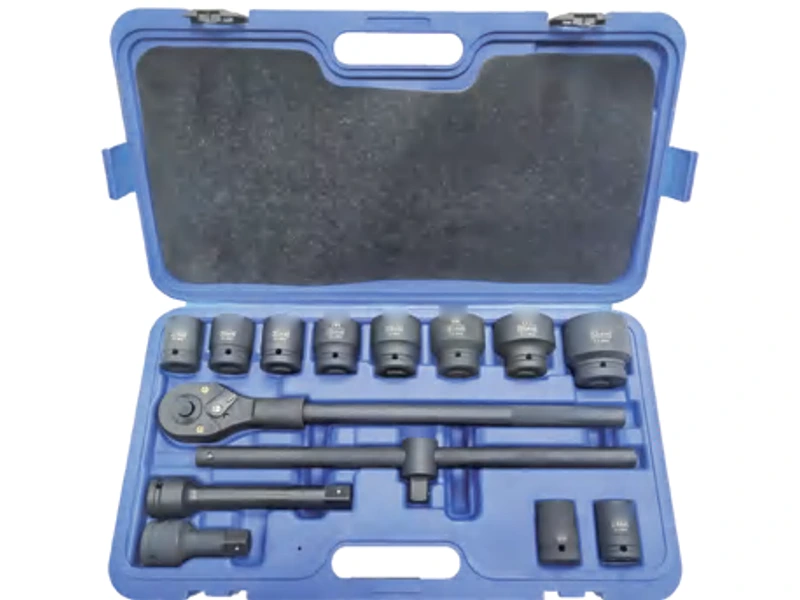
Sockets, ratchet and bars arranged in an open blue case
Supplier catalogue photo of a 3/4-inch drive set with operating accessories.
  • Ask for gross and net weight measured on the final pack.
  • Confirm carton dimensions and units in writing.
  • Confirm sets per carton and carton count for the actual order.

Treat logistics as a fresh quotation field. Do not derive freight weight from a blurred or conflicting catalogue line. Keep carton data tied to the exact packaging revision. A supplier selection checklist can support that confirmation along with product and inspection details.

Shipping data request

Data Confirmation needed
Net weight Finished set contents and case only, definition stated
Gross weight Final packed unit measured, units stated
Carton dimensions Length, width, height, units, packed state
Carton quantity Sets per carton and total cartons
Pack revision Link to approved case and BOM revision

Action: get a signed packing specification for the order before booking freight or publishing logistics figures.

9. What should the distributor put in a mixed-drive RFQ?

A good RFQ identifies the kit architecture, not only its headline count. Include drive groups, every socket opening, profile, depth, accessory list, tool class, case, markings, finish, documentation, and shipment data. Ask suppliers to quote substitutions separately and highlight anything they cannot confirm. Avoid collapsing the specification into a generic “heavy-duty” phrase.
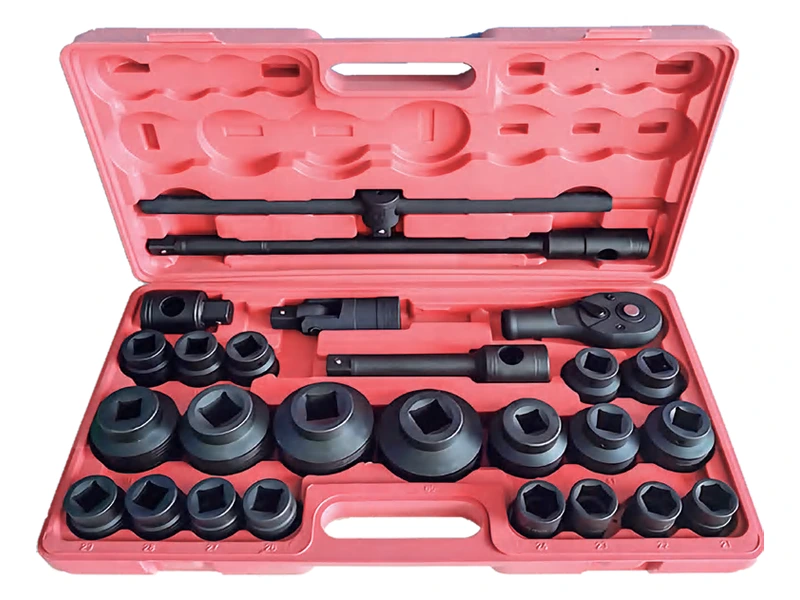
Mixed-drive sockets and accessories arranged in an open red case
Supplier catalogue photo of the listed 26-piece mixed-drive set.
  • Attach a table with one line per component.
  • Identify impact-use and manual-use parts separately.
  • Request a sample, drawing, pack list, and current carton data.

Use the RFQ to expose uncertainty early. If “big/small slide head” or another accessory name remains ambiguous, ask for a labeled photo and a corrected BOM. Buyers can compare the quote against socket products and send the final configuration through a quotation request.

Distributor RFQ template

Field Required detail
Socket group Drive, opening, unit, profile, depth, quantity
Accessories Name, count, drive ends, tool class, retention
Case Layout, labels, material, approved sample
Evidence Drawings, inspection records, intended-use documents
Logistics Confirmed unit and carton weights/dimensions

Action: require suppliers to return a completed BOM instead of quoting by set nickname alone.

10. How should a buyer approve the final set?

Approval should reconcile the physical pack, BOM, product labels, and shipment data. The 26-piece source example provides a useful starting architecture, but the exact count convention and accessory identity still need confirmation. Treat the catalogue photo as an illustration of a supplied set, not proof of universal compatibility or performance. A sample and controlled document set should close those gaps before production.
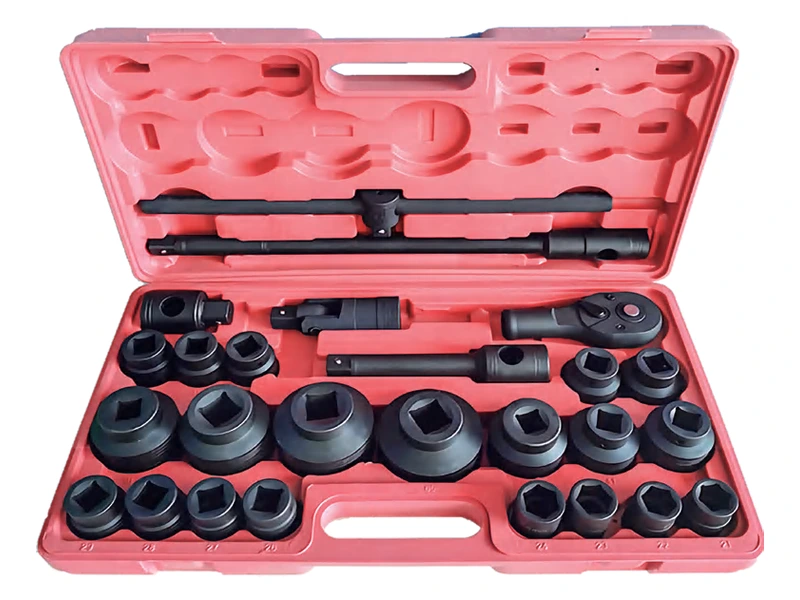
Mixed-drive sockets and accessories arranged in an open red case
Supplier catalogue photo of the listed 26-piece mixed-drive set.
  • Check each size, drive family, and accessory against the approved BOM.
  • Verify powered versus hand-operated components and their markings.
  • Confirm current packing data against the final case and carton.

Release the set only when contents and records agree. For distributor continuity, keep the approved BOM revision attached to every reorder.

Action: sign off the sample, component matrix, case layout, labels, and packing specification as one revision-controlled package.

Q1: Does a mixed-drive set mean each socket fits both drive sizes? No. Each socket has one drive interface unless a separate adapter is used and approved.

Q2: Does the 26-piece count include the case? The catalogue labels the set 26PC, but the buyer should confirm the supplier’s counting convention in the BOM.

Q3: Can every item in an impact set case go on an impact wrench? No. Classify each component; manual ratchets and bars are not automatically impact-rated.

Q4: Should the catalogue carton weight be used for freight? No. Reconfirm current gross and net weights for the final packed configuration.

Q5: Can an adapter make a smaller socket suitable for a larger wrench? An adapter changes the interface. It does not prove compatibility, retention, or intended use.

Looking for a reliable mechanic tools manufacturer in China?

If you are sourcing hand tools, socket tools, automotive repair tools, mechanic tool sets or OEM private label tools, contact KOLARWIN Tools for factory-direct quotation, customization support and product consultation.


A mixed-drive set can cover a broad size range while combining sockets, reducers or adapters, ratcheting components, and storage. That flexibility also creates more interfaces to verify. The supplied catalogue shows a 26-piece set combining 3/4-inch and 1-inch drive sockets with accessories. Its carton weight and accessory wording should not be copied into a buying record without confirmation. For a distributor, the main task is to turn the assortment into an auditable BOM and confirm that every powered-use component suits its intended tool.

1. What makes a mixed-drive impact set different?

A mixed-drive set contains sockets or accessories using more than one square-drive size. The 26-piece catalogue example lists 17 sockets under 3/4-inch drive, three under 1-inch drive, and accessories. That configuration can serve applications with different fastener sizes or tools, but each transition requires a compatibility check. A piece count alone does not describe the set’s coverage or safe use.

Mixed-drive sockets and accessories arranged in an open red case
Supplier catalogue photo of the listed 26-piece mixed-drive set.

Start with the complete bill of materials. Use the catalogue’s 26-piece label as a source-supplied set description, then reconcile each physical item with the final list. For a wider impact socket assortment, keep drive families visible at line-item level.

Set composition fields

Component group Catalogue example Buyer check
3/4-inch-drive sockets 17 sizes listed Confirm each size and profile
1-inch-drive sockets 3 sizes listed Confirm drive and opening mapping
Accessories 6-piece group stated Reconcile names and physical count
Case Plastic case shown/listed Confirm layout, label, and retention

Action: request a numbered BOM with one line per physical component and a total that reconciles to the package count.

2. Why combine 3/4-inch and 1-inch drives?

Different drive sizes connect to different wrench anvils and accessory systems. A set containing both may suit a fleet, maintenance department, or distributor customer using more than one impact-tool class. It should not imply that an adapter makes every socket appropriate for every tool. Tool anvil size, output, retention, and manufacturer instructions still govern each combination.

Mixed-drive sockets and accessories arranged in an open red case
Supplier catalogue photo of the listed 26-piece mixed-drive set.

Match the set to the tools already in service. A 3/4-inch socket does not become a 1-inch-drive socket because an adapter is added; the adapter creates another interface that needs approval. Buyers comparing socket drive sizes should specify the connected tool model or its anvil requirements.

Drive-family planning

Drive family What it defines Do not confuse it with
3/4-inch square Accessory connection size Socket opening or fastener size
1-inch square Larger connection family A universal torque rating
Adapter transition Female-to-male connection Proof of impact compatibility

Action: map every SKU to a compatible wrench and retention method before approving a mixed-drive package.

3. How should the distributor verify the piece count?

Count every physical item once, including each socket, bar, head, joint, adapter, and case only if the supplier defines the case as a piece. The source listing states 26 pieces and gives a breakdown of 17 sockets, three additional sockets, and a six-piece accessory group. Its accessory description includes an “adding-force bar,” a big/small slide head, a heavy ratchet head, an impact universal joint, an extension bar, and a heavy sliding bar. Buyers should confirm whether the “big/small slide head” is one combined item or two separate items, since that affects arithmetic.

Mixed-drive sockets and accessories arranged in an open red case
Supplier catalogue photo of the listed 26-piece mixed-drive set.

Make the count auditable before packaging approval. This is especially important for marketplace listings, where buyers compare headline piece counts. A socket set configuration should present a count convention that matches the physical pack.

Count reconciliation

Source description Count treatment to confirm
17 sockets, 3/4-inch drive Count each socket individually
3 sockets, 1-inch drive Count each socket individually
Six accessory pieces stated Resolve whether combined head entry is one or two pieces
Case and insert State whether excluded from piece total

Action: approve artwork only after supplier, BOM, and physical pack show the same counted set.

4. Which socket sizes should the set cover?

Size selection depends on the target applications and customer base. The source example lists 3/4-inch-drive metric sockets from 21 mm through 50 mm with gaps, plus 1-inch-drive sizes of 55 mm, 60 mm, and 65 mm. That list is a catalogue configuration, not a claim that it covers every heavy-duty vehicle or industrial application. Distributors should compare local fastener standards, service data, and their existing inventory before choosing a mix.

Sockets and operating accessories arranged in an open gray case
Supplier catalogue photo of a separate 3/4-inch drive metric set.

Use actual demand to justify each size. If the package mixes millimeter openings and drive sizes in inches, label those fields clearly. A metric-to-SAE size chart can help buyers compare nominal openings, but it does not make adjacent sizes interchangeable.

Size coverage review

Decision point Buyer question
Unit system Metric, SAE, or a deliberate combination?
Coverage Which sizes are included and which are omitted?
Application Which repair or maintenance jobs justify each opening?
Stock overlap Does the set duplicate existing core inventory?

Action: attach a size matrix to the RFQ and ask the supplier to flag every omission or substitution.

5. Are all pieces in the case intended for powered impact use?

Not necessarily. A mixed kit may contain sockets designed for impact use alongside manual bars, sliding heads, or ratchet components. The source catalogue calls the sockets an impact set, but buyers should verify every accessory’s intended use. In particular, a ratchet head or hand-operating bar should not be treated as an impact-wrench accessory simply because it shares the case with impact sockets.

Manual ratchet head with square drive and handle socket
Supplier catalogue photo of a manual ratchet head, shown here as a hand-tool example.

Classify every component, not only the case title. Page 14 of the catalogue also lists ratchet-wrench accessories separately. A mechanics tool set may include hand-drive components, so product labels should make the tool class unmistakable.

Intended-use matrix

Item type Verify before use
Impact socket Exact model documented for impact service
Adapter or joint Impact compatibility and retention stated
Ratchet head Hand operation and use limits stated
Sliding bar Manual operation and correct drive family stated

Action: require a per-component intended-use matrix and keep hand-use pieces off impact-wrench instructions.

6. What compatibility risks come with adapters and joints?

Adapters and joints add length, interfaces, and possible misalignment to the drive path. A reducer changes connection size; it does not validate a wrench/socket pairing by itself. A universal joint or swivel also changes access and loading conditions. Buyers need the exact female and male drive sizes, retention method, and use classification for each accessory.

Four square-drive reducers in different body sizes
Supplier catalogue photo of separate square-drive reducers; their inclusion in the mixed set is not established.

Review the assembly as a chain. The source-listed impact universal joint deserves its own line in the set BOM and compatibility documentation. For repair-focused assortment planning, connect the set to actual automotive repair tool needs, rather than adding accessories for piece-count appeal.

Accessory chain record

Position Example field Approval question
Wrench Anvil drive and retention Does the tool maker allow this accessory?
Adapter Female-to-male sizes Is each interface compatible and rated?
Joint Joint style and dimensions Is intended use documented?
Socket Drive, opening, profile, depth Does it fit the fastener and access?

Action: require a complete chain drawing for any configuration using adapters or a universal joint.

7. How should case layout and packaging be specified?

A case should keep pieces identifiable, retained, and countable during shipment and use. A photograph can show arrangement but cannot prove parts stay seated through transport. Distributors should specify labels, size markings, layout, and how replacement pieces will be identified. Carton packing also needs a separate check against the intended channel and handling conditions.

Mixed-drive sockets and accessories arranged in an open red case
Supplier catalogue photo of the listed 26-piece mixed-drive set.

Approve the pack as a product, not decoration. Ask for a finished sample with all pieces seated and a packing list inside. A complete mechanics kit may create additional packaging constraints, so standardize case labels across the related range.

Packaging checks

Area Acceptance check
Tool retention Pieces remain in assigned positions during handling trial
Identification Size and drive markings remain visible
Case structure Hinges, latches, and handle suit distribution needs
Pack list Printed BOM matches actual contents
Outer carton Quantity and protection match shipment plan

Action: approve a pre-production packed sample before releasing packaging artwork.

8. Which catalogue packing details should buyers reconfirm?

Packaging quantities, gross and net weights, carton size, and set contents can change with case design or accessory configuration. The source catalogue’s packing values around this mixed set are visually unclear; they should not be copied into a quote, freight calculation, or listing without supplier confirmation. Use the stated 26-piece label only with a reconciled BOM, and request current shipment data for the final packed configuration.

Sockets, ratchet and bars arranged in an open blue case
Supplier catalogue photo of a 3/4-inch drive set with operating accessories.

Treat logistics as a fresh quotation field. Do not derive freight weight from a blurred or conflicting catalogue line. Keep carton data tied to the exact packaging revision. A supplier selection checklist can support that confirmation along with product and inspection details.

Shipping data request

Data Confirmation needed
Net weight Finished set contents and case only, definition stated
Gross weight Final packed unit measured, units stated
Carton dimensions Length, width, height, units, packed state
Carton quantity Sets per carton and total cartons
Pack revision Link to approved case and BOM revision

Action: get a signed packing specification for the order before booking freight or publishing logistics figures.

9. What should the distributor put in a mixed-drive RFQ?

A good RFQ identifies the kit architecture, not only its headline count. Include drive groups, every socket opening, profile, depth, accessory list, tool class, case, markings, finish, documentation, and shipment data. Ask suppliers to quote substitutions separately and highlight anything they cannot confirm. Avoid collapsing the specification into a generic “heavy-duty” phrase.

Mixed-drive sockets and accessories arranged in an open red case
Supplier catalogue photo of the listed 26-piece mixed-drive set.

Use the RFQ to expose uncertainty early. If “big/small slide head” or another accessory name remains ambiguous, ask for a labeled photo and a corrected BOM. Buyers can compare the quote against socket products and send the final configuration through a quotation request.

Distributor RFQ template

Field Required detail
Socket group Drive, opening, unit, profile, depth, quantity
Accessories Name, count, drive ends, tool class, retention
Case Layout, labels, material, approved sample
Evidence Drawings, inspection records, intended-use documents
Logistics Confirmed unit and carton weights/dimensions

Action: require suppliers to return a completed BOM instead of quoting by set nickname alone.

10. How should a buyer approve the final set?

Approval should reconcile the physical pack, BOM, product labels, and shipment data. The 26-piece source example provides a useful starting architecture, but the exact count convention and accessory identity still need confirmation. Treat the catalogue photo as an illustration of a supplied set, not proof of universal compatibility or performance. A sample and controlled document set should close those gaps before production.

Mixed-drive sockets and accessories arranged in an open red case
Supplier catalogue photo of the listed 26-piece mixed-drive set.

Release the set only when contents and records agree. For distributor continuity, keep the approved BOM revision attached to every reorder.

Action: sign off the sample, component matrix, case layout, labels, and packing specification as one revision-controlled package.

Q1: Does a mixed-drive set mean each socket fits both drive sizes? No. Each socket has one drive interface unless a separate adapter is used and approved.

Q2: Does the 26-piece count include the case? The catalogue labels the set 26PC, but the buyer should confirm the supplier’s counting convention in the BOM.

Q3: Can every item in an impact set case go on an impact wrench? No. Classify each component; manual ratchets and bars are not automatically impact-rated.

Q4: Should the catalogue carton weight be used for freight? No. Reconfirm current gross and net weights for the final packed configuration.

Q5: Can an adapter make a smaller socket suitable for a larger wrench? An adapter changes the interface. It does not prove compatibility, retention, or intended use.

Why Partner with Kolarwin Tools?

Factory-Direct Pricing Skip the middleman — access competitive wholesale prices and protect your margins
Private Label & OEM Ready Your brand, our expertise — full customization from logo to packaging
Fast Global Shipping Reliable delivery to 60+ countries with full export documentation support
Low MOQ, High Flexibility Start small, scale fast — flexible order quantities to fit your business
Dedicated B2B Support One-on-one account management from quote to delivery, every time

Get Your Free Quote in 24 Hours

Tell us your sourcing needs — we'll respond with a tailored quote, product specs, and the best pricing for your market. No commitment required.

Chat on WhatsApp Email Us Directly