Home/Blog/ Thin-Wall vs Standard Impact Sockets: A Buyer Guide

Thin-Wall vs Standard Impact Sockets: A Buyer Guide

Get OEM Tool Catalog + Quote Back to Tool Sourcing Blog
Three thin-wall deep impact sockets in an open case
This KOLARWIN Tools article is written for overseas distributors, wholesalers, importers and private label tool brands sourcing mechanic tools, automotive repair tools, socket tools, hand tools and OEM tool sets from China. Use this guide to compare product options, check supplier quality points and move from reading to a faster B2B inquiry.

Need OEM supplier support for this product type?

Contact KOLARWIN Tools for OEM mechanic tools, private label packaging, wholesale quotation and product range support. This gives overseas buyers a clear path from article reading to supplier discussion.

Choosing between thin-wall and standard impact sockets comes down to the available clearance around a fastener. A standard socket may fit the nut yet fail to pass through a narrow wheel opening; a thin-wall profile can help where its measured outside diameter clears that path. Buyers should compare both forms on the target assembly, then confirm reach and full fastener engagement. This guide uses one clearly listed catalogue example and keeps its specifications limited to that set.

1. What does “thin-wall” mean on an impact socket?

A thin-wall socket has a reduced outside profile around its working end so its body can enter a tighter opening. “Thin-wall” describes clearance geometry; it does not identify a universal wall thickness or performance class. A buyer should compare outer diameter, opening size, socket depth, and drive before approving a range. A 19 mm fastener opening can need more than a 19 mm clearance because the socket’s outside body surrounds the fastener.
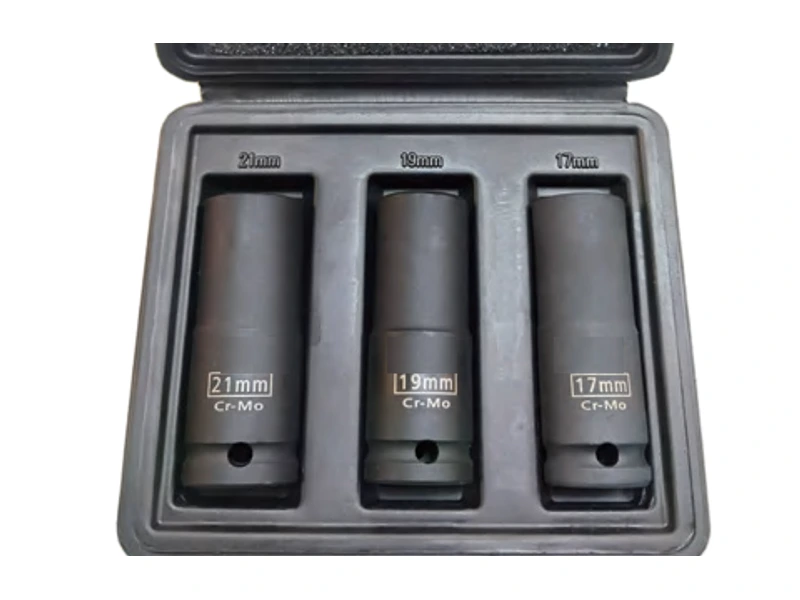
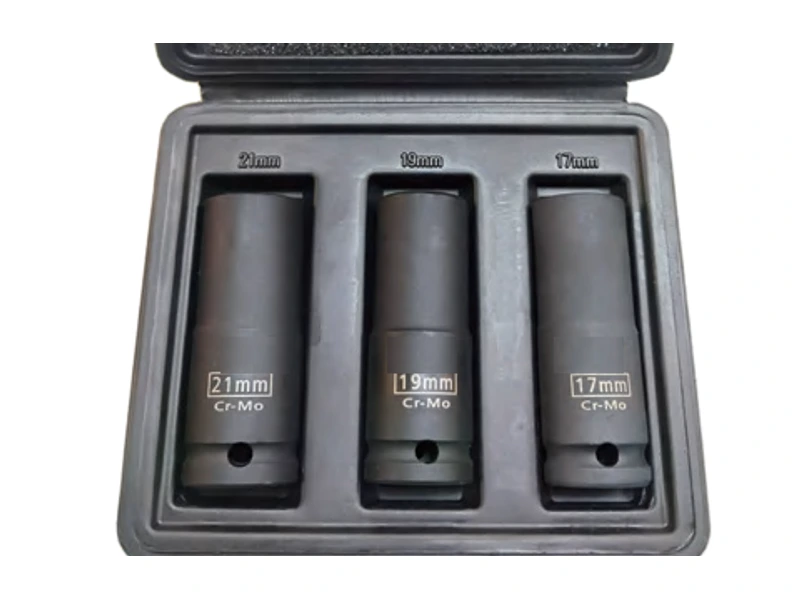
Three thin-wall deep impact sockets in an open case
Supplier catalogue photo of the listed three-piece thin-wall set.

Use these questions when reviewing a proposed thin-wall impact socket:

  • What fastener size does the socket fit?
  • What is the maximum outside diameter through the restricted opening?
  • Does the socket reach the fastener fully while clearing the wheel or nearby part?

That clearance check should happen before set-count discussions. Measure a representative assembly and compare the tightest passage with a sample socket. For a broader baseline on socket types, see impact sockets versus regular sockets.

Buyer summary

Check Buyer question Evidence to request
Fastener fit Does opening match the nut or bolt? Nominal size and sample fit
Outer clearance Does the body pass the wheel opening? Maximum outside diameter
Application Which vehicle or assembly sets the limit? Customer-side measurement

2. How does outside diameter affect wheel access?

A socket can match a lug nut and still fail at the wheel opening. The socket’s outer body must pass through the smallest nearby diameter, while the fastener opening must seat fully on the nut. Those are separate fit conditions. A small diameter difference may decide whether the tool reaches the fastener squarely or binds against a wheel face.
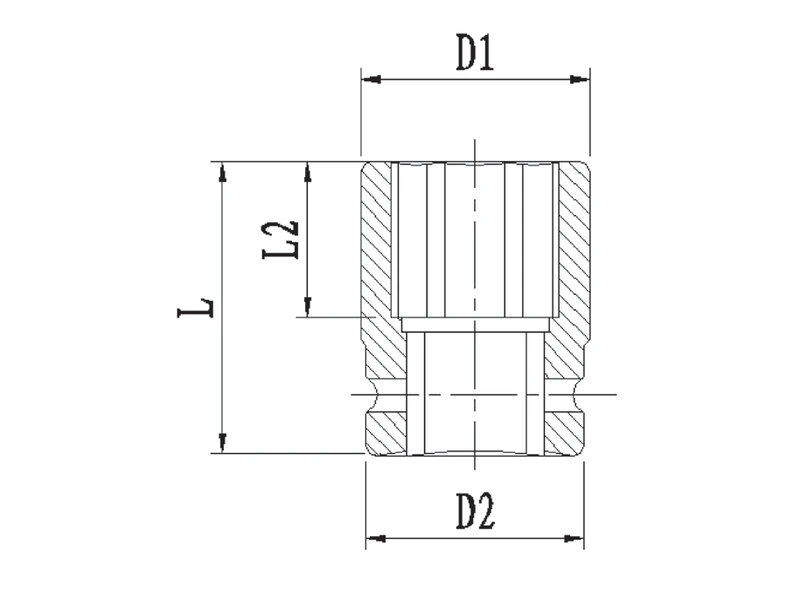
Socket section drawing with D1, D2, L and L2 dimension arrows
Catalogue section drawing accompanying the 1/2-inch socket tables.

Measure the actual access path rather than relying on a photo or a nominal wheel label. Check the entry opening, the narrowest point along the path, the depth of any recess, and room for the impact wrench or extension behind the socket. Wheel designs, trim packages, and aftermarket parts can change those dimensions. A dimension from one vehicle should not be treated as a universal clearance value.

  • Measure the narrowest opening with a caliper or suitable gauge.
  • Check whether the socket can stay aligned during engagement.
  • Confirm tool-body clearance around the drive end and the socket nose.

Here is the practical test. Push a sample through the tight point by hand before applying power. A thin-wall option should clear the surrounding wheel without sacrificing full nut engagement. Compare nominal size with the metric-to-standard socket conversion chart when your assortment uses both systems.

Buyer summary

Geometry What it controls How to verify
Opening size Fit across fastener flats Check nut size and profile
Outside diameter Passage through wheel opening Measure tightest path
Full length Reach and tool access Test on target assembly

3. Is thin-wall the same as a deep socket?

No. Wall profile and full length solve different access problems. Thin-wall construction can help a socket pass through a restricted opening. A deep socket adds length for recessed fasteners or exposed studs. Some catalogue products combine a deep form with a thin-wall description, but buyers should still verify each dimension independently.
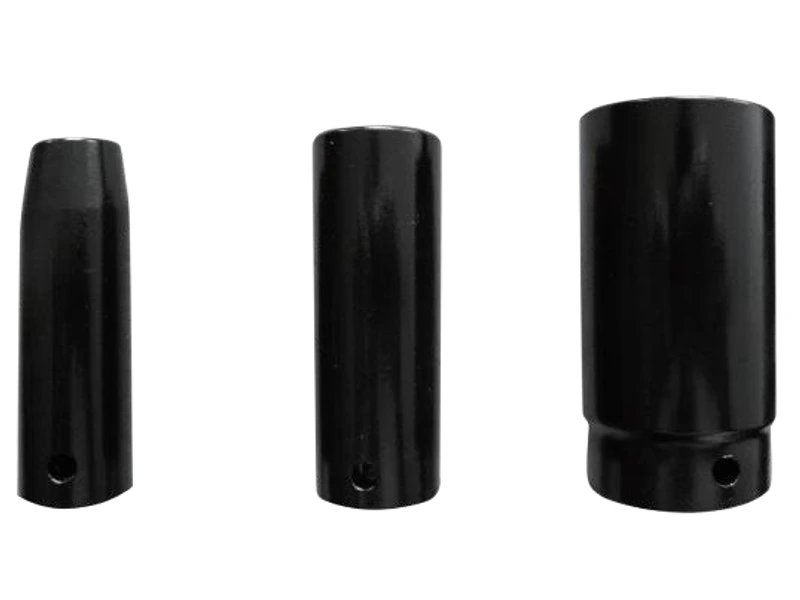
Three dark socket bodies with different stepped profiles
Supplier catalogue photo of socket body profiles beside the 1/2-inch deep-socket table.

A short thin-wall socket may clear the opening but stop before reaching a recessed nut. A deep socket may reach the nut yet have too much outside diameter for the wheel. An extension can add reach behind a socket, but it cannot make an oversized socket nose pass through a narrow opening. The fit path has to work from entry to full seating.

  • Select outside diameter for radial clearance.
  • Select length for axial reach and stud clearance.
  • Check drive connection and tool access as separate requirements.

This distinction keeps a catalogue label from doing too much work. Compare the listed body dimensions with the target vehicle. Buyers weighing length options can also use the deep socket versus shallow socket guide, then request a sample where the margin is tight.

Buyer summary

Feature Main purpose Does not establish
Thin-wall profile Smaller outside envelope Required reach length
Deep length Recess or stud access Clearance through a narrow opening
Extension bar Adds distance behind socket Smaller socket outside diameter

4. What does the catalogue example actually include?

The source catalogue visibly lists a “3PC 1/2-inch Drive Deep Impact Socket Set Thin Wall.” Its three sizes are 17, 19, and 21 mm, and the description includes a plastic case. This is a specific product-range example from the supplied catalogue, not a claim that every thin-wall set uses those sizes or that all three fit every wheel design.
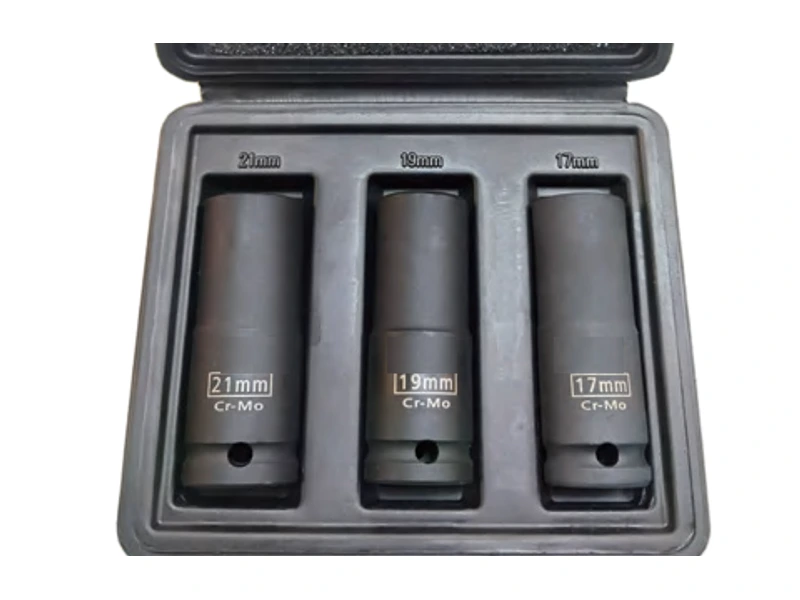
Three thin-wall deep impact sockets in an open case
Supplier catalogue photo of the listed three-piece thin-wall set.

For purchasing, confirm current set contents, packaging, and markings against the supplier’s quotation and approved sample. If a product revision changes dimensions, verify fit again on the target application before approving a reorder. Keep that check tied to the same drawing revision used for the sample.

  • Treat 17, 19, and 21 mm as the listed sizes for this example only.
  • Ask whether each socket’s outside diameter is controlled and measured.
  • Confirm the case, labeling, and units on the current quotation.

Use the sample as a starting point, then test your own application. A size list alone cannot prove clearance. Buyers comparing the complete range can review socket set manufacturer selection points.

Buyer summary

Catalogue detail Example value Scope
Drive 1/2 inch Listed thin-wall set
Sizes 17, 19, 21 mm Three-piece example only
Package Plastic case Confirm current supply details

5. How should a buyer test a thin-wall socket sample?

A hand fit check catches obvious interference, but a useful approval covers the whole assembly. Use a representative nut and wheel, confirm the socket reaches its intended seating depth, and inspect contact around the opening. Then connect the specified impact wrench or drive tool and confirm retention. Do not run a powered test until fit, condition, and safe operating instructions have been reviewed.
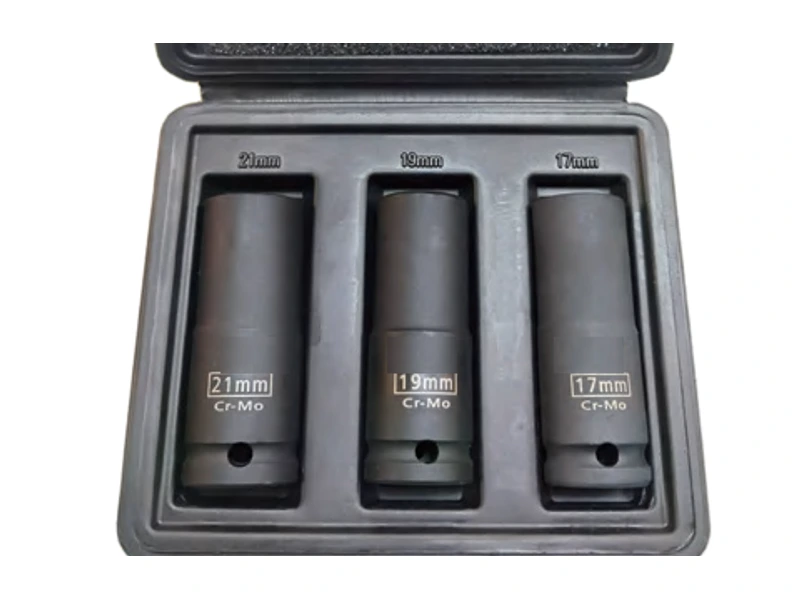
Three thin-wall deep impact sockets in an open case
Supplier catalogue photo of the listed three-piece thin-wall set.

A test record can include vehicle or fixture identification, fastener size, minimum clearance, socket outside diameter, full length, drive type, and result. If several wheel designs share one SKU, test the tightest known case. A prototype that clears one wheel does not automatically validate all fitments.

  • Record the assembly and fastener used.
  • Check passage, seating, alignment, and drive retention.
  • Keep a photo or dimensional record with the approved sample.

A repeatable check protects both the product page and the warehouse. If the socket binds or seats at an angle, stop and revise the size or profile. For drive interface questions, compare pin-detent and friction-ring retention.

Buyer summary

Test stage Pass condition Record
Passage Socket enters without wheel contact Minimum opening and OD
Seating Socket reaches full fastener engagement Fastener and depth
Connection Socket stays attached to intended anvil Retention style

6. Which measurements belong in an RFQ?

A thin-wall RFQ should make the application measurable. “Thin-wall, 19 mm” describes too little: it gives a nominal opening size but leaves outside diameter, length, drive, and retention unspecified. A buyer may receive a product that fits the nut yet fails the wheel opening. State the full combination and ask the supplier to confirm the drawing revision used for the quote.
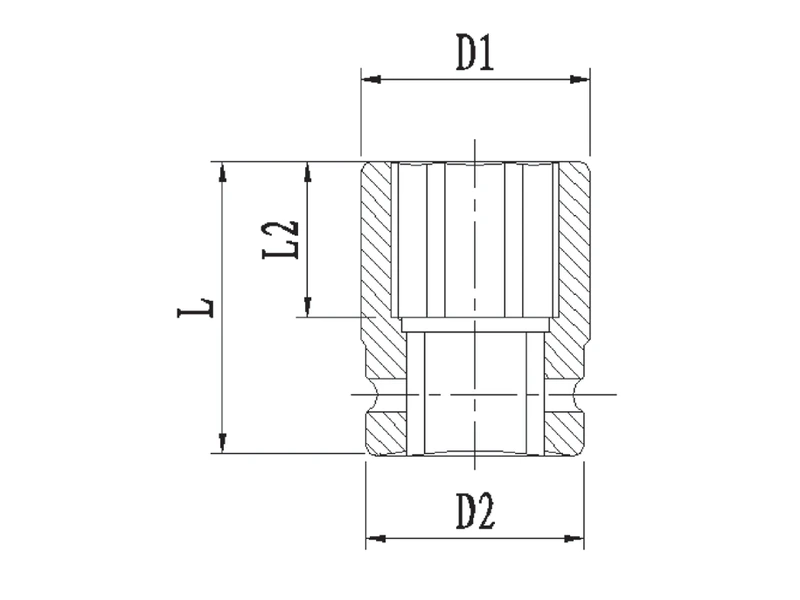
Socket section drawing with D1, D2, L and L2 dimension arrows
Catalogue section drawing accompanying the 1/2-inch socket tables.

For a repeat order, identify whether dimensions are targets, maximum limits, or reference values. A nominal outside diameter without tolerance can leave uncertainty at a narrow opening. If a customer provides a maximum clearance, preserve that requirement in the approved drawing or inspection note. Avoid choosing a tolerance by guesswork; the design owner must set fit limits.

  • Drive size and anvil retention requirement.
  • Fastener system and opening size.
  • Maximum outside diameter, full length, and tolerance status.
  • Sample quantity, drawing revision, and approval method.

Put the limit in writing before price comparison. Then suppliers can quote the same geometry. Browse related socket drive size selection guidance when building the RFQ vocabulary.

Buyer summary

RFQ field Example format Why it matters
Fastener size 19 mm, 6-point Defines opening fit
Drive 1/2 inch, stated retention Defines tool connection
Envelope Max OD and length with units Defines clearance and reach

7. How do profile and point count affect the choice?

A thin-wall description says nothing by itself about the fastener’s point count. A six-point socket suits a six-sided fastener profile; a twelve-point opening is intended for twelve-point fasteners. Buyers should match the socket opening to the actual nut geometry, then check wall clearance. Do not assume a reduced outside diameter changes the fastener interface.
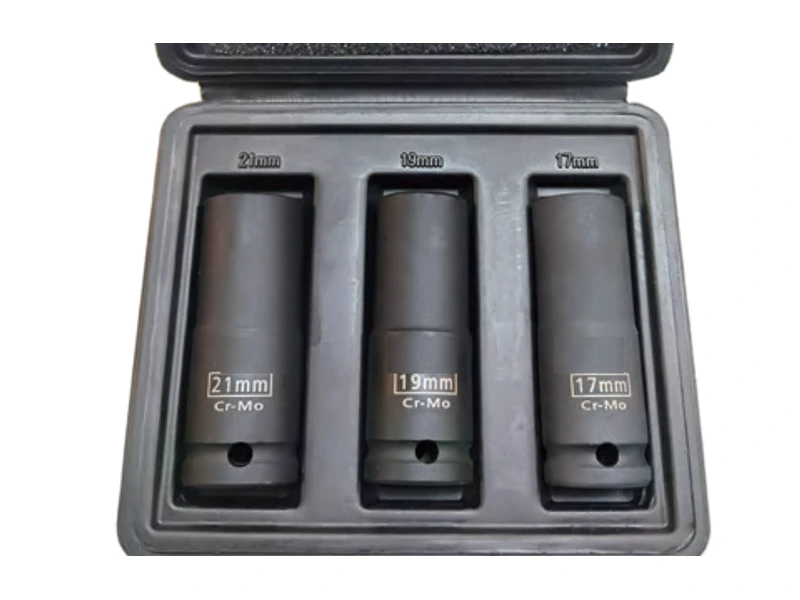
Three thin-wall deep impact sockets in an open case
Supplier catalogue photo of the listed three-piece thin-wall set.

For wheel service, a distributor may need coverage across different vehicles and nut profiles. That assortment decision should follow customer demand, fitment records, and application samples. Adding sizes “for completeness” can increase inventory without addressing the narrowest real-world access point. Retain clear size marking so warehouse and service staff can identify the correct piece.

  • Confirm fastener point count and nominal size.
  • Confirm that the opening reaches the flats without rocking.
  • Check mark legibility after finish and packaging decisions.

Match the drive end and working end independently. See six-point versus twelve-point sockets for opening-profile selection, then have the application owner approve the thin-wall body dimensions.

Buyer summary

Selection item Confirm with Approval evidence
Point count Fastener geometry Sample engagement
Size system Customer specification Metric or SAE listing
Wall profile Wheel clearance Measured sample fit

8. What should quality inspection verify?

Incoming inspection should verify dimensions tied to fit, along with visual and functional condition. For thin-wall products, outside diameter deserves special attention because that dimension controls passage through a restrictive opening. Check the fastener size and drive interface too. A socket that looks slim in a photograph may still exceed a customer’s measured limit.
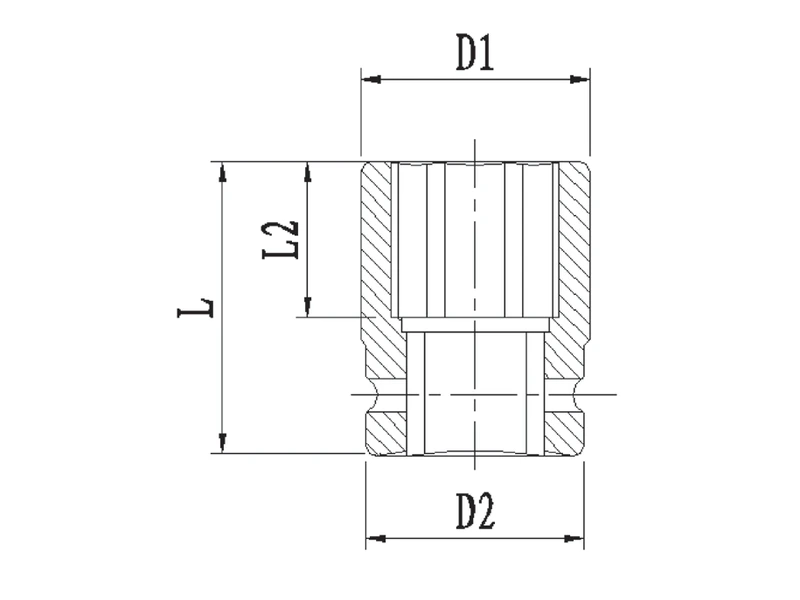
Socket section drawing with D1, D2, L and L2 dimension arrows
Catalogue section drawing accompanying the 1/2-inch socket tables.

Inspection frequency and acceptance limits should come from the purchase specification and risk level. A first-article review can measure all listed pieces. Later lots may use an agreed sampling plan, with critical fit dimensions retained as acceptance criteria. This article does not set universal tolerances or certify a supplier’s quality system.

  • Measure outside diameter at the specified location.
  • Verify full length, opening size, and drive interface.
  • Review markings, finish condition, case configuration, and drawing revision.

Keep the acceptance record tied to the approved drawing. If an incoming result falls outside the agreed limit, quarantine the affected lot pending disposition. See the impact socket range while defining product-specific acceptance evidence.

Buyer summary

Inspection point Method to agree Buyer record
Outer diameter Caliper or suitable gauge Result and location
Opening and drive Gauge or sample mating part Fit status
Identity Marking and revision review Lot and drawing number

9. How can a distributor avoid assortment gaps?

A thin-wall set may solve one access problem while leaving customers short on standard sockets, extensions, or adjacent sizes. Start with documented vehicle demand and the required fastener sizes. Then decide whether a three-piece specialist set belongs beside broader 1/2-inch drive coverage. Do not expand the set based on a single customer's fitment without confirming demand across the sales channel.
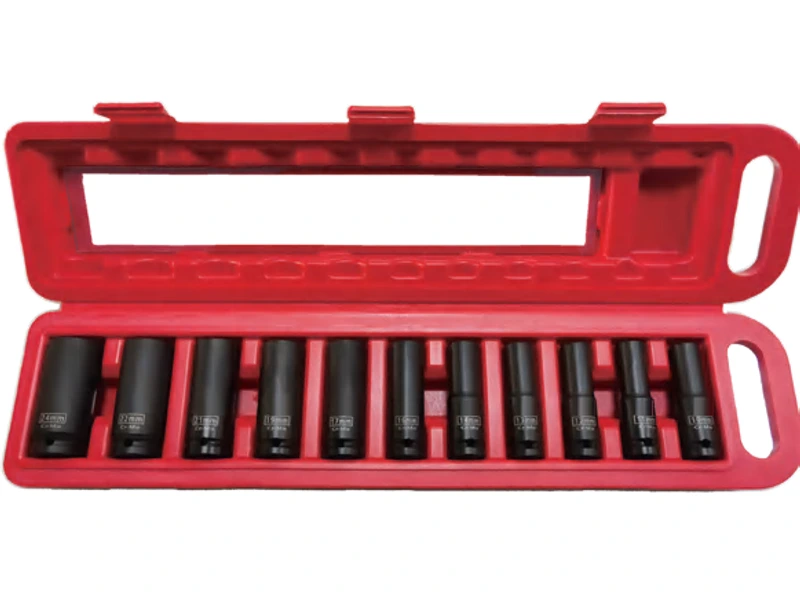
Metric deep impact sockets in an open red case
Supplier catalogue photo of a separate metric deep-socket assortment.

The supplied three-size example can support a focused SKU discussion. It does not establish a complete wheel-service program. A distributor should check metric and SAE demand separately, determine whether individual replacement pieces are available, and keep packaging and size marking consistent with shelf labels.

  • Compare demand by size system and customer segment.
  • Separate specialist clearance products from general-purpose ranges.
  • Confirm replenishment, replacement-piece, and packaging details.

Use sales history to set the range, then use samples to close fit risk. A mechanic tool set guide for distributors can help place this specialist set inside a wider assortment plan.

Buyer summary

Assortment decision Evidence Avoid
Core sizes Sales and service demand Guessing from one vehicle
Specialist set Clearance need and sample test Treating it as universal
Replenishment Current supply confirmation Assuming every size sells loose

10. What is the safest approval rule before ordering?

Approve thin-wall impact sockets against a defined fastener and a measured access path. The outside diameter must clear the tightest opening, the socket must seat fully, and the drive must match the intended impact tool. Product names and photos are useful for discovery, but they cannot replace dimensions and application testing.
Three thin-wall deep impact sockets in an open case
Supplier catalogue photo of the listed three-piece thin-wall set.

For the listed catalogue example, the 1/2-inch drive set contains 17, 19, and 21 mm sockets. Treat those values as a catalogue-specific configuration. Confirm current drawings, tolerances, sample fit, package details, and marking before a purchase order. If one wheel design fails the clearance test, define a different approved option rather than stretching the claim across all vehicles.

  • Set a written maximum outside diameter.
  • Approve a sample on the tightest target assembly.
  • Tie the purchase order to the accepted drawing and configuration.

Make fit approval a documented gate, not a catalog assumption. That gives engineering, procurement, and sales one record to use when a replacement order arrives.

Q1: What makes an impact socket thin-wall?

Its outside profile is reduced for access through a restricted opening. Exact dimensions depend on the product drawing.

Q2: Does thin-wall mean deep?

No. Wall profile controls radial clearance; length controls reach and stud access.

Q3: Which sizes appear in the supplied catalogue example?

The listed three-piece 1/2-inch drive example includes 17, 19, and 21 mm sockets.

Q4: Can one thin-wall socket fit every wheel?

No. Check each relevant wheel opening, fastener profile, and seating condition.

Q5: What should a buyer request before ordering?

Request a current drawing with outside diameter and length, then approve a sample on the target assembly.

Looking for a reliable mechanic tools manufacturer in China?

If you are sourcing hand tools, socket tools, automotive repair tools, mechanic tool sets or OEM private label tools, contact KOLARWIN Tools for factory-direct quotation, customization support and product consultation.


Choosing between thin-wall and standard impact sockets comes down to the available clearance around a fastener. A standard socket may fit the nut yet fail to pass through a narrow wheel opening; a thin-wall profile can help where its measured outside diameter clears that path. Buyers should compare both forms on the target assembly, then confirm reach and full fastener engagement. This guide uses one clearly listed catalogue example and keeps its specifications limited to that set.

1. What does “thin-wall” mean on an impact socket?

A thin-wall socket has a reduced outside profile around its working end so its body can enter a tighter opening. “Thin-wall” describes clearance geometry; it does not identify a universal wall thickness or performance class. A buyer should compare outer diameter, opening size, socket depth, and drive before approving a range. A 19 mm fastener opening can need more than a 19 mm clearance because the socket’s outside body surrounds the fastener.

Three thin-wall deep impact sockets in an open case
Supplier catalogue photo of the listed three-piece thin-wall set.

Use these questions when reviewing a proposed thin-wall impact socket:

That clearance check should happen before set-count discussions. Measure a representative assembly and compare the tightest passage with a sample socket. For a broader baseline on socket types, see impact sockets versus regular sockets.

Buyer summary

Check Buyer question Evidence to request
Fastener fit Does opening match the nut or bolt? Nominal size and sample fit
Outer clearance Does the body pass the wheel opening? Maximum outside diameter
Application Which vehicle or assembly sets the limit? Customer-side measurement

2. How does outside diameter affect wheel access?

A socket can match a lug nut and still fail at the wheel opening. The socket’s outer body must pass through the smallest nearby diameter, while the fastener opening must seat fully on the nut. Those are separate fit conditions. A small diameter difference may decide whether the tool reaches the fastener squarely or binds against a wheel face.

Socket section drawing with D1, D2, L and L2 dimension arrows
Catalogue section drawing accompanying the 1/2-inch socket tables.

Measure the actual access path rather than relying on a photo or a nominal wheel label. Check the entry opening, the narrowest point along the path, the depth of any recess, and room for the impact wrench or extension behind the socket. Wheel designs, trim packages, and aftermarket parts can change those dimensions. A dimension from one vehicle should not be treated as a universal clearance value.

Here is the practical test. Push a sample through the tight point by hand before applying power. A thin-wall option should clear the surrounding wheel without sacrificing full nut engagement. Compare nominal size with the metric-to-standard socket conversion chart when your assortment uses both systems.

Buyer summary

Geometry What it controls How to verify
Opening size Fit across fastener flats Check nut size and profile
Outside diameter Passage through wheel opening Measure tightest path
Full length Reach and tool access Test on target assembly

3. Is thin-wall the same as a deep socket?

No. Wall profile and full length solve different access problems. Thin-wall construction can help a socket pass through a restricted opening. A deep socket adds length for recessed fasteners or exposed studs. Some catalogue products combine a deep form with a thin-wall description, but buyers should still verify each dimension independently.

Three dark socket bodies with different stepped profiles
Supplier catalogue photo of socket body profiles beside the 1/2-inch deep-socket table.

A short thin-wall socket may clear the opening but stop before reaching a recessed nut. A deep socket may reach the nut yet have too much outside diameter for the wheel. An extension can add reach behind a socket, but it cannot make an oversized socket nose pass through a narrow opening. The fit path has to work from entry to full seating.

This distinction keeps a catalogue label from doing too much work. Compare the listed body dimensions with the target vehicle. Buyers weighing length options can also use the deep socket versus shallow socket guide, then request a sample where the margin is tight.

Buyer summary

Feature Main purpose Does not establish
Thin-wall profile Smaller outside envelope Required reach length
Deep length Recess or stud access Clearance through a narrow opening
Extension bar Adds distance behind socket Smaller socket outside diameter

4. What does the catalogue example actually include?

The source catalogue visibly lists a “3PC 1/2-inch Drive Deep Impact Socket Set Thin Wall.” Its three sizes are 17, 19, and 21 mm, and the description includes a plastic case. This is a specific product-range example from the supplied catalogue, not a claim that every thin-wall set uses those sizes or that all three fit every wheel design.

Three thin-wall deep impact sockets in an open case
Supplier catalogue photo of the listed three-piece thin-wall set.

For purchasing, confirm current set contents, packaging, and markings against the supplier’s quotation and approved sample. If a product revision changes dimensions, verify fit again on the target application before approving a reorder. Keep that check tied to the same drawing revision used for the sample.

Use the sample as a starting point, then test your own application. A size list alone cannot prove clearance. Buyers comparing the complete range can review socket set manufacturer selection points.

Buyer summary

Catalogue detail Example value Scope
Drive 1/2 inch Listed thin-wall set
Sizes 17, 19, 21 mm Three-piece example only
Package Plastic case Confirm current supply details

5. How should a buyer test a thin-wall socket sample?

A hand fit check catches obvious interference, but a useful approval covers the whole assembly. Use a representative nut and wheel, confirm the socket reaches its intended seating depth, and inspect contact around the opening. Then connect the specified impact wrench or drive tool and confirm retention. Do not run a powered test until fit, condition, and safe operating instructions have been reviewed.

Three thin-wall deep impact sockets in an open case
Supplier catalogue photo of the listed three-piece thin-wall set.

A test record can include vehicle or fixture identification, fastener size, minimum clearance, socket outside diameter, full length, drive type, and result. If several wheel designs share one SKU, test the tightest known case. A prototype that clears one wheel does not automatically validate all fitments.

A repeatable check protects both the product page and the warehouse. If the socket binds or seats at an angle, stop and revise the size or profile. For drive interface questions, compare pin-detent and friction-ring retention.

Buyer summary

Test stage Pass condition Record
Passage Socket enters without wheel contact Minimum opening and OD
Seating Socket reaches full fastener engagement Fastener and depth
Connection Socket stays attached to intended anvil Retention style

6. Which measurements belong in an RFQ?

A thin-wall RFQ should make the application measurable. “Thin-wall, 19 mm” describes too little: it gives a nominal opening size but leaves outside diameter, length, drive, and retention unspecified. A buyer may receive a product that fits the nut yet fails the wheel opening. State the full combination and ask the supplier to confirm the drawing revision used for the quote.

Socket section drawing with D1, D2, L and L2 dimension arrows
Catalogue section drawing accompanying the 1/2-inch socket tables.

For a repeat order, identify whether dimensions are targets, maximum limits, or reference values. A nominal outside diameter without tolerance can leave uncertainty at a narrow opening. If a customer provides a maximum clearance, preserve that requirement in the approved drawing or inspection note. Avoid choosing a tolerance by guesswork; the design owner must set fit limits.

Put the limit in writing before price comparison. Then suppliers can quote the same geometry. Browse related socket drive size selection guidance when building the RFQ vocabulary.

Buyer summary

RFQ field Example format Why it matters
Fastener size 19 mm, 6-point Defines opening fit
Drive 1/2 inch, stated retention Defines tool connection
Envelope Max OD and length with units Defines clearance and reach

7. How do profile and point count affect the choice?

A thin-wall description says nothing by itself about the fastener’s point count. A six-point socket suits a six-sided fastener profile; a twelve-point opening is intended for twelve-point fasteners. Buyers should match the socket opening to the actual nut geometry, then check wall clearance. Do not assume a reduced outside diameter changes the fastener interface.

Three thin-wall deep impact sockets in an open case
Supplier catalogue photo of the listed three-piece thin-wall set.

For wheel service, a distributor may need coverage across different vehicles and nut profiles. That assortment decision should follow customer demand, fitment records, and application samples. Adding sizes “for completeness” can increase inventory without addressing the narrowest real-world access point. Retain clear size marking so warehouse and service staff can identify the correct piece.

Match the drive end and working end independently. See six-point versus twelve-point sockets for opening-profile selection, then have the application owner approve the thin-wall body dimensions.

Buyer summary

Selection item Confirm with Approval evidence
Point count Fastener geometry Sample engagement
Size system Customer specification Metric or SAE listing
Wall profile Wheel clearance Measured sample fit

8. What should quality inspection verify?

Incoming inspection should verify dimensions tied to fit, along with visual and functional condition. For thin-wall products, outside diameter deserves special attention because that dimension controls passage through a restrictive opening. Check the fastener size and drive interface too. A socket that looks slim in a photograph may still exceed a customer’s measured limit.

Socket section drawing with D1, D2, L and L2 dimension arrows
Catalogue section drawing accompanying the 1/2-inch socket tables.

Inspection frequency and acceptance limits should come from the purchase specification and risk level. A first-article review can measure all listed pieces. Later lots may use an agreed sampling plan, with critical fit dimensions retained as acceptance criteria. This article does not set universal tolerances or certify a supplier’s quality system.

Keep the acceptance record tied to the approved drawing. If an incoming result falls outside the agreed limit, quarantine the affected lot pending disposition. See the impact socket range while defining product-specific acceptance evidence.

Buyer summary

Inspection point Method to agree Buyer record
Outer diameter Caliper or suitable gauge Result and location
Opening and drive Gauge or sample mating part Fit status
Identity Marking and revision review Lot and drawing number

9. How can a distributor avoid assortment gaps?

A thin-wall set may solve one access problem while leaving customers short on standard sockets, extensions, or adjacent sizes. Start with documented vehicle demand and the required fastener sizes. Then decide whether a three-piece specialist set belongs beside broader 1/2-inch drive coverage. Do not expand the set based on a single customer's fitment without confirming demand across the sales channel.

Metric deep impact sockets in an open red case
Supplier catalogue photo of a separate metric deep-socket assortment.

The supplied three-size example can support a focused SKU discussion. It does not establish a complete wheel-service program. A distributor should check metric and SAE demand separately, determine whether individual replacement pieces are available, and keep packaging and size marking consistent with shelf labels.

Use sales history to set the range, then use samples to close fit risk. A mechanic tool set guide for distributors can help place this specialist set inside a wider assortment plan.

Buyer summary

Assortment decision Evidence Avoid
Core sizes Sales and service demand Guessing from one vehicle
Specialist set Clearance need and sample test Treating it as universal
Replenishment Current supply confirmation Assuming every size sells loose

10. What is the safest approval rule before ordering?

Approve thin-wall impact sockets against a defined fastener and a measured access path. The outside diameter must clear the tightest opening, the socket must seat fully, and the drive must match the intended impact tool. Product names and photos are useful for discovery, but they cannot replace dimensions and application testing.

Three thin-wall deep impact sockets in an open case
Supplier catalogue photo of the listed three-piece thin-wall set.

For the listed catalogue example, the 1/2-inch drive set contains 17, 19, and 21 mm sockets. Treat those values as a catalogue-specific configuration. Confirm current drawings, tolerances, sample fit, package details, and marking before a purchase order. If one wheel design fails the clearance test, define a different approved option rather than stretching the claim across all vehicles.

Make fit approval a documented gate, not a catalog assumption. That gives engineering, procurement, and sales one record to use when a replacement order arrives.

Q1: What makes an impact socket thin-wall?

Its outside profile is reduced for access through a restricted opening. Exact dimensions depend on the product drawing.

Q2: Does thin-wall mean deep?

No. Wall profile controls radial clearance; length controls reach and stud access.

Q3: Which sizes appear in the supplied catalogue example?

The listed three-piece 1/2-inch drive example includes 17, 19, and 21 mm sockets.

Q4: Can one thin-wall socket fit every wheel?

No. Check each relevant wheel opening, fastener profile, and seating condition.

Q5: What should a buyer request before ordering?

Request a current drawing with outside diameter and length, then approve a sample on the target assembly.

Why Partner with Kolarwin Tools?

Factory-Direct Pricing Skip the middleman — access competitive wholesale prices and protect your margins
Private Label & OEM Ready Your brand, our expertise — full customization from logo to packaging
Fast Global Shipping Reliable delivery to 60+ countries with full export documentation support
Low MOQ, High Flexibility Start small, scale fast — flexible order quantities to fit your business
Dedicated B2B Support One-on-one account management from quote to delivery, every time

Get Your Free Quote in 24 Hours

Tell us your sourcing needs — we'll respond with a tailored quote, product specs, and the best pricing for your market. No commitment required.

Chat on WhatsApp Email Us Directly