
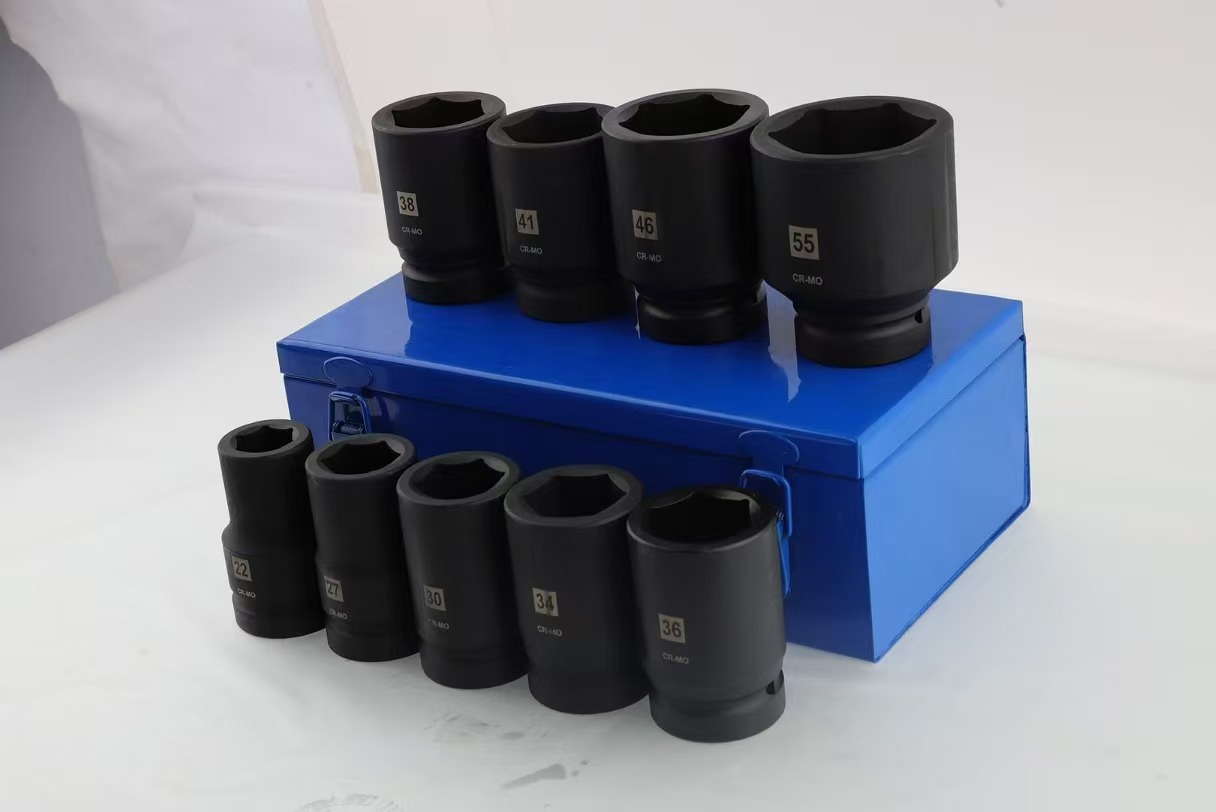
Need OEM supplier support for this product type?
Contact KOLARWIN Tools for OEM mechanic tools, private label packaging, wholesale quotation and product range support. This gives overseas buyers a clear path from article reading to supplier discussion.
For metric to standard socket conversion, divide millimeters by 25.4 or multiply inches by 25.4. Use these charts to compare nominal dimensions, then select the specified socket size. Here, “standard” means SAE inch sizes; it does not describe socket depth.
Download the printable socket conversion chart for workshop use or purchasing reviews.
1. Metric to Standard Socket Conversion Chart
Compare nominal sizes before selecting a socket. The metric column gives millimeters across a nominal fastener opening. The SAE column gives an inch fraction.
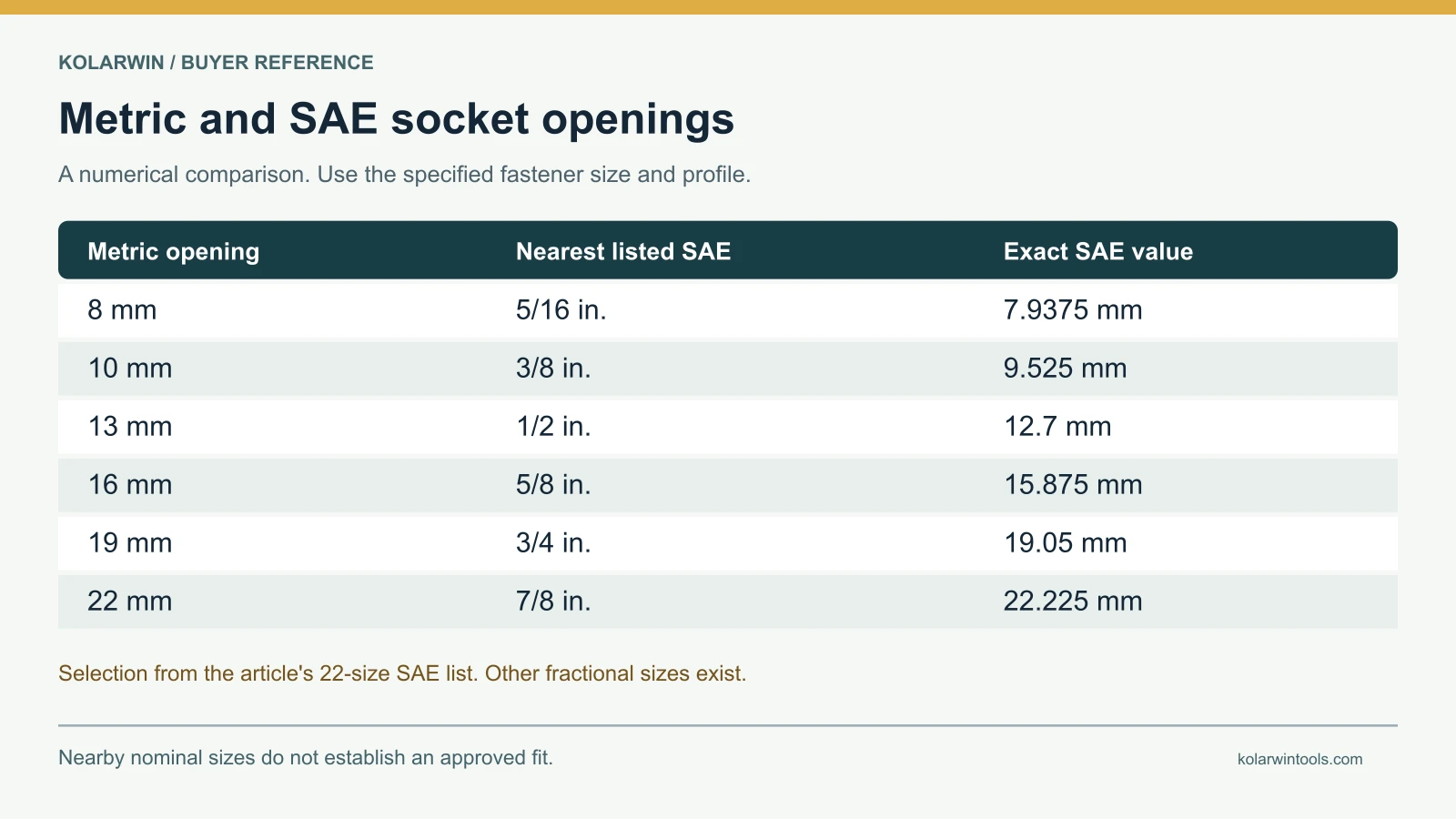
This socket size chart compares metric and standard openings against 22 listed SAE sizes. “Nearest” means nearest within that list, not every fractional size sold.
Metric-to-SAE pairing at a glance
| Metric opening (mm) | Nearest listed SAE (in.) | Exact SAE value (mm) | SAE minus metric (mm) |
|---|---|---|---|
| 4 | 5/32 | 3.96875 | -0.03125 |
| 5 | 3/16 | 4.7625 | -0.2375 |
| 6 | 1/4 | 6.35 | +0.35 |
| 7 | 9/32 | 7.14375 | +0.14375 |
| 8 | 5/16 | 7.9375 | -0.0625 |
| 9 | 11/32 | 8.73125 | -0.26875 |
| 10 | 3/8 | 9.525 | -0.475 |
| 11 | 7/16 | 11.1125 | +0.1125 |
| 12 | 1/2 | 12.7 | +0.7 |
| 13 | 1/2 | 12.7 | -0.3 |
| 14 | 9/16 | 14.2875 | +0.2875 |
| 15 | 9/16 | 14.2875 | -0.7125 |
| 16 | 5/8 | 15.875 | -0.125 |
| 17 | 11/16 | 17.4625 | +0.4625 |
| 18 | 11/16 | 17.4625 | -0.5375 |
| 19 | 3/4 | 19.05 | +0.05 |
| 20 | 13/16 | 20.6375 | +0.6375 |
| 21 | 13/16 | 20.6375 | -0.3625 |
| 22 | 7/8 | 22.225 | +0.225 |
| 23 | 7/8 | 22.225 | -0.775 |
| 24 | 15/16 | 23.8125 | -0.1875 |
| 25 | 1 | 25.4 | +0.4 |
| 26 | 1 | 25.4 | -0.6 |
| 27 | 1-1/16 | 26.9875 | -0.0125 |
| 28 | 1-1/8 | 28.575 | +0.575 |
| 29 | 1-1/8 | 28.575 | -0.425 |
| 30 | 1-3/16 | 30.1625 | +0.1625 |
| 31 | 1-1/4 | 31.75 | +0.75 |
| 32 | 1-1/4 | 31.75 | -0.25 |
Positive values mean a larger SAE nominal size; negative values mean smaller. Differences represent neither fit clearances nor manufacturing tolerances. Other fractional sizes exist. For example, 13/32 inch equals 10.31875 mm, closer than 3/8 inch for a 10 mm comparison. It falls outside this chart’s selected list.
- Read opening size separately from drive square size.
- Treat each fraction as a nominal label with a calculated millimeter value.
- Check fastener condition and use the specified size and profile.
- Keep exact metric and SAE sockets available for repeat service work.
Use these values when building a socket tools purchasing list. Mark recurring sizes from your equipment records, then keep their metric or SAE identities throughout ordering.
2. SAE Socket Size Chart: Exact Millimeter Values
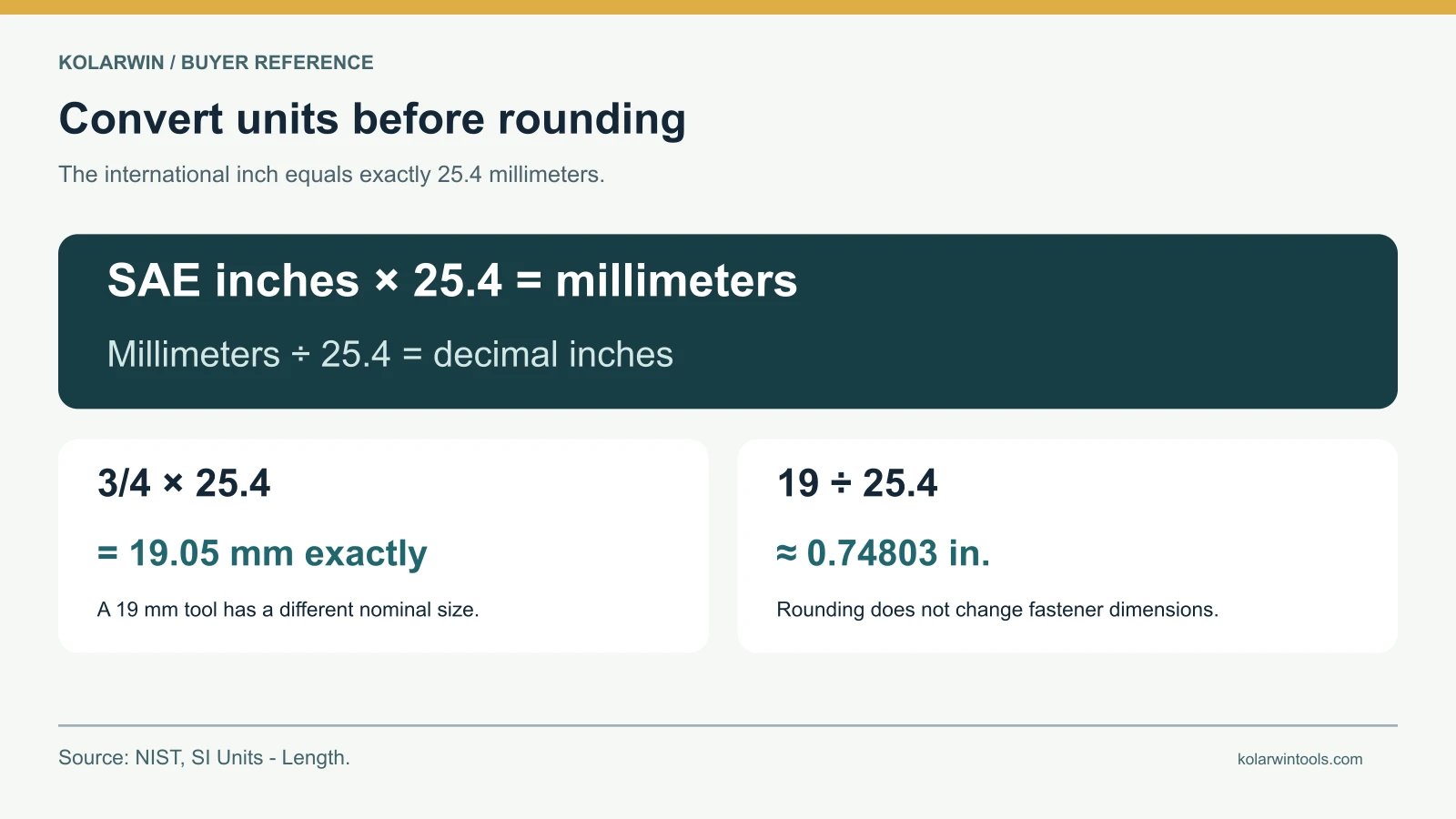
Keep the formula visible whenever a socket label crosses measurement systems. One inch equals exactly 25.4 millimeters, so metric-to-inch conversion divides by 25.4. Inch-to-millimeter conversion multiplies by 25.4. NIST records this relationship as an exact conversion in its length unit reference.
For example, 3/4 inch × 25.4 equals 19.05 mm. A 19 mm label differs from 3/4 inch by 0.05 mm. That difference describes nominal dimensions, not clearance between actual manufactured parts.
- Multiply an inch fraction by 25.4 for an exact millimeter value.
- Divide millimeters by 25.4 for an inch result.
- Preserve fraction labels during ordering and inventory entry.
- Compare candidate values before testing a socket on hardware.
Round displayed values only for quick scanning. Keep exact calculations in purchasing records whenever a drawing, maintenance procedure, or replacement part controls fit.
SAE values calculated from exact inch fractions
| SAE opening (in.) | Exact value (mm) | Nearest whole mm* |
|---|---|---|
| 5/32 | 3.96875 | 4 |
| 3/16 | 4.7625 | 5 |
| 7/32 | 5.55625 | 6 |
| 1/4 | 6.35 | 6 |
| 9/32 | 7.14375 | 7 |
| 5/16 | 7.9375 | 8 |
| 11/32 | 8.73125 | 9 |
| 3/8 | 9.525 | 10 |
| 7/16 | 11.1125 | 11 |
| 1/2 | 12.7 | 13 |
| 9/16 | 14.2875 | 14 |
| 5/8 | 15.875 | 16 |
| 11/16 | 17.4625 | 17 |
| 3/4 | 19.05 | 19 |
| 13/16 | 20.6375 | 21 |
| 7/8 | 22.225 | 22 |
| 15/16 | 23.8125 | 24 |
| 1 | 25.4 | 25 |
| 1-1/16 | 26.9875 | 27 |
| 1-1/8 | 28.575 | 29 |
| 1-3/16 | 30.1625 | 30 |
| 1-1/4 | 31.75 | 32 |
*Rounded half up for numerical comparison only. This column does not identify an interchangeable metric socket.
3. 1/4, 3/8, and 1/2 Drive Socket Size Chart
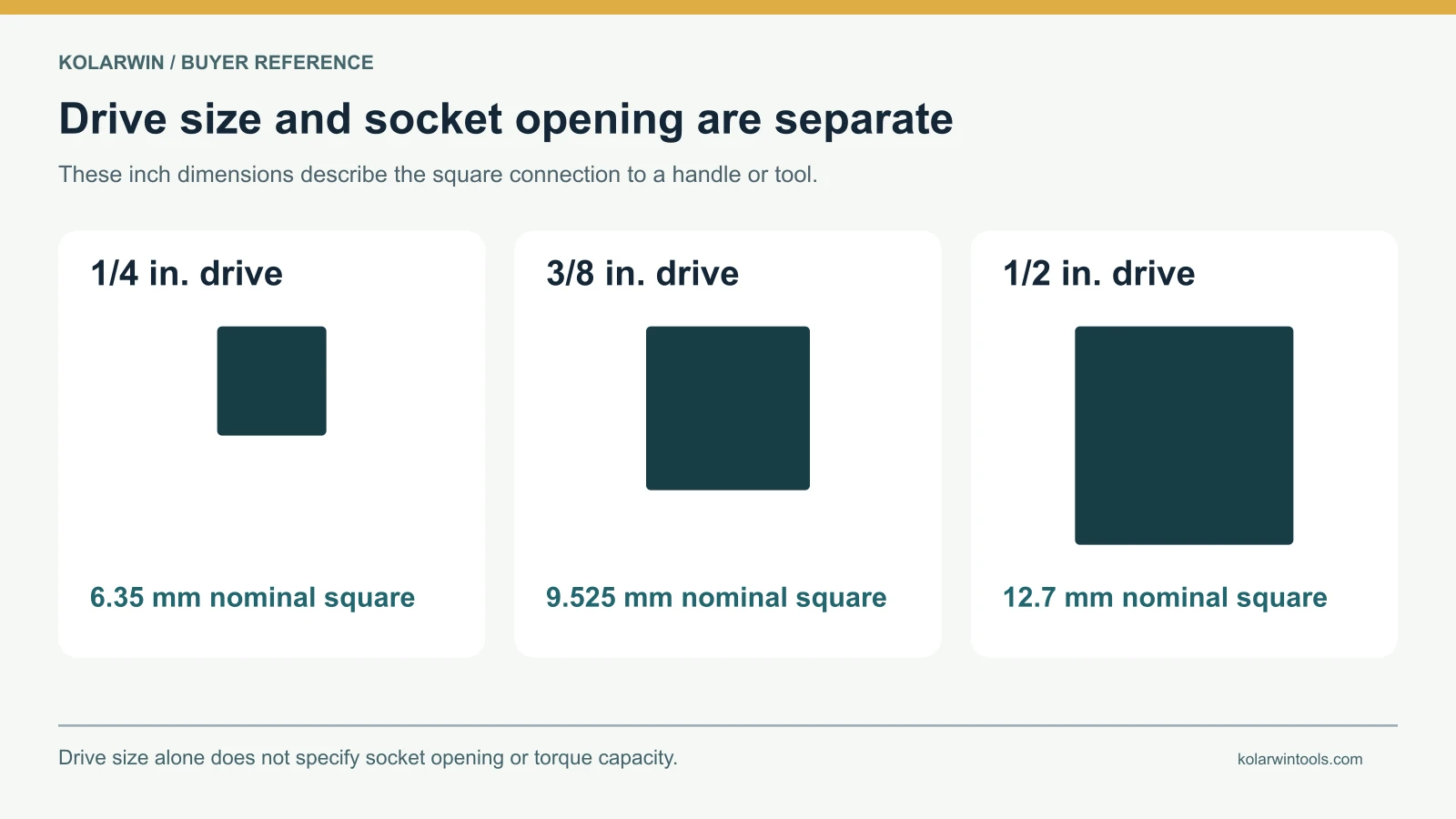
Separate square drive dimensions from hex opening dimensions before comparing socket set sizes. A 3/8-inch drive × 12 mm socket has a 3/8-inch square connection and a 12 mm fastener opening. Either dimension can appear in a product title, so a single “3/8 socket” label leaves a purchasing gap.
Drive size describes the connection with a ratchet, extension, breaker bar, or impact wrench. Opening size describes contact around a nut or bolt head. A 1/2-inch drive can carry many metric or SAE openings across a manufacturer’s range.
- Compare 1/4-inch drive options when access and smaller openings lead selection.
- Review 3/8-inch drive options for a general-service kit.
- Consider 1/2-inch drive options when a documented application calls for them.
- Confirm each set’s actual range instead of assuming an industry-wide standard.
The following ranges are illustrative RFQ examples, not industry limits or confirmed stock. Drive size alone gives no allowable torque value. A socket set request should state both dimensions in every line item.
Three drive categories and illustrative opening ranges
| Drive square | Nominal square (mm) | Illustrative metric openings | Illustrative SAE openings |
|---|---|---|---|
| 1/4 in. | 6.35 | 4–14 mm | 5/32–9/16 in. |
| 3/8 in. | 9.525 | 6–24 mm | 1/4–1 in. |
| 1/2 in. | 12.7 | 10–32 mm | 3/8–1-1/4 in. |
Ranges overlap and vary between product lines. Confirm individual sizes, tool ratings, and accessories with your supplier.
4. Which Metric and SAE Sizes Are Closest?
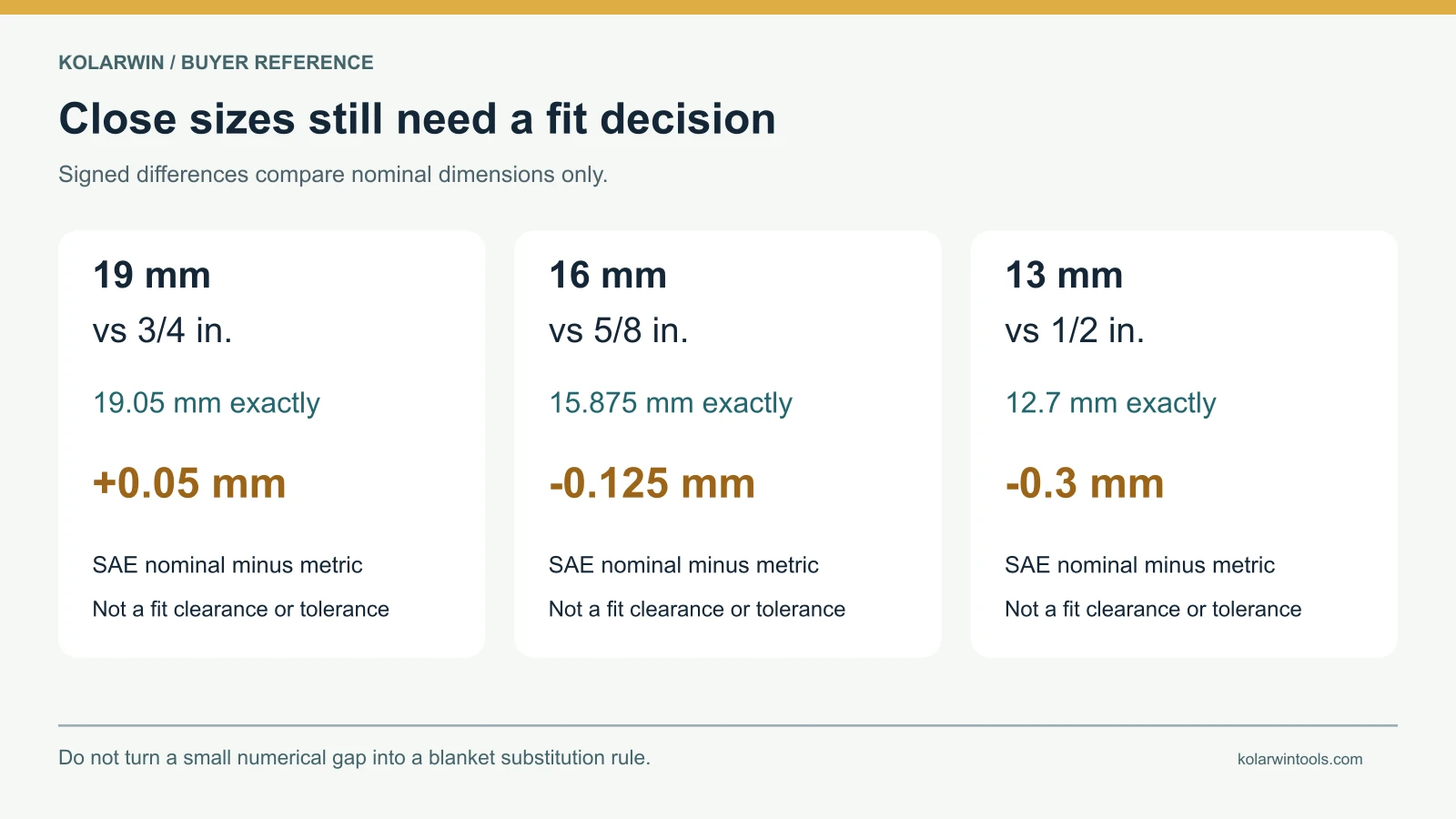
Treat a near pair as a measurement clue, not a fit guarantee. The closest listed SAE fraction may sit only a few hundredths of a millimeter away from a metric label. Rust, corner damage, plating variation, load direction, and socket wear can still change contact.
The chart’s six examples show why buyers need signed differences. 19 mm versus 3/4 inch differs by +0.05 mm because 3/4 inch equals 19.05 mm. 16 mm versus 5/8 inch differs by -0.125 mm because 5/8 inch equals 15.875 mm.
- Choose the specified metric or SAE size and matching profile.
- Seat a correctly selected socket fully by hand before applying load.
- Stop when a socket rocks, binds, or contacts only corners.
- Keep a matching replacement size on a service vehicle.
Keep these near-size values as reference notes rather than approved substitutes on a buying sheet.
Six close pairs with signed dimensional differences
| Metric / SAE pair | Exact SAE value (mm) | SAE minus metric (mm) |
|---|---|---|
| 8 mm / 5/16 in. | 7.9375 | -0.0625 |
| 13 mm / 1/2 in. | 12.7 | -0.3 |
| 16 mm / 5/8 in. | 15.875 | -0.125 |
| 19 mm / 3/4 in. | 19.05 | +0.05 |
| 21 mm / 13/16 in. | 20.6375 | -0.3625 |
| 22 mm / 7/8 in. | 22.225 | +0.225 |
Neither a small positive difference nor a small negative difference establishes a general substitution rule.
5. Metric Socket Sizes: Coverage, Gaps, and Set Planning
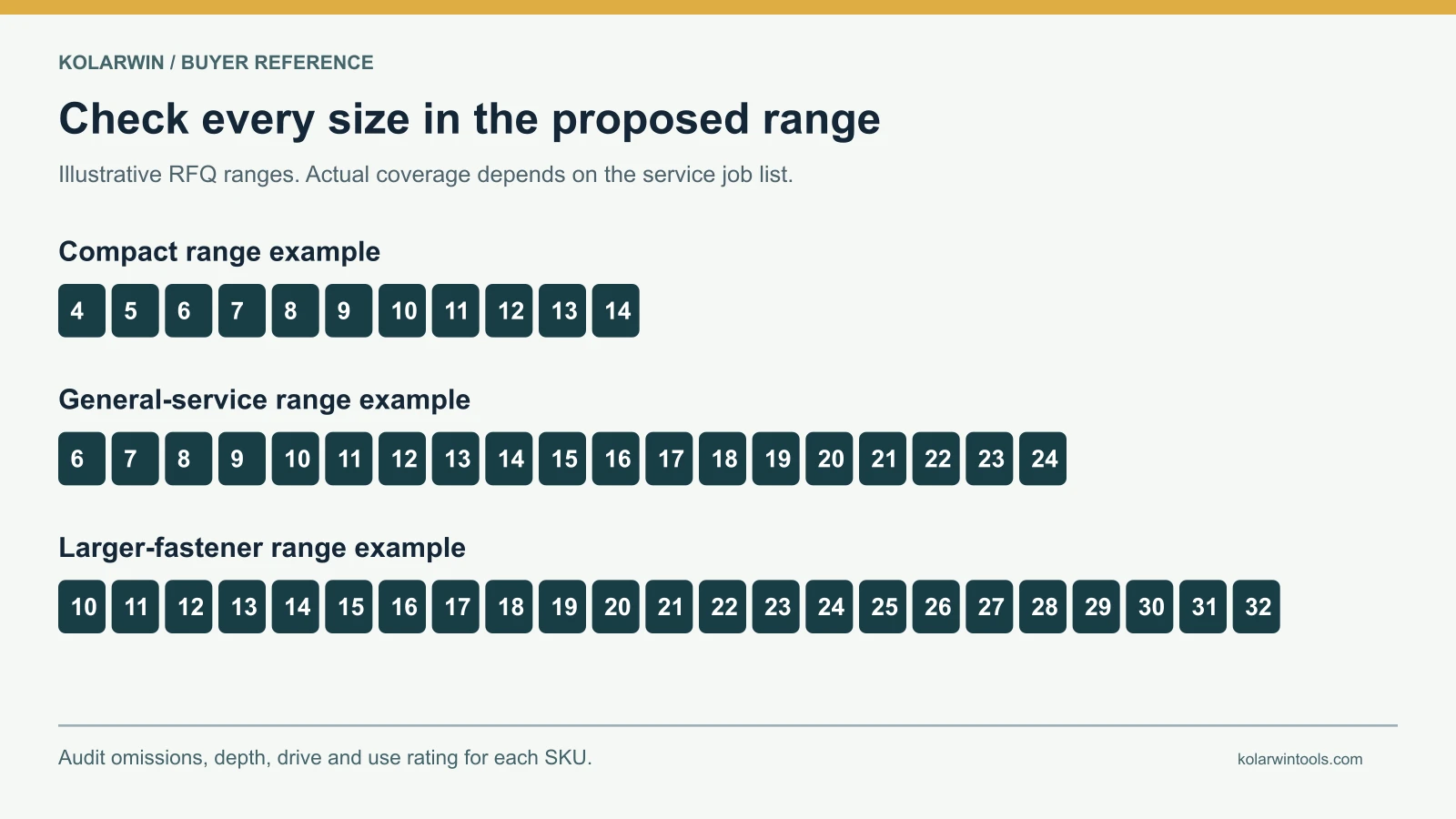
Plan metric socket sizes around actual equipment, not around a full-looking rail. A set spanning 4–32 mm may still miss a recurring 18 mm, 23 mm, or 27 mm requirement. Coverage depends on each manufacturer’s chosen sequence, drive size, depth, and point count.
Build a usage list from maintenance tickets, drawings, spare-part lists, and field reports. Then separate high-frequency sizes from occasional sizes. This method prevents a buyer from paying for broad coverage while leaving a small but costly gap.
- Mark recurring sizes used during routine service.
- Add deep versions where studs or recesses block shallow sockets.
- Add impact versions where powered tools enter the workflow.
- Keep exact sizes for fasteners carrying alignment or clamping loads.
An automotive team can pair a metric core with selected SAE sizes when its vehicle or equipment records justify both. Automotive repair tools should follow actual vehicle and machine records.
Metric kit coverage and gap review
| Proposed coverage | Audit before ordering | Separate additions |
|---|---|---|
| 4–14 mm compact range | Each size and access envelope | Bits or specialty profiles by job |
| 6–24 mm general-service range | Skipped sizes and depth gaps | SAE openings supported by records |
| 10–32 mm larger-fastener range | Required models and tool ratings | Axle-nut or larger specialty sockets |
These are planning examples. List exact components instead of approving only a range printed on a case.
6. Six-Point and Twelve-Point Socket Choices
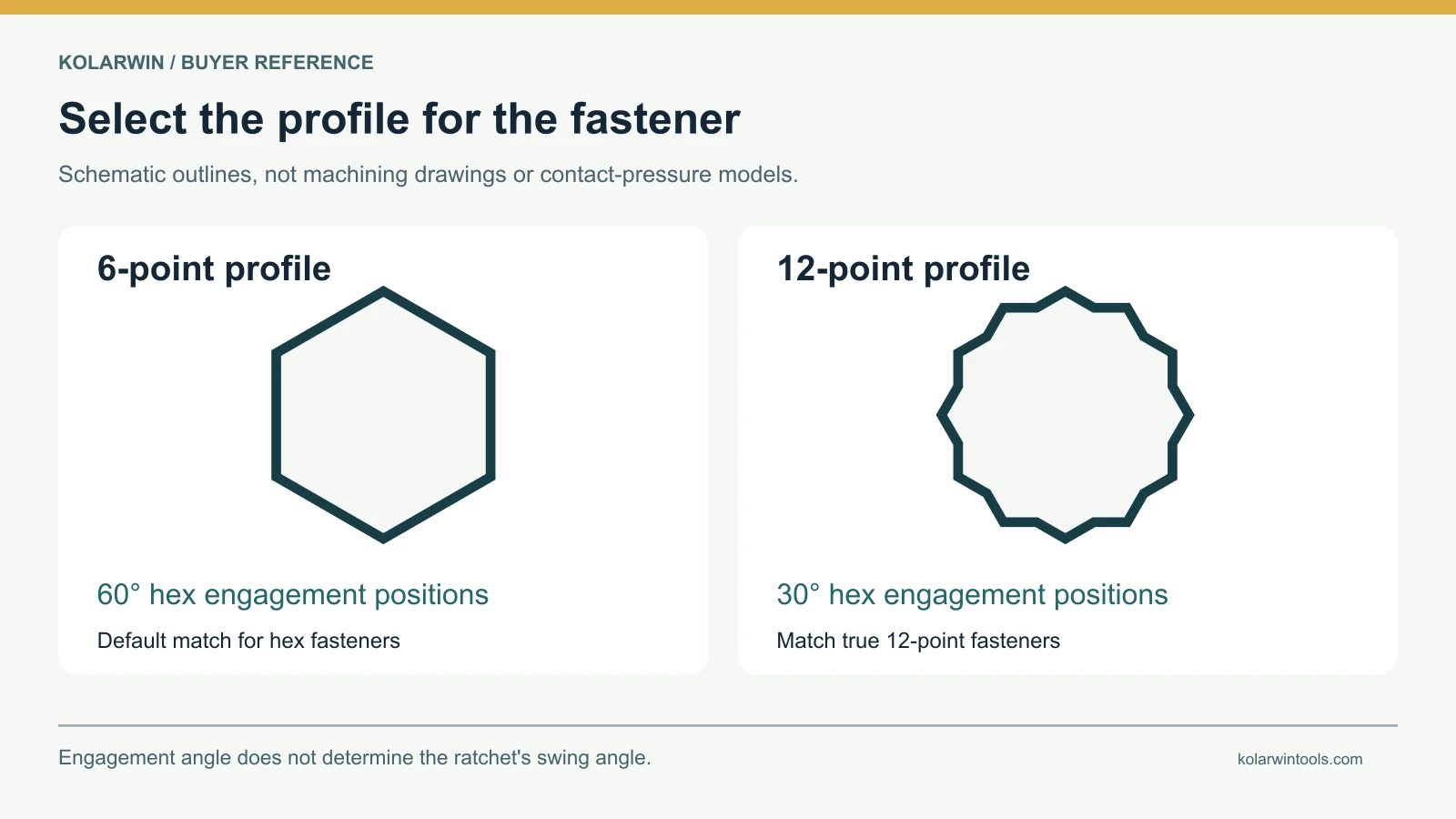
Match socket profile with fastener profile before judging point count. A six-point opening matches a standard hex fastener across six flats. A twelve-point opening uses a double-hex profile and can engage a matching hex size at more positions.
Six-point engagement positions occur every 60 degrees, while twelve-point engagement positions occur every 30 degrees. That access difference does not change ratchet-tooth swing. A twelve-point socket can help alignment in tight spaces, yet six-point contact remains a sound default for a matching hex fastener under high force.
- Select six-point for standard hex hardware and heavy hand-force work.
- Specify twelve-point for true twelve-point fasteners; assess hex use separately.
- Confirm point count on both socket and fastener before ordering.
- Stop using any profile that slips across corners.
The profile guidance supports matching geometry rather than claiming one profile always wins. Point count belongs in a BOM line beside drive, opening, and depth.
Profile choice for fit and access
| Fastener / task | Profile decision | Buyer check |
|---|---|---|
| Six-point hex | Six-point default | Exact size, condition and seating |
| True twelve-point | Matching twelve-point | Verify geometry and opening |
| Hex with restricted alignment | Evaluate twelve-point use | Engagement angle differs from ratchet swing |
A twelve-point socket does not change a ratchet’s tooth count or rated load.
7. Hand, Impact, Shallow, and Deep Socket Selection
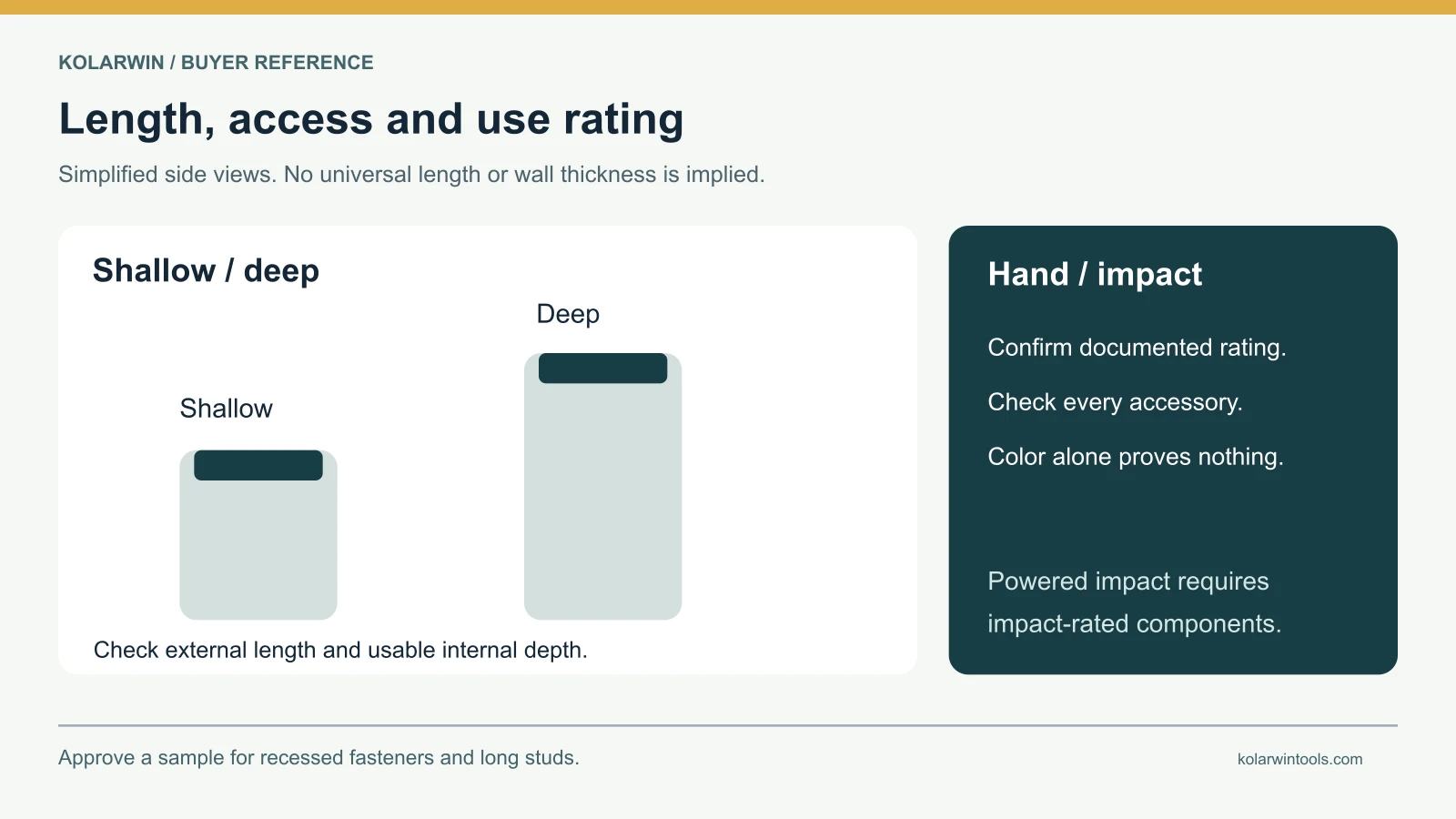
Choose socket construction from tool action and access conditions. Hand sockets suit ratchets, extensions, and controlled manual work. Impact sockets suit impact wrenches or drivers only when their marking and rating support that use.
Use only impact-rated sockets and accessories on impact tools, as required by impact-wrench operator instructions. A matching metric or SAE number does not make a chrome hand socket impact-safe. Confirm impact rating, drive interface, retention method, depth, and point count before release to a powered-tool station.
- Pair hand sockets with manual drive tools.
- Pair impact-rated sockets with powered impact equipment.
- Use shallow sockets where access depth permits.
- Check usable internal depth for projecting studs and recessed nuts.
- Match detent pin, friction ring, or retaining-ball needs.
The impact socket range should be checked against each wrench or driver model. Color alone cannot establish impact suitability.
Profile, length, and use decision guide
| Requirement | Specify | Confirm with sample or documentation |
|---|---|---|
| Manual operation | Hand-use socket and compatible drive | Fit and retention |
| Powered impact | Impact-rated sockets and accessories | Anvil connection and documented use |
| Limited clearance | Shallow form where suitable | Outside diameter and total length |
| Projecting stud / recessed nut | Required depth and reach | Usable bore depth and interference |
A deep label alone cannot confirm stud clearance. Compare usable internal depth against the actual assembly.
8. Repair-Shop Socket Set Examples for Buyers
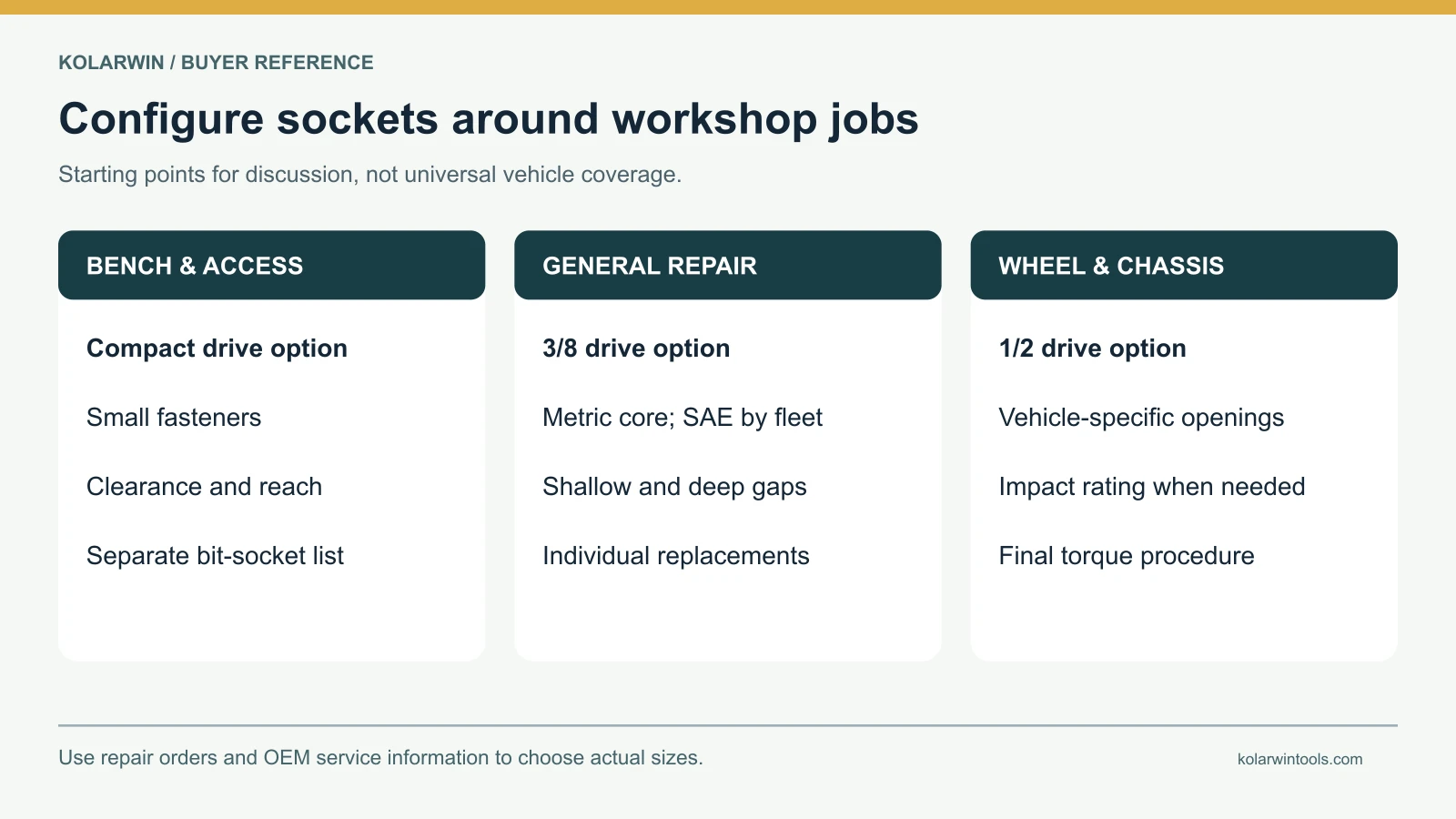
Build a repair-shop set from repeat jobs, access limits, and tool stations. A small service cart may need metric 6–24 mm coverage in 3/8-inch drive, plus selected SAE sizes for older equipment. A heavier station may add 1/2-inch drive, deep sockets, and impact-rated openings.
These ranges are illustrative RFQ examples. They require an equipment list and model numbers before a buyer treats them as a specification. A set title alone cannot confirm opening sequence, depth, point count, retention, or rating.
- List equipment models beside every proposed size family.
- Separate hand, impact, shallow, and deep requirements.
- Mark high-frequency sizes for duplicate issue quantities.
- Add missing sizes from work-order evidence.
Use a mechanics tool set page for package planning, then compare each proposed rail with service records. Buyers can keep mixed systems organized when labels remain explicit.
Ask suppliers for a line-by-line size schedule before approving a repair-shop kit.
Illustrative repair-shop kit planning examples
| Workshop station | Illustrative package | Add only after checking jobs |
|---|---|---|
| Small fasteners / access | 1/4 drive, 4–14 mm | Required bits and extensions |
| General repair | 3/8 drive, 6–24 mm | SAE and deep versions by fleet |
| Wheel / chassis work | 1/2 drive, selected 10–32 mm | Impact rating, clearance, torque procedure |
These examples are purchasing briefs, not complete vehicle coverage or service instructions.
9. Distributor and OEM BOM Planning
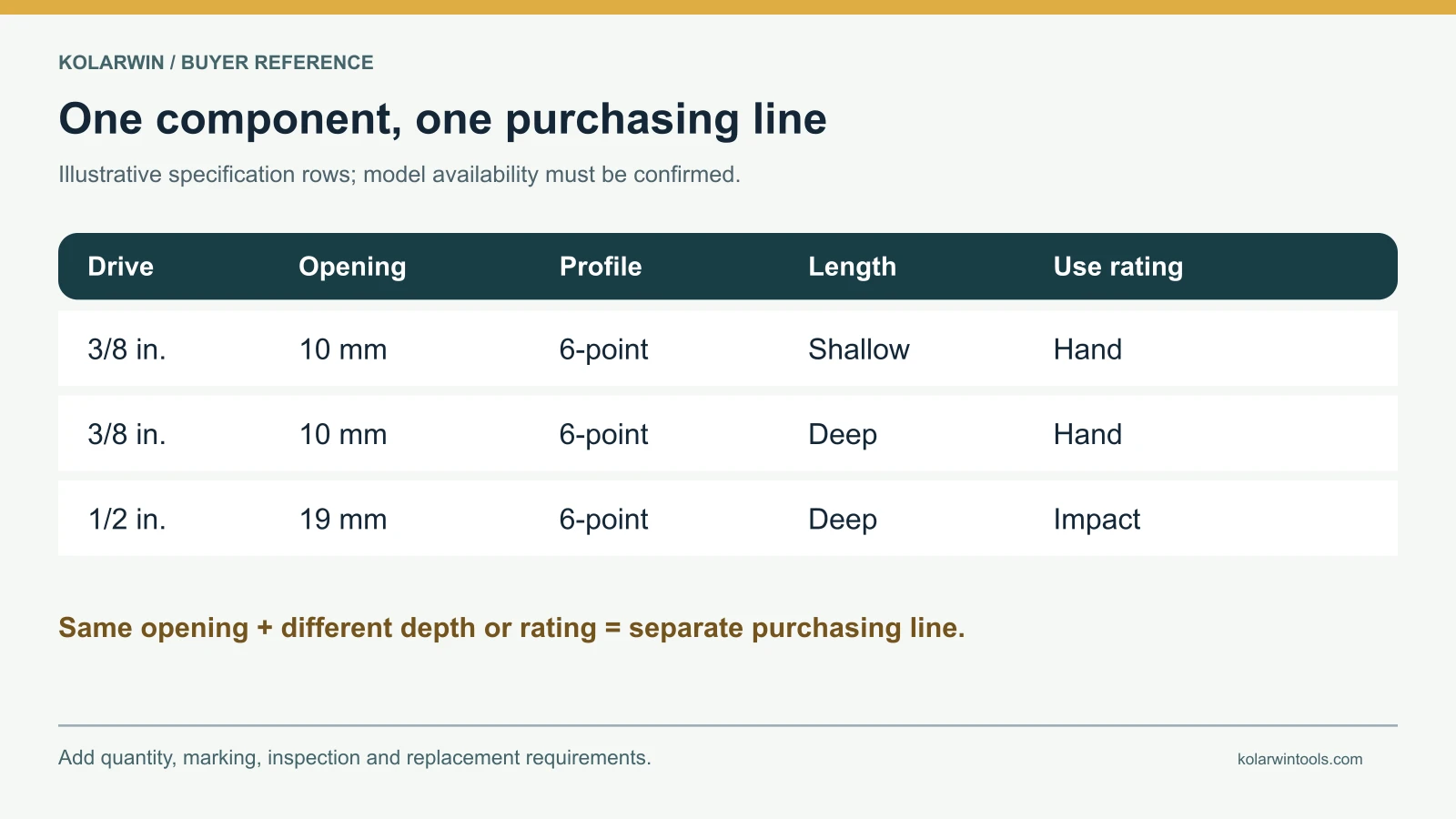
Give distributors and OEM teams a measurable BOM that survives quotation review. Each line should name drive, opening, unit system, fraction or millimeter label, point count, depth, intended tool, and quantity. Add drawing references when a socket supports a defined assembly.
Separate a retail piece count from actual size coverage. A 60-piece case can contain extensions, bits, adapters, or duplicate depths. Require an itemized list before comparing its value with a smaller socket-only set. Record replacement availability for each component and require approval before substitutions.
- Separate metric rows from SAE rows in the BOM.
- Add an exact conversion note beside any close pair.
- Mark impact-rated lines with tool and retention requirements.
- Request samples or fit checks for unusual hardware.
Review KOLARWIN’s OEM background when preparing branding and packaging requirements. Where final tightening requires controlled torque, include suitable tooling and records from your procedure. Our torque wrench buying guide explains those purchasing fields.
Distributor and OEM RFQ checklist
| RFQ field | Required detail |
|---|---|
| Identity | Metric / SAE; exact opening; drive |
| Geometry | Point count, length, usable depth, outside clearance |
| Tool use | Hand / impact, anvil and retention requirements |
| Coverage | Component quantities and replacement part list |
| Brand and pack | Marking artwork, case layout, labels and carton requirements |
| Acceptance | Approved samples, checks and substitution approval |
Approve the component list, sample, and packaging together so quoted quantities match the delivered kit.
10. Download the Chart and Turn It into an RFQ
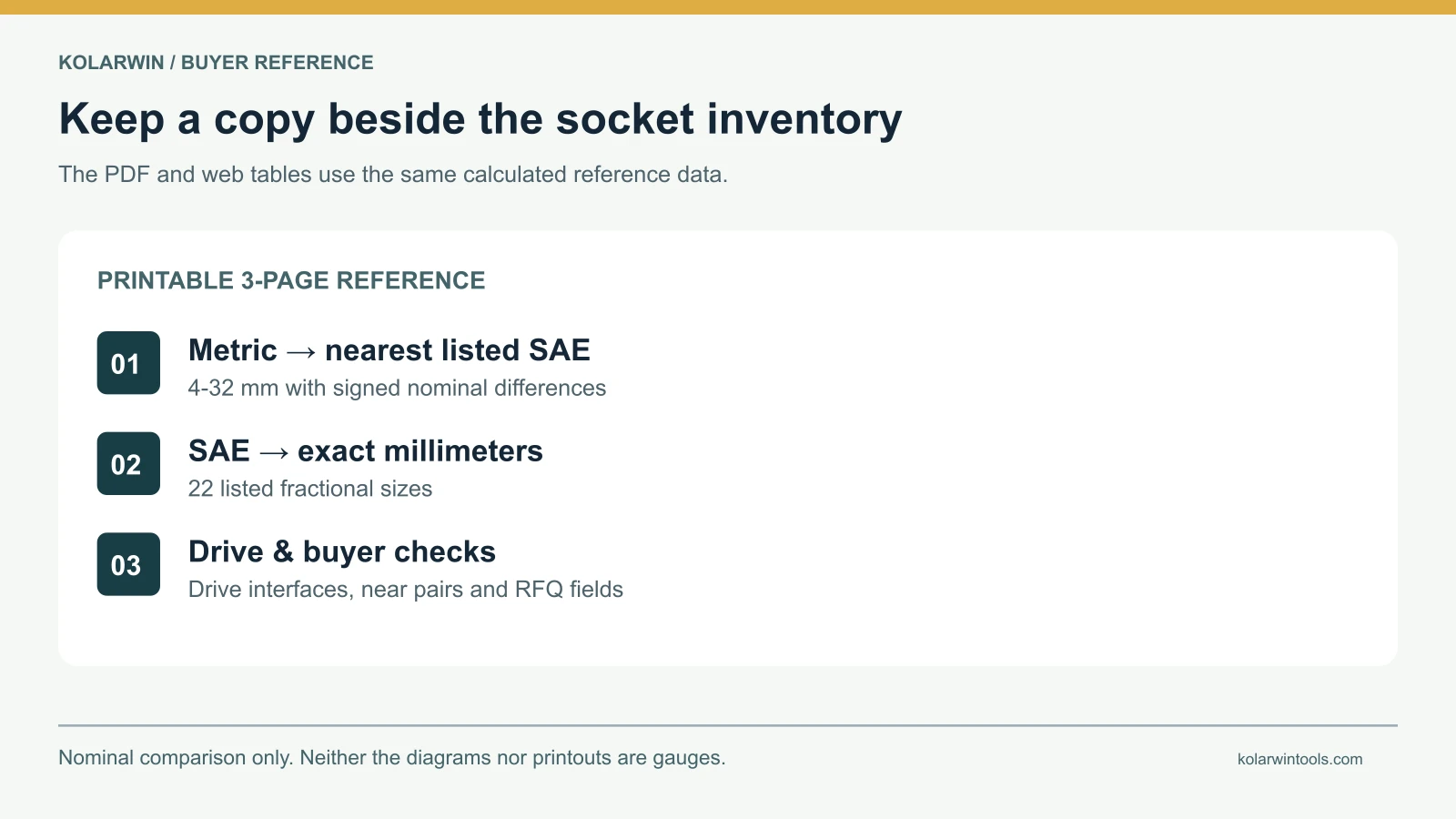
Mark required sizes before requesting a quotation. Download the metric-to-SAE conversion chart, then mark every size that appears in current work. Add exact opening, drive square, point count, depth, tool type, and quantity.
The three-page PDF contains metric comparisons, exact SAE conversions, drive dimensions, near pairs, and a buyer checklist. It uses US Letter pages for workshop printing. Printed shapes are reference illustrations rather than physical fit gauges.
- Attach equipment lists and model numbers.
- Flag high-force, damaged, or precision fasteners.
- Request impact rating where powered tools apply.
- Confirm retention hardware against each anvil.
- Send unresolved dimensions through KOLARWIN’s contact page.
Issue the RFQ only after each socket line has a verified application and complete dimensional description.
Can a 19 mm socket replace a 3/4-inch socket?
They have different nominal sizes: 3/4 inch equals 19.05 mm. Use the specified size; 0.05 mm alone does not establish acceptable fit.
Does drive size identify a socket’s fastener opening?
Drive size does not identify an opening. It names a square connection, while opening size names fastener contact.
Can a twelve-point socket replace every six-point socket?
No universal replacement rule applies. Match profile with fastener geometry, then use six-point contact for standard hex hardware under high force.
Can hand sockets go on an impact wrench?
Hand sockets should stay off impact wrenches. Use impact-rated sockets with retention hardware matching a tool’s anvil.
What should a socket RFQ include?
List unit system, opening, drive, point count, depth, tool type, retention, quantity, equipment model, and application.
Looking for a reliable mechanic tools manufacturer in China?
If you are sourcing hand tools, socket tools, automotive repair tools, mechanic tool sets or OEM private label tools, contact KOLARWIN Tools for factory-direct quotation, customization support and product consultation.


