
Home/Blog/ 6-Point vs 12-Point Sockets: A Buyer’s Guide

6-Point vs 12-Point Sockets: A Buyer’s Guide

Get OEM Tool Catalog + Quote Back to Tool Sourcing Blog
Unbranded six-point and twelve-point sockets viewed from above
This KOLARWIN Tools article is written for overseas distributors, wholesalers, importers and private label tool brands sourcing mechanic tools, automotive repair tools, socket tools, hand tools and OEM tool sets from China. Use this guide to compare product options, check supplier quality points and move from reading to a faster B2B inquiry.

Need OEM supplier support for this product type?

Contact KOLARWIN Tools for OEM mechanic tools, private label packaging, wholesale quotation and product range support. This gives overseas buyers a clear path from article reading to supplier discussion.

Repair shops and tool importers often face a deceptively small buying decision: should a socket set use six points, twelve points, or both? The answer starts with fastener geometry, then moves through load, access, drive type, and range planning. A 6 point vs 12 point socket comparison can prevent rounded fasteners, mismatched samples, and an RFQ that leaves suppliers guessing.

This guide uses the terminology buyers need for a clear BOM. It separates socket engagement from ratchet tooth swing and treats impact as a product classification. Depth, material, and metric-to-SAE conversion remain within their proper scope. A broader socket tools range can then carry those fields into a service or private-label program.

What is the difference between 6-point and 12-point sockets?

A six-point socket has a hexagonal opening with six repeating engagement positions, spaced 60° apart. A twelve-point socket uses a double-hex opening with twelve positions, spaced 30° apart. Extra placement can help in restricted spaces; point count alone does not establish strength or impact suitability.

Socket point count has a different job from ratchet tooth count. A socket describes its fastener opening. Ratchet teeth describe handle travel before pawl re-engagement. A fine-tooth ratchet can carry either profile, while a 12-point socket does not give a low-tooth ratchet a smaller return arc.
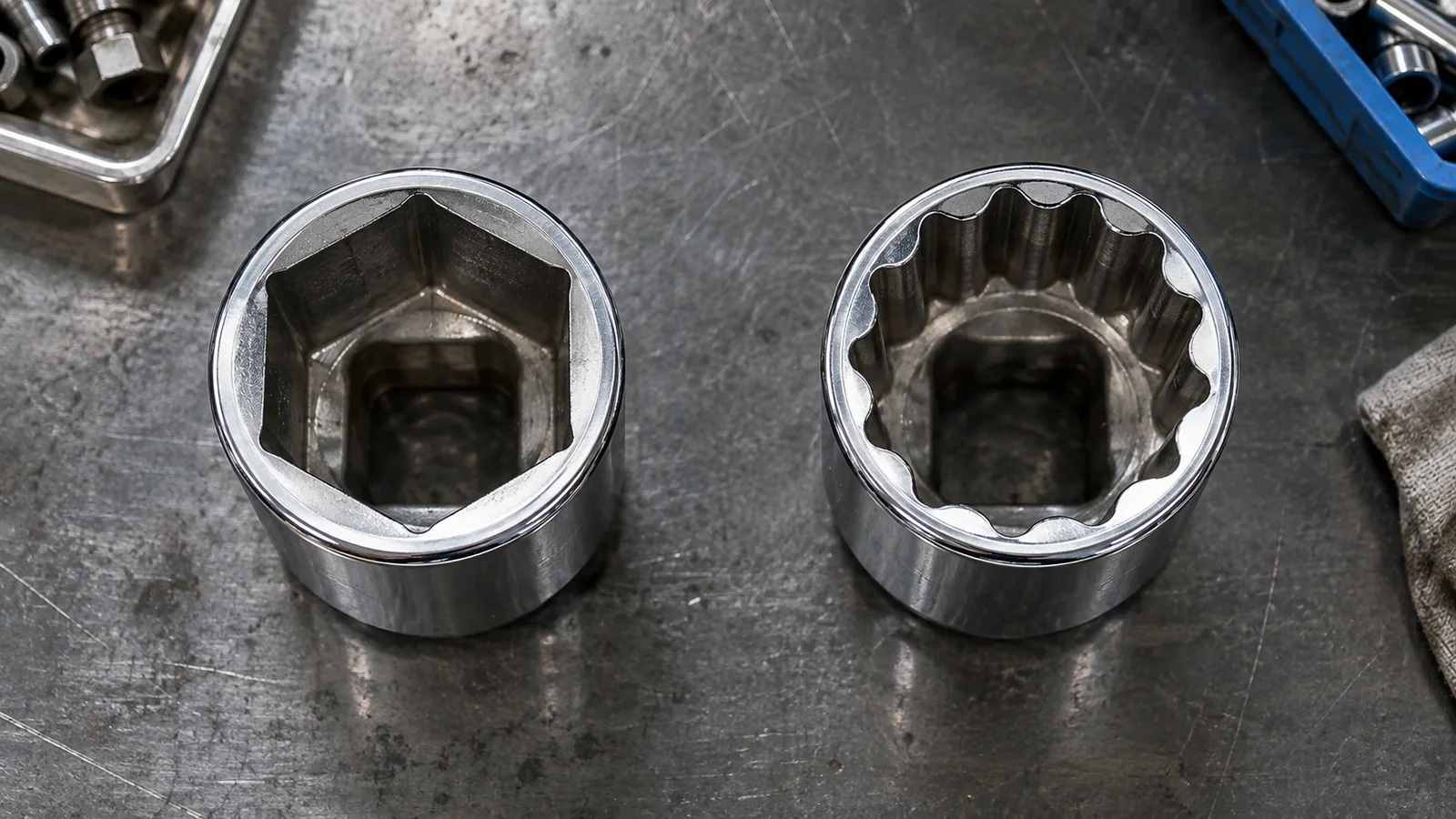
Unbranded six-point and twelve-point sockets viewed from above
AI-generated conceptual illustration.
  • Six-point: hex opening, 60° repeating orientation.
  • Twelve-point: double-hex opening, 30° repeating orientation.
  • Ratchet tooth count: separate field for handle return travel.

Start with the interface field. Put 6-point hex or 12-point double-hex beside nominal size and SAE or metric system. “19 mm socket” alone leaves profile, tool class, and fit open to interpretation.

Profile terms buyers can approve

Specification item Six-point option Twelve-point option Why it belongs in the quote
Socket opening Hex Double-hex Defines engagement geometry
Repeating placement 60° 30° Shows available alignment positions
Ratchet relationship Independent Independent Prevents a point-count misunderstanding

Practical action: update your socket master data with point count, fastener profile, nominal size, drive size, and tool class before requesting prices.

Which socket profile matches each fastener?

Match a six-point socket with a standard six-point hex fastener when fit and load matter. Match a twelve-point socket with a true twelve-point fastener. A 12-point socket can engage a six-point hex of matching nominal size, but that compatibility does not make both profiles equal under every condition. A six-point socket cannot substitute for a true twelve-point fastener because its opening lacks the required double-hex geometry.

For a clean, undamaged six-point fastener under light hand work, cross-use may function. Under high force, corrosion, damaged flats, or repeated service, exact-fit selection gives more conservative contact. Record permitted cross-use as a controlled exception in the catalog.
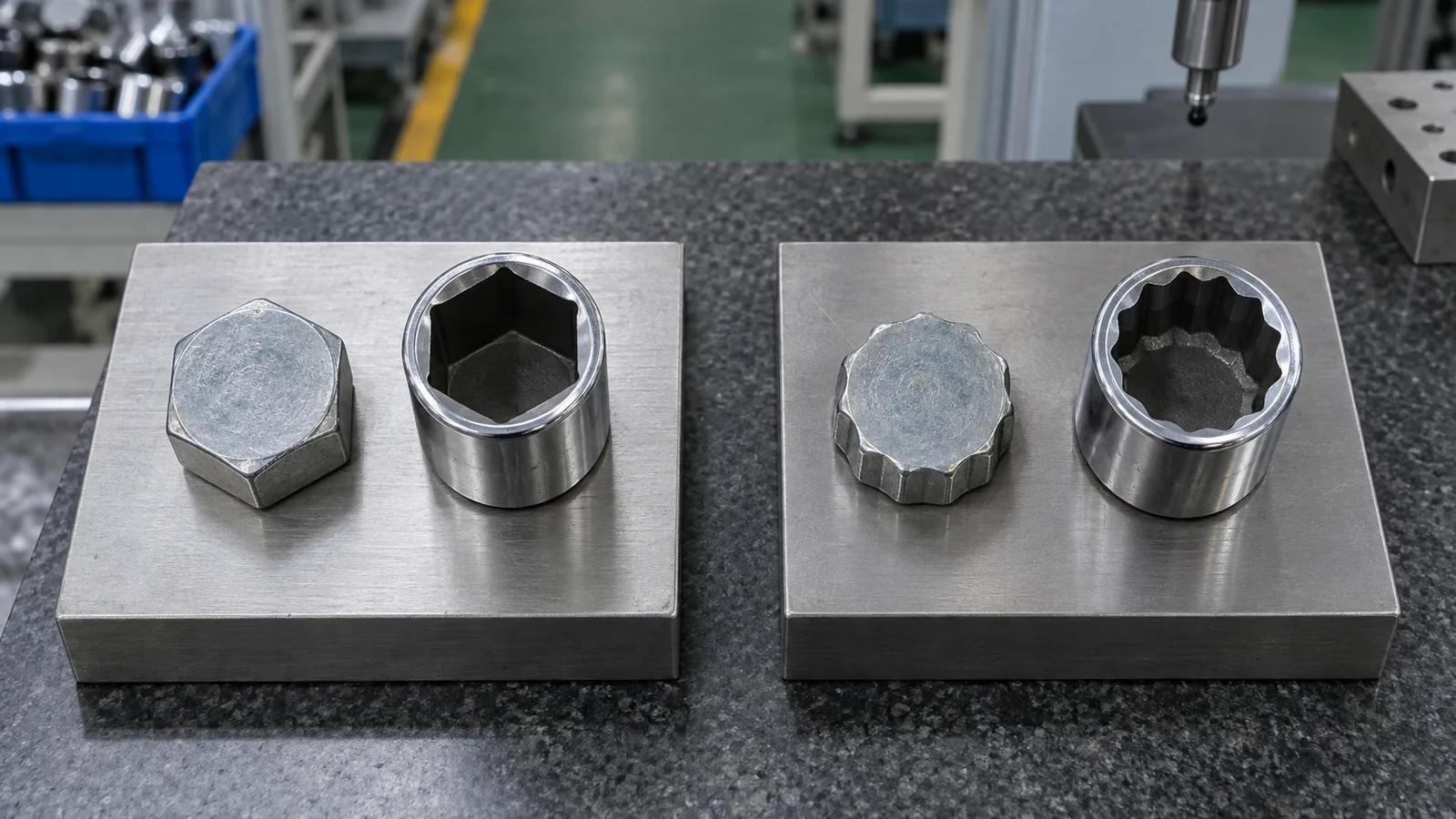
Separate six-point and twelve-point socket and fastener profile pairs
AI-generated conceptual illustration.
  • Standard hex fastener: specify a matching six-point tool by default.
  • True twelve-point fastener: specify a matching twelve-point tool.
  • Cross-use: allow only when application, condition, and load have been reviewed.

Make fit auditable. Include fastener interface, across-flats size, point count, and exact-fit rule in each line item. This gives a quality inspector something concrete to check against a sample.

Fastener-to-socket matching table

Fastener condition or profile Preferred socket Controlled exception Buyer note
Clean six-point hex Six-point hex Twelve-point at light load Confirm fit before production use
True twelve-point Twelve-point double-hex None without engineering review Six-point is not an equivalent substitute
Corroded or worn hex Six-point hex None for high-force removal Inspect flats and replace if needed

Practical action: add a “matching profile required” checkbox to sample approval and RFQs.

How does point count affect contact and rounding risk?

Contact depends on more than a socket label. Poor fit, worn corners, corrosion, excessive clearance, or partial seating can increase slip and rounding risk. A six-point tool on a six-point fastener remains conservative for high-force hand work. That rule does not promise equal performance across products.

A twelve-point tool on a six-point fastener may seat on fewer effective contact surfaces as load rises or flats deteriorate. A clean fastener may tolerate that arrangement, yet a rusty-nut removal deserves an exact-fit six-point option. Rounded-corner designs can move contact toward flats, but no profile removes every failure mode. Geometry and fit govern the result.
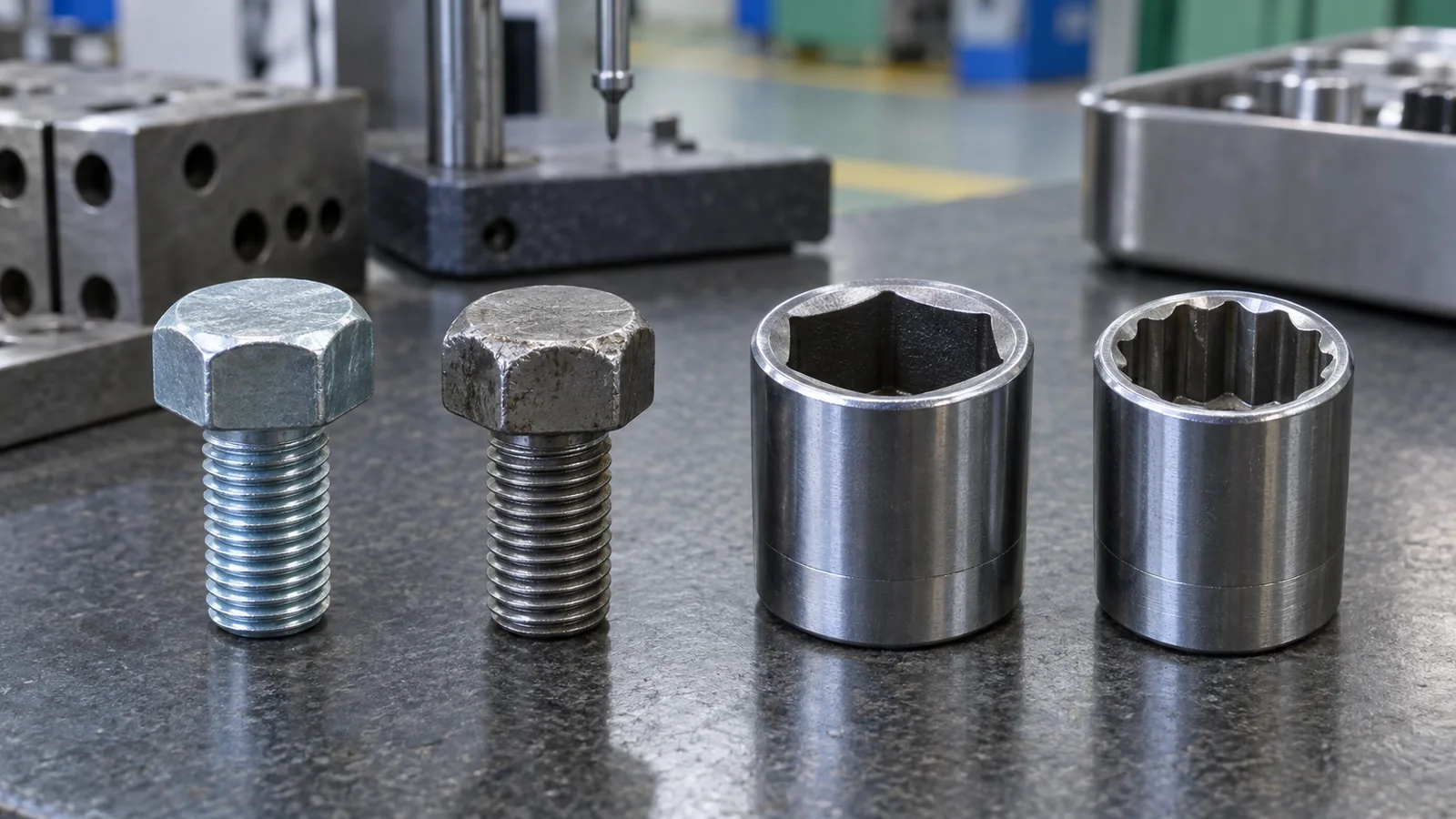
Clean and worn hex fasteners beside six-point and twelve-point sockets
AI-generated conceptual illustration.
  • Check fastener flats before choosing a cross-profile tool.
  • Use matching geometry as load or corrosion risk increases.
  • Treat corner wear, tolerance, and seating depth as inspection points.

Read fastener condition before opening the catalog. Point count alone misses condition, seating, and actual load path.

Contact and condition review

Review factor Lower-risk condition Higher-risk condition Selection response
Fastener flats Clean and sharp Worn, rounded, or corroded Favor exact-fit six-point for hex
Socket seating Full and square Partial or tilted Stop and correct alignment
Applied load Light hand work Breaker bar or removal force Use matched profile and rated tool

Practical action: train receiving and service staff to reject a socket sample that rocks, binds, or seats shallow on its reference fastener.

Does a 12-point socket improve access?

A twelve-point socket offers more engagement orientations, so a user can align it every 30° instead of every 60°. That helps in a crowded engine bay or beside a frame rail. It does not make a tool slimmer, shorter, or safer on a damaged hex.

Access also depends on head thickness, depth, neck shape, extension length, and universal or swivel connection. Ratchet tooth count controls return travel separately. Any documented arc-swing value belongs in the ratchet specification, not in point-count claims. Universal joints solve approach angle; they do not repair mismatched engagement.

Technician aligning a hand socket in a restricted engine-bay space
AI-generated conceptual illustration.
  • Record the available placement angle around each service fastener.
  • Check head thickness and clearance before adding point count.
  • Specify ratchet swing and socket profile in separate fields.

Access has several moving parts. Ask for a drawing or sample fit when a twelve-point choice depends on a tight approach rather than fastener geometry.

Access variables at a glance

Access variable What it controls What point count controls RFQ field
Socket point count Fastener alignment positions 60° or 30° engagement pattern 6-point or 12-point
Ratchet tooth count Handle return travel Nothing about fastener contact Tooth count and arc swing
Depth and neck Reach and obstruction clearance Nothing about profile match Shallow, deep, necked, or thin-wall

Practical action: send a restricted-access photo, fixture drawing, or reference assembly with an access-sensitive request.

Which profile suits high-force hand work?

For a standard hex fastener under high hand force, choose a correctly sized six-point socket with a breaker bar, torque wrench, or hand ratchet. Matching contact supports a controlled load path and reduces slip inside a cross-profile opening. Selection still depends on socket quality, drive size, wall geometry, and fastener condition.

Twelve-point sockets fit true twelve-point fasteners and can help with restricted placement on clean hardware. A twelve-point impact or hand product is not automatically low-load, just as a six-point label does not prove torque capacity. Compare product data and application limits rather than assigning a universal ranking by point count.
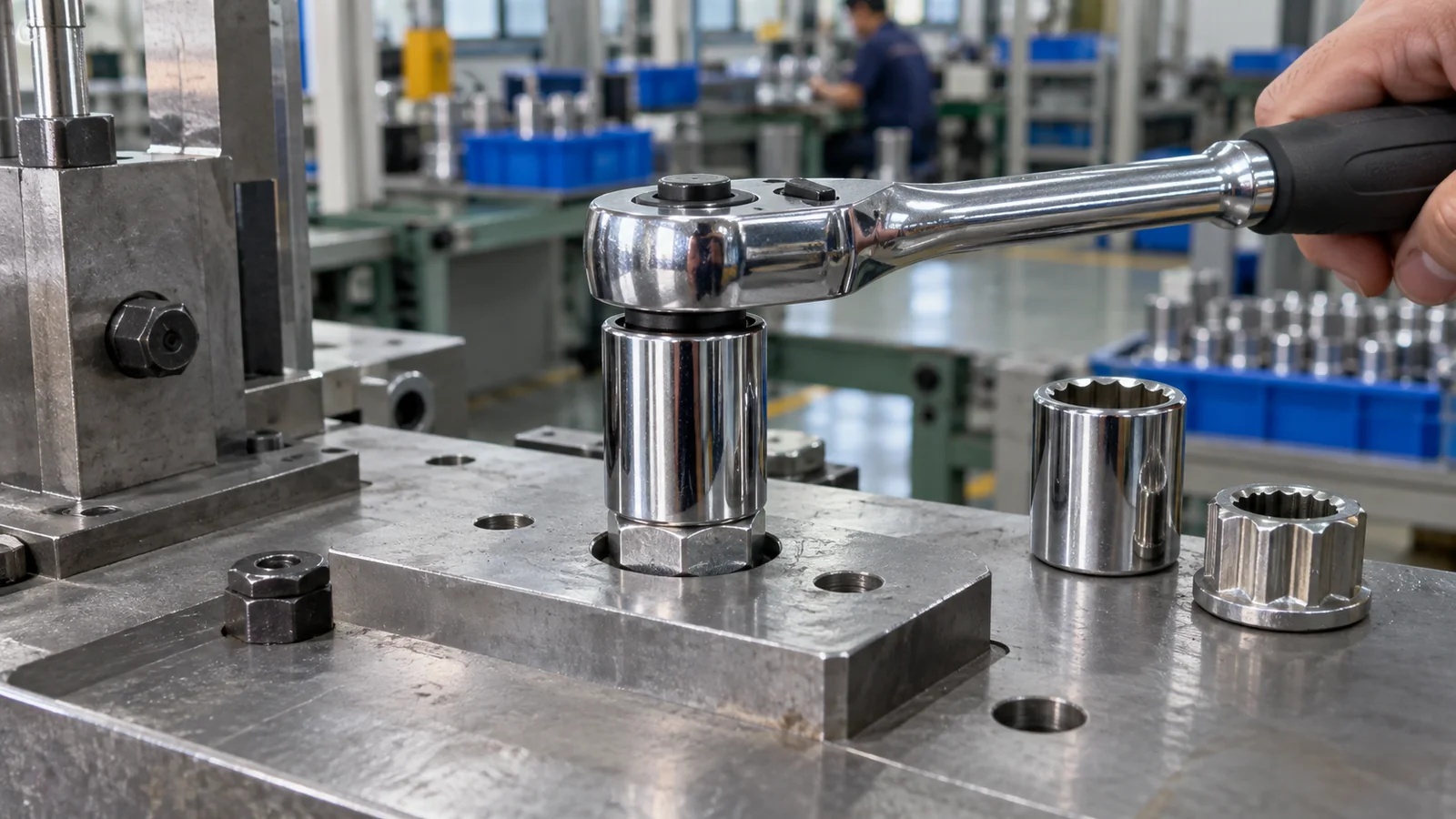
Hand-ratchet setup with six-point and twelve-point socket samples
AI-generated conceptual illustration.
  • Hex fastener plus high hand load: start with matching six-point geometry.
  • Twelve-point fastener: use a matching twelve-point socket.
  • Any high-force job: verify drive, fit, condition, and product documentation.

Load changes the buying threshold. A shop that regularly removes seized hardware should carry exact-fit six-point coverage across its core sizes.

Hand-work selection check

Hand-work situation Preferred profile Additional check Reason
High-force hex removal Matching six-point Condition and drive size Conservative contact on flats
Clean twelve-point assembly Matching twelve-point Torque procedure Correct fastener interface
Tight placement, clean hardware Profile that matches fastener Head thickness and swing Access may drive the choice

Practical action: require supervisor or technician approval for cross-profile use during high-force removal.

What changes when impact tools are involved?

Impact work changes the specification because powered tools deliver repeated shock loads and transient force. “Six-point” or “twelve-point” describes engagement; it does not prove impact rating, material, heat treatment, service life, or torque capacity. Use documented impact sockets and accessories with compatible drive size and retention. A generic chrome hand socket should stay off an impact wrench unless explicitly rated.

Product documentation may identify forged impact construction, an applicable standard, or pin-and-O-ring retention. Those details belong in an RFQ. The impact-rated sockets category can stand apart in your catalog, while profile remains separate. Require product-specific evidence for every material, standard, and use-rating statement.
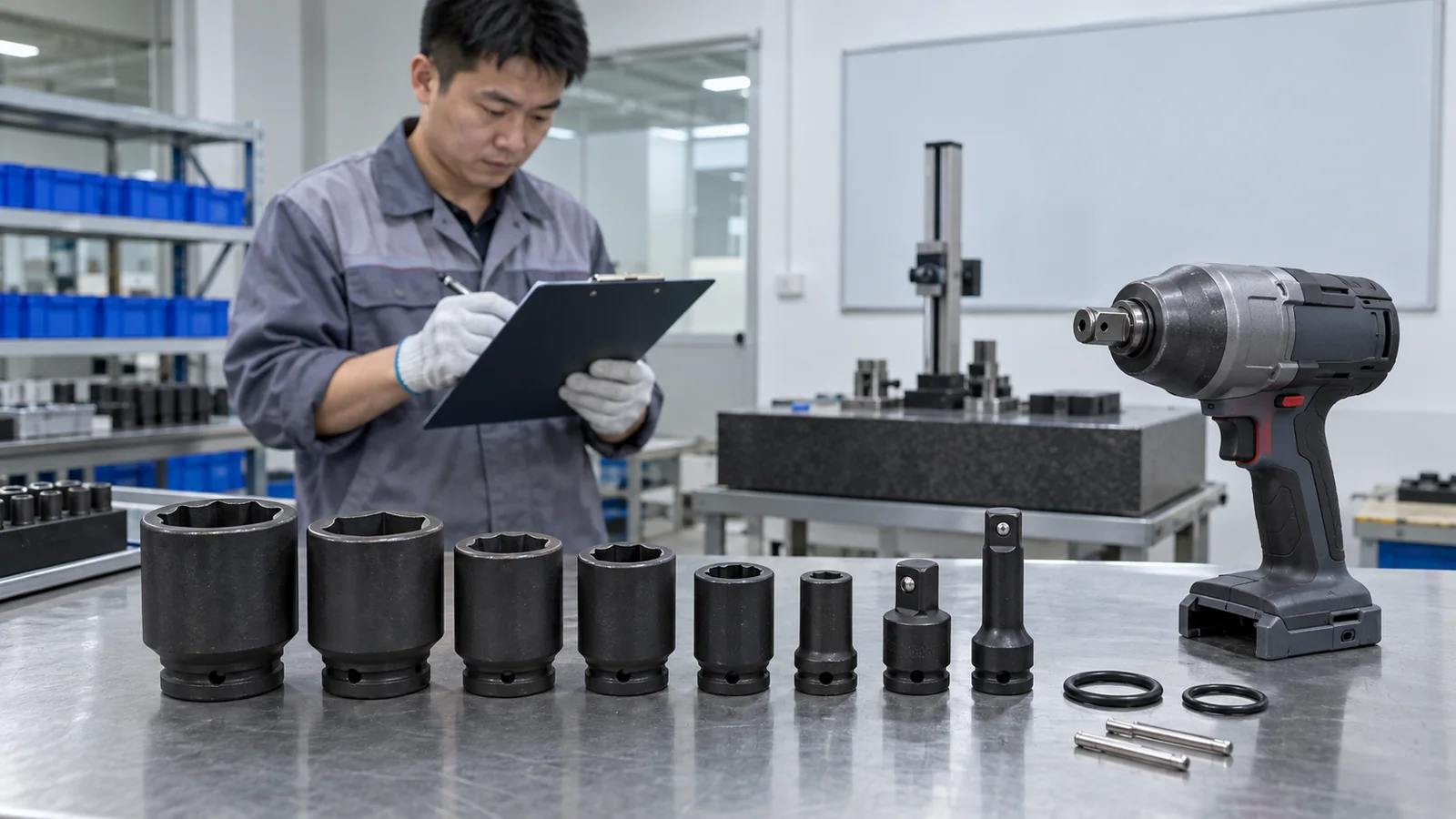
Technician inspecting impact-rated socket profiles and retention features
AI-generated conceptual illustration.
  • Mark hand-drive and impact-rated products as different classes.
  • Specify drive size, retention, and documented application.
  • Match point count to fastener profile after impact suitability is confirmed.

Treat “impact” as its own gate. Do not let a point-count column carry a safety or performance claim it cannot support.

Impact RFQ fields

Field Example entry Why it matters
Tool class Impact-rated Confirms intended powered use
Interface 1/2-inch drive, 6-point Separates drive and profile
Retention Pin-and-O-ring or specified system Controls tool connection
Standard statement Supplier documentation required Supports product-level review

Practical action: require an impact classification statement and retention detail before approving samples.

How do depth, clearance, and accessories affect the decision?

Depth and clearance solve reach problems that point count cannot. A shallow socket can fit around structures, while a deep socket can reach a studded nut or recessed fastener. Thin-wall or necked profiles may help in confined openings, but wall thickness and application limits must come from product documentation. Keep these fields beside profile in a BOM.

Extensions, universal joints, and swivel sockets alter approach geometry. Model-specific accessories may list a working angle, yet that figure should not be generalized across a family. For automotive ranges, pair access notes with automotive repair tools. Keep metric and SAE lookup separate through a metric-to-SAE conversion chart.
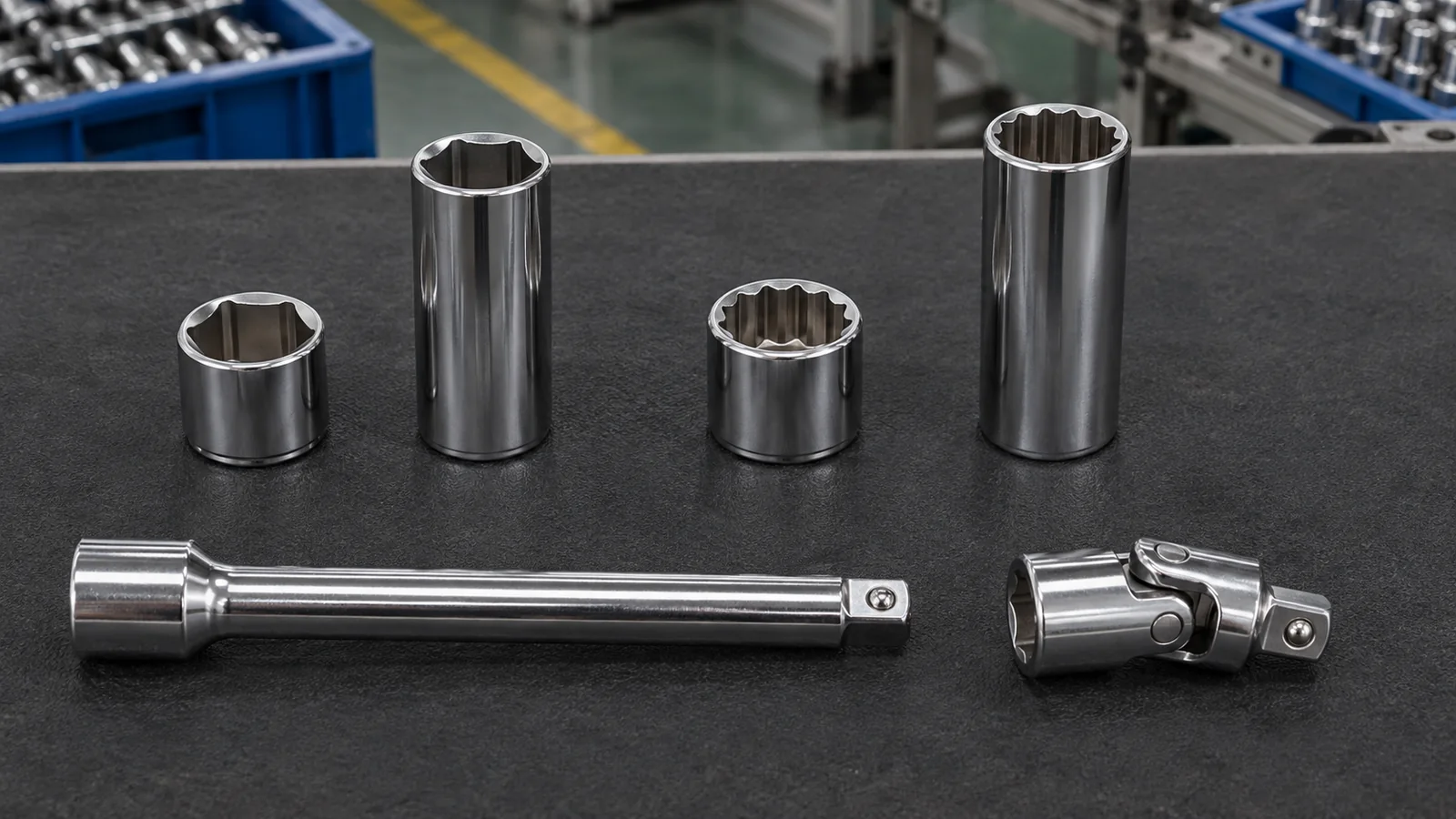
Shallow and deep sockets with extension and universal joint arranged separately
AI-generated conceptual illustration.
  • Choose shallow or deep from fastener reach and obstruction data.
  • Add extensions or universal joints for approach geometry.
  • Keep unit conversion and profile matching as separate checks.

Clearance deserves its own line item. Ask suppliers for length, head, neck, and accessory dimensions when a sample must reach a recessed or obstructed fastener.

Access specification matrix

Access need Socket or accessory field Profile decision still required
Recessed nut or stud Deep length Match hex or double-hex
Nearby obstruction Shallow, thin-wall, or neck profile Confirm actual fastener interface
Angled approach Universal or swivel, working angle Do not use angle as a fit substitute

Practical action: add a clearance sketch and maximum head dimension to every access-sensitive RFQ.

How should a repair shop configure socket sets?

Most repair shops can build a core around matching six-point sockets for common hex fasteners. Add twelve-point coverage for true double-hex hardware and access-driven jobs. Separate metric and SAE trays. Keep impact-rated rows apart from hand-drive rows so technicians do not grab a chrome hand socket for powered work.

A set should reflect drive sizes, depth, and replacement policy. Unclear profile markings slow selection. For a full socket set configurations program, map fastener families, access conditions, and tool types before choosing case layout. A complete mechanics tool set may combine accessories, yet its socket sub-BOM still needs these fields. A mechanic tools list can prioritize supporting tools after socket coverage is defined.
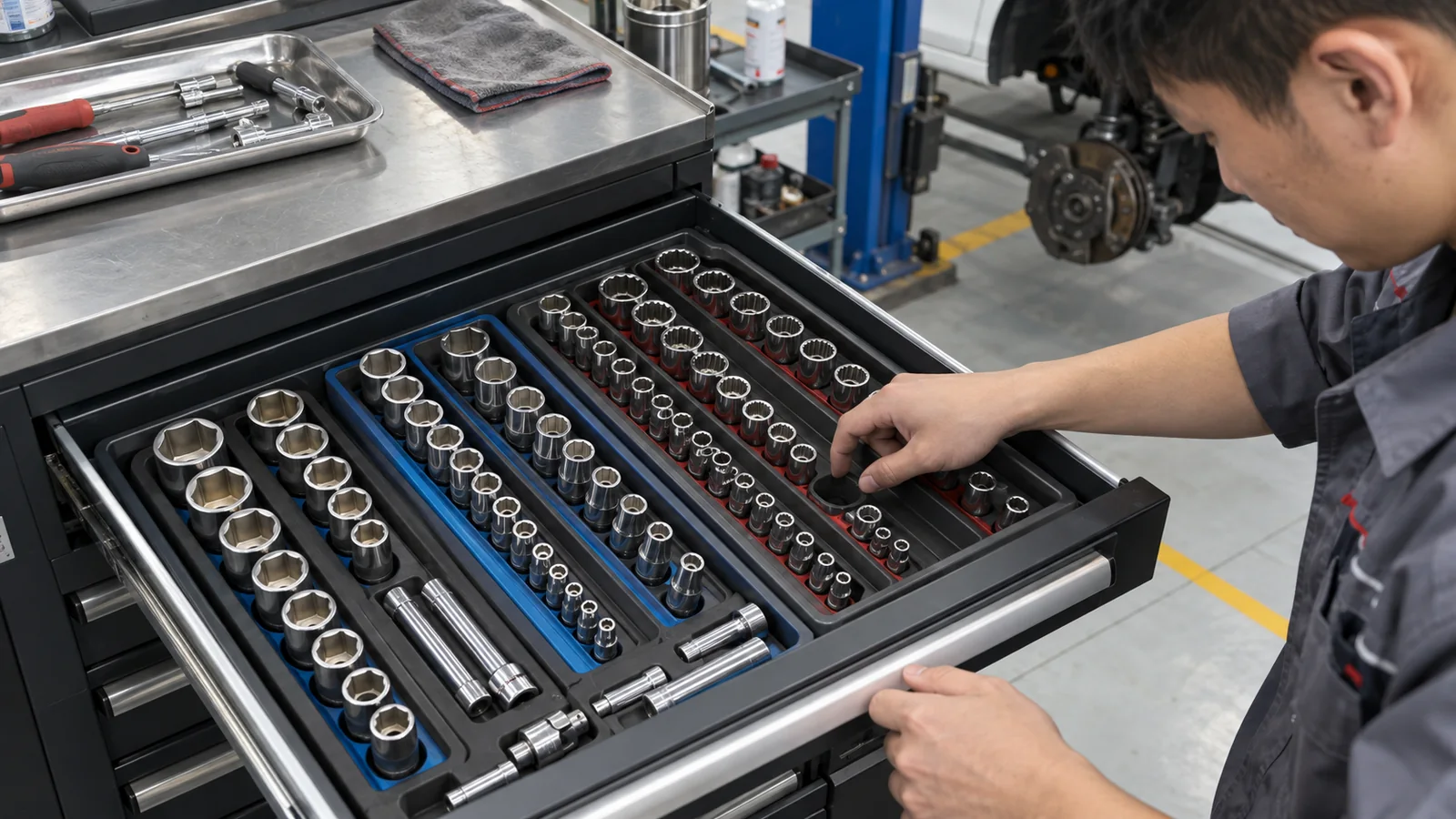
Repair-shop drawer with separate six-point and twelve-point socket rows
AI-generated conceptual illustration.
  • Core row: matching six-point metric and SAE hex sizes.
  • Specialty row: twelve-point sizes for matching fasteners or controlled access work.
  • Separate trays: hand-drive, impact-rated, shallow, and deep families.

Organize around the job. Label trays by profile, system, drive, and depth so replacement buyers can reorder one missing socket without guessing.

Set-configuration example

Set area Core contents Storage rule Buyer benefit
Hand-drive hex Six-point metric and SAE Separate size families Fast exact-fit selection
Twelve-point specialty Matching double-hex sizes Mark true profile Supports specific fasteners
Impact Documented impact products Separate drawer or case Reduces misuse risk
Access Shallow, deep, extensions Group by drive size Faster reach decisions

Practical action: audit one drawer and tag sockets whose profile, drive class, or unit system is unclear.

What should distributors put in an RFQ and BOM?

An RFQ should make a supplier quote a defined interface rather than a vague size list. Start with six-point hex or twelve-point double-hex, nominal across-flats size, and SAE or metric system. Add drive, hand or impact use, depth, wall or neck requirement, retention, markings, quantity, and approved cross-use rules. This structure simplifies sample review and replacement.

Ask for product-level documents where a claim affects safety or selection. A standard’s socket performance and safety scope can frame review, yet it does not create a universal strength ranking by point count. For supplier due diligence, use a socket set manufacturer checklist before commercial questions reach the contact page.

Tool professionals reviewing socket profiles and a blank component matrix
AI-generated conceptual illustration.
  • Interface: profile, nominal size, and measurement system.
  • Tool class: drive, hand or impact, retention, and accessory compatibility.
  • Delivery control: markings, part number, revision, quantity, and replacement rule.

Write acceptance criteria before ordering. State how a sample must seat on reference fasteners and which documents must accompany approval.

RFQ and BOM checklist

BOM field Example wording Approval evidence
Fastener interface 6-point hex, 19 mm, metric Reference fastener fit
Tool class Hand ratchet, 3/8-inch drive Sample interface check
Access Shallow, standard neck Drawing or measured sample
Identification Part number and size marking Photo and inspection record
Replacement Interchangeability rule Approved revision record

Practical action: send a BOM with reference fasteners, photos, and acceptance criteria attached to every supplier request.

Which profile should a buyer choose?

Choose a matching six-point socket for ordinary hex fasteners when hand load, corrosion, damaged flats, or removal force raises slip risk. Choose a matching twelve-point socket for true twelve-point fasteners. Choose twelve points for a clean matching fastener when placement solves an access problem. Verify depth, drive, ratchet swing, and tool classification separately.

Many buyers should carry both profiles, but they do not need equal quantities. Make six-point hex coverage the core of high-force hand service, and add twelve-point sizes around known vehicle, machinery, or assembly applications. Powered work requires impact-rated products and documented accessories regardless of point count.
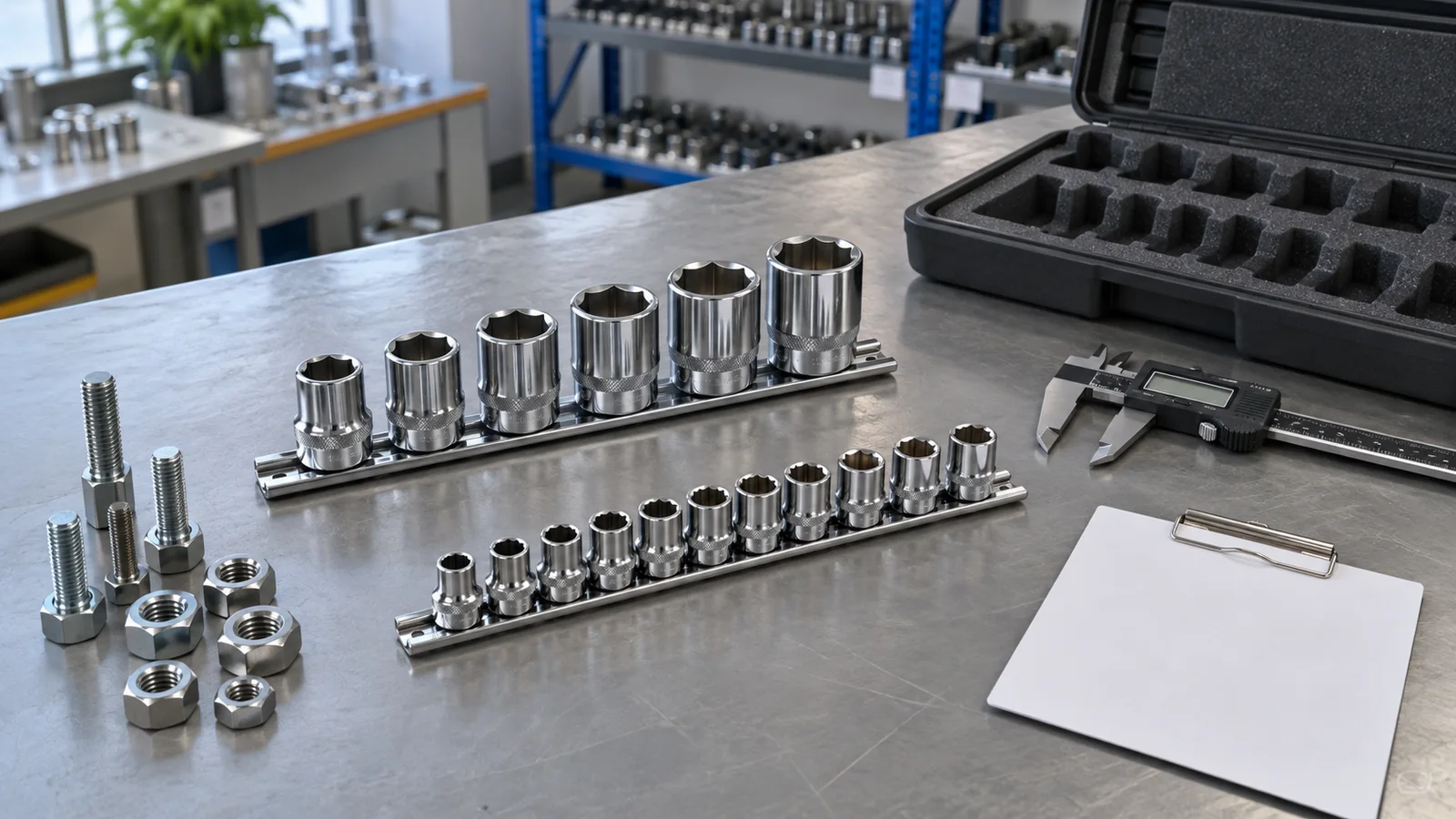
Six-point core rail and twelve-point specialty rail arranged for buyer approval
AI-generated conceptual illustration.
  • Match profile to fastener before evaluating convenience.
  • Use load and condition to decide whether cross-use is acceptable.
  • Put impact, depth, material, and conversion questions in their own fields.

Turn the choice into an RFQ rule. Send profile, size, drive, tool class, access, and approval details, then ask suppliers for samples that meet each line.

Practical action: issue a small pilot order with reference fasteners and inspection criteria before expanding a private-label range or distributor set.

Can a 12-point socket fit a six-point bolt? Yes, a matching size may engage a standard hex. Use exact-fit six-point tools for high force, corrosion, or damaged flats.

Does a 12-point socket turn faster than a 6-point socket? Point count changes engagement orientation. Ratchet teeth control handle return travel, so specify both.

Are 12-point sockets suitable for impact tools? Some are, but suitability comes from documented impact classification, construction, drive, retention, and application.

Should a repair shop buy both profiles? Usually, a six-point core plus targeted twelve-point sizes gives broader coverage without treating every profile as interchangeable.

What should I include in a socket RFQ? List profile, nominal size, SAE or metric system, drive, hand or impact class, depth, access, retention, markings, quantity, and sample acceptance rules.

Looking for a reliable mechanic tools manufacturer in China?

If you are sourcing hand tools, socket tools, automotive repair tools, mechanic tool sets or OEM private label tools, contact KOLARWIN Tools for factory-direct quotation, customization support and product consultation.


Repair shops and tool importers often face a deceptively small buying decision: should a socket set use six points, twelve points, or both? The answer starts with fastener geometry, then moves through load, access, drive type, and range planning. A 6 point vs 12 point socket comparison can prevent rounded fasteners, mismatched samples, and an RFQ that leaves suppliers guessing.

This guide uses the terminology buyers need for a clear BOM. It separates socket engagement from ratchet tooth swing and treats impact as a product classification. Depth, material, and metric-to-SAE conversion remain within their proper scope. A broader socket tools range can then carry those fields into a service or private-label program.

What is the difference between 6-point and 12-point sockets?

A six-point socket has a hexagonal opening with six repeating engagement positions, spaced 60° apart. A twelve-point socket uses a double-hex opening with twelve positions, spaced 30° apart. Extra placement can help in restricted spaces; point count alone does not establish strength or impact suitability.

Socket point count has a different job from ratchet tooth count. A socket describes its fastener opening. Ratchet teeth describe handle travel before pawl re-engagement. A fine-tooth ratchet can carry either profile, while a 12-point socket does not give a low-tooth ratchet a smaller return arc.

Unbranded six-point and twelve-point sockets viewed from above
AI-generated conceptual illustration.

Start with the interface field. Put 6-point hex or 12-point double-hex beside nominal size and SAE or metric system. “19 mm socket” alone leaves profile, tool class, and fit open to interpretation.

Profile terms buyers can approve

Specification item Six-point option Twelve-point option Why it belongs in the quote
Socket opening Hex Double-hex Defines engagement geometry
Repeating placement 60° 30° Shows available alignment positions
Ratchet relationship Independent Independent Prevents a point-count misunderstanding

Practical action: update your socket master data with point count, fastener profile, nominal size, drive size, and tool class before requesting prices.

Which socket profile matches each fastener?

Match a six-point socket with a standard six-point hex fastener when fit and load matter. Match a twelve-point socket with a true twelve-point fastener. A 12-point socket can engage a six-point hex of matching nominal size, but that compatibility does not make both profiles equal under every condition. A six-point socket cannot substitute for a true twelve-point fastener because its opening lacks the required double-hex geometry.

For a clean, undamaged six-point fastener under light hand work, cross-use may function. Under high force, corrosion, damaged flats, or repeated service, exact-fit selection gives more conservative contact. Record permitted cross-use as a controlled exception in the catalog.

Separate six-point and twelve-point socket and fastener profile pairs
AI-generated conceptual illustration.

Make fit auditable. Include fastener interface, across-flats size, point count, and exact-fit rule in each line item. This gives a quality inspector something concrete to check against a sample.

Fastener-to-socket matching table

Fastener condition or profile Preferred socket Controlled exception Buyer note
Clean six-point hex Six-point hex Twelve-point at light load Confirm fit before production use
True twelve-point Twelve-point double-hex None without engineering review Six-point is not an equivalent substitute
Corroded or worn hex Six-point hex None for high-force removal Inspect flats and replace if needed

Practical action: add a “matching profile required” checkbox to sample approval and RFQs.

How does point count affect contact and rounding risk?

Contact depends on more than a socket label. Poor fit, worn corners, corrosion, excessive clearance, or partial seating can increase slip and rounding risk. A six-point tool on a six-point fastener remains conservative for high-force hand work. That rule does not promise equal performance across products.

A twelve-point tool on a six-point fastener may seat on fewer effective contact surfaces as load rises or flats deteriorate. A clean fastener may tolerate that arrangement, yet a rusty-nut removal deserves an exact-fit six-point option. Rounded-corner designs can move contact toward flats, but no profile removes every failure mode. Geometry and fit govern the result.

Clean and worn hex fasteners beside six-point and twelve-point sockets
AI-generated conceptual illustration.

Read fastener condition before opening the catalog. Point count alone misses condition, seating, and actual load path.

Contact and condition review

Review factor Lower-risk condition Higher-risk condition Selection response
Fastener flats Clean and sharp Worn, rounded, or corroded Favor exact-fit six-point for hex
Socket seating Full and square Partial or tilted Stop and correct alignment
Applied load Light hand work Breaker bar or removal force Use matched profile and rated tool

Practical action: train receiving and service staff to reject a socket sample that rocks, binds, or seats shallow on its reference fastener.

Does a 12-point socket improve access?

A twelve-point socket offers more engagement orientations, so a user can align it every 30° instead of every 60°. That helps in a crowded engine bay or beside a frame rail. It does not make a tool slimmer, shorter, or safer on a damaged hex.

Access also depends on head thickness, depth, neck shape, extension length, and universal or swivel connection. Ratchet tooth count controls return travel separately. Any documented arc-swing value belongs in the ratchet specification, not in point-count claims. Universal joints solve approach angle; they do not repair mismatched engagement.

Technician aligning a hand socket in a restricted engine-bay space
AI-generated conceptual illustration.

Access has several moving parts. Ask for a drawing or sample fit when a twelve-point choice depends on a tight approach rather than fastener geometry.

Access variables at a glance

Access variable What it controls What point count controls RFQ field
Socket point count Fastener alignment positions 60° or 30° engagement pattern 6-point or 12-point
Ratchet tooth count Handle return travel Nothing about fastener contact Tooth count and arc swing
Depth and neck Reach and obstruction clearance Nothing about profile match Shallow, deep, necked, or thin-wall

Practical action: send a restricted-access photo, fixture drawing, or reference assembly with an access-sensitive request.

Which profile suits high-force hand work?

For a standard hex fastener under high hand force, choose a correctly sized six-point socket with a breaker bar, torque wrench, or hand ratchet. Matching contact supports a controlled load path and reduces slip inside a cross-profile opening. Selection still depends on socket quality, drive size, wall geometry, and fastener condition.

Twelve-point sockets fit true twelve-point fasteners and can help with restricted placement on clean hardware. A twelve-point impact or hand product is not automatically low-load, just as a six-point label does not prove torque capacity. Compare product data and application limits rather than assigning a universal ranking by point count.

Hand-ratchet setup with six-point and twelve-point socket samples
AI-generated conceptual illustration.

Load changes the buying threshold. A shop that regularly removes seized hardware should carry exact-fit six-point coverage across its core sizes.

Hand-work selection check

Hand-work situation Preferred profile Additional check Reason
High-force hex removal Matching six-point Condition and drive size Conservative contact on flats
Clean twelve-point assembly Matching twelve-point Torque procedure Correct fastener interface
Tight placement, clean hardware Profile that matches fastener Head thickness and swing Access may drive the choice

Practical action: require supervisor or technician approval for cross-profile use during high-force removal.

What changes when impact tools are involved?

Impact work changes the specification because powered tools deliver repeated shock loads and transient force. “Six-point” or “twelve-point” describes engagement; it does not prove impact rating, material, heat treatment, service life, or torque capacity. Use documented impact sockets and accessories with compatible drive size and retention. A generic chrome hand socket should stay off an impact wrench unless explicitly rated.

Product documentation may identify forged impact construction, an applicable standard, or pin-and-O-ring retention. Those details belong in an RFQ. The impact-rated sockets category can stand apart in your catalog, while profile remains separate. Require product-specific evidence for every material, standard, and use-rating statement.

Technician inspecting impact-rated socket profiles and retention features
AI-generated conceptual illustration.

Treat “impact” as its own gate. Do not let a point-count column carry a safety or performance claim it cannot support.

Impact RFQ fields

Field Example entry Why it matters
Tool class Impact-rated Confirms intended powered use
Interface 1/2-inch drive, 6-point Separates drive and profile
Retention Pin-and-O-ring or specified system Controls tool connection
Standard statement Supplier documentation required Supports product-level review

Practical action: require an impact classification statement and retention detail before approving samples.

How do depth, clearance, and accessories affect the decision?

Depth and clearance solve reach problems that point count cannot. A shallow socket can fit around structures, while a deep socket can reach a studded nut or recessed fastener. Thin-wall or necked profiles may help in confined openings, but wall thickness and application limits must come from product documentation. Keep these fields beside profile in a BOM.

Extensions, universal joints, and swivel sockets alter approach geometry. Model-specific accessories may list a working angle, yet that figure should not be generalized across a family. For automotive ranges, pair access notes with automotive repair tools. Keep metric and SAE lookup separate through a metric-to-SAE conversion chart.

Shallow and deep sockets with extension and universal joint arranged separately
AI-generated conceptual illustration.

Clearance deserves its own line item. Ask suppliers for length, head, neck, and accessory dimensions when a sample must reach a recessed or obstructed fastener.

Access specification matrix

Access need Socket or accessory field Profile decision still required
Recessed nut or stud Deep length Match hex or double-hex
Nearby obstruction Shallow, thin-wall, or neck profile Confirm actual fastener interface
Angled approach Universal or swivel, working angle Do not use angle as a fit substitute

Practical action: add a clearance sketch and maximum head dimension to every access-sensitive RFQ.

How should a repair shop configure socket sets?

Most repair shops can build a core around matching six-point sockets for common hex fasteners. Add twelve-point coverage for true double-hex hardware and access-driven jobs. Separate metric and SAE trays. Keep impact-rated rows apart from hand-drive rows so technicians do not grab a chrome hand socket for powered work.

A set should reflect drive sizes, depth, and replacement policy. Unclear profile markings slow selection. For a full socket set configurations program, map fastener families, access conditions, and tool types before choosing case layout. A complete mechanics tool set may combine accessories, yet its socket sub-BOM still needs these fields. A mechanic tools list can prioritize supporting tools after socket coverage is defined.

Repair-shop drawer with separate six-point and twelve-point socket rows
AI-generated conceptual illustration.

Organize around the job. Label trays by profile, system, drive, and depth so replacement buyers can reorder one missing socket without guessing.

Set-configuration example

Set area Core contents Storage rule Buyer benefit
Hand-drive hex Six-point metric and SAE Separate size families Fast exact-fit selection
Twelve-point specialty Matching double-hex sizes Mark true profile Supports specific fasteners
Impact Documented impact products Separate drawer or case Reduces misuse risk
Access Shallow, deep, extensions Group by drive size Faster reach decisions

Practical action: audit one drawer and tag sockets whose profile, drive class, or unit system is unclear.

What should distributors put in an RFQ and BOM?

An RFQ should make a supplier quote a defined interface rather than a vague size list. Start with six-point hex or twelve-point double-hex, nominal across-flats size, and SAE or metric system. Add drive, hand or impact use, depth, wall or neck requirement, retention, markings, quantity, and approved cross-use rules. This structure simplifies sample review and replacement.

Ask for product-level documents where a claim affects safety or selection. A standard’s socket performance and safety scope can frame review, yet it does not create a universal strength ranking by point count. For supplier due diligence, use a socket set manufacturer checklist before commercial questions reach the contact page.

Tool professionals reviewing socket profiles and a blank component matrix
AI-generated conceptual illustration.

Write acceptance criteria before ordering. State how a sample must seat on reference fasteners and which documents must accompany approval.

RFQ and BOM checklist

BOM field Example wording Approval evidence
Fastener interface 6-point hex, 19 mm, metric Reference fastener fit
Tool class Hand ratchet, 3/8-inch drive Sample interface check
Access Shallow, standard neck Drawing or measured sample
Identification Part number and size marking Photo and inspection record
Replacement Interchangeability rule Approved revision record

Practical action: send a BOM with reference fasteners, photos, and acceptance criteria attached to every supplier request.

Which profile should a buyer choose?

Choose a matching six-point socket for ordinary hex fasteners when hand load, corrosion, damaged flats, or removal force raises slip risk. Choose a matching twelve-point socket for true twelve-point fasteners. Choose twelve points for a clean matching fastener when placement solves an access problem. Verify depth, drive, ratchet swing, and tool classification separately.

Many buyers should carry both profiles, but they do not need equal quantities. Make six-point hex coverage the core of high-force hand service, and add twelve-point sizes around known vehicle, machinery, or assembly applications. Powered work requires impact-rated products and documented accessories regardless of point count.

Six-point core rail and twelve-point specialty rail arranged for buyer approval
AI-generated conceptual illustration.

Turn the choice into an RFQ rule. Send profile, size, drive, tool class, access, and approval details, then ask suppliers for samples that meet each line.

Practical action: issue a small pilot order with reference fasteners and inspection criteria before expanding a private-label range or distributor set.

Can a 12-point socket fit a six-point bolt? Yes, a matching size may engage a standard hex. Use exact-fit six-point tools for high force, corrosion, or damaged flats.

Does a 12-point socket turn faster than a 6-point socket? Point count changes engagement orientation. Ratchet teeth control handle return travel, so specify both.

Are 12-point sockets suitable for impact tools? Some are, but suitability comes from documented impact classification, construction, drive, retention, and application.

Should a repair shop buy both profiles? Usually, a six-point core plus targeted twelve-point sizes gives broader coverage without treating every profile as interchangeable.

What should I include in a socket RFQ? List profile, nominal size, SAE or metric system, drive, hand or impact class, depth, access, retention, markings, quantity, and sample acceptance rules.

Why Partner with Kolarwin Tools?

Factory-Direct Pricing Skip the middleman — access competitive wholesale prices and protect your margins
Private Label & OEM Ready Your brand, our expertise — full customization from logo to packaging
Fast Global Shipping Reliable delivery to 60+ countries with full export documentation support
Low MOQ, High Flexibility Start small, scale fast — flexible order quantities to fit your business
Dedicated B2B Support One-on-one account management from quote to delivery, every time

Get Your Free Quote in 24 Hours

Tell us your sourcing needs — we'll respond with a tailored quote, product specs, and the best pricing for your market. No commitment required.

Chat on WhatsApp Email Us Directly
