
Need OEM supplier support for this product type?
Contact KOLARWIN Tools for OEM mechanic tools, private label packaging, wholesale quotation and product range support. This gives overseas buyers a clear path from article reading to supplier discussion.
A socket can have the right working opening yet be wrong for a range because its square drive does not suit the tool or access. The square drive is separate from the working hex or other profile.
For socket drive sizes, choose the square drive from access, handle ecosystem, socket depth, hand-versus-impact use, and verified sample fit. Treat 1/4, 3/8, 1/2, 3/4, and 1 inch as product families with different workflows, not as universal torque classes. This guide stays with square-drive selection.
1. What do socket drive sizes describe?
Socket drive size describes the square connection between a socket and its ratchet, breaker bar, torque wrench, or powered tool. It does not describe the working hex, Torx profile, socket outside diameter, or a guaranteed torque capacity.
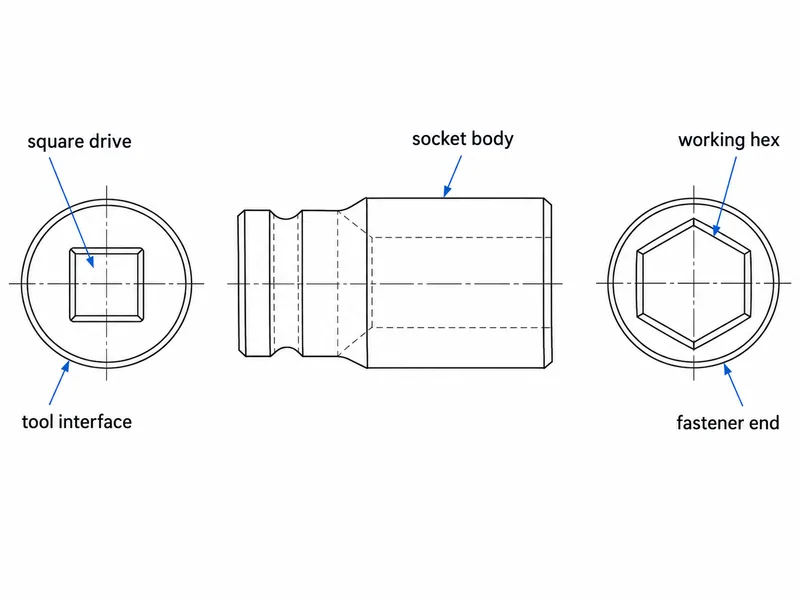
How is the square drive different from the working end?
The square drive sits at the socket’s tool end. The working end receives the fastener profile. One drive family can carry many working openings, while one working opening may be offered in more than one drive family.
The clean specification starts with two separate fields.
- Square drive: the interface that accepts the turning tool.
- Working profile: the opening or bit that engages the fastener.
Why should a buyer avoid one-size drive language?
| Specification field | What it controls | What it does not prove |
|---|---|---|
| Square drive | Ratchet or tool compatibility | Universal load capacity |
| Working profile | Fastener engagement | Drive compatibility |
| Socket depth | Reach around a stud or recess | Drive strength |
Use this table to separate interface and fastener fields.
“Professional socket” says little about the square drive, intended tool, or access envelope. A buyer needs the drive, working profile, length, depth, and use mode together before comparing samples.
- Separate hand-drive and impact-drive listings.
- Show compatible ratchet, extension, or powered-tool families.
Which tool connects to the square, and what work envelope must it reach?
For working-hex inch/mm conversion, use the existing metric-to-standard conversion guide separately.
Key Takeaway: Define the square drive independently from the working opening.
2. When should a buyer choose 1/4-inch drive?
Choose 1/4-inch drive when compact access and controlled hand use matter more than a larger handle ecosystem. It suits small sockets, close-quarter work, and lighter assemblies when the socket, ratchet, and fastener have been sampled together.
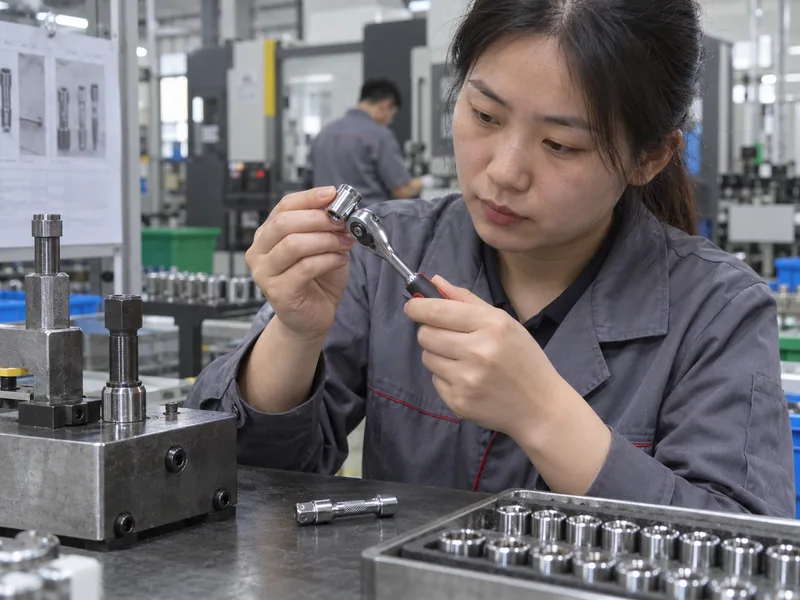
What access problem does 1/4-inch drive solve?
The smaller square can pair with compact ratchets and short extensions, reducing bulk around panels, brackets, and confined assemblies. It does not automatically make every socket slim because socket body, wall, and working opening still determine clearance.
Small interface, specific job.
- Measure the complete ratchet-and-socket envelope.
- Check detent or retention at the square.
What should appear in a 1/4-inch drive RFQ?
| 1/4-inch drive check | Buyer question | Sample evidence |
|---|---|---|
| Square fit | Does the ratchet seat fully? | Detent and insertion check |
| Access | Does the handle clear the assembly? | Fixture trial |
| Socket body | Does wall and depth suit the recess? | Outside-envelope measurement |
Use this to qualify a compact range without a load number.
The RFQ should be specific. List socket family, working profile, depth, outside diameter, square tolerance, retaining method, and intended use.
- Request a master ratchet and fixture sample.
- State whether a torque tool is in scope.
The socket tools category can help place compact drives inside a broader assortment, while each 1/4-inch SKU still needs its own access evidence.
Key Takeaway: Use 1/4-inch drive for verified compact hand-tool work.
3. When does 3/8-inch drive fit the workflow?
Choose 3/8-inch drive when a range needs a flexible middle interface for hand-tool access, extensions, and moderate socket bodies. Its suitability comes from the tool chain, not a universal torque claim.
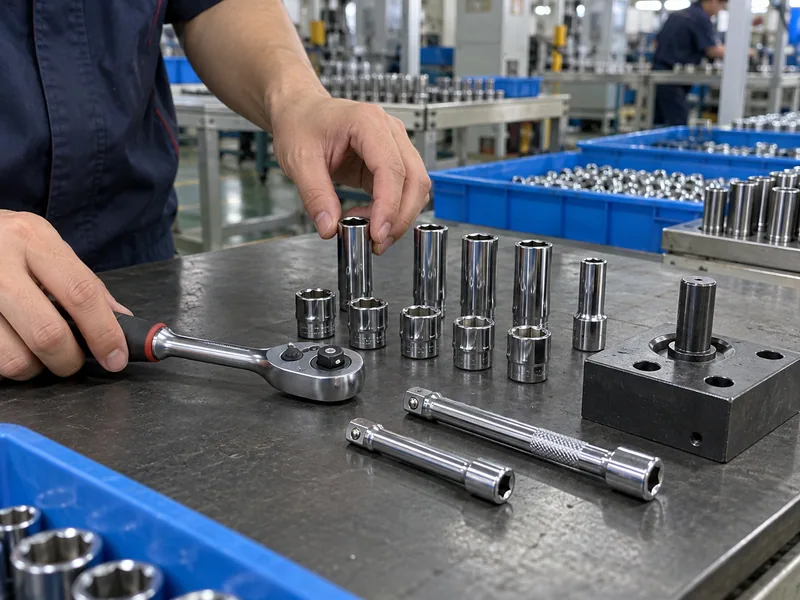
What makes 3/8-inch drive a range anchor?
Many hand-tool programs use 3/8-inch drive as a bridge between compact access and larger sockets. A buyer should still check ratchet head size, handle length, socket outside diameter, and the customer’s actual fastener work.
The middle drive still needs a measured role.
- Pair it with the ratchets and extensions customers already use.
- Separate shallow, deep, and specialty socket bodies.
How should a buyer avoid drive duplication?
| 3/8-inch drive field | Why it matters | Approval method |
|---|---|---|
| Ratchet head | Controls swing and access | Working fixture |
| Extension family | Controls reach and retention | Assembly sample |
| Socket depth | Controls stud and recess clearance | Depth check |
Use this to build a role-based 3/8-inch range.
Add a second 3/8-inch drive when access, handle compatibility, depth, or workflow justifies it.
- Record the reason code for every duplicate opening.
- Compare full envelope and extension compatibility.
For a wider automotive assortment, review automotive repair tools while keeping square-drive evidence in the individual socket record.
Key Takeaway: Make 3/8-inch drive a workflow decision, not a default.
4. When does 1/2-inch drive make sense?
Choose 1/2-inch drive when the range needs larger ratchets, breaker bars, deeper bodies, or selected heavy-duty workflow coverage. Drive size alone does not validate a socket for a fastener or powered tool.
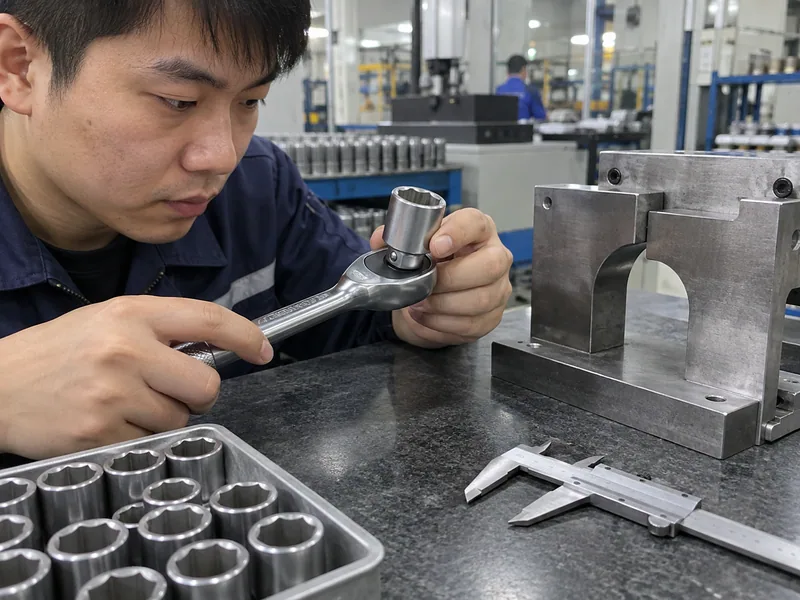
What should be checked before adding 1/2-inch drive?
Check square engagement, retaining method, socket wall, outside diameter, length, and compatibility with the intended hand or powered tool. A larger square may add bulk that blocks access around covers or brackets.
A larger interface changes the whole envelope.
- Test the drive with the target ratchet or breaker bar.
- Check extension retention under the approved use method.
How should a distributor describe 1/2-inch drive?
| 1/2-inch drive field | Range decision | Evidence |
|---|---|---|
| Tool interface | Which ratchet or bar connects? | Square-drive sample |
| Body envelope | Does the socket clear nearby parts? | Access fixture |
| Depth | Does it reach without bottoming? | Stud and recess sample |
Use this to compare 1/2-inch workflows.
Claims need boundaries. Describe the drive, tool mode, depth, and tested access role; avoid universal capacity wording.
- State whether impact use is excluded or separately validated.
- Keep any load or torque statement tied to a specific manufacturer document.
Compare impact socket options only when the socket material, retention, and powered-tool procedure are separately documented.
Key Takeaway: Add 1/2-inch drive for a verified larger-tool workflow.
5. What are 3/4-inch and 1-inch drives for?
3/4-inch and 1-inch drives serve selected heavy-equipment, industrial-maintenance, construction, and large-fastener programs where the complete tool system supports their size. They should enter a range through application evidence, not because a larger square looks stronger.
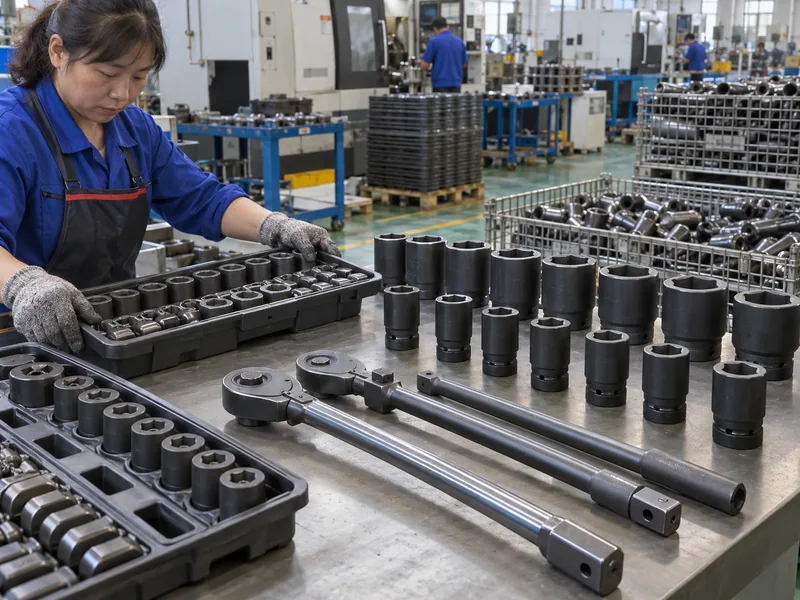
Which applications justify these drive families?
Use equipment lists, socket drawings, tool interfaces, and fixtures to define the role. A 3/4-inch or 1-inch drive can be unnecessary bulk where a smaller system works.
Large drive, narrow decision.
- Confirm the customer’s tool ecosystem.
- Check storage, transport, and replacement logic.
How should the RFQ handle large drives?
| Drive family | Buyer focus | Evidence needed |
|---|---|---|
| 3/4-inch | Selected heavy-equipment and maintenance work | Customer tool and fixture |
| 1-inch | Larger industrial or construction programs | Equipment and access record |
Use this to plan a targeted range without a rating.
Large-drive evidence must be specific. State square, profile, length, envelope, tool mode, retention, finish, marking, and fixture.
- Separate individual sockets from adapters and extensions.
- Require a physical fit sample before a large set is approved.
The industry solutions page can frame maintenance context, but the drive choice still requires customer-specific evidence.
Key Takeaway: Treat 3/4-inch and 1-inch as application-led families.
6. How should a buyer match hand-drive and impact-drive sockets?
Match socket construction, retaining method, markings, and instructions to hand-drive or impact-drive use. A square drive that fits a tool does not make a hand socket suitable for powered impact service.
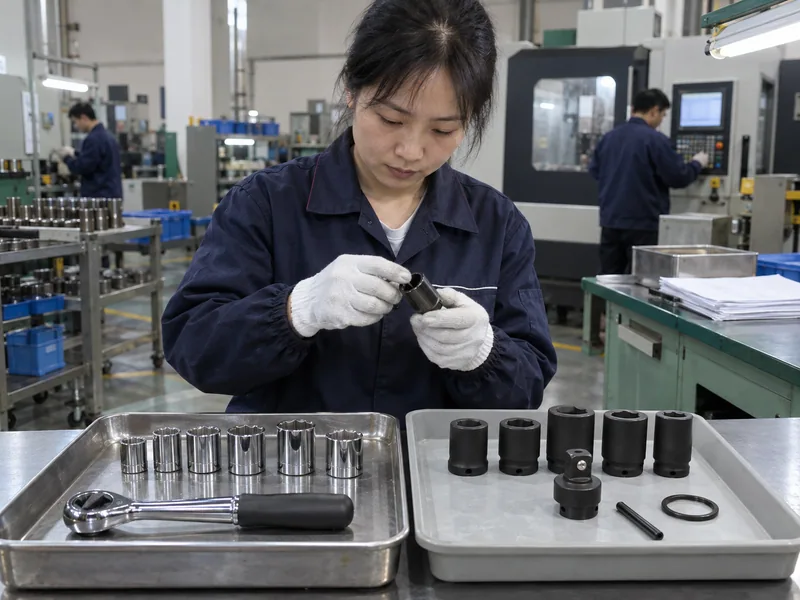
What separates hand and impact workflows?
Hand sockets and impact sockets can differ in material, wall profile, finish, retention, and marked use. The buyer should record the tool source, operating method, and accessory path rather than rely on the square size alone.
The drive interface is only the starting point.
- Mark impact sockets for impact use.
- Separate hand and impact packaging.
Are adapters the weakest link?
| Workflow | Socket data to control | QC evidence |
|---|---|---|
| Hand drive | Ratchet, finish, profile, and retention | Hand-tool sample |
| Impact drive | Material, retention, marking, and procedure | Powered-tool documentation |
Use this to avoid false equivalence.
The weakest link is often added. An adapter adds an interface, retention point, and length; it may solve access while adding looseness or bulk.
- Specify both drive sizes and the adapter’s intended mode.
- Test the adapter with the exact socket and tool family.
Review socket-set planning for assortment architecture, while keeping adapters separately identified in the RFQ.
Key Takeaway: Match hand or impact use before matching the square.
7. How should extensions and access affect drive selection?
Extensions, universal joints, wobble features, and low-clearance ratchets can change reach and swing without changing the nominal square drive. Select them as part of an access path, then verify that engagement and retention remain stable.
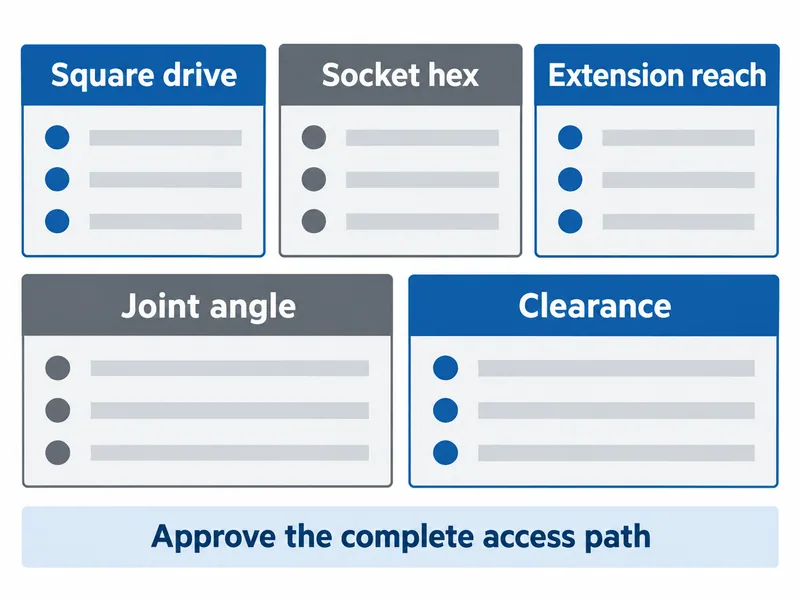
Which access fields belong in a sample fixture?
Record extension length, joint height, wobble or swivel behavior, socket depth, nearby obstruction, and handle sweep. A longer path can reach a recess while reducing visibility or increasing movement at the fastener.
Reach is a system property.
- Test straight and articulated paths separately.
- Check retention at every connection.
- Keep the socket aligned with the fastener.
When should the drive stay smaller?
| Access component | Benefit | Risk to test |
|---|---|---|
| Straight extension | Predictable reach | Added length or obstruction |
| Wobble extension | Small angle correction | Reduced alignment |
| Universal joint | Larger access angle | More bulk and movement |
Use this to approve an access path.
The smaller path wins when verified. Keep a smaller drive when body, ratchet, and extension clear the job. Do not force a reducer into a mismatch.
- Compare the full path before choosing an adapter.
- Keep the smallest approved interface that meets the access need.
The mechanics tool set range can help place drive families inside a larger kit without hiding access differences.
Key Takeaway: Approve drive, extension, and clearance as one workflow.
8. How should suppliers inspect socket drive samples?
Supplier QC should verify square dimensions, retention, socket engagement, body condition, markings, access, and repeatability against controlled tools and fixtures. A polished sample or correct box label is not enough.
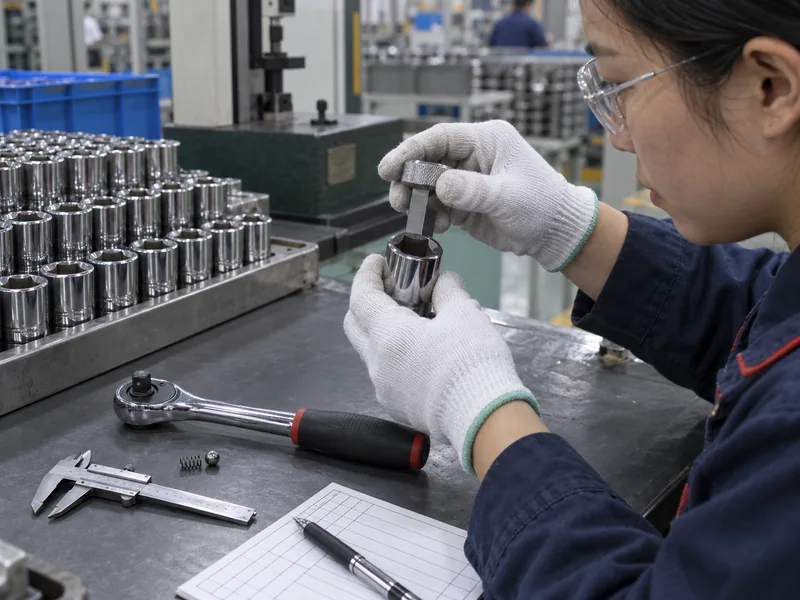
Which checks belong in the QC report?
Record square opening, depth, corner condition, detent or retention behavior, socket body dimensions, finish, marking, and fit with the intended ratchet or powered tool. Keep hand and impact samples separate.
A sample report should explain the interface.
- Use a master drive gauge or approved tool.
- Check insertion, retention, and release.
How should failed drive samples be handled?
| QC check | Record | Stop condition |
|---|---|---|
| Square fit | Opening, depth, and retention | Loose or incomplete seat |
| Body | Length, wall, and outside envelope | Fixture interference |
| Use mode | Hand or impact marking and sample | Mixed or missing identity |
Use this as a release checklist; retain revision.
Failed samples need traceability. Quarantine loose, damaged, twisted, or unclear samples. Do not generalize one failure to an entire drive family.
- Record the exact SKU, tool, and revision.
- Re-test after a controlled correction.
Adjacent hand-tool planning can support the range, while drive QC remains a socket-interface check.
Key Takeaway: Release socket drives through measured interface evidence.
9. What should a socket drive size RFQ include?
An RFQ should define square drive, profile, depth, body envelope, use mode, retention, extensions, packaging, sample method, and change control. “Socket set” alone is not comparable.
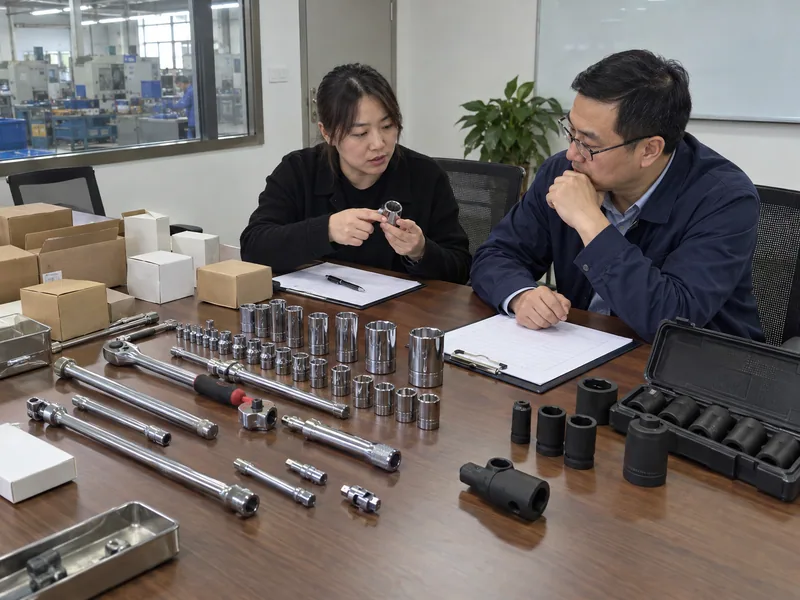
Which technical fields prevent mismatched quotes?
State the square drive family, socket profile, length, outside diameter, depth, retaining method, tool mode, extension path, marking, and fixture. Add the customer’s access drawing or master tool where the square or body is unusual.
Clear RFQs protect the range from hidden adapters.
- List 1/4, 3/8, 1/2, 3/4, or 1-inch square drive explicitly.
- Separate hand and impact SKUs.
- Ask for dimensional results and sample photos.
Which commercial details belong beside the drawing?
| RFQ block | Example requirement | Approval evidence |
|---|---|---|
| Square drive | Nominal family and tolerance | Master tool or gauge |
| Socket body | Length, depth, wall, and envelope | Drawing and fixture |
| Use mode | Hand or impact with instructions | Marking and sample |
| Accessories | Extensions, joints, and adapters | Assembly trial |
Use this for supplier comparison. The about page supports background review.
Commercial details follow the drawing. Ask for sample timing, replacements, packaging, instructions, change notice, and quote validity. Tie price and lead time to the exact drive family.
- Request separate lines for adapters and extensions.
- State inspection ownership and report format.
Do not approve a lower quote if it removes the master tool, gauge result, or use-mode marking needed for repeat orders.
Key Takeaway: A complete RFQ makes square-drive selection testable.
10. How should a buyer release a socket drive range?
Release a socket drive range after the square fits, retains, clears the fixture, and matches hand or impact use. Use measured evidence rather than a drive-to-load shortcut.
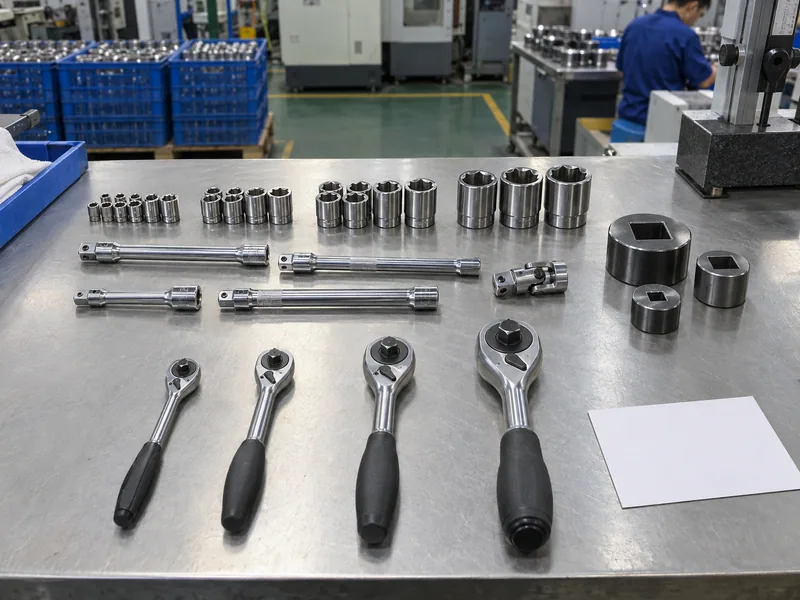
What is the final release gate?
Confirm each SKU’s square drive, working profile, body envelope, depth, accessory path, use mode, packaging, and revision record. Keep unsupported drive combinations outside the published range until a sample supports them.
- Approve the master tool and fixture.
- Approve the sample report and markings.
- Approve hand or impact instructions.
Use the contact page to send an approved square-drive RFQ. The main tool range can be reviewed when sockets are part of a broader order.
The buying decision should stay tied to the square. A clear interface, access path, use mode, and revision record give a B2B range a defensible release basis.
Can one drive size fit every socket job? No. Access, body envelope, tool compatibility, and use mode can require different square-drive families.
Is a larger square drive always stronger? No universal capacity follows from drive size alone. Use the manufacturer’s product and use documentation.
Can a reducer make any socket range interchangeable? It can connect two interfaces in selected applications, but add an adapter only after checking retention, access, and use-mode approval.
Should hand and impact sockets share one SKU? Only when the supplier’s documentation and samples support that exact dual-use claim. Keep distinct use modes separate by default.
What should an importer request before bulk approval? Request square-drive drawings, master tools, body measurements, retention results, hand-or-impact instructions, sample photos, packaging proof, and change-control terms.
Looking for a reliable mechanic tools manufacturer in China?
If you are sourcing hand tools, socket tools, automotive repair tools, mechanic tool sets or OEM private label tools, contact KOLARWIN Tools for factory-direct quotation, customization support and product consultation.


