
Need OEM supplier support for this product type?
Contact KOLARWIN Tools for OEM mechanic tools, private label packaging, wholesale quotation and product range support. This gives overseas buyers a clear path from article reading to supplier discussion.
US distributors, importers, repair shops, and private-label tool buyers often compare socket depth after a fit problem appears. A nut sits behind a bracket, a stud reaches past a standard socket, or a deep body hits nearby hardware before the drive seats. That small mismatch can create returns, slow service work, and unclear RFQ language.
The practical answer is straightforward: choose depth from reach and clearance. A deep socket gives more internal room for long studs or recessed nuts. A shallow socket keeps the tool shorter where headroom or side access is limited. Depth does not define impact rating, drive size, point count, measurement system, wall thickness, or torque capacity. Those fields need their own product decisions and checks.
For range planning, begin with actual service fasteners and a clear bill of materials. Sockets, extensions, adapters, and sets belong in one planning conversation while each item still needs a separate specification.
What is the difference between a deep socket and a shallow socket?
A shallow socket has a shorter body and less usable internal clearance behind its fastener opening. It suits fasteners that sit near a surface or locations where a longer body would meet an obstruction. A deep socket has a longer body with more internal clearance. That extra room can pass over exposed thread or reach a nut set inside a recess.
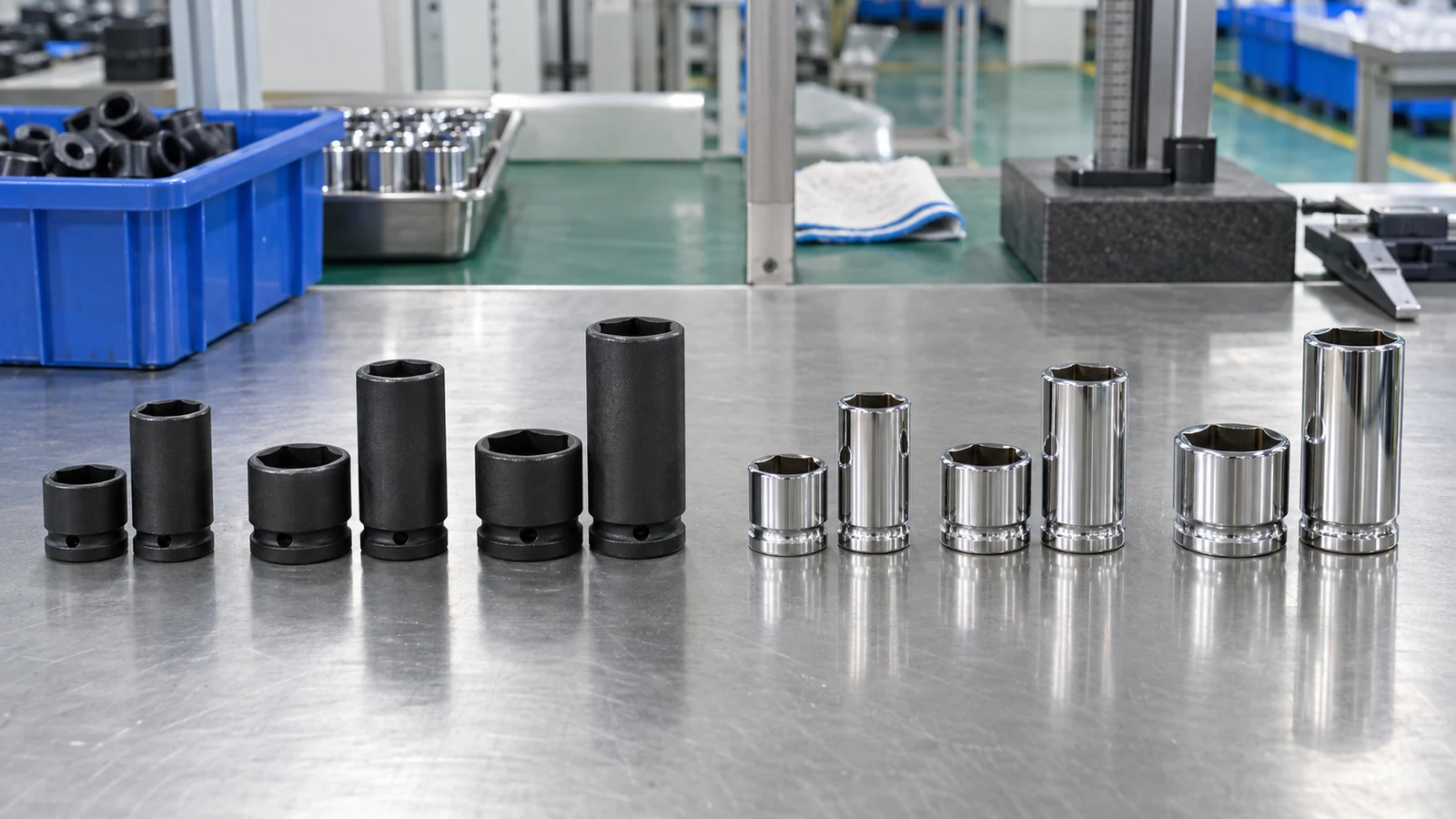
Depth describes reach. It does not describe a socket’s drive size, point count, metric or SAE system, hand or impact class, wall thickness, or torque capacity. A 1/2-inch-drive deep socket and a 1/2-inch-drive shallow socket can share a nominal size while serving different access conditions. A broader socket tools range should still record depth as a separate field.
- Shallow: shorter reach and often easier headroom control.
- Deep: extra internal clearance for studs and recessed nuts.
- Both: still require a defined size, drive, point count, system, and product class.
Here is the working definition. Put “depth” beside reach and clearance in product data, then keep other performance fields separate.
Buyer checkpoint
| Field | Shallow socket | Deep socket | Buyer check |
|---|---|---|---|
| Main job | Surface-level fastener | Studded or recessed fastener | Use a reference assembly |
| Body reach | Shorter | Longer | Confirm drawing or sample |
| Clearance risk | May lack internal room | May meet nearby parts | Check headroom and side space |
| Independent fields | Drive, point, system, class | Drive, point, system, class | Quote each field separately |
Practical action: add depth, total length, drive, point count, measurement system, and tool class as separate columns in your socket master data.
Why does a deep socket help with long studs and recessed nuts?
A deep socket helps when a nut sits beyond a flat surface or when exposed thread rises above the nut. Internal length lets the socket pass over that thread while its opening stays seated on the nut. This situation appears around wheel studs, suspension mounts, pipe supports, engine-bay brackets, and other assemblies with limited hand access.
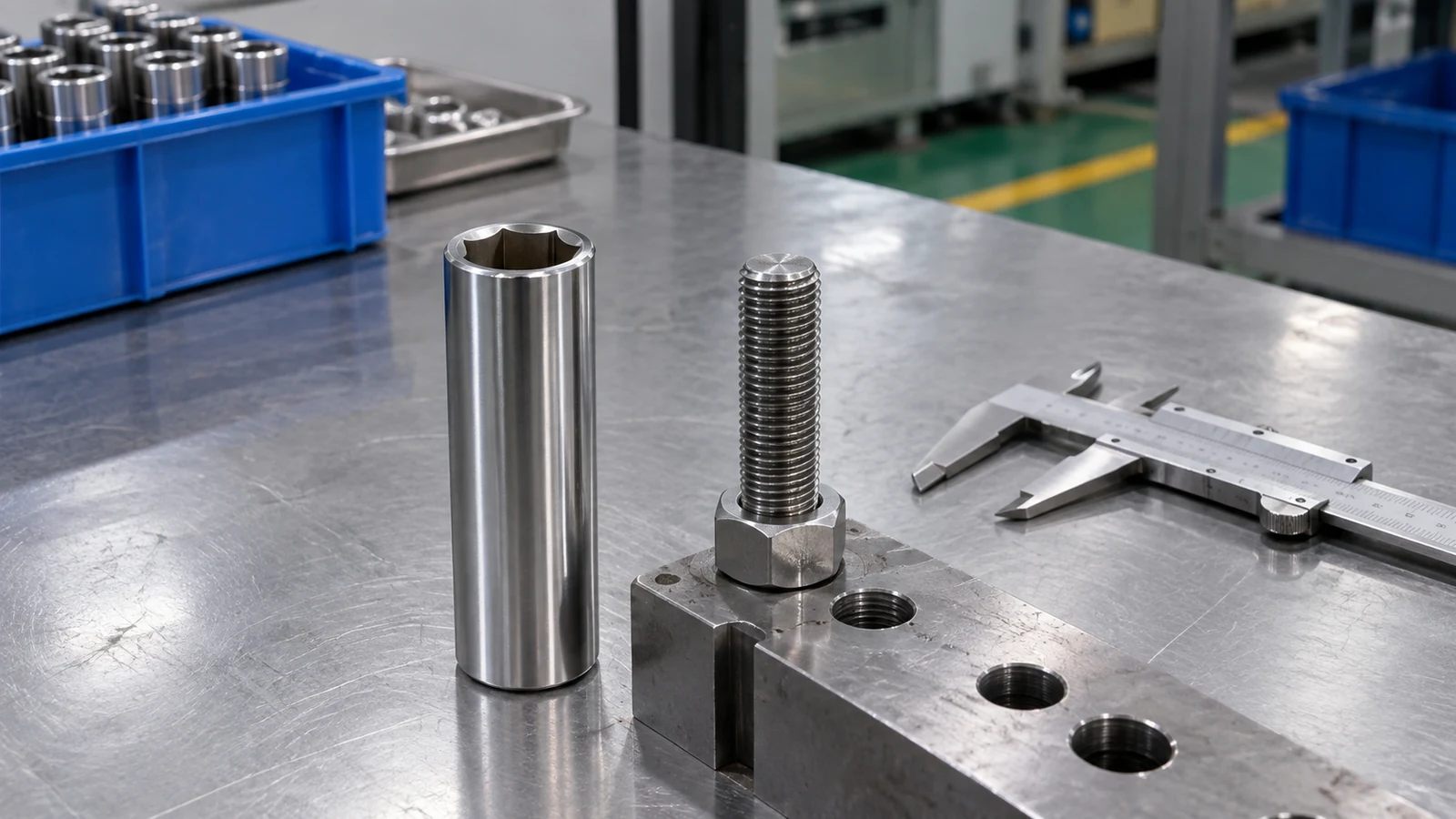
Reach still depends on nut position, stud length, body shape, and nearby obstruction. A deep body cannot compensate for the wrong nominal size or a drive that cannot seat. A socket can also be too deep for a nearby panel or bracket, so a sample fit remains useful.
- Long stud above nut: check internal clearance and total body length.
- Recessed nut: check entry diameter, opening depth, and approach path.
- Mixed service work: keep matching shallow coverage for adjacent fasteners.
Fit comes before reach. Extra depth helps only when internal room solves the actual obstruction.
Reach decision table
| Fastener condition | Likely starting point | Extra check | Range note |
|---|---|---|---|
| Long exposed stud | Deep socket | Internal clearance | Stock sizes used on that assembly |
| Nut inside a recess | Deep or specialized profile | Entry and side clearance | Approve against a reference part |
| Nut near open surface | Shallow socket | Headroom | Avoid needless body length |
| Unknown assembly | Sample both depths | Fit and seating | Keep a trial SKU until confirmed |
Practical action: measure nut position, exposed stud length, entry opening, and nearby obstruction before adding deep sockets to a purchase list.
When does a shallow socket work better in confined spaces?
A shallow socket works better when a fastener sits close to a surface and surrounding parts limit tool height. Its shorter body can clear a frame rail, cover, casting, or panel that would stop a deep socket before full engagement. This can matter in engine bays, compact machinery, brake assemblies, and crowded service fixtures.
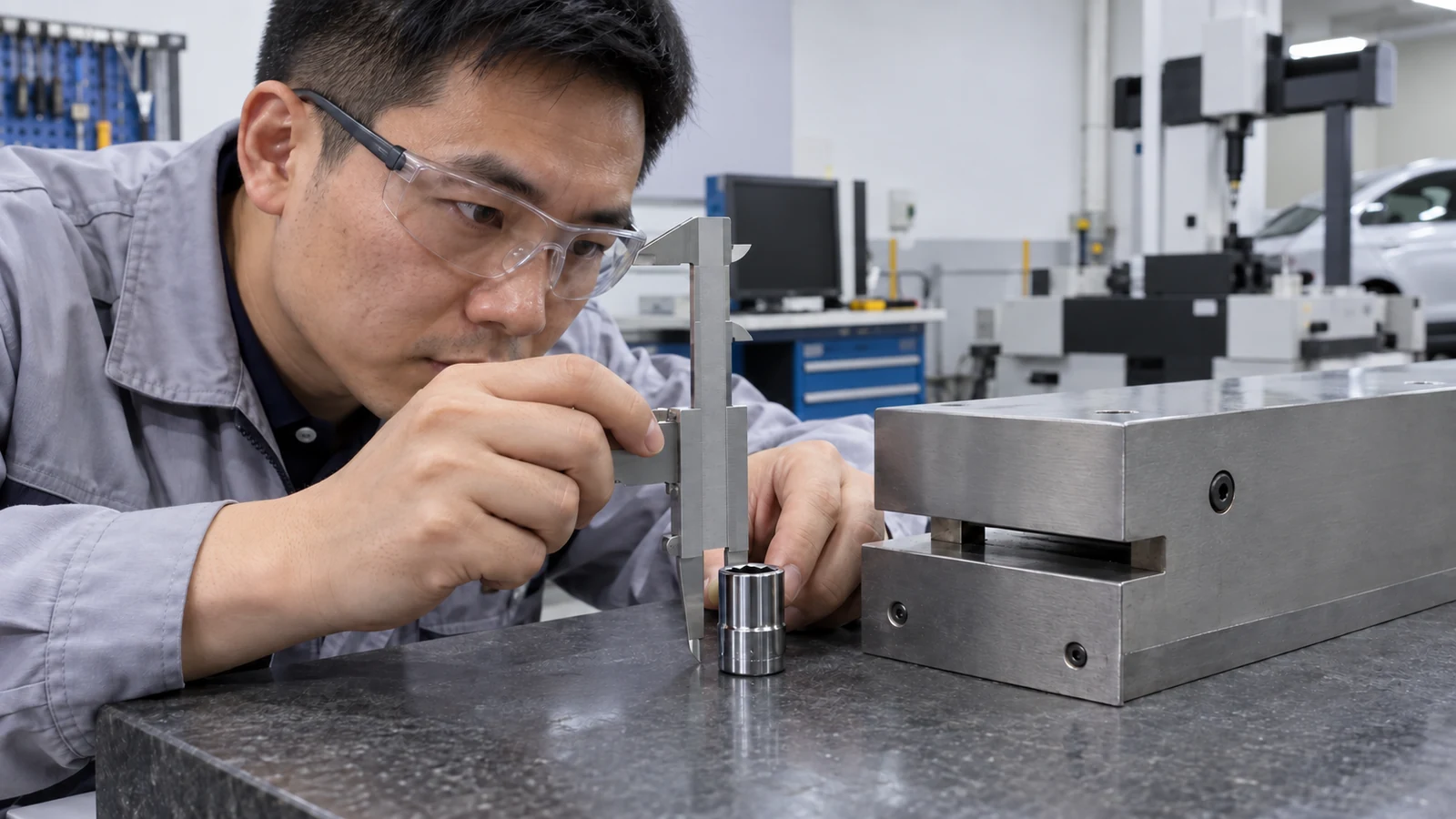
Shorter reach does not mean weaker construction. It only describes body geometry. Selection still depends on fit, drive, point count, wall design, and use class. If a nut has exposed thread, a shallow body may bottom out before the opening reaches the fastener. That is a reach failure, not a strength ranking.
- Low headroom: compare total socket length with nearby surfaces.
- Tight side access: check outer diameter and neck shape.
- Flat fastener position: start with shallow depth before adding length.
Clearance changes the answer. A shorter socket can save more working space than extra reach can provide.
Access decision table
| Access condition | Starting depth | What can go wrong | Approval check |
|---|---|---|---|
| Low overhead clearance | Shallow | Deep body hits cover | Full seating under obstruction |
| Tight side opening | Shallow or thin-wall option | Outer body binds | Entry and outside diameter |
| Thread extends above nut | Deep | Shallow bottoms out | Stud clearance and seating |
| Recessed nut | Deep | Entry shoulder blocks access | Recess depth and opening |
Practical action: record minimum headroom and side clearance beside every access-sensitive socket line item.
Does socket depth change impact rating or torque capacity?
No. Depth alone does not establish whether a socket suits an impact wrench, nor does it set torque capacity. A deep and shallow socket can both require separate documentation for material, heat treatment, drive interface, point profile, wall design, retention, and intended use. Product class must come from a defined specification or supplier document. Use the impact-rated versus regular socket guide for that separate decision.
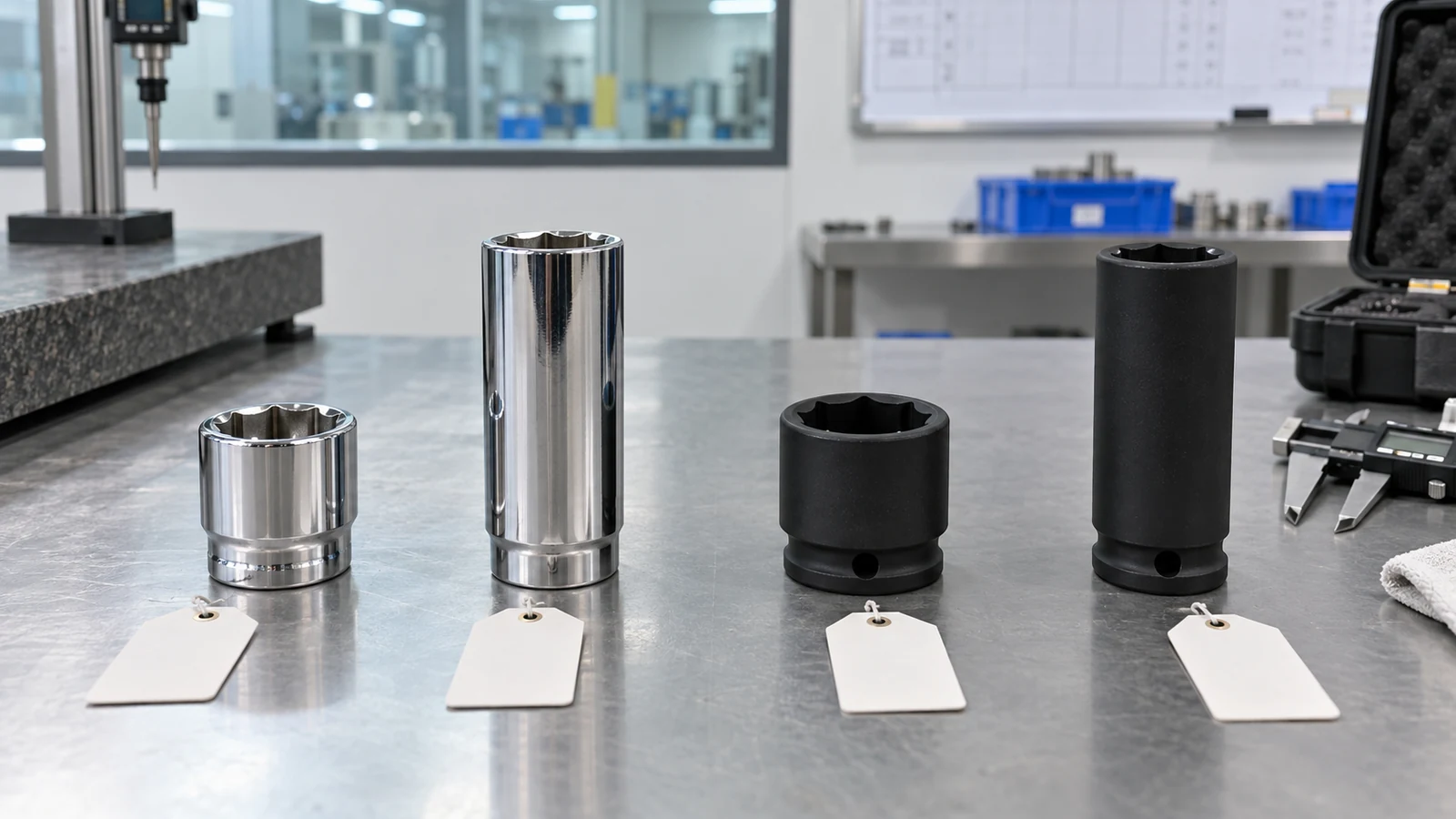
The same boundary applies to torque. Capacity depends on the complete tool design, dimensions, material condition, drive connection, fastener fit, and application limits. A buyer should not label a deep socket stronger because its body looks longer. A buyer should not label a shallow socket safer because it has less body.
- Impact class: confirm as its own product field.
- Torque or load limit: request product-level evidence where required.
- Depth: use for reach and clearance only.
Keep force and access separate. That rule prevents a depth choice from carrying claims it cannot support.
Independent specification fields
| Field | What it controls | What depth does not prove |
|---|---|---|
| Depth and total length | Reach and clearance | Impact suitability |
| Drive size | Tool connection | Torque capacity by itself |
| Point count | Fastener interface geometry | Wall thickness |
| Material and heat treatment | Product construction | Correct fit on every nut |
| Wall or neck design | Access and local geometry | Universal strength ranking |
Practical action: require separate acceptance lines for depth, tool class, drive, material, wall design, and any torque or load statement.
How should extensions and accessories affect socket depth choice?
An extension can add reach when a socket seats correctly but the handle cannot reach the drive. That solution may suit a deep recess with a straight approach. A deep socket can be better when exposed stud occupies internal space, because an extension cannot create room inside a shallow body.
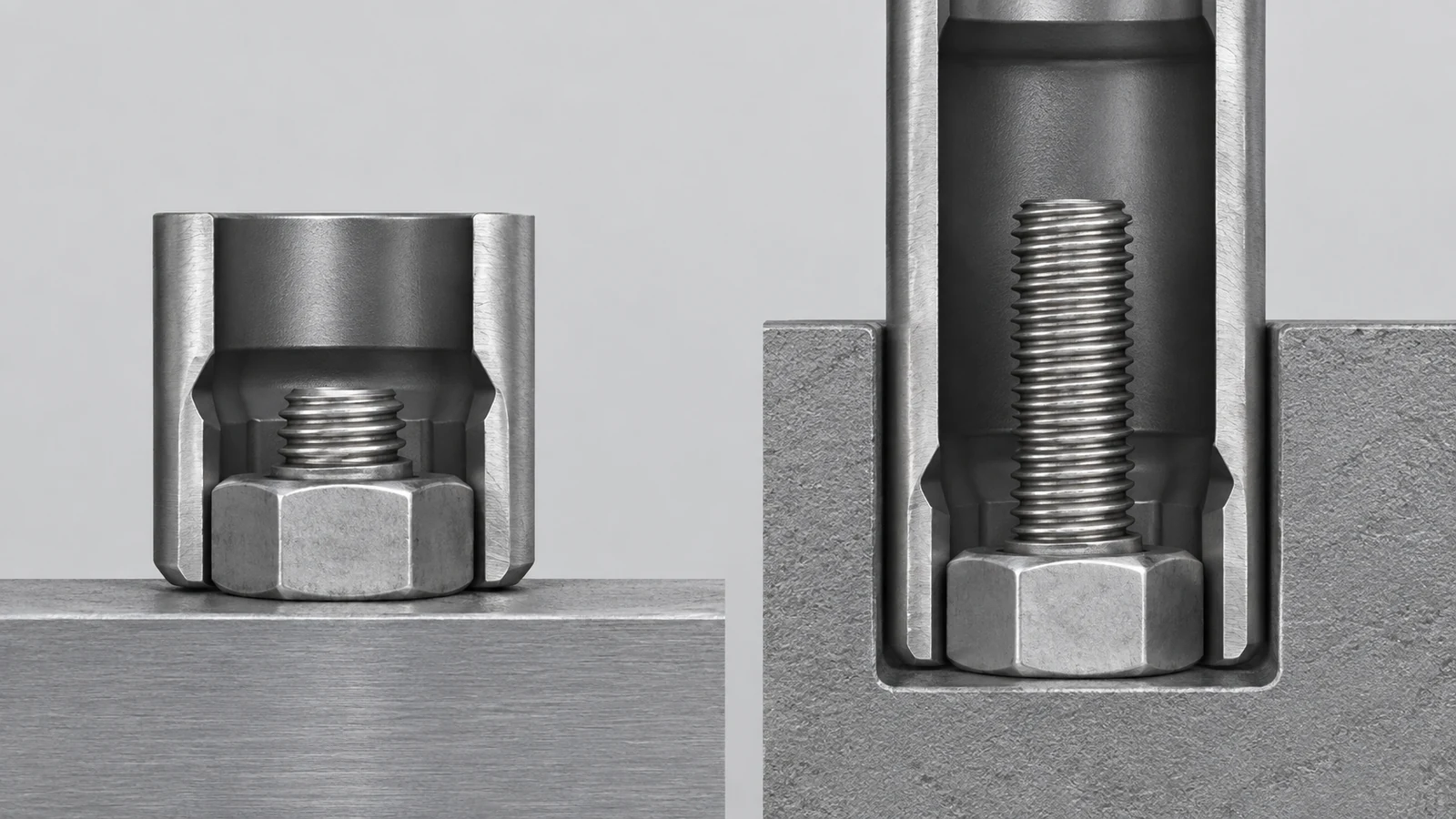
Universal joints and swivel accessories alter approach angle. Adapters change the connection between drive sizes and must match the intended tool path. Retention systems also matter during powered use or overhead work. These accessories add length and movement, so they can create a new collision or reduce control in a cramped location.
- Socket depth: solve internal reach around the nut and stud.
- Extension: solve handle reach after socket seating.
- Universal joint: solve approach angle with a reviewed connection.
Reach has two directions. Check internal room next, then decide whether an accessory should extend or redirect the drive.
Accessory decision table
| Problem | Primary option | Risk to review | RFQ detail |
|---|---|---|---|
| Stud blocks shallow body | Deep socket | Nearby body collision | Internal and total dimensions |
| Handle cannot reach | Extension | Added bending or collision | Length and drive match |
| Drive approach is angled | Universal or swivel | Control and working angle | Accessory compatibility |
| Drive sizes differ | Adapter | Connection mismatch | Input, output, and retention |
Practical action: draw the complete tool path from fastener through socket, accessory, and handle before approving a reach-sensitive configuration.
How do metric, SAE, drive size, and point count fit into the choice?
These fields answer different questions. Metric and SAE identify measurement systems. Drive size identifies the square connection. Point count describes the opening geometry. Depth describes body reach. A range that records only “deep 19 mm” still leaves drive and point count open.
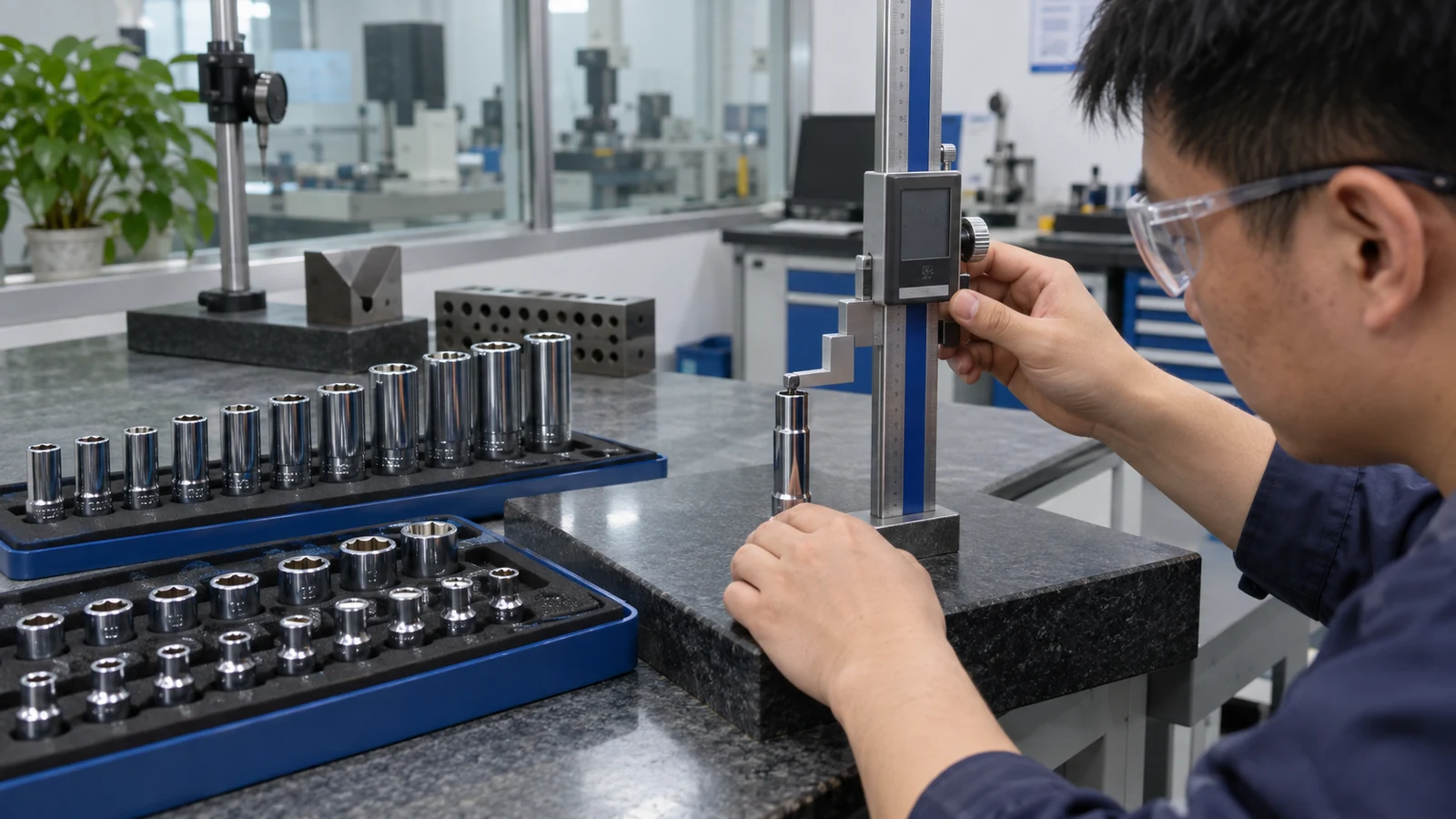
This separation helps importers prevent substitutions during quoting. A supplier can quote a correct depth with a wrong drive or a different point count unless each field appears in the line item. Use the 6-point versus 12-point socket guide for profile questions and the metric-to-SAE conversion chart for unit planning. Your BOM should still carry every field explicitly.
- Metric or SAE: match the fastener system.
- Drive: match ratchet, breaker bar, wrench, or machine.
- Point count: match fastener geometry and access rule.
- Depth: match stud exposure, recess, and obstruction.
Write four separate fields. This prevents a conversion shortcut from hiding a fit or connection error.
Specification matrix
| Decision field | Buyer question | Example record |
|---|---|---|
| Measurement system | Which fastener system applies? | Metric |
| Nominal size | What size must seat? | 19 mm |
| Drive | Which handle or machine connects? | 1/2 inch |
| Point count | Which opening geometry fits? | 6-point |
| Depth | What reach or clearance is required? | Deep |
Practical action: reject RFQ lines that omit any one of measurement system, nominal size, drive, point count, or depth.
How should repair shops plan shallow and deep socket sets?
A repair shop usually needs both depths because service jobs mix exposed studs, recessed nuts, and low-clearance fasteners. Build the core around frequently serviced sizes and fastener locations. Add deep coverage where stud length or recesses appear often. Add shallow coverage where brackets, covers, or rails limit body height.
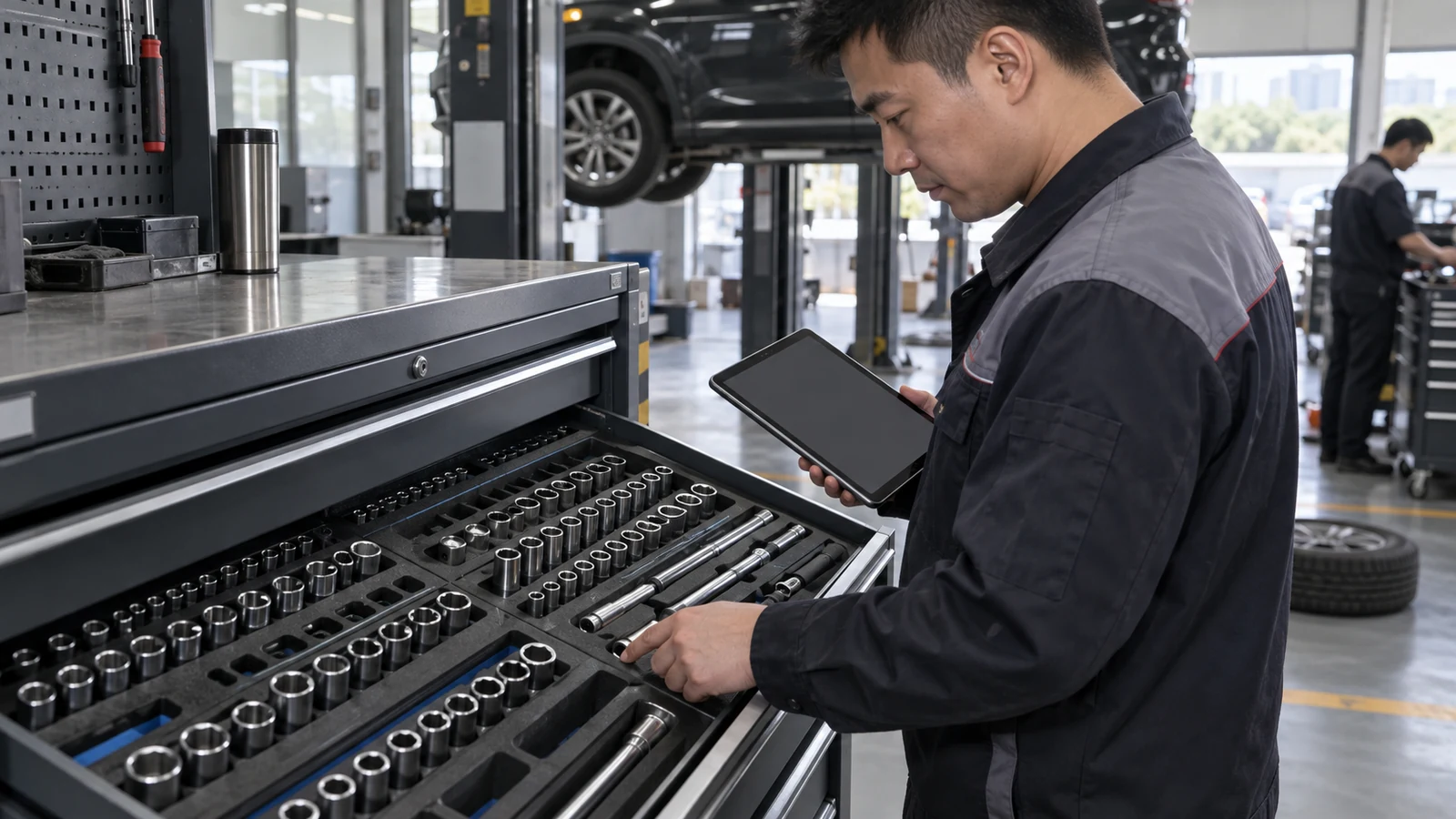
Store hand-use and impact-use products in separate rows. Separate metric and SAE trays. Mark drive size, point count, and depth on cases or drawer labels. A mechanics tool set program can combine many tools, yet socket depth still needs its own sub-BOM and replacement rule. For vehicle service rows, pair that plan with automotive repair tools.
- Core row: common shallow and deep sizes for routine work.
- Specialty row: unusual reach, recess, or access profiles.
- Control row: damaged, missing, quarantined, or pending replacement items.
Build around service jobs. A drawer organized by actual repair conditions is faster to use than a drawer organized by marketing labels.
Repair-shop set table
| Set area | Include | Storage rule | Buyer purpose |
|---|---|---|---|
| Shallow core | Common surface fasteners | Group by drive and system | Fast low-clearance work |
| Deep core | Studded or recessed fasteners | Mark depth clearly | Reliable reach |
| Impact row | Documented impact products | Separate from hand sockets | Reduces misuse |
| Specialty row | Extensions and unusual profiles | Label each accessory | Supports difficult access |
Practical action: audit one service drawer, then mark every socket with depth, drive, point count, and measurement system.
What should importers and private-label buyers put in an RFQ?
An RFQ should describe a working condition rather than ask for “deep sockets” as a broad category. State nominal size, measurement system, point count, drive, depth, total length, entry or outside diameter, tool class, finish, markings, packaging, and quantity. Add a reference fastener or assembly where access controls the decision.
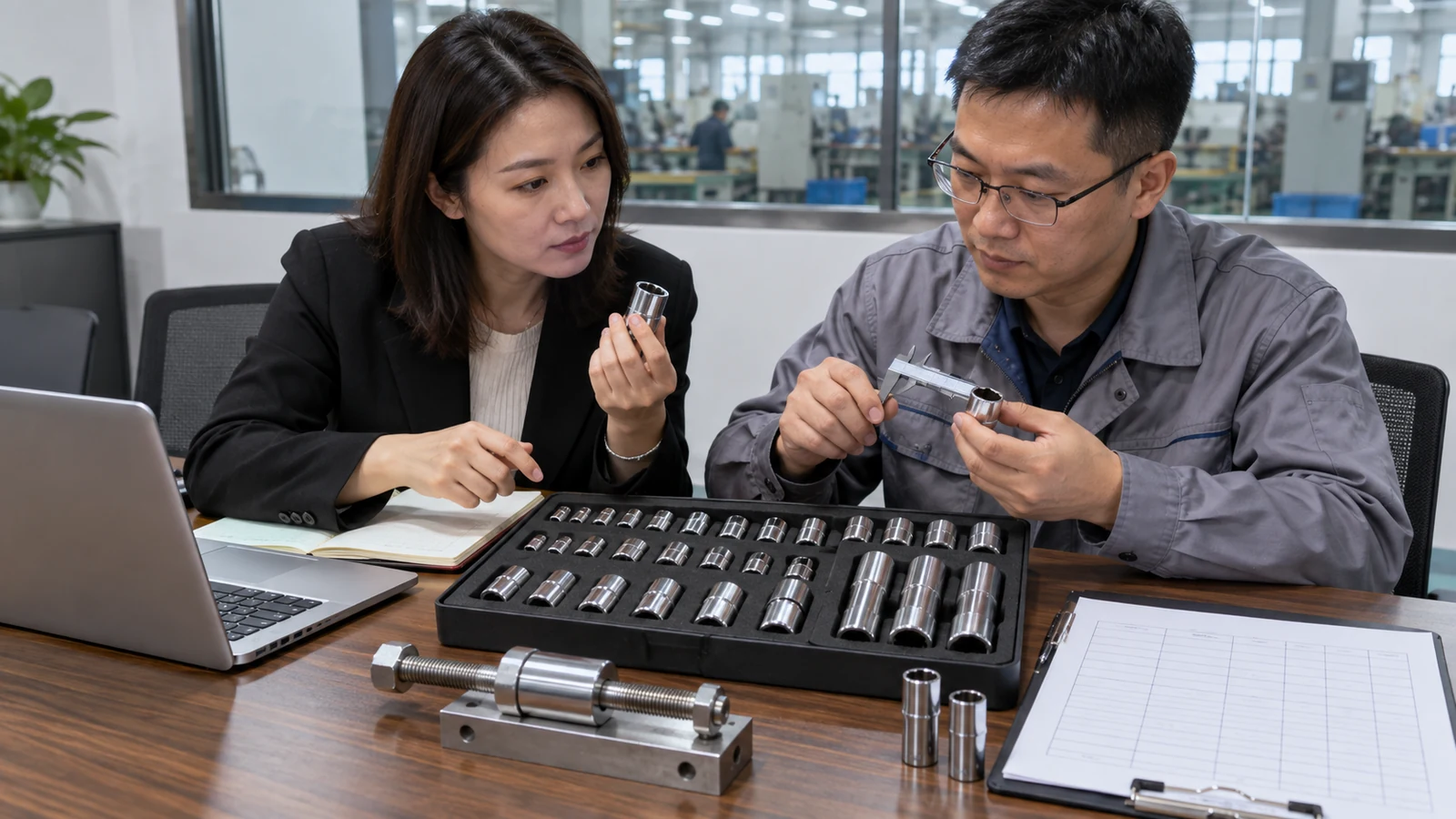
Ask for sample approval against the same fit condition used by customers. KOLARWIN’s impact socket category can help frame a separate impact range. A socket set manufacturer checklist can support broader supplier review, while this socket decision stays focused on depth and fit.
- Product identity: part number, depth, size, drive, point count, and system.
- Fit evidence: reference fastener, recess, stud exposure, and clearance sketch.
- Delivery control: marking, packaging, inspection record, revision, and quantity.
Write the acceptance line at the outset. A clear sample rule gives sourcing, QC, and the supplier one shared target.
RFQ field table
| RFQ field | Example wording | Approval evidence |
|---|---|---|
| Depth | Deep socket for exposed stud | Reference assembly fit |
| Drive and point | 1/2-inch drive, 6-point | Tool and fastener seating |
| Access | Maximum outside diameter stated | Clearance measurement |
| Marking | Permanent size and part number | Visual sample check |
| Packaging | Private-label case row and label | Approved packing sample |
Practical action: send one filled line item and one access sketch with every depth-sensitive sourcing request.
How can buyers inspect samples and control replacement stock?
Sample inspection should begin with fit, not appearance. Seat each socket squarely on a reference fastener. Check whether a shallow body reaches the nut without bottoming out and whether a deep body clears the stud without meeting nearby parts. Confirm drive engagement, point profile, markings, and any specified outside dimensions.
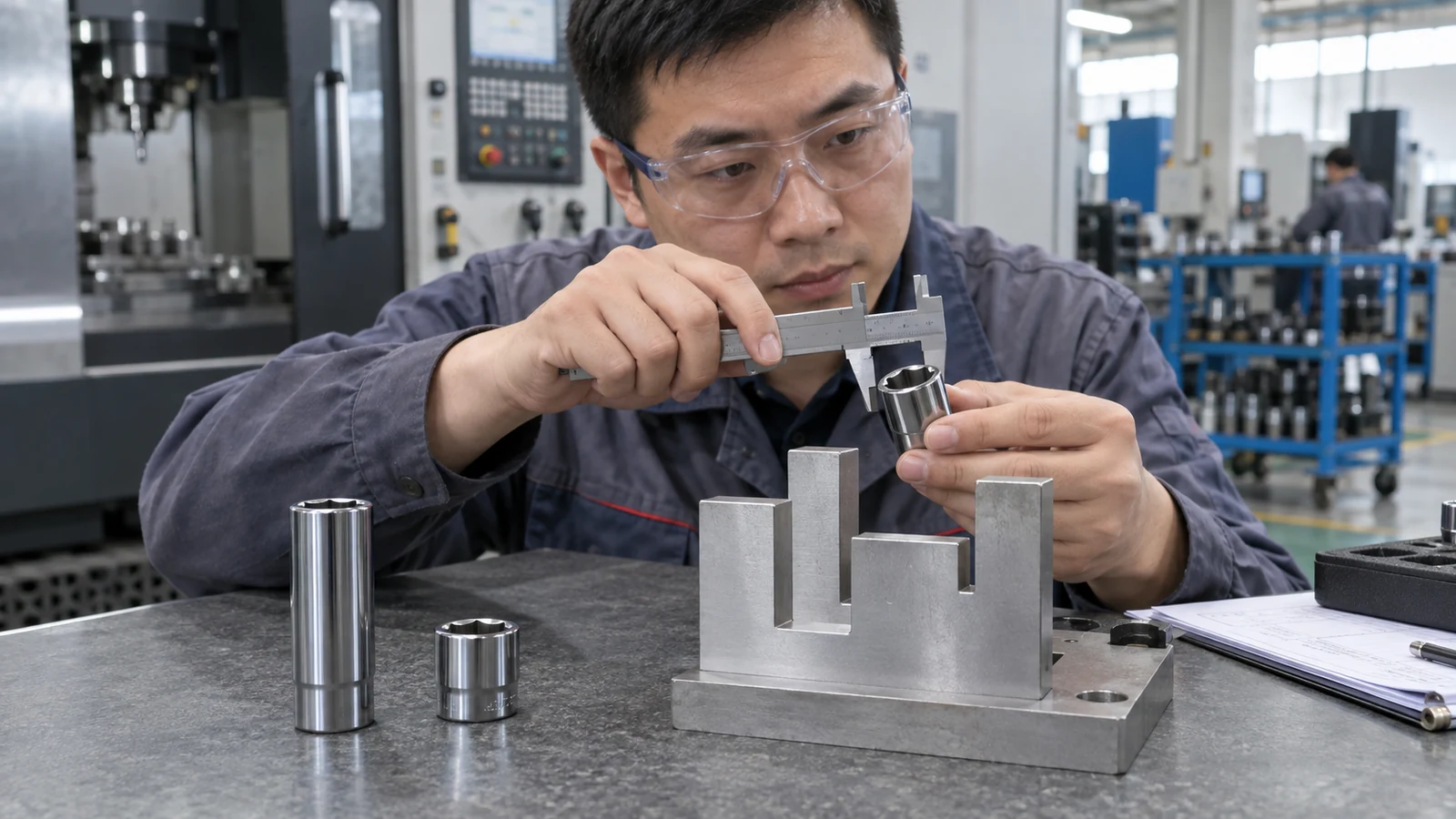
Receiving teams should quarantine a socket with cracks, distorted openings, damaged drive corners, uncertain identification, or a fit that differs from the approved sample. Do not solve a clearance issue by grinding or drilling a production socket. Record the replacement part number with depth, drive, point count, system, and class.
- Fit check: reference fastener and full seating.
- Dimension check: body length, entry, outside diameter, and drive.
- Condition check: cracks, deformation, wear, marking, and storage damage.
A sample earns its place through repeatable fit. That record can guide receiving, service replacement, and future private-label revisions.
Inspection and replacement table
| Check | Pass condition | Hold or reject condition | Record |
|---|---|---|---|
| Fastener seating | Square, complete engagement | Rocking, shallow seat, or bind | Reference part and result |
| Depth clearance | Reach achieved without collision | Stud bottoming or body collision | Assembly and measurements |
| Drive fit | Full connection with tool | Loose, damaged, or mismatched drive | Drive and class |
| Identification | Marking matches approved sample | Missing or unclear marking | Part and revision |
Practical action: keep one approved reference socket and one reference fastener with each incoming inspection plan.
Which socket range should a buyer choose?
Choose a deep socket when long studs, recessed nuts, or internal thread clearance appear in repeat service work. Choose a shallow socket when headroom, side clearance, or nearby structures limit body length. Carry both when a repair range covers mixed assemblies. Then specify drive, point count, measurement system, tool class, wall design, markings, and packaging as separate decisions.
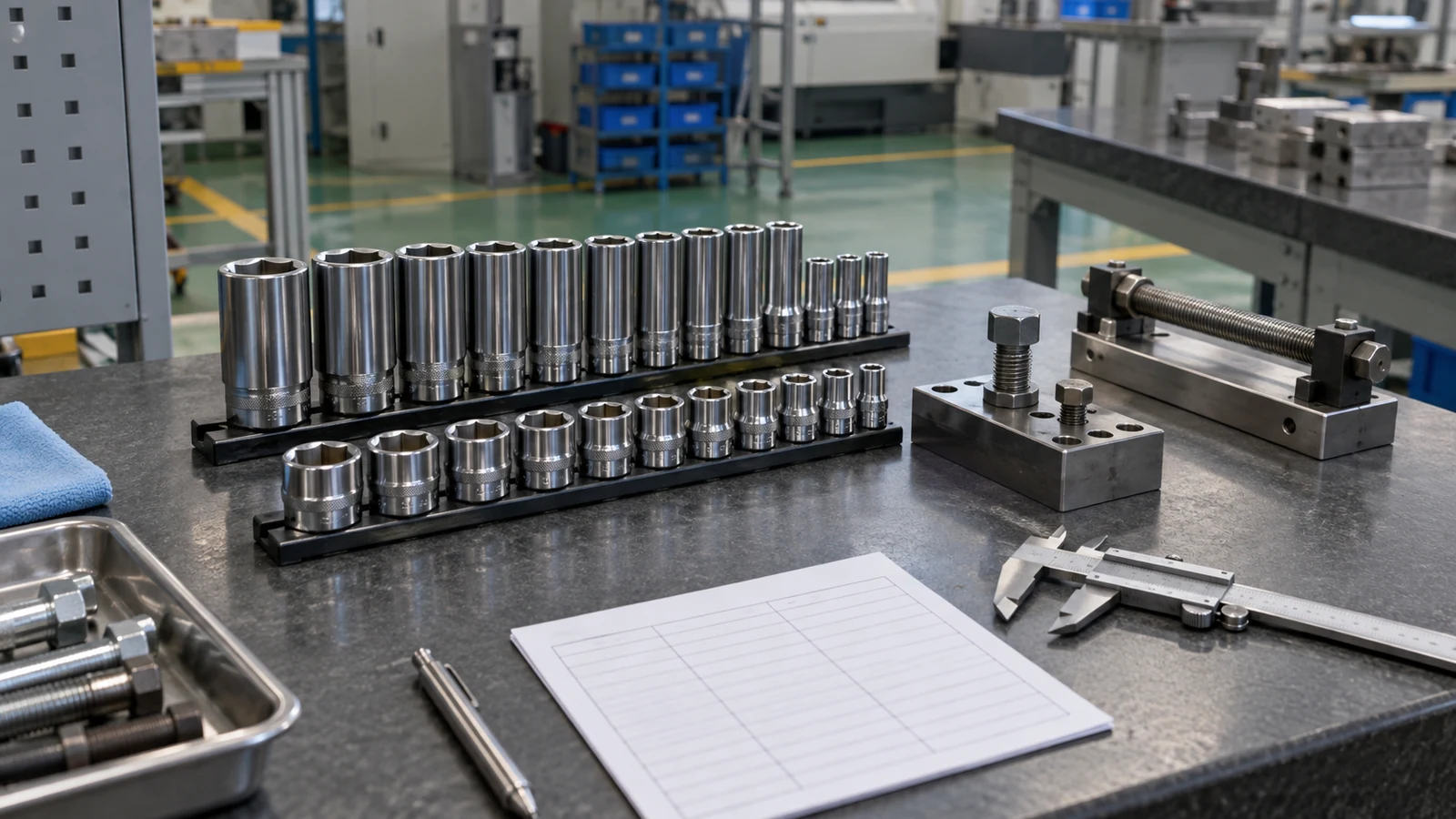
For an importer, range design should follow customer jobs and replacement history. For a private-label buyer, a short pilot can test depth coverage before a wider case layout. For an industrial maintenance buyer, documented fit conditions and inspection records can guide repeat orders. Buyers can review KOLARWIN’s broader tool sourcing range before finalizing a program. The contact page offers a starting point for a defined inquiry.
- Start with fasteners that create returns, delays, or tool substitutions.
- Add deep and shallow coverage by job frequency, not by equal piece counts.
- Approve samples before expanding a branded range.
Make the range choice explicit. Depth should solve a measured access problem while every other product field remains visible in the quote.
Practical action: send a supplier your top service fasteners, depth needs, drive systems, point counts, target set layout, and sample acceptance checks.
FAQ 1: Are deep sockets stronger than shallow sockets?
No. Depth alone does not establish strength, impact suitability, wall thickness, or torque capacity. Compare product class, construction, fit, and documentation for each item.
FAQ 2: Can a shallow socket replace a deep socket?
Sometimes. Confirm that its usable internal clearance accepts any stud projection and that the tool path reaches a recessed fastener with the chosen rated accessory. Approve a substitution only after full seating on the actual assembly.
FAQ 3: Does a deep socket always need an extension?
No. A deep body can solve internal clearance while an extension solves handle reach. Choose an extension only after confirming socket seating and approach geometry.
FAQ 4: Should a repair shop buy only deep sockets?
Usually no. Deep sockets help with studded or recessed fasteners, while shallow sockets suit low headroom and tight side access. A job-based mix covers both conditions.
FAQ 5: What should appear in a buyer’s socket RFQ?
List nominal size, metric or SAE system, drive, point count, depth, total dimensions, tool class, markings, packaging, quantity, reference fit, and inspection evidence. This gives the supplier and QC team one agreed specification.
Looking for a reliable mechanic tools manufacturer in China?
If you are sourcing hand tools, socket tools, automotive repair tools, mechanic tool sets or OEM private label tools, contact KOLARWIN Tools for factory-direct quotation, customization support and product consultation.


