Home/Blog/ Industrial Maintenance Repair Tools: A Buyer’s Guide

Industrial Maintenance Repair Tools: A Buyer’s Guide

Get OEM Tool Catalog + Quote Back to Tool Sourcing Blog
Guarded conveyor, stationary motor-pump unit, and maintenance trolley
This KOLARWIN Tools article is written for overseas distributors, wholesalers, importers and private label tool brands sourcing mechanic tools, automotive repair tools, socket tools, hand tools and OEM tool sets from China. Use this guide to compare product options, check supplier quality points and move from reading to a faster B2B inquiry.

Need OEM supplier support for this product type?

Contact KOLARWIN Tools for OEM mechanic tools, private label packaging, wholesale quotation and product range support. This gives overseas buyers a clear path from article reading to supplier discussion.

A shutdown can expose a small purchasing mistake quickly. A shallow socket, wrong adapter, or missing size can delay the maintenance schedule.

Industrial maintenance repair tools include hand tools, sockets, torque tools, and diagnostic instruments used to inspect, adjust, and repair plant equipment. Choose them against actual jobs, fit, ratings, and replacement needs.

What should an industrial maintenance tool brief cover?

An industrial maintenance tool brief should map equipment, jobs, access, tool families, and use limits.
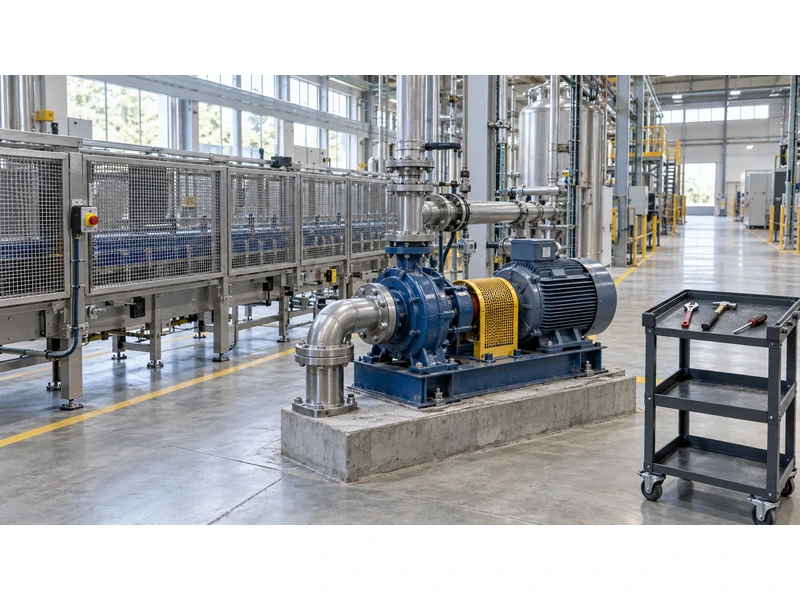
Guarded conveyor, stationary motor-pump unit, and maintenance trolley
Conceptual illustration; not evidence of a specific product, facility or test result.

Which jobs and tool families need coverage?

List equipment groups and service actions before products. A pump room, conveyor line, fleet workshop, and mobile service team may all need sockets, but their reach and replacement patterns differ.

  • Record fastener systems, access restrictions, and service actions.
  • Group wrenches, pliers, screwdrivers, ratchets, socket accessories, measurement tools, and specialty tools by job.
  • Note fixed workstations, mobile cases, and exposure to dirt or moisture.

The industrial maintenance solutions page helps group hand tools, socket tools, and repair sets around those applications.

What should the brief say about use boundaries?

State whether each item is for hand use, powered run-down, controlled torque, measurement, or a defined specialty job. Keep isolation and other application-specific safety procedures with the site’s risk assessment and equipment instructions.

Brief field Decision it supports
Equipment and task Tool family and specialty coverage
Access and movement Reach, case, rail, or storage choice
Use and environment Hand, impact, measurement, or application rating

A mobile crew may need a carry case; a fixed cell may need a socket rail. Key Takeaway: Give the supplier a task, family, and access map before requesting a quotation.

Should you buy a kit or individual maintenance tools?

Buy a complete kit for portable coverage, and buy individual tools for precise gaps, replacements, or unusual sizes. Most B2B programs need both.
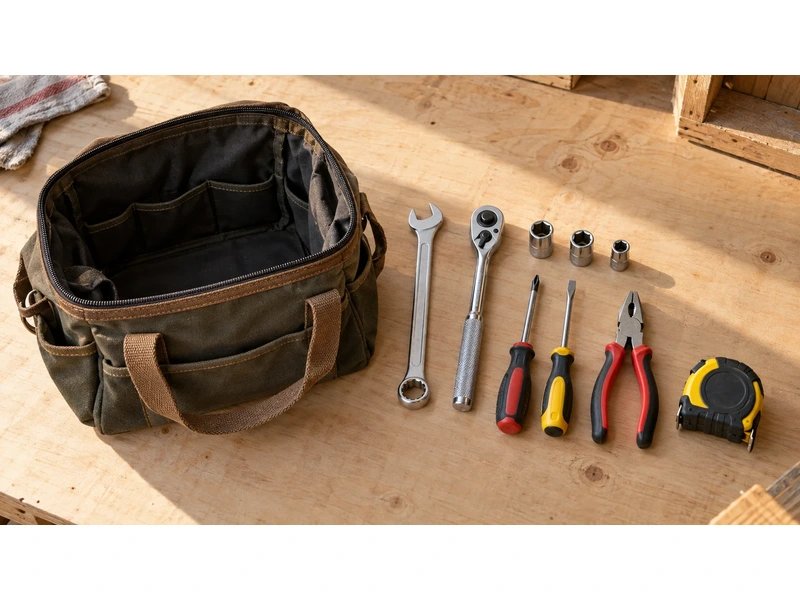
Compact technician bag with selected hand tools and individual replacements
Conceptual illustration; not evidence of a specific product, facility or test result.

What does a task-specific kit solve?

A kit reduces selection time and gives a technician a known storage layout. It works for service vehicles, repeatable field tasks, and distributor programs when every component and empty slot is documented.

  • Define the piece list, drive sizes, profiles, reach, and storage format.
  • Reserve a route for lost or damaged pieces.

The mechanics tool set options combine sockets, ratchets, extensions, wrenches, drivers, pliers, bits, and hex keys. Remove pieces that do not serve your list.

When are individual tools better?

Individual tools make more sense when a team already owns core equipment, uses unusual sizes, or needs spares at the point of work.

Purchase route Strong fit Watch for
Complete kit New technician, vehicle, or standard task Duplicates and missing specialty pieces
Individual tools Gaps, replacements, unusual access More work to control storage and compatibility
Modular range Distributor or multi-site program Component changes between kit versions

A kit with duplicated bits can still omit a required deep socket. Key Takeaway: Approve the component matrix and storage layout together, confirm how individual pieces can be reordered.

How do you match drive size, fastener size, and access?

Match the square drive, fastener size and profile, reach, clearance, and driver type as one interface. Nominal hex size alone does not prove fit.
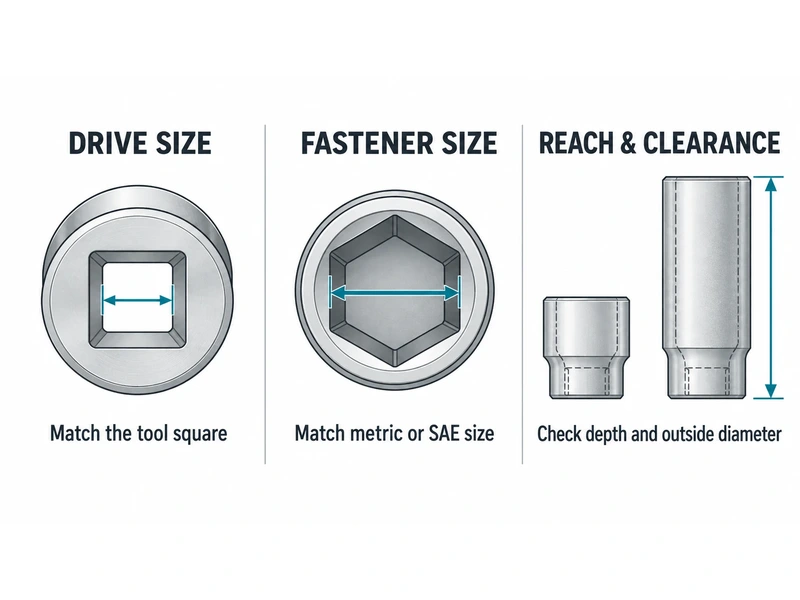
Technical diagram of socket drive size, fastener size, and reach
Conceptual illustration; not evidence of a specific product, facility or test result.

Which dimensions belong on the quotation?

Specify drive size separately from metric or SAE fastener size. Add point profile, shallow or deep reach, overall length, clearance, retention, and any special form.

  • State the square-drive size, fastener system, point profile, depth, and matching accessories.
  • Request a drawing or sample for tight or recessed access.
  • Keep metric and SAE systems separate; do not approve a close-enough substitution from labels alone.

Review the socket tools category for ratchets, extensions, adapters, universal joints, and related accessories. Ask for the same fields in the quotation, drawing, and sample.

How should powered access change the specification?

Powered impact work calls for impact-rated sockets and compatible accessories stated in the documentation. Keep hand-use sockets separate from impact-use components and follow the driver instructions.

Fit field Approval question
Drive interface Do the squares and retaining features match?
Fastener interface Does the size and profile engage fully?
Access envelope Does depth, length, and clearance reach the joint?
Use rating Is the component documented for hand or impact work?

A deep socket can clear a stud yet exceed the available outside clearance. Key Takeaway: Treat fit as a documented combination of drive, fastener, reach, clearance, and use rating, then verify it with a sample.

What should you check for hand, impact, and torque work?

Check intended use, compatible accessories, and evidence for hand, impact, and torque applications. Powered run-down and final controlled torque are different requirements.
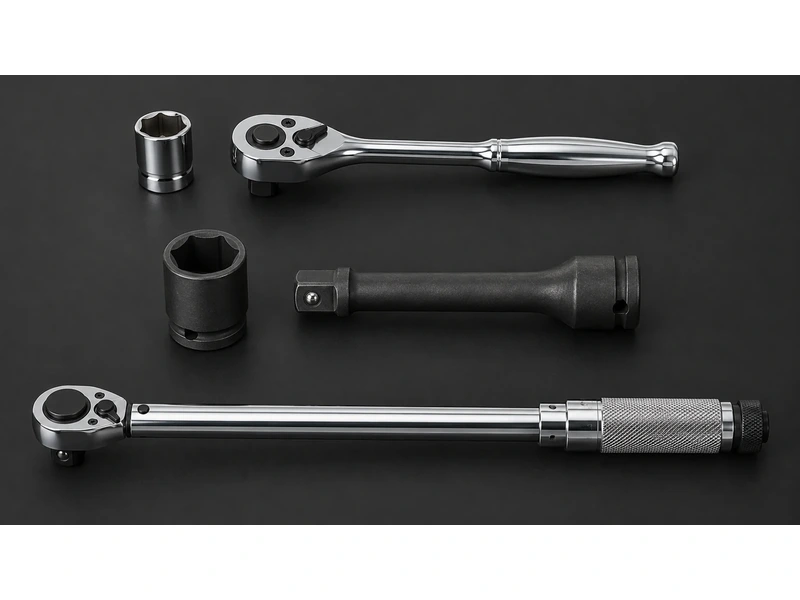
Hand ratchet, impact socket, extension, and torque wrench arranged separately
Conceptual illustration; not evidence of a specific product, facility or test result.

How should impact accessories be specified?

Specify impact-rated sockets, extensions, adapters, and universal joints when an impact wrench or driver will power the connection. Require the intended use and markings in the datasheet and sample record.

  • Separate impact accessories from hand-socket ranges in the bill of materials.
  • Confirm drive size, fastener profile, retention, and reach as a set.

The impact socket range provides a category reference for drive sizes, standard and deep forms, and accessory combinations. It does not replace a product-specific specification or site procedure.

What should the torque record cover?

For final controlled torque, use a suitable calibrated torque tool when specified. Request a serial-numbered calibration report; a conformance declaration is not equivalent. Ask for range, method or standard, result, uncertainty, date, and traceability; ISO 6789-2 and NIST metrological traceability guidance explain the record elements.

Use case Evidence to request
Hand fastening Stated intended use and inspection criteria
Impact run-down Impact rating and compatible accessories
Controlled torque Identifier, method, result, uncertainty, and traceability

Hold accessories with unverified impact ratings and torque tools with missing required calibration records. Key Takeaway: Put the use rating and evidence request beside each family, so a powered accessory or torque tool is not approved on appearance alone.

Which measurement and diagnostic tools need records?

Measurement and diagnostic tools need an instrument list, defined use, calibration or verification route, and an identifying record. Specify both the meter and its leads for the job’s measurement category (CAT) and voltage.
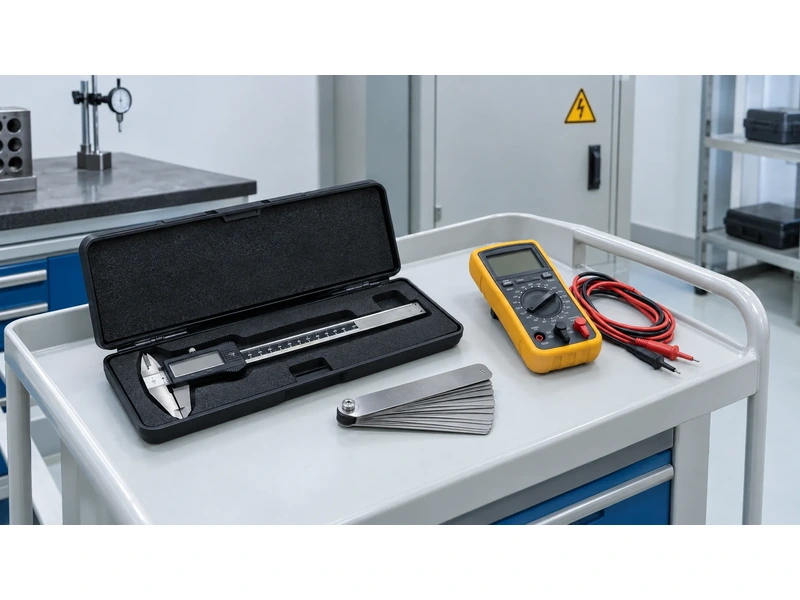
Caliper, feeler gauge, and multimeter arranged on a maintenance metrology cart
Conceptual illustration; not evidence of a specific product, facility or test result.

What belongs in the instrument plan?

List calipers, feeler gauges, levels, tape measures, multimeters, and other instruments by task and environment. Identify whether each measures clearance, dimension, alignment, continuity, or another defined condition. For torque instruments, use the selection and calibration guide to narrow the requirements.

  • Record range, resolution, connection or probe needs, and environmental limits.
  • State whether the instrument needs calibration, verification, or a visual pre-use check.

How should records support a measurement decision?

Give each instrument an identifier, owner, status, date, and next review action. For traceable measurement, ask for method, result, uncertainty, and traceability. Electrical testing requires qualified personnel under OSHA’s instrument-use rules and applicable site procedures.

Instrument need Purchasing check
Dimension or clearance Range, resolution, contact condition
Electrical diagnostic Meter and leads: CAT category, voltage, condition
Controlled measurement Identifier, record, date, and traceability

An overdue record can keep an intact instrument out of service. Key Takeaway: Assign an owner and review route when you buy each instrument.

Which material and serviceability details affect tool life?

Tool life depends on geometry, material and heat treatment, surface condition, use, maintenance, and replacement control. A material label is a specification to verify, not proof of performance.
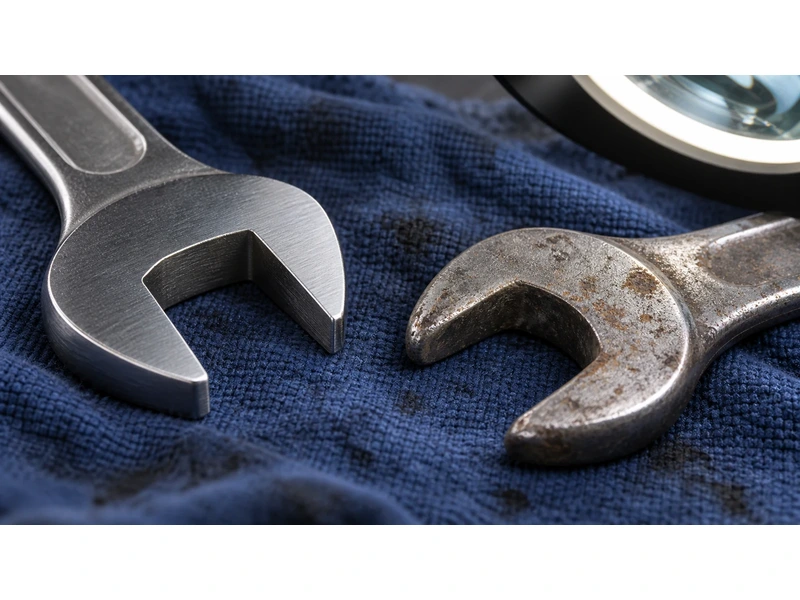
Close-up of two combination wrench jaws showing clean and worn condition
Conceptual illustration; not evidence of a specific product, facility or test result.

What should a supplier connect to evidence?

Ask which material designation, heat-treatment record, finish, and dimensions apply to the supplied model and lot. Request a test method and result rather than accepting “forged” or “high strength.”

  • Check drive geometry, working edges, length, markings, finish, and moving joints.
  • Ask whether lot identity and heat-treatment records are available for the project.

Standards such as ASME B107.110 and ISO 3315 have defined scopes. Cite the applicable edition, not the name as a blanket claim.

How do serviceability and replacement affect selection?

Serviceability means the buyer can identify and reorder pieces that fail or disappear first. Record markings, positions, and replacement routes before the order.

Evidence area Buyer decision
Material and process Which records are required for the model and lot?
Geometry and finish Which dimensions and appearance defects reject a piece?
Serviceability Can the team identify and replace one component?

Quarantine damaged tools before they return to issued kits. Key Takeaway: Tie every durability statement to a model, inspection point, and replacement plan that receiving can use.

How should a buyer approve samples and receiving criteria?

Approve a representative sample against a written specification, then use a defined inspection and lot record for receiving. The sample sets the expected configuration; it does not replace production checks.
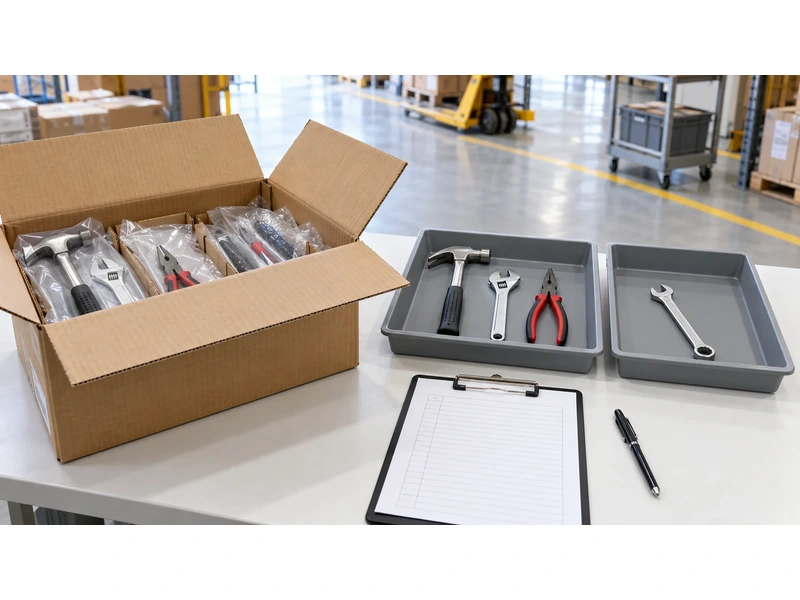
Open carton with tools in trays and one wrench set aside for review
Conceptual illustration; not evidence of a specific product, facility or test result.

What should the sample gate include?

The sample gate should cover the tool, dimensions, markings, accessories, packaging, and required reports. Have users and receiving staff review the same sample and component list.

  • Approve the drawing, component matrix, artwork, case layout, and sample version.
  • Record drive fit, markings, surface condition, function, and key dimensions; require approval for substitutions.

ISO 28590 and ISO guidance on external providers can inform a lot-by-lot plan. Use them as a basis for product-specific controls, not as a promise that sampling makes every piece defect-free.

What belongs in receiving records?

Receiving records should identify the lot, quantities, method, criteria, packaging, labels, and release decision. Add product-specific checks where specified. Send draft criteria through KOLARWIN’s contact page so samples, packaging, and records can be discussed together.

Gate Record to retain
Pre-production sample Approved version and component list
Production lot Lot identity, sample method, and results
Shipment release Quantity, packaging, labels, and exceptions

An unresolved substitution should remain on hold at shipment release. Key Takeaway: Write the sample and receiving gate before production, then make each acceptance field traceable to the approved tool brief.

What belongs in a China maintenance-tool RFQ?

US buyers sourcing maintenance tools from China should specify products, quantities, use conditions, inspection evidence, packaging, destination, and commercial terms in the request for quotation (RFQ).

Secured pallet of unbranded cartons at a covered loading dock
Conceptual illustration; not evidence of a specific product, facility or test result.

Which commercial details need a written answer?

Request a line-by-line response for model, size, profile, drive, quantity, mixed SKU rules, packaging, replacements, and records. Ask the supplier to identify assumptions about samples, logo work, cartons, delivery terms, and minimums.

  • Attach the approved component matrix and drawings, then separate sample, artwork, production, inspection, and dispatch milestones.
  • State destination, packaging language, labels, carton marks, and documents.

For private-label programs, KOLARWIN’s OEM and supplier background describes tool selection, logo, kit configuration, packaging, and export coordination. Treat each option as subject to project review and written approval.

How should you control changes after quotation?

Require written approval for a changed material, size, case, logo, label, or component. Show what is fixed and what remains open in the quotation.

RFQ section Buyer’s control point
Product Model, size, profile, use, and replacement list
Quality Sample, inspection criteria, and required records
Brand and pack Artwork, case, labels, cartons, and approvals
Commercial Quantities, assumptions, terms, and milestones

If freight is excluded, compare it separately before accepting the unit price. Key Takeaway: Send one controlled RFQ pack and require every quotation assumption, change, and approval step to be visible.

How do you plan allocation, replenishment, and supplier review?

Plan allocation and replenishment by task criticality, usage, replacement time, storage, and site count. A job-stopping tool needs a different spare policy from a low-use accessory.
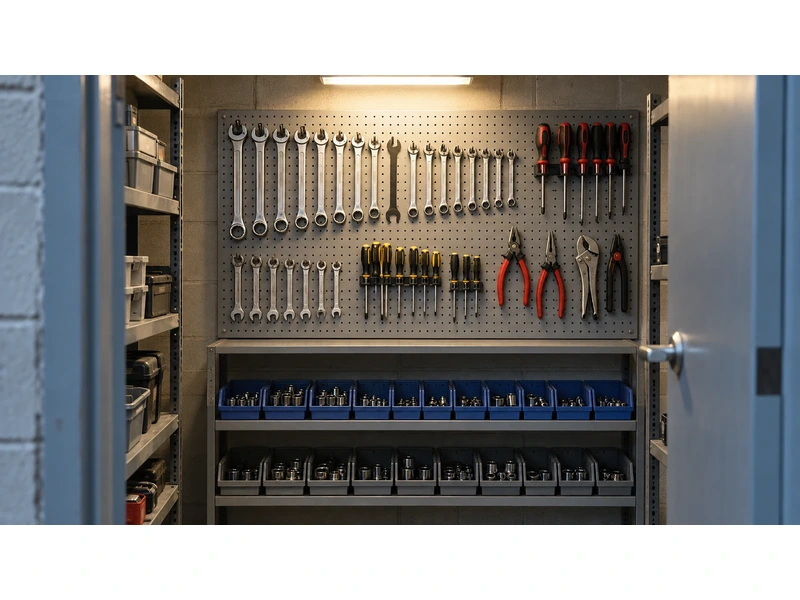
Tool crib shadow board with organized tools and an empty wrench outline
Conceptual illustration; not evidence of a specific product, facility or test result.

Which tools need spare coverage?

Start with fast-moving sizes, shared tools, and pieces that are difficult to replace. Record issued kits, missing components, and damage before setting reorder triggers.

  • Mark critical, routine, and low-use items, then set minimum levels by site, vehicle, or maintenance cell.
  • Store replacement sockets and accessories by clear component identity.

For fleet branches, the automotive repair tool categories can separate brake, timing, puller, steering, and engine work from a plant range.

How should you compare suppliers after the first order?

Review supplier performance against the approved brief. Compare sample match, lot records, packaging accuracy, exceptions, replacements, and the next quotation.

Review point Evidence to compare
Availability Critical sizes, spares, and reorder route
Consistency Approved sample, lot records, and change history
Support Responses, documents, packaging, and replacements

Track repeated replacements by component to identify a weak item in the kit. Key Takeaway: Assign spare rules before the first shipment and review the supplier on evidence, consistency, and recovery from exceptions.

What is the next step for an industrial maintenance tool purchase?

Start with an equipment and task list, request itemized quotes, and approve samples and acceptance criteria before placing an order. Check the socket set options against your required component list.

Send your sizes, quantities, sample requirements, and packaging brief to KOLARWIN Tools. We can discuss hand tools, socket sets, and OEM packaging, with specifications and commercial terms confirmed for the project. Our approach starts with requirements that purchasing, maintenance, and receiving teams can check together.

Two professionals reviewing a wrench, socket, and blank specification sheet
Conceptual illustration; not evidence of a specific product, facility or test result.

Can I use ordinary sockets with an impact wrench?

No. Specify impact-rated sockets and compatible accessories, then verify the use and documentation against the driver instructions.

What’s the best way to compare two maintenance tool sets?

Compare the component matrix, drive and profile coverage, access, use rating, records, and replacement terms. Piece count alone does not show coverage.

How do I know if a socket will fit a maintenance joint?

Match the square drive, fastener system, size, profile, depth, length, and clearance. Approve a sample where access is tight.

Can a China supplier add my logo and packaging?

Often, subject to project review. Define logo method, artwork, tool contents, case, labels, sample, and change control.

What should I request before a larger order?

Request a written specification, approved sample, inspection plan, lot records, packaging proof, replacement terms, and a quotation showing commercial assumptions.

Looking for a reliable mechanic tools manufacturer in China?

If you are sourcing hand tools, socket tools, automotive repair tools, mechanic tool sets or OEM private label tools, contact KOLARWIN Tools for factory-direct quotation, customization support and product consultation.
A shutdown can expose a small purchasing mistake quickly. A shallow socket, wrong adapter, or missing size can delay the maintenance schedule.

Industrial maintenance repair tools include hand tools, sockets, torque tools, and diagnostic instruments used to inspect, adjust, and repair plant equipment. Choose them against actual jobs, fit, ratings, and replacement needs.

What should an industrial maintenance tool brief cover?

An industrial maintenance tool brief should map equipment, jobs, access, tool families, and use limits.

Guarded conveyor, stationary motor-pump unit, and maintenance trolley
Conceptual illustration; not evidence of a specific product, facility or test result.

Which jobs and tool families need coverage?

List equipment groups and service actions before products. A pump room, conveyor line, fleet workshop, and mobile service team may all need sockets, but their reach and replacement patterns differ.

The industrial maintenance solutions page helps group hand tools, socket tools, and repair sets around those applications.

What should the brief say about use boundaries?

State whether each item is for hand use, powered run-down, controlled torque, measurement, or a defined specialty job. Keep isolation and other application-specific safety procedures with the site’s risk assessment and equipment instructions.

Brief field Decision it supports
Equipment and task Tool family and specialty coverage
Access and movement Reach, case, rail, or storage choice
Use and environment Hand, impact, measurement, or application rating

A mobile crew may need a carry case; a fixed cell may need a socket rail. Key Takeaway: Give the supplier a task, family, and access map before requesting a quotation.

Should you buy a kit or individual maintenance tools?

Buy a complete kit for portable coverage, and buy individual tools for precise gaps, replacements, or unusual sizes. Most B2B programs need both.

Compact technician bag with selected hand tools and individual replacements
Conceptual illustration; not evidence of a specific product, facility or test result.

What does a task-specific kit solve?

A kit reduces selection time and gives a technician a known storage layout. It works for service vehicles, repeatable field tasks, and distributor programs when every component and empty slot is documented.

The mechanics tool set options combine sockets, ratchets, extensions, wrenches, drivers, pliers, bits, and hex keys. Remove pieces that do not serve your list.

When are individual tools better?

Individual tools make more sense when a team already owns core equipment, uses unusual sizes, or needs spares at the point of work.

Purchase route Strong fit Watch for
Complete kit New technician, vehicle, or standard task Duplicates and missing specialty pieces
Individual tools Gaps, replacements, unusual access More work to control storage and compatibility
Modular range Distributor or multi-site program Component changes between kit versions

A kit with duplicated bits can still omit a required deep socket. Key Takeaway: Approve the component matrix and storage layout together, confirm how individual pieces can be reordered.

How do you match drive size, fastener size, and access?

Match the square drive, fastener size and profile, reach, clearance, and driver type as one interface. Nominal hex size alone does not prove fit.

Technical diagram of socket drive size, fastener size, and reach
Conceptual illustration; not evidence of a specific product, facility or test result.

Which dimensions belong on the quotation?

Specify drive size separately from metric or SAE fastener size. Add point profile, shallow or deep reach, overall length, clearance, retention, and any special form.

Review the socket tools category for ratchets, extensions, adapters, universal joints, and related accessories. Ask for the same fields in the quotation, drawing, and sample.

How should powered access change the specification?

Powered impact work calls for impact-rated sockets and compatible accessories stated in the documentation. Keep hand-use sockets separate from impact-use components and follow the driver instructions.

Fit field Approval question
Drive interface Do the squares and retaining features match?
Fastener interface Does the size and profile engage fully?
Access envelope Does depth, length, and clearance reach the joint?
Use rating Is the component documented for hand or impact work?

A deep socket can clear a stud yet exceed the available outside clearance. Key Takeaway: Treat fit as a documented combination of drive, fastener, reach, clearance, and use rating, then verify it with a sample.

What should you check for hand, impact, and torque work?

Check intended use, compatible accessories, and evidence for hand, impact, and torque applications. Powered run-down and final controlled torque are different requirements.

Hand ratchet, impact socket, extension, and torque wrench arranged separately
Conceptual illustration; not evidence of a specific product, facility or test result.

How should impact accessories be specified?

Specify impact-rated sockets, extensions, adapters, and universal joints when an impact wrench or driver will power the connection. Require the intended use and markings in the datasheet and sample record.

The impact socket range provides a category reference for drive sizes, standard and deep forms, and accessory combinations. It does not replace a product-specific specification or site procedure.

What should the torque record cover?

For final controlled torque, use a suitable calibrated torque tool when specified. Request a serial-numbered calibration report; a conformance declaration is not equivalent. Ask for range, method or standard, result, uncertainty, date, and traceability; ISO 6789-2 and NIST metrological traceability guidance explain the record elements.

Use case Evidence to request
Hand fastening Stated intended use and inspection criteria
Impact run-down Impact rating and compatible accessories
Controlled torque Identifier, method, result, uncertainty, and traceability

Hold accessories with unverified impact ratings and torque tools with missing required calibration records. Key Takeaway: Put the use rating and evidence request beside each family, so a powered accessory or torque tool is not approved on appearance alone.

Which measurement and diagnostic tools need records?

Measurement and diagnostic tools need an instrument list, defined use, calibration or verification route, and an identifying record. Specify both the meter and its leads for the job’s measurement category (CAT) and voltage.

Caliper, feeler gauge, and multimeter arranged on a maintenance metrology cart
Conceptual illustration; not evidence of a specific product, facility or test result.

What belongs in the instrument plan?

List calipers, feeler gauges, levels, tape measures, multimeters, and other instruments by task and environment. Identify whether each measures clearance, dimension, alignment, continuity, or another defined condition. For torque instruments, use the selection and calibration guide to narrow the requirements.

How should records support a measurement decision?

Give each instrument an identifier, owner, status, date, and next review action. For traceable measurement, ask for method, result, uncertainty, and traceability. Electrical testing requires qualified personnel under OSHA’s instrument-use rules and applicable site procedures.

Instrument need Purchasing check
Dimension or clearance Range, resolution, contact condition
Electrical diagnostic Meter and leads: CAT category, voltage, condition
Controlled measurement Identifier, record, date, and traceability

An overdue record can keep an intact instrument out of service. Key Takeaway: Assign an owner and review route when you buy each instrument.

Which material and serviceability details affect tool life?

Tool life depends on geometry, material and heat treatment, surface condition, use, maintenance, and replacement control. A material label is a specification to verify, not proof of performance.

Close-up of two combination wrench jaws showing clean and worn condition
Conceptual illustration; not evidence of a specific product, facility or test result.

What should a supplier connect to evidence?

Ask which material designation, heat-treatment record, finish, and dimensions apply to the supplied model and lot. Request a test method and result rather than accepting “forged” or “high strength.”

Standards such as ASME B107.110 and ISO 3315 have defined scopes. Cite the applicable edition, not the name as a blanket claim.

How do serviceability and replacement affect selection?

Serviceability means the buyer can identify and reorder pieces that fail or disappear first. Record markings, positions, and replacement routes before the order.

Evidence area Buyer decision
Material and process Which records are required for the model and lot?
Geometry and finish Which dimensions and appearance defects reject a piece?
Serviceability Can the team identify and replace one component?

Quarantine damaged tools before they return to issued kits. Key Takeaway: Tie every durability statement to a model, inspection point, and replacement plan that receiving can use.

How should a buyer approve samples and receiving criteria?

Approve a representative sample against a written specification, then use a defined inspection and lot record for receiving. The sample sets the expected configuration; it does not replace production checks.

Open carton with tools in trays and one wrench set aside for review
Conceptual illustration; not evidence of a specific product, facility or test result.

What should the sample gate include?

The sample gate should cover the tool, dimensions, markings, accessories, packaging, and required reports. Have users and receiving staff review the same sample and component list.

ISO 28590 and ISO guidance on external providers can inform a lot-by-lot plan. Use them as a basis for product-specific controls, not as a promise that sampling makes every piece defect-free.

What belongs in receiving records?

Receiving records should identify the lot, quantities, method, criteria, packaging, labels, and release decision. Add product-specific checks where specified. Send draft criteria through KOLARWIN’s contact page so samples, packaging, and records can be discussed together.

Gate Record to retain
Pre-production sample Approved version and component list
Production lot Lot identity, sample method, and results
Shipment release Quantity, packaging, labels, and exceptions

An unresolved substitution should remain on hold at shipment release. Key Takeaway: Write the sample and receiving gate before production, then make each acceptance field traceable to the approved tool brief.

What belongs in a China maintenance-tool RFQ?

US buyers sourcing maintenance tools from China should specify products, quantities, use conditions, inspection evidence, packaging, destination, and commercial terms in the request for quotation (RFQ).

Secured pallet of unbranded cartons at a covered loading dock
Conceptual illustration; not evidence of a specific product, facility or test result.

Which commercial details need a written answer?

Request a line-by-line response for model, size, profile, drive, quantity, mixed SKU rules, packaging, replacements, and records. Ask the supplier to identify assumptions about samples, logo work, cartons, delivery terms, and minimums.

For private-label programs, KOLARWIN’s OEM and supplier background describes tool selection, logo, kit configuration, packaging, and export coordination. Treat each option as subject to project review and written approval.

How should you control changes after quotation?

Require written approval for a changed material, size, case, logo, label, or component. Show what is fixed and what remains open in the quotation.

RFQ section Buyer’s control point
Product Model, size, profile, use, and replacement list
Quality Sample, inspection criteria, and required records
Brand and pack Artwork, case, labels, cartons, and approvals
Commercial Quantities, assumptions, terms, and milestones

If freight is excluded, compare it separately before accepting the unit price. Key Takeaway: Send one controlled RFQ pack and require every quotation assumption, change, and approval step to be visible.

How do you plan allocation, replenishment, and supplier review?

Plan allocation and replenishment by task criticality, usage, replacement time, storage, and site count. A job-stopping tool needs a different spare policy from a low-use accessory.

Tool crib shadow board with organized tools and an empty wrench outline
Conceptual illustration; not evidence of a specific product, facility or test result.

Which tools need spare coverage?

Start with fast-moving sizes, shared tools, and pieces that are difficult to replace. Record issued kits, missing components, and damage before setting reorder triggers.

For fleet branches, the automotive repair tool categories can separate brake, timing, puller, steering, and engine work from a plant range.

How should you compare suppliers after the first order?

Review supplier performance against the approved brief. Compare sample match, lot records, packaging accuracy, exceptions, replacements, and the next quotation.

Review point Evidence to compare
Availability Critical sizes, spares, and reorder route
Consistency Approved sample, lot records, and change history
Support Responses, documents, packaging, and replacements

Track repeated replacements by component to identify a weak item in the kit. Key Takeaway: Assign spare rules before the first shipment and review the supplier on evidence, consistency, and recovery from exceptions.

What is the next step for an industrial maintenance tool purchase?

Start with an equipment and task list, request itemized quotes, and approve samples and acceptance criteria before placing an order. Check the socket set options against your required component list.

Send your sizes, quantities, sample requirements, and packaging brief to KOLARWIN Tools. We can discuss hand tools, socket sets, and OEM packaging, with specifications and commercial terms confirmed for the project. Our approach starts with requirements that purchasing, maintenance, and receiving teams can check together.

Two professionals reviewing a wrench, socket, and blank specification sheet
Conceptual illustration; not evidence of a specific product, facility or test result.

Can I use ordinary sockets with an impact wrench?

No. Specify impact-rated sockets and compatible accessories, then verify the use and documentation against the driver instructions.

What’s the best way to compare two maintenance tool sets?

Compare the component matrix, drive and profile coverage, access, use rating, records, and replacement terms. Piece count alone does not show coverage.

How do I know if a socket will fit a maintenance joint?

Match the square drive, fastener system, size, profile, depth, length, and clearance. Approve a sample where access is tight.

Can a China supplier add my logo and packaging?

Often, subject to project review. Define logo method, artwork, tool contents, case, labels, sample, and change control.

What should I request before a larger order?

Request a written specification, approved sample, inspection plan, lot records, packaging proof, replacement terms, and a quotation showing commercial assumptions.

Why Partner with Kolarwin Tools?

Factory-Direct Pricing Skip the middleman — access competitive wholesale prices and protect your margins
Private Label & OEM Ready Your brand, our expertise — full customization from logo to packaging
Fast Global Shipping Reliable delivery to 60+ countries with full export documentation support
Low MOQ, High Flexibility Start small, scale fast — flexible order quantities to fit your business
Dedicated B2B Support One-on-one account management from quote to delivery, every time

Get Your Free Quote in 24 Hours

Tell us your sourcing needs — we'll respond with a tailored quote, product specs, and the best pricing for your market. No commitment required.

Chat on WhatsApp Email Us Directly