
Home/Blog/ How to Choose Woodworking Clamps for Wholesale: A Practical Buyer’s Guide

How to Choose Woodworking Clamps for Wholesale: A Practical Buyer’s Guide

Get OEM Tool Catalog + Quote Back to Tool Sourcing Blog
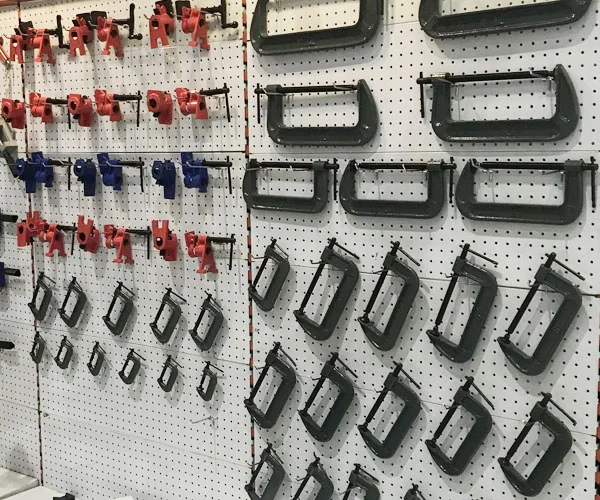
Woodworking clamp assortment for wholesale product selection
This KOLARWIN Tools article is written for overseas distributors, wholesalers, importers and private label tool brands sourcing mechanic tools, automotive repair tools, socket tools, hand tools and OEM tool sets from China. Use this guide to compare product options, check supplier quality points and move from reading to a faster B2B inquiry.

Need OEM supplier support for this product type?

Contact KOLARWIN Tools for OEM mechanic tools, private label packaging, wholesale quotation and product range support. This gives overseas buyers a clear path from article reading to supplier discussion.

A woodworking clamp looks simple until you compare samples from several suppliers. Two clamps with the same opening capacity may have different throat depths, rail sections, jaw materials, spindle quality and usable clamping force. Those differences affect the jobs the clamp can perform, how long it lasts and whether customers will return it.

For a distributor or private-label tool brand, the objective is not to buy the largest possible assortment. It is to build a clear product range in which every SKU has a defined user, application and quality level.

This guide explains how to compare woodworking clamps, prepare a sample test and write an RFQ that suppliers can quote accurately.
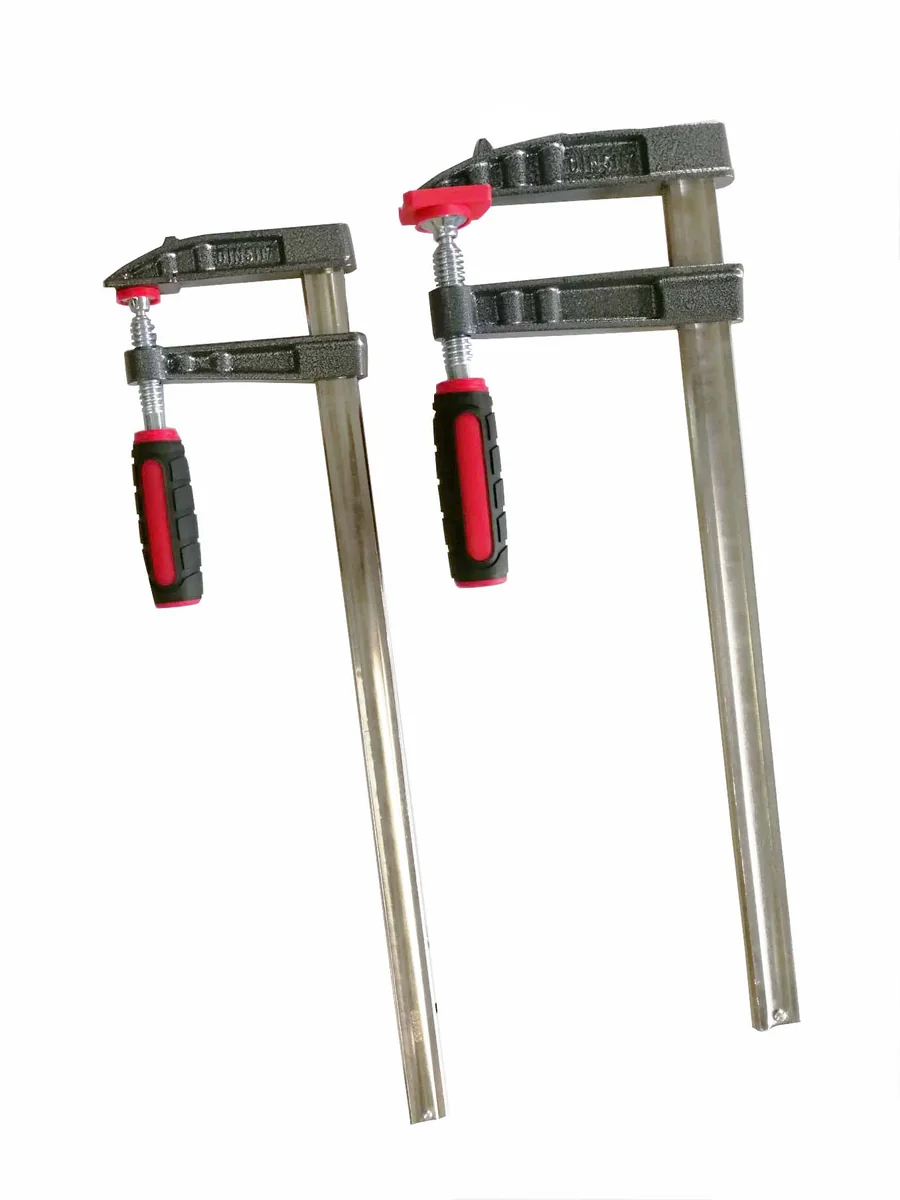
Pair of F clamps for woodworking and assembly
F-clamp construction and size should be matched to the application.

Start With the Job, Not the Clamp Name

Different markets use “bar clamp,” “F clamp” and “quick-release clamp” inconsistently. A product name alone is therefore not a complete specification.

Begin with the work your customer needs to hold:

  • Small craft pieces or temporary positioning
  • Cabinet doors, drawers and face frames
  • Furniture assembly and wood glue-ups
  • Wide panels and workbench projects
  • Metal fabrication or other higher-load work

Then select the mechanism and construction that fit the job.

Clamp type Typical use Buyer’s main checks
Spring clamp Temporary positioning, light assembly and craft work Jaw opening, spring strength, handle comfort and pad retention
One-handed quick-release bar clamp Fast positioning, installation and repetitive assembly Release mechanism, clamping force, jaw travel, rail stiffness and convert-to-spreader function if required
Light-duty F clamp General woodworking, repair and small glue-ups Opening, throat depth, rail section, spindle movement and protective pads
Heavy-duty F or bar clamp Furniture assembly, larger glue-ups and workshop use Rail straightness, frame rigidity, pressure plate, spindle thread and verified force
G/C clamp Concentrated holding and workshop or fabrication tasks Frame material, screw alignment, swivel pad and finish
Corner or angle clamp Frames, boxes and cabinet assembly Angle accuracy, jaw travel, workpiece access and repeatability

The table is a starting point, not a substitute for a specification sheet. The same clamp type can be built for entry-level retail, regular workshop use or heavier professional work.
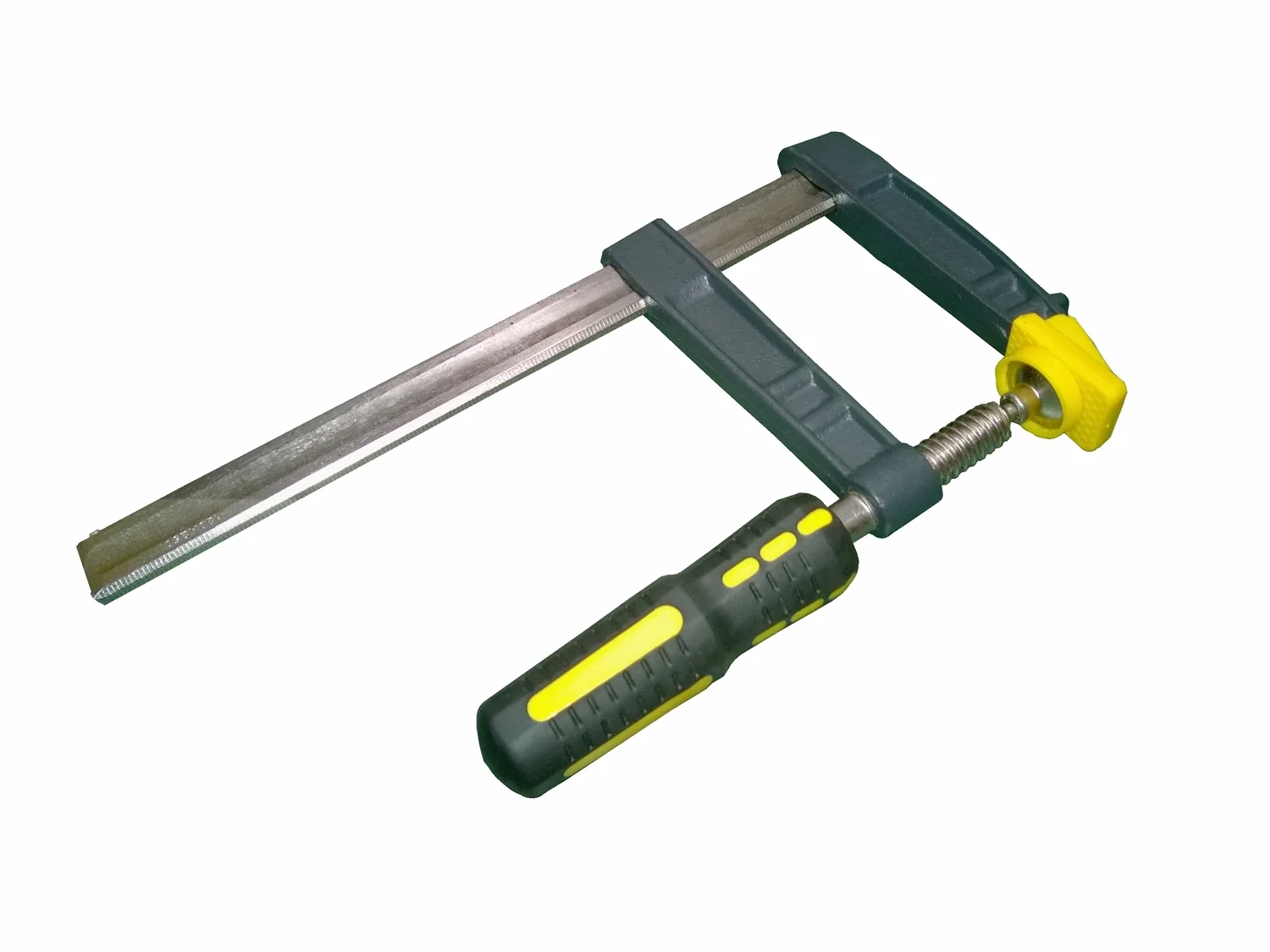
Heavy-duty F clamp with steel rail and screw handle
Opening, throat depth, rail section and spindle construction all affect the usable clamp.

The Six Specifications That Make Quotations Comparable

1. Opening capacity

Opening capacity is the maximum workpiece dimension that fits between the pressure surfaces. It should be stated in millimetres, inches or both. Do not approve a range described only as “small,” “medium” or “large.”

A useful size program normally follows the dimensions commonly purchased in the target market. Before choosing sizes, review the customer’s applications, shelf space and competing retail assortments.

2. Throat depth

Throat depth describes how far the clamp reaches from the rail or frame to the pressure point. A long opening does not automatically provide a deep reach. For cabinet, panel and frame work, throat depth can be as important as opening capacity.

Ask the supplier to show where the measurement is taken. This prevents two factories from quoting different dimensions under the same label.

3. Rail or frame section

For a bar or F clamp, record the rail width and thickness. The rail section, steel grade, heat treatment and profile influence stiffness and the force the clamp can sustain without excessive bending.

Rail size should be evaluated together with the sliding arm and fixed jaw. A thick rail does not compensate for a weak casting, poor fit or misaligned spindle.

4. Clamping force

Do not accept an unsupported force number. Ask how the value was measured, at what jaw opening and whether it is a typical result or a rated maximum. If clamping force is important to your market, agree on a repeatable test method before ordering.

Very high force is not always better. Delicate trim, craft work and finished surfaces may need controlled pressure and larger protective pads. Heavy furniture or fabrication applications require a more rigid design.

5. Contact surfaces and handle

Inspect the pressure plate, jaw pads and handle as a system:

  • Do the pads stay attached during normal use?
  • Do the contact faces remain reasonably parallel?
  • Can the swivel pad seat against a slightly uneven surface?
  • Is the handle comfortable when meaningful pressure is applied?
  • Is the screw thread smooth through its full travel?
  • Are sharp edges, casting flash and exposed burrs removed?

Wood, two-component plastic and straight or T-style handles serve different price points and users. Specify the required design rather than accepting whichever handle appears on a sample.

6. Finish and corrosion protection

Confirm the finish for the rail, screw, frame and handle separately. Common options can include paint, powder coating, plating, black oxide or other protective treatments, depending on the component.

If corrosion performance is a contractual requirement, define the test method and acceptance criteria. “Rust-resistant” without a method, exposure time or pass condition is not measurable.

How to Build a Wholesale Clamp Assortment

A practical opening order often performs better when it covers a few clear use cases rather than many nearly identical SKUs.

Hardware and DIY retail

Start with easy-to-understand products: spring clamps, compact one-handed clamps, common F-clamp sizes and two-piece or four-piece sets. Packaging must communicate opening capacity, throat depth, basic application and safe use without forcing the shopper to open the pack.

Furniture and woodworking distributors

Prioritize multiple lengths within a consistent F-clamp or bar-clamp family. Buyers should be able to move from small assembly work to wider panels without changing the mechanism or quality level. Replacement pads can be commercially useful if the design supports them.

Professional workshop supply

Use fewer but more clearly specified models. Rail section, frame construction, spindle quality, pressure plate and verified clamping force matter more than a large piece count. Technical data must be consistent across the carton, catalog and website.

E-commerce programs

Control package dimensions, gross weight, product protection and pack consistency. A product that survives export cartons can still be damaged during parcel delivery if the clamp moves inside the retail box or the rail is exposed.

For every channel, classify each SKU as entry, standard or heavy-duty. Define the difference using specifications and test results, not only color or packaging.
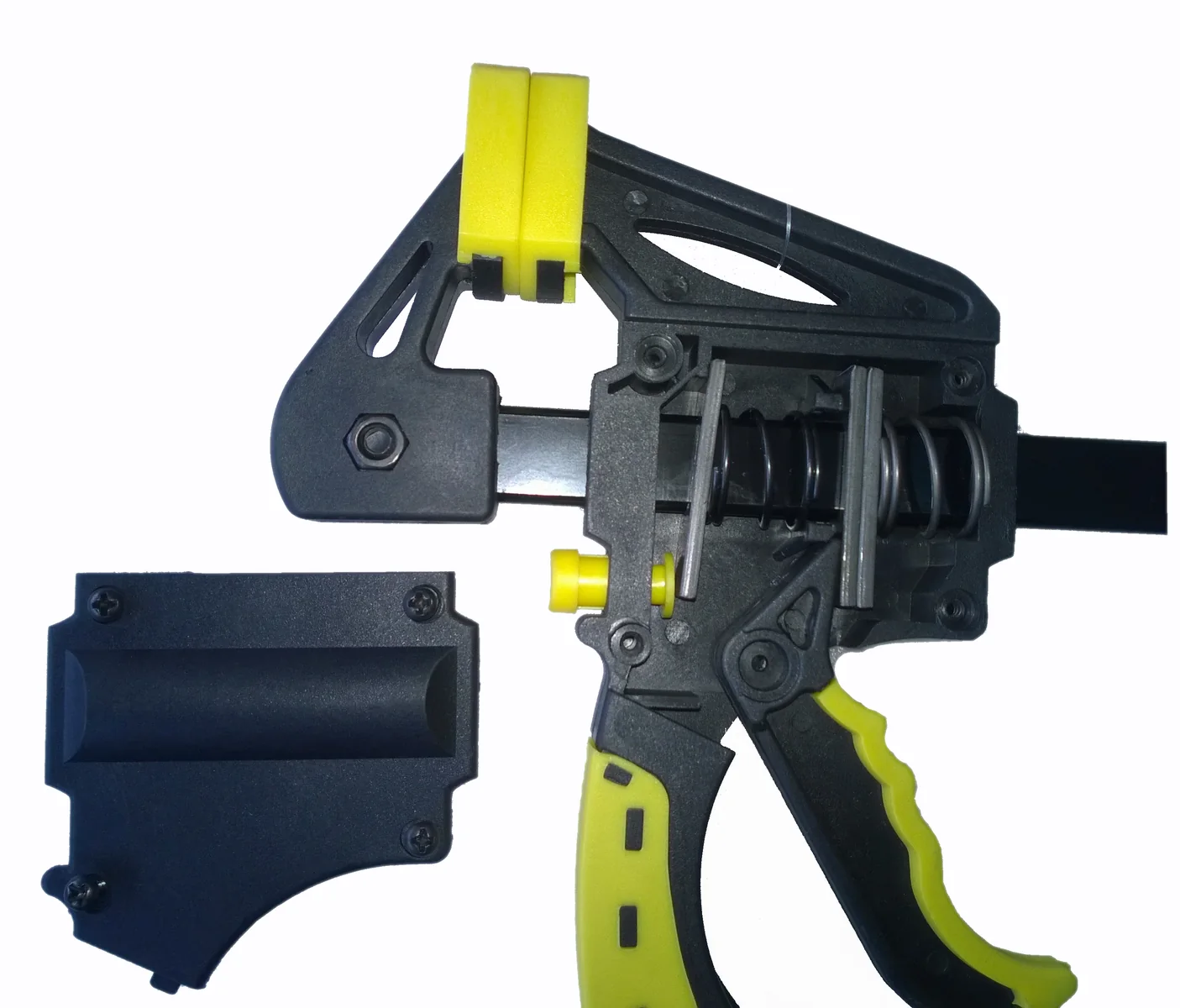
Quick-release bar clamp mechanism for buyer inspection
A mechanism view helps buyers inspect the release parts, springs, pins and rail engagement.

A Sample Evaluation That Produces Useful Evidence

One attractive sample is not enough. Ask for production-representative samples and record the result against the approved specification.

Dimensional inspection

Check opening capacity, throat depth, rail width and thickness, screw diameter, pad size and overall dimensions. Record the measuring points so future inspections use the same method.

Operation test

Run the sliding jaw, release lever or spindle repeatedly. Watch for binding, unexpected release, uneven travel, excessive play and sharp contact points. Test the product at several jaw openings rather than only when fully closed.

Load and holding test

Agree on the fixture, jaw opening, load application and hold time. Inspect for permanent rail bending, frame damage, thread failure, slipping or release. If the supplier states a clamping-force value, the test report should identify the method used to obtain it.

Workpiece protection

Clamp representative softwood, hardwood and finished samples when relevant. Check whether pads mark the workpiece, twist out of position or detach during release.

Finish and workmanship

Inspect coating coverage, plating, welds or cast surfaces, screw finish, handle assembly, printed markings and color consistency. Define acceptable cosmetic limits before mass production.

Packaging test

Verify the retail pack, label, barcode, instruction sheet, inner quantity, master-carton quantity, carton dimensions, net weight and gross weight. For e-commerce, add a parcel-drop test agreed with the supplier. For pallet or container programs, confirm stacking and carton strength.

Keep photographs, measurements and results in an approved-sample record. This gives the pre-shipment inspector an objective reference.

OEM and Private-Label Details to Confirm Before Artwork

Do not begin packaging design before the product specification is frozen. A change in rail length, handle shape or pack quantity can invalidate the dieline and shipping calculation.

Confirm these points first:

  1. Product model and revision
  2. Opening capacity and throat depth
  3. Materials and finishes by component
  4. Required clamping-force claim and test method, if any
  5. Product and packaging colors
  6. Logo method and marking position
  7. Retail pack type and pack quantity
  8. Barcode, warning and language requirements
  9. Inner and master-carton quantities
  10. Carton dimensions, net weight and gross weight
  11. MOQ for the product, color, logo and packaging
  12. Sample approval and pre-shipment inspection requirements

Legal markings and warnings depend on the destination market and sales channel. The importer should confirm the applicable requirements instead of copying another brand’s packaging.

The Landed-Cost Questions Buyers Often Miss

Unit price is only one part of a clamp program. Long rails and heavy steel components can make packing efficiency and freight important cost drivers.

Ask suppliers to quote the same commercial basis and provide:

  • Currency and Incoterm
  • Named port or delivery point
  • MOQ per SKU and per custom color
  • Retail-pack and master-carton quantities
  • Carton dimensions, net weight and gross weight
  • Estimated loading quantity, with the calculation basis
  • Tooling, printing plate or packaging setup charges
  • Sample and courier costs
  • Production lead time after sample and artwork approval
  • Spare-pad or service-part availability, if required

Use carton data to compare landed cost per sellable unit. A slightly lower unit price can become more expensive if the packaging wastes volume or causes damage.

Copy-and-Send RFQ Template

The following format reduces clarification rounds and helps suppliers quote the same product:

Product: light-duty F clamp
Application: furniture repair and general woodworking retail
Opening capacity: 300 mm
Throat depth: 50 mm
Rail section: supplier to state width, thickness, material and finish
Handle: wood handle; supplier to provide available finish and color options
Jaw pads: non-marking removable pads required
Clamping force: supplier to state test method and result
Packaging: 2 pieces per retail set; quote available pack options
Branding: one-color logo on product and private-label packaging
Quantity: state trial quantity and annual forecast separately
Destination market: state country and sales channel
Quote to include: MOQ, Incoterm, port, lead time, carton quantity, carton size, net/gross weight, sample cost and artwork requirements

The dimensions above are an RFQ example, not a claim that one specification is suitable for every market.

Common Sourcing Mistakes

Comparing products by opening size and price only

Clamps with the same opening can differ substantially in reach, rail stiffness, spindle quality and workmanship. Compare the complete specification and sample test.

Treating “heavy-duty” as a specification

The phrase has no useful meaning unless it is supported by construction details and an agreed performance test.

Approving artwork before the sample

Artwork should follow the approved product. Otherwise, changes to size, color, pack quantity or legal text create rework.

Mixing unverified claims into the catalog

Do not publish a force rating, material grade, corrosion result or certification until the supplier provides acceptable evidence for the exact model.

Ignoring repeat-order control

An approved sample, dated specification, artwork version and inspection checklist help ensure the second order matches the first.

What to Send When Requesting a KOLARWIN Clamp Quotation

Prepare the clamp type, opening capacity, throat depth, target application, expected quantity, destination market and packaging format. If you already have a reference sample or drawing, identify which features must match and which can change.

KOLARWIN can then review the requested product range and confirm which models, specifications, packaging options, MOQ and sample arrangements are available. Final performance claims and commercial terms should be recorded in the quotation and approved specification.

Review KOLARWIN hand tools or send a clamp RFQ with your required sizes and sales channel.

Frequently Asked Questions

What information is required for a woodworking clamp quotation?

At minimum, provide the clamp type, opening capacity, throat depth, quantity, target market and packaging requirement. For a comparable technical quotation, also request the rail or frame specification, materials, finish, force-test basis and carton data.

Is opening capacity the same as throat depth?

No. Opening capacity is the maximum workpiece dimension between the pressure surfaces. Throat depth is the reach from the rail or frame to the pressure point. Both dimensions should appear on the specification sheet.

How should clamping force be compared?

Compare results only when the measurement method, jaw opening and acceptance criteria are defined. An unsupported maximum number is not enough for supplier approval.

Should a distributor buy clamp sets or individual clamps?

Sets are convenient for retail and e-commerce, while individual SKUs give professional buyers more control over size. The best choice depends on the channel, shelf space, average selling price and replenishment plan.

What should be approved before a bulk order?

Approve the product specification, representative sample, logo position, color, packaging artwork, pack quantity, carton data, inspection checklist and commercial terms. Keep every approved version dated.

Prepare Your Woodworking Clamp RFQ

Send the clamp type, opening capacity, throat depth, target market, order quantity and packaging requirements for model and quotation review.

Send Your Clamp Requirements

Looking for a reliable mechanic tools manufacturer in China?

If you are sourcing hand tools, socket tools, automotive repair tools, mechanic tool sets or OEM private label tools, contact KOLARWIN Tools for factory-direct quotation, customization support and product consultation.


A woodworking clamp looks simple until you compare samples from several suppliers. Two clamps with the same opening capacity may have different throat depths, rail sections, jaw materials, spindle quality and usable clamping force. Those differences affect the jobs the clamp can perform, how long it lasts and whether customers will return it.

For a distributor or private-label tool brand, the objective is not to buy the largest possible assortment. It is to build a clear product range in which every SKU has a defined user, application and quality level.

This guide explains how to compare woodworking clamps, prepare a sample test and write an RFQ that suppliers can quote accurately.

Pair of F clamps for woodworking and assembly
F-clamp construction and size should be matched to the application.

Start With the Job, Not the Clamp Name

Different markets use “bar clamp,” “F clamp” and “quick-release clamp” inconsistently. A product name alone is therefore not a complete specification.

Begin with the work your customer needs to hold:

Then select the mechanism and construction that fit the job.

Clamp type Typical use Buyer’s main checks
Spring clamp Temporary positioning, light assembly and craft work Jaw opening, spring strength, handle comfort and pad retention
One-handed quick-release bar clamp Fast positioning, installation and repetitive assembly Release mechanism, clamping force, jaw travel, rail stiffness and convert-to-spreader function if required
Light-duty F clamp General woodworking, repair and small glue-ups Opening, throat depth, rail section, spindle movement and protective pads
Heavy-duty F or bar clamp Furniture assembly, larger glue-ups and workshop use Rail straightness, frame rigidity, pressure plate, spindle thread and verified force
G/C clamp Concentrated holding and workshop or fabrication tasks Frame material, screw alignment, swivel pad and finish
Corner or angle clamp Frames, boxes and cabinet assembly Angle accuracy, jaw travel, workpiece access and repeatability

The table is a starting point, not a substitute for a specification sheet. The same clamp type can be built for entry-level retail, regular workshop use or heavier professional work.

Heavy-duty F clamp with steel rail and screw handle
Opening, throat depth, rail section and spindle construction all affect the usable clamp.

The Six Specifications That Make Quotations Comparable

1. Opening capacity

Opening capacity is the maximum workpiece dimension that fits between the pressure surfaces. It should be stated in millimetres, inches or both. Do not approve a range described only as “small,” “medium” or “large.”

A useful size program normally follows the dimensions commonly purchased in the target market. Before choosing sizes, review the customer’s applications, shelf space and competing retail assortments.

2. Throat depth

Throat depth describes how far the clamp reaches from the rail or frame to the pressure point. A long opening does not automatically provide a deep reach. For cabinet, panel and frame work, throat depth can be as important as opening capacity.

Ask the supplier to show where the measurement is taken. This prevents two factories from quoting different dimensions under the same label.

3. Rail or frame section

For a bar or F clamp, record the rail width and thickness. The rail section, steel grade, heat treatment and profile influence stiffness and the force the clamp can sustain without excessive bending.

Rail size should be evaluated together with the sliding arm and fixed jaw. A thick rail does not compensate for a weak casting, poor fit or misaligned spindle.

4. Clamping force

Do not accept an unsupported force number. Ask how the value was measured, at what jaw opening and whether it is a typical result or a rated maximum. If clamping force is important to your market, agree on a repeatable test method before ordering.

Very high force is not always better. Delicate trim, craft work and finished surfaces may need controlled pressure and larger protective pads. Heavy furniture or fabrication applications require a more rigid design.

5. Contact surfaces and handle

Inspect the pressure plate, jaw pads and handle as a system:

Wood, two-component plastic and straight or T-style handles serve different price points and users. Specify the required design rather than accepting whichever handle appears on a sample.

6. Finish and corrosion protection

Confirm the finish for the rail, screw, frame and handle separately. Common options can include paint, powder coating, plating, black oxide or other protective treatments, depending on the component.

If corrosion performance is a contractual requirement, define the test method and acceptance criteria. “Rust-resistant” without a method, exposure time or pass condition is not measurable.

How to Build a Wholesale Clamp Assortment

A practical opening order often performs better when it covers a few clear use cases rather than many nearly identical SKUs.

Hardware and DIY retail

Start with easy-to-understand products: spring clamps, compact one-handed clamps, common F-clamp sizes and two-piece or four-piece sets. Packaging must communicate opening capacity, throat depth, basic application and safe use without forcing the shopper to open the pack.

Furniture and woodworking distributors

Prioritize multiple lengths within a consistent F-clamp or bar-clamp family. Buyers should be able to move from small assembly work to wider panels without changing the mechanism or quality level. Replacement pads can be commercially useful if the design supports them.

Professional workshop supply

Use fewer but more clearly specified models. Rail section, frame construction, spindle quality, pressure plate and verified clamping force matter more than a large piece count. Technical data must be consistent across the carton, catalog and website.

E-commerce programs

Control package dimensions, gross weight, product protection and pack consistency. A product that survives export cartons can still be damaged during parcel delivery if the clamp moves inside the retail box or the rail is exposed.

For every channel, classify each SKU as entry, standard or heavy-duty. Define the difference using specifications and test results, not only color or packaging.

Quick-release bar clamp mechanism for buyer inspection
A mechanism view helps buyers inspect the release parts, springs, pins and rail engagement.

A Sample Evaluation That Produces Useful Evidence

One attractive sample is not enough. Ask for production-representative samples and record the result against the approved specification.

Dimensional inspection

Check opening capacity, throat depth, rail width and thickness, screw diameter, pad size and overall dimensions. Record the measuring points so future inspections use the same method.

Operation test

Run the sliding jaw, release lever or spindle repeatedly. Watch for binding, unexpected release, uneven travel, excessive play and sharp contact points. Test the product at several jaw openings rather than only when fully closed.

Load and holding test

Agree on the fixture, jaw opening, load application and hold time. Inspect for permanent rail bending, frame damage, thread failure, slipping or release. If the supplier states a clamping-force value, the test report should identify the method used to obtain it.

Workpiece protection

Clamp representative softwood, hardwood and finished samples when relevant. Check whether pads mark the workpiece, twist out of position or detach during release.

Finish and workmanship

Inspect coating coverage, plating, welds or cast surfaces, screw finish, handle assembly, printed markings and color consistency. Define acceptable cosmetic limits before mass production.

Packaging test

Verify the retail pack, label, barcode, instruction sheet, inner quantity, master-carton quantity, carton dimensions, net weight and gross weight. For e-commerce, add a parcel-drop test agreed with the supplier. For pallet or container programs, confirm stacking and carton strength.

Keep photographs, measurements and results in an approved-sample record. This gives the pre-shipment inspector an objective reference.

OEM and Private-Label Details to Confirm Before Artwork

Do not begin packaging design before the product specification is frozen. A change in rail length, handle shape or pack quantity can invalidate the dieline and shipping calculation.

Confirm these points first:

  1. Product model and revision
  2. Opening capacity and throat depth
  3. Materials and finishes by component
  4. Required clamping-force claim and test method, if any
  5. Product and packaging colors
  6. Logo method and marking position
  7. Retail pack type and pack quantity
  8. Barcode, warning and language requirements
  9. Inner and master-carton quantities
  10. Carton dimensions, net weight and gross weight
  11. MOQ for the product, color, logo and packaging
  12. Sample approval and pre-shipment inspection requirements

Legal markings and warnings depend on the destination market and sales channel. The importer should confirm the applicable requirements instead of copying another brand’s packaging.

The Landed-Cost Questions Buyers Often Miss

Unit price is only one part of a clamp program. Long rails and heavy steel components can make packing efficiency and freight important cost drivers.

Ask suppliers to quote the same commercial basis and provide:

Use carton data to compare landed cost per sellable unit. A slightly lower unit price can become more expensive if the packaging wastes volume or causes damage.

Copy-and-Send RFQ Template

The following format reduces clarification rounds and helps suppliers quote the same product:

Product: light-duty F clamp
Application: furniture repair and general woodworking retail
Opening capacity: 300 mm
Throat depth: 50 mm
Rail section: supplier to state width, thickness, material and finish
Handle: wood handle; supplier to provide available finish and color options
Jaw pads: non-marking removable pads required
Clamping force: supplier to state test method and result
Packaging: 2 pieces per retail set; quote available pack options
Branding: one-color logo on product and private-label packaging
Quantity: state trial quantity and annual forecast separately
Destination market: state country and sales channel
Quote to include: MOQ, Incoterm, port, lead time, carton quantity, carton size, net/gross weight, sample cost and artwork requirements

The dimensions above are an RFQ example, not a claim that one specification is suitable for every market.

Common Sourcing Mistakes

Comparing products by opening size and price only

Clamps with the same opening can differ substantially in reach, rail stiffness, spindle quality and workmanship. Compare the complete specification and sample test.

Treating “heavy-duty” as a specification

The phrase has no useful meaning unless it is supported by construction details and an agreed performance test.

Approving artwork before the sample

Artwork should follow the approved product. Otherwise, changes to size, color, pack quantity or legal text create rework.

Mixing unverified claims into the catalog

Do not publish a force rating, material grade, corrosion result or certification until the supplier provides acceptable evidence for the exact model.

Ignoring repeat-order control

An approved sample, dated specification, artwork version and inspection checklist help ensure the second order matches the first.

What to Send When Requesting a KOLARWIN Clamp Quotation

Prepare the clamp type, opening capacity, throat depth, target application, expected quantity, destination market and packaging format. If you already have a reference sample or drawing, identify which features must match and which can change.

KOLARWIN can then review the requested product range and confirm which models, specifications, packaging options, MOQ and sample arrangements are available. Final performance claims and commercial terms should be recorded in the quotation and approved specification.

Review KOLARWIN hand tools or send a clamp RFQ with your required sizes and sales channel.

Frequently Asked Questions

What information is required for a woodworking clamp quotation?

At minimum, provide the clamp type, opening capacity, throat depth, quantity, target market and packaging requirement. For a comparable technical quotation, also request the rail or frame specification, materials, finish, force-test basis and carton data.

Is opening capacity the same as throat depth?

No. Opening capacity is the maximum workpiece dimension between the pressure surfaces. Throat depth is the reach from the rail or frame to the pressure point. Both dimensions should appear on the specification sheet.

How should clamping force be compared?

Compare results only when the measurement method, jaw opening and acceptance criteria are defined. An unsupported maximum number is not enough for supplier approval.

Should a distributor buy clamp sets or individual clamps?

Sets are convenient for retail and e-commerce, while individual SKUs give professional buyers more control over size. The best choice depends on the channel, shelf space, average selling price and replenishment plan.

What should be approved before a bulk order?

Approve the product specification, representative sample, logo position, color, packaging artwork, pack quantity, carton data, inspection checklist and commercial terms. Keep every approved version dated.

Prepare Your Woodworking Clamp RFQ

Send the clamp type, opening capacity, throat depth, target market, order quantity and packaging requirements for model and quotation review.

Send Your Clamp Requirements

Why Partner with Kolarwin Tools?

Factory-Direct Pricing Skip the middleman — access competitive wholesale prices and protect your margins
Private Label & OEM Ready Your brand, our expertise — full customization from logo to packaging
Fast Global Shipping Reliable delivery to 60+ countries with full export documentation support
Low MOQ, High Flexibility Start small, scale fast — flexible order quantities to fit your business
Dedicated B2B Support One-on-one account management from quote to delivery, every time

Get Your Free Quote in 24 Hours

Tell us your sourcing needs — we'll respond with a tailored quote, product specs, and the best pricing for your market. No commitment required.

Chat on WhatsApp Email Us Directly
