Need OEM supplier support for this product type?
Contact KOLARWIN Tools for OEM mechanic tools, private label packaging, wholesale quotation and product range support. This gives overseas buyers a clear path from article reading to supplier discussion.
Choose a cold chisel for a maker-approved metalworking task and a wood chisel for woodworking. Their edges and handles may look similar, but struck-face design and material limits differ by model. Confirm what product suits the material, which striking method its maker allows, and how to inspect its head before work.
1. What is the main difference between a cold chisel and a wood chisel?
A cold chisel is a struck tool used for cutting or shaping certain metals. Its opposite end has a struck face, and its cutting edge must suit the material. A wood chisel serves woodworking tasks. Its edge cuts wood; its handle may allow hand pressure, a wooden mallet, or another model-specific method. Neither name gives permission to use every model on every material.
Mayhew’s cold-chisel product page says its listed product cuts metals softer than the edge and is not intended for masonry. Stanley’s model 16-981 listing describes a beveled wood-chisel edge and a steel striking cap for a steel-headed hammer. These examples show why buyers should inspect product-specific instructions. An existing types of chisels guide covers broad families; this comparison focuses on material, construction, and selection.
Start with a specific workpiece and model.
- Identify the material and task before selecting a chisel.
- Read maker limits for cutting, striking, and maintenance.
- Keep model identity with any use instruction.
- Stop when the documented application does not match the job.
Quick comparison
| Feature | Cold chisel | Wood chisel |
|---|---|---|
| Primary work | Maker-approved cutting or shaping of metal | Woodworking tasks specified by maker |
| Edge and body | Profile and stock vary by tool style | Bevel and blade construction vary by model |
| Struck end | Typically has a struck face opposite cutting edge | Handle may be designed for palm, mallet, or hammer cap |
| Main check | Material softer than the edge, where maker requires | Handle and striking method for exact model |
2. How do the cutting edges and bodies differ?
Both tools have a cutting edge, but shape, width, body section, and intended cut vary. A metalworking chisel may use a flat, cross-cut, or other profile for a specific cut. Mayhew lists several cold-chisel profiles. Klein’s struck-tool guide shows varied stock sections and types.
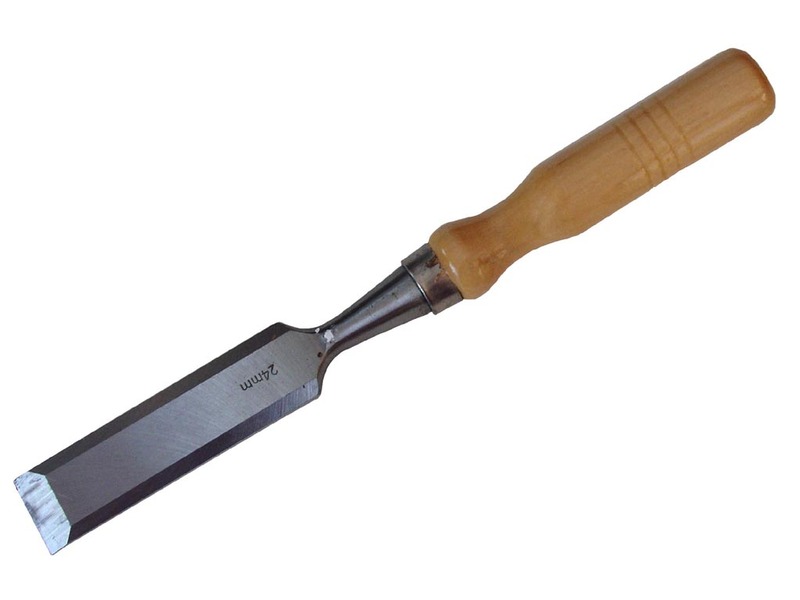
Wood chisels also differ by model. Stanley’s 16-981 listing calls its edge beveled, while Bahco’s 425-20 product sheet describes a precision-ground blade. Those statements refer to named products. They do not set one bevel angle or edge geometry for every woodworking chisel. Check the drawing or product page when a joint, recess, or cut width needs a particular profile.
Compare needed edge profile with stated tool purpose.
- Check blade width and profile against the work.
- Keep blade geometry separate from handle construction.
- Ask for a drawing when edge shape is not clear.
- Avoid assigning an unverified bevel angle or steel grade.
Geometry checks
| Dimension or feature | Why it matters | Buyer evidence |
|---|---|---|
| Edge width | Controls the cut span or line | Maker specification or drawing |
| Edge profile | Matches the cut shape and access | Named model image or drawing |
| Body section | Affects strength and hand clearance | Product drawing and intended use |
| Bevel or grind | Must match model and task | Maker specification; no inferred angle |
3. Which materials are each chisel designed for?
Use the exact product’s material statement. Mayhew’s listed cold chisel is for metals softer than its cutting edge and not for masonry. That language does not mean every metal is suitable. A maker’s edge limit still applies; a generic label cannot confirm workpiece alloy or hardness.
Manufacturer scopes can differ by specific model. Klein’s mining-tool catalog describes certain alloy-flat cold chisels for high-tensile steel, welds, and named masonry materials. That model-level product claim does not extend to all cold chisels. Confirm the exact part number and current documentation before using any tool on harder metal, concrete, or stone. A wood chisel belongs to a woodworking application; do not use its appearance as proof that it suits a metal cut.
Material claims belong to named models.
- Match workpiece material with the exact maker statement.
- Confirm any hardness limits from current product documents.
- Treat masonry claims as model-specific.
- Escalate uncertain alloys or coatings before work starts.
Material fit
| Workpiece | Cold-chisel decision | Wood-chisel decision |
|---|---|---|
| Metal below stated edge limit | Consider only if exact maker model allows it | Do not assume suitability from appearance |
| Hardened metal or weld | Verify exact model and material claim | Not a default application |
| Masonry | Product claims differ; verify exact model | Do not assume suitability |
| Wood | Not the normal category label; confirm maker use | Match exact woodworking model and task |
4. What should you know about the struck end and handle?
Cold chisels are struck tools, but their head geometry and body vary. Klein’s hand-tool guide describes a cold chisel with a cutting edge at one end and a struck face at the other. It also warns against using a struck tool with cracks, chips, mushrooming, bending, or excessive wear. Eye protection applies to the user and nearby people when striking tools are used.
Wood-chisel handles vary just as much. Bahco’s 425-20 woodworking chisel has a red-beech handle, ferrule, and maker-stated use with a wooden mallet or palm. Stanley’s 16-981 through-tang wood chisel has a steel striking cap explicitly designed for a steel-headed hammer. These examples rule out a universal hammer rule for all wood chisels. Follow the handle instructions, and do not strike an unapproved model.
Read the handle construction before choosing a striking tool.
- Identify a struck face on a metal chisel.
- Check wood-chisel ferrule, cap, or handle style.
- Use only the impact method named for that model.
- Wear eye protection when struck tools can release particles.
Head and handle examples
| Example | Maker-listed construction | Maker-listed method or limit |
|---|---|---|
| Klein cold chisels | Cutting end and struck face; multiple stock sections | Inspect struck face and reject damaged tools |
| Bahco 425-20 wood chisel | Red-beech handle, ferrule, precision-ground blade | Wooden mallet or palm |
| Stanley 16-981 wood chisel | Through-tang and steel striking cap | Steel-headed hammer on this model |
5. When should you use hand pressure, a mallet, or a hammer?
Follow the striking method specified for each model. Bahco lists its 425-20 wooden-handle chisel for a wooden mallet or palm. Stanley describes a steel striking cap on model 16-981 for a steel-headed hammer. A different handle may not share either design. Do not assume that a wood handle can take steel-hammer blows or that a plastic grip is a striking cap.
Cold chisels have a struck face, so tool choice and condition matter at both ends. Use a suitable striking tool only when the cold chisel maker authorizes that use. Keep blows aligned with the chisel axis; avoid glancing strikes. Klein’s guide says off-center blows do not direct force through a tool body. For hammer types, see types of hammers and match a hammer to the work instruction.
Let model instructions set how force reaches each edge.
- Use hand pressure only where the chisel maker permits it.
- Select mallet or hammer by handle design and documentation.
- Keep strike aligned with the tool body.
- Stop if the head or handle moves, chips, or mushrooms.
Method selection
| Chisel construction | Method to verify | Do not assume |
|---|---|---|
| Cold chisel with struck face | Maker-approved striking tool and condition | Any hammer or material is acceptable |
| Wood handle with ferrule | Maker’s listed palm or mallet method | Steel-hammer use from ferrule alone |
| Through-tang with striking cap | Cap’s documented hammer type | Other models share same allowance |
| Unclear or damaged handle | Confirm model or remove from service | Trial strikes are a safe test |
6. What inspection and safety checks matter?
Inspect both cutting and striking ends before use. Klein advises rejecting struck tools with cracks, chips, mushrooming, bends, or excessive wear. A damaged struck face can create flying fragments. Check the handle, ferrule, cap, and blade for movement or damage as applicable. Follow the maker’s care procedure; do not grind, reheat-treat, or reshape a heat-treated edge without approved instructions.
Wear eye protection when striking can release particles, and protect nearby workers from the same hazard. Secure stock with a suitable fixture; keep hands clear of cut. For assortment planning, see woodworking clamps for wholesale and types of clamps. Choose a fixture for actual material and process.
A sound head and a stable workpiece come before the first strike.
- Check edge, head, and handle condition.
- Wear eye protection and control nearby access.
- Secure stock with an appropriate fixture.
- Quarantine chipped, mushroomed, loose, or bent tools.
Inspection checklist
| Checkpoint | Reject or pause when | Record or response |
|---|---|---|
| Cutting edge | Chipped, dull, cracked, or distorted | Follow maker service guidance |
| Struck face | Mushrooming, cracks, chips, or bends | Remove from striking service |
| Handle or cap | Loose, split, or damaged | Repair only as maker permits |
| Work area | Stock moves or bystanders enter hazard zone | Re-secure and control access |
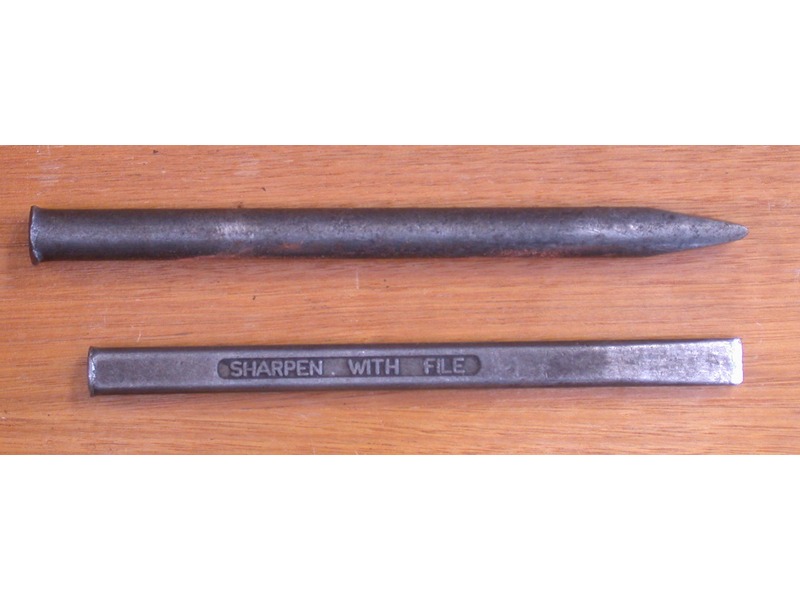
7. What jobs should you keep separate?
Select a cold chisel only when its maker designates that model for the metal and cut. Choose a wood chisel for an approved woodworking operation. Do not use category names alone to decide if an edge can handle hardened metal, welding residue, concrete, stone, or a specific wood species. Mayhew’s masonry restriction and Klein’s model-specific masonry claims show why product-level evidence matters.
Do not use a chisel as a pry bar, wedge, or saw substitute. For long cuts, review the types of hand saws guide instead. Follow the equipment-maker procedure for shop-specific tasks.
Use tools only for maker-named tasks.
- Separate metalworking and woodworking inventories.
- Keep masonry claims tied to exact model numbers.
- Do not force a chisel into prying or wedging work.
- Stop when workpiece material falls outside documentation.
Task boundaries
| Proposed task | Decision check | Procurement action |
|---|---|---|
| Metal cut or shaping | Exact cold-chisel material statement | Record maker and model limits |
| Woodworking cut | Exact wood-chisel design and handle method | Confirm edge and strike instructions |
| Masonry work | Specific SKU explicitly rated for task | Do not infer from “cold chisel” label |
| Prying or wedging | Chisel maker’s intended use | Select a purpose-designed tool instead |
8. What should buyers specify in a chisel RFQ?
Name the material, task, edge profile, blade width, overall length, and expected striking method. Ask for the exact model, material statement, head and handle construction, care instructions, and any use limits. If a product is claimed for hardened metal or masonry, request the maker’s exact product documentation rather than accepting a category description. Do not invent a bevel angle, steel grade, hardness value, or striking permission.
For maintenance ranges, industrial maintenance repair tools can help with assortment planning. Keep chisel application and model limits in the item record. Mechanic tools list can support range planning; retain chisel-specific RFQ fields.
Put application in product specification.
- State the workpiece and intended cut.
- Identify edge width, profile, and overall length.
- Specify approved striking method by model.
- Request documentation for limits and maintenance.
Approve a sample only after end users confirm edge and handle suit documented work.
RFQ fields
| Field | Buyer request |
|---|---|
| Application | Workpiece material and task |
| Edge | Profile, width, and drawing reference |
| Construction | Body, handle, ferrule, tang, or strike cap |
| Method | Palm, mallet, or hammer allowance by exact model |
| Documentation | Material scope, maintenance, and replacement limits |
9. How can distributors prevent chisel mix-ups?
Store wood chisels and cold chisels in clearly labeled locations. Keep model numbers, use limits, and striking instructions with each item or kit. A mixed drawer invites an operator to choose by appearance, even though two similar profiles can have very different handle construction and material limits. Separate damaged tools immediately and replace missing documentation before return to shared use.
Training should make the selection check visible. Ask operators to identify material, tool model, handle method, and stop condition before work. Keep replacement edges and guards with the correct tool family. For broad consumer hand-tool planning, hand tools for home repairs offers separate assortment context; it does not replace model-level chisel guidance.
A clear label is part of safe tool control.
- Separate material families in storage.
- Keep instructions attached to model identifiers.
- Quarantine damaged tools and missing-label items.
- Review training whenever models or tasks change.
Storage and training controls
| Control | Minimum content | Owner action |
|---|---|---|
| Label | Tool family and model number | Replace unreadable labels |
| Instruction | Material and striking limits | Keep maker reference accessible |
| Inspection | Edge, head, handle, and cap condition | Quarantine failures |
| Training | Material, method, and stop conditions | Refresh after product change |
10. How should you choose between a cold chisel and a wood chisel?
Choose from the documented task and model, not from a similar outline or general category name. Cold chisels serve specified metalworking operations; wood chisels serve specified woodworking work. Edge geometry, struck face, handle, and allowed impact method differ across products. Mayhew, Klein, Bahco, and Stanley document different limits for their named products, so follow the exact manufacturer source.
The types of chisels guide provides a broader family overview. Product and sourcing questions can go through Contact Us. For tool programs, record the material, model, striking method, and inspection rule together.
Approve only a model whose use and construction match the job.
- Verify exact product documentation.
- Keep material and striking claims model-specific.
- Train users on inspection and stop conditions.
- Do not approve unsupported universal claims.
Q1: Can a cold chisel cut any metal?
No; Mayhew says its cold chisels are for metals softer than the cutting edge. Check the exact model limits.
Q2: Can a cold chisel be used on concrete?
Only if the exact product documentation allows that material. Mayhew excludes masonry for its cold chisels, while some maker models state different uses.
Q3: Can I strike any wood chisel with a steel hammer?
No; follow the model’s handle design. Bahco specifies a wooden mallet or palm for model 425-20; Stanley specifies a steel-headed hammer for model 16-981.
Q4: What should I inspect on a cold chisel?
Check its edge and struck face for chips, cracks, bending, or mushrooming. Remove damaged tools from service.
Q5: What should a chisel supplier quote include?
Request model, material scope, edge profile, dimensions, handle construction, approved striking method, and care instructions.
Looking for a reliable mechanic tools manufacturer in China?
If you are sourcing hand tools, socket tools, automotive repair tools, mechanic tool sets or OEM private label tools, contact KOLARWIN Tools for factory-direct quotation, customization support and product consultation.