Need OEM supplier support for this product type?
Contact KOLARWIN Tools for OEM mechanic tools, private label packaging, wholesale quotation and product range support. This gives overseas buyers a clear path from article reading to supplier discussion.
Hammer assortments span carpentry, metalwork, maintenance, and surface-sensitive assembly. Buyers must match head shape and mass with each task, then specify a suitable handle and package. This guide groups common hammer types by face and use. Manufacturer and safety sources support the examples; dimensions remain model-specific.
1. How can buyers group the main types of hammers?
Group hammers by contact face and workpiece. Claw and framing models serve nail work; ball-peen and cross-peen designs suit metalworking. Mallets use softer or replaceable faces for assembly. Dead-blow models use an internal design intended for controlled impact. Drilling hammers serve specified struck tools; club and sledge hammers bring greater head mass.
Bricklayer, roofing, drywall, and welding chipping hammers address named trades. These families are not interchangeable. Catalog terms vary, so compare drawings and intended-use instructions when names leave room for doubt.
- By workpiece: wood, metal, masonry, or a finished surface.
- By contact: flat face, peen, claw, soft face, or application-shaped head.
- By strike: precise placement, repeated light blows, or heavier impact.
Start with the struck surface. Identify what the hammer contacts, then narrow the family before comparing weight or handle style.
Hammer family map
| Family | Contact feature | Common task | Buyer check |
|---|---|---|---|
| Claw/framing | Flat face and claw | Driving or withdrawing nails | Head and handle pattern |
| Ball-peen | Flat face and rounded peen | Metal shaping and riveting tasks | Head mass and face size |
| Cross-peen | Flat face and transverse peen | Controlled metal shaping | Peen orientation and mass |
| Mallet | Softer or replaceable face | Assembly and surface-sensitive work | Face material and hardness |
| Dead-blow | Internal moving mass in some designs | Controlled shop strikes | Exact construction and use notes |
| Drilling/club/sledge | Heavy striking face | Chisels, demolition, or heavy work | Intended struck tool and handling |
Practical action: sort catalog records by head design and intended task instead of using a single generic “hammer” label.
2. What work are claw and framing hammers made for?
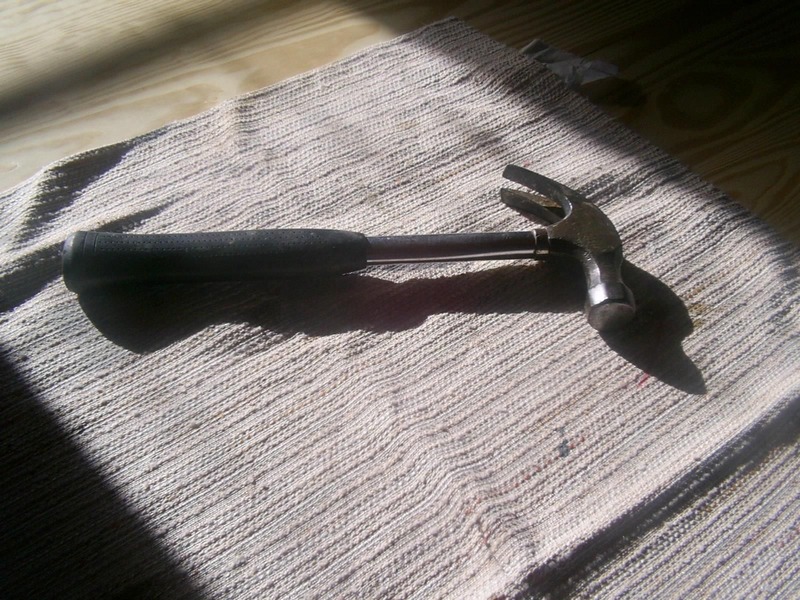
A claw hammer pairs a striking face with a split claw for nail removal. Framing hammers are a related carpentry family. Stanley’s framing range shows model-specific options; claw curve, face size, handle, and mass still vary by SKU.
Estwing’s usage guide limits nail hammers to common nails and names separate framing and specialty designs. That distinction helps buyers separate general carpentry from trade-specific ranges. Do not describe either family as universal for fastening or demolition.
- Ask whether customers need nail driving, nail removal, or both.
- Compare face geometry and claw shape against their work method.
- Specify head weight and handle length from the selected product drawing.
Keep the range tied to trade. Retail home-repair buyers and framing crews may want different head styles, weights, and packaging. A broader homeowner tool guide can help place claw hammers in a general kit.
Carpentry hammer choices
| Design | Useful distinction | Buyer question | Avoid assuming |
|---|---|---|---|
| Claw hammer | Claw supports nail withdrawal | Curved or straight claw? | One claw profile suits every task |
| Framing hammer | Trade-oriented nail work | Face, mass, and handle preference? | “Framing” defines one universal weight |
| Nail hammer | General nail driving | Intended nail type? | Nail hammer is suitable for struck chisels |
Practical action: quote carpentry hammers by product drawing and customer task, not by head weight alone.
3. When does a ball-peen hammer fit metalwork?
A ball-peen hammer has a flat face and rounded peen. Its flat face may strike a compatible punch or chisel when approved by the hammer maker. The peen serves metal shaping tasks. Estwing’s model page describes metalworking uses; its safety guidance names riveting and straightening unhardened metal.
Distinguish this design from nail hammers by its two working ends. Avoid claims about hardness or performance unless the exact SKU supports them. Compare face material, rebound behavior, and workpiece fit in the ball-peen vs dead-blow guide.
- Confirm which end customers expect to use for their metalworking task.
- Match head mass and face diameter to the work and struck tool.
- Request an exact SKU sheet before printing performance details.
Use the profile as a starting point. Metal type, workpiece geometry, and task method still determine which model belongs in a kit.
Ball-peen buying fields
| Field | Why buyers record it | Evidence source |
|---|---|---|
| Head mass | Affects tool selection and user preference | Manufacturer SKU table |
| Face diameter | Must suit contact and struck-tool requirements | Product drawing |
| Overall length | Affects access and swing envelope | Product drawing |
| Intended use | Separates shaping from general nail work | Manufacturer instructions |
Practical action: approve ball-peen size against a work sample and maker guidance.
4. What does a cross-peen hammer add?
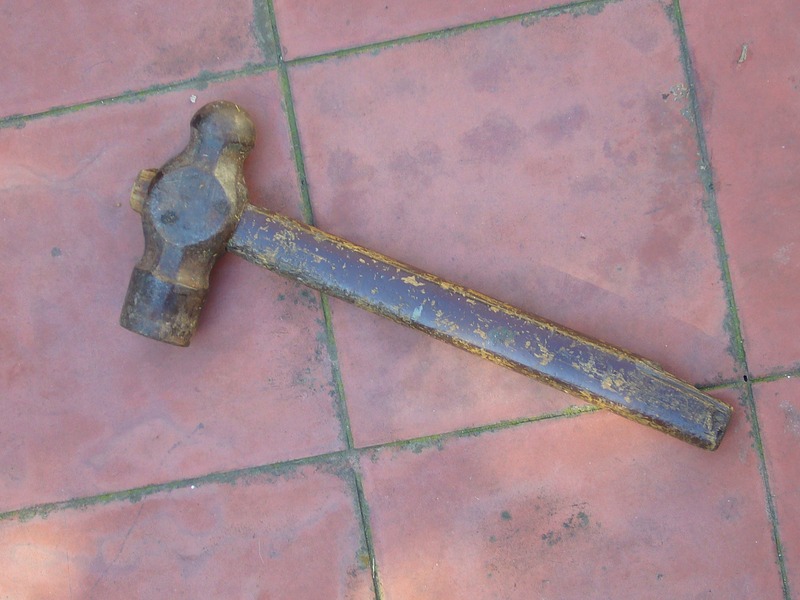
A cross-peen hammer pairs a flat face with a wedge-shaped peen set across the handle. That orientation supports a different strike direction for metal shaping. Milwaukee’s product page describes its model for controlled strikes and shaping or forging; that description is model-specific.
Catalogs spell the family “cross-peen” or “cross-pein.” Some use “engineer’s hammer” for a ball-peen pattern. Check the head illustration, peen orientation, mass, and handle proportions instead of relying on translated names.
- Confirm whether the peen runs across or along the handle.
- State the desired head mass and face geometry.
- Include the target material and shaping task in the specification.
Check the drawing, not only the label. Cross-peen and ball-peen names point to different peen shapes, but translations can blur catalog terminology.
Peen pattern comparison
| Pattern | Peen shape | Orientation | Buyer focus |
|---|---|---|---|
| Ball-peen | Rounded end | Ball at opposite end from face | Metal shaping and specified striking tasks |
| Cross-peen | Narrow wedge | Across handle axis | Controlled shaping direction |
Practical action: attach a head-view image or dimensioned drawing when ordering peen-style hammers across languages.
5. Which trade-specific hammers belong in an assortment?
Include trade-specific hammers only when customer work supports them. Bricklayer hammers set or split bricks; roofing tools support shingle work; drywall hammers score or install panels. Welding chipping hammers remove slag, as noted on Klein’s product page. These head shapes suit distinct tasks, so avoid one generic “specialty hammer” label.
Estwing’s guidance assigns separate purposes to drilling, ball-peen, drywall, shingler’s, and bricklayer tools. Check supplier instructions for each model. A mechanic tools list shows how repair buyers may place hammers among other tools.
- Ask which trade and work stage the item serves.
- Check face, edge, claw, or pick geometry against that task.
- Separate individual tools from multi-piece kits.
Follow the work sequence. A hammer earns its place when it solves a named operation that customers perform repeatedly.
Trade-specific hammer fit
| Type | Stated task example | Assortment question | Source check |
|---|---|---|---|
| Bricklayer | Setting or splitting brick | Which masonry tasks recur? | Head and edge drawing |
| Roofing/shingler’s | Installing or trimming shingles | Which roof materials are covered? | Manufacturer instructions |
| Drywall | Scoring or installing drywall | Is it a required trade item? | Head profile and handle |
| Welding chipping | Removing slag around welds | What workpiece and slag pattern? | Intended-use description |
Practical action: include a trade hammer only after the distributor confirms its end-user task and required package position.
6. When should buyers choose a mallet?
Mallets suit assembly or surface-sensitive work where buyers want a different contact face from steel. Catalogs include rubber-faced and replaceable-head designs. GEDORE’s striking-tool catalog lists nylon heads and spares. Stanley describes rubber mallets for woodworking, assembly, and flooring; GEDORE describes rubber-faced models for sensitive components. These examples do not guarantee fit on every surface.
Choose by workpiece, finish, strike, and stated application. For homeowner kits, see the hand-tool guide or household tool kit guide.
- Identify the surface or assembly being contacted.
- Compare replaceable and fixed-face options.
- Check face material and available spare-head details.
Protect the finished part deliberately. Test the face on a representative material instead of relying on “soft.”
Mallet selection matrix
| Face style | Possible fit | Buyer check | Avoid assuming |
|---|---|---|---|
| Rubber | Assembly or flooring tasks | Hardness and face diameter | Every rubber grade protects every finish |
| Plastic/nylon | Replaceable or firm synthetic face | Material and replacement availability | All polymers behave alike |
| Wood | Joinery or tool seating | Species and face condition | One wood face suits metalwork |
| Replaceable-face | Ongoing service range | Head compatibility and spares | Spare heads fit across brands |
Practical action: test a sample on the target workpiece and record acceptable marking before approving a mallet range.
7. What distinguishes a dead-blow hammer?
A dead-blow hammer uses an internal design intended to affect impact behavior. Estwing’s model contains moving steel shot inside a polyurethane-encased body; Estwing says that product can reduce marring, sting, and vibration. Those details remain specific to that model.
“Dead-blow” does not guarantee zero rebound, no damage, or fit for every struck tool. Construction, face, mass, and instructions define the SKU. This section treats dead-blow as one family; compare individual models against the intended workpiece.
- Ask what internal mass or face construction the model uses.
- Check intended workpiece, head weight, and replacement options.
- Keep marketing language separate from measurable product details.
Read the model sheet closely. The same category name can cover different internal constructions and face materials.
Dead-blow specification checks
| Field | What to confirm | Why it matters |
|---|---|---|
| Internal design | Shot, inserts, or other stated construction | Category claims vary by model |
| Face/body material | Exact manufacturer description | Contact and surface behavior |
| Head mass | Product-specific value | Selection and handling |
| Use notes | Approved workpiece and maintenance | Avoid unsupported application claims |
Practical action: request the supplier’s current product sheet and sample before making a reduced-rebound claim.
8. When do drilling, club, and sledge hammers fit?
Drilling hammers serve specified struck-tool combinations. Estwing lists chisels, punches, and star drills for its models; its product page calls for eye protection. Treat that as model-specific guidance. Both hammer and struck tool must suit the intended impact.
GEDORE lists club and sledge hammers among its striking tools. These serve heavier demolition or masonry work. Head mass changes handling and swing needs; follow task conditions and maker instructions. Do not select by weight alone. See the broader auto mechanic tool guide and industrial maintenance guide.
- Drilling hammer: confirm the intended chisel, punch, or drill combination.
- Club hammer: check the task and required swing space.
- Sledgehammer: review workpiece, work area, and handling plan.
Match both striking and struck tools. A heavy head alone does not make a hammer suitable for a chisel or punch.
Heavy-strike tool comparison
| Type | Typical role | Buyer detail | Safety review |
|---|---|---|---|
| Drilling hammer | Designed striking of specified tools | Head mass and face diameter | Confirm both tool instructions |
| Club hammer | Heavier hand strikes | Handle length and task | Swing clearance and PPE |
| Sledgehammer | Heavy demolition or breaking work | Head mass and overall length | Work zone and handling plan |
Practical action: list struck tool and workpiece in the RFQ for every impact application.
9. How should teams select and inspect hammers?
A useful specification combines head style, face geometry, head mass, handle material and length, overall dimensions, and intended task. Add face hardness, coating, or material grade only when required and documented. Product photos cannot establish material grade or performance rating.
Safety checks matter during sourcing and use. OSHA’s hand-tool rule requires impact tools such as chisels, wedges, and drift pins to remain free of mushroomed heads. Wooden handles must be free of cracks or splinters and tight in the tool. Estwing recommends goggles for users and bystanders. Follow site rules and product instructions for eye and face protection.
- Inspect face, peen, claw, handle, and head-to-handle joint.
- Confirm the hammer and struck tool are specified for the operation.
- Record rejected defects and acceptance criteria by SKU.
Make inspection part of approval. A sample should meet both the drawing and the customer’s safe-use expectations.
Hammer sample review
| Check | Evidence | Acceptance note |
|---|---|---|
| Head geometry | Drawing and sample | Face, peen, claw, or insert profile |
| Head mass and length | Product sheet | Match quoted values |
| Handle and joint | Sample inspection | No cracks, loose fit, or visible damage |
| Intended use | Manufacturer instructions | Hammer and struck tool suitability |
| Packaging | Approved sample pack | Piece count, labels, and language |
Practical action: retain a signed reference sample and document face, handle, mass, and packaging checks for each SKU.
10. What should a hammer RFQ include?
A useful RFQ names hammer family, face, head mass, handle material and length, intended use, and workpiece. For specialty models, identify the struck tool or trade task. Add quantity, market, package, branding, label language, and evidence required for material or performance claims.
Separate requirements from questions: specify two ball-peen weights while requesting alternate handle styles. The mechanic tool-set guide places hammers in a wider kit. Send face, head mass, handle, use conditions, quantity, market, and packaging details through KOLARWIN’s contact page.
Make the quote easy to assess. Attach a product drawing or representative workpiece when face geometry controls fit. No MOQ, price, stock, capacity, or lead time is assumed here.
- Family, face shape, and head mass
- Handle material, length, and joint details
- Intended operation, workpiece, and struck tool if relevant
- Market, customer channel, quantity, packaging, and language
- Documents required for any material or performance statement
Attach a marked drawing or sample when impact fit is specific.
FAQ
Q1: What are the most common types of hammers?
Common families include claw, framing, ball-peen, cross-peen, mallet, dead-blow, drilling, club, sledge, and trade-specific hammers.
Q2: What is a ball-peen hammer used for?
Manufacturers describe ball-peen hammers for metalworking tasks such as shaping or rounding edges. Follow model instructions for its exact use.
Q3: Is a rubber mallet the same as a dead-blow hammer?
No; those labels describe different features. A rubber mallet names a face material, while dead-blow names a hammer design. Some dead-blow models use an internal mass; check each product sheet.
Q4: Which hammer should be used with a chisel or punch?
Use only a hammer and struck tool intended for that combination. Follow both manufacturers’ instructions and the worksite’s eye and face protection requirements.
Q5: What information should a buyer include in a hammer RFQ?
List the head style, face geometry, mass, handle, intended operation, struck tool if applicable, quantity, market, packaging, and documentation requirements.
Looking for a reliable mechanic tools manufacturer in China?
If you are sourcing hand tools, socket tools, automotive repair tools, mechanic tool sets or OEM private label tools, contact KOLARWIN Tools for factory-direct quotation, customization support and product consultation.