
Need OEM supplier support for this product type?
Contact KOLARWIN Tools for OEM mechanic tools, private label packaging, wholesale quotation and product range support. This gives overseas buyers a clear path from article reading to supplier discussion.
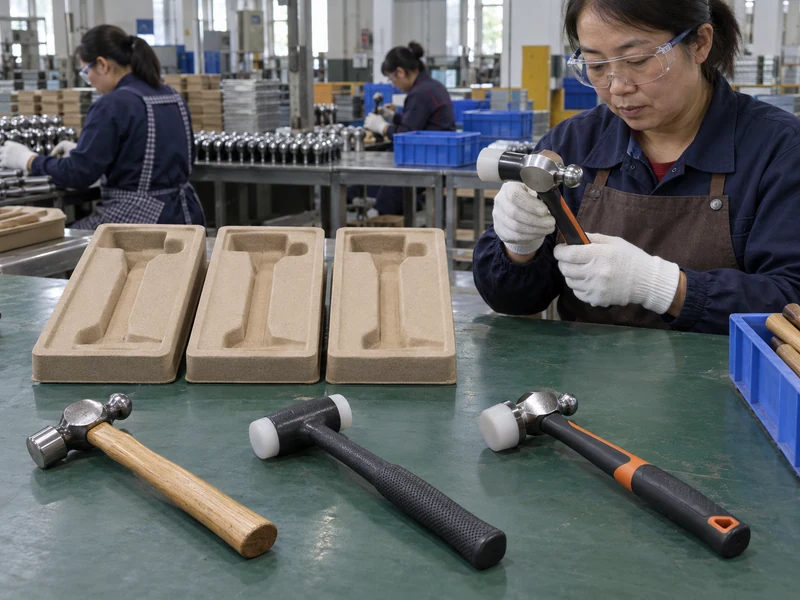
A ball-peen hammer describes head shape: one flat face and one rounded peen. “Dead blow” describes impact behavior, usually a head designed to reduce rebound. The categories can overlap in a combination hammer. Distributors comparing these tools should assess the face, head construction, workpiece, and application rather than treating the names as mutually exclusive types.
1. What does each hammer name describe?
A conventional ball-peen hammer has a flat striking face at one end and a rounded peen at the other. The flat face supports general striking tasks allowed by the tool maker; the peen can shape or peen suitable unhardened metal. A dead-blow hammer is designed to reduce rebound after impact. Some models use a hollow head with internal shot, while designs and face materials vary.
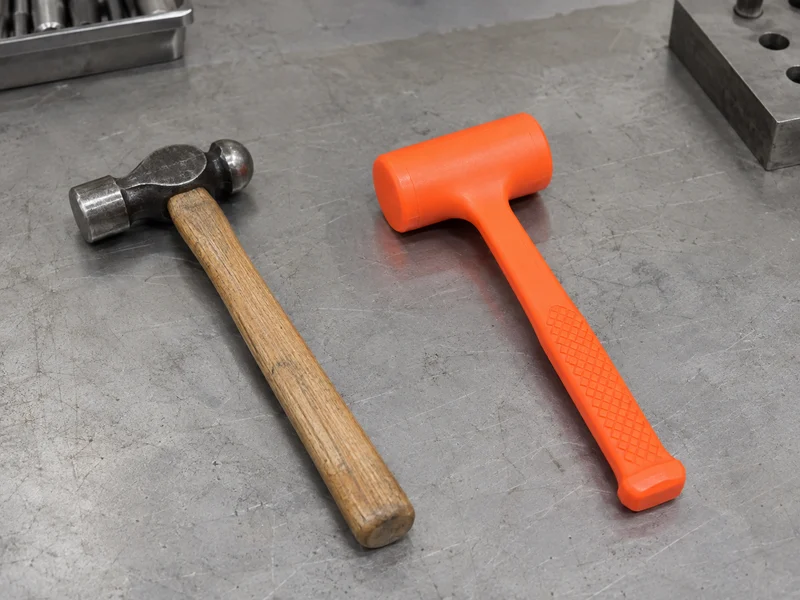
These labels describe different attributes. A hammer may combine ball-peen geometry with dead-blow construction, so distributors should not compare them as exclusive categories. Some combination models have steel faces and a protective outer jacket. Other dead-blow designs use different face materials. Check the exact model’s construction.
Separate head shape from impact behavior.
- Ball-peen: identify the flat face and rounded peen.
- Dead blow: identify how the head reduces rebound and what material contacts the work.
- Combination: inspect both face geometry and internal head design.
- Product names alone do not establish whether a hammer is non-marring.
Kolarwin’s hand tools range lists hammers alongside wrenches, screwdrivers, pliers, and measuring tools for distributor assortment planning.
Hammer-feature matrix
| Label | Describes | Buyer verification |
|---|---|---|
| Ball peen | Head geometry | Both face shapes and material |
| Dead blow | Rebound behavior | Internal design and striking face |
| Ball-peen dead blow | Both features | Construction, face, and use limits |
Compare the construction fields before assigning a product to a mutually exclusive catalog category.
2. What does a ball peen hammer do?
A ball-peen hammer’s flat face delivers a broad contact area; its rounded peen concentrates contact over a smaller area. Manufacturer guidance describes uses such as metal shaping, riveting, and peening for appropriate unhardened materials. The task, alloy, and hammer size matter. A ball peen is not a general-purpose answer for every fastener or workpiece.
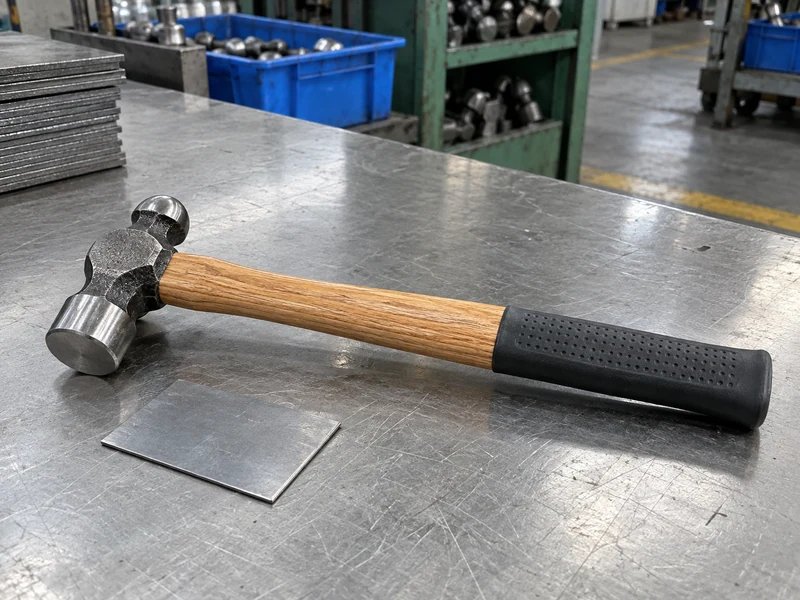
Let the rounded end shape suitable metal, not every problem.
- Match the peen diameter and head weight to the material and task.
- Use the flat face only for tasks allowed by the hammer instructions.
- Keep striking faces clean and free from cracks, chips, or mushrooming.
- Use an approved punch or drift when the task requires one.
The automotive repair tools range can help place striking hammers beside specialized brake, steering, engine, and puller tools.
Ball-peen use matrix
| Hammer area | Typical role | Limit to check |
|---|---|---|
| Flat face | General striking or suitable punch work | Face condition and struck material |
| Rounded peen | Shaping or peening suitable metal | Material and forming procedure |
| Handle and head | Control and impact transfer | Fit, damage, and grip condition |
Confirm the workpiece material and approved striking method before recommending a ball-peen model.
3. How does a dead-blow hammer reduce rebound?
Many dead-blow hammers use a hollow head with loose material inside. During a strike, internal mass moves and helps reduce the hammer’s rebound. Check what actually contacts the part.
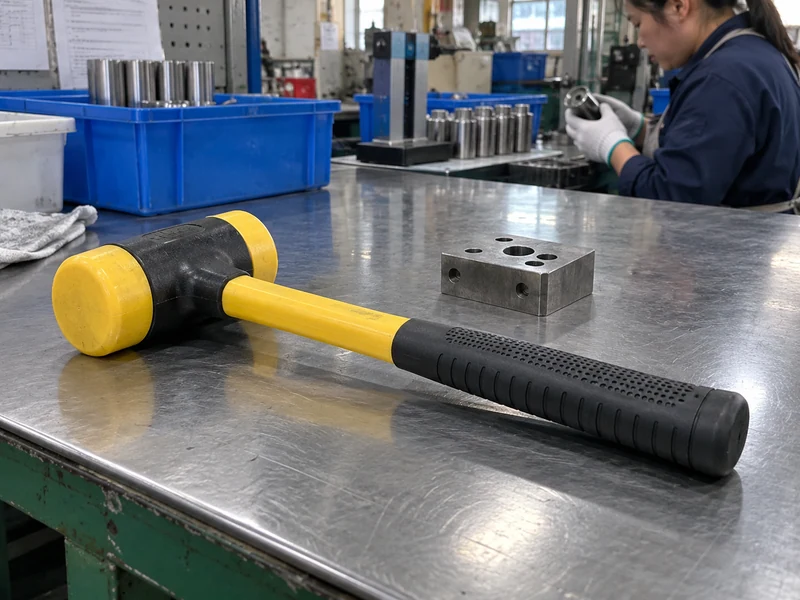
- Ask whether the head contains shot or another rebound-control mechanism.
- Identify face material, jacket material, and replaceable components.
- Match face hardness and shape with the workpiece and assembly task.
- Inspect for cracks, tears, looseness, or exposed internal fill.
- Treat “non-marring” as model-specific, not a category-wide promise.
For kit planning, Kolarwin’s mechanics tool sets page provides broader kit context; verify actual set contents before adding a hammer as a listed component.
Dead-blow construction matrix
| Construction field | Buyer question | Evidence |
|---|---|---|
| Internal fill | What reduces rebound? | Drawing or product description |
| Striking face | What material touches the part? | Sample inspection |
| Outer jacket | Does it cover the head or face? | Section view |
| Service parts | Can wear components be replaced? | Parts list |
Request a construction description and sample before using broad surface-protection claims.
4. Which hammer is better for assembly and seating work?
A dead-blow hammer may suit controlled assembly, alignment, and seating work where reduced rebound is useful. The correct face still depends on the part. A polymer-faced hammer may help protect a finish. Use a steel-faced dead blow only on workpieces and struck tools approved by its manufacturer; harder material does not establish safe contact. Neither choice removes the need to control swing, support the work, and follow assembly instructions.
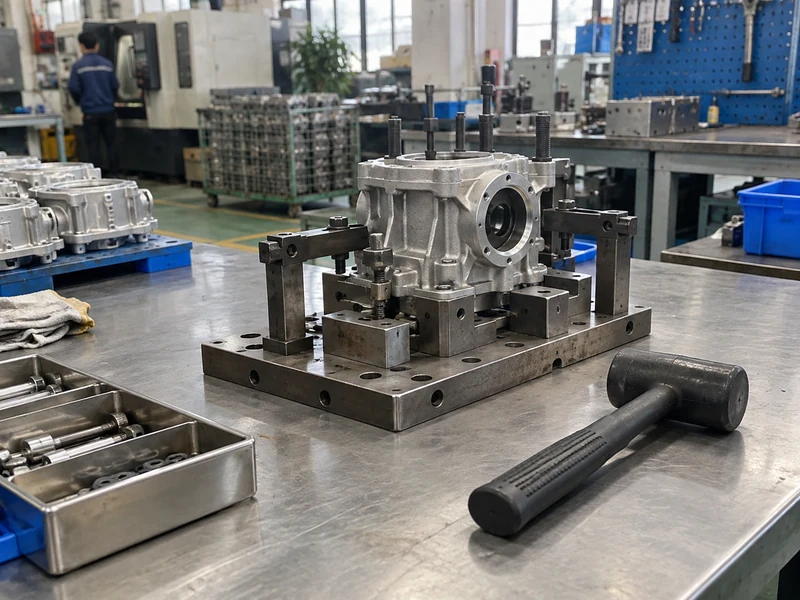
Start with the contact surface and required impact.
- For seating a finished part, check face material and allowable surface contact.
- For alignment, confirm that the strike will not deform a locating surface.
- For metal shaping, confirm that the peen shape matches the intended operation.
- For a combination tool, inspect its metal faces and outer jacket separately.
- Use a fixture or support that prevents the assembly from shifting.
Kolarwin’s auto mechanic tool guide gives context for placing hammers within automotive service assortments.
Task-to-face matrix
| Task | Candidate feature | Check before use |
|---|---|---|
| Aligning a heavy component | Controlled-rebound head | Part support and face material |
| Seating an assembly | Dead-blow construction | Manufacturer’s intended contact |
| Forming metal | Rounded peen | Material and forming procedure |
| Protecting a finished surface | Suitable soft or covered face | Actual contact material and condition |
Match the hammer face to the component instead of relying on a general “assembly hammer” label.
5. When does a ball-peen dead-blow combination make sense?
A ball-peen dead-blow combination joins two features: rounded and flat striking faces, plus a head intended to reduce rebound. Manufacturer product details show that some examples still use hardened steel faces and internal shot. That construction can support controlled metalwork while retaining steel contact, but it does not make the tool soft-faced or non-marring.
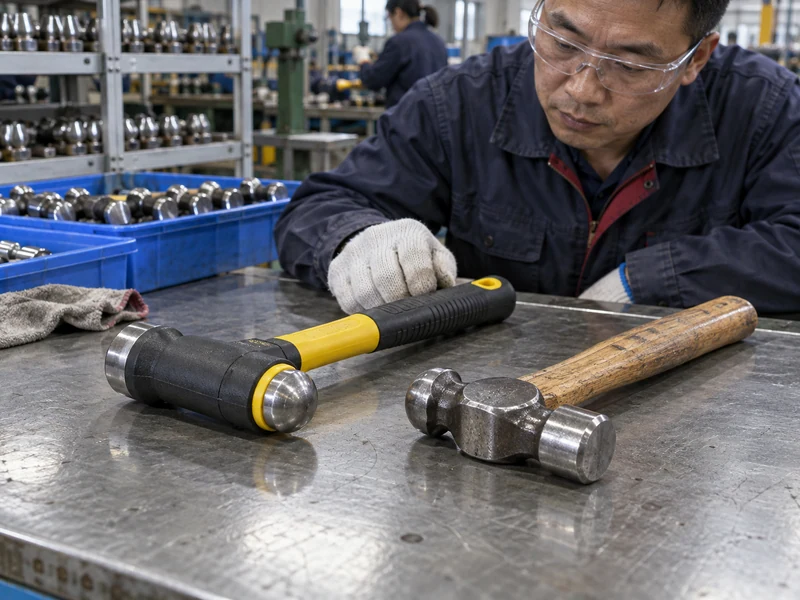
Treat the combination as its own specification.
- Record both face shapes and their material.
- Confirm head construction and internal fill.
- Compare weight and handle length with the target use.
- Check jacket coverage, wear parts, and replacement policy.
- Label permitted and excluded uses clearly.
For suspension jobs that require a press or separator, see Kolarwin’s ball-joint separator vs press guide. A hammer should not be presented as a universal substitute for a purpose-built separation tool.
Combination-hammer matrix
| Feature | Buyer question | Sample check |
|---|---|---|
| Peen and flat faces | Do both match target tasks? | Shape and finish inspection |
| Dead-blow design | What reduces rebound? | Construction review |
| Steel contact | Can it mark or deform the part? | Approved workpiece test |
| Balance | Does the tool suit intended control? | In-hand evaluation |
Approve a combination model only when buyers need both features and accept its face material.
6. How do weight, handle length, and balance affect selection?
Head weight affects the effort and impact available in a strike, while handle length changes reach and control. A longer handle can increase swing clearance needs. A heavier hammer can fatigue an operator or make precise alignment harder. Select weight and length for the task and user rather than treating a bigger head as automatically better.
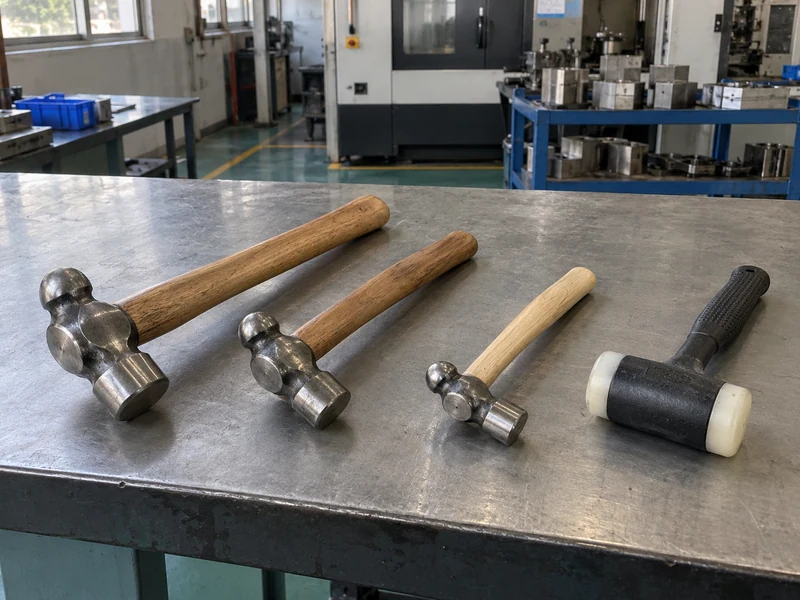
Choose the smallest tool that completes the specified strike.
- Compare head weight, tool length, and grip material.
- Check access around the workpiece and operator’s hand.
- Evaluate control with the target face and fixture.
- Consider repeated-use fatigue and storage dimensions.
- Keep product specifications model-specific.
Kolarwin’s complete mechanic tools list helps buyers view hammers within a broader mix of service tools and set components.
Size-selection matrix
| Field | Work effect | Evidence to compare |
|---|---|---|
| Head weight | Impact effort and control | Published mass |
| Handle length | Reach and swing path | Published dimensions |
| Grip | Hold and handling | Material and sample feel |
| Balance | Control through a strike | Sample evaluation |
Set a target weight and reach range before requesting assortment samples.
7. What safety and inspection limits should buyers know?
Operators and nearby bystanders should wear safety glasses during striking work and follow the tool maker’s protection requirements. Never strike another hammer or an unapproved hardened object; chipped steel can eject fragments.

Inspect hammers before use and remove damaged tools from service. Chips, cracks, loose heads, mushroomed faces, or a split handle can create flying fragments or loss of control. A damaged jacket may expose internal material or change how the head contacts a workpiece. Do not keep using a tool because a replacement is inconvenient.
Check the hammer and work area before each task.
- Inspect faces, peen, handle, head attachment, and jacket.
- Confirm the hammer’s size and face suit the operation.
- Secure the workpiece and clear nearby people.
- Avoid glancing blows and unstable supports.
- Remove damaged tools from service and document defects.
Kolarwin’s industry solutions page gives distributors a broader context for maintenance and workshop tool programs.
Safety inspection matrix
| Inspection point | Acceptable condition | Remove from use when |
|---|---|---|
| Steel face or peen | No cracks, chips, or mushrooming | Edge damage or deformation appears |
| Handle | Secure and intact | Crack, split, or movement appears |
| Dead-blow jacket | Intact and attached | Tear or exposed fill appears |
| Work area | Stable and clear | Strike path is obstructed |
Make visual inspection part of sample approval and end-user instructions.
8. How should buyers test hammer samples?
A sample review should verify dimensions, weight, face shape, grip, balance, finish, and package contents. Then test the hammer only on a safe fixture and representative material approved for that face. Record observations about rebound and control without inventing a universal performance score. Different workpieces absorb impact differently, so a single demonstration cannot represent every use.
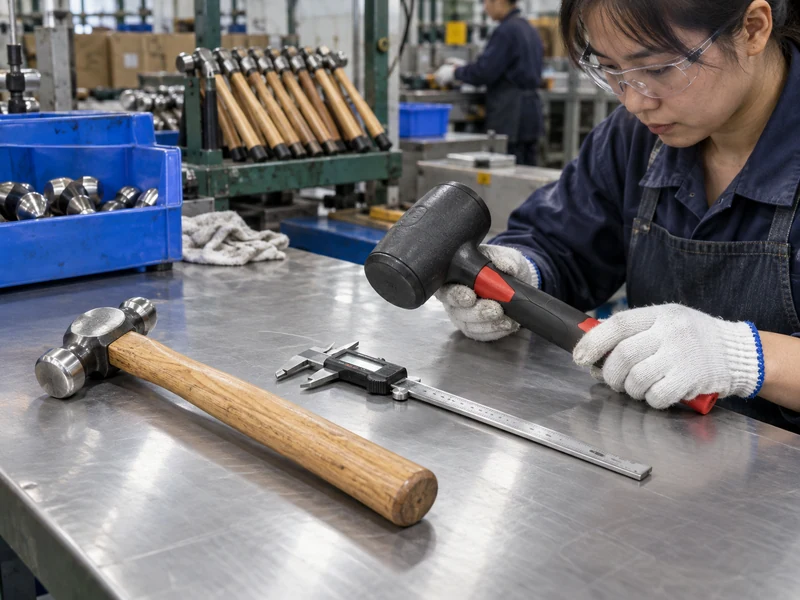
Use one written method across samples.
- Photograph each side and measure head weight and length.
- Inspect face geometry, finish, handle attachment, and jacket.
- Test on a controlled workpiece that matches the intended use.
- Record rebound and surface marks as sample observations.
The types of automotive repair tools page can guide assortment placement, but it does not establish a hammer’s sample result or performance rating.
Sample-review matrix
| Test area | Record | Avoid assuming |
|---|---|---|
| Dimensions | Weight and length | Same balance across models |
| Face construction | Shape and material | All dead blows are soft-faced |
| Controlled impact | Workpiece and observable result | Universal rebound score |
| Condition | Before and after inspection | One sample proves all lots |
Keep photographs and test notes with the exact sample SKU and revision.
9. How should a hammer range be organized for buyers?
A practical range can include conventional ball-peen hammers, dead-blow hammers in specified face materials, and combination ball-peen dead blows where a channel needs both features. Plan by use, weight, handle length, face construction, and replacement support. Avoid duplicate SKUs that differ only in a name while leaving the contact surface unclear.
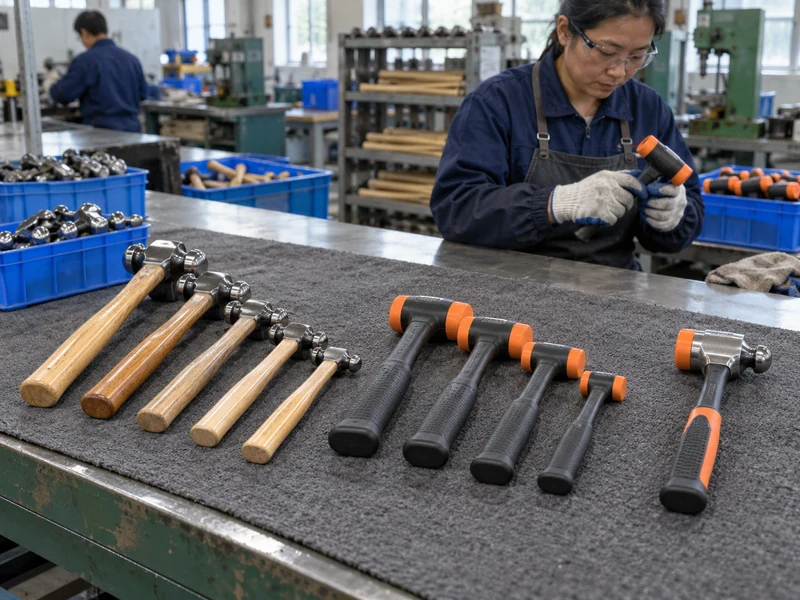
Build the range around the job and face material.
- Segment by striking behavior and face geometry.
- Identify steel, polymer, jacket, or other contact materials.
- Include replacement parts and inspection guidance when available.
- Keep combination tools distinct in labels and catalog data.
A mechanic tool set page can support kit planning. Do not add a hammer to a set until its weight and use suit the target channel.
Assortment matrix
| Product family | Catalog fields | Range decision |
|---|---|---|
| Ball peen | Face geometry, head weight, handle | Metalworking and suitable striking uses |
| Dead blow | Internal design, face material, weight | Assembly or controlled impact uses |
| Combination | Both face types and construction | Buyers needing both attributes |
Approve a core range first, then add specialized forms where sales or customer requirements support them.
10. What should a hammer RFQ include?
Write the impact surface into the order specification.
- State head type, face geometry, and face material.
- Include weight, length, grip, finish, and packaging.
- Request sample inspection and model-specific documents.
- Separate general, dead-blow, and combination SKU labels.
The contact page provides a route for tool inquiries. Send your target applications, head weights, face requirements, and package format.
Q1: Are ball-peen and dead-blow hammers mutually exclusive? No. Some hammers combine a rounded peen with dead-blow construction.
Q2: Is every dead-blow hammer non-marring? No. Face material and condition determine what contacts the workpiece.
Q3: What is the rounded peen used for? It can shape or peen suitable unhardened metal when the procedure calls for it.
Q4: Can a dead-blow hammer replace a ball-peen hammer? Not for every task. Compare face geometry and material with the required operation.
Q5: What should distributors verify first? Confirm head design, contact material, weight, dimensions, and model-specific instructions.
Looking for a reliable mechanic tools manufacturer in China?
If you are sourcing hand tools, socket tools, automotive repair tools, mechanic tool sets or OEM private label tools, contact KOLARWIN Tools for factory-direct quotation, customization support and product consultation.


