
Home/Blog/ Ball Joint Separator vs Ball Joint Press: A Tool Buyer’s Guide

Ball Joint Separator vs Ball Joint Press: A Tool Buyer’s Guide

Get OEM Tool Catalog + Quote Back to Tool Sourcing Blog
Fork-style ball joint separator beside a C-frame ball joint press and separate receiving cups
This KOLARWIN Tools article is written for overseas distributors, wholesalers, importers and private label tool brands sourcing mechanic tools, automotive repair tools, socket tools, hand tools and OEM tool sets from China. Use this guide to compare product options, check supplier quality points and move from reading to a faster B2B inquiry.

Need OEM supplier support for this product type?

Contact KOLARWIN Tools for OEM mechanic tools, private label packaging, wholesale quotation and product range support. This gives overseas buyers a clear path from article reading to supplier discussion.

Ball joint service can involve two jobs. A separator breaks a tapered stud connection. A press-fit ball joint tool removes or installs the joint body using matched cups and supports. Confusing interfaces can damage boots or create wrong listings. This guide helps buyers specify tools from contact points, vehicle data, and maker instructions.

1. What is the difference between a separator and a press?

A ball joint separator works at a tapered connection. Its fork or screw-driven jaws create a separating action between a stud and its mating knuckle. A ball joint press works around a joint body that sits in a bore. Cups, receivers, and a forcing screw or hydraulic cylinder push against selected surfaces.

The two tools can share a service kit, yet they do different work. A separator releases a taper without supporting a housing. A press needs a reaction path through the housing, receiver, adapter, and opposite support. A standard press-fit kit needs approval and suitable attachments before use for taper separation. A fork cannot press a housing-mounted joint from its bore.

Use these review questions:

  • What connection must release: a tapered stud or a joint body in a bore?
  • Where will reaction force land, and can that surface carry it squarely?

Start with the interface, then choose the force path. Choose a separator for the taper. Choose a press when housing service requires controlled pushing.

Put interface, application, clearance, and accessory set on every RFQ. Place the tool within the wider automotive repair tools range only after its service boundary is documented.
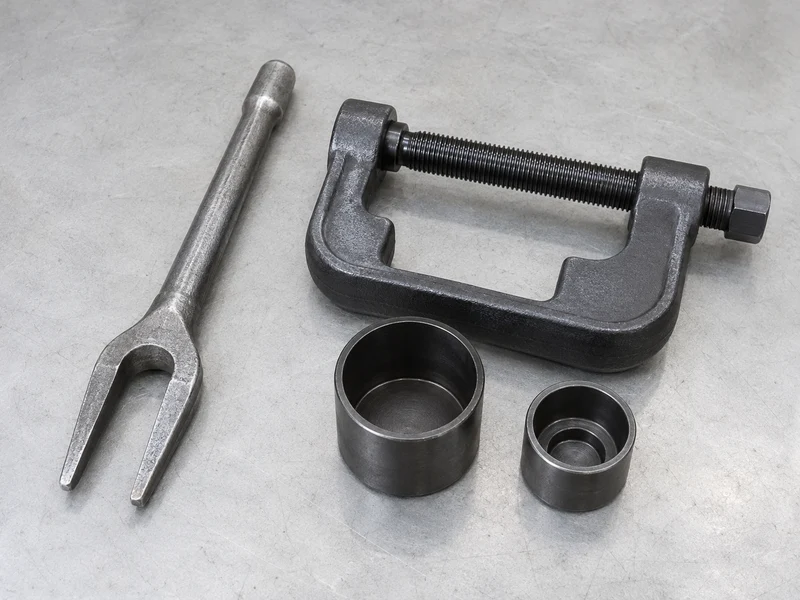
Fork-style ball joint separator beside a C-frame ball joint press and separate receiving cups
Product illustration; confirm actual model specifications and fit.

Buyer table: separator or press

Service condition Starting tool Buyer evidence Main selection risk
Tapered stud held in knuckle Screw separator, fork, or maker-approved C-frame Stud, knuckle, opening, and clearance Contact does not match the listed design
Joint body in a removable bore Ball joint press with cups Joint diameter, housing, receiver, and drive Cup pushes on the wrong shoulder

2. Which separator screw and fork variants should buyers compare?

Screw separators use a forcing screw or jaws that load a tapered stud connection. A fork separator uses wedge-shaped prongs between mating parts. Forks can suit fast removal where boot replacement remains planned. Screw types can give more control when surrounding components need clearance.

Variant names do not prove suitability. Compare jaw opening, fork throat, tip thickness, stud range, screw thread, drive size, reach, and contact geometry. A fork can fit one knuckle yet foul another. A wide opening can still leave the screw misaligned with its intended stud contact.

Keep these points in a sample file:

  • Maximum and minimum opening measured at actual contact points.
  • Fork width, taper angle, tip thickness, and usable insertion depth.
  • Forcing-screw diameter, thread form, drive interface, and spare availability.

The separator earns its place through contact geometry, not a broad catalogue label. Buyers should ask for a seated photo or drawing on a representative joint before accepting a range claim.

Split separator SKUs by screw-driven and fork-driven service, then map access and replacement risk. Place compact variants within the hand tools category with application records.
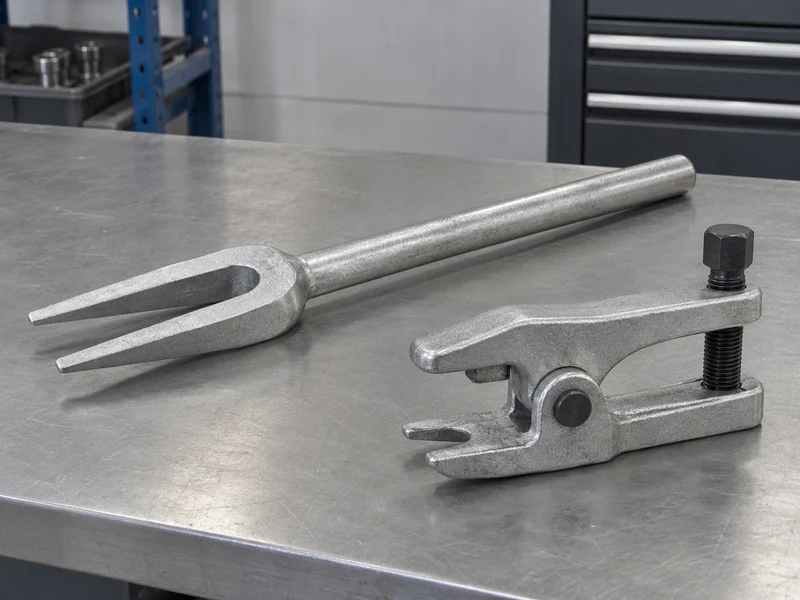
Unbranded fork-style and screw-operated ball joint separators laid out for comparison
Product illustration; confirm actual model specifications and fit.

Buyer table: separator variants

Variant Useful condition Evidence to request Limitation to state
Screw-driven separator Controlled taper release with a defined support point Opening, reach, thread, drive, seated drawing May not clear nearby knuckle features
Fork separator Fast taper separation where damaged boot replacement is acceptable Throat, tip, thickness, handle or drive Wedge contact can damage boot or joint

3. When does a press fit the service job?

A ball joint press fits when a joint body sits in a removable housing and force must travel through cups or receivers. Mechanical and hydraulic versions still need a straight load path and stable support.

Press scope depends on joint design. Some joints press from a control arm or knuckle. Riveted joints need an approved removal and replacement procedure. An integral joint may require a complete arm or knuckle assembly. A press cannot turn every mounting type into a press-fit job.

Ask a supplier to document:

  • Press opening, usable throat, stroke, forcing thread, and attachment interface.
  • Cup and receiver dimensions at each supported joint family.
  • Lowest-rated component in a complete mechanical or hydraulic configuration.

A press earns approval when its cups match a documented housing, not when its frame looks heavy. Keep any capacity statement tied to the listed configuration and instructions.

Request a press-set drawing with every cup, receiver, crossbar, pin, and drive component identified. Show the dedicated press module beside the wider mechanics tool set range.
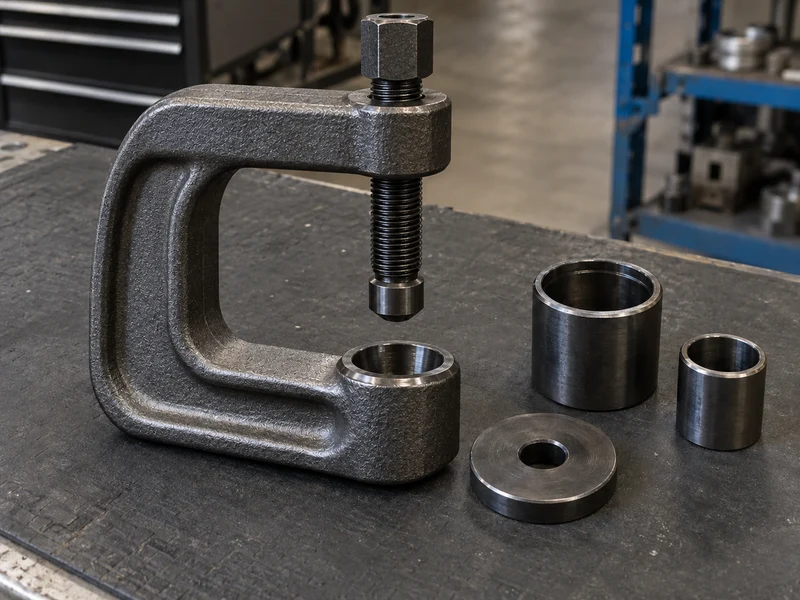
Heavy C-frame ball joint press with a forcing screw and separate receiver tubes on a bench
Product illustration; confirm actual model specifications and fit.

Buyer table: press scope

Press detail Why the buyer needs it Sample evidence Stop condition
Throat and opening Confirms vehicle-side access Dimensioned frame drawing Housing cannot sit square
Stroke and forcing thread Confirms travel and drive fit Screw or cylinder specification Thread or stroke is undocumented
Cup and receiver set Creates the intended reaction path Part-numbered set drawing Cup lands on a seal or thin edge

4. How should buyers specify adapters and receiver cups?

An adapter decides where force enters and leaves a ball joint. A receiver cup must clear the body while supporting a strong shoulder. An installation cup must contact a suitable outer surface. A cup’s outside diameter can look correct while its opening hits the wrong feature, so record diameter, shoulder, bore depth, and arm geometry.

Ask suppliers for:

  • Section drawings showing cup internal diameter, outside diameter, depth, and wall.
  • Adapter numbers tied to specific vehicle or joint applications.
  • Retention method for cups, pins, collars, or threaded accessories.

The cup decides whether a press acts on the joint or on a nearby weak part. A supplier drawing is more useful than a photograph taken from one angle.

Send a joint sample or dimensioned section to the supplier. Record drive interfaces alongside the socket drive sizes used by approved accessories.
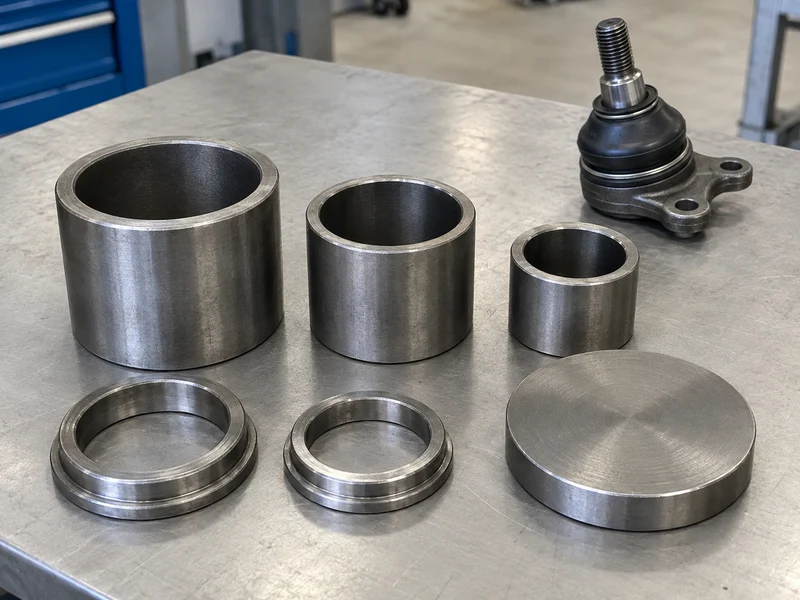
Hollow receiver cups, adapter rings, and a press plate arranged beside an uninstalled ball joint
Product illustration; confirm actual model specifications and fit.

Buyer table: adapter and receiver evidence

Contact question Acceptable evidence Risk if missing
Where does removal force land? Section drawing with supported shoulder Cup loads a seal or thin flange
Where does installation force land? Driver profile and joint-side contact Stud or boot receives load
Can the joint pass through? Receiver depth and clear opening Joint stops before removal

5. Do all ball joints use a press-fit mounting?

No. Ball joints may use a press-fit body, bolts, rivets, threaded housings, or an integral design within a control arm or knuckle. Labeling every replacement “press service” creates wrong listings. Screw-in joints require a matching socket and the specified threaded removal and installation procedure. A threaded housing differs from a threaded stud.

Press-fit joints need a matched receiver and driver. Bolt-in joints need fastener access and replacement hardware information. Riveted joints need an approved removal and replacement process. Integral designs may call for assembly replacement.

Build application data with these fields:

  • Vehicle make, model, year, drive layout, axle position, and joint location.
  • Mounting type and whether service covers joint-only or complete assembly.
  • Removal direction, installation direction, cup set, adapter, and fastener notes.

Mounting type controls tool type before package size or headline force enters the discussion. Use a fit matrix so each SKU carries a defined service boundary.

Separate “press-fit, bolt-in, riveted, threaded, or integral service” in your catalogue filters. Place each application within a complete mechanic tools list only after its mounting type is recorded.
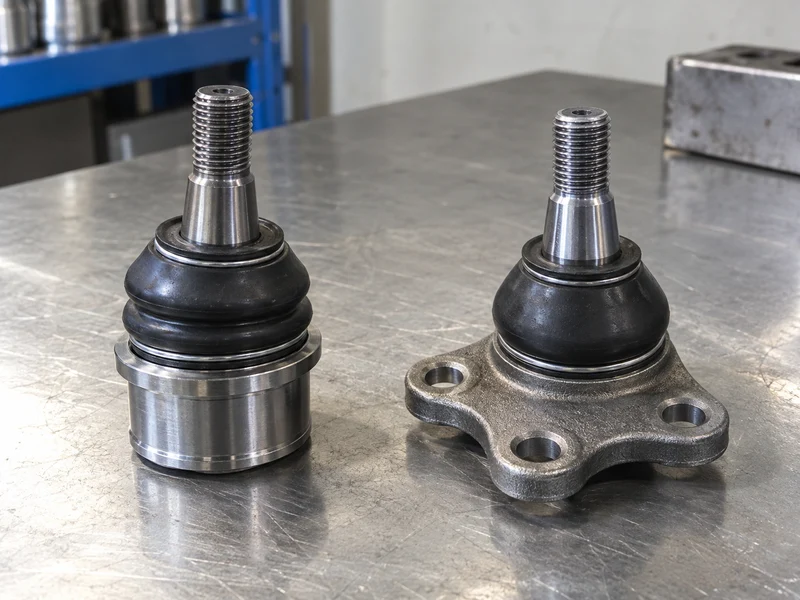
Separate press-fit style and bolt-flange style ball joint samples with intact dust boots
Product illustration; confirm actual model specifications and fit.

Buyer table: mounting type

Joint mounting Typical tool direction Buyer record Listing caution
Press-fit Press, cups, and receivers Housing and joint dimensions Do not omit cup limits
Bolt-in Hand tools and access equipment Bolt pattern, head clearance, hardware A press may add no value
Riveted Approved removal and replacement setup Rivet access and replacement hardware Do not imply simple pressing
Threaded housing Matching socket and specified threaded procedure Thread, access, and removal direction Do not confuse housing thread with stud thread
Integral arm or knuckle Vehicle-specific assembly replacement Application and assembly record Stand-alone joint press may be unsuitable

6. How do access and dimensions change tool choice?

Access decides whether a separator can seat or a press can align. Measure around the vehicle-side joint, not only across a loose sample. A knuckle may leave little room for a fork. A control arm may block a press crossbar. Nearby ABS wiring, brake parts, shields, and studs can limit tool orientation.

Capture usable dimensions at actual contact points:

  • Stud diameter, taper area, and separator opening.
  • Joint-body diameter, flange, housing bore, and press direction.
  • Available throat, crossbar clearance, receiver depth, and stroke.

Use the shortest practical force path that keeps contact square. A long reach can add bending and reduce control. A nominal opening can overstate fit if the tool cannot enter the service position.

A catalogue range becomes useful only after a vehicle-side clearance check. Ask for drawings that show working dimensions instead of outside frame dimensions alone.

Create a one-page measurement sheet for distributor samples. File a seated photograph and dimensioned sketch under the SKU.
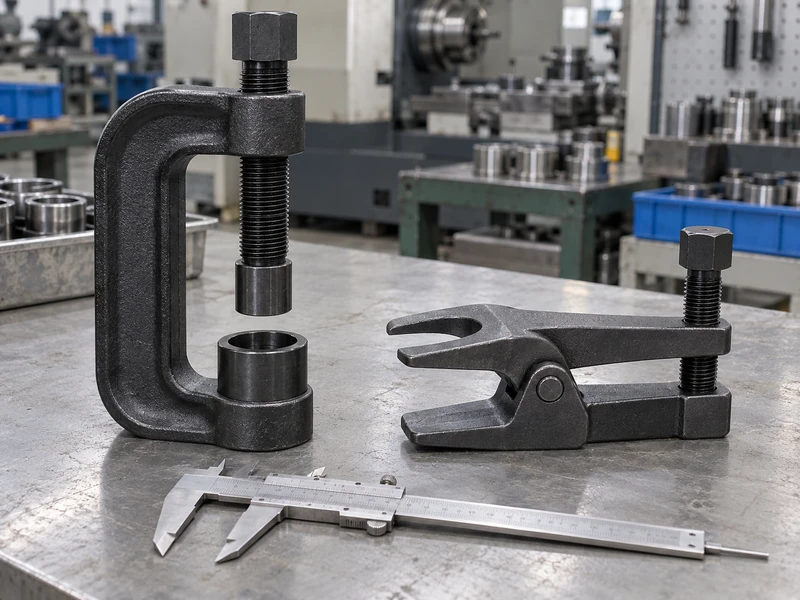
Unbranded C-frame press and screw ball-joint separator beside a separate caliper for dimensional review
Product illustration; confirm actual model specifications and fit.

Buyer table: dimensions to capture

Dimension Applies to Acceptance question Common miss
Fork throat or jaw opening Separator Does the tool reach the taper without fouling? Outside opening used as fit proof
Housing and joint diameter Press Does each cup support the correct shoulder? Cup touches seal or flange edge

7. How can buyers protect the boot and preserve threads?

Boots and threads often show damage when contact points are vague. A fork can split a boot, which makes planned joint or boot reuse a selection concern. A press adapter can crush a boot or load an unapproved stud surface. A forcing screw can gall when thread engagement, lubrication, or cleaning guidance is missing.

A separator designed for taper release may press against a stud through its specified contact. A housing press should load the approved outer housing or shoulder. Keep those force paths separate in the product record.

Review these conditions:

  • Keep fork tips, cups, and receivers away from rubber boots and seals unless instructions state otherwise.
  • Confirm full thread engagement, clean threads, retaining pins, and drive access.
  • Check whether a stud, nut, or adapter remains reusable after the operation.

Do not add an impact wrench, extension, heat source, or improvised spacer without approved instructions. A catalogue photograph cannot establish a load rating.

Thread and boot protection start with a defined contact surface. If a sample leaves scuffs, crushed rubber, thread marks, or bent parts, pause approval and ask for a revised interface.

Add boot condition, thread condition, and reuse decision fields to your inspection form. For reassembly fasteners, keep any torque documentation in the professional torque-wrench guide separate from press-load claims.
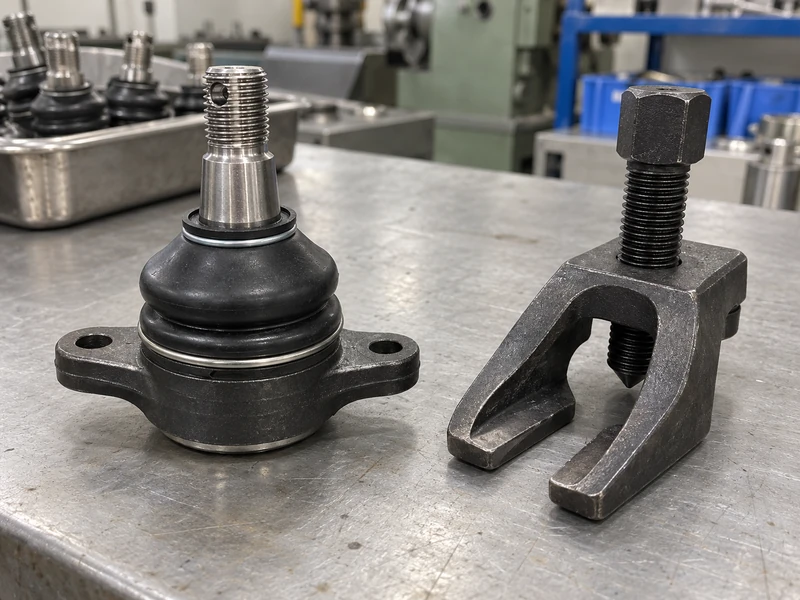
Intact ball joint with black dust boot and threaded stud beside a separate screw ball-joint separator
Product illustration; confirm actual model specifications and fit.

Buyer table: condition checks

Check What good evidence shows Hold point
Boot clearance Tool remains clear during full travel Rubber is pinched or cut
Thread engagement Clean, full engagement with retained drive Galling, cross-threading, or short bite
Contact surface Press cup loads housing shoulder; separator uses approved stud and knuckle contacts Unapproved stud contact or load on a seal

8. What should a safe sample QC review cover?

Sample QC should test fit, condition, documentation, and limitations together. Inspect bodies, threads, pins, jaws, cups, receivers, crossbars, hoses, and fittings. Vehicle-side checks require qualified personnel following OEM support and spring-load control procedures. A tool comparison cannot replace vehicle instructions.

Review a representative joint or fixture:

  • Confirm the tool seats fully and stays square through the approved travel.
  • Record contact points, accessory numbers, and any interference.
  • Match markings, manual limits, inspection points, and packaging labels.

Do not publish universal-fit language or a force rating without a complete configuration record. Stop when a sample cannot reach the joint or alignment changes under load.

A sample passes when its limits match its fit. This documents acceptance limits for distributors and service users.

Retain one approved sample, its measured drawing, manual, photos, and QC record together. Use a mechanical product supplier checklist to structure evidence requests.
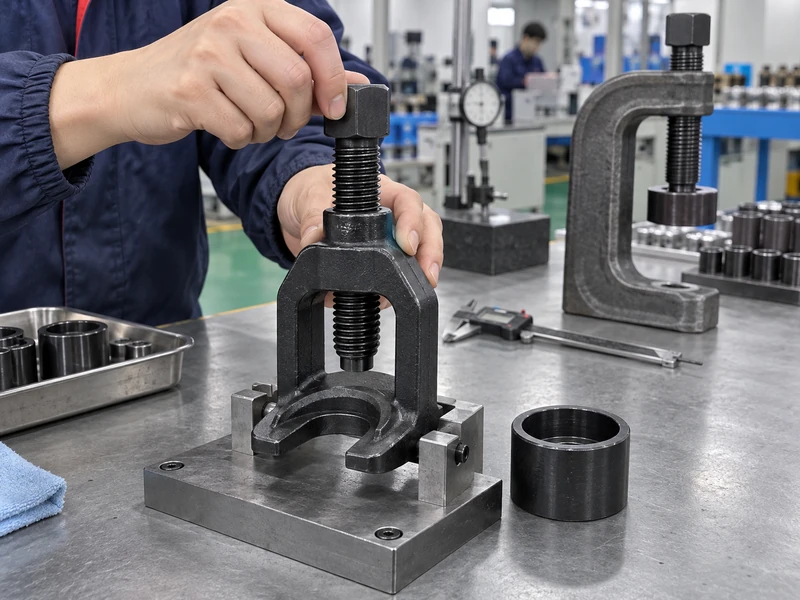
Unloaded screw ball-joint separator and separate receiving cup on a factory quality-control bench
Product illustration; confirm actual model specifications and fit.

Buyer table: sample QC record

QC area Record Reject or hold condition
Physical condition Surface, thread, pin, cup, and jaw inspection Crack, bend, galling, leak, or poor finish
Fit Seated setup photo and dimensions Partial contact or interference
Alignment Travel and reaction support observation Tilt, shift, or unstable support

9. How should a distributor build an assortment?

An assortment should follow service interfaces. A compact separator can cover taper release. A press kit can serve documented press-fit families. Cups, receivers, pins, replacement screws, and spare jaws support the main tool.

Build the range in modules:

  • Core taper separators with defined opening and vehicle application data.
  • Press-fit kits with numbered cups, receivers, and replacement contact parts.
  • Vehicle-specific or specialty adapters where repeat demand supports inventory.

Avoid putting a fork, press frame, and random cups in one “universal” set. A narrower kit with a clean fit matrix gives distributors a better listing.

An assortment sells more cleanly when every accessory has a named job. Tie each spare to a bill of materials and each application to an evidence file.

Compare a general repair-shop kit, service-chain kit, and private-label range. Record which cups, separators, instructions, and replacement parts each buyer needs.
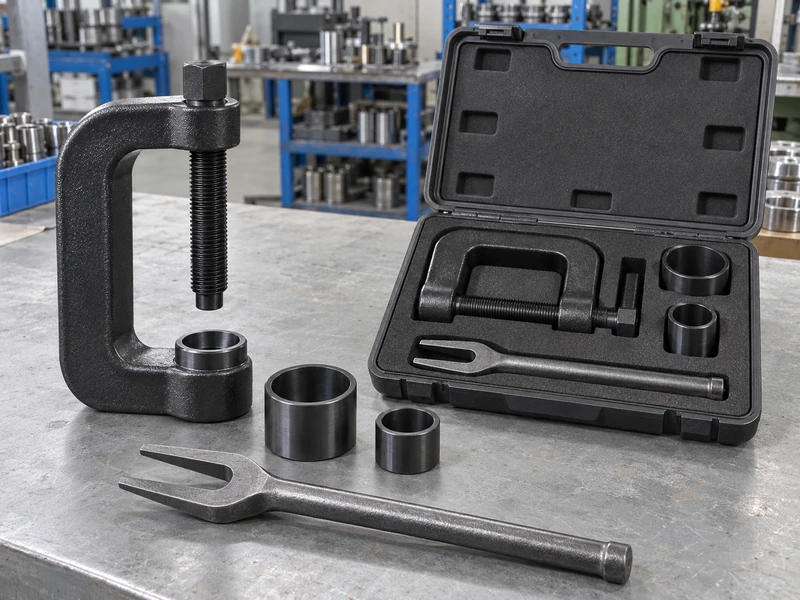
Organized unbranded ball-joint tool kit with upright C-frame press, cups, straight-shaft pickle fork, and plain case
Product illustration; confirm actual model specifications and fit.

Buyer table: assortment structure

Range layer Product role Evidence needed Inventory decision
Core separator Taper release across defined interfaces Opening, contact, applications Stock where repeat service exists
Press-fit kit Housing joint removal and installation Cup matrix and fit drawings Add by documented joint families
Specialty adapter Narrow vehicle or joint coverage Application record and sample Carry only with demand evidence

10. What should an RFQ include?

An RFQ should describe the joint, vehicle, interface, and evidence required. State whether you need taper separation, press-fit housing service, or both. Include vehicle make, model, year, axle position, joint location, mounting type, and a photo or drawing from the service position.
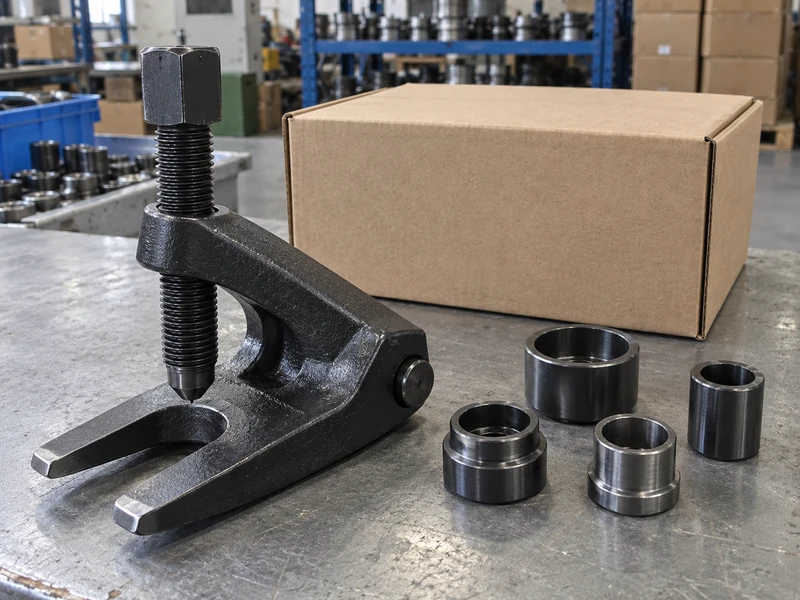
Unbranded screw ball-joint separator, separate adapter cups, and blank sample box prepared for an RFQ
Product illustration; confirm actual model specifications and fit.

Ask suppliers for drawings, parts, application limits, instructions, sample plan, and packaging. Request press cup and receiver dimensions plus separator opening, fork profile, thread, drive, and contact limits. Keep ratings tied to maker documentation.

Record also:

  • Sample quantity, inspection method, and approval owner.
  • Required private-label markings, barcode, manual language, and replacement parts.

A precise RFQ turns tool selection into a reviewable fit decision. Send measurements before asking for a universal claim or headline capacity.

Send the final specification with a representative sample request through supplier contact support, then keep approval evidence attached to each SKU.

Q1. Can a ball joint separator replace a ball joint press?
No. A separator releases a tapered stud. A press handles a housing joint with matched cups and supports.

Q2. Are fork separators suitable for every vehicle?
No. Throat, tip thickness, access, and boot condition vary. Match each fork with vehicle dimensions and maker guidance.

Q3. Do all press kits fit every press-fit ball joint?
No. Cup diameter, shoulder, depth, frame opening, and direction still need checking.

Q4. Can a distributor list one set as universal?
Only when applications and dimensions support that wording. Otherwise list exact interfaces and limits.

Q5. What should a buyer request before approving a sample?
Request drawings, parts, applications, instructions, contact photos, and a QC record.

Looking for a reliable mechanic tools manufacturer in China?

If you are sourcing hand tools, socket tools, automotive repair tools, mechanic tool sets or OEM private label tools, contact KOLARWIN Tools for factory-direct quotation, customization support and product consultation.


Ball joint service can involve two jobs. A separator breaks a tapered stud connection. A press-fit ball joint tool removes or installs the joint body using matched cups and supports. Confusing interfaces can damage boots or create wrong listings. This guide helps buyers specify tools from contact points, vehicle data, and maker instructions.

1. What is the difference between a separator and a press?

A ball joint separator works at a tapered connection. Its fork or screw-driven jaws create a separating action between a stud and its mating knuckle. A ball joint press works around a joint body that sits in a bore. Cups, receivers, and a forcing screw or hydraulic cylinder push against selected surfaces.

The two tools can share a service kit, yet they do different work. A separator releases a taper without supporting a housing. A press needs a reaction path through the housing, receiver, adapter, and opposite support. A standard press-fit kit needs approval and suitable attachments before use for taper separation. A fork cannot press a housing-mounted joint from its bore.

Use these review questions:

Start with the interface, then choose the force path. Choose a separator for the taper. Choose a press when housing service requires controlled pushing.

Put interface, application, clearance, and accessory set on every RFQ. Place the tool within the wider automotive repair tools range only after its service boundary is documented.

Fork-style ball joint separator beside a C-frame ball joint press and separate receiving cups
Product illustration; confirm actual model specifications and fit.

Buyer table: separator or press

Service condition Starting tool Buyer evidence Main selection risk
Tapered stud held in knuckle Screw separator, fork, or maker-approved C-frame Stud, knuckle, opening, and clearance Contact does not match the listed design
Joint body in a removable bore Ball joint press with cups Joint diameter, housing, receiver, and drive Cup pushes on the wrong shoulder

2. Which separator screw and fork variants should buyers compare?

Screw separators use a forcing screw or jaws that load a tapered stud connection. A fork separator uses wedge-shaped prongs between mating parts. Forks can suit fast removal where boot replacement remains planned. Screw types can give more control when surrounding components need clearance.

Variant names do not prove suitability. Compare jaw opening, fork throat, tip thickness, stud range, screw thread, drive size, reach, and contact geometry. A fork can fit one knuckle yet foul another. A wide opening can still leave the screw misaligned with its intended stud contact.

Keep these points in a sample file:

The separator earns its place through contact geometry, not a broad catalogue label. Buyers should ask for a seated photo or drawing on a representative joint before accepting a range claim.

Split separator SKUs by screw-driven and fork-driven service, then map access and replacement risk. Place compact variants within the hand tools category with application records.

Unbranded fork-style and screw-operated ball joint separators laid out for comparison
Product illustration; confirm actual model specifications and fit.

Buyer table: separator variants

Variant Useful condition Evidence to request Limitation to state
Screw-driven separator Controlled taper release with a defined support point Opening, reach, thread, drive, seated drawing May not clear nearby knuckle features
Fork separator Fast taper separation where damaged boot replacement is acceptable Throat, tip, thickness, handle or drive Wedge contact can damage boot or joint

3. When does a press fit the service job?

A ball joint press fits when a joint body sits in a removable housing and force must travel through cups or receivers. Mechanical and hydraulic versions still need a straight load path and stable support.

Press scope depends on joint design. Some joints press from a control arm or knuckle. Riveted joints need an approved removal and replacement procedure. An integral joint may require a complete arm or knuckle assembly. A press cannot turn every mounting type into a press-fit job.

Ask a supplier to document:

A press earns approval when its cups match a documented housing, not when its frame looks heavy. Keep any capacity statement tied to the listed configuration and instructions.

Request a press-set drawing with every cup, receiver, crossbar, pin, and drive component identified. Show the dedicated press module beside the wider mechanics tool set range.

Heavy C-frame ball joint press with a forcing screw and separate receiver tubes on a bench
Product illustration; confirm actual model specifications and fit.

Buyer table: press scope

Press detail Why the buyer needs it Sample evidence Stop condition
Throat and opening Confirms vehicle-side access Dimensioned frame drawing Housing cannot sit square
Stroke and forcing thread Confirms travel and drive fit Screw or cylinder specification Thread or stroke is undocumented
Cup and receiver set Creates the intended reaction path Part-numbered set drawing Cup lands on a seal or thin edge

4. How should buyers specify adapters and receiver cups?

An adapter decides where force enters and leaves a ball joint. A receiver cup must clear the body while supporting a strong shoulder. An installation cup must contact a suitable outer surface. A cup’s outside diameter can look correct while its opening hits the wrong feature, so record diameter, shoulder, bore depth, and arm geometry.

Ask suppliers for:

The cup decides whether a press acts on the joint or on a nearby weak part. A supplier drawing is more useful than a photograph taken from one angle.

Send a joint sample or dimensioned section to the supplier. Record drive interfaces alongside the socket drive sizes used by approved accessories.

Hollow receiver cups, adapter rings, and a press plate arranged beside an uninstalled ball joint
Product illustration; confirm actual model specifications and fit.

Buyer table: adapter and receiver evidence

Contact question Acceptable evidence Risk if missing
Where does removal force land? Section drawing with supported shoulder Cup loads a seal or thin flange
Where does installation force land? Driver profile and joint-side contact Stud or boot receives load
Can the joint pass through? Receiver depth and clear opening Joint stops before removal

5. Do all ball joints use a press-fit mounting?

No. Ball joints may use a press-fit body, bolts, rivets, threaded housings, or an integral design within a control arm or knuckle. Labeling every replacement “press service” creates wrong listings. Screw-in joints require a matching socket and the specified threaded removal and installation procedure. A threaded housing differs from a threaded stud.

Press-fit joints need a matched receiver and driver. Bolt-in joints need fastener access and replacement hardware information. Riveted joints need an approved removal and replacement process. Integral designs may call for assembly replacement.

Build application data with these fields:

Mounting type controls tool type before package size or headline force enters the discussion. Use a fit matrix so each SKU carries a defined service boundary.

Separate “press-fit, bolt-in, riveted, threaded, or integral service” in your catalogue filters. Place each application within a complete mechanic tools list only after its mounting type is recorded.

Separate press-fit style and bolt-flange style ball joint samples with intact dust boots
Product illustration; confirm actual model specifications and fit.

Buyer table: mounting type

Joint mounting Typical tool direction Buyer record Listing caution
Press-fit Press, cups, and receivers Housing and joint dimensions Do not omit cup limits
Bolt-in Hand tools and access equipment Bolt pattern, head clearance, hardware A press may add no value
Riveted Approved removal and replacement setup Rivet access and replacement hardware Do not imply simple pressing
Threaded housing Matching socket and specified threaded procedure Thread, access, and removal direction Do not confuse housing thread with stud thread
Integral arm or knuckle Vehicle-specific assembly replacement Application and assembly record Stand-alone joint press may be unsuitable

6. How do access and dimensions change tool choice?

Access decides whether a separator can seat or a press can align. Measure around the vehicle-side joint, not only across a loose sample. A knuckle may leave little room for a fork. A control arm may block a press crossbar. Nearby ABS wiring, brake parts, shields, and studs can limit tool orientation.

Capture usable dimensions at actual contact points:

Use the shortest practical force path that keeps contact square. A long reach can add bending and reduce control. A nominal opening can overstate fit if the tool cannot enter the service position.

A catalogue range becomes useful only after a vehicle-side clearance check. Ask for drawings that show working dimensions instead of outside frame dimensions alone.

Create a one-page measurement sheet for distributor samples. File a seated photograph and dimensioned sketch under the SKU.

Unbranded C-frame press and screw ball-joint separator beside a separate caliper for dimensional review
Product illustration; confirm actual model specifications and fit.

Buyer table: dimensions to capture

Dimension Applies to Acceptance question Common miss
Fork throat or jaw opening Separator Does the tool reach the taper without fouling? Outside opening used as fit proof
Housing and joint diameter Press Does each cup support the correct shoulder? Cup touches seal or flange edge

7. How can buyers protect the boot and preserve threads?

Boots and threads often show damage when contact points are vague. A fork can split a boot, which makes planned joint or boot reuse a selection concern. A press adapter can crush a boot or load an unapproved stud surface. A forcing screw can gall when thread engagement, lubrication, or cleaning guidance is missing.

A separator designed for taper release may press against a stud through its specified contact. A housing press should load the approved outer housing or shoulder. Keep those force paths separate in the product record.

Review these conditions:

Do not add an impact wrench, extension, heat source, or improvised spacer without approved instructions. A catalogue photograph cannot establish a load rating.

Thread and boot protection start with a defined contact surface. If a sample leaves scuffs, crushed rubber, thread marks, or bent parts, pause approval and ask for a revised interface.

Add boot condition, thread condition, and reuse decision fields to your inspection form. For reassembly fasteners, keep any torque documentation in the professional torque-wrench guide separate from press-load claims.

Intact ball joint with black dust boot and threaded stud beside a separate screw ball-joint separator
Product illustration; confirm actual model specifications and fit.

Buyer table: condition checks

Check What good evidence shows Hold point
Boot clearance Tool remains clear during full travel Rubber is pinched or cut
Thread engagement Clean, full engagement with retained drive Galling, cross-threading, or short bite
Contact surface Press cup loads housing shoulder; separator uses approved stud and knuckle contacts Unapproved stud contact or load on a seal

8. What should a safe sample QC review cover?

Sample QC should test fit, condition, documentation, and limitations together. Inspect bodies, threads, pins, jaws, cups, receivers, crossbars, hoses, and fittings. Vehicle-side checks require qualified personnel following OEM support and spring-load control procedures. A tool comparison cannot replace vehicle instructions.

Review a representative joint or fixture:

Do not publish universal-fit language or a force rating without a complete configuration record. Stop when a sample cannot reach the joint or alignment changes under load.

A sample passes when its limits match its fit. This documents acceptance limits for distributors and service users.

Retain one approved sample, its measured drawing, manual, photos, and QC record together. Use a mechanical product supplier checklist to structure evidence requests.

Unloaded screw ball-joint separator and separate receiving cup on a factory quality-control bench
Product illustration; confirm actual model specifications and fit.

Buyer table: sample QC record

QC area Record Reject or hold condition
Physical condition Surface, thread, pin, cup, and jaw inspection Crack, bend, galling, leak, or poor finish
Fit Seated setup photo and dimensions Partial contact or interference
Alignment Travel and reaction support observation Tilt, shift, or unstable support

9. How should a distributor build an assortment?

An assortment should follow service interfaces. A compact separator can cover taper release. A press kit can serve documented press-fit families. Cups, receivers, pins, replacement screws, and spare jaws support the main tool.

Build the range in modules:

Avoid putting a fork, press frame, and random cups in one “universal” set. A narrower kit with a clean fit matrix gives distributors a better listing.

An assortment sells more cleanly when every accessory has a named job. Tie each spare to a bill of materials and each application to an evidence file.

Compare a general repair-shop kit, service-chain kit, and private-label range. Record which cups, separators, instructions, and replacement parts each buyer needs.

Organized unbranded ball-joint tool kit with upright C-frame press, cups, straight-shaft pickle fork, and plain case
Product illustration; confirm actual model specifications and fit.

Buyer table: assortment structure

Range layer Product role Evidence needed Inventory decision
Core separator Taper release across defined interfaces Opening, contact, applications Stock where repeat service exists
Press-fit kit Housing joint removal and installation Cup matrix and fit drawings Add by documented joint families
Specialty adapter Narrow vehicle or joint coverage Application record and sample Carry only with demand evidence

10. What should an RFQ include?

An RFQ should describe the joint, vehicle, interface, and evidence required. State whether you need taper separation, press-fit housing service, or both. Include vehicle make, model, year, axle position, joint location, mounting type, and a photo or drawing from the service position.

Unbranded screw ball-joint separator, separate adapter cups, and blank sample box prepared for an RFQ
Product illustration; confirm actual model specifications and fit.

Ask suppliers for drawings, parts, application limits, instructions, sample plan, and packaging. Request press cup and receiver dimensions plus separator opening, fork profile, thread, drive, and contact limits. Keep ratings tied to maker documentation.

Record also:

A precise RFQ turns tool selection into a reviewable fit decision. Send measurements before asking for a universal claim or headline capacity.

Send the final specification with a representative sample request through supplier contact support, then keep approval evidence attached to each SKU.

Q1. Can a ball joint separator replace a ball joint press?
No. A separator releases a tapered stud. A press handles a housing joint with matched cups and supports.

Q2. Are fork separators suitable for every vehicle?
No. Throat, tip thickness, access, and boot condition vary. Match each fork with vehicle dimensions and maker guidance.

Q3. Do all press kits fit every press-fit ball joint?
No. Cup diameter, shoulder, depth, frame opening, and direction still need checking.

Q4. Can a distributor list one set as universal?
Only when applications and dimensions support that wording. Otherwise list exact interfaces and limits.

Q5. What should a buyer request before approving a sample?
Request drawings, parts, applications, instructions, contact photos, and a QC record.

Why Partner with Kolarwin Tools?

Factory-Direct Pricing Skip the middleman — access competitive wholesale prices and protect your margins
Private Label & OEM Ready Your brand, our expertise — full customization from logo to packaging
Fast Global Shipping Reliable delivery to 60+ countries with full export documentation support
Low MOQ, High Flexibility Start small, scale fast — flexible order quantities to fit your business
Dedicated B2B Support One-on-one account management from quote to delivery, every time

Get Your Free Quote in 24 Hours

Tell us your sourcing needs — we'll respond with a tailored quote, product specs, and the best pricing for your market. No commitment required.

Chat on WhatsApp Email Us Directly
