Need OEM supplier support for this product type?
Contact KOLARWIN Tools for OEM mechanic tools, private label packaging, wholesale quotation and product range support. This gives overseas buyers a clear path from article reading to supplier discussion.
A ball-end hex key helps reach a socket screw when nearby parts block a straight approach. A straight-tip key seats directly in the recess and suits controlled tightening when the tool can line up with the screw. For importers and tool buyers, the useful question is often not which type replaces the other, but how each end should be specified, tested, and included in an assortment. This guide compares access, engagement, use limits, sample checks, and RFQ details using manufacturer-published product information and practical selection criteria.
1. What is the difference between a ball-end and a straight hex key?
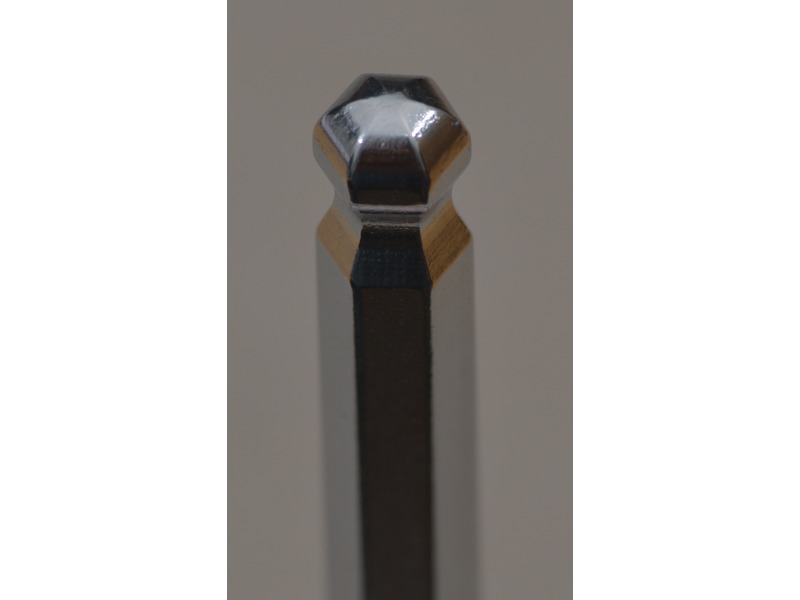
A straight hex key ends in a regular hexagonal tip. Aligned with the screw axis, its six flats engage the internal recess. A ball-end key rounds the tip into a ball-shaped hex profile, letting the shaft sit at an angle within the product’s designed range.
Many L-shaped keys combine both tips on one tool: a ball end on the long arm and a straight end on the short arm. Other designs may differ, so confirm the drawing or sample rather than assuming identical configuration. The ball and straight ends also do not create two unrelated fastener systems. Both fit the same nominal hex socket size when correctly specified; their working geometry differs.
- Ball end: angled access for running a screw where straight alignment is obstructed.
- Straight end: full-depth, on-axis engagement for controlled turning.
- Dual-ended L-key: lets a user switch ends when access and final engagement needs change.
Start with the geometry, then consider access. Buyers comparing adjacent drive systems can also review Torx vs Allen because fastener recess profile and key-end geometry are separate selection questions. For a sample request, state whether each key needs a ball end, a straight end, or both.
Quick comparison
| Feature | Ball-end tip | Straight tip |
|---|---|---|
| Approach | Can engage off-axis within product limits | Requires alignment with screw axis |
| Access | Helps where nearby parts obstruct the tool | Needs a clear, direct approach |
| Contact | Curved hex profile has less contact area at an angle | Full hex flats engage when seated correctly |
| Typical role | Access and faster screw running | Final tightening and higher-load work, subject to tool and fastener limits |
2. How does a ball-end hex key engage a screw at an angle?
The ball-shaped end presents hexagonal contact surfaces around a rounded profile. That geometry can keep the tool engaged while the shaft tilts away from the screw’s centerline. A user can then turn the fastener in a restricted space without first removing every obstructing component.
The allowable angle depends on the key design and size. Unior describes a particular ball-end wrench set as rated for 25 degrees off-axis; that figure belongs to that manufacturer’s product information, not every ball-end key. Other manufacturers may state a different limit or omit a number. Do not put a universal angle on packaging unless the actual model has documented support.
Angled engagement changes contact. The ball profile meets less of the recess than a straight tip seated squarely. Greater angle, poor fit, worn edges, or excessive force can damage the tool or screw. A ball end solves access; it does not permit maximum force at every angle.
- Check the maker’s stated angle, if one is provided.
- Keep the tool axis as close to square as the surrounding assembly allows.
- Stop if the key rocks, slips, or fails to seat consistently.
The angle solves access, but it changes how the tip bears on the recess. When comparing a supplier’s claim, ask for a drawing or sample demonstration at the proposed angle instead of borrowing another brand’s figure.
Angle and engagement checks
| Check | Buyer action | Why it matters |
|---|---|---|
| Stated working angle | Record the model-specific value or “not stated” | Avoids a universal claim unsupported by the item |
| Recess fit | Check a clean, undamaged matching screw | Poor fit can mimic a design problem |
| Shaft position | Confirm tool remains engaged at intended access angle | Simulates the application more closely |
| Turning force | Use only an approved test method and limit | Avoids unsupported torque comparisons |
3. When should a buyer choose a straight-tip hex key?
Choose a straight tip when the fastener is accessible from directly above or along its axis and the user needs the key fully seated. Direct engagement gives the hex faces a broader contact pattern than an angled ball end. That makes a straight tip the sounder choice for final tightening, repetitive assembly, or a fastener with a specified torque requirement, provided the correct size and tool are used.
Examples include a machine cover screw with open access, a fixture fastener on a bench, or the final torque pass on a bicycle component after a ball end has run the screw down. These are examples of access conditions, not universal torque ratings. Manufacturer guidance for the fastener and assembly remains controlling.
Straight keys also come in short-arm, long-arm, T-handle, and other formats. Those shapes affect reach and turning feel. A straight tip alone does not guarantee strength; material, cross-section, heat treatment, fit, and workmanship contribute. Compare item specifications and samples.
- Use straight engagement when the tool can align with the fastener.
- Seat the tip fully before turning.
- Use a calibrated torque tool when an assembly specification requires a numeric torque.
If a straight approach is available, use it for the controlled pass. If your range includes other socket geometries, 6-point vs 12-point sockets offers a related example of how contact profile affects selection.
Straight-tip selection
| Application condition | Selection cue | Buyer check |
|---|---|---|
| Open, direct access | Straight end is practical | Confirm full insertion and size fit |
| Specified final torque | Prefer on-axis engagement | Follow fastener and assembly requirements |
| Repeated assembly | Evaluate grip and handle format too | Trial the actual production sample |
| Restricted access | Straight end may not reach | Consider a ball end for access, then reassess final tightening |
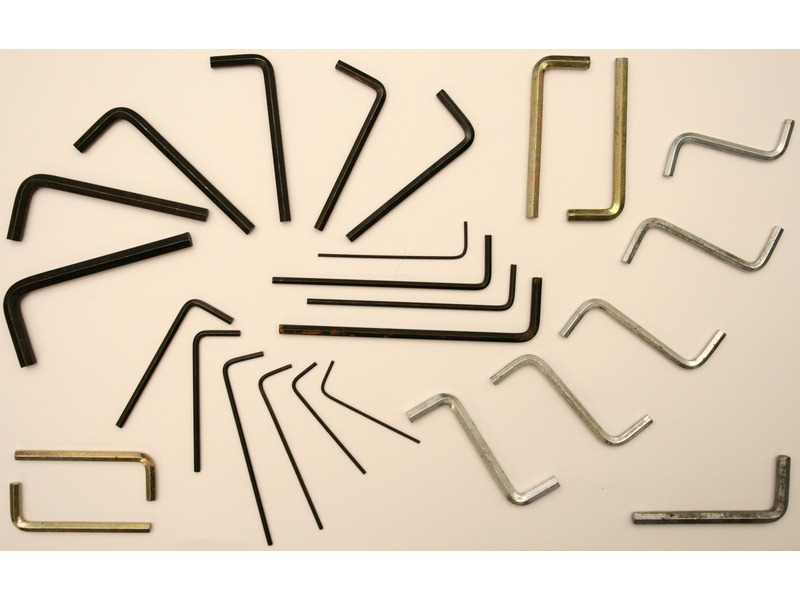
4. Where does a ball-end key help in real work?
A ball end helps when a nearby component blocks a straight shaft. A bicycle mechanic may reach a clamp screw behind a handlebar or cage. An assembler may approach a fastener through a frame opening. A service technician may turn a screw where a hose or guard limits hand position. The key must still match the recess and remain within its working angle.
Ball-end access can reduce the need to reposition the workpiece or remove adjacent parts. It can also speed initial screw running after a fastener has been started by hand. It does not replace the need for a straight engagement when assembly instructions call for a final torque pass. Nor does it make a rounded, contaminated, or incorrectly sized recess safe to turn.
Testing should reflect the actual obstruction. A photo, sketch, or sample fixture can show the required angle and clearance more clearly than saying access is “tight.”
- Identify the obstruction: frame, guard, housing, bracket, or adjacent screw.
- Note available shaft clearance and the desired approach direction.
- Confirm whether the ball end is for starting, running, or final tightening.
A small access mock-up can settle a disputed specification quickly. For projects using several tool formats, socket drive sizes explains how interface and access requirements should be specified separately.
Application fit
| Work condition | Ball-end value | Limit to communicate |
|---|---|---|
| Obstructed fastener | Angled shaft can reach the recess | Access angle remains item-specific |
| Screw running | Can turn a fastener after engagement | Do not infer a torque rating |
| Final tightening | May help position the key initially | Use a straight, approved torque method when required |
| Unclear clearance | A sample or fixture can clarify fit | Do not promise universal access |
5. Does a ball end provide the same contact as a straight end?
No. A straight tip inserted fully and aligned with the fastener presents its hex faces to the internal recess. A ball end is shaped to keep engaging at an angle, so its contact pattern differs and generally becomes less favorable as the shaft tilts. This is the trade-off behind its access advantage.
Do not turn “less contact” into a fabricated percentage or a claim that every ball end damages screws. Fit, angle, load, wear, material, and technique affect results. Some manufacturers also sell non-standard hex profiles; those features differ from conventional ball-end geometry.
For buyers, the practical question is whether a sample engages the specified recess at intended working conditions without rocking or slipping. Test with representative fasteners, including production-relevant tolerances and finishes when available. Inspect both the tool tip and screw recess afterward. If test loads matter, document the method and acceptance limits before comparing vendors.
- Keep ball-end engagement for access tasks within its stated limits.
- Use a matching straight tip for a direct, controlled engagement when feasible.
- Inspect both mating parts after any fit or durability trial.
Contact should be evaluated in the application, not reduced to a slogan. For a separate driver-profile comparison, see Pozidriv vs Phillips, where recess identification also affects fit.
Contact and risk factors
| Factor | Possible effect | Sample evaluation |
|---|---|---|
| Increased angle | Changes where the rounded tip bears | Test at required access position |
| Incorrect size | Loose fit or incomplete engagement | Verify marking and recess fit |
| Worn or damaged tip | Reduced engagement consistency | Inspect under good lighting |
| Excessive force | Tool or fastener damage risk | Follow approved procedure and limits |
6. Do ball-end keys have a universal angle or torque limit?
No universal angle or torque limit applies to every ball-end key. A manufacturer may publish an angle for a model or product family, but that figure should not be copied across sizes, brands, or designs without evidence. Torque capability depends on more than end shape: key size, shaft dimensions, material, production quality, fastener condition, and the test method all matter.
Avoid turning a maker’s application guidance into a market-wide torque rule. Request documented values only when the supplier supports them for the quoted item.
When no published figure exists, treat angle and load as qualification questions. Define an application-specific test with matched fasteners, clear acceptance criteria, and a repeatable procedure. Do not infer a certified capacity from a visual inspection or a competitor’s datasheet.
- Record angle limits by exact model and size where documented.
- Ask for the test method behind any torque or durability number.
- Mark unsupported figures as unverified in catalog copy.
A number without a test method is hard to compare. If a range also stocks powered screwdriving accessories, distinguish hand keys from impact bits; the tools and use conditions differ.
Claims review
| Proposed claim | Evidence needed | Safer copy if evidence is absent |
|---|---|---|
| Maximum working angle | Model-specific manufacturer specification | “Ball end supports angled access; limit varies by model” |
| Maximum torque | Defined method and exact item data | Omit numeric rating |
| Higher strength | Comparative test on equivalent items | Describe measured result and conditions only |
| Reduced fastener damage | Controlled comparative evidence | Explain geometry without promising outcome |
7. How do arm length and key shape affect the choice?
Tip geometry and arm function must be considered together. With the long arm in the screw, the key reaches deeper and the short arm provides a smaller turning radius. With the short arm in the screw, the long arm acts as a longer lever and needs more swing clearance. On a common dual-ended L-key, these positions also correspond to the ball end and straight end respectively, though buyers should confirm the offered configuration.
The long arm only increases turning advantage when it stays outside the screw as the handle. When inserted as the working end, it gives reach while the short arm becomes the lever. Do not use cheater bars or improvised extensions unless the maker rates the tool for that use. List each arm length separately; “long” alone is not a usable specification.
Confirm which end has the ball profile. Many common L-keys place the ball end on the long arm and a straight tip on the short arm, but the configuration must be checked on the offered item. Wera’s catalogue, for example, lists model and arm dimensions for specific L-keys rather than establishing one universal layout.
- Specify overall length and each arm length.
- State which arm carries the ball end.
- Review grip, reach, and storage format with the intended user.
Arm length changes reach and turning advantage; it does not change the fastener size. For larger assembly tool assortments, the mechanic tools list can help frame a wider range review.
Handle and dimension choices
| Design choice | Benefit | Check before ordering |
|---|---|---|
| Short straight arm in screw | Long arm acts as the lever | Confirm swing clearance and controlled use |
| Long ball arm in screw | Greater reach; short arm has a smaller turning radius | Confirm reach and room to turn the short arm |
| Dual-ended L-key | Combines angled access and straight engagement | Confirm which arm has each tip |
| T-handle | Different grip for repeated turning | Check clearance and storage needs |
8. How should buyers inspect size, fit, and sample quality?
Begin with nominal hex size and measurement system. Metric and inch keys are distinct; a near-size substitute may feel close while fitting poorly. Never use an approximate conversion instead of the correct key. Mark and store each system clearly. For broader context, see this metric-to-standard socket conversion chart; a chart does not make near-sized hex keys interchangeable.
Inspect samples against the drawing and fastener. Check tip dimensions, straightness, arm lengths, finish, markings, holder fit, and requested material data. Finish alone does not prove performance. For repeat orders, record the approved sample, revision, and acceptance method.
Use the matching screw or a controlled gauge where appropriate. Test ball-end access at the intended angle and test straight-end seating on-axis. Reject ambiguous markings or a sample that binds, rocks, or slips under ordinary hand engagement. If a critical numeric property is required, request documentation tied to the exact item.
- Confirm metric or inch sizing before set composition.
- Compare samples with a drawing and representative fasteners.
- Agree on marking, finish, inspection, and revision control.
A buyer-approved sample turns a vague expectation into a repeatable check. Use the same discipline for other drive families, including triple-square sockets, which use a different recess geometry.
Sample inspection plan
| Inspection point | What to verify | Record |
|---|---|---|
| Size | Correct nominal metric or inch size | Size marking and gauge result |
| Tip | Ball and straight geometry match agreed design | Sample photo or drawing revision |
| Fit | Seats without abnormal rocking or slip | Fastener or gauge used |
| Dimensions | Arm lengths and overall profile | Drawing measurement |
| Finish and marking | Matches approved sample and packaging | Visual standard and label copy |
9. What should a distributor include in a hex-key assortment?
Build the assortment around customer fasteners and work conditions. A service counter may need common metric sizes in long-arm ball-end L-keys. A machine builder may need defined sizes with straight ends for torque-controlled assembly. Mixed-market kits may require separate metric and inch sets, spare pieces, or holders with visible markings.
Consider whether buyers need dual-ended keys or separate ball-end and straight-tip pieces. Dual-ended designs offer flexibility in one tool. Separate tools can make the intended task clearer or permit distinct lengths and formats. Packaging should identify size system, individual sizes, tip configuration, and any verified use limits. Never imply a key handles Torx, triple-square, or other drives; their profiles differ. The distinction is similar in principle to choosing the right manual impact screwdriver or impact driver: name the tool and task precisely.
- Review installed fasteners in the target equipment.
- Choose metric or imperial coverage from actual market demand.
- Trial the holder and labels with warehouse and end-user staff.
A compact range is useful when its coverage is explicit. Before listing a set, compare piece count and sizes against buyer applications and show omissions clearly.
Assortment decision table
| Buyer need | Possible set direction | Decision check |
|---|---|---|
| Restricted access service | Long-arm keys with ball ends | Confirm documented angle and user limits |
| Controlled direct assembly | Straight-tip keys or straight end on dual-ended keys | Align with assembly procedure |
| Mixed fastener standards | Separate metric and inch sets | Avoid ambiguous combined markings |
| Flexible maintenance kit | Dual-ended L-key assortment | Verify both ends and holder layout |
10. What should go into an RFQ for ball-end and straight hex keys?
An RFQ should let suppliers quote the same configuration. Include size system, every size required, key style, which end carries the ball profile, both arm lengths, overall dimensions, finish, marking, holder or packaging, and any documented angle requirement. If the tool will be used in an assembly with a torque specification, explain the workflow and ask what evidence the supplier can provide for the exact item.
Attach a drawing, product photo, or physical reference sample when the end geometry or package layout is difficult to express in words. Specify whether the ball end runs a fastener only or whether buyers expect a separate straight-end final pass. If you need a durability or load test, define fixture, fastener, procedure, sample quantity, and acceptance criteria before production approval.
For supplier comparison, request one sample set from each quoted configuration. Check fit, markings, dimensions, holder retention, and packaging with the same inspection sheet. Keep commercial details such as quantity, branding artwork, and packaging language in the RFQ, but confirm all quoted terms directly with each supplier rather than assuming standard MOQ or lead-time conditions.
- List sizes in one measurement system per set.
- State the intended application and access constraints.
- Request drawings, samples, and evidence for any numeric claim.
- Confirm price, order quantity, lead time, and packaging in the supplier’s written quote.
A specific RFQ makes the sample review faster and the quote easier to compare. Send the size list, metric or inch system, arm dimensions, ball-end use, set quantity, and packaging market with your contact request.
Frequently asked questions
Q1. Can I use a ball-end hex key for every hex screw?
Only when its size matches and the application suits angled engagement. Use a straight tip for direct, fully seated work when possible.
Q2. What angle can a ball-end hex key reach?
The limit depends on its design and manufacturer data. Ask for an item-specific figure; do not assume every key shares one angle.
Q3. Are ball-end and straight hex keys different sizes?
They can share the same nominal size while using different tip geometries. Confirm both size and end configuration on the quoted item.
Q4. Should a ball end be used for final torque?
Follow the assembly and tool instructions. For controlled final tightening, use an approved method with straight, on-axis engagement when required.
Q5. What should a buyer specify in a hex-key RFQ?
List sizes, metric or inch system, tip configuration, arm lengths, finish, markings, packaging, application, sample checks, and commercial terms.
Looking for a reliable mechanic tools manufacturer in China?
If you are sourcing hand tools, socket tools, automotive repair tools, mechanic tool sets or OEM private label tools, contact KOLARWIN Tools for factory-direct quotation, customization support and product consultation.