
Home/Blog/ Manual Impact Screwdriver vs Impact Driver: Buyer Guide

Manual Impact Screwdriver vs Impact Driver: Buyer Guide

Get OEM Tool Catalog + Quote Back to Tool Sourcing Blog
Hammer-struck manual impact screwdriver beside a cordless impact driver
This KOLARWIN Tools article is written for overseas distributors, wholesalers, importers and private label tool brands sourcing mechanic tools, automotive repair tools, socket tools, hand tools and OEM tool sets from China. Use this guide to compare product options, check supplier quality points and move from reading to a faster B2B inquiry.

Need OEM supplier support for this product type?

Contact KOLARWIN Tools for OEM mechanic tools, private label packaging, wholesale quotation and product range support. This gives overseas buyers a clear path from article reading to supplier discussion.

A manual impact screwdriver and a powered impact driver both turn fasteners with impact action, but their input, accessories, and use are different. A manual driver is struck with a hammer at its designated cap; a cordless impact driver runs from a trigger and applies repeated rotary impacts. For distributors, the distinction affects bit compatibility, instructions, safety notes, and product grouping.

1. How does a manual impact screwdriver differ from an impact driver?

A manual impact screwdriver is a hand tool with an internal cam or impact mechanism. The operator sets the direction, seats a bit, applies axial pressure, then strikes the tool’s intended impact cap. The blow drives the bit into the fastener while producing a short rotation. A powered impact driver uses a motor, trigger, and internal rotary hammering mechanism. It turns when powered and impacts as resistance rises.
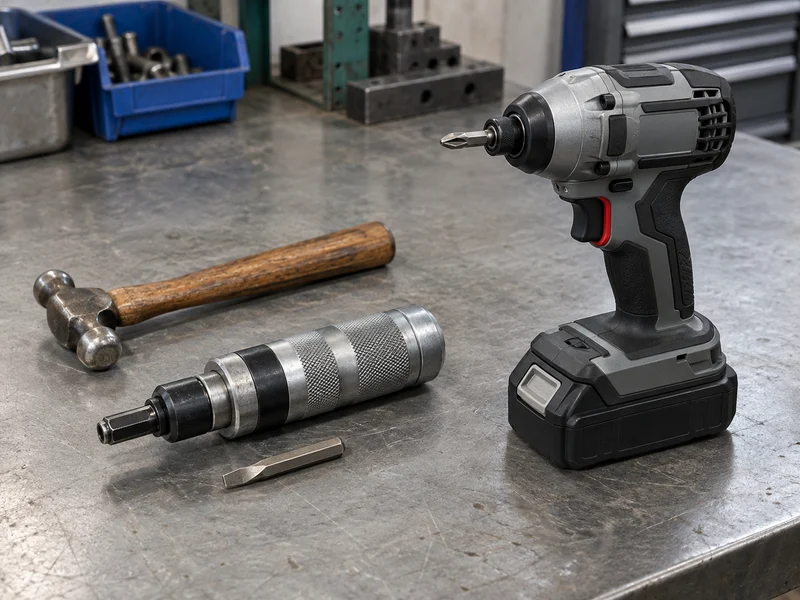
Hammer-struck manual impact screwdriver beside a cordless impact driver
Product illustration; confirm actual model specifications and fit.

The names cause confusion. “Impact screwdriver” may describe a hand-struck tool or a powered pneumatic screwdriver. This guide compares the manual tool with a cordless rotary impact driver. Sort the products by energy source first.

  • Manual impact screwdriver: hammer input, internal mechanical rotation, no battery or compressor.
  • Cordless impact driver: battery and trigger, usually a quick-change hex interface.
  • Pneumatic impact screwdriver: compressed-air-powered driver, with its own drive, pressure, and maintenance requirements.

Kolarwin’s hand tools range includes screwdrivers and related categories. Clear naming helps a distributor avoid listing three different tools under one generic “impact screwdriver” label.

Tool-class comparison

Tool class Input Output action Listing field
Manual impact screwdriver Hammer strike Short, directed rotation Cap and bit interface
Cordless impact driver Battery and trigger Repeated rotary impacts Voltage, bit holder, modes
Pneumatic impact screwdriver Compressed air Powered rotation and impacts Air pressure and drive

Use “manual,” “cordless,” or “pneumatic” in the SKU title and product data.

2. How does the manual tool turn a hammer strike?

Inside a manual impact screwdriver, a cam or helical mechanism converts part of a straight strike into a short twist. At the same time, the tool presses the bit into the fastener recess. That combination can help free a stuck screw while reducing the tendency for a bit to climb out. Designs and rotation amounts vary, so buyers should request the exact tool manual instead of publishing a universal torque figure.
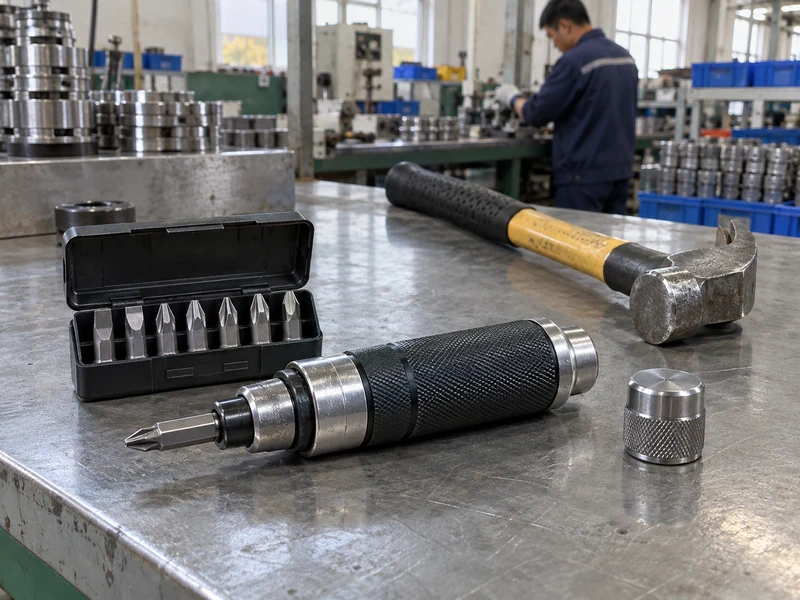
Manual impact screwdriver, compatible bits, and hammer arranged on a factory workbench
Product illustration; confirm actual model specifications and fit.

The turning action starts with the model’s own selector.

  • Seat the bit fully and squarely in the fastener.
  • Apply axial pressure while keeping the tool aligned.
  • Strike only the cap or surface named in the instructions.
  • Remove the bit before changing direction when the manual requires it.

A useful product demo should show the tool’s actual direction control and accessory interface. Avoid implying that all models share one manufacturer’s selector arrangement.

Mechanism and control

Feature Manual impact screwdriver Buyer evidence
Energy input Hammer strike Manual diagram
Direction Model-specific selector Marking and operation check
Rotation Short cam-driven movement Exact model description
Axial force Supplied by operator and strike Correct alignment guidance

Ask suppliers for a model-specific operating sequence and do not infer output torque from appearance.

3. When should a shop reach for a manual impact screwdriver?

A manual impact screwdriver can suit a seized screw where a straight, controlled hammer strike and simultaneous turning action may help. Automotive examples include certain retaining screws, but the application depends on the fastener, surrounding parts, and service procedure. Use the right bit profile and size. If the bit does not seat fully, stop; a poorly matched tip can damage the recess or break under impact.
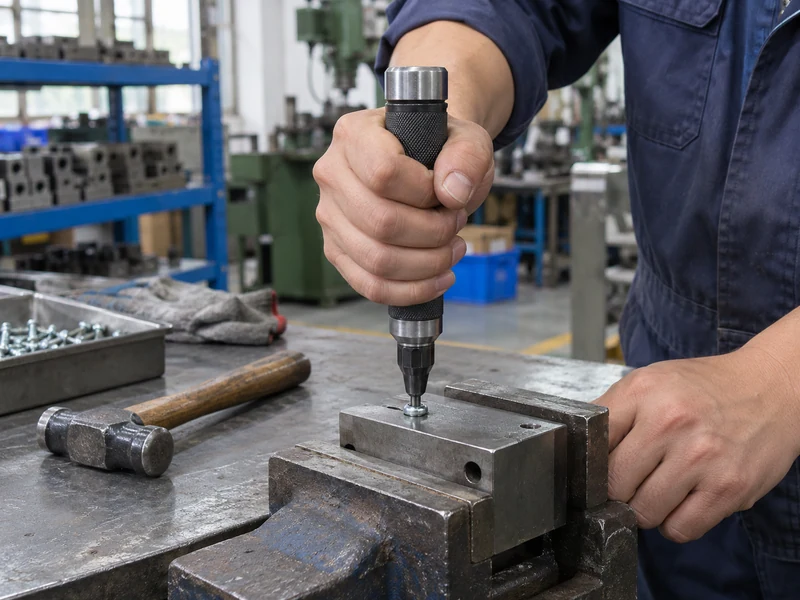
Manual impact screwdriver aligned with a fastener in a secured test fixture
Product illustration; confirm actual model specifications and fit.

Use it where the cap and fastener can stay aligned.

  • Choose a seized screw with an intact recess and correct bit available.
  • Restrain the workpiece or component before striking.
  • Keep the tool axis square to the fastener.
  • Check clearance for the hammer path and nearby parts.

For a broader service assortment, Kolarwin’s automotive repair tools page covers brake, puller, timing, steering, and engine tool categories. A manual impact screwdriver complements specialized service tools; it does not replace a vehicle-specific procedure.

Application screen

Condition Manual tool fit Buyer or technician check
Stuck screw, sound recess Possible Correct bit and aligned strike
Damaged or rounded recess Uncertain Identify approved extraction method
Restricted hammer access Poor fit Use service-approved alternative
Fragile nearby component Added risk Protect or remove per procedure

Select the method only after confirming access, fastener condition, and the repair procedure.

4. When is a powered impact driver the better choice?

A powered impact driver suits repeated fastening or removal where a compatible bit and controlled trigger operation match the job. It uses a motor and internal rotary impacts rather than a hammer blow to the tool’s rear cap. The operator controls start and speed through the trigger; some models also offer modes. Output and control vary by model, battery, and material.
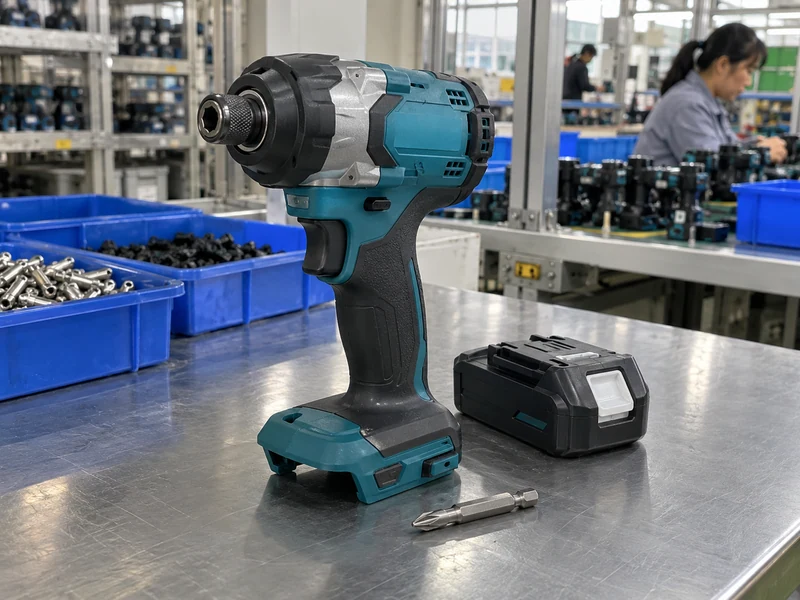
Cordless impact driver and detached battery arranged on an inspection bench
Product illustration; confirm actual model specifications and fit.

Choose powered action for repeat cycles, with control.

  • Check the manufacturer’s accessory and bit requirements.
  • Start at a controlled trigger speed and keep the bit aligned.
  • Stop if the bit, holder, or fastener shows damage.

Kolarwin’s socket tools range groups ratchets, sockets, extensions, and accessories. A powered hex driver and a square-drive impact wrench require distinct accessories and labeling.

Powered-tool comparison

Selection point Powered impact driver Manual impact screwdriver
Repeated cycles Trigger-driven One strike sequence per operation
Accessory Approved hex-shank bit or adapter Model-specific bit or drive adapter
Control Trigger and model modes Direction setting and strike
Main risk Overdriving or incompatible bit Misalignment or missed strike

Keep powered bits and manual impact bits separated in the assortment where their compatibility differs.

5. Why do bit fit and rating matter?

Match the bit at both ends.
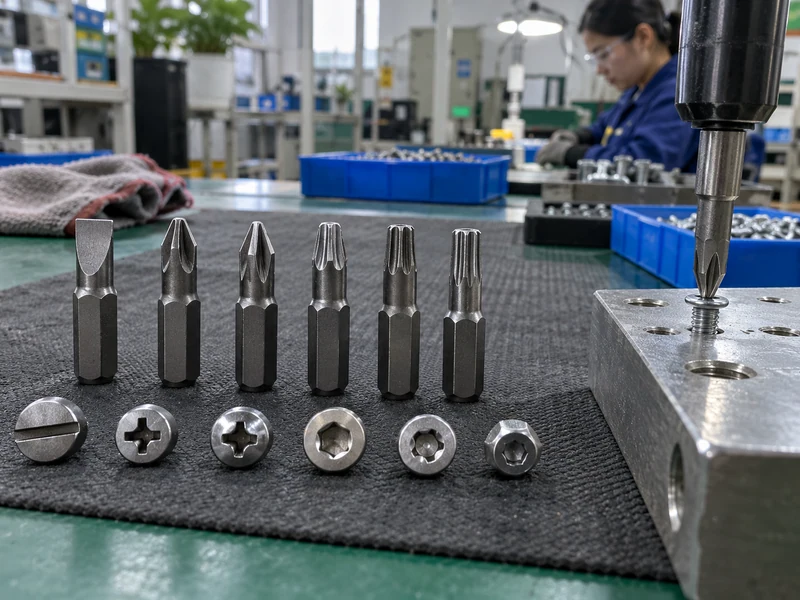
Driver bits checked against matching fastener recess samples
Product illustration; confirm actual model specifications and fit.
  • Match tip geometry and size to the fastener recess.
  • Confirm shank, holder, and retention compatibility.
  • Verify powered impact rating where the tool maker requires it.
  • For a manual tool, follow its approved bit and strike instructions.

The Torx vs Allen guide explains why driver profiles should not be treated as interchangeable. For impact use, accurate fit reduces cam-out and helps preserve the fastener recess.

Bit approval matrix

Bit check Manual impact screwdriver Powered impact driver
Tip profile Exact recess match Exact recess match
Interface Tool-specific bit or adapter Holder-compatible shank
Rating Follow manual Impact-duty approval if specified
Condition No chips, twist, or wear No chips, twist, or wear

Request a compatibility list that names tool models, bit profiles, and use limits.

6. How should an operator use a manual impact screwdriver safely?

A manual impact screwdriver requires a controlled axial strike. Wear eye protection; gloves may help protect hands from sharp edges, but they do not replace proper grip and alignment. Secure the workpiece so it cannot shift. Keep bystanders outside the hammer path and inspect the tool, cap, adapter, and bit before use. Do not strike an ordinary screwdriver or a powered impact driver unless its maker specifically designed that tool for striking.

Technician prepares a manual impact screwdriver beside a secured fixture
Product illustration; confirm actual model specifications and fit.

Set direction and fully engage the bit before applying force. Hold the body firmly, maintain downward pressure, and use the hammer only on the designated striking surface. The exact blow and hammer type depend on the tool instructions. A glancing strike can damage the bit, fastener, or nearby part. Stop if the cap mushrooms, a bit cracks, or selector movement becomes unreliable.

Keep the strike straight and the work stable.

  • Wear safety glasses and secure loose clothing.
  • Clamp or otherwise stabilize the component when appropriate.
  • Keep hands clear of the striking surface and nearby pinch points.
  • Use the specified hammer contact point and service procedure.
  • Inspect for deformation or loose parts after repeated use.

OSHA hand-tool guidance calls out flying fragments from damaged impact tools and the need for proper condition and handling. Do not use a damaged striker or mushroomed impact surface.

Manual-tool safety screen

Check Before use Stop condition
Workpiece Stable and supported Shifts under load
Bit Correct and fully seated Slips or cracks
Tool cap Undamaged, intended for impact Mushrooming or deformation
Operator space Clear strike path Nearby hazard or poor alignment

Train operators on the exact model’s instructions and remove damaged tools from service.

7. What limits should buyers account for?

A manual impact screwdriver needs hammer access and a fastener recess that can accept the correct bit. It is less suited to repetitive fastening than a powered driver, and each strike depends on operator alignment and the tool’s condition. A powered impact driver needs a charged battery, compatible accessories, and a work setup that tolerates its speed and repeated impacts. Neither tool should be selected by headline torque alone.
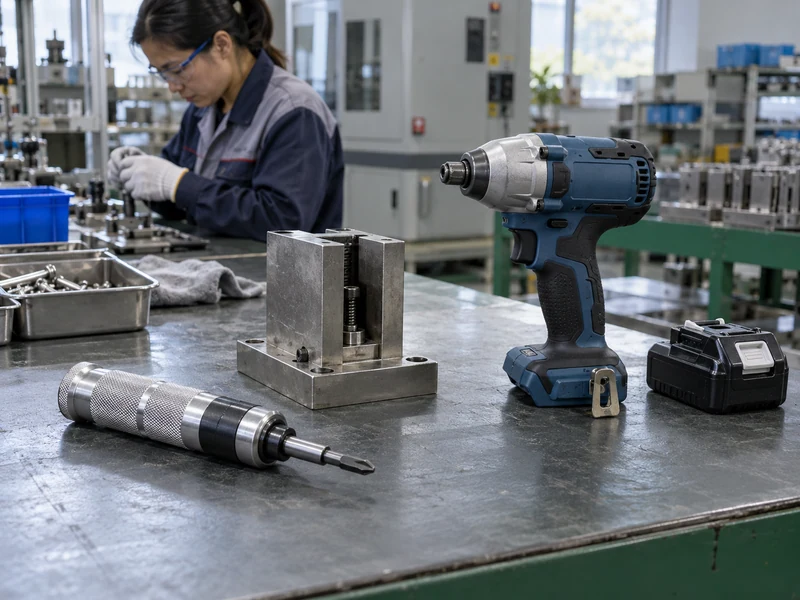
Manual and cordless impact drivers shown separately beside a clearance fixture
Product illustration; confirm actual model specifications and fit.

Let the fastener and access decide.

  • Manual tool: consider stuck screws, limited powered access, and room for a hammer.
  • Powered driver: consider repeated cycles, suitable bits, and trigger control.

Kolarwin’s socket drive size guide covers square-drive families, a useful distinction when a manual tool uses an adapter or the job moves to a ratchet. Keep drive size separate from torque claims.

Use-limit matrix

Job condition Manual impact screwdriver Powered impact driver
Single seized screw May suit with access May suit with approved bit and control
Repetitive assembly Slow for volume Often better suited
Tight hammer clearance Limited Depends on tool access
Delicate torque-sensitive fastener Use caution Use controlled tool or specified torque method

List suitable and excluded applications at product level rather than promising universal use.

8. How should distributors compare specifications?

Compare the manual tool’s drive or bit interface, direction method, striking cap, body length, supplied bits, case contents, and operating instructions. For a powered impact driver, compare voltage platform, holder, modes, speed control, battery system, and approved accessories. Product titles should name the power source. Catalog rows should not hide a manual hammer tool inside a cordless-driver family.
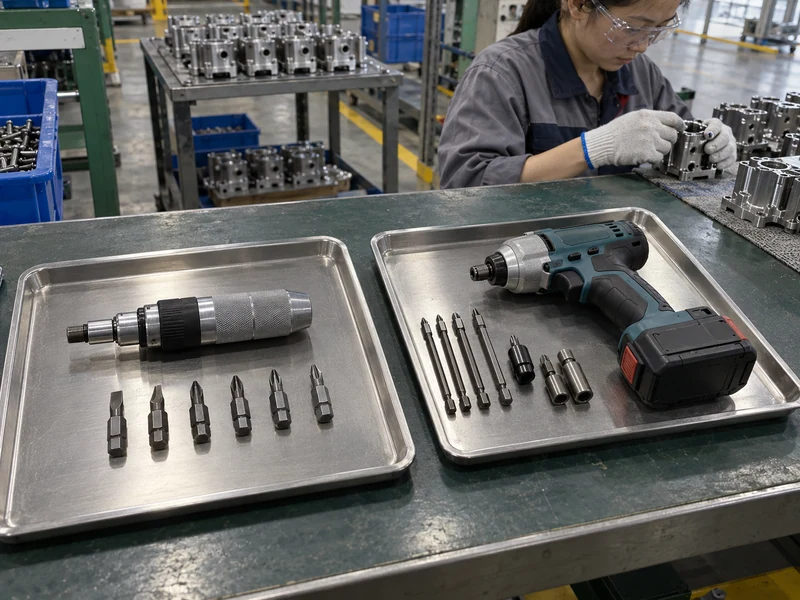
Manual and powered driver accessories arranged separately for specification review
Product illustration; confirm actual model specifications and fit.

Compare evidence, not just package counts.

  • Record interface and included accessories.
  • Confirm instructions, warnings, and spare parts.
  • Inspect case separation so manual and powered accessories are not confused.
  • Ask what ratings are measured, published, or unverified.

The Torx vs triple-square guide supports accurate profile selection. A distributor should map bit demand by fastener rather than assuming a universal insert set.

Specification matrix

Field Manual impact screwdriver Powered impact driver
Power source Hand strike Battery
Interface Model-specific Usually hex holder, verify model
Controls Direction selector Trigger, direction, possible modes
Package Driver and approved bits Tool, battery, charger, approved bits

Require separate SKU data and clear packaging for each tool class.

9. What quality checks belong in a sample review?

Turn the sample into a recordable check.
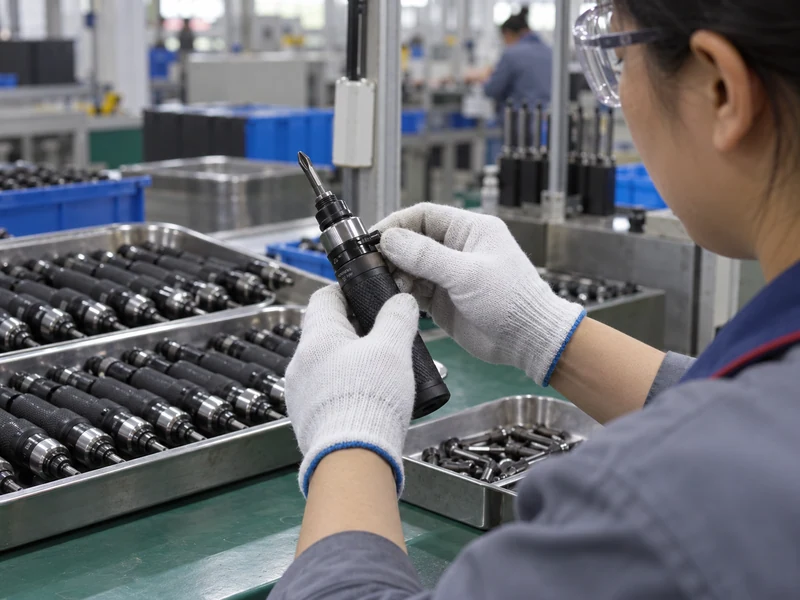
QC technician inspects a manual impact screwdriver and its bit holder
Product illustration; confirm actual model specifications and fit.
  • Match each accessory to the package list and interface.
  • Check selector and direction against the instruction sheet.
  • Inspect caps, bits, holders, handles, and fasteners for damage.
  • Record the model, revision, sample result, and corrective action.

Kolarwin’s mechanics tool set page helps buyers evaluate how hand tools fit a broader kit. Keep manual and powered impact accessories visibly distinct in that bill of materials.

Sample-QC matrix

Check Manual tool Powered driver
Interface Bit or adapter fit Hex holder and retention
Direction Selector and rotation Forward/reverse switch
Striking or trigger part Cap condition Trigger response
Accessories Approved profile and size Approved shank and rating

Approve packaging only after the sample and accessory list agree.

10. What should a distributor RFQ include?

Make the comparison operational for sales and service teams.
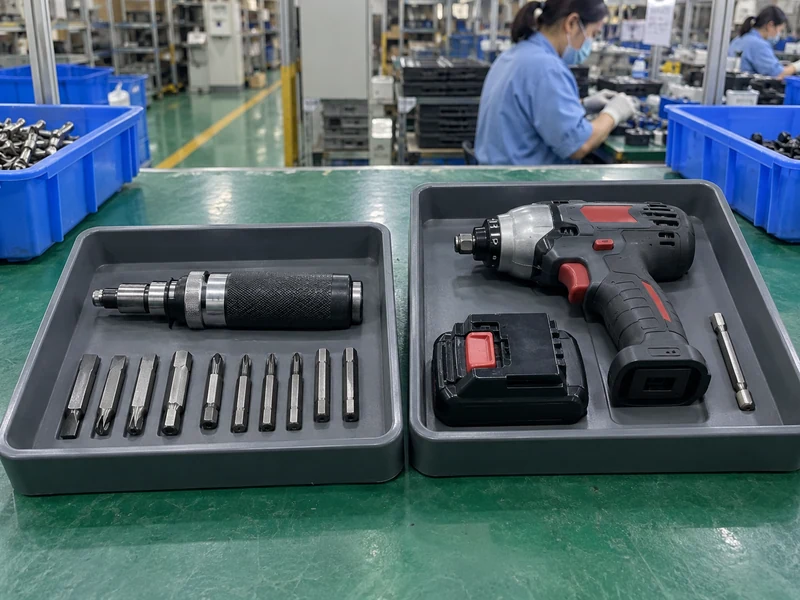
Manual and cordless impact driver samples separated in a distributor assortment
Product illustration; confirm actual model specifications and fit.
  • Identify power source and product class in the first line.
  • List interface, direction control, and included accessories.
  • Require fit evidence for target screw profiles.
  • Confirm package contents, model revision, and quality records.

The contact page gives buyers a route for a product inquiry. Send representative fastener samples, target channels, and package needs with the request.

Q1: Can a powered impact driver replace a manual impact screwdriver? Not in every job. Access, fastener condition, bit fit, and service procedure determine the method.

Q2: Should a manual impact screwdriver be hit with a hammer? Only if its manufacturer designed that model for striking, and only at its designated cap.

Q3: Are cordless impact-driver bits suitable for a manual impact screwdriver? Not automatically. Confirm bit interface and approval for the exact manual tool.

Q4: Does a 1/4-inch hex shank guarantee powered impact suitability? No. Check accessory rating and intended use as well as shank fit.

Q5: What safety gear should be used? Follow the tool instructions and workplace rules; wear eye protection around striking operations.

Looking for a reliable mechanic tools manufacturer in China?

If you are sourcing hand tools, socket tools, automotive repair tools, mechanic tool sets or OEM private label tools, contact KOLARWIN Tools for factory-direct quotation, customization support and product consultation.


A manual impact screwdriver and a powered impact driver both turn fasteners with impact action, but their input, accessories, and use are different. A manual driver is struck with a hammer at its designated cap; a cordless impact driver runs from a trigger and applies repeated rotary impacts. For distributors, the distinction affects bit compatibility, instructions, safety notes, and product grouping.

1. How does a manual impact screwdriver differ from an impact driver?

A manual impact screwdriver is a hand tool with an internal cam or impact mechanism. The operator sets the direction, seats a bit, applies axial pressure, then strikes the tool’s intended impact cap. The blow drives the bit into the fastener while producing a short rotation. A powered impact driver uses a motor, trigger, and internal rotary hammering mechanism. It turns when powered and impacts as resistance rises.

Hammer-struck manual impact screwdriver beside a cordless impact driver
Product illustration; confirm actual model specifications and fit.

The names cause confusion. “Impact screwdriver” may describe a hand-struck tool or a powered pneumatic screwdriver. This guide compares the manual tool with a cordless rotary impact driver. Sort the products by energy source first.

Kolarwin’s hand tools range includes screwdrivers and related categories. Clear naming helps a distributor avoid listing three different tools under one generic “impact screwdriver” label.

Tool-class comparison

Tool class Input Output action Listing field
Manual impact screwdriver Hammer strike Short, directed rotation Cap and bit interface
Cordless impact driver Battery and trigger Repeated rotary impacts Voltage, bit holder, modes
Pneumatic impact screwdriver Compressed air Powered rotation and impacts Air pressure and drive

Use “manual,” “cordless,” or “pneumatic” in the SKU title and product data.

2. How does the manual tool turn a hammer strike?

Inside a manual impact screwdriver, a cam or helical mechanism converts part of a straight strike into a short twist. At the same time, the tool presses the bit into the fastener recess. That combination can help free a stuck screw while reducing the tendency for a bit to climb out. Designs and rotation amounts vary, so buyers should request the exact tool manual instead of publishing a universal torque figure.

Manual impact screwdriver, compatible bits, and hammer arranged on a factory workbench
Product illustration; confirm actual model specifications and fit.

The turning action starts with the model’s own selector.

A useful product demo should show the tool’s actual direction control and accessory interface. Avoid implying that all models share one manufacturer’s selector arrangement.

Mechanism and control

Feature Manual impact screwdriver Buyer evidence
Energy input Hammer strike Manual diagram
Direction Model-specific selector Marking and operation check
Rotation Short cam-driven movement Exact model description
Axial force Supplied by operator and strike Correct alignment guidance

Ask suppliers for a model-specific operating sequence and do not infer output torque from appearance.

3. When should a shop reach for a manual impact screwdriver?

A manual impact screwdriver can suit a seized screw where a straight, controlled hammer strike and simultaneous turning action may help. Automotive examples include certain retaining screws, but the application depends on the fastener, surrounding parts, and service procedure. Use the right bit profile and size. If the bit does not seat fully, stop; a poorly matched tip can damage the recess or break under impact.

Manual impact screwdriver aligned with a fastener in a secured test fixture
Product illustration; confirm actual model specifications and fit.

Use it where the cap and fastener can stay aligned.

For a broader service assortment, Kolarwin’s automotive repair tools page covers brake, puller, timing, steering, and engine tool categories. A manual impact screwdriver complements specialized service tools; it does not replace a vehicle-specific procedure.

Application screen

Condition Manual tool fit Buyer or technician check
Stuck screw, sound recess Possible Correct bit and aligned strike
Damaged or rounded recess Uncertain Identify approved extraction method
Restricted hammer access Poor fit Use service-approved alternative
Fragile nearby component Added risk Protect or remove per procedure

Select the method only after confirming access, fastener condition, and the repair procedure.

4. When is a powered impact driver the better choice?

A powered impact driver suits repeated fastening or removal where a compatible bit and controlled trigger operation match the job. It uses a motor and internal rotary impacts rather than a hammer blow to the tool’s rear cap. The operator controls start and speed through the trigger; some models also offer modes. Output and control vary by model, battery, and material.

Cordless impact driver and detached battery arranged on an inspection bench
Product illustration; confirm actual model specifications and fit.

Choose powered action for repeat cycles, with control.

Kolarwin’s socket tools range groups ratchets, sockets, extensions, and accessories. A powered hex driver and a square-drive impact wrench require distinct accessories and labeling.

Powered-tool comparison

Selection point Powered impact driver Manual impact screwdriver
Repeated cycles Trigger-driven One strike sequence per operation
Accessory Approved hex-shank bit or adapter Model-specific bit or drive adapter
Control Trigger and model modes Direction setting and strike
Main risk Overdriving or incompatible bit Misalignment or missed strike

Keep powered bits and manual impact bits separated in the assortment where their compatibility differs.

5. Why do bit fit and rating matter?

Match the bit at both ends.

Driver bits checked against matching fastener recess samples
Product illustration; confirm actual model specifications and fit.

The Torx vs Allen guide explains why driver profiles should not be treated as interchangeable. For impact use, accurate fit reduces cam-out and helps preserve the fastener recess.

Bit approval matrix

Bit check Manual impact screwdriver Powered impact driver
Tip profile Exact recess match Exact recess match
Interface Tool-specific bit or adapter Holder-compatible shank
Rating Follow manual Impact-duty approval if specified
Condition No chips, twist, or wear No chips, twist, or wear

Request a compatibility list that names tool models, bit profiles, and use limits.

6. How should an operator use a manual impact screwdriver safely?

A manual impact screwdriver requires a controlled axial strike. Wear eye protection; gloves may help protect hands from sharp edges, but they do not replace proper grip and alignment. Secure the workpiece so it cannot shift. Keep bystanders outside the hammer path and inspect the tool, cap, adapter, and bit before use. Do not strike an ordinary screwdriver or a powered impact driver unless its maker specifically designed that tool for striking.

Technician prepares a manual impact screwdriver beside a secured fixture
Product illustration; confirm actual model specifications and fit.

Set direction and fully engage the bit before applying force. Hold the body firmly, maintain downward pressure, and use the hammer only on the designated striking surface. The exact blow and hammer type depend on the tool instructions. A glancing strike can damage the bit, fastener, or nearby part. Stop if the cap mushrooms, a bit cracks, or selector movement becomes unreliable.

Keep the strike straight and the work stable.

OSHA hand-tool guidance calls out flying fragments from damaged impact tools and the need for proper condition and handling. Do not use a damaged striker or mushroomed impact surface.

Manual-tool safety screen

Check Before use Stop condition
Workpiece Stable and supported Shifts under load
Bit Correct and fully seated Slips or cracks
Tool cap Undamaged, intended for impact Mushrooming or deformation
Operator space Clear strike path Nearby hazard or poor alignment

Train operators on the exact model’s instructions and remove damaged tools from service.

7. What limits should buyers account for?

A manual impact screwdriver needs hammer access and a fastener recess that can accept the correct bit. It is less suited to repetitive fastening than a powered driver, and each strike depends on operator alignment and the tool’s condition. A powered impact driver needs a charged battery, compatible accessories, and a work setup that tolerates its speed and repeated impacts. Neither tool should be selected by headline torque alone.

Manual and cordless impact drivers shown separately beside a clearance fixture
Product illustration; confirm actual model specifications and fit.

Let the fastener and access decide.

Kolarwin’s socket drive size guide covers square-drive families, a useful distinction when a manual tool uses an adapter or the job moves to a ratchet. Keep drive size separate from torque claims.

Use-limit matrix

Job condition Manual impact screwdriver Powered impact driver
Single seized screw May suit with access May suit with approved bit and control
Repetitive assembly Slow for volume Often better suited
Tight hammer clearance Limited Depends on tool access
Delicate torque-sensitive fastener Use caution Use controlled tool or specified torque method

List suitable and excluded applications at product level rather than promising universal use.

8. How should distributors compare specifications?

Compare the manual tool’s drive or bit interface, direction method, striking cap, body length, supplied bits, case contents, and operating instructions. For a powered impact driver, compare voltage platform, holder, modes, speed control, battery system, and approved accessories. Product titles should name the power source. Catalog rows should not hide a manual hammer tool inside a cordless-driver family.

Manual and powered driver accessories arranged separately for specification review
Product illustration; confirm actual model specifications and fit.

Compare evidence, not just package counts.

The Torx vs triple-square guide supports accurate profile selection. A distributor should map bit demand by fastener rather than assuming a universal insert set.

Specification matrix

Field Manual impact screwdriver Powered impact driver
Power source Hand strike Battery
Interface Model-specific Usually hex holder, verify model
Controls Direction selector Trigger, direction, possible modes
Package Driver and approved bits Tool, battery, charger, approved bits

Require separate SKU data and clear packaging for each tool class.

9. What quality checks belong in a sample review?

Turn the sample into a recordable check.

QC technician inspects a manual impact screwdriver and its bit holder
Product illustration; confirm actual model specifications and fit.

Kolarwin’s mechanics tool set page helps buyers evaluate how hand tools fit a broader kit. Keep manual and powered impact accessories visibly distinct in that bill of materials.

Sample-QC matrix

Check Manual tool Powered driver
Interface Bit or adapter fit Hex holder and retention
Direction Selector and rotation Forward/reverse switch
Striking or trigger part Cap condition Trigger response
Accessories Approved profile and size Approved shank and rating

Approve packaging only after the sample and accessory list agree.

10. What should a distributor RFQ include?

Make the comparison operational for sales and service teams.

Manual and cordless impact driver samples separated in a distributor assortment
Product illustration; confirm actual model specifications and fit.

The contact page gives buyers a route for a product inquiry. Send representative fastener samples, target channels, and package needs with the request.

Q1: Can a powered impact driver replace a manual impact screwdriver? Not in every job. Access, fastener condition, bit fit, and service procedure determine the method.

Q2: Should a manual impact screwdriver be hit with a hammer? Only if its manufacturer designed that model for striking, and only at its designated cap.

Q3: Are cordless impact-driver bits suitable for a manual impact screwdriver? Not automatically. Confirm bit interface and approval for the exact manual tool.

Q4: Does a 1/4-inch hex shank guarantee powered impact suitability? No. Check accessory rating and intended use as well as shank fit.

Q5: What safety gear should be used? Follow the tool instructions and workplace rules; wear eye protection around striking operations.

Why Partner with Kolarwin Tools?

Factory-Direct Pricing Skip the middleman — access competitive wholesale prices and protect your margins
Private Label & OEM Ready Your brand, our expertise — full customization from logo to packaging
Fast Global Shipping Reliable delivery to 60+ countries with full export documentation support
Low MOQ, High Flexibility Start small, scale fast — flexible order quantities to fit your business
Dedicated B2B Support One-on-one account management from quote to delivery, every time

Get Your Free Quote in 24 Hours

Tell us your sourcing needs — we'll respond with a tailored quote, product specs, and the best pricing for your market. No commitment required.

Chat on WhatsApp Email Us Directly
