
Home/Blog/ Torx vs Allen: A B2B Buyer’s Guide to Driver Fit

Torx vs Allen: A B2B Buyer’s Guide to Driver Fit

Get OEM Tool Catalog + Quote Back to Tool Sourcing Blog
Unbranded Torx and Allen drivers shown as separate six-lobe and six-flat profiles
This KOLARWIN Tools article is written for overseas distributors, wholesalers, importers and private label tool brands sourcing mechanic tools, automotive repair tools, socket tools, hand tools and OEM tool sets from China. Use this guide to compare product options, check supplier quality points and move from reading to a faster B2B inquiry.

Need OEM supplier support for this product type?

Contact KOLARWIN Tools for OEM mechanic tools, private label packaging, wholesale quotation and product range support. This gives overseas buyers a clear path from article reading to supplier discussion.

A Torx driver and an Allen key can look similar in a tool drawer, yet their fastener openings are different. Torx uses a six-lobe star profile. Allen, also called hex, uses six straight flats. For distributors, confusing those profiles creates stripped recesses, returns, and unsafe field improvisation.

Torx vs Allen selection starts with the fastener profile, then moves through size system, access, drive format, hand or impact rating, tamper-resistant design, and sample verification. Match the driver to the recess exactly. Metric and inch Allen sizes require separate control, while Torx size codes follow their own series. Do not treat a near-size key as an acceptable substitute.

1. What is the difference between Torx and Allen profiles?

Torx has six rounded lobes around a star-shaped recess, while Allen has six straight flats forming a hexagonal recess.
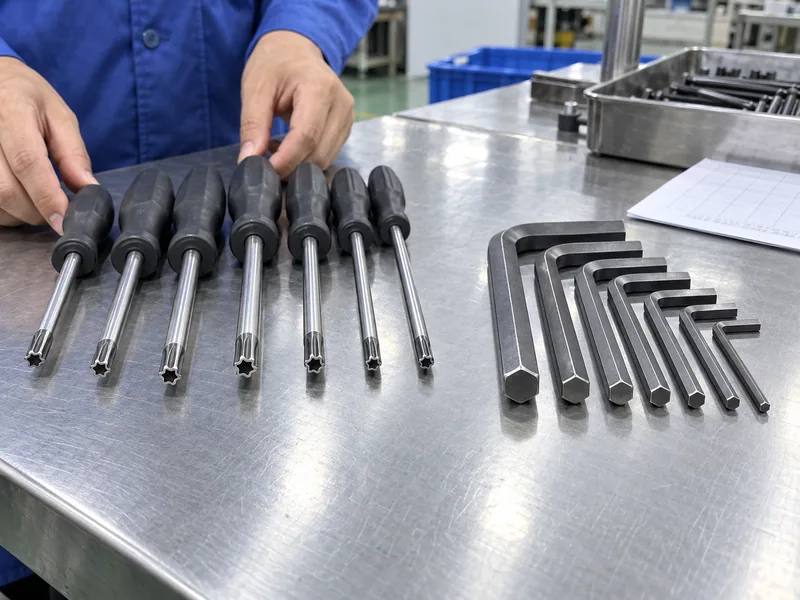
Unbranded Torx and Allen drivers shown as separate six-lobe and six-flat profiles
AI-generated concept illustration; not an actual factory or test record.

How should a buyer identify each profile?

Inspect the fastener from above after removing dirt and coating debris. A hex recess shows six flat walls and six corners. A Torx recess shows six repeated lobes and valleys. Profile recognition comes before size selection.

Do not reach for a size chart until profile and drive format agree.

  • Hex key, hex bit, or hex socket for six flat walls
  • Torx key, Torx bit, or Torx socket for six lobes
  • Security Torx driver when a center pin blocks a standard recess
  • Correct male or female interface for the selected tool

Review socket tool options when building a driver range that includes keys, bits, and sockets. Action: photograph the fastener recess beside a proposed driver before approving a replacement SKU.

Which profile fields belong in a product matrix?

Field Allen entry Torx entry Buyer check
Recess form Six straight flats Six rounded lobes Visual and gauge match
Driver code Metric or inch size T-series code Marking and drawing
Security feature Usually none Center-pin version may apply Pin and hole clearance
Tool format L-key, bit, socket, or driver Key, bit, socket, or driver Customer interface
Use class Hand or specified powered tool Hand or specified powered tool Rating evidence

Keep profile and size as separate controlled fields. Action: reject product copy that calls every six-sided recess “Torx.”

2. Are Torx and Allen keys interchangeable?

Torx and Allen keys are not interchangeable because their contact geometry does not match. A loose tool can damage the recess.
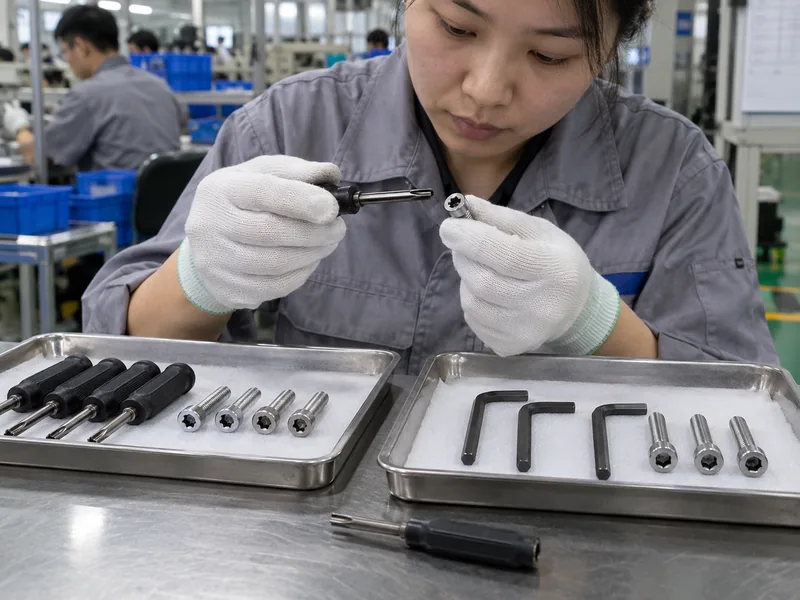
Chinese technician checking Torx and Allen driver engagement in matching sample fasteners
AI-generated concept illustration; not an actual factory or test record.

Why does a near fit fail?

An Allen key contacts flats. A Torx driver relies on lobe and valley engagement. Their points of contact, corner clearance, and load path differ, so a key that seems to fit at the opening may rock under load.

Change the driver before applying more force.

  • Remove dirt, paint, rust, or sealant from the recess.
  • Confirm profile with a clean sample or drawing.
  • Seat the correct driver fully and squarely.
  • Stop if the tool rocks, bottoms out, or leaves marks.

Do not confuse Torx with triple-square or another multi-lobe profile. Use the triple-square socket definition as a separate profile reference. Action: add a profile photograph to each buyer approval file.

What should a rejection matrix record?

Observation Likely issue Buyer response
Driver will not enter Wrong profile or debris Clean and identify again
Driver enters loosely Wrong size or profile Stop and replace
Full seat with rocking Damaged recess or tool Quarantine both samples
Correct seat, poor access Wrong length or format Change body or drive
Center pin blocks entry Security Torx fastener Use matching hollow driver

Use rejection evidence to improve packaging and counter staff training.

3. How should buyers compare metric and inch Allen sizes?

Metric and inch Allen keys are different size families; a near numerical match does not create a reliable fit. A buyer should list both systems clearly when customers service mixed equipment.
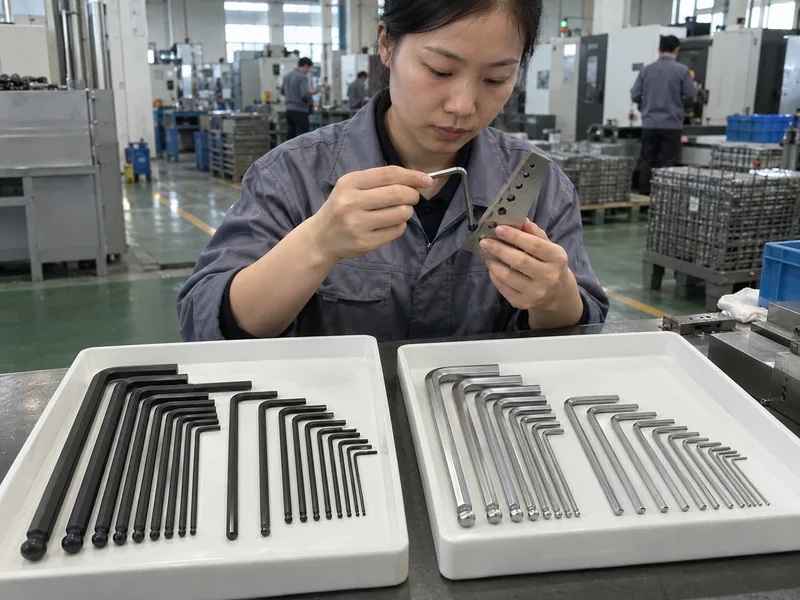
Separate metric and inch Allen key trays arranged for tool range inspection
AI-generated concept illustration; not an actual factory or test record.

Which Allen size details matter?

Specify the hex across flats, system, tolerance, end style, and tool format. A straight L-key may have a ball end on one side, while a bit or socket uses a different holder. Ball ends can assist angled access but should not be treated as the default for high resistance.

“Hex key” alone does not tell a buyer whether the set is metric, inch, ball-end, or powered.

  • Metric sizes in millimeters
  • Inch sizes in fractional or decimal notation
  • Short and long arm dimensions
  • Straight or ball-end geometry
  • Key, bit, socket, or T-handle format

For broader range planning, review KOLARWIN hand tools. Action: keep metric and inch sets in separate trays and package legends.

How should an Allen assortment be specified?

Specification Example field Risk if omitted
Size system Metric or inch Near-size substitution
Across flats Controlled nominal value Loose or blocked fit
End style Straight, ball, or chamfered Wrong access expectation
Arm length Short or long Insufficient reach or excess interference
Format L-key, bit, socket, or driver Wrong customer tool interface

Do not convert one family into another by rounding. Action: require a sample from each size system before set approval.

4. How are Torx size codes specified?

Torx drivers use a T-series size code such as T10, T25, or T40; that code belongs to the Torx profile family and should not be treated as an Allen millimeter or inch dimension. Security versions keep the lobe size but add a center-hole requirement.
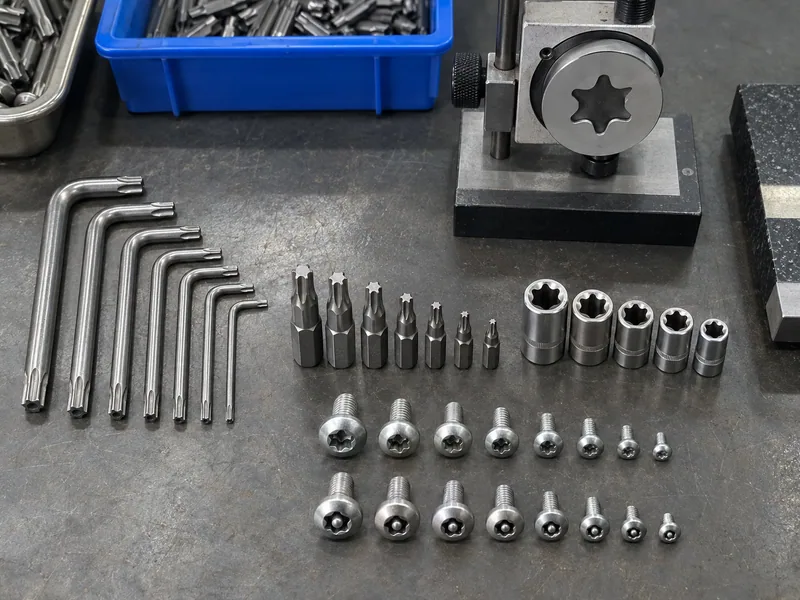
Unbranded Torx driver samples and a profile gauge arranged on a factory inspection bench
AI-generated concept illustration; not an actual factory or test record.

What should a Torx size line include?

This guide focuses on male T-series drivers for recessed fasteners. Female sockets for external Torx heads use E-series codes; keep them in a separate range. List the exact T-code, profile type, driver format, length, and security feature for the recessed-fastener tools covered here. If a socket or bit connects to a square drive, add drive size and retention details. A T-code without a profile drawing can still leave ambiguity around tamper-resistant form.

A large Torx set still fails if its size marks or profile are wrong.

  • T-code and controlled drawing
  • Standard or security Torx
  • Male tip for an internal Torx recess; external E-series sockets are separate
  • Shank, key, bit, or socket length
  • Drive square, hex shank, or handle connection

Use automotive repair tool ranges to map Torx formats to actual service channels. Action: verify every code against a master gauge or approved fastener sample.

What belongs in a Torx size matrix?

Field Standard Torx Security Torx Approval evidence
Size T-code Same T-code plus center-hole design Gauge or fastener
Tip Solid six-lobe Hollow six-lobe Pin clearance
Length Key, bit, or socket length Key, bit, or socket length Access fixture
Drive Hand handle or square drive Hand handle or square drive Connection test
Marking Legible code Legible code and security note Visual inspection

Treat size code, profile, and security as three separate approval fields.

5. Which hand-driver format should a distributor stock?

Stock L-keys, T-handles, screwdriver-style drivers, bits, and sockets according to access, torque, speed, and customer equipment. No single format covers every assembly station.
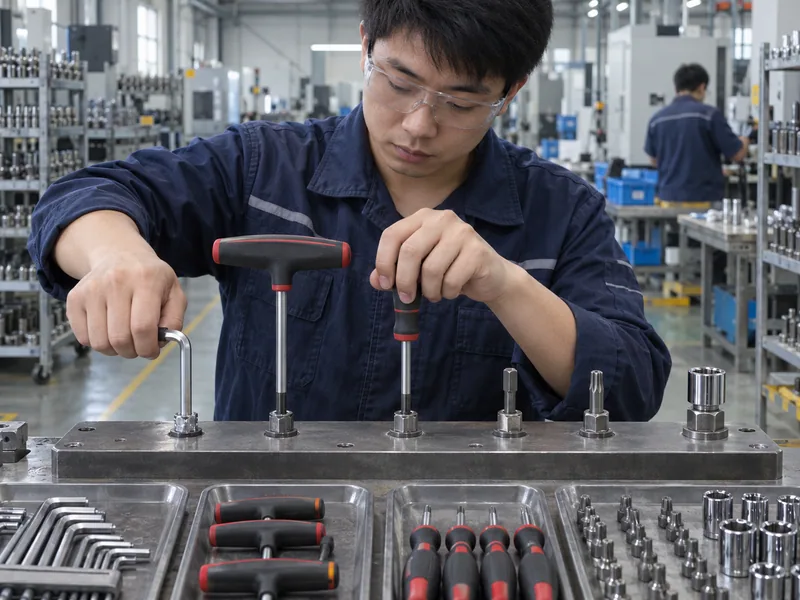
Chinese technician comparing Allen keys, Torx keys, bits, and sockets on a service fixture
AI-generated concept illustration; not an actual factory or test record.

When does each format make sense?

L-keys suit compact manual service. T-handles can improve repetitive turning. Screwdriver handles suit bench work. Bits and sockets fit ratchets, extensions, and selected powered tools.

A correct tip still fails commercially when its body cannot reach or control the fastener.

  • L-key for compact field kits
  • T-handle for repeated manual turning
  • Driver handle for bench assembly
  • Bit for interchangeable holders
  • Socket for ratchet or torque-tool connection

Use mechanics tool set planning to place profile-specific drivers inside a broader kit. Action: test grip, access, and full seating with the intended customer gloves.

What format fields belong in a range sheet?

Format Strength Access tradeoff Evidence
L-key Compact and low part count Short arm may limit reach Hand trial
T-handle Fast repeated turning Handle can block nearby parts Clearance trial
Driver handle Controlled bench grip Less flexible for deep access Station trial
Bit Works with holders and ratchets Needs compatible holder Interface check
Socket Supports drive tools Body and drive add bulk Tool and fixture check

Keep the same profile and size visible across each format.

6. Can Torx or Allen drivers be impact-rated?

Only a driver specifically designed and marked for impact use should enter an impact-tool range. A standard L-key or chrome hand bit should not be presented as impact-rated because its shape alone does not prove material, heat treatment, retention, or safety suitability.
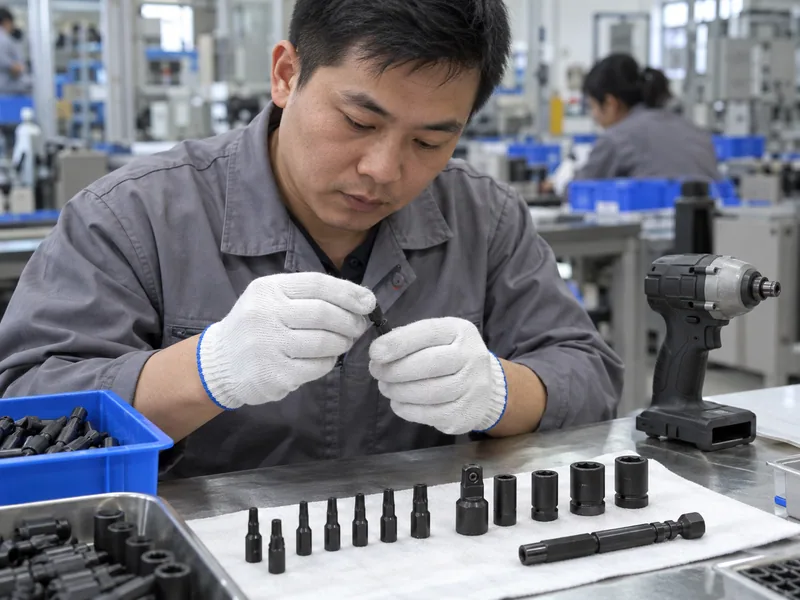
Impact-rated Torx and Allen bits and sockets inspected at a Chinese factory QC station
AI-generated concept illustration; not an actual factory or test record.

What should an impact version show?

Confirm impact-rated construction, drive interface, retention method, dimensional drawing, and supplier test evidence. Impact sockets and bits use different holder systems.

The same recess profile can require a different tool construction under powered loading.

  • Mark hand and impact use separately.
  • Confirm holder or anvil compatibility.
  • Check retention pin, ring, or bit-lock requirements.
  • Test the exact size under the intended controlled setup.

See impact socket options for adjacent powered-tool range planning. Action: block any “impact-ready” claim until the quoted construction and test evidence match.

What should a powered-tool sample record contain?

Check Hand driver Impact driver or socket Record
Connection Handle, bit holder, or ratchet Anvil or impact holder Interface photo
Profile Hex or Torx match Hex or Torx match Gauge result
Retention Hand seating Ring, pin, or lock Retention test
Surface Chrome or hand finish Impact-compatible finish Visual standard
Use claim Manual only Specific powered use Approved wording

Do not transfer a hand-tool claim to a powered accessory.

7. How should a buyer specify tamper-resistant Torx?

Tamper-resistant, security, or pin-in Torx fasteners have a center pin that requires a hollow Torx driver with a matching hole. A standard solid Torx tip cannot seat fully when that pin occupies the recess center.
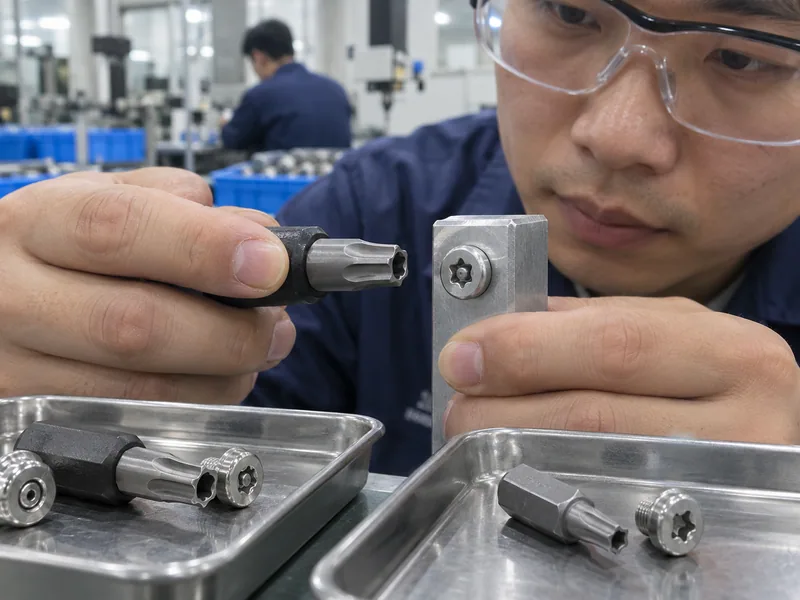
Hollow security Torx driver aligned with a pin-in fastener during a fit inspection
AI-generated concept illustration; not an actual factory or test record.

Which security details affect fit?

Confirm T-code, lobe profile, center-hole size, wall thickness, tip length, and access around the pin. Sample testing should cover insertion and removal.

Specify the pin geometry with the lobe code.

  • Standard or security Torx
  • T-code and lobe geometry
  • Center-hole dimensions
  • Hollow-tip wall and strength
  • Tool length and drive interface

Action: ask for a real security fastener sample and do not infer the hole size from a product name.

How should a security Torx sample be approved?

Sample field What to inspect Failure signal
Hole entry Pin clears without force Tip stops early
Lobe seat Full six-lobe engagement Rocking or partial contact
Wall No cracking or burrs Deformed hollow tip
Access Tool reaches squarely Side loading required
Removal Fastener exits without binding Tip remains stuck

Record standard and security samples as separate SKUs.

8. What should a buyer do when a recess is damaged?

Stop normal driving when a Torx or hex recess is damaged, identify the profile, remove debris, and choose a controlled repair method suited to the fastener and assembly. A buyer guide should not recommend hammering a Torx driver into a hex recess or treating that improvised fit as a standard extraction method.
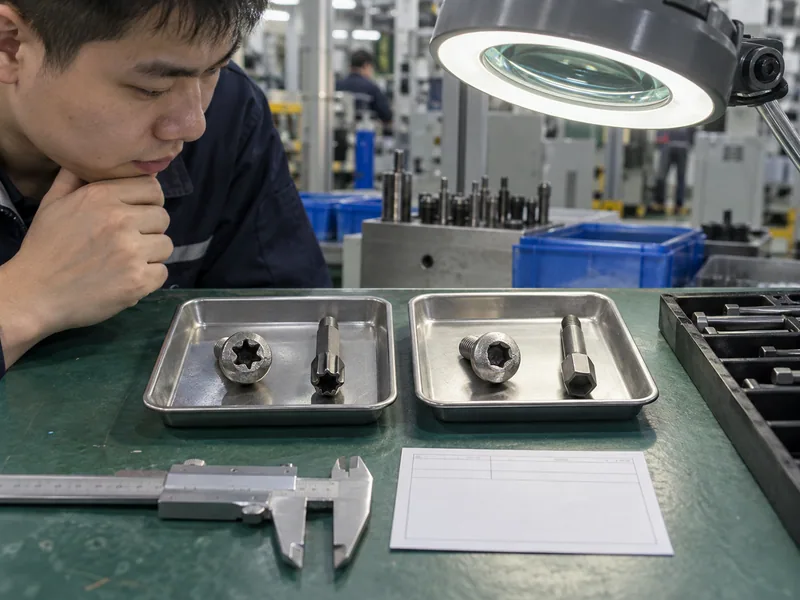
Damaged Torx and Allen sample fasteners isolated for controlled repair assessment
AI-generated concept illustration; not an actual factory or test record.

Which checks come before an extraction decision?

Inspect recess depth, edge condition, corrosion, access, fastener material, and surrounding components. Heat, penetrant, drilling, or extraction choices belong to a repair procedure.

Preserve the fastener and surrounding assembly before choosing a recovery tool.

  • Photograph the damaged recess.
  • Confirm profile and nominal size.
  • Clean without pushing debris deeper.
  • Assess access and collateral damage.
  • Escalate to a qualified repair method.

For broader sourcing context, see complete mechanic tool guidance. Action: write extraction limits into training and packaging notes.

What should not appear in product instructions?

Prohibited shortcut Why it is risky Safer instruction
Hammer Torx into hex Profile mismatch and damage Identify and match profile
Use a loose near-size key Rounds the recess Select the correct size
Use a ball end under high resistance Reduced contact and slip risk Use straight full-depth end
Apply impact to hand-rated key Construction may not suit load Use marked impact tool
Promise universal extraction Conditions vary widely Refer to approved repair method

Keep extraction advice conditional and model-independent.

9. What should a Torx or Allen RFQ include?

An RFQ should state profile, size family, exact code, format, access, hand or impact use, security feature, finish, marking, packaging, and sample tests. “Hex and star key set” leaves too much room for substitutions.
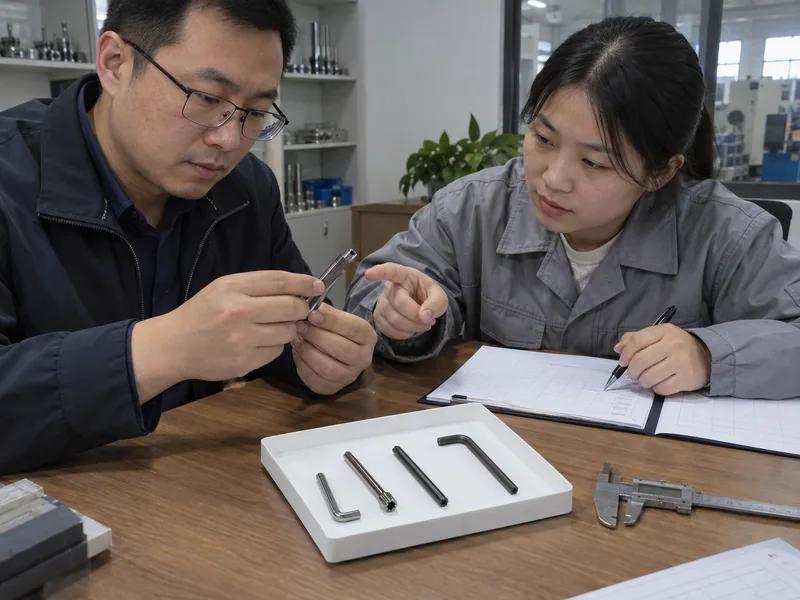
Chinese B2B buyers reviewing Torx and Allen samples with blank RFQ sheets
AI-generated concept illustration; not an actual factory or test record.

Which fields prevent supplier drift?

Attach drawings or controlled photographs for profile, tip, shank, and drive interfaces. State metric and inch Allen families separately. List standard and security Torx separately.

Suppliers can quote the same driver instead of guessing from a category name.

  • Profile and size matrix
  • Tool format and length
  • Hand or impact classification
  • Security pin geometry
  • Gauge, sample, and visual tests

Use tool sourcing guidance for distributors to align a profile RFQ with wider supplier review. Action: issue one controlled revision to every shortlisted supplier.

What belongs in a final RFQ table?

RFQ block Required detail Supplier response
Profile Hex flats or Torx lobes Drawing and sample
Size Metric, inch, or T-code Matrix and marking
Format Key, bit, socket, or handle Product specification
Use Hand or impact Rating evidence
Security Solid or hollow center Pin-fit sample
Quality Gauges, cycles, appearance Inspection record

Reject a quote that changes profile, size system, or use class without written approval.

10. Which Torx or Allen range should a B2B buyer source?

Source both profiles when customer equipment requires both, but keep them in separate ranges. Choose Allen sets from service evidence, Torx by controlled T-code, and impact or security versions only after sample approval.
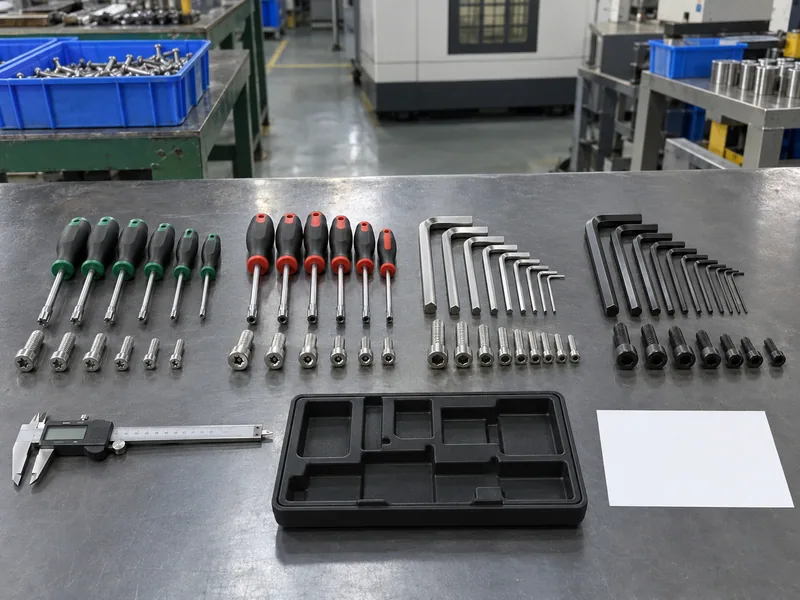
Buyer approval layout with separate Torx, security Torx, metric Allen, and inch Allen samples
AI-generated concept illustration; not an actual factory or test record.

What is the final selection gate?

Use this gate before listing, private-label packaging, or ordering:

  • Confirm profile from fastener drawings or clean samples.
  • Separate metric and inch Allen sizes.
  • Separate standard and security Torx.
  • Match hand or impact format to the stated use.
  • Record access, markings, gauges, and sample results.

Sell a driver range that a buyer can identify, fit, inspect, and reorder without improvisation.

KOLARWIN can review a profile matrix, sample set, and RFQ through contact with KOLARWIN Tools. Buyers can review the wider tool range before selecting a supplier. A controlled profile is the starting point for a dependable tool program.

Are Torx and Allen keys the same tool?

No. Allen uses six straight flats, while Torx uses six rounded lobes. Select a driver that matches the fastener profile exactly.

Can I use a metric Allen key on an inch hex fastener?

Use the specified size family whenever possible. A near-size key can feel close yet damage the recess under load, so approve substitutions only through a controlled fit test.

Does a security Torx driver fit a standard Torx fastener?

Usually, a hollow security driver can engage a standard Torx profile if its lobe size matches. Confirm tip geometry and clearance for each model before claiming interchangeability.

Can I use an Allen key in an impact driver?

Only when a bit or socket is specifically designed and marked for that powered use. A standard L-key or hand-rated bit should stay in manual service.

What should I do with a stripped Torx or hex recess?

Stop using normal drivers, inspect the damage and access, then follow a qualified extraction procedure. Do not hammer one profile into another as a general repair method.

Looking for a reliable mechanic tools manufacturer in China?

If you are sourcing hand tools, socket tools, automotive repair tools, mechanic tool sets or OEM private label tools, contact KOLARWIN Tools for factory-direct quotation, customization support and product consultation.


A Torx driver and an Allen key can look similar in a tool drawer, yet their fastener openings are different. Torx uses a six-lobe star profile. Allen, also called hex, uses six straight flats. For distributors, confusing those profiles creates stripped recesses, returns, and unsafe field improvisation.

Torx vs Allen selection starts with the fastener profile, then moves through size system, access, drive format, hand or impact rating, tamper-resistant design, and sample verification. Match the driver to the recess exactly. Metric and inch Allen sizes require separate control, while Torx size codes follow their own series. Do not treat a near-size key as an acceptable substitute.

1. What is the difference between Torx and Allen profiles?

Torx has six rounded lobes around a star-shaped recess, while Allen has six straight flats forming a hexagonal recess.

Unbranded Torx and Allen drivers shown as separate six-lobe and six-flat profiles
AI-generated concept illustration; not an actual factory or test record.

How should a buyer identify each profile?

Inspect the fastener from above after removing dirt and coating debris. A hex recess shows six flat walls and six corners. A Torx recess shows six repeated lobes and valleys. Profile recognition comes before size selection.

Do not reach for a size chart until profile and drive format agree.

Review socket tool options when building a driver range that includes keys, bits, and sockets. Action: photograph the fastener recess beside a proposed driver before approving a replacement SKU.

Which profile fields belong in a product matrix?

Field Allen entry Torx entry Buyer check
Recess form Six straight flats Six rounded lobes Visual and gauge match
Driver code Metric or inch size T-series code Marking and drawing
Security feature Usually none Center-pin version may apply Pin and hole clearance
Tool format L-key, bit, socket, or driver Key, bit, socket, or driver Customer interface
Use class Hand or specified powered tool Hand or specified powered tool Rating evidence

Keep profile and size as separate controlled fields. Action: reject product copy that calls every six-sided recess “Torx.”

2. Are Torx and Allen keys interchangeable?

Torx and Allen keys are not interchangeable because their contact geometry does not match. A loose tool can damage the recess.

Chinese technician checking Torx and Allen driver engagement in matching sample fasteners
AI-generated concept illustration; not an actual factory or test record.

Why does a near fit fail?

An Allen key contacts flats. A Torx driver relies on lobe and valley engagement. Their points of contact, corner clearance, and load path differ, so a key that seems to fit at the opening may rock under load.

Change the driver before applying more force.

Do not confuse Torx with triple-square or another multi-lobe profile. Use the triple-square socket definition as a separate profile reference. Action: add a profile photograph to each buyer approval file.

What should a rejection matrix record?

Observation Likely issue Buyer response
Driver will not enter Wrong profile or debris Clean and identify again
Driver enters loosely Wrong size or profile Stop and replace
Full seat with rocking Damaged recess or tool Quarantine both samples
Correct seat, poor access Wrong length or format Change body or drive
Center pin blocks entry Security Torx fastener Use matching hollow driver

Use rejection evidence to improve packaging and counter staff training.

3. How should buyers compare metric and inch Allen sizes?

Metric and inch Allen keys are different size families; a near numerical match does not create a reliable fit. A buyer should list both systems clearly when customers service mixed equipment.

Separate metric and inch Allen key trays arranged for tool range inspection
AI-generated concept illustration; not an actual factory or test record.

Which Allen size details matter?

Specify the hex across flats, system, tolerance, end style, and tool format. A straight L-key may have a ball end on one side, while a bit or socket uses a different holder. Ball ends can assist angled access but should not be treated as the default for high resistance.

“Hex key” alone does not tell a buyer whether the set is metric, inch, ball-end, or powered.

For broader range planning, review KOLARWIN hand tools. Action: keep metric and inch sets in separate trays and package legends.

How should an Allen assortment be specified?

Specification Example field Risk if omitted
Size system Metric or inch Near-size substitution
Across flats Controlled nominal value Loose or blocked fit
End style Straight, ball, or chamfered Wrong access expectation
Arm length Short or long Insufficient reach or excess interference
Format L-key, bit, socket, or driver Wrong customer tool interface

Do not convert one family into another by rounding. Action: require a sample from each size system before set approval.

4. How are Torx size codes specified?

Torx drivers use a T-series size code such as T10, T25, or T40; that code belongs to the Torx profile family and should not be treated as an Allen millimeter or inch dimension. Security versions keep the lobe size but add a center-hole requirement.

Unbranded Torx driver samples and a profile gauge arranged on a factory inspection bench
AI-generated concept illustration; not an actual factory or test record.

What should a Torx size line include?

This guide focuses on male T-series drivers for recessed fasteners. Female sockets for external Torx heads use E-series codes; keep them in a separate range. List the exact T-code, profile type, driver format, length, and security feature for the recessed-fastener tools covered here. If a socket or bit connects to a square drive, add drive size and retention details. A T-code without a profile drawing can still leave ambiguity around tamper-resistant form.

A large Torx set still fails if its size marks or profile are wrong.

Use automotive repair tool ranges to map Torx formats to actual service channels. Action: verify every code against a master gauge or approved fastener sample.

What belongs in a Torx size matrix?

Field Standard Torx Security Torx Approval evidence
Size T-code Same T-code plus center-hole design Gauge or fastener
Tip Solid six-lobe Hollow six-lobe Pin clearance
Length Key, bit, or socket length Key, bit, or socket length Access fixture
Drive Hand handle or square drive Hand handle or square drive Connection test
Marking Legible code Legible code and security note Visual inspection

Treat size code, profile, and security as three separate approval fields.

5. Which hand-driver format should a distributor stock?

Stock L-keys, T-handles, screwdriver-style drivers, bits, and sockets according to access, torque, speed, and customer equipment. No single format covers every assembly station.

Chinese technician comparing Allen keys, Torx keys, bits, and sockets on a service fixture
AI-generated concept illustration; not an actual factory or test record.

When does each format make sense?

L-keys suit compact manual service. T-handles can improve repetitive turning. Screwdriver handles suit bench work. Bits and sockets fit ratchets, extensions, and selected powered tools.

A correct tip still fails commercially when its body cannot reach or control the fastener.

Use mechanics tool set planning to place profile-specific drivers inside a broader kit. Action: test grip, access, and full seating with the intended customer gloves.

What format fields belong in a range sheet?

Format Strength Access tradeoff Evidence
L-key Compact and low part count Short arm may limit reach Hand trial
T-handle Fast repeated turning Handle can block nearby parts Clearance trial
Driver handle Controlled bench grip Less flexible for deep access Station trial
Bit Works with holders and ratchets Needs compatible holder Interface check
Socket Supports drive tools Body and drive add bulk Tool and fixture check

Keep the same profile and size visible across each format.

6. Can Torx or Allen drivers be impact-rated?

Only a driver specifically designed and marked for impact use should enter an impact-tool range. A standard L-key or chrome hand bit should not be presented as impact-rated because its shape alone does not prove material, heat treatment, retention, or safety suitability.

Impact-rated Torx and Allen bits and sockets inspected at a Chinese factory QC station
AI-generated concept illustration; not an actual factory or test record.

What should an impact version show?

Confirm impact-rated construction, drive interface, retention method, dimensional drawing, and supplier test evidence. Impact sockets and bits use different holder systems.

The same recess profile can require a different tool construction under powered loading.

See impact socket options for adjacent powered-tool range planning. Action: block any “impact-ready” claim until the quoted construction and test evidence match.

What should a powered-tool sample record contain?

Check Hand driver Impact driver or socket Record
Connection Handle, bit holder, or ratchet Anvil or impact holder Interface photo
Profile Hex or Torx match Hex or Torx match Gauge result
Retention Hand seating Ring, pin, or lock Retention test
Surface Chrome or hand finish Impact-compatible finish Visual standard
Use claim Manual only Specific powered use Approved wording

Do not transfer a hand-tool claim to a powered accessory.

7. How should a buyer specify tamper-resistant Torx?

Tamper-resistant, security, or pin-in Torx fasteners have a center pin that requires a hollow Torx driver with a matching hole. A standard solid Torx tip cannot seat fully when that pin occupies the recess center.

Hollow security Torx driver aligned with a pin-in fastener during a fit inspection
AI-generated concept illustration; not an actual factory or test record.

Which security details affect fit?

Confirm T-code, lobe profile, center-hole size, wall thickness, tip length, and access around the pin. Sample testing should cover insertion and removal.

Specify the pin geometry with the lobe code.

Action: ask for a real security fastener sample and do not infer the hole size from a product name.

How should a security Torx sample be approved?

Sample field What to inspect Failure signal
Hole entry Pin clears without force Tip stops early
Lobe seat Full six-lobe engagement Rocking or partial contact
Wall No cracking or burrs Deformed hollow tip
Access Tool reaches squarely Side loading required
Removal Fastener exits without binding Tip remains stuck

Record standard and security samples as separate SKUs.

8. What should a buyer do when a recess is damaged?

Stop normal driving when a Torx or hex recess is damaged, identify the profile, remove debris, and choose a controlled repair method suited to the fastener and assembly. A buyer guide should not recommend hammering a Torx driver into a hex recess or treating that improvised fit as a standard extraction method.

Damaged Torx and Allen sample fasteners isolated for controlled repair assessment
AI-generated concept illustration; not an actual factory or test record.

Which checks come before an extraction decision?

Inspect recess depth, edge condition, corrosion, access, fastener material, and surrounding components. Heat, penetrant, drilling, or extraction choices belong to a repair procedure.

Preserve the fastener and surrounding assembly before choosing a recovery tool.

For broader sourcing context, see complete mechanic tool guidance. Action: write extraction limits into training and packaging notes.

What should not appear in product instructions?

Prohibited shortcut Why it is risky Safer instruction
Hammer Torx into hex Profile mismatch and damage Identify and match profile
Use a loose near-size key Rounds the recess Select the correct size
Use a ball end under high resistance Reduced contact and slip risk Use straight full-depth end
Apply impact to hand-rated key Construction may not suit load Use marked impact tool
Promise universal extraction Conditions vary widely Refer to approved repair method

Keep extraction advice conditional and model-independent.

9. What should a Torx or Allen RFQ include?

An RFQ should state profile, size family, exact code, format, access, hand or impact use, security feature, finish, marking, packaging, and sample tests. “Hex and star key set” leaves too much room for substitutions.

Chinese B2B buyers reviewing Torx and Allen samples with blank RFQ sheets
AI-generated concept illustration; not an actual factory or test record.

Which fields prevent supplier drift?

Attach drawings or controlled photographs for profile, tip, shank, and drive interfaces. State metric and inch Allen families separately. List standard and security Torx separately.

Suppliers can quote the same driver instead of guessing from a category name.

Use tool sourcing guidance for distributors to align a profile RFQ with wider supplier review. Action: issue one controlled revision to every shortlisted supplier.

What belongs in a final RFQ table?

RFQ block Required detail Supplier response
Profile Hex flats or Torx lobes Drawing and sample
Size Metric, inch, or T-code Matrix and marking
Format Key, bit, socket, or handle Product specification
Use Hand or impact Rating evidence
Security Solid or hollow center Pin-fit sample
Quality Gauges, cycles, appearance Inspection record

Reject a quote that changes profile, size system, or use class without written approval.

10. Which Torx or Allen range should a B2B buyer source?

Source both profiles when customer equipment requires both, but keep them in separate ranges. Choose Allen sets from service evidence, Torx by controlled T-code, and impact or security versions only after sample approval.

Buyer approval layout with separate Torx, security Torx, metric Allen, and inch Allen samples
AI-generated concept illustration; not an actual factory or test record.

What is the final selection gate?

Use this gate before listing, private-label packaging, or ordering:

Sell a driver range that a buyer can identify, fit, inspect, and reorder without improvisation.

KOLARWIN can review a profile matrix, sample set, and RFQ through contact with KOLARWIN Tools. Buyers can review the wider tool range before selecting a supplier. A controlled profile is the starting point for a dependable tool program.

Are Torx and Allen keys the same tool?

No. Allen uses six straight flats, while Torx uses six rounded lobes. Select a driver that matches the fastener profile exactly.

Can I use a metric Allen key on an inch hex fastener?

Use the specified size family whenever possible. A near-size key can feel close yet damage the recess under load, so approve substitutions only through a controlled fit test.

Does a security Torx driver fit a standard Torx fastener?

Usually, a hollow security driver can engage a standard Torx profile if its lobe size matches. Confirm tip geometry and clearance for each model before claiming interchangeability.

Can I use an Allen key in an impact driver?

Only when a bit or socket is specifically designed and marked for that powered use. A standard L-key or hand-rated bit should stay in manual service.

What should I do with a stripped Torx or hex recess?

Stop using normal drivers, inspect the damage and access, then follow a qualified extraction procedure. Do not hammer one profile into another as a general repair method.

Why Partner with Kolarwin Tools?

Factory-Direct Pricing Skip the middleman — access competitive wholesale prices and protect your margins
Private Label & OEM Ready Your brand, our expertise — full customization from logo to packaging
Fast Global Shipping Reliable delivery to 60+ countries with full export documentation support
Low MOQ, High Flexibility Start small, scale fast — flexible order quantities to fit your business
Dedicated B2B Support One-on-one account management from quote to delivery, every time

Get Your Free Quote in 24 Hours

Tell us your sourcing needs — we'll respond with a tailored quote, product specs, and the best pricing for your market. No commitment required.

Chat on WhatsApp Email Us Directly
