
Need OEM supplier support for this product type?
Contact KOLARWIN Tools for OEM mechanic tools, private label packaging, wholesale quotation and product range support. This gives overseas buyers a clear path from article reading to supplier discussion.
Repair shops often receive a socket marked “triple square” and discover that it does not fit a nearby star, spline, or twelve-point fastener. That mismatch wastes time and can damage a precision head. A clear explanation of triple-square geometry, drive class, sizes, and inspection points gives distributors and private-label buyers a safer product brief.
Table of Contents
- 1. What Is a Triple Square Socket?
- 2. How Does Triple-Square Geometry Work?
- 3. Which Fasteners Use a Triple Square Socket?
- 4. How Is Triple Square Different from Other Profiles?
- 5. What Drive Sizes and Metric Sizes Should Buyers Stock?
- 6. When Should a Triple Square Socket Be Hand-Drive or Impact-Rated?
- 7. What Materials and Heat Treatment Matter?
- 8. How Should Private-Label Buyers Inspect a Triple Square Socket?
- 9. How Should Distributors Build a Triple Square Socket Set?
- 10. What Should a Triple Square Socket RFQ Include?
1. What Is a Triple Square Socket?

A triple square socket normally carries a projecting male driver formed from three overlapping four-sided patterns. Buyers may also see “XZN” in catalogues, although naming should be confirmed against a drawing or sample. Its twelve square-sided points enter a matching internal fastener recess; the opposite end connects to a ratchet, bar, or other approved drive tool.
The short answer: a triple square socket belongs with a matching triple-square fastener. It should not be sold as a generic twelve-point tool. Profile identity, nominal size, drive size, and intended use belong together in every SKU record.
For a distributor, this distinction prevents common errors:
- listing a triple-square tool under a generic spline name;
- substituting a conventional twelve-point socket because both profiles appear multi-lobed;
- quoting size without stating metric designation or drive interface.
KOLARWIN’s socket tools category places specialty profiles beside general socket accessories. Use a drawing or fit sample for approval.
Practical action: add “triple square/XZN profile” as a controlled field beside size, drive, depth, finish, and tool class.
Buyer identity table
| Specification field | What it identifies | Why buyers need it |
|---|---|---|
| Output profile | Projecting triple-square engagement form | Prevents profile substitution |
| Nominal size | Matching fastener dimension | Supports fit approval |
| Drive size | Ratchet, bar, or machine interface | Separates tool connection from recess |
| Tool class | Hand-drive or impact-rated | Controls permitted use |
2. How Does Triple-Square Geometry Work?

Triple-square geometry places repeated square-based points on a projecting driver. That driver enters a matching internal fastener recess, then contact occurs across multiple driving faces. It must seat fully and squarely before load reaches those faces. A partial fit can concentrate force at point tips, especially after corrosion or wear.
Look past the lobe count: profiles may differ in lobe shape, depth, angle, and contact location. Visual similarity cannot approve interchangeability. Use a gauge or reference fastener.
Check these geometry fields:
- lobe count and profile name;
- output size and tolerance;
- bit projection and usable engagement depth;
- drive-end shape and retention feature;
- point, root, and flank condition plus burr control;
- seating depth on the reference fastener.
Triple square concerns the fastener interface. Ratchet teeth and extensions remain separate RFQ fields.
Practical action: require a profile drawing or approved reference fastener whenever a supplier uses “spline,” “12-point,” or “universal” as a substitute description.
Geometry control table
| Geometry item | Inspection question | Failure risk if vague |
|---|---|---|
| Lobe form | Does the tool match the approved profile? | Slippage or shallow contact |
| Output size | Does the male driver seat without rocking? | Fastener damage |
| Bit projection | Does engagement reach the required depth? | Tip loading |
| Points, roots, and flanks | Is the formed profile clean and undamaged? | False fit or difficult removal |
3. Which Fasteners Use a Triple Square Socket?
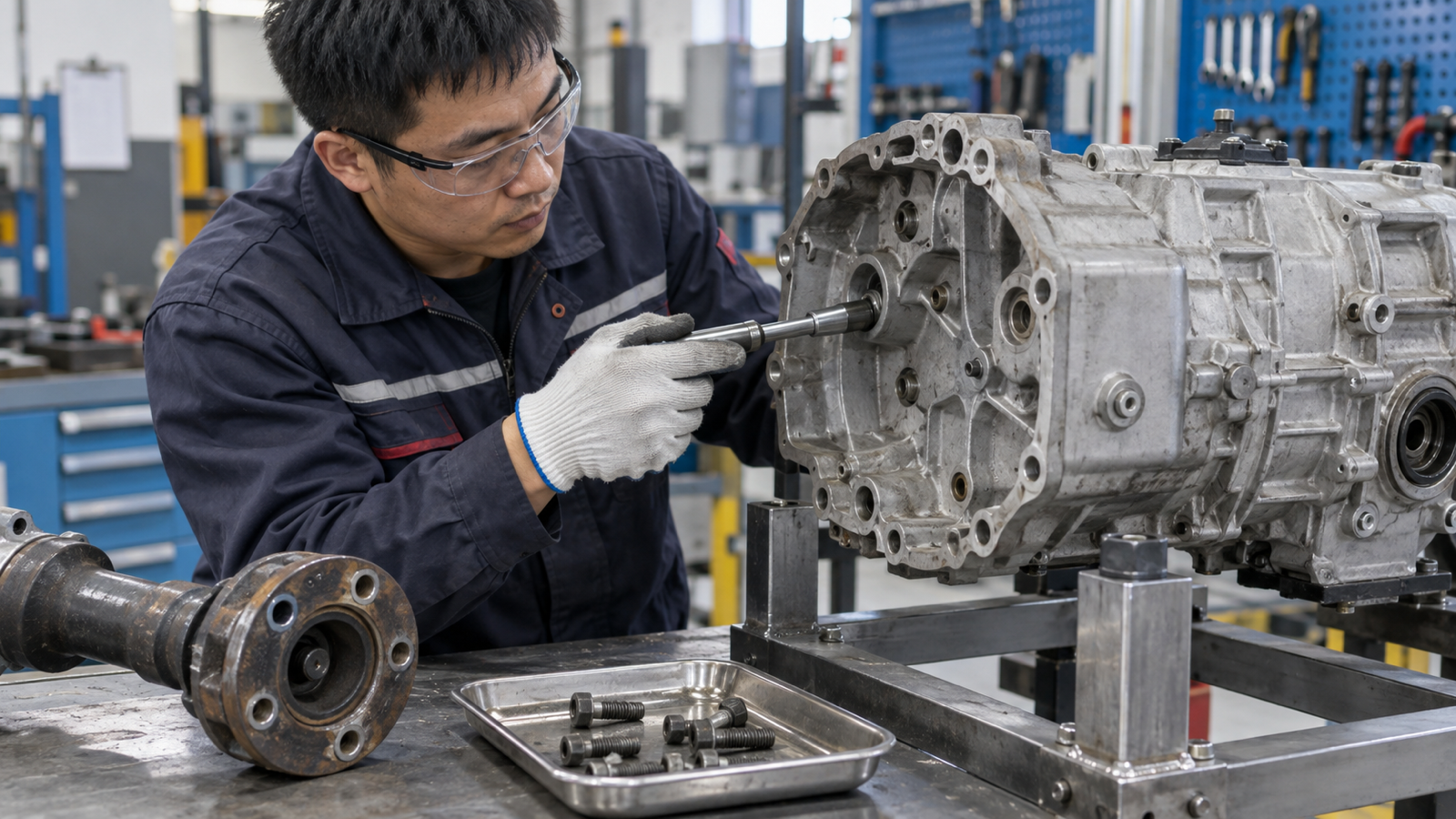
Triple-square fasteners appear in selected automotive and machinery assemblies. Actual use depends on assembly design, service procedure, and fastener size. Treat application information as a verification aid, not universal coverage.
Fit comes before force: a triple-square socket works only when its output profile, size, and seating depth match the fastener recess. A tool that enters partway may still turn by hand, then slip under higher load.
Common application groups can include:
- recessed drivetrain or transmission fasteners;
- selected driveline, gearbox, or flange service points documented for XZN;
- vehicle or machinery assemblies whose service information names this profile;
- recessed fasteners where bit projection and body clearance match the access path.
The automotive repair tools range places specialty sockets beside broader service categories. Request an application matrix.
Practical action: pair each proposed size with a reference fastener, application note, and exclusion note before building a catalogue.
Application-fit table
| Application situation | What must match | Buyer check |
|---|---|---|
| Recessed drivetrain fastener | Profile, size, depth | Reference assembly or drawing |
| Documented driveline service point | Profile and access clearance | Service-tool application list |
| Machine fixture | Fastener interface and drive | Equipment documentation |
| Unknown multi-lobed head | Exact profile identity | Do not approve by appearance |
4. How Is Triple Square Different from Other Profiles?
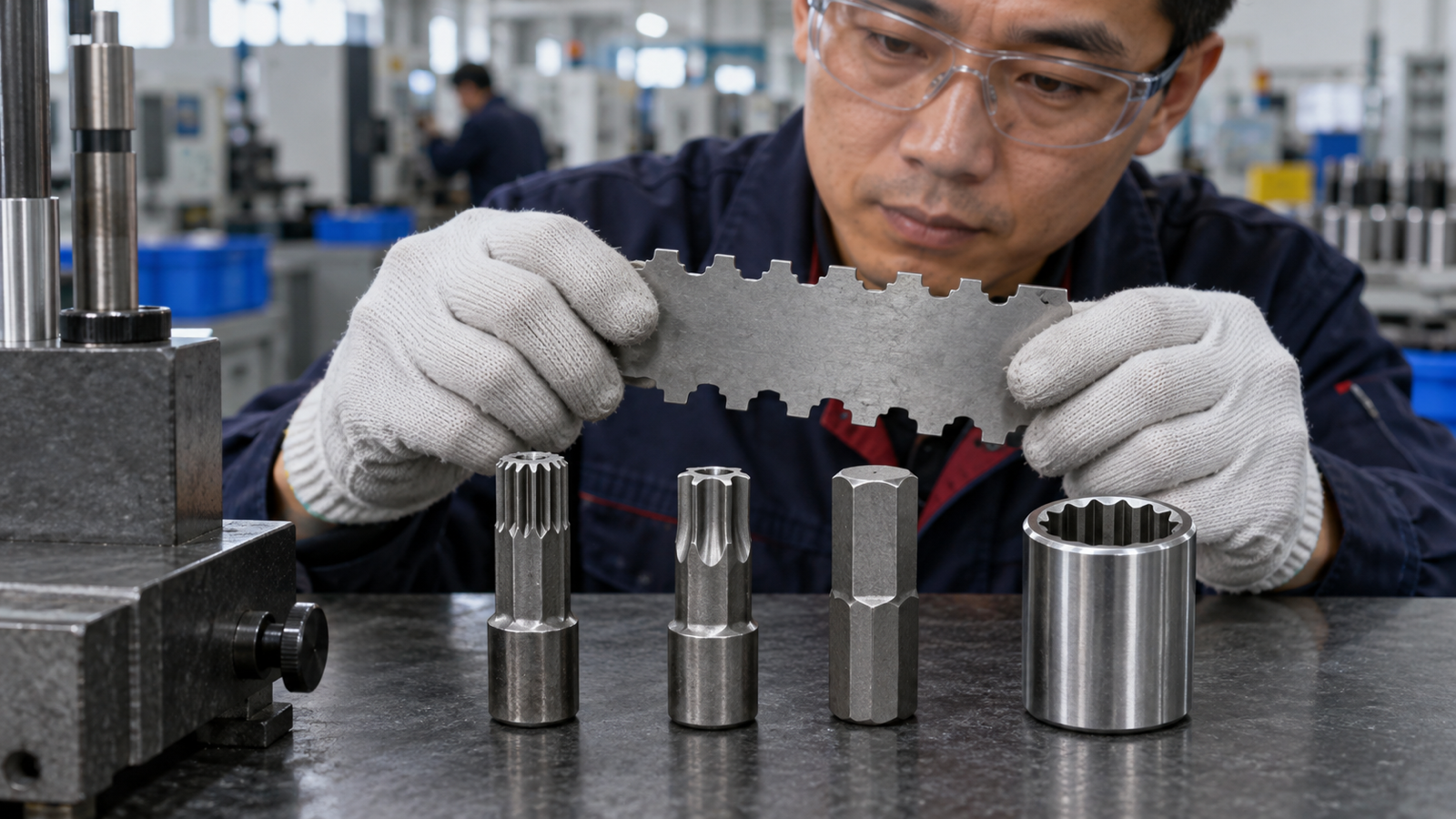
Triple square, internal spline, star-shaped profiles, hex, and ordinary twelve-point sockets are different interfaces. Listing names can overlap, so identify a triple-square socket by geometry and matching fastener.
Do not mix these names: a tool may enter another recess while touching only a few surfaces. That temporary fit can create a damaged fastener, a stuck socket, or a failed return claim.
Separate these concepts in product data:
- triple-square profile versus generic spline profile;
- projecting driver profile versus the fastener’s internal recess;
- nominal size versus across-flats measurement;
- drive square versus fastener recess;
- hand-use classification versus impact classification.
The existing 6-point versus 12-point socket guide explains conventional hex and bi-hex interfaces, which helps buyers keep those sockets separate from XZN drivers.
Practical action: prohibit cross-profile substitutions unless engineering review approves a specific reference fastener and operating load.
Profile comparison table
| Profile label | Core identity | Can it replace triple square by default? |
|---|---|---|
| Triple square/XZN | Projecting 12-point driver with square-sided flanks | No substitution assumed |
| Generic internal spline | Spline-based internal engagement | No, verify geometry |
| Torx/hexalobular | Six rounded lobes | No, different geometry |
| Six-point hex | Six flat driving faces | No, different interface |
| Twelve-point | Double-hex opening | No, visual similarity is insufficient |
5. What Drive Sizes and Metric Sizes Should Buyers Stock?
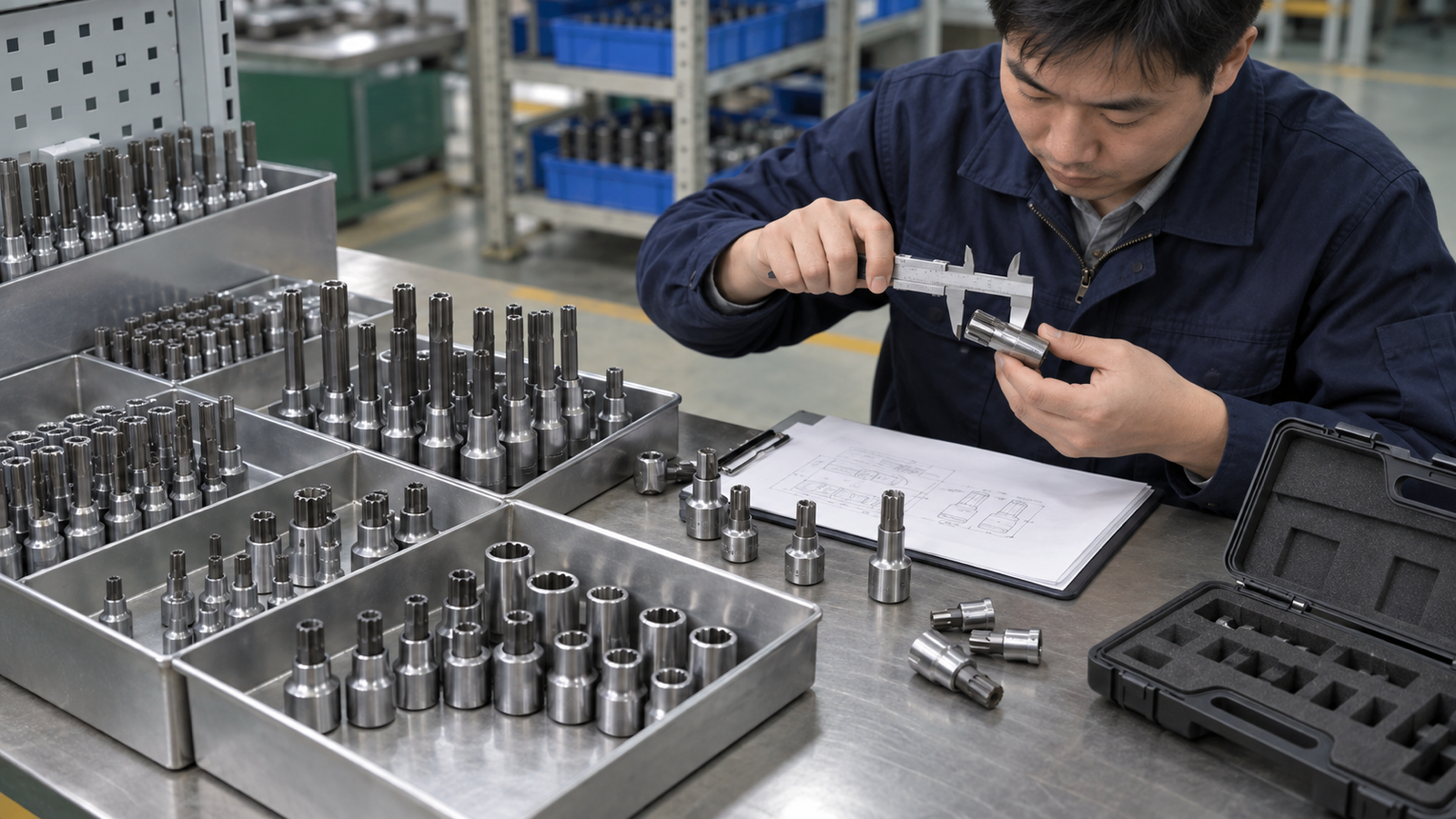
Triple-square sockets commonly use metric-style output labels, yet ranges vary by product family and application. Labels such as M4, M8, M10, M12, M14, or M16 may appear in catalogues. Here, M12 identifies the XZN output profile rather than a bolt-thread diameter. Confirm each line against a drawing and reference fastener.
Plan the range: a profitable assortment follows known service demand, not a case filled with rarely ordered sizes. Drive size also matters because a small recess may pair with a larger drive-end body for strength or access.
A range plan should record:
- nominal profile size and unit system;
- drive square size;
- bit length, projection, and usable engagement;
- hand or impact class;
- replacement policy for individual pieces.
The socket set range shows how drive families, cases, and replacement pieces can be organized. Keep metric output size, square-drive size, and profile separate. “Metric socket” alone does not identify this product.
Practical action: start with application-backed sizes, then add adjacent sizes only after demand or service data supports them.
Range-planning table
| Range field | Example entry | Why it affects stocking |
|---|---|---|
| Profile size | M10 triple square | Matches fastener specification |
| Drive size | 3/8-inch or 1/2-inch square | Determines compatible handles |
| Bit format | Projection and usable engagement | Controls reach and body clearance |
| Pack format | Individual, rail, or case | Affects replacement and shelf planning |
6. When Should a Triple Square Socket Be Hand-Drive or Impact-Rated?

Tool class follows operating method. A hand-drive triple-square socket belongs with a manual ratchet, breaker bar, or torque-controlled hand tool when documentation allows. An impact-rated socket needs design and validation for powered shock loads. Profile shape alone establishes neither class.
Usage sets the class: a dark finish, thick wall, or alloy label cannot approve powered impact work. The product record should state its intended drive method and any approved retention or accessory system.
Ask for:
- hand-drive or impact classification;
- compatible drive and retention method;
- material and heat-treatment description;
- warning language for prohibited tools;
- finished-product test method where specified.
The impact sockets page gives buyers a separate category for powered-use products. Keep hand and impact SKUs apart.
Practical action: require an explicit use classification on every sample, label, carton, and quotation line.
Use-class table
| Product class | Suitable operating context | Approval focus |
|---|---|---|
| Hand-drive | Manual ratchet or breaker-bar work | Fit, drive, and manual-use guidance |
| Torque-controlled hand use | Specified torque procedure | Interface and procedure compatibility |
| Impact-rated | Approved powered impact operation | Impact design, retention, and validation |
| Unclassified | Unknown use | Hold until supplier documents class |
7. What Materials and Heat Treatment Matter?

CR-MO or CR-V labels describe alloy families, not complete performance. Grade, heat treatment, wall geometry, surface condition, and inspection shape service behavior. Do not infer impact suitability or service life from one abbreviation.
Material alone cannot approve a tool: ask for a product-specific material description and process record. Keep claims tied to evidence supplied for that socket family, size, and use class.
Review these controls:
- exact grade or agreed material specification;
- heat-treatment route and hardness method;
- profile dimensions after forming and treatment;
- finish and corrosion-control requirement;
- change approval for material or process substitutions.
KOLARWIN’s hand-tools category helps buyers place specialty sockets within a broader private-label tool program. The XZN SKU still needs its own product specification.
Practical action: place grade, process, geometry, and test evidence in one approved product file rather than accepting a material-only quotation.
Material-control table
| Control | Evidence to request | What it does not prove alone |
|---|---|---|
| Material grade | Certificate or agreed verification | Finished impact performance |
| Heat treatment | Batch record and hardness method | Fit or geometry |
| Finished geometry | Drawing and dimensional report | Material chemistry |
| Surface finish | Agreed coating or corrosion check | Core strength |
8. How Should Private-Label Buyers Inspect a Triple Square Socket?
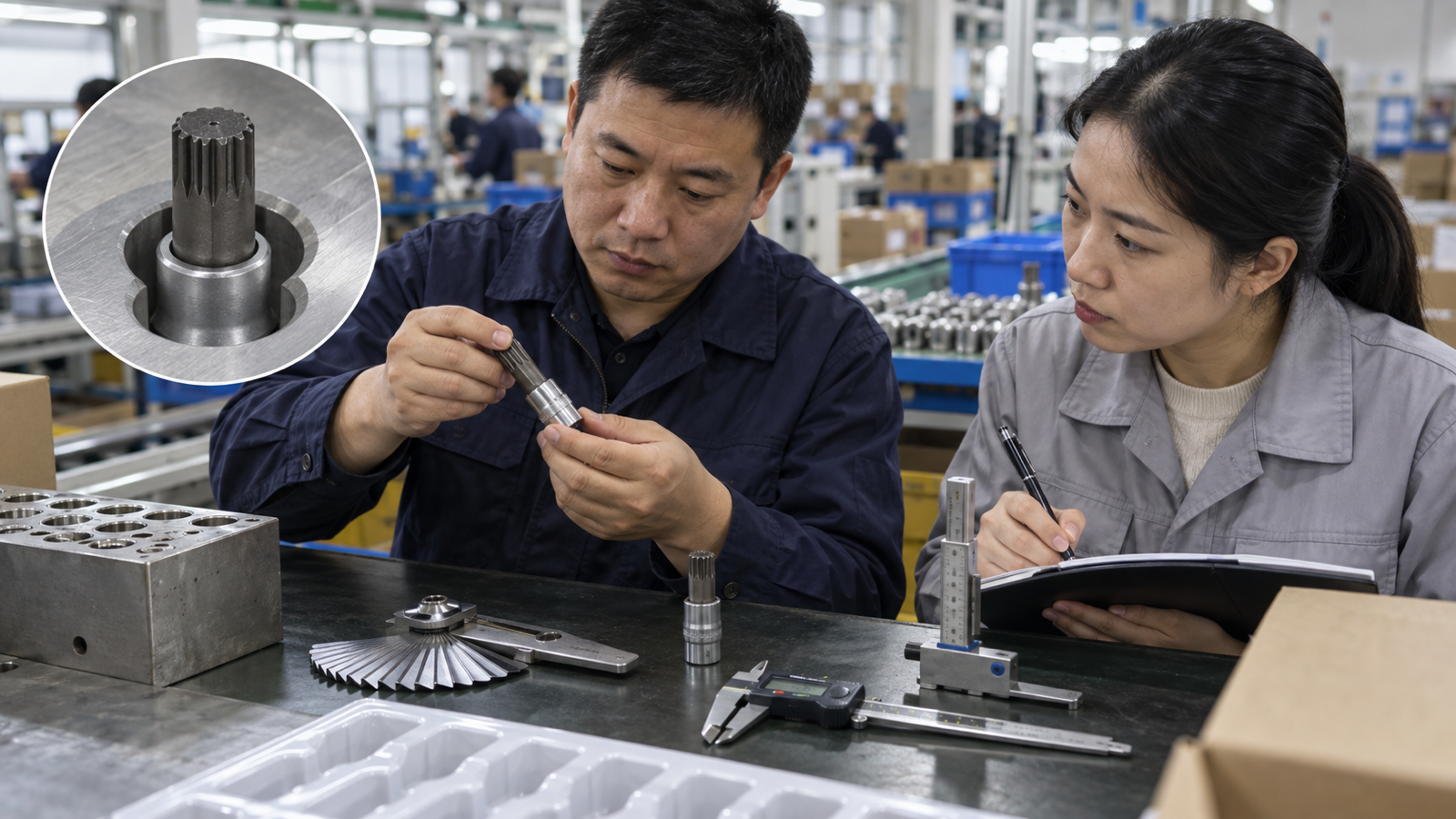
Sample approval should begin with identity, dimensions, and fit. Use a reference fastener or calibrated gauge. Check seating, rocking, drive connection, marking, and packaging. A polished sample can hide a tolerance problem.
Sample approval needs a pass/fail rule: “looks correct” is not an inspection method. Record what passes, what fails, and which revision controls production.
An inspection plan can include:
- verify profile name, size, drive, and part number;
- measure output profile, bit projection, overall length, and critical body features;
- test full engagement on approved fasteners;
- check burrs, cracks, distortion, and finish defects;
- compare production pieces with approved samples.
After piece-level approval, a mechanics tool set program can organize approved sockets into cases and replacement-piece schedules. Case appearance cannot replace profile inspection.
Practical action: retain one approved sample, one reference fastener, and one signed inspection sheet for each private-label SKU.
Sample-inspection table
| Check | Pass condition | Hold condition |
|---|---|---|
| Profile fit | Full, square engagement | Rocking or shallow seating |
| Dimensions | Within approved drawing | Out-of-tolerance feature |
| Surface | Clean, no damaging burrs | Crack, distortion, or sharp burr |
| Marking | Size and part ID readable | Missing or wrong identification |
9. How Should Distributors Build a Triple Square Socket Set?

A useful set balances application coverage, replacement simplicity, and clear product identity. Start with sizes supported by repair data, then choose individual sockets, rails, or a case. Separate hand and impact versions, depth options, and drive families.
Set architecture affects sell-through: a large case does not create useful coverage if its labels blur profile, size, or drive. Buyers should map each piece against a known service task.
Plan these assortment elements:
- core sizes with documented application demand;
- matching drive sizes and handle compatibility;
- shallow or extended pieces for access constraints;
- separate hand and impact packaging;
- replacement pieces and part-number logic.
The complete mechanic tools list can support a wider category plan. A triple-square set still needs exact profile naming.
Practical action: build a pilot set around real repair applications, then remove low-use pieces before committing to private-label volume.
Assortment table
| Set decision | Buyer question | Practical control |
|---|---|---|
| Size coverage | Which applications justify each piece? | Application matrix |
| Drive mix | Which handles do customers own? | Drive compatibility check |
| Packaging | Rail, case, or individual? | Replacement and shelf review |
| SKU separation | Which pieces are hand or impact? | Color, label, and bin separation |
10. What Should a Triple Square Socket RFQ Include?
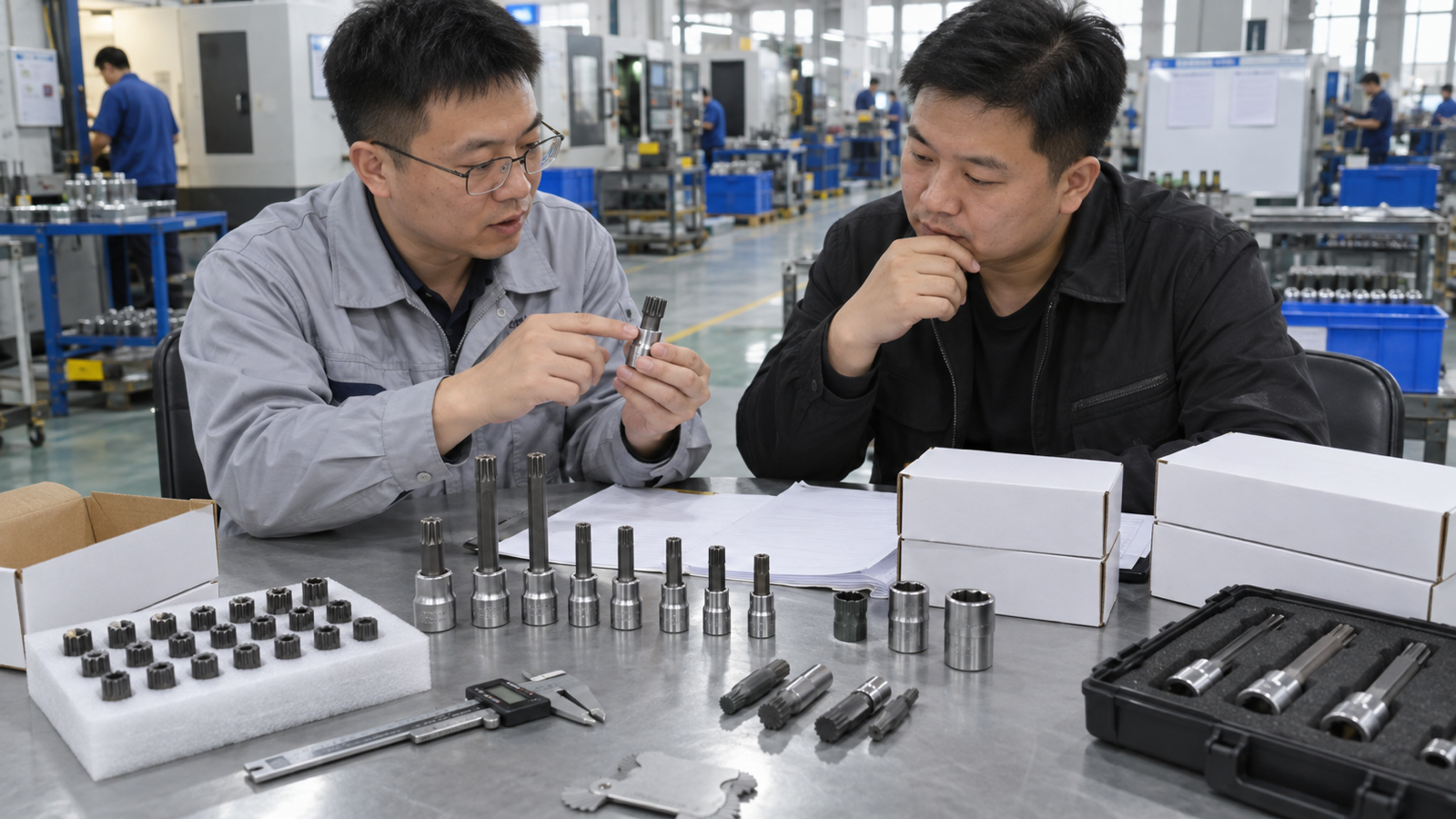
A useful RFQ turns “triple square socket” into a controlled definition. Name profile, size, drive square, depth, tool class, finish, markings, pack format, and reference fastener. Add drawings and sample rules before price comparison.
Put every assumption in the RFQ: one profile word and one size cannot define a consistent product. Clear fields help importers compare samples without relying on photographs.
Include:
- triple-square/XZN profile confirmation;
- size list with metric designation and tolerance;
- drive size, depth, length, and access limits;
- hand or impact classification;
- material and heat-treatment evidence;
- marking, packaging, and replacement requirements;
- reference fastener or application description;
- sample approval, inspection, and change-control rules.
Send these requirements through the KOLARWIN contact page. Request a drawing and sample before approval.
Practical action: issue the RFQ with a completed BOM and reference fastener, then approve samples against those same fields.
Q1: Is a triple square socket the same as a twelve-point socket? No. A triple-square socket normally uses a projecting male XZN driver for an internal recess, while a conventional twelve-point socket engages an external bi-hex fastener. Confirm geometry and fit rather than relying on similar point counts.
Q2: What does XZN mean on a socket listing? XZN commonly appears as a name for triple-square profiles. Ask for a drawing or sample because marketplace naming can be inconsistent.
Q3: Can a triple square socket be used with an impact wrench? Only when that socket carries an explicit impact classification and compatible drive and retention guidance.
Q4: Which sizes should a distributor stock first? Start with sizes supported by customer applications and service data. Avoid assuming one universal range fits every market.
Q5: What should a private-label buyer inspect? Check profile, size, drive, seating, dimensions, finish, markings, packaging, and supporting material or process records.
Looking for a reliable mechanic tools manufacturer in China?
If you are sourcing hand tools, socket tools, automotive repair tools, mechanic tool sets or OEM private label tools, contact KOLARWIN Tools for factory-direct quotation, customization support and product consultation.


