
Home/Blog/ Torx vs Triple Square: How to Identify the Right Drive

Torx vs Triple Square: How to Identify the Right Drive

Get OEM Tool Catalog + Quote Back to Tool Sourcing Blog
Six-lobe Torx and twelve-point triple-square profiles side by side
This KOLARWIN Tools article is written for overseas distributors, wholesalers, importers and private label tool brands sourcing mechanic tools, automotive repair tools, socket tools, hand tools and OEM tool sets from China. Use this guide to compare product options, check supplier quality points and move from reading to a faster B2B inquiry.

Need OEM supplier support for this product type?

Contact KOLARWIN Tools for OEM mechanic tools, private label packaging, wholesale quotation and product range support. This gives overseas buyers a clear path from article reading to supplier discussion.

A six-lobe star recess and a twelve-point multi-tooth recess can look similar on a busy workshop bench. The wrong bit may enter partway and damage a fastener when torque rises. Torx and triple square have different engagement geometry. Confirm profile, size, and full seating before applying force. This guide helps B2B buyers avoid substitutions and plan useful sets.

1. What is the difference between Torx and triple square?

Torx uses a six-lobe star profile, while triple square uses a twelve-point internal multi-tooth profile commonly identified as XZN. Their outlines can both look star-like, yet the contact geometry and size systems differ.
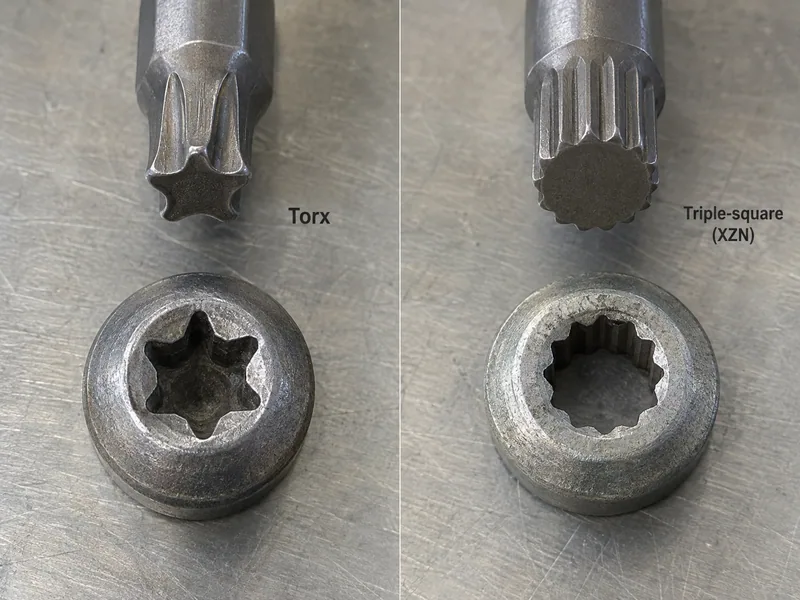
Six-lobe Torx and twelve-point triple-square profiles side by side
AI-generated technical illustration; schematic, not a dimensional drawing.

How can you describe each profile?

Torx has six rounded lobes arranged around a central axis. Triple square has twelve straight, right-angled points formed by overlapping three squares. The visual count matters because a similar outline does not mean compatible engagement.

Count points before you reach for a socket.

  • Six rounded lobes: Torx family
  • Twelve finer points: triple square or XZN family
  • Center pin: possible security variation, requiring a matching tool
  • Internal recess: use a socket or bit made for that exact profile

Buyers who need background on XZN can link to KOLARWIN’s triple-square socket definition before building a set.

Why does profile shape matter?

Profile shape determines where force enters the fastener. A near match may load corners, wobble, or slip.

A familiar-looking recess still needs positive seating.

What should a product buyer record?

Record profile, size, drive attachment, application, and security status. Keep Torx and XZN positions separate.

Profile Visual count Common naming Buyer check
Torx 6 lobes TX or Torx Confirm six-lobe tip and size
Triple square 12 points XZN or Vielzahn Confirm twelve-point internal profile

2. How do you identify a Torx recess correctly?

Identify a Torx recess by its six-lobe geometry, then confirm size and any center pin.

Technician identifying a six-lobe Torx recess
AI-generated concept illustration; not an actual factory or test record.

What should you look for?

Count six rounded lobes around the recess. Standard Torx has an open center; security Torx adds a center pin that blocks a standard hollow-free tip. Do not confuse Torx with a six-point hexagon or a twelve-point profile.

The profile face tells you more than a side label.

  • Count lobes under good light
  • Check for a center pin
  • Read the stamped size only after profile confirmation
  • Seat the bit by hand before using a handle

What mistakes cause damage?

Common errors include selecting by color, confusing six-point shapes, and using a wrong size because the tip enters shallowly.

A correct tip should sit squarely without rocking.

Reject damaged tools and clean debris from deep recesses. Use service information when a fastener remains unclear.

How should a distributor package Torx tools?

Separate standard and security Torx positions. Print profile and size beside each slot, keep the marking legible after coating, and include a clear indication of bit or socket drive size.

Torx check Why it matters Set-planning response
Six-lobe profile Separates Torx from XZN Label profile family
Center pin Changes tip requirement Add security-compatible pieces
Size marking Prevents shallow engagement Stamp or print durable size

3. How do you identify a triple-square or XZN recess?

Identify triple square by its twelve fine, right-angled points and three-square construction. XZN and triple square describe this profile family in many catalogs.
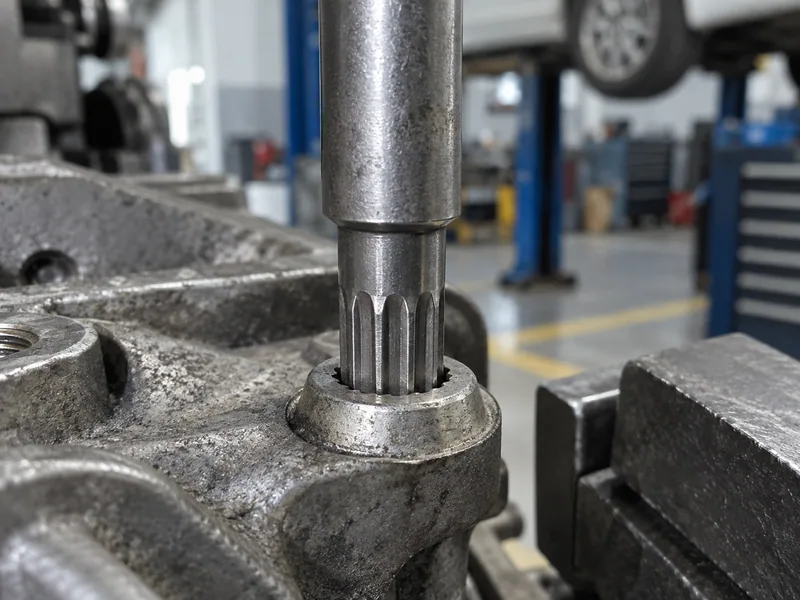
Triple-square XZN bit fully seated in a fastener
AI-generated concept illustration; not an actual factory or test record.

What does the top view show?

The recess presents twelve points rather than six rounded lobes. A clean face can reveal three overlapping squares rotated relative to one another. The fine teeth need full seating because partial engagement can damage both tool and fastener.

Twelve points indicate a different tool family from six-lobe Torx.

  • Clean the recess before counting
  • Look for twelve right-angled points
  • Confirm XZN or triple-square wording in documentation
  • Use the exact size listed for the fastener

KOLARWIN’s socket tools range gives buyers a place to compare compatible socket formats without mixing profile names.

Why can contamination cause trouble?

Fine teeth leave less room for dirt, coating, or corrosion. Debris may prevent full insertion while worn teeth reduce confidence.

Brush and inspect before applying torque.

Do not hammer an unmatched bit into place. Follow the approved repair procedure for a damaged recess.

What should a buyer request from a supplier?

Request exact profile terminology, size range, drive attachment, length options, and application notes. Ask suppliers to show the profile face in drawings or samples so XZN cannot be mistaken for a double-hex or another multi-point form.

XZN check Buyer question Practical reason
Point count Does the face show 12 points? Separates XZN from Torx
Naming Is it marked XZN or triple square? Aligns catalog language
Engagement Does the tool seat fully? Reduces slip and damage

4. Can Torx and triple-square tools be interchanged?

Torx and triple-square tools should not be interchanged because their flank geometry and point counts differ.

Separate Torx and triple-square tool trays preventing substitution
AI-generated concept illustration; not an actual factory or test record.

Why does a near fit fail?

A near fit can create rocking, uneven contact, or corner loading. Higher force can turn poor engagement into a stripped recess or sudden slip.

Similar outline does not mean substitute.

  • Stop if the bit rocks
  • Do not force a profile into a recess
  • Do not grind a tip to make it enter
  • Replace damaged fasteners under the approved procedure

When impact work is part of the program, review impact sockets separately because impact construction does not make profiles interchangeable.

Does size notation solve the problem?

Size notation helps only after the profile family is correct. Matching letters or numbers across catalogs can create a false equivalence.

Identify family, then verify dimension and drive.

Use the fastener drawing, service information, or an approved sample as authority. Mark cross-references “not interchangeable.”

What should workshop policy require?

Require profile identification, full seating, and a stop condition when fit is uncertain. Train users to return an unidentified fastener for review rather than selecting a nearby tool.

Situation Correct response Avoid
Six-lobe recess Use matching Torx tool XZN substitution
Twelve-point XZN recess Use matching triple-square tool Torx substitution
Damaged or dirty recess Clean, inspect, and follow procedure Extra force

5. Which applications commonly require each profile?

Both profiles appear across vehicle and equipment programs, yet the assembly and service documentation control the required drive.

Automotive service bay with separate Torx and XZN tool groups
AI-generated concept illustration; not an actual factory or test record.

Where might Torx appear?

Torx appears across vehicle and equipment fasteners, including standard and security variants. Size, depth, and access depend on the assembly.

It helps narrow a range but cannot identify a recess alone.

  • Check the service part information
  • Confirm standard or security form
  • Match socket length with access
  • Use the specified tightening method afterward

Buyers can connect profile planning with KOLARWIN automotive repair tools when building a broader service assortment.

Where might triple square appear?

Triple square or XZN appears in automotive and mechanical applications using a fine twelve-point drive. Tool size and tightening method remain model-specific.

Verify the actual fastener face before choosing the bit.

Keep XZN pieces in a separate case section. Do not describe every twelve-point fastener as triple square.

How should a range planner group applications?

Group by profile, size, drive attachment, length, security feature, and end-use channel. A workshop set may need both families, while a retail set may need a clear profile legend to prevent misuse.

Planning factor Torx line Triple-square line
Profile Six rounded lobes Twelve fine points
Variants Standard and security forms XZN size and length options
Use decision Confirm service specification Confirm XZN documentation

6. What should buyers inspect before approving a profile tool?

Buyers should inspect profile accuracy, size marking, drive attachment, seating, and packaging before approval.
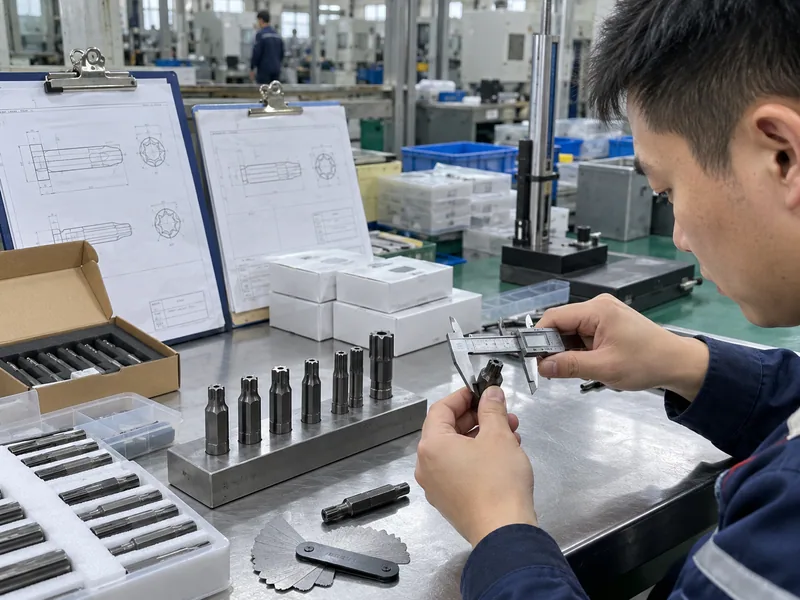
Factory inspection of Torx and XZN profile samples
AI-generated concept illustration; not an actual factory or test record.

What should a sample inspection cover?

Compare the sample with an approved drawing or reference fastener. Inspect points or lobes, finish, tip damage, drive dimensions, and retention.

A polished package cannot rescue a wrong profile.

  • Photograph the profile face
  • Check each marked size
  • Verify drive and length
  • Record seating observations

Use a complete mechanic tool set configuration only after each profile component has its own approval record.

What documentation should support the claim?

Request drawings, material statements, inspection plans, and user warnings. Do not publish a family-wide claim from one sample.

Profile, size, and finish claims must match the approved item.

Keep the document revision with the sample and packaging artwork.

How should results reach the catalog?

Use profile-first naming, durable size markings, and a close-up image. State whether a set contains Torx, security Torx, triple square, or another profile.

Approval point Evidence Buyer action
Profile geometry Drawing and sample face Approve exact family
Size marking Photo and dimensional check Match catalog data
Drive attachment Drawing and fit check Confirm handle compatibility

7. How do fit, seating, and access affect tool selection?

Fit, seating, and access determine whether a profile tool transmits force without slipping. A correct profile still needs clean engagement and adequate depth.
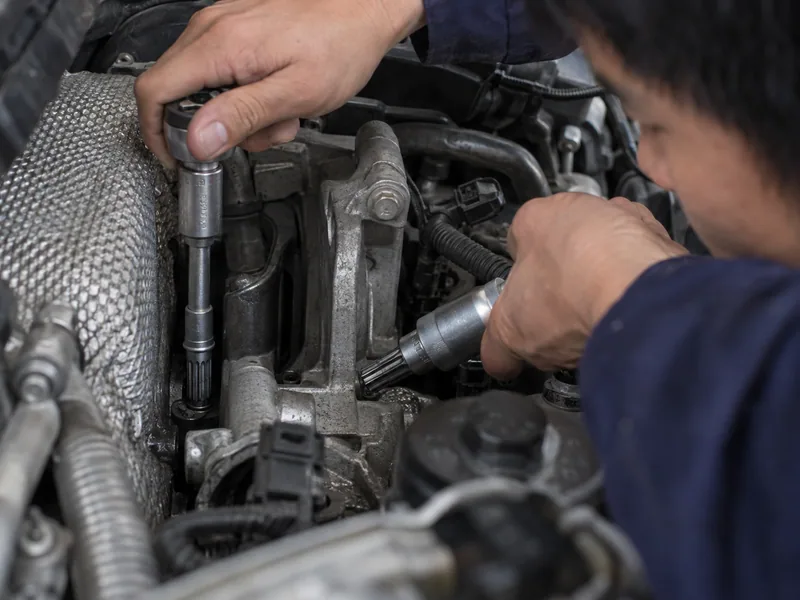
Profile tools aligned in a constrained automotive fixture
AI-generated concept illustration; not an actual factory or test record.

How should users verify seating?

Clean the recess, insert the tool straight, and confirm that it reaches full depth. A light hand check can reveal rocking before a ratchet or torque tool adds load.

Resistance should begin after full engagement, not before it.

  • Remove dirt and loose coating
  • Align the tool with the fastener axis
  • Confirm full insertion
  • Stop when rocking or unusual resistance appears

Use the triple-square identification guide for profile selection. An inch-to-millimeter hex chart cannot map T-series Torx codes to XZN sizes.

How does access change the product choice?

Depth, angle, nearby components, and clearance influence bit length, socket form, and drive attachment. A short socket may fit yet fail to clear a surrounding boss.

Length and profile must be selected together.

Test representative fasteners in the service position and record clearance.

What should a set planner compare?

Compare profile, size, length, drive, access, retention, and storage. List extensions and adapters separately.

Fit factor Selection question Risk if ignored
Seating Does the tip reach full depth? Flank damage or slip
Access Can the handle stay aligned? Side loading
Length Does reach suit the recess? Poor control or interference

8. How should teams maintain and store Torx and XZN tools?

Teams should clean, inspect, and store each profile tool so its points and lobes remain identifiable. Fine XZN teeth need extra attention.
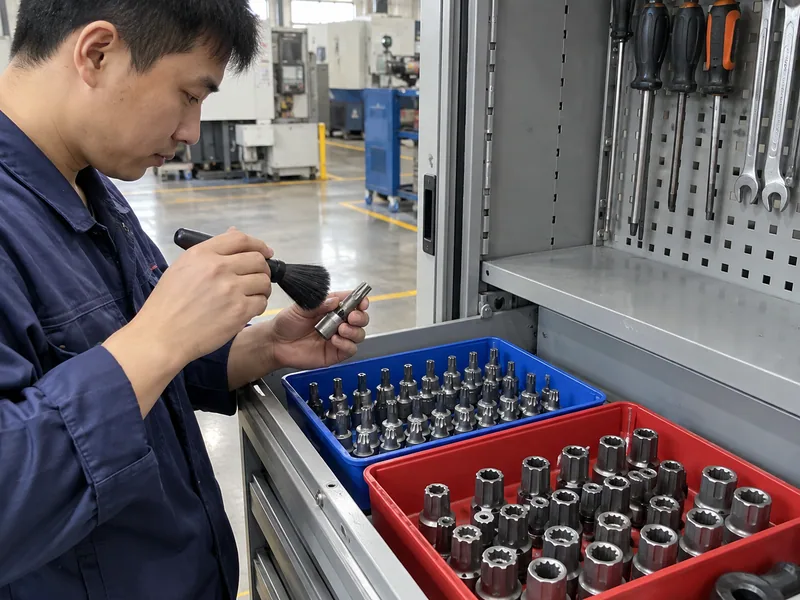
Separated Torx and XZN tools being cleaned and stored
AI-generated concept illustration; not an actual factory or test record.

What care does each profile need?

Wipe tools after contaminated work, remove debris, and inspect for rounding, cracks, distortion, or corrosion. Keep bits dry and separated.

Remove a questionable tip before it reaches a customer job.

  • Clean the working end
  • Check points or lobes under good light
  • Separate worn tools from approved stock
  • Keep profile markings visible

Review KOLARWIN hand tools for adjacent storage and range-planning needs.

What storage details matter?

Use case slots, rails, or trays that prevent profile mixing. Protect tips from impact and moisture.

A correct tool is useless when users cannot find it.

Do not put Torx and XZN pieces in one unlabeled pocket.

How can a distributor reduce misuse?

Add profile diagrams, size markings, and a short “not interchangeable” note to set instructions. Give service users a profile reference card when a case contains several specialty drives.

Maintenance point Torx Triple square / XZN
Working face Check six lobes Check twelve teeth
Cleaning Remove debris from lobes Remove debris from fine teeth
Storage Separate security variants Separate XZN sizes and lengths

9. How can buyers plan a useful Torx and triple-square set?

Buyers can plan a useful set by mapping applications, profile families, size demand, access, and replacement needs. Piece count alone does not show coverage.

Buyer reviewing a specialty profile tool set matrix
AI-generated concept illustration; not an actual factory or test record.

What belongs in a range brief?

Specify profile, size notation, security features, drive attachment, length, users, packaging, and labeling. Ask for a sample matrix across channels.

Each included piece should answer a known service need.

  • List fasteners by profile and size
  • Separate Torx from XZN
  • Add access lengths only where evidence supports them
  • Plan replacement and replenishment SKUs

Review complete mechanic tool sourcing guidance before setting a final range.

How should set quality be communicated?

Show profile faces, markings, drive ends, and case layout. State materials or finish only where SKU records support the claim.

A buyer should know which fastener each piece fits.

Use application notes and profile diagrams instead of unsupported vehicle claims.

What should a buyer compare across suppliers?

Compare sample accuracy, marking durability, case separation, size coverage, length options, documentation, and support. Record exclusions so lower piece count is not mistaken for equivalent coverage.

Set-planning factor Decision Evidence
Profile mix Torx, security Torx, XZN Approved face samples
Size coverage Based on target applications Customer or service matrix
Access Lengths and drive options Position tests

10. Which Torx versus triple-square strategy should a B2B buyer use?

A B2B buyer should keep Torx and triple square as separate product families, verify every profile against a drawing or sample, and build sets around real applications.
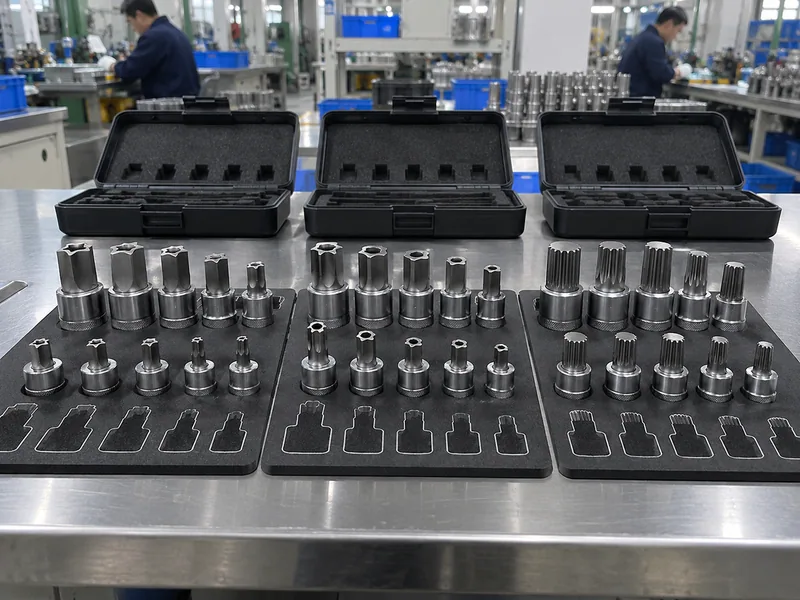
Buyer-ready Torx and triple-square assortment separated by profile
AI-generated concept illustration; not an actual factory or test record.

What should the final product brief include?

State profile family, size, security form, drive attachment, length, applications, inspection method, marking, packaging, and evidence. Add a related socket set program when a wider assortment is needed.

Count the profile, confirm the size, and verify full seating.

  • Separate six-lobe Torx from twelve-point XZN
  • Mark every slot with profile and size
  • Approve samples before packaging release
  • Keep unsupported equivalence claims out of the catalog

For a focused B2B range discussion, contact KOLARWIN Tools with target applications. KOLARWIN’s position is practical: make profile selection repeatable with documented claims.

Can a Torx bit fit a triple-square fastener?

No. The profiles use different point counts and flank geometry. Select a tool made for the identified recess.

Is XZN the same as triple square?

In many tool catalogs, yes. Confirm exact naming and size information in the supplier’s drawing or service documentation.

How can I tell Torx from triple square quickly?

Count the working points from above: six rounded lobes indicate Torx, while twelve fine points indicate triple square or XZN.

Can I use an impact tool with either profile?

Only with a compatible impact-rated socket or bit and an approved procedure. Impact capability does not make different profiles interchangeable.

What should a distributor show on a specialty-bit package?

Show profile name, size, drive attachment, security status, and a clear face diagram or image. Keep Torx and XZN positions separate.

Looking for a reliable mechanic tools manufacturer in China?

If you are sourcing hand tools, socket tools, automotive repair tools, mechanic tool sets or OEM private label tools, contact KOLARWIN Tools for factory-direct quotation, customization support and product consultation.


A six-lobe star recess and a twelve-point multi-tooth recess can look similar on a busy workshop bench. The wrong bit may enter partway and damage a fastener when torque rises. Torx and triple square have different engagement geometry. Confirm profile, size, and full seating before applying force. This guide helps B2B buyers avoid substitutions and plan useful sets.

1. What is the difference between Torx and triple square?

Torx uses a six-lobe star profile, while triple square uses a twelve-point internal multi-tooth profile commonly identified as XZN. Their outlines can both look star-like, yet the contact geometry and size systems differ.

Six-lobe Torx and twelve-point triple-square profiles side by side
AI-generated technical illustration; schematic, not a dimensional drawing.

How can you describe each profile?

Torx has six rounded lobes arranged around a central axis. Triple square has twelve straight, right-angled points formed by overlapping three squares. The visual count matters because a similar outline does not mean compatible engagement.

Count points before you reach for a socket.

Buyers who need background on XZN can link to KOLARWIN’s triple-square socket definition before building a set.

Why does profile shape matter?

Profile shape determines where force enters the fastener. A near match may load corners, wobble, or slip.

A familiar-looking recess still needs positive seating.

What should a product buyer record?

Record profile, size, drive attachment, application, and security status. Keep Torx and XZN positions separate.

Profile Visual count Common naming Buyer check
Torx 6 lobes TX or Torx Confirm six-lobe tip and size
Triple square 12 points XZN or Vielzahn Confirm twelve-point internal profile

2. How do you identify a Torx recess correctly?

Identify a Torx recess by its six-lobe geometry, then confirm size and any center pin.

Technician identifying a six-lobe Torx recess
AI-generated concept illustration; not an actual factory or test record.

What should you look for?

Count six rounded lobes around the recess. Standard Torx has an open center; security Torx adds a center pin that blocks a standard hollow-free tip. Do not confuse Torx with a six-point hexagon or a twelve-point profile.

The profile face tells you more than a side label.

What mistakes cause damage?

Common errors include selecting by color, confusing six-point shapes, and using a wrong size because the tip enters shallowly.

A correct tip should sit squarely without rocking.

Reject damaged tools and clean debris from deep recesses. Use service information when a fastener remains unclear.

How should a distributor package Torx tools?

Separate standard and security Torx positions. Print profile and size beside each slot, keep the marking legible after coating, and include a clear indication of bit or socket drive size.

Torx check Why it matters Set-planning response
Six-lobe profile Separates Torx from XZN Label profile family
Center pin Changes tip requirement Add security-compatible pieces
Size marking Prevents shallow engagement Stamp or print durable size

3. How do you identify a triple-square or XZN recess?

Identify triple square by its twelve fine, right-angled points and three-square construction. XZN and triple square describe this profile family in many catalogs.

Triple-square XZN bit fully seated in a fastener
AI-generated concept illustration; not an actual factory or test record.

What does the top view show?

The recess presents twelve points rather than six rounded lobes. A clean face can reveal three overlapping squares rotated relative to one another. The fine teeth need full seating because partial engagement can damage both tool and fastener.

Twelve points indicate a different tool family from six-lobe Torx.

KOLARWIN’s socket tools range gives buyers a place to compare compatible socket formats without mixing profile names.

Why can contamination cause trouble?

Fine teeth leave less room for dirt, coating, or corrosion. Debris may prevent full insertion while worn teeth reduce confidence.

Brush and inspect before applying torque.

Do not hammer an unmatched bit into place. Follow the approved repair procedure for a damaged recess.

What should a buyer request from a supplier?

Request exact profile terminology, size range, drive attachment, length options, and application notes. Ask suppliers to show the profile face in drawings or samples so XZN cannot be mistaken for a double-hex or another multi-point form.

XZN check Buyer question Practical reason
Point count Does the face show 12 points? Separates XZN from Torx
Naming Is it marked XZN or triple square? Aligns catalog language
Engagement Does the tool seat fully? Reduces slip and damage

4. Can Torx and triple-square tools be interchanged?

Torx and triple-square tools should not be interchanged because their flank geometry and point counts differ.

Separate Torx and triple-square tool trays preventing substitution
AI-generated concept illustration; not an actual factory or test record.

Why does a near fit fail?

A near fit can create rocking, uneven contact, or corner loading. Higher force can turn poor engagement into a stripped recess or sudden slip.

Similar outline does not mean substitute.

When impact work is part of the program, review impact sockets separately because impact construction does not make profiles interchangeable.

Does size notation solve the problem?

Size notation helps only after the profile family is correct. Matching letters or numbers across catalogs can create a false equivalence.

Identify family, then verify dimension and drive.

Use the fastener drawing, service information, or an approved sample as authority. Mark cross-references “not interchangeable.”

What should workshop policy require?

Require profile identification, full seating, and a stop condition when fit is uncertain. Train users to return an unidentified fastener for review rather than selecting a nearby tool.

Situation Correct response Avoid
Six-lobe recess Use matching Torx tool XZN substitution
Twelve-point XZN recess Use matching triple-square tool Torx substitution
Damaged or dirty recess Clean, inspect, and follow procedure Extra force

5. Which applications commonly require each profile?

Both profiles appear across vehicle and equipment programs, yet the assembly and service documentation control the required drive.

Automotive service bay with separate Torx and XZN tool groups
AI-generated concept illustration; not an actual factory or test record.

Where might Torx appear?

Torx appears across vehicle and equipment fasteners, including standard and security variants. Size, depth, and access depend on the assembly.

It helps narrow a range but cannot identify a recess alone.

Buyers can connect profile planning with KOLARWIN automotive repair tools when building a broader service assortment.

Where might triple square appear?

Triple square or XZN appears in automotive and mechanical applications using a fine twelve-point drive. Tool size and tightening method remain model-specific.

Verify the actual fastener face before choosing the bit.

Keep XZN pieces in a separate case section. Do not describe every twelve-point fastener as triple square.

How should a range planner group applications?

Group by profile, size, drive attachment, length, security feature, and end-use channel. A workshop set may need both families, while a retail set may need a clear profile legend to prevent misuse.

Planning factor Torx line Triple-square line
Profile Six rounded lobes Twelve fine points
Variants Standard and security forms XZN size and length options
Use decision Confirm service specification Confirm XZN documentation

6. What should buyers inspect before approving a profile tool?

Buyers should inspect profile accuracy, size marking, drive attachment, seating, and packaging before approval.

Factory inspection of Torx and XZN profile samples
AI-generated concept illustration; not an actual factory or test record.

What should a sample inspection cover?

Compare the sample with an approved drawing or reference fastener. Inspect points or lobes, finish, tip damage, drive dimensions, and retention.

A polished package cannot rescue a wrong profile.

Use a complete mechanic tool set configuration only after each profile component has its own approval record.

What documentation should support the claim?

Request drawings, material statements, inspection plans, and user warnings. Do not publish a family-wide claim from one sample.

Profile, size, and finish claims must match the approved item.

Keep the document revision with the sample and packaging artwork.

How should results reach the catalog?

Use profile-first naming, durable size markings, and a close-up image. State whether a set contains Torx, security Torx, triple square, or another profile.

Approval point Evidence Buyer action
Profile geometry Drawing and sample face Approve exact family
Size marking Photo and dimensional check Match catalog data
Drive attachment Drawing and fit check Confirm handle compatibility

7. How do fit, seating, and access affect tool selection?

Fit, seating, and access determine whether a profile tool transmits force without slipping. A correct profile still needs clean engagement and adequate depth.

Profile tools aligned in a constrained automotive fixture
AI-generated concept illustration; not an actual factory or test record.

How should users verify seating?

Clean the recess, insert the tool straight, and confirm that it reaches full depth. A light hand check can reveal rocking before a ratchet or torque tool adds load.

Resistance should begin after full engagement, not before it.

Use the triple-square identification guide for profile selection. An inch-to-millimeter hex chart cannot map T-series Torx codes to XZN sizes.

How does access change the product choice?

Depth, angle, nearby components, and clearance influence bit length, socket form, and drive attachment. A short socket may fit yet fail to clear a surrounding boss.

Length and profile must be selected together.

Test representative fasteners in the service position and record clearance.

What should a set planner compare?

Compare profile, size, length, drive, access, retention, and storage. List extensions and adapters separately.

Fit factor Selection question Risk if ignored
Seating Does the tip reach full depth? Flank damage or slip
Access Can the handle stay aligned? Side loading
Length Does reach suit the recess? Poor control or interference

8. How should teams maintain and store Torx and XZN tools?

Teams should clean, inspect, and store each profile tool so its points and lobes remain identifiable. Fine XZN teeth need extra attention.

Separated Torx and XZN tools being cleaned and stored
AI-generated concept illustration; not an actual factory or test record.

What care does each profile need?

Wipe tools after contaminated work, remove debris, and inspect for rounding, cracks, distortion, or corrosion. Keep bits dry and separated.

Remove a questionable tip before it reaches a customer job.

Review KOLARWIN hand tools for adjacent storage and range-planning needs.

What storage details matter?

Use case slots, rails, or trays that prevent profile mixing. Protect tips from impact and moisture.

A correct tool is useless when users cannot find it.

Do not put Torx and XZN pieces in one unlabeled pocket.

How can a distributor reduce misuse?

Add profile diagrams, size markings, and a short “not interchangeable” note to set instructions. Give service users a profile reference card when a case contains several specialty drives.

Maintenance point Torx Triple square / XZN
Working face Check six lobes Check twelve teeth
Cleaning Remove debris from lobes Remove debris from fine teeth
Storage Separate security variants Separate XZN sizes and lengths

9. How can buyers plan a useful Torx and triple-square set?

Buyers can plan a useful set by mapping applications, profile families, size demand, access, and replacement needs. Piece count alone does not show coverage.

Buyer reviewing a specialty profile tool set matrix
AI-generated concept illustration; not an actual factory or test record.

What belongs in a range brief?

Specify profile, size notation, security features, drive attachment, length, users, packaging, and labeling. Ask for a sample matrix across channels.

Each included piece should answer a known service need.

Review complete mechanic tool sourcing guidance before setting a final range.

How should set quality be communicated?

Show profile faces, markings, drive ends, and case layout. State materials or finish only where SKU records support the claim.

A buyer should know which fastener each piece fits.

Use application notes and profile diagrams instead of unsupported vehicle claims.

What should a buyer compare across suppliers?

Compare sample accuracy, marking durability, case separation, size coverage, length options, documentation, and support. Record exclusions so lower piece count is not mistaken for equivalent coverage.

Set-planning factor Decision Evidence
Profile mix Torx, security Torx, XZN Approved face samples
Size coverage Based on target applications Customer or service matrix
Access Lengths and drive options Position tests

10. Which Torx versus triple-square strategy should a B2B buyer use?

A B2B buyer should keep Torx and triple square as separate product families, verify every profile against a drawing or sample, and build sets around real applications.

Buyer-ready Torx and triple-square assortment separated by profile
AI-generated concept illustration; not an actual factory or test record.

What should the final product brief include?

State profile family, size, security form, drive attachment, length, applications, inspection method, marking, packaging, and evidence. Add a related socket set program when a wider assortment is needed.

Count the profile, confirm the size, and verify full seating.

For a focused B2B range discussion, contact KOLARWIN Tools with target applications. KOLARWIN’s position is practical: make profile selection repeatable with documented claims.

Can a Torx bit fit a triple-square fastener?

No. The profiles use different point counts and flank geometry. Select a tool made for the identified recess.

Is XZN the same as triple square?

In many tool catalogs, yes. Confirm exact naming and size information in the supplier’s drawing or service documentation.

How can I tell Torx from triple square quickly?

Count the working points from above: six rounded lobes indicate Torx, while twelve fine points indicate triple square or XZN.

Can I use an impact tool with either profile?

Only with a compatible impact-rated socket or bit and an approved procedure. Impact capability does not make different profiles interchangeable.

What should a distributor show on a specialty-bit package?

Show profile name, size, drive attachment, security status, and a clear face diagram or image. Keep Torx and XZN positions separate.

Why Partner with Kolarwin Tools?

Factory-Direct Pricing Skip the middleman — access competitive wholesale prices and protect your margins
Private Label & OEM Ready Your brand, our expertise — full customization from logo to packaging
Fast Global Shipping Reliable delivery to 60+ countries with full export documentation support
Low MOQ, High Flexibility Start small, scale fast — flexible order quantities to fit your business
Dedicated B2B Support One-on-one account management from quote to delivery, every time

Get Your Free Quote in 24 Hours

Tell us your sourcing needs — we'll respond with a tailored quote, product specs, and the best pricing for your market. No commitment required.

Chat on WhatsApp Email Us Directly
