Need OEM supplier support for this product type?
Contact KOLARWIN Tools for OEM mechanic tools, private label packaging, wholesale quotation and product range support. This gives overseas buyers a clear path from article reading to supplier discussion.
A Phillips bit and a Pozidriv bit both have a cross-shaped tip, so a purchasing list can make them look interchangeable. They are different drive profiles, and a mismatch can reduce engagement or damage a screw recess. Buyers can prevent that problem by specifying profile and size together, then approving a representative sample. This guide gives importers, distributors, and tool-kit planners a practical way to identify, source, and check each type.
Contents
- 1. What is the difference between Pozidriv and Phillips?
- 2. How can a buyer identify each drive profile?
- 3. Can PH2 and PZ2 bits be used interchangeably?
- 4. How should buyers choose a PH or PZ bit size?
- 5. How do profile mismatch and wear affect screw engagement?
- 6. Which bit interface suits manual, drill, or impact use?
- 7. What sample checks should precede approval?
- 8. How should a distributor plan assortment and packaging?
- 9. What should an OEM or importer include in an RFQ?
- 10. How can buyers make a clear final selection?
Use the profile first, then confirm the size and application. For related hand-tool assortment planning, see our hand tools guide.
1. What is the difference between Pozidriv and Phillips?
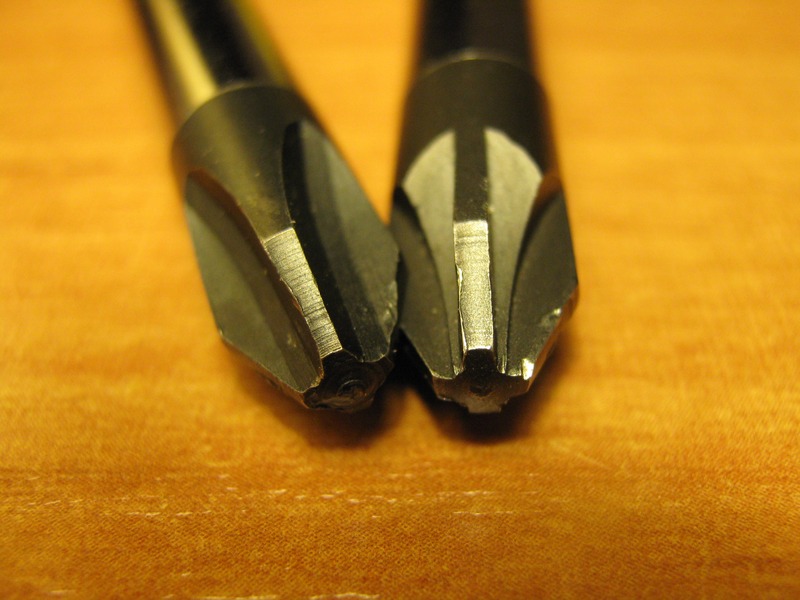
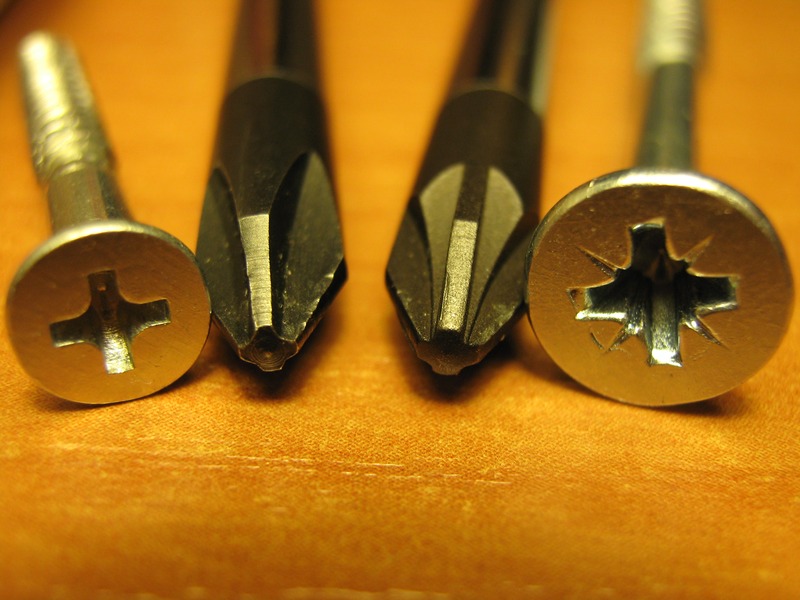
Phillips (PH) and Pozidriv (PZ) are distinct cross-recess drive systems. Each requires its own matching tip geometry. A PZ driver has additional ribs, and many PZ screw heads carry four diagonal identification marks between their main cross arms. These visible marks help identification; actual engagement depends on compatible bit and recess geometry.
For purchasing, specify PH or PZ and size on the bit, package, and sample record. A “cross-head” label leaves room for interpretation.
- PH has one main cross recess.
- PZ screw heads commonly show four diagonal identification marks; matching bits have additional ribs.
- Matching profile supports better engagement; it does not guarantee slip-free driving.
- Drive-profile labels identify geometry, not material grade or performance class.
Start with a named profile and a real screw sample. Do not infer a full specification from a cross-shaped outline alone.
Profile comparison for sourcing
| Attribute | Phillips (PH) | Pozidriv (PZ) |
|---|---|---|
| Main visual cue | One cross recess | Main cross plus four shallow diagonal marks |
| Driver marking | PH plus size, such as PH2 | PZ plus size, such as PZ2 |
| Match requirement | Match screw recess profile | Match screw recess profile |
| Buyer risk | Cross-profile mix-up | Cross-profile mix-up |
2. How can a buyer identify each drive profile?
Look at the screw head under clear light and compare it with a known sample. Many Pozidriv screw heads show four diagonal identification marks between their main cross arms. They are a useful cue, but they are not sole proof when a screw has accumulated paint, corrosion, debris, or wear. Clean the recess before inspection when the application allows it.
A bit marking helps identify what the bit claims to be; it does not verify its tip geometry or fit. Keep a labeled PH sample and PZ sample beside the inspection station, then compare each against the actual screw family. For another profile comparison, see Torx vs Allen.
- Inspect the screw head directly rather than relying on a product title.
- Check for the four diagonal identification marks commonly associated with PZ screw heads.
- Read the bit’s stamped or printed marking, then verify with a fit check.
- Replace visual judgment with supplier drawings where application risk warrants it.
Use two checks: geometry and engagement. If a recess is too worn or dirty for a confident reading, classify it as uncertain and test against a clean sample from the same screw family.
Identification cues and limits
| Check | Useful cue | Limit |
|---|---|---|
| Head identification marks | Four diagonal lines may indicate PZ | Wear or debris can hide details |
| Bit marking | PH or PZ plus size | Marking does not prove fit |
| Test fit | Correct bit should seat consistently | A damaged screw can mislead |
| Supplier drawing | Clarifies named profile | Confirm sample against actual screw |
3. Can PH2 and PZ2 bits be used interchangeably?
No. PH2 and PZ2 share the number “2,” but that number does not make their geometry interchangeable. The numeral identifies a size within a drive family; it does not mean millimeters or a universal cross-head dimension. A PH2 bit belongs with a compatible Phillips recess. A PZ2 bit belongs with a compatible Pozidriv recess.
A mismatched bit may seem to enter a screw, especially when pressure is applied. Partial entry is not evidence of correct fit. The tip can contact the wrong surfaces, move under load, or damage the screw recess and bit. If a job mixes screw types, provide separate labeled bits and make the selection visible at the point of use.
- Match PH to PH and PZ to PZ.
- Confirm the size within that profile family.
- Do not substitute PH2 for PZ2 because both carry a “2” marking.
- Segregate mixed fastener kits with clear labels and storage positions.
A shared size number does not bridge two profiles. Confirm the screw family before approving an assortment. See Torx vs triple square for another profile comparison.
Cross-substitution risk
| Screw recess | Correct starting bit | Avoid assuming |
|---|---|---|
| Phillips size 2 | PH2 | PZ2 will fit because its number matches |
| Pozidriv size 2 | PZ2 | PH2 will fit because both look cross-shaped |
| Mixed or unknown | Identify and sample first | One “cross” bit covers both profiles |
| Worn recess | Replace or verify with a clean sample | Poor fit proves a different profile |
4. How should buyers choose a PH or PZ bit size?
After identifying the profile, match the size to the screw recess. A larger bit may fail to seat fully; a smaller one may move within the recess. Neither condition calls for more force. Product marking such as PH1, PH2, PZ1, or PZ2 must stay attached to the named drive family in catalogs and packaging.
Request fit checks across representative screws. Ask suppliers what geometry supports any size chart, then record approved pairings for reorders.
- Specify profile and size as separate fields.
- Check full seating and stable contact on a clean, undamaged screw.
- Compare several representative screws if the assortment covers multiple sources.
- Keep each approved pairing in the product or kit specification.
Size selection gets concrete at the screw head. Use a known screw and bit sample together, then retain the pair as a reference for incoming or reorder checks.
Profile and size selection
| Buyer input | Example field | Approval question |
|---|---|---|
| Profile | PH or PZ | Does it match the recess? |
| Size | 1, 2, or supplier-listed size | Does the tip seat fully? |
| Screw family | Named product or application | Are samples representative? |
| Fit record | Approved bit and screw pairing | Can receiving repeat the check? |
5. How do profile mismatch and wear affect screw engagement?
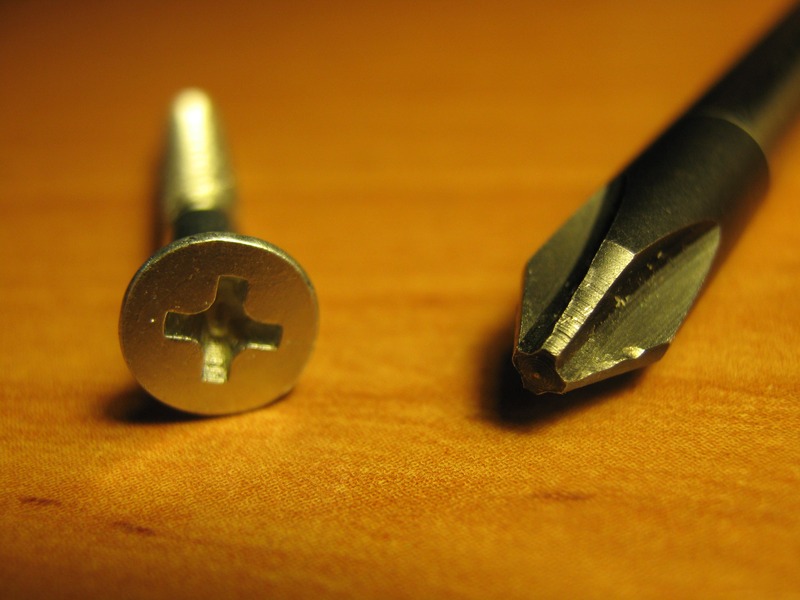
A mismatched bit can contact the wrong parts of a recess. Under turning force, that contact may become unstable and contribute to slipping or wear. A correctly matched profile improves the chance of proper engagement, but it cannot remove every cause of cam-out. Size mismatch, damaged recesses, poor alignment, insufficient axial pressure, speed, and application conditions can also affect the result.
A used bit or screw may no longer provide a fair selection test. Rounded edges, debris, paint, or corrosion can alter appearance and fit. Test a fresh screw sample to separate a profile mismatch from fastener wear.
- Stop if the bit rocks, sits high, or contacts only part of the recess.
- Check profile, size, alignment, and screw condition before changing tools.
- Avoid forcing a mismatched bit to finish the operation.
- Replace damaged samples before drawing conclusions about a product family.
A poor fit can damage both sides of the connection. Test with clean, representative screws and document any mismatch found during sample approval.
Engagement failure review
| Observed condition | Possible cause | Buyer response |
|---|---|---|
| Bit sits high | Wrong profile or size | Confirm marking and geometry |
| Bit rocks in recess | Mismatch, wear, or poor seating | Try clean matched samples |
| Recess edges deform | Excess load or poor interface | Stop and inspect both parts |
| Bit slips repeatedly | Several causes possible | Review alignment, pressure, speed, and fit |
6. Which bit interface suits manual, drill, or impact use?
Profile and size identify the screw-end geometry. They do not establish the bit’s shank interface, length, material, impact rating, magnetic function, or electrical insulation. Those attributes require separate specifications. A buyer assembling a kit should name both the working tip and the holder or drive connection that fits the intended tool.
Manual drivers, drills, and impact drivers place different demands on a bit and its connection. Do not assume any PH or PZ bit works in every powered tool merely because the tip seats in a screw. If impact use is required, request the supplier’s stated product suitability and supporting documentation for the specific SKU. For sourcing context, see our OEM impact bit sets guide and manual impact screwdriver vs impact driver guide.
- Specify tip profile and size separately from shank and length.
- Name manual, drill, or impact use in the RFQ.
- Request material, coating, magnetic, or insulation details only when needed.
- Verify any impact-use claim for the exact model offered.
The tip answers one question; the tool interface answers another. Keep these fields distinct in your catalog so similar-looking bits do not inherit unsupported use claims.
Bit specification fields
| Field | Example requirement | Verification route |
|---|---|---|
| Tip | PH2 or PZ2 | Screw fit sample |
| Shank | Named holder interface | Drawing or sample |
| Length | Overall or working length | Dimension check |
| Tool use | Manual, drill, or impact | SKU-specific documentation |
| Optional feature | Magnetic or insulated, if requested | Separate evidence and inspection |
7. What sample checks should precede approval?
Sample review should confirm identity, fit, and packaging. Compare markings with the order, then test clean matched screws. The tip should seat without rocking or excessive force. Repeat across representative screw sources.
Photographs preserve evidence, but cannot replace direct engagement. Record sample ID, profile, size, interface, length, screw reference, and result. If a mismatch appears, hold approval and request clarification. Do not silently change profile or size.
- Confirm marking and sample identification.
- Check seating in clean PH or PZ screws of the named size.
- Inspect tip edges and finish for visible damage or burrs.
- Compare label, SKU, and pack contents with the approved specification.
Approve a named sample, not a vague category. Retain one reference set with its screw samples and inspection notes for later comparison.
Sample approval checklist
| Check | Pass condition | Record |
|---|---|---|
| Marking | Agrees with profile and size order | Photo and SKU |
| Screw fit | Seats consistently in matched recess | Screw reference |
| Tip condition | No visible damage affecting fit | Inspection note |
| Pack identity | Label matches contents | Package photo |
| Approval trail | Sample links to spec revision | Date and reviewer |
8. How should a distributor plan assortment and packaging?
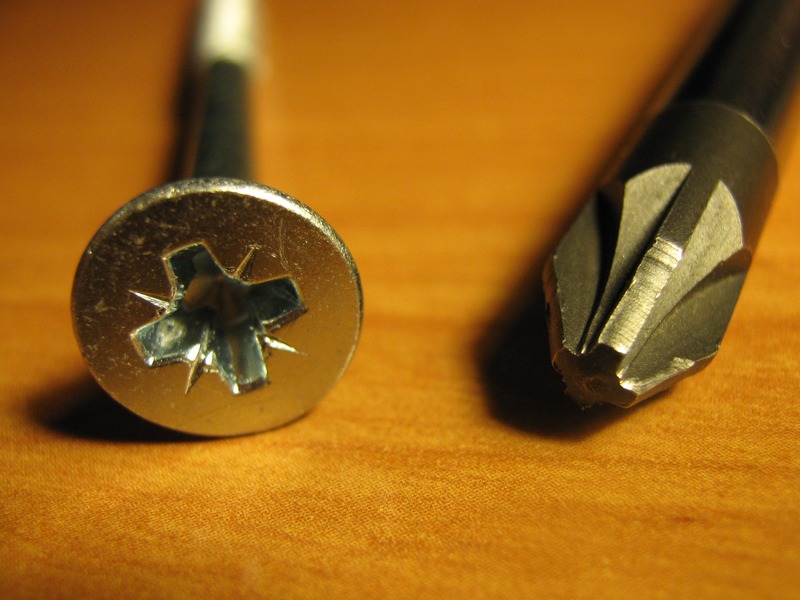
A distributor should plan PH and PZ as distinct stock identities wherever customers use both. Product titles, barcode records, bins, kit maps, and replacement instructions should preserve the profile and size. A generic “cross-head bit” label can obscure a mismatch until a user reaches the workbench. Separate packaging colors may help, but color alone should never replace printed profile and size markings.
Set assortment depth by customer applications and screw families. Mixed equipment kits may need both profiles; a focused assembly line may need one. Review demand before adding variants, and tie replacements to the original SKU.
- Keep PH and PZ as separate SKUs or clearly separated kit positions.
- Print profile and size on packaging and product records.
- Use visual aids as a supplement to readable labels.
- Map replacement parts to an approved SKU and sample.
Clear labeling prevents a small profile difference from becoming a service complaint. Audit product pages and kit inserts against the same master specification. See the mechanic tool set guide for broader kit-planning considerations.
Assortment and packaging controls
| Control | Good practice | Failure to prevent |
|---|---|---|
| SKU naming | Include PH/PZ and size | Cross-profile substitution |
| Pack label | Printed profile and size | Photo-only identification |
| Kit layout | Separate labeled positions | Mixed loose bits |
| Reorder mapping | Link replacement to SKU | Informal shorthand errors |
9. What should an OEM or importer include in an RFQ?
A useful RFQ states the screw-drive family, bit size, intended tool, and required interface. Attach a clear photograph or sample of the screw recess when profile certainty matters. Add length, pack quantity, marking, packaging language, and any requested special features as separate fields. This keeps profile geometry from becoming tangled with commercial or optional requirements.
Ask suppliers to identify variations before sampling, and require labels showing profile and size. For impact, magnetic, insulation, or material claims, request evidence for the exact model. For custom pack design, review our custom socket set design guide, then confirm bit-specific fields separately.
- Name PH or PZ and size on every line item.
- Provide the screw sample, photo, or application reference.
- State shank, length, tool use, and package needs independently.
- Request labeled samples and SKU-specific supporting documents.
A specific RFQ reduces room for profile substitution. Use the list below as a starting point, then ask your supplier to repeat the specification on the sample label and final quotation.
RFQ fields for PH and PZ bits
| RFQ field | Buyer should provide | Supplier should confirm |
|---|---|---|
| Drive profile and size | PH/PZ plus size | Marked SKU and sample |
| Screw reference | Drawing, photo, or physical sample | Fit confirmation |
| Tool interface | Holder and tool type | Matching shank details |
| Product dimensions | Length and any required geometry | Drawing or sample measurement |
| Pack and claims | Label, quantity, optional features | Final artwork and evidence |
10. How can buyers make a clear final selection?
Select PH or PZ from the recess, confirm size within that family, and list tool-interface requirements separately. Sample review catches fit and labeling problems; a shared “2” does not prove interchangeability.
- Identify the screw profile from a clean, representative recess.
- Match the bit profile and size, then check full seating.
- Specify shank, length, and intended tool separately.
- Approve the labeled sample and retain its screw reference.
Put the exact pairing in the RFQ and sample record. If your buyer team needs a project-specific combination, send a PH/PZ bit sourcing inquiry to KOLARWIN.
Include your destination market, required quantities, PH/PZ sizes, intended driver, shank interface, and packaging needs. Attach a clear screw-head photograph or an item list where available. Ask for a proposed SKU list, specification sheet, sample terms, and a quotation based on those requirements. Confirm availability and model-specific suitability before placing an order.
Q1: What does PH2 mean?
PH2 identifies a size 2 Phillips bit. The “2” is a profile-family size designation, not a measurement in millimeters.
Q2: What does PZ2 mean?
PZ2 identifies a size 2 Pozidriv bit. Match it with a compatible Pozidriv recess of the same size.
Q3: How can I tell a Pozidriv screw from a Phillips screw?
Many Pozidriv screw heads carry four diagonal identification marks between the main cross arms. These are visual cues. Confirm the drive profile and size with a clean, representative screw and correctly matched bit; dirt and wear can obscure details.
Q4: Can I use a PH2 bit in a PZ2 screw?
Avoid that substitution. Similar size numbers do not make PH and PZ profiles interchangeable; verify fit with a matched bit and screw.
Q5: Does a Pozidriv bit prevent cam-out?
No. A correctly matched PZ bit can improve engagement, but size, alignment, pressure, wear, speed, and application conditions still affect slipping.
Looking for a reliable mechanic tools manufacturer in China?
If you are sourcing hand tools, socket tools, automotive repair tools, mechanic tool sets or OEM private label tools, contact KOLARWIN Tools for factory-direct quotation, customization support and product consultation.