Need OEM supplier support for this product type?
Contact KOLARWIN Tools for OEM mechanic tools, private label packaging, wholesale quotation and product range support. This gives overseas buyers a clear path from article reading to supplier discussion.
Slip joint pliers vs combination pliers comes down to working geometry. Slip-joint pliers change pivot position for an adjustable opening, while combination pliers generally keep a fixed pivot and combine gripping, forming, and cutting zones. A buyer choosing stock should compare the workpiece, jaw contact, surface risk, access, and model-rated limits before relying on either family label.
Contents
- 1. What is the basic difference between these plier types?
- 2. How does a common two-position slip joint work?
- 3. Why do combination pliers use a fixed pivot?
- 4. Which pliers fit irregular or round workpieces?
- 5. When is a combination plier cutter useful?
- 6. How do serrated jaws affect finished surfaces?
- 7. Does handle color or a soft grip mean electrical insulation?
- 8. How should buyers compare size, jaw fit, and access?
- 9. What should a distributor inspect before approving samples?
- 10. Which tool should a buyer place in each assortment slot?
1. What is the basic difference between these plier types?
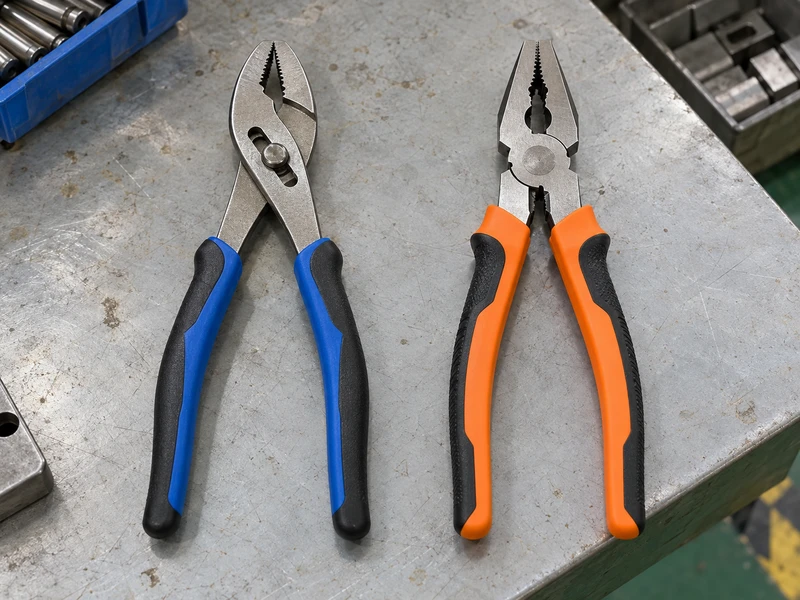
Slip-joint pliers suit changing workpiece sizes where an adjustable opening helps. Combination pliers suit a repeatable mix of flat gripping, round gripping, wire forming, and model-rated cutting around a fixed pivot. The two tools can overlap in light gripping, but their working zones answer different purchasing needs.
- Choose slip joint when opening adjustment is the main requirement.
- Choose combination pliers when fixed multi-zone work matters.
- Compare jaw shape and contact before comparing handle length.
- Keep cutter, finish, and insulation claims model-specific.
Pivot movement should lead the comparison, then task and workpiece should decide. The specialty pliers buying guide gives wider family context, while the hand-tools category helps place both patterns within a range.
Pattern comparison table
| Decision field | Slip-joint pliers | Combination pliers |
|---|---|---|
| Pivot | Adjustable position | Generally fixed |
| Main advantage | Opening changes | Several fixed working zones |
| Typical grip | Light general gripping | Flat and round grip zones |
| Wire work | Model-specific grip or cutter | Forming and model-rated cutter |
| Best evidence | Joint positions and opening | Zone drawing and limits |
2. How does a common two-position slip joint work?
A common basic slip-joint pattern moves the pivot between two holes or seats. One position gives a narrower opening; another gives a wider opening. Two positions are common in basic designs, yet they are not universal. Some models use different adjustment arrangements or add features that change the working envelope.
- Confirm the actual number of positions on the quoted model.
- Check joint seating before applying hand pressure.
- Record opening and jaw depth at each approved position.
- Treat any cutter as a separate model-rated feature.
Two positions describe a common pattern, not a family-wide specification. Ask for a model drawing or instruction sheet. The types of hose clamp pliers reference can point buyers toward a different application-specific family when a slip joint is not the right answer.
Slip-joint review table
| Check | Narrow position | Wide position |
|---|---|---|
| Opening | Record exact model value | Record exact model value |
| Jaw contact | Confirm full seating | Confirm full seating |
| Joint | Check lock and alignment | Check lock and alignment |
| Access | Review head entry | Review head and handle clearance |
| Claim | Use model wording | Do not call it universal capacity |
3. Why do combination pliers use a fixed pivot?
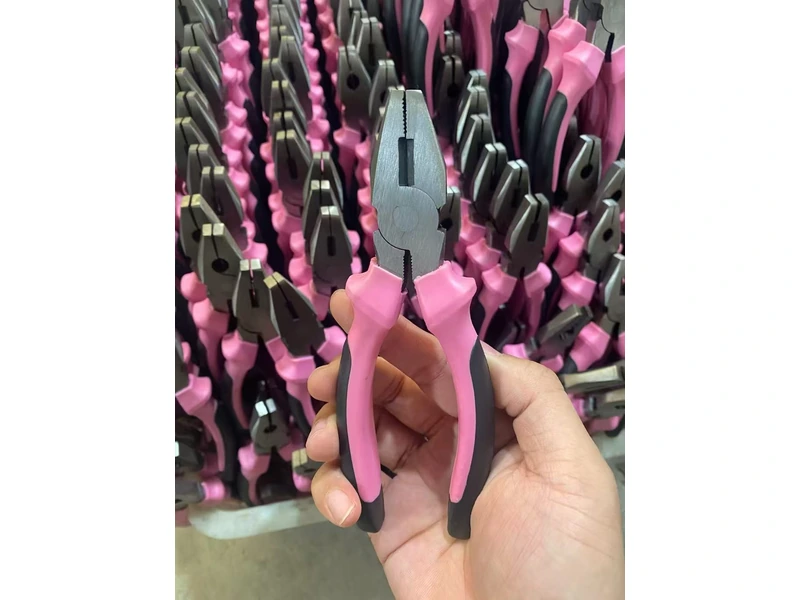
The fixed pivot keeps a repeatable relationship between flat jaws, round-grip area, and cutter. That layout suits users who move between defined tasks without resetting a joint. Models vary in jaw length, cutter position, forming features, and added zones, so “combination” still needs a drawing.
- Look for flat serrated jaws near the nose.
- Identify any shaped zone intended for round work.
- Record cutter position and listed limits.
- Separate optional crimping or forming features from basic grip claims.
A fixed pivot gives a stable layout, while each model still needs its own use map. Review the tool beside actual workpieces before approving a family description. Keep the comparison on geometry rather than brand terminology, which can overlap across US catalogs.
Fixed-pivot inspection table
| Working zone | Buyer question | Required evidence |
|---|---|---|
| Flat grip | What flat work can it hold? | Jaw drawing and fit review |
| Round grip | Does the shape seat the part? | Model description and sample |
| Cutter | Which materials and sizes apply? | Named instructions |
| Forming | What wire task is supported? | Model-specific use note |
| Hinge | Does the pivot stay aligned? | Sample inspection |
4. Which pliers fit irregular or round workpieces?
Slip-joint pliers adjust opening, which can help when workpiece size changes. Combination pliers provide a fixed shaped or toothed zone that can suit round stock when its opening and jaw depth fit. Both may mark a finish. Neither family label proves a diameter, material range, or safe grip on every irregular part.
- Give the workpiece shape and approximate size.
- Check full jaw contact instead of catching an edge.
- Mark coated, polished, or soft surfaces as finish-sensitive.
- Stop when the workpiece rolls, deforms, or slips.
Fit comes from contact geometry, not from a wider handle. Use a representative sample and record marks or movement. For pipe-tool decisions, consult the water pump pliers versus pipe wrench comparison as a separate comparison.
Round-work fit table
| Workpiece condition | Slip-joint check | Combination check |
|---|---|---|
| Small round stock | Narrow setting and contact | Shaped zone and jaw depth |
| Larger round stock | Wide setting and access | Fixed opening and reach |
| Finished surface | Serrations may mark | Serrations may mark |
| Irregular shape | Stable seating required | Confirm shaped-zone contact |
| Thin-wall tube | Deformation risk | Deformation risk |
5. When is a combination plier cutter useful?
Both families may include a cutter, but presence alone does not establish a universal range. A combination plier cutter can handle listed wire work for its model. A slip-joint cutter may serve a similar narrow task. Buyers should compare material, size, edge position, and access rather than assume one family cuts more.
- Request named material and size limits.
- Keep conductor cutting separate from insulation removal.
- Do not infer capacity from jaw opening or handle length.
- Use a dedicated cutter outside model instructions.
The cutter rating matters more than the family label. Record cutting limits from the model’s instructions in each SKU record. Consult the wire stripper versus wire cutter comparison when choosing between those tasks.
Cutter decision table
| Buyer field | Slip-joint option | Combination option |
|---|---|---|
| Cutter present | Confirm exact model | Confirm exact model |
| Material range | Use named instructions | Use named instructions |
| Size range | Do not infer from opening | Do not infer from length |
| Access | Check joint and edge position | Check fixed head and edge |
| Alternate tool | Dedicated cutter as needed | Dedicated cutter as needed |
6. How do serrated jaws affect finished surfaces?
Serrated jaws improve hold on many irregular or round pieces, yet teeth can mark plating, paint, polished surfaces, and soft stock. Slip-joint adjustment does not remove that risk. A combination plier’s fixed zone does not remove it either. Finish protection requires a suitable interface and controlled contact.
- Name the surface and acceptable marking level.
- Check tooth pattern and contact depth.
- Avoid gripping finished flats when an appropriate smooth-jaw tool fits better.
- Record any alternate tool required by the application.
A stronger bite can create an unacceptable surface mark. A smooth-jaw adjustable wrench or pliers wrench may fit finish-sensitive flats when its model limits match. Do not promise mark-free contact without application evidence. For adjacent cutter geometry, see the flush cutters versus diagonal cutters comparison.
Surface-risk table
| Surface | Risk with serrations | Buyer response |
|---|---|---|
| Bare steel | Tooth marks may be acceptable | Record approved contact |
| Plated finish | Coating may scratch | Review a close-fit sample |
| Painted part | Scuffing or transfer | Test actual coating |
| Polished part | Cosmetic damage | Choose a suitable interface |
| Thin-wall tube | Shape may deform | Check wall and jaw fit |
7. Does handle color or a soft grip mean electrical insulation?
No. A colored handle, plastic dip, or comfort overmold identifies finish or handling. It does not establish insulation. For electrical work, require an explicit insulated, VDE, or 1000 V designation on the named model with the relevant documentation. Do not imply safe energized work for either family from appearance.
- Separate comfort-grip language from insulation language.
- Request model-level marking and documentation.
- Remove voltage claims when evidence is absent.
- Keep electrical selection inside the buyer’s safety process.
Only a documented model rating supports an electrical claim. Add that requirement before comparing plier families for an electrical customer. Handle color cannot carry the decision.
Handle-claim table
| Visible feature | May indicate | Cannot prove |
|---|---|---|
| Plastic-dipped grip | Comfort or finish | Electrical insulation |
| Colored handle | Product family | Voltage rating |
| Soft overmold | Hand comfort | Safe energized work |
| Insulation marking | Rated configuration | Any unmarked model |
8. How should buyers compare size, jaw fit, and access?
Compare the complete working envelope. Slip-joint tools need opening at each confirmed position, jaw depth, joint clearance, and handle span. Combination tools need fixed-zone opening, jaw depth, head width, cutter position, and handle span. Total length helps storage planning but cannot answer fit by itself.
- Measure the tightest approach path.
- Record opening and jaw depth for actual workpieces.
- Check handle movement beside nearby parts.
- Keep cutter access separate from grip access.
The better size leaves room for both contact and hand movement. Ask for side-view drawings and a fit check at the tightest location. For another clamping family, see the straight-jaw versus curved-jaw locking plier comparison.
Size and access table
| Field | Slip-joint pliers | Combination pliers |
|---|---|---|
| Opening | Each confirmed joint position | Fixed working-zone opening |
| Jaw depth | Record model value | Record model value |
| Handle span | Check closure and hand clearance | Check closure and hand clearance |
| Head access | Joint and jaw envelope | Fixed head and cutter envelope |
| Length | Reach and storage only | Reach and storage only |
9. What should a distributor inspect before approving samples?
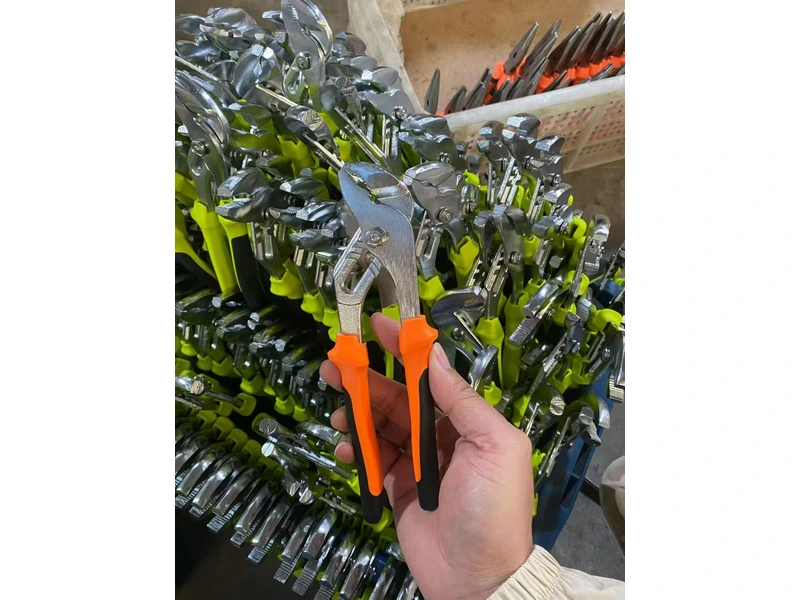
Inspect the exact model that will ship. For slip-joint samples, verify position seating, opening change, jaw alignment, and any cutter. For combination samples, inspect fixed-pivot alignment, working zones, cutter condition, and optional features. Record marks after representative grip work.
- Photograph each model beside a representative workpiece.
- Record dimensions against model number and revision.
- Check for burrs, cracks, bent handles, and loose hinges.
- Keep cutter or forming reviews within listed model limits.
A clean sample record prevents a family label from outrunning the tool. Use the end-cutting pliers versus diagonal cutters comparison only when cutter geometry becomes the next decision. See the bent-nose versus straight-nose pliers comparison when approach angle, rather than pivot family, controls access.
Sample inspection table
| Inspection point | Slip-joint sample | Combination sample |
|---|---|---|
| Joint | Position seating and play | Fixed-pivot alignment |
| Jaw | Serration, alignment, opening | Zone shape and alignment |
| Cutter | Present and model-supported | Present and model-supported |
| Handle | Span, finish, damage | Span, finish, damage |
| Application | Fit and marking | Fit, marking, and limits |
10. Which tool should a buyer place in each assortment slot?
Place slip-joint pliers where changing opening and light general gripping drive the task. Place combination pliers where a fixed layout covers repeatable flat grip, round grip, wire forming, and documented cutting. Stock both only when customer applications show a real split between adjustable opening and fixed multi-zone work.
- Put joint positions and opening fields on slip-joint listings.
- Put working-zone and cutter fields on combination listings.
- Mark surface and insulation limits on both families.
- Confirm uncertain model identity before packaging or publication.
Choose from the workpiece first, then record the tool family and model. Contact the supplier through the contact page when a photograph does not establish the joint, cutter, or working-zone design.
Q1: Are all slip-joint pliers two-position tools? No. Two positions are common in basic designs, but each model’s adjustment count needs confirmation.
Q2: Do combination pliers have adjustable jaws? Usually no. They generally use a fixed pivot with combined working zones.
Q3: Can serrated pliers grip a polished part without damage? Do not assume so. Teeth may mark or damage finished surfaces.
Q4: Does a soft handle make pliers insulated? No. Require explicit insulated, VDE, or 1000 V documentation.
Q5: Can either family replace a dedicated cutter? Only within the named model’s listed limits. Use a dedicated cutter outside those limits.
Looking for a reliable mechanic tools manufacturer in China?
If you are sourcing hand tools, socket tools, automotive repair tools, mechanic tool sets or OEM private label tools, contact KOLARWIN Tools for factory-direct quotation, customization support and product consultation.