Need OEM supplier support for this product type?
Contact KOLARWIN Tools for OEM mechanic tools, private label packaging, wholesale quotation and product range support. This gives overseas buyers a clear path from article reading to supplier discussion.
End-cutting pliers and diagonal cutting pliers both remove wire, nails, or small projections, yet their jaws meet a workpiece from different directions. Choose end-cutting pliers when a forward-facing jaw must sit close against a surface. Choose diagonal cutters for side entry around wire in open or crowded assemblies. Mixing those jobs can leave a nail proud, damage a finished face, or force a wrist twist in a confined area. The limits below are general selection guidance; each model still needs a verified drawing and material rating.
Contents
- 1. What is the basic difference between these pliers?
- 2. How does jaw direction change the cut?
- 3. Are end cutters automatically nail pullers or flush tools?
- 4. Which workpieces suit each jaw?
- 5. Which tool reaches a recessed area?
- 6. How should force and capacity be checked?
- 7. How should a distributor separate the SKUs?
- 8. Which details keep buyers from returning a tool?
- 9. How should a buyer inspect a sample cut?
- 10. Which pliers belong on the purchase order?
- What is the basic difference between these pliers?
- How does jaw direction change the cut?
- Are end cutters automatically nail pullers or flush tools?
- Which workpieces suit each jaw?
- Which tool reaches a recessed area?
- How should force and capacity be checked?
- How should a distributor separate the SKUs?
- Which details keep buyers from returning a tool?
- How should a buyer inspect a sample cut?
- Which pliers belong on the purchase order?
1. What is the basic difference between these pliers?
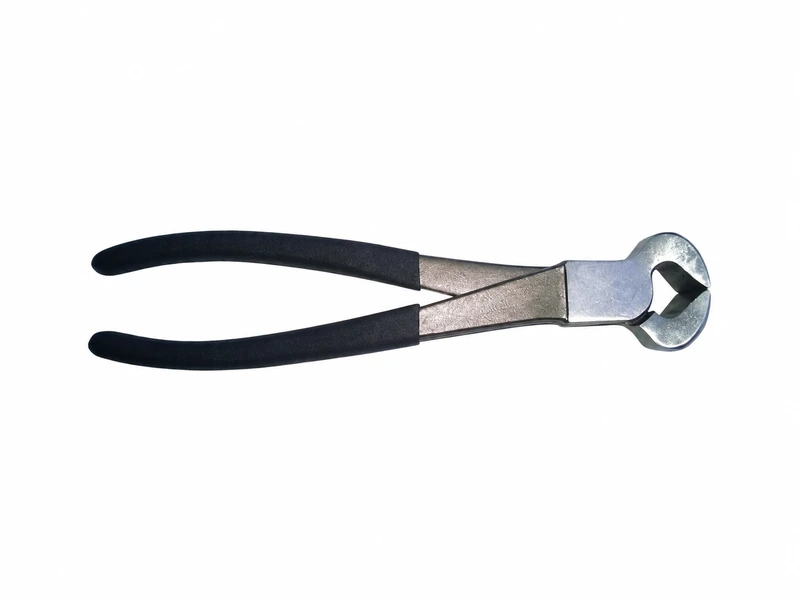
End-cutting pliers place cutting edges perpendicular to their handles. Their nose can sit close against a board, sole, molding edge, or other surface. Diagonal cutters place edges on an oblique head, allowing a side approach that works well on wire in an open or crowded assembly. Both designs vary widely in edge bevel, head profile, hand advantage, and capacity.
The buyer’s first question should be about where a cut happens. If the edge must meet a surface from above, end cutters may fit. If the user must reach between components and approach from the side, a diagonal cutter may be easier. Neither name proves a flush finish or nail-pulling ability.
Name the workpiece and approach first.
- End cutter: forward-facing work against a surface.
- Diagonal cutter: side entry around wire or lead.
- Special flush or nail model: only when its edge and head support that use.
Ask for a workpiece sketch showing surface, projection, and approach direction.
Two common jobs
A flooring installer may place an end cutter against wood to trim a nail close to the board. An electronics assembler may place a diagonal cutter beside a connector to remove a fine lead. Those conditional examples show access differences; they do not prove any unlisted product rating.
Orientation table
| Buyer condition | End-cutting pliers | Diagonal cutters | Verify |
|---|---|---|---|
| Cut against a flat surface | Natural approach | May require awkward twist | Head direction |
| Cut beside a component | Nose may block access | Side entry often easier | Head width |
| Pull a projection | Some rounded heads help | Not primary job | Pulling guidance |
| General wire work | Model dependent | Common role | Material and diameter |
2. How does jaw direction change the cut?
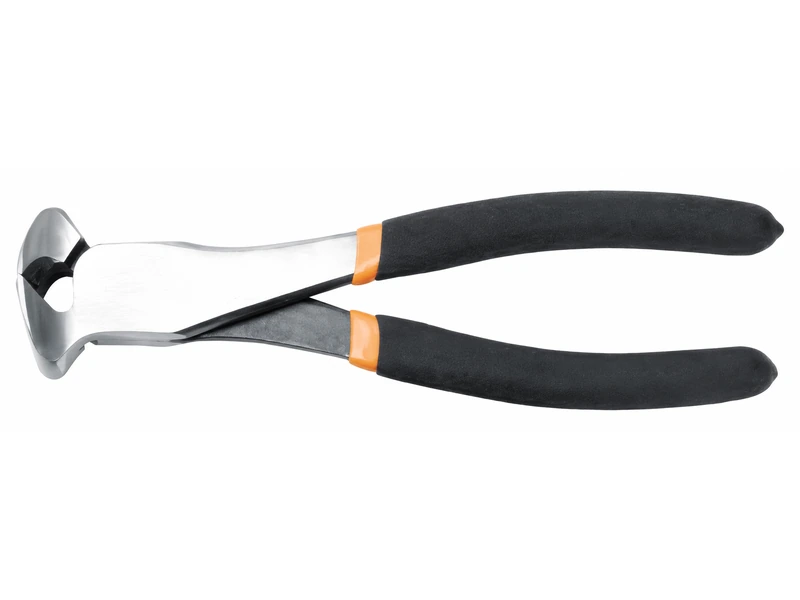
Jaw direction changes where force enters a projection. An end cutter can rock against a supporting surface when its head shape allows that motion. A diagonal cutter bites from the side, which can leave a tail if the user cannot bring its cutting edges close enough. Edge bevel then changes how much material remains above the surface.
KNIPEX’s technical guidance separates end-cutting nippers, oblique cutters, diagonal cutters, and cutting-edge forms such as bevel, small bevel, no bevel, and flush cut. That distinction shows why jaw direction and edge form should appear as separate product fields.
Approach direction determines control.
- Check whether the nose can sit flat.
- Check where the offcut will travel.
- Check whether the retained part has room for the bevel.
Photograph a side view and top view of every private-label head before listing it.
What “close” can mean
Close cutting may mean a low tail, an edge nearly level with a surface, or a cut suitable for later filing. Buyers use the phrase loosely. Ask which result they require, then match edge geometry and material. Do not promise a perfectly flush face from jaw orientation alone.
Jaw-path table
| Jaw path | Strength | Limitation |
|---|---|---|
| Forward end cut | Surface-adjacent access | Nose may need open top space |
| Diagonal side cut | Reaches beside parts | May leave a protruding tail |
| Rocking end head | Can lift some projections | Requires suitable head and surface |
| Slim diagonal head | Fits narrow gaps | Often lower heavy-wire capacity |
3. Are end cutters automatically nail pullers or flush tools?
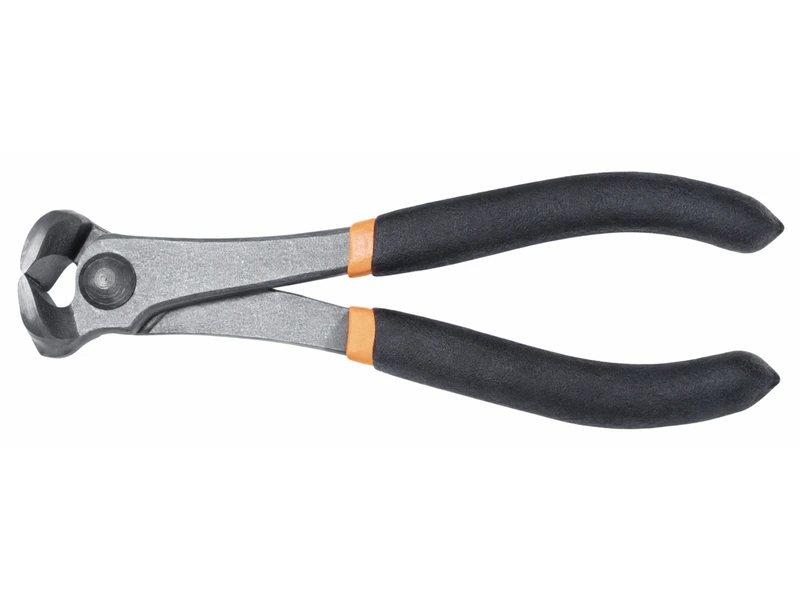
No. Some end-cutting pliers have a rounded head and jaw shape that support controlled rocking for nails or staples. Others focus on cutting wire. A tool may cut close yet have no safe geometry for pulling. A flush-looking end cutter may still leave a witness because its bevel, nose, or workpiece contact differs from a surface-ground plastic cutter.
Maun describes end cutters as useful for close cuts and notes that some can pull nails by holding a nail and levering it out. That guidance is application-specific. A distributor should not turn it into a universal nail-pulling promise.
“End” describes direction, not every capability.
- Nail pulling: look for a stated pulling use and suitable nose.
- Flush trim: check edge form and material.
- Hard wire: check the wire class and capacity.
Keep “end cutting,” “nail pulling,” and “flush finish” as separate listing fields.
Conditional wood example
If a repair worker removes a nail from reusable wood, a rounded end cutter designed for controlled levering may help. If a technician trims a soft wire against a housing, a different end cutter may fit. Neither case authorizes a buyer to pull hardened fasteners or cut material outside the sheet.
Capability table
| Claimed function | Evidence needed | Wording to avoid |
|---|---|---|
| End cutting | Jaw orientation photo | “Cuts everything” |
| Flush finish | Edge and sample cut | “Perfect flush” |
| Nail pulling | Head profile and guidance | “All end cutters pull nails” |
| Hard wire | Rated wire class | “Heavy duty” alone |
4. Which workpieces suit each jaw?
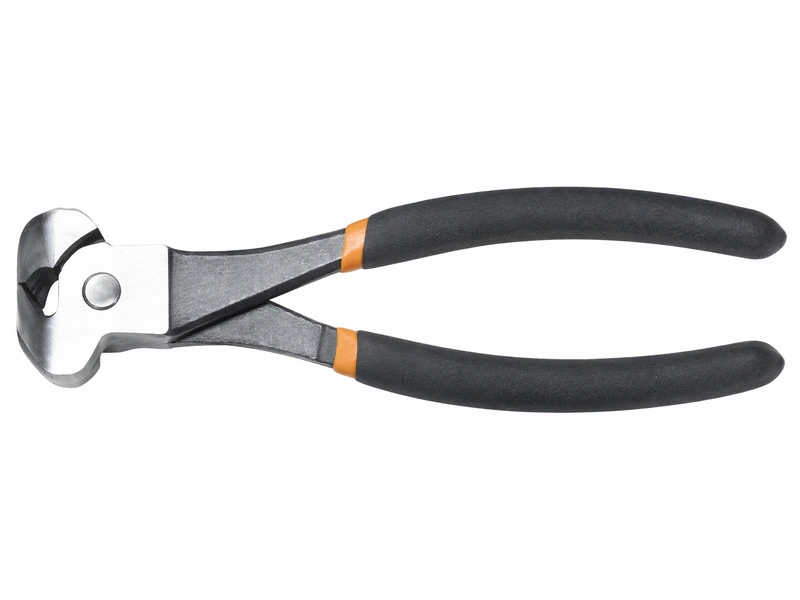
Start with the retained workpiece. Soft copper wire, cable ties, plastic runners, nails, staples, and small bolts each need a different edge and support level. A diagonal cutter may handle a general wire task, while an end cutter may sit closer against a wood or trim surface. A flush plastic cutter may be a better choice than either if a molding gate must disappear beside a visible face.
KNIPEX identifies surface-ground cutting faces for plastic work and bevel-based forms for wire. That distinction protects buyers from treating “end” as a finish guarantee. Material and diameter still control edge life.
Put surface, projection, and material in one sentence.
- Wood projection: confirm pull and cut guidance.
- Soft wire: confirm diameter and tail requirement.
- Plastic trim: confirm surface-ground or suitable flush edge.
- Hard wire: confirm rated edge support.
Rewrite each assortment description around one retained-part result.
Workpiece table
| Workpiece | Starting family | Result to inspect |
|---|---|---|
| Nail in wood | Rated end cutter | Remaining stub and wood bruising |
| Fine lead | Slim diagonal cutter | Tail and nearby part clearance |
| Plastic sprue | Plastic flush cutter | Witness and burr |
| Hard pin | Rated heavy cutter | Edge condition and cut force |
5. Which tool reaches a recessed area?
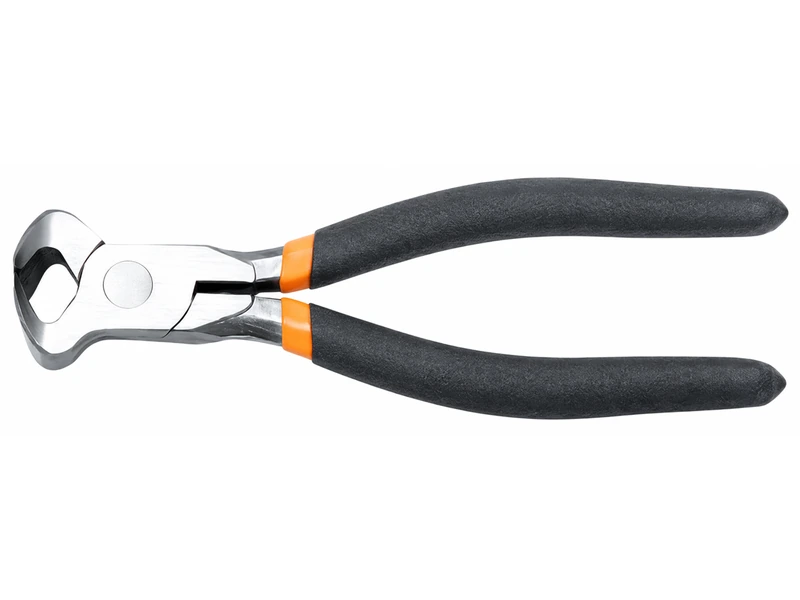
Access is a three-dimensional problem. A diagonal cutter may slip between connector rows because its head approaches from the side. An end cutter may need space above a surface yet give better contact once its nose arrives. Handle length, head thickness, jaw opening, and nearby walls all change the answer.
Ask buyers for a clearance measurement rather than “tight space.” A 6 mm slot, a recessed nail head, and a wire behind a panel each demand a different view. If the operator must rotate the wrist to align edges, a nominally correct cutter can damage parts or tire the user.
Measure the approach as well as the gap.
- Record top clearance and side clearance.
- Note whether the surface can support the nose.
- Check handle swing and line of sight.
Include a simple side-profile sketch in sourcing requests.
Access table
| Work area | Likely starting point | Main check |
|---|---|---|
| Flat wood face | End cutter | Nose contact and rocking space |
| PCB or connector row | Slim diagonal | Head thickness |
| Deep trim recess | Long or narrow head | Reach without twisting |
| Open bench | General diagonal | Material and capacity |
6. How should force and capacity be checked?
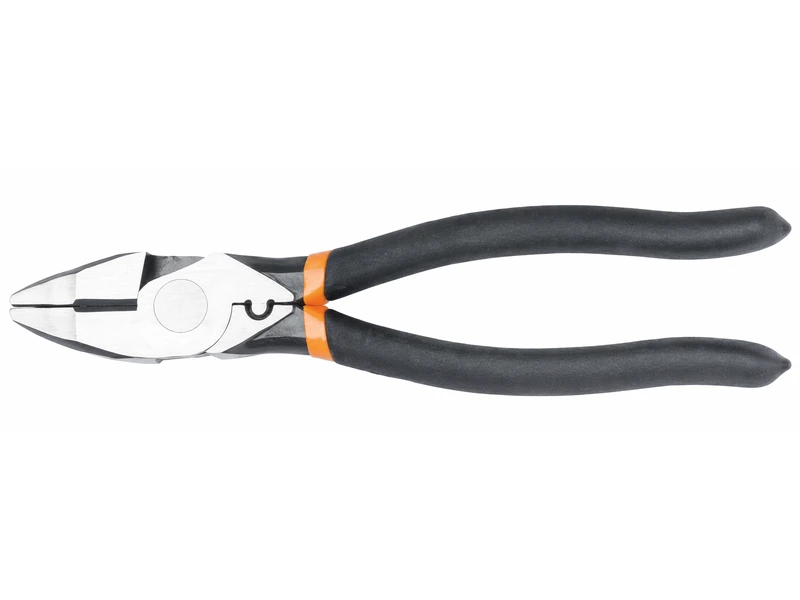
Handle length and joint position affect hand force, yet mechanical advantage does not erase material limits. KNIPEX notes that maximum cutting values apply under stated performance conditions, with wire placed near the joint. That condition belongs in your supplier discussion. A buyer who cuts near the tip may see a different result from a catalog capacity.
For end cutters used as levers, surface contact and head strength matter. A buyer should ask whether rocking is part of intended use, whether nails are mild steel or hardened, and whether the rounded head can avoid bruising a finished face.
Tie force claims to placement and motion.
- Ask for material class and diameter.
- Ask where the workpiece sits in the jaws.
- Separate cutting force from levering force.
Add cutting position and motion to your technical approval form.
Force table
| Question | Why it matters | Evidence |
|---|---|---|
| Where is material placed? | Joint provides more hand advantage | Capacity note |
| Is rocking intended? | Adds stress beyond cutting | Use guidance |
| What is wire hardness? | Edge support differs | Wire class |
| What surface is nearby? | Head may bruise it | Sample workpiece |
7. How should a distributor separate the SKUs?
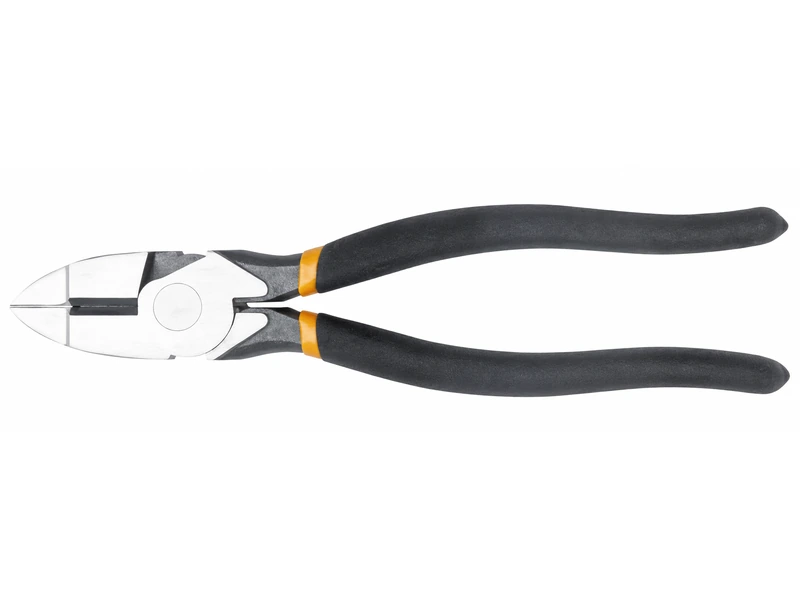
A distributor can group end cutters under surface-adjacent cutting, projection removal, or approved nail work. Diagonal cutters can sit under side-access wire cutting, harness work, or general maintenance. The specialty pliers buying guide can support that grouping, while the hand tools range gives buyers a wider family view.
Avoid a catalog that lists every plier as “multi-use.” Instead show jaw direction, finish, material, capacity, head size, and any pulling guidance. Link adjacent types of crimping tools only when the cut wire enters a terminal workflow.
Separate similar heads by access and retained result.
- End cutter for surface-adjacent work.
- Diagonal cutter for side entry.
- Flush plastic cutter for suitable visible trim.
- Rated heavy cutter for harder material.
Give each SKU one primary job and one prominent exclusion.
Assortment table
| Shelf group | Core message | Avoid implying |
|---|---|---|
| End cutting | Jaw faces surface | Universal nail pulling |
| Diagonal cutting | Side-access wire work | Flush finish on every material |
| Flush plastic | Low witness on suitable soft plastic | Hard-wire use |
| Heavy cutting | Rated harder material | Gentle visible-face trim |
8. Which details keep buyers from returning a tool?
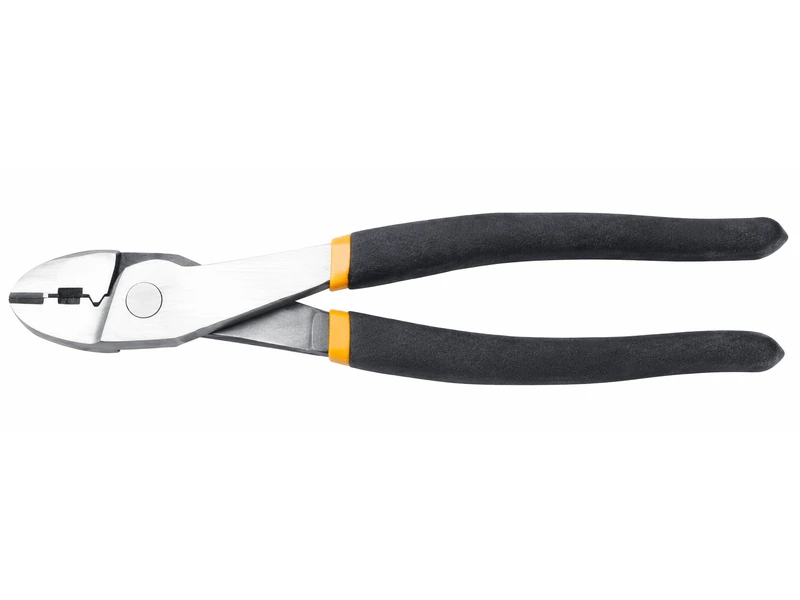
Possible returns can begin with a photo that hides jaw direction. A buyer may expect a surface-adjacent cut from a side-cutting head. Another buyer could assume an end cutter pulls hardened fasteners. A third may order a broad head for a recessed component after seeing only a front view. Show a side profile, closed-jaw view, and workpiece example. State whether the tool cuts close, cuts flush, pulls a projection, or supports all three only when documentation allows it. Buyers also check handle markings, spare parts, edge hardness, and packaging identity.
For maintenance buyers, pair this guide with the industrial maintenance repair tools buyers guide and the automotive repair tools range where repair access shapes the choice. Use supplier background and the contact page after technical fit has been documented.
Describe what the jaws cannot promise.
- State material class and size.
- Separate cutting from pulling.
- Show jaw direction in the image.
- Give a sample or drawing path for uncertain applications.
Make sales staff repeat the retained result before approving a substitute.
Return table
| Buyer expectation | Listing evidence | Failure avoided |
|---|---|---|
| Cut beside surface | Jaw direction and photo | Wrong approach |
| Flush-looking finish | Edge type and sample | Proud stub |
| Nail pulling | Stated head use | Lever damage |
| Hard wire | Rated class and diameter | Chipped edge |
9. How should a buyer inspect a sample cut?
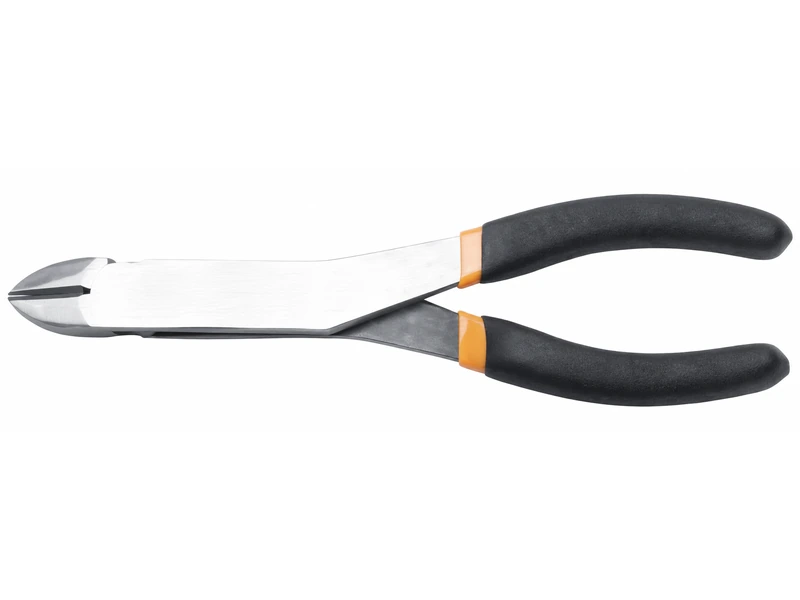
Use the intended material and surface. For a wood nail task, cut and then inspect the wood for bruising and the stub for height. For side-access wire, measure clearance beside a representative component. For plastic, photograph the retained edge under consistent lighting. If a tool may pull nails, test controlled rocking separately from cutting.
Compare end and diagonal cutters on the same job only when each tool sits in its intended direction. Record hand position, edge placement, cut tail, workpiece marks, and tool condition after repeated cycles. A single clean cut can hide access trouble or an edge that rolls after production use.
Use a representative retained part for testing.
- Photograph before and after.
- Record material and size.
- Mark the approach direction.
- Inspect edge and hinge after repetition.
Approve a model only after sample evidence matches the product copy.
Sample table
| Test | Record | Approval question |
|---|---|---|
| Surface-adjacent cut | Stub height and surface mark | Does end geometry help? |
| Side-access cut | Clearance and tail | Does diagonal entry fit? |
| Pulling motion | Nose contact and bruising | Is levering within guidance? |
| Repeated wire cuts | Edge and joint condition | Will the SKU survive intended use? |
10. Which pliers belong on the purchase order?
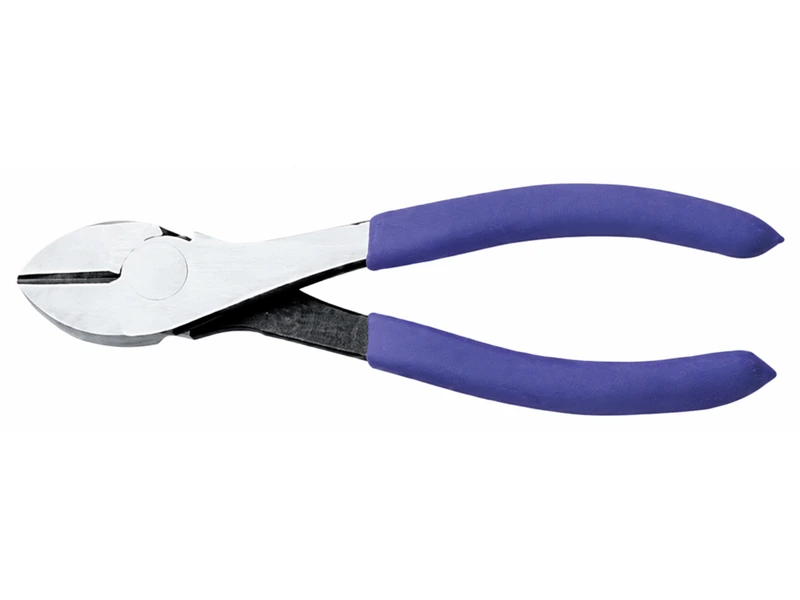
Order end-cutting pliers when a forward-facing jaw must sit close against a surface or a documented pulling use matters. Order diagonal cutters when side access, fine wire, or general wire preparation drives the work. Add a plastic flush cutter or hard-wire model only when material and finish justify separate SKUs.
Write the application in buyer language: “mild-steel nail in reusable wood, close trim, no hardened fasteners,” or “soft copper lead beside a connector, side entry, low tail.” For cable-related work, review the wire stripping and cutting functions guide so cutting and stripping do not get conflated. The industry application brief can frame the work environment.
Describe motion and material before naming the plier.
- State jaw direction needed.
- State surface or component clearance.
- State material and diameter.
- State finish or pulling result.
Request a side-profile drawing and a conditional sample before approving an equivalent tool.
Q1: Are end-cutting pliers the same as nail pullers? No. Some models support controlled nail pulling, while others only cut. Check the specific head and instructions.
Q2: Do end cutters always make a flush cut? No. Jaw direction helps access, but edge bevel, workpiece, and approach still control leftover material.
Q3: Which tool fits beside a connector? A slim diagonal cutter often offers side entry, subject to head width and wire rating.
Q4: Can a diagonal cutter pull nails? It should not be assumed. Use a model whose supplier documents pulling or levering for that application.
Q5: What should a buyer show a supplier? Provide a workpiece photo or sketch, material, size, clearance, required finish, and any pulling motion.
Looking for a reliable mechanic tools manufacturer in China?
If you are sourcing hand tools, socket tools, automotive repair tools, mechanic tool sets or OEM private label tools, contact KOLARWIN Tools for factory-direct quotation, customization support and product consultation.