Home/Blog/ Straight-Jaw vs Curved-Jaw Locking Pliers: Buyer Guide

Straight-Jaw vs Curved-Jaw Locking Pliers: Buyer Guide

Get OEM Tool Catalog + Quote Back to Tool Sourcing Blog
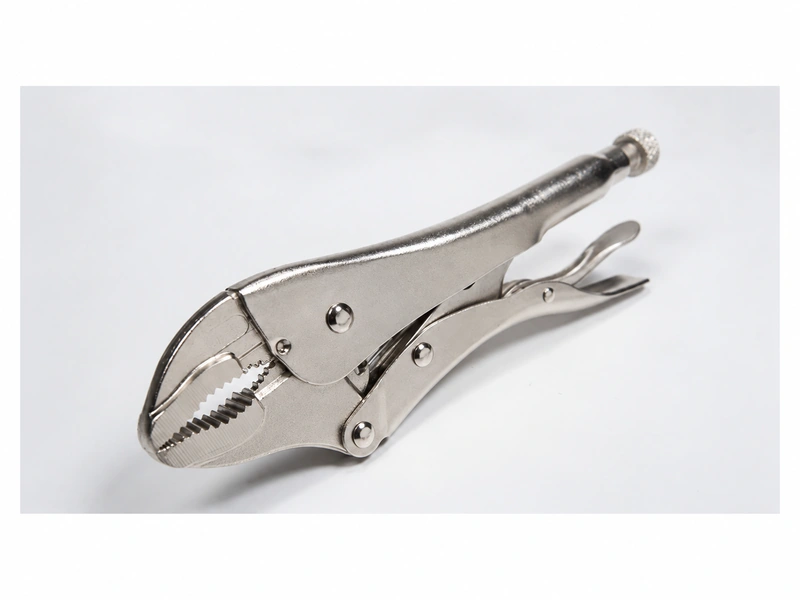
Curved-jaw locking pliers product photograph.
This KOLARWIN Tools article is written for overseas distributors, wholesalers, importers and private label tool brands sourcing mechanic tools, automotive repair tools, socket tools, hand tools and OEM tool sets from China. Use this guide to compare product options, check supplier quality points and move from reading to a faster B2B inquiry.

Need OEM supplier support for this product type?

Contact KOLARWIN Tools for OEM mechanic tools, private label packaging, wholesale quotation and product range support. This gives overseas buyers a clear path from article reading to supplier discussion.

Two locking pliers can share the same length and still behave differently on a bracket or round rod. For straight jaw vs curved jaw locking pliers, compare contact shape before handle features. Straight jaws suit many flat-sided holding jobs. Curved jaws accommodate round and mixed shapes. Check the exact part before choosing either.

Contents
  1. 1. Which jaw shape matches the part you need to hold?
  2. 2. Where does a straight jaw earn its shelf space?
  3. 3. When does a curved jaw make the better sample choice?
  4. 4. Does jaw shape change the locking mechanism?
  5. 5. How should importers compare opening and usable access?
  6. 6. What should buyers know about tooth marks and pressure?
  7. 7. Which details matter more than a bright finish?
  8. 8. How can a buyer reduce avoidable returns?
  9. 9. Should a distributor stock both jaw shapes?
  10. 10. What should an RFQ say about jaw shape?
1. Which jaw shape matches the part you need to hold?

Curved-jaw locking pliers product photograph
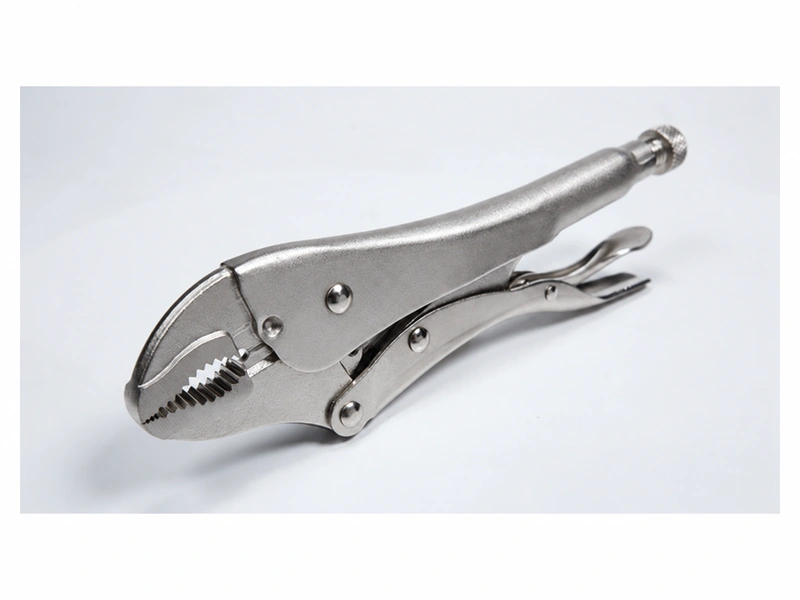
Curved-jaw locking pliers product photograph.

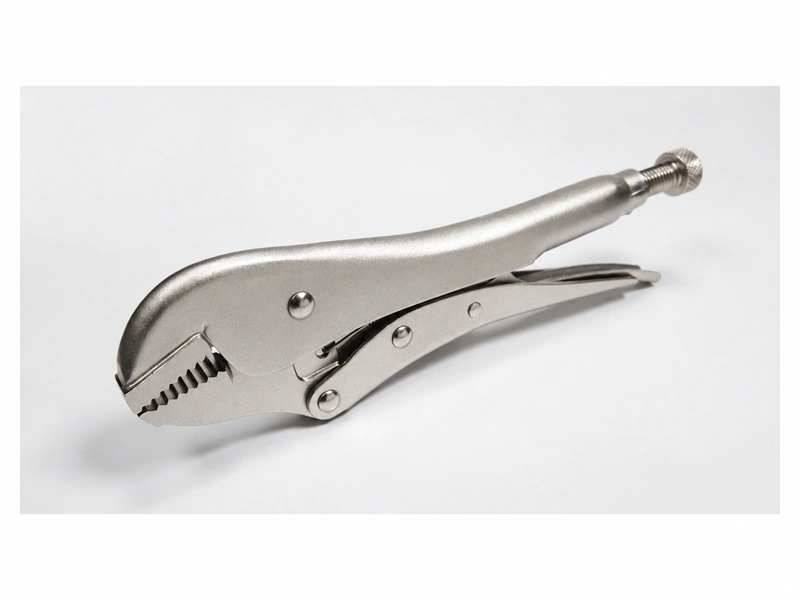
Straight-jaw locking pliers present a comparatively flat gripping profile. Curved-jaw versions place a shaped recess around a workpiece. That difference changes where contact develops when the handles lock.

A flat bracket, short section of round stock and irregular repair part create three different sample jobs. One tool may cover more than one, but that does not make every jaw shape equally useful. Actual jaw size, teeth and opening also affect the result.

Put a workpiece beside the quotation. Ask suppliers to identify the contact area on your representative part. Review the hand tools category after separating those applications.

  • Flat-sided stock needs a suitable contact footprint.
  • Round stock needs stable seating across its diameter.
  • Delicate surfaces need a separate marking decision.

Record the chosen application alongside each SKU. A customer should not need to infer suitability from a small product photograph or the phrase “all-purpose grip.”

Contact-shape comparison

Feature Straight jaw Curved jaw
Basic profile Flatter gripping faces Recessed, curved contact area
Useful sample Flat-sided bracket Round rod or suitable pipe
Selection limit Actual seating still needs checking Curvature alone proves no capacity

2. Where does a straight jaw earn its shelf space?

Curved-jaw locking pliers product photograph
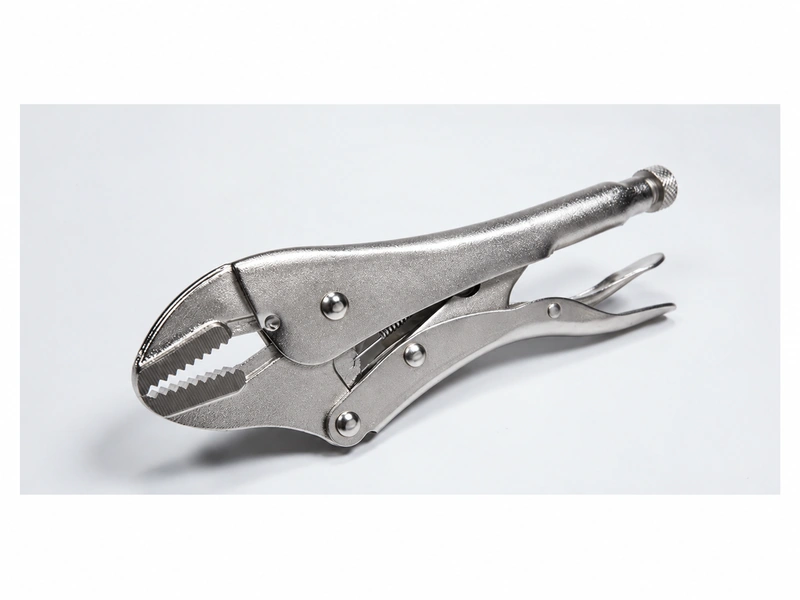
Curved-jaw locking pliers product photograph.

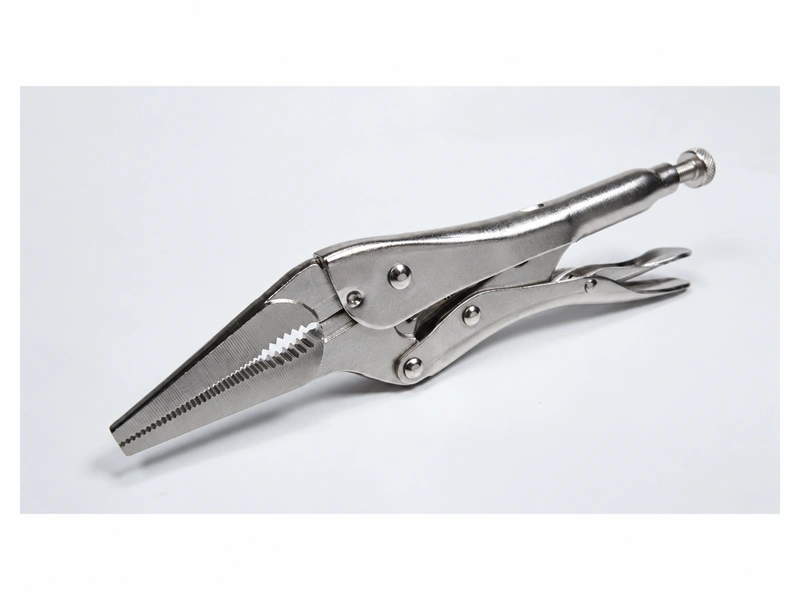
A workshop may need to hold two flat pieces in position while checking alignment. Straight jaws can provide a useful contact shape for that task. But locking pliers do not automatically replace a purpose-designed assembly clamp or fixture.

Look at jaw width as well as length. A narrow jaw can reach a small flange yet leave less contact area. A wider one may support the part better while blocking access to a nearby hole. These are different buying decisions even if both tools carry the same nominal size.

Check what the jaws cover. Put the sample on the real bracket or a matching coupon. Mark the intended contact zone before the trial.

  • Does the jaw land fully on usable material?
  • Can a second tool still reach the next operation?
  • Does the locked position disturb alignment?

The specialty pliers guide separates locking, gripping and other plier functions. Use that distinction when writing a kit list. A straight-jaw SKU deserves its place because it covers a defined job, rather than completing a color-matched display.

Flat-part review

Detail Sample question Buying consequence
Jaw width Does it cover usable material? Change contact footprint
Adjacent feature Does a jaw block the hole? Consider another head style
Part alignment Does locking move either piece? Review setup or fixture choice

3. When does a curved jaw make the better sample choice?

Curved-jaw locking pliers product photograph
Curved-jaw locking pliers product photograph.

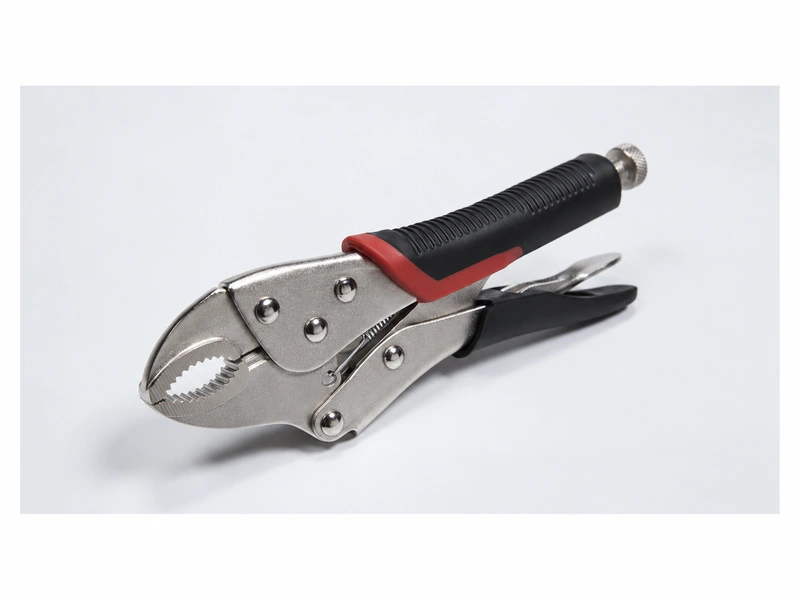
Curved jaws can accommodate round workpieces and other shapes that seat within their profile. That makes them worth comparing for a repair assortment handling rods, short pipe sections and mixed hardware. They can also grip some flat-sided shapes when the contact geometry suits.

Check the intended diameter in the actual jaw recess. A tiny rod and a much larger one will not sit in the same way. Contact near a jaw tip can behave differently from contact deeper inside.

Test the diameter your customer actually uses. Do not let a supplier demonstrate only the easiest sample. Include the range endpoints you plan to describe in sales material.

  • Observe stable seating before any working trial.
  • Check access for the intended operation.
  • Review marking on the representative surface.

For workshop customers, place these tools within the automotive repair assortment only when the application fits. Locking pliers are not a routine substitute for the correct wrench on an undamaged fastener. Keep that boundary clear in product descriptions and counter training.

Round-part checks

Sample What to compare Record
Small rod Position within jaw profile Contact location
Larger round stock Seating and remaining clearance Exact diameter
Mixed-shape repair part Tendency to rock Suitable contact orientation

4. Does jaw shape change the locking mechanism?

Straight-jaw locking pliers product photograph
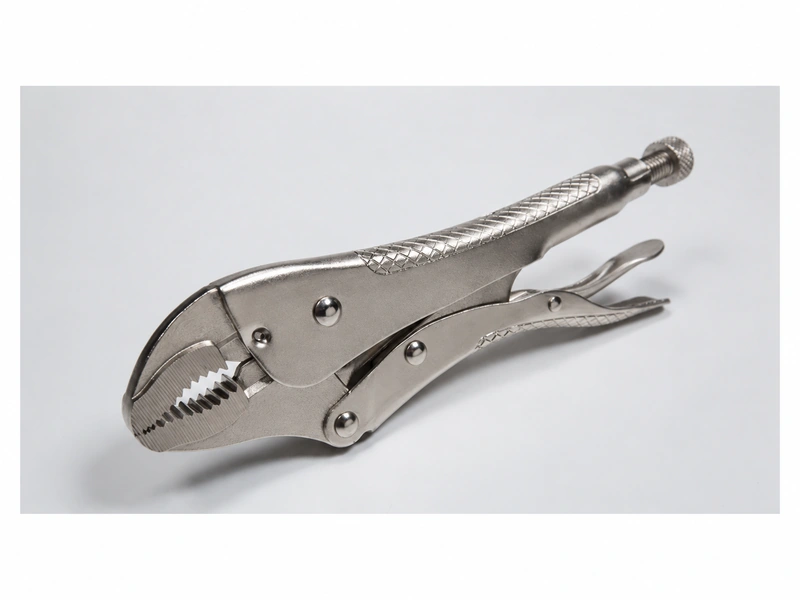
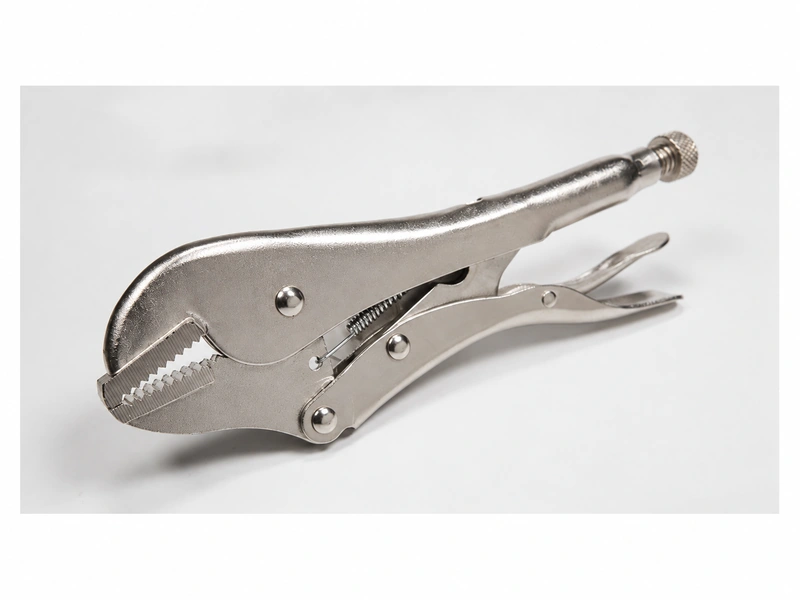
Straight-jaw locking pliers product photograph.

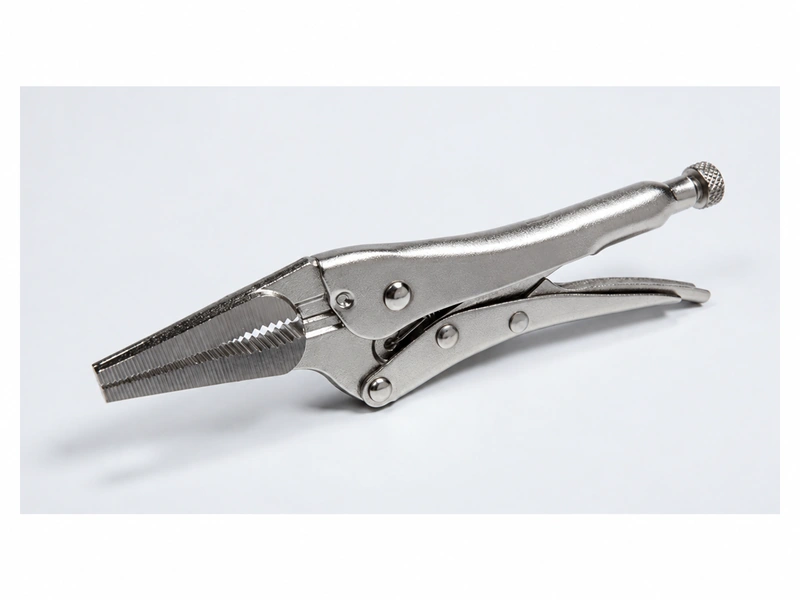
Jaw shape and locking mechanism are separate specifications. Many locking pliers use an adjustment screw and an over-center linkage. Other models add different release arrangements or adjustment features. A curved jaw does not identify which mechanism a supplier has fitted.

Buyers often compare an attractive handle photograph while overlooking a release lever hidden on the other side. Ask for both sides of the tool and a clear demonstration of normal locking and release. Review the manufacturer’s instructions before operating a sample.

Name the mechanism in the BOM. “Locking pliers, curved jaw” leaves too much room for a substitution if release design affects your customers.

  • Adjustment screw design and accessible grip area.
  • Release lever or other release arrangement.
  • Linkage clearance and moving-part condition.
  • Intended adjustment and operating instructions.

Keep a labeled master sample showing the accepted arrangement. Procurement, sales and incoming inspection should all refer to that same variant. Otherwise, one team can approve the jaws while another receives a different handle assembly.

Mechanism specification

Specification Why buyers need it Evidence
Adjustment arrangement Controls fit to the part Model drawing or sample
Release design Affects handling and access Operating instructions
Linkage configuration Identifies the quoted variant Both-side photographs

5. How should importers compare opening and usable access?

Straight-jaw locking pliers product photograph
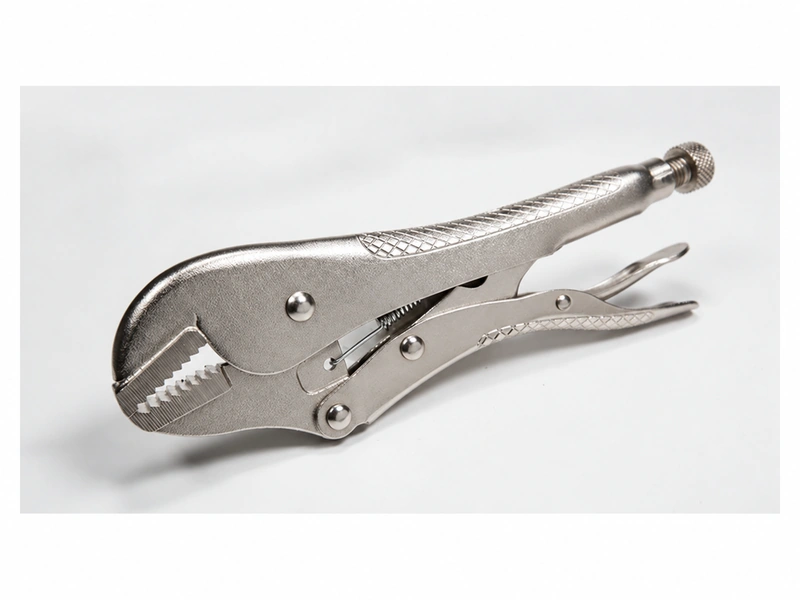
Straight-jaw locking pliers product photograph.

Maximum opening gives only part of the story. A tool may open around a workpiece while its handle or release lever hits nearby equipment. Another sample may reach the part comfortably but block the next operation once locked.

Compare the whole tool in its working position. Include the hand space needed to operate the release. For a crowded repair location, a cardboard clearance model can expose an access problem before buyers order a sample fixture.

Evaluate it while locked. Open-tool photographs cannot show where the handles and release will sit during the actual task.

  • Measure head width, depth and overall length.
  • Check handle position around the chosen workpiece.
  • Leave room for the next tool and normal release.

The maintenance tool buying guide helps turn these checks into a task-based list. Add another locking-plier size only when it covers a useful opening or access gap. A longer handle alone is a weak reason to duplicate stock.

Working-envelope record

Measurement Review position Reason
Head width Seated on the part Nearby obstruction clearance
Handle position Locked Hand and next-tool clearance
Release access Normal operating position Practical removal after use

6. What should buyers know about tooth marks and pressure?

Straight-jaw locking pliers product photograph
Straight-jaw locking pliers product photograph.

Toothed locking jaws can mark a workpiece. A firm grip on a scrap steel coupon does not prove acceptable contact on plated, painted or soft material. Define what surface damage the job can tolerate before selecting a jaw style.

Adjustment also changes how the tool closes on a part. Excessive setting force can damage the tool or workpiece. Follow model instructions and do not invent a universal screw position or hand-force rule for every product.

Inspect the part after release. Photograph both contact areas. A part can look aligned while clamped and show dents or distortion after removal.

  • Check visible marks against customer requirements.
  • Look for bending or movement of thin sections.
  • Consider a suitable dedicated clamp for delicate work.

Keep surface-critical tools separate from general gripping tools in a mechanics tool set. A kit description should explain what the included jaws are meant to hold. Avoid promising “no damage” unless the exact application and evidence justify that wording.

Surface acceptance record

Workpiece condition Check after release Possible next step
Visible finish Tooth impressions Select a suitable surface-protecting tool
Thin section Dents or loss of shape Review pressure and fixture
General steel coupon Contact pattern Compare with approved sample

7. Which details matter more than a bright finish?

Straight-jaw locking pliers product photograph
Straight-jaw locking pliers product photograph.

Inspect the jaws, pivot and linkage before grading appearance. A smooth coating cannot compensate for a chipped tooth or damaged moving part. Equally, an intended jaw shape should not be rejected because it looks different from another manufacturer’s tool.

Compare each sample against its own drawing, instructions and accepted master. Record where jaws contact the workpiece, how adjustment travels and whether normal release works. Keep the actual workpiece in the approval file or identify it precisely.

Use a repeatable sample job. “Feels strong” gives an incoming inspector little to check when another lot arrives.

  • Confirm model and jaw profile.
  • Inspect teeth and component condition.
  • Check normal adjustment, locking and release.
  • Examine the sample part after removal.

Ask for material and heat-treatment evidence separately if those claims appear in an offer. Do not infer a steel grade from color or finish. Supplier information on the about page provides commercial background, while product-specific evidence must cover the exact tool under review.

Inspection priorities

Check Record Hold for review when
Jaw identity Shape and quoted variant Supplied model differs
Moving components Normal function Adjustment or release binds
Contact condition Teeth and part impressions Damage affects intended grip

8. How can a buyer reduce avoidable returns?

Straight-jaw locking pliers product photograph
Straight-jaw locking pliers product photograph.

Ask what happened before replacing a returned tool. Did it slip on round stock, mark a finished bracket, fail to release normally, or arrive with damage? These complaints point to different causes and should not share one “poor quality” code.

A slipping complaint may involve wrong jaw selection or an actual defect. A surface complaint may reflect an application promise that should never have been made. Keep those possibilities open until the tool, part and setup are reviewed.

Ask for the part as well as the pliers. A clear photograph of the contact location can be more useful than a close-up of handles.

  • Tool model and batch identifier.
  • Workpiece shape, material and dimensions.
  • Intended operation and observed failure.
  • Photographs before and after release where available.

Use the industry application brief to separate customer tasks. A display aimed at general maintenance can need different guidance from a light assembly range. Update the product description when the return reveals a predictable selection mistake.

Return-routing table

Complaint Evidence to collect Review route
Slip Part shape and contact location Selection and tool condition
Marking Finish requirement and impressions Application description
Difficult release Setup and mechanism condition Instructions and functional inspection

9. Should a distributor stock both jaw shapes?

Straight-jaw locking pliers product photograph
Straight-jaw locking pliers product photograph.

A mixed repair channel can justify both. Straight jaws and curved jaws should cover different parts or contact requirements within the range. If both samples serve exactly the same local demand, another size or specialized clamp may fill a more useful gap.

Make a small application card for sales staff. Include one representative flat-part job and one round-part job. Add actual model limits and a reminder that marked surfaces need review. Avoid turning every possible repair workaround into a recommended application.

Build the range around repeat requests. Ask which jobs customers bring back, rather than ordering every jaw variation available from a catalog.

  • Keep a distinct role for each jaw shape.
  • Compare duplicate lengths before adding SKUs.
  • Specify replacement consistency across reorders.

When a customer needs conventional fastener turning, direct them toward suitable wrenches. The pipe wrench versus adjustable wrench guide provides a separate tool-selection discussion. Keeping these boundaries clear makes the locking-plier offering easier to explain and easier to inspect.

Two-SKU assortment test

Proposed SKU Role to justify Reason to reconsider
Straight jaw Defined flat-sided holding job No distinct contact benefit
Curved jaw Defined round or mixed-shape job Opening or access misses demand
Additional size New working envelope Merely duplicates existing use

10. What should an RFQ say about jaw shape?

Curved-jaw locking pliers product photograph
Curved-jaw locking pliers product photograph.

Include a side photograph showing the workpiece and a drawing or sample defining contact geometry. Name the jaw style, tool length, usable opening and release design. Ask the supplier to flag any difference between the offered model and your reference.

Keep packaging and customization on separate lines. Logo placement, carton quantity or handle color should not authorize a different linkage, jaw or screw. Request confirmation before production substitutions.

Approve one exact combination. Tool model, sample workpiece and written inspection conditions should remain linked throughout the order.

  • Jaw profile and head dimensions.
  • Adjustment and release arrangement.
  • Workpiece material, shape and surface limits.
  • Sample approval and reorder requirements.

Send those details through the contact page. Ask for separate quotations when straight and curved variants use different constructions. Your comparison sheet should let warehouse staff identify the accepted tool without reopening a sales conversation months later.

Q1: Are curved jaws always better for round parts?

They are worth evaluating for suitable round workpieces, but actual diameter, jaw profile and model limits determine fit.

Q2: Can curved-jaw locking pliers hold flat material?

Some can. Compare actual contact and part movement rather than treating jaw names as absolute application boundaries.

Q3: Do straight jaws guarantee a mark-free grip?

No. Teeth and clamping pressure can mark or deform a workpiece. Review surface acceptance separately.

Q4: Is maximum opening enough for SKU selection?

No. Check seating, head clearance, locked handle position and normal release access around the intended part.

Q5: What should remain unchanged on a reorder?

The approved jaw geometry, mechanism, materials and instructions should match the agreed specification. Review proposed substitutions before acceptance.

Looking for a reliable mechanic tools manufacturer in China?

If you are sourcing hand tools, socket tools, automotive repair tools, mechanic tool sets or OEM private label tools, contact KOLARWIN Tools for factory-direct quotation, customization support and product consultation.
Two locking pliers can share the same length and still behave differently on a bracket or round rod. For straight jaw vs curved jaw locking pliers, compare contact shape before handle features. Straight jaws suit many flat-sided holding jobs. Curved jaws accommodate round and mixed shapes. Check the exact part before choosing either.

Contents
  1. 1. Which jaw shape matches the part you need to hold?
  2. 2. Where does a straight jaw earn its shelf space?
  3. 3. When does a curved jaw make the better sample choice?
  4. 4. Does jaw shape change the locking mechanism?
  5. 5. How should importers compare opening and usable access?
  6. 6. What should buyers know about tooth marks and pressure?
  7. 7. Which details matter more than a bright finish?
  8. 8. How can a buyer reduce avoidable returns?
  9. 9. Should a distributor stock both jaw shapes?
  10. 10. What should an RFQ say about jaw shape?

1. Which jaw shape matches the part you need to hold?

Curved-jaw locking pliers product photograph
Curved-jaw locking pliers product photograph.

Straight-jaw locking pliers present a comparatively flat gripping profile. Curved-jaw versions place a shaped recess around a workpiece. That difference changes where contact develops when the handles lock.

A flat bracket, short section of round stock and irregular repair part create three different sample jobs. One tool may cover more than one, but that does not make every jaw shape equally useful. Actual jaw size, teeth and opening also affect the result.

Put a workpiece beside the quotation. Ask suppliers to identify the contact area on your representative part. Review the hand tools category after separating those applications.

Record the chosen application alongside each SKU. A customer should not need to infer suitability from a small product photograph or the phrase “all-purpose grip.”

Contact-shape comparison

Feature Straight jaw Curved jaw
Basic profile Flatter gripping faces Recessed, curved contact area
Useful sample Flat-sided bracket Round rod or suitable pipe
Selection limit Actual seating still needs checking Curvature alone proves no capacity

2. Where does a straight jaw earn its shelf space?

Curved-jaw locking pliers product photograph
Curved-jaw locking pliers product photograph.

A workshop may need to hold two flat pieces in position while checking alignment. Straight jaws can provide a useful contact shape for that task. But locking pliers do not automatically replace a purpose-designed assembly clamp or fixture.

Look at jaw width as well as length. A narrow jaw can reach a small flange yet leave less contact area. A wider one may support the part better while blocking access to a nearby hole. These are different buying decisions even if both tools carry the same nominal size.

Check what the jaws cover. Put the sample on the real bracket or a matching coupon. Mark the intended contact zone before the trial.

The specialty pliers guide separates locking, gripping and other plier functions. Use that distinction when writing a kit list. A straight-jaw SKU deserves its place because it covers a defined job, rather than completing a color-matched display.

Flat-part review

Detail Sample question Buying consequence
Jaw width Does it cover usable material? Change contact footprint
Adjacent feature Does a jaw block the hole? Consider another head style
Part alignment Does locking move either piece? Review setup or fixture choice

3. When does a curved jaw make the better sample choice?

Curved-jaw locking pliers product photograph
Curved-jaw locking pliers product photograph.

Curved jaws can accommodate round workpieces and other shapes that seat within their profile. That makes them worth comparing for a repair assortment handling rods, short pipe sections and mixed hardware. They can also grip some flat-sided shapes when the contact geometry suits.

Check the intended diameter in the actual jaw recess. A tiny rod and a much larger one will not sit in the same way. Contact near a jaw tip can behave differently from contact deeper inside.

Test the diameter your customer actually uses. Do not let a supplier demonstrate only the easiest sample. Include the range endpoints you plan to describe in sales material.

For workshop customers, place these tools within the automotive repair assortment only when the application fits. Locking pliers are not a routine substitute for the correct wrench on an undamaged fastener. Keep that boundary clear in product descriptions and counter training.

Round-part checks

Sample What to compare Record
Small rod Position within jaw profile Contact location
Larger round stock Seating and remaining clearance Exact diameter
Mixed-shape repair part Tendency to rock Suitable contact orientation

4. Does jaw shape change the locking mechanism?

Straight-jaw locking pliers product photograph
Straight-jaw locking pliers product photograph.

Jaw shape and locking mechanism are separate specifications. Many locking pliers use an adjustment screw and an over-center linkage. Other models add different release arrangements or adjustment features. A curved jaw does not identify which mechanism a supplier has fitted.

Buyers often compare an attractive handle photograph while overlooking a release lever hidden on the other side. Ask for both sides of the tool and a clear demonstration of normal locking and release. Review the manufacturer’s instructions before operating a sample.

Name the mechanism in the BOM. “Locking pliers, curved jaw” leaves too much room for a substitution if release design affects your customers.

Keep a labeled master sample showing the accepted arrangement. Procurement, sales and incoming inspection should all refer to that same variant. Otherwise, one team can approve the jaws while another receives a different handle assembly.

Mechanism specification

Specification Why buyers need it Evidence
Adjustment arrangement Controls fit to the part Model drawing or sample
Release design Affects handling and access Operating instructions
Linkage configuration Identifies the quoted variant Both-side photographs

5. How should importers compare opening and usable access?

Straight-jaw locking pliers product photograph
Straight-jaw locking pliers product photograph.

Maximum opening gives only part of the story. A tool may open around a workpiece while its handle or release lever hits nearby equipment. Another sample may reach the part comfortably but block the next operation once locked.

Compare the whole tool in its working position. Include the hand space needed to operate the release. For a crowded repair location, a cardboard clearance model can expose an access problem before buyers order a sample fixture.

Evaluate it while locked. Open-tool photographs cannot show where the handles and release will sit during the actual task.

The maintenance tool buying guide helps turn these checks into a task-based list. Add another locking-plier size only when it covers a useful opening or access gap. A longer handle alone is a weak reason to duplicate stock.

Working-envelope record

Measurement Review position Reason
Head width Seated on the part Nearby obstruction clearance
Handle position Locked Hand and next-tool clearance
Release access Normal operating position Practical removal after use

6. What should buyers know about tooth marks and pressure?

Straight-jaw locking pliers product photograph
Straight-jaw locking pliers product photograph.

Toothed locking jaws can mark a workpiece. A firm grip on a scrap steel coupon does not prove acceptable contact on plated, painted or soft material. Define what surface damage the job can tolerate before selecting a jaw style.

Adjustment also changes how the tool closes on a part. Excessive setting force can damage the tool or workpiece. Follow model instructions and do not invent a universal screw position or hand-force rule for every product.

Inspect the part after release. Photograph both contact areas. A part can look aligned while clamped and show dents or distortion after removal.

Keep surface-critical tools separate from general gripping tools in a mechanics tool set. A kit description should explain what the included jaws are meant to hold. Avoid promising “no damage” unless the exact application and evidence justify that wording.

Surface acceptance record

Workpiece condition Check after release Possible next step
Visible finish Tooth impressions Select a suitable surface-protecting tool
Thin section Dents or loss of shape Review pressure and fixture
General steel coupon Contact pattern Compare with approved sample

7. Which details matter more than a bright finish?

Straight-jaw locking pliers product photograph
Straight-jaw locking pliers product photograph.

Inspect the jaws, pivot and linkage before grading appearance. A smooth coating cannot compensate for a chipped tooth or damaged moving part. Equally, an intended jaw shape should not be rejected because it looks different from another manufacturer’s tool.

Compare each sample against its own drawing, instructions and accepted master. Record where jaws contact the workpiece, how adjustment travels and whether normal release works. Keep the actual workpiece in the approval file or identify it precisely.

Use a repeatable sample job. “Feels strong” gives an incoming inspector little to check when another lot arrives.

Ask for material and heat-treatment evidence separately if those claims appear in an offer. Do not infer a steel grade from color or finish. Supplier information on the about page provides commercial background, while product-specific evidence must cover the exact tool under review.

Inspection priorities

Check Record Hold for review when
Jaw identity Shape and quoted variant Supplied model differs
Moving components Normal function Adjustment or release binds
Contact condition Teeth and part impressions Damage affects intended grip

8. How can a buyer reduce avoidable returns?

Straight-jaw locking pliers product photograph
Straight-jaw locking pliers product photograph.

Ask what happened before replacing a returned tool. Did it slip on round stock, mark a finished bracket, fail to release normally, or arrive with damage? These complaints point to different causes and should not share one “poor quality” code.

A slipping complaint may involve wrong jaw selection or an actual defect. A surface complaint may reflect an application promise that should never have been made. Keep those possibilities open until the tool, part and setup are reviewed.

Ask for the part as well as the pliers. A clear photograph of the contact location can be more useful than a close-up of handles.

Use the industry application brief to separate customer tasks. A display aimed at general maintenance can need different guidance from a light assembly range. Update the product description when the return reveals a predictable selection mistake.

Return-routing table

Complaint Evidence to collect Review route
Slip Part shape and contact location Selection and tool condition
Marking Finish requirement and impressions Application description
Difficult release Setup and mechanism condition Instructions and functional inspection

9. Should a distributor stock both jaw shapes?

Straight-jaw locking pliers product photograph
Straight-jaw locking pliers product photograph.

A mixed repair channel can justify both. Straight jaws and curved jaws should cover different parts or contact requirements within the range. If both samples serve exactly the same local demand, another size or specialized clamp may fill a more useful gap.

Make a small application card for sales staff. Include one representative flat-part job and one round-part job. Add actual model limits and a reminder that marked surfaces need review. Avoid turning every possible repair workaround into a recommended application.

Build the range around repeat requests. Ask which jobs customers bring back, rather than ordering every jaw variation available from a catalog.

When a customer needs conventional fastener turning, direct them toward suitable wrenches. The pipe wrench versus adjustable wrench guide provides a separate tool-selection discussion. Keeping these boundaries clear makes the locking-plier offering easier to explain and easier to inspect.

Two-SKU assortment test

Proposed SKU Role to justify Reason to reconsider
Straight jaw Defined flat-sided holding job No distinct contact benefit
Curved jaw Defined round or mixed-shape job Opening or access misses demand
Additional size New working envelope Merely duplicates existing use

10. What should an RFQ say about jaw shape?

Curved-jaw locking pliers product photograph
Curved-jaw locking pliers product photograph.

Include a side photograph showing the workpiece and a drawing or sample defining contact geometry. Name the jaw style, tool length, usable opening and release design. Ask the supplier to flag any difference between the offered model and your reference.

Keep packaging and customization on separate lines. Logo placement, carton quantity or handle color should not authorize a different linkage, jaw or screw. Request confirmation before production substitutions.

Approve one exact combination. Tool model, sample workpiece and written inspection conditions should remain linked throughout the order.

Send those details through the contact page. Ask for separate quotations when straight and curved variants use different constructions. Your comparison sheet should let warehouse staff identify the accepted tool without reopening a sales conversation months later.

Q1: Are curved jaws always better for round parts?

They are worth evaluating for suitable round workpieces, but actual diameter, jaw profile and model limits determine fit.

Q2: Can curved-jaw locking pliers hold flat material?

Some can. Compare actual contact and part movement rather than treating jaw names as absolute application boundaries.

Q3: Do straight jaws guarantee a mark-free grip?

No. Teeth and clamping pressure can mark or deform a workpiece. Review surface acceptance separately.

Q4: Is maximum opening enough for SKU selection?

No. Check seating, head clearance, locked handle position and normal release access around the intended part.

Q5: What should remain unchanged on a reorder?

The approved jaw geometry, mechanism, materials and instructions should match the agreed specification. Review proposed substitutions before acceptance.

Why Partner with Kolarwin Tools?

Factory-Direct Pricing Skip the middleman — access competitive wholesale prices and protect your margins
Private Label & OEM Ready Your brand, our expertise — full customization from logo to packaging
Fast Global Shipping Reliable delivery to 60+ countries with full export documentation support
Low MOQ, High Flexibility Start small, scale fast — flexible order quantities to fit your business
Dedicated B2B Support One-on-one account management from quote to delivery, every time

Get Your Free Quote in 24 Hours

Tell us your sourcing needs — we'll respond with a tailored quote, product specs, and the best pricing for your market. No commitment required.

Chat on WhatsApp Email Us Directly