Need OEM supplier support for this product type?
Contact KOLARWIN Tools for OEM mechanic tools, private label packaging, wholesale quotation and product range support. This gives overseas buyers a clear path from article reading to supplier discussion.
A flush cutter and a diagonal cutter can look nearly identical in a catalog photo, yet “flush” and “diagonal” describe different attributes. Flush usually describes edge geometry or cut result; diagonal usually describes an oblique head orientation. A diagonal cutter can also have flush-ground cutting faces. In routine buying language, this comparison often means a flush-ground precision cutter versus a conventional beveled diagonal cutter, although those attributes can overlap. Published KNIPEX guidance explains the distinction; each supplied model still needs its own drawing and capacity sheet.
Contents
- 1. What changes between flush and diagonal cutting?
- 2. How does edge geometry change the cut face?
- 3. Which materials belong with each cutter?
- 4. How can a cutter damage a workpiece?
- 5. Which head reaches a crowded work area?
- 6. What should a buyer check in a specification sheet?
- 7. How should distributors build an assortment?
- 8. Which inspection points reduce returns?
- 9. How should a sample cut be evaluated?
- 10. Which cutter should a buyer order?
1. What changes between flush and diagonal cutting?
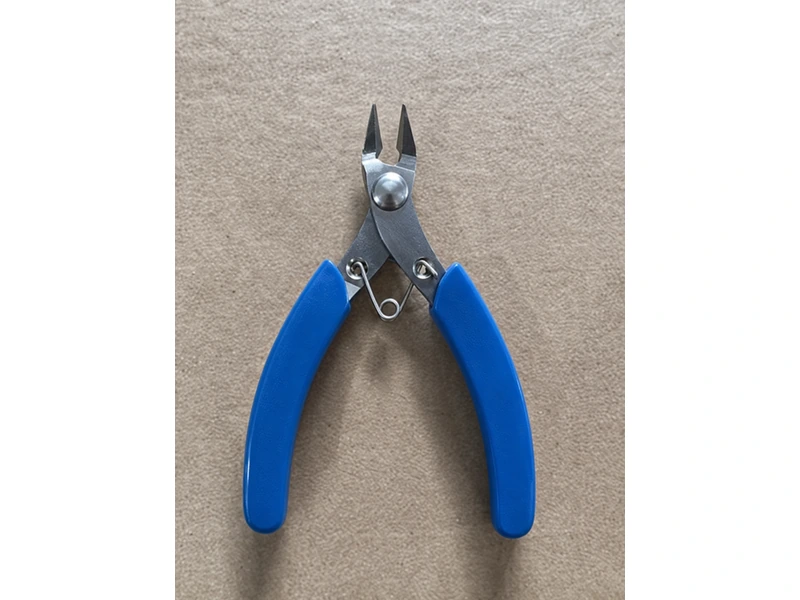
Flush-ground cutters place a cutting face close and parallel to a surface. They suit soft plastic sprues, cable-tie tails, and fine wire where a low leftover nub matters. A conventional diagonal cutter usually has an oblique head and a sloped bevel that drives material away from the joint. That geometry often handles tougher wire better, yet leaves a small wedge or point beside the cut. Some diagonal cutters combine an oblique head with flush-ground faces for a specific soft-material job.
For a purchasing team, the distinction sits in the result rather than the name. Ask whether a user needs a near-surface finish, a tougher material range, or one economical general-purpose cutter. A flat-looking head does not prove flush geometry.
Choose the edge for the next operation.
- Flush-ground edge: low protrusion beside a supported surface.
- Conventional beveled diagonal cutter: side-access wire cutting with a sloped cut face.
- Diagonal-head flush cutter: overlapping geometry with model-specific material limits.
Request a close-up edge drawing and a sample cut on your actual workpiece before replacing one family with another.
What does each tool leave behind?
Suppose an assembler trims an injection-molded sprue beside a visible housing. A beveled diagonal cutter can push material toward the housing and leave a small raised witness. A flush-ground cutter can reduce that finishing step when its rated material matches the plastic. On copper wire, a diagonal cutter may leave a pointed end; that may be acceptable under a crimp barrel, while it may be unsuitable near a seal.
Comparison for a first SKU decision
| Buyer need | Flush-ground cutter | Conventional beveled diagonal cutter | Check before order |
|---|---|---|---|
| Visible plastic trim | Flush-ground option often fits | Conventional bevel may leave a nub | Edge ground parallel to surface |
| General soft wire | Model dependent | Common choice | Diameter and wire class |
| Hard wire | Usually narrow material range | Rated models exist | Hardness and capacity table |
| Lowest leftover profile | Primary design goal | Model dependent | Sample cut and magnification |
2. How does edge geometry change the cut face?
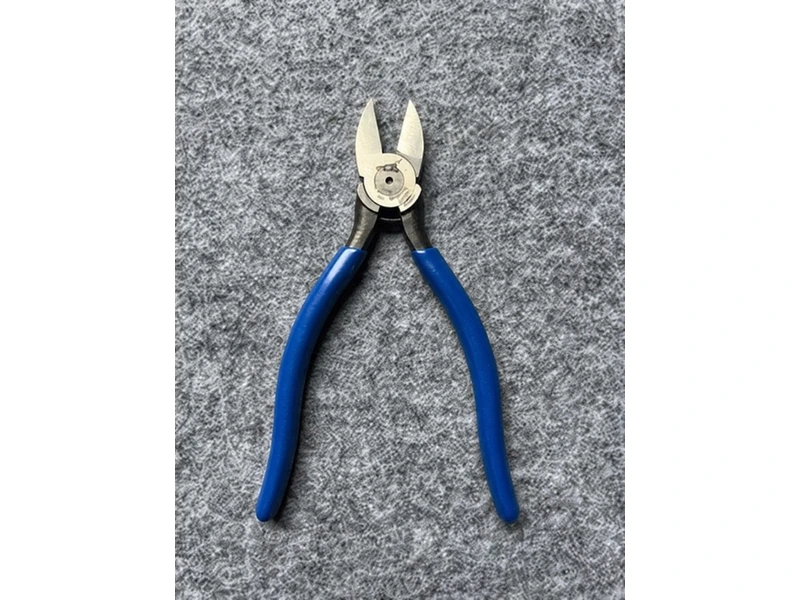
A cutter’s bevel controls where force enters a workpiece. KNIPEX explains that a conventional wire-cutter bevel produces a wedge-shaped cut toward the center. Its plastic cutters use surface-ground faces without a bevel toward the component, allowing a straighter separation on suitable soft material. That relationship helps explain why “flush” describes a cutting result and edge layout, not a universal product category.
Cutting direction also matters. A user who rolls a cutter across a board can create a different witness than someone who presents the edge squarely. Jaw alignment, joint play, edge meeting, and head access all affect the final surface.
Catalog shape cannot prove cutting geometry.
- Ask which side carries the bevel.
- Ask whether both edges meet evenly across their length.
- Ask whether the manufacturer defines “flush” as near-flush or truly surface-ground.
Add edge geometry, intended material, and cut orientation to your product data rather than relying on “flat cutter” wording.
Single bevel, double bevel, and no bevel
A single bevel can direct a burr away from a preferred face. Double-beveled edges divide the wedge and usually leave more material above a surface. A no-bevel or surface-ground face can cut very close, but it normally suits softer materials and tighter capacities. No-bevel does not mean “safe for every wire.”
Geometry comparison
| Edge form | Cut tendency | Typical fit | Risk if misapplied |
|---|---|---|---|
| Surface-ground flush face | Low protrusion on soft material | Sprues, fine trim | Edge chips on hard wire |
| Small bevel | Near-flush with modest wedge | Fine wire, controlled trim | Pointed tail or witness |
| Standard bevel | Wedge-shaped separation | General wire work | Surface damage beside cut |
| Heavy bevel | More edge support | Harder rated wire | Poor visible-face finish |
3. Which materials belong with each cutter?
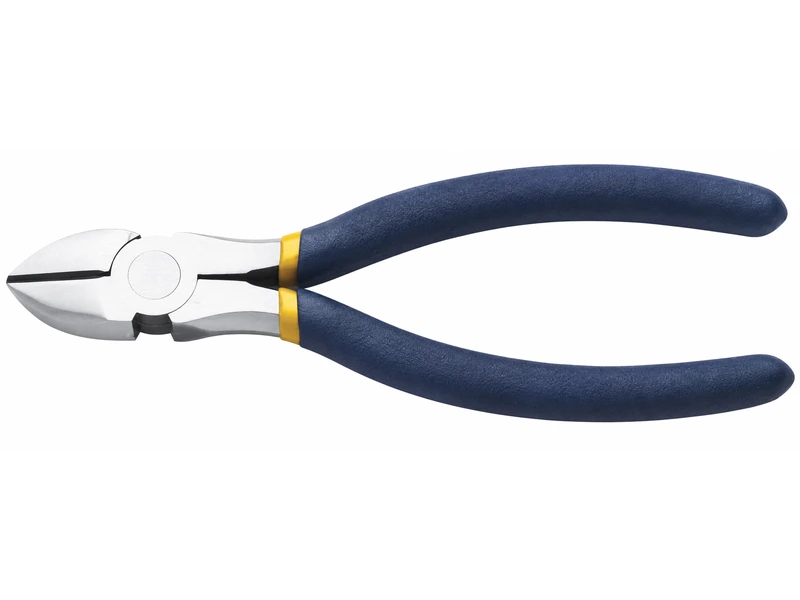
Material class should lead the selection. Soft copper, aluminum, plastic, cable ties, and lead behave differently from nails, piano wire, hardened pins, or steel cable. A flush cutter designed for plastic can fail quickly if a user treats it as a nail nipper. A diagonal cutter with a generous bevel may handle a rated wire class while still producing a less tidy cut.
Do not infer capacity from jaw length or handle color. A published diameter applies only under stated conditions, often with material placed near the joint. KNIPEX’s technical material separates soft, medium-hard, hard, and piano-wire classes. That classification is more useful than a single “cuts wire” label.
Match material before judging finish.
- Soft plastic: check edge support and compression behavior.
- Copper or aluminum wire: check diameter, strand type, and insulation clearance.
- Steel or hardened wire: use only a model explicitly rated for it.
Print material class and maximum diameter beside every cutter image in your distributor listing.
A conditional shop-floor example
If a harness line trims soft copper leads before crimping, a fine diagonal cutter may be sufficient when its capacity matches wire size. If a molding line removes plastic sprues from a visible panel, a surface-ground flush cutter may reduce secondary filing. These are conditional examples, not claims about a buyer’s process.
Material fit table
| Workpiece | Preferred starting family | Why | Confirm |
|---|---|---|---|
| Plastic sprue | Plastic flush cutter | Low witness | Plastic hardness and edge angle |
| Cable-tie tail | Flush tie cutter | Smooth operator-facing tail | Tie width and jaw clearance |
| Soft copper wire | Fine diagonal or flush model | Clean electrical prep | Diameter and strand construction |
| Nail or hard steel | Rated diagonal or end cutter | Stronger edge support | Exact wire class and capacity |
4. How can a cutter damage a workpiece?
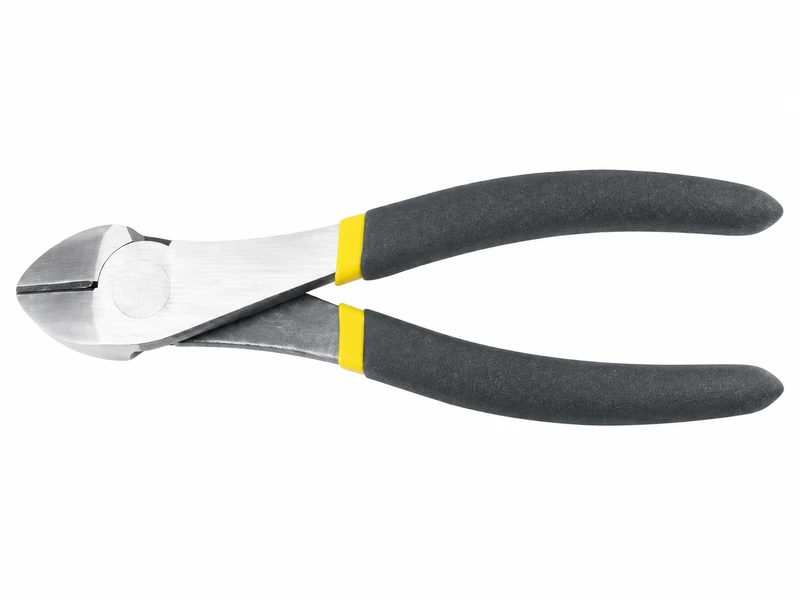
A mismatch can damage either side of a transaction. Excessive bevel force can dent a plastic boss or leave a sharp copper point. An undersized edge can roll, chip, or develop a gap. A user may then blame the tool for a result caused by wrong material, off-axis cutting, or a workpiece that was unsupported.
Distributors should describe failure modes plainly. “Flush” does not promise a mark-free surface. “Heavy duty” does not authorize cutting hardened steel. A buyer actually checks whether a cutter leaves a safe tail, distorts insulation, crushes strands, or needs rework.
Inspect both sides of the cut.
- Look for crushed strands or flattened insulation.
- Check for a plastic witness under normal lighting.
- Inspect edge damage after repeated cuts.
Ask suppliers for retained-workpiece photos beside a scale and a stated material condition.
Possible return triggers
Possible returns can follow a vague product page. A buyer may expect a flush finish yet receive a conventional beveled edge. Another buyer could cut steel tie wire with a soft-material cutter. A third buyer might need a narrow head for a board yet order a broad general-purpose model. Clearer descriptions can prevent each complaint.
Damage-risk table
| Observed result | Likely cause | Buyer response |
|---|---|---|
| Raised plastic nub | Bevel or wrong presentation | Use flush geometry and square approach |
| Pointed wire tail | Sloped edge | Select smaller-bevel or flush model |
| Crushed copper strands | Capacity exceeded | Move up capacity or change cable prep |
| Chipped edge | Hard material mismatch | Verify wire class before resale |
5. Which head reaches a crowded work area?
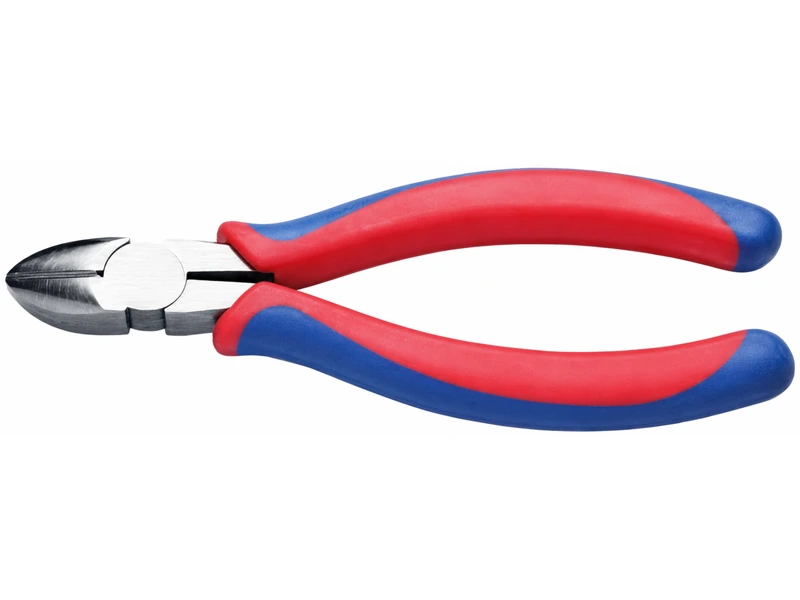
Flush and diagonal describe different attributes; neither alone describes access. A slim diagonal head can reach between connector bodies. A flush-ground edge may produce a low leftover profile once that head reaches the workpiece. A broad forged head may survive tougher wire but hit nearby ribs or fasteners. Handle length changes hand advantage and swing clearance, while a spring can improve repetitive light trimming.
For a buyer, access means the operator can place the edge squarely without twisting a wrist or scraping adjacent parts. A diagonal head often approaches from the side, whether its cutting faces are beveled or flush-ground. An end-facing cutter presents its edge differently, which matters in a separate comparison.
Access controls edge placement.
- Measure slot width and approach angle.
- Check head thickness near the joint.
- Confirm whether a spring or lock affects one-hand work.
Send suppliers a simple access sketch with minimum gap, wire position, and approach direction.
Access table
| Work area | Useful feature | Tradeoff |
|---|---|---|
| Dense PCB | Slim, fine diagonal head | Lower heavy-wire capacity |
| Open harness bench | Standard diagonal head | More wedge at cut |
| Visible plastic edge | Flush face with suitable nose | Narrow material range |
| Deep enclosure | Long, slim nose | Less hand advantage at joint |
6. What should a buyer check in a specification sheet?
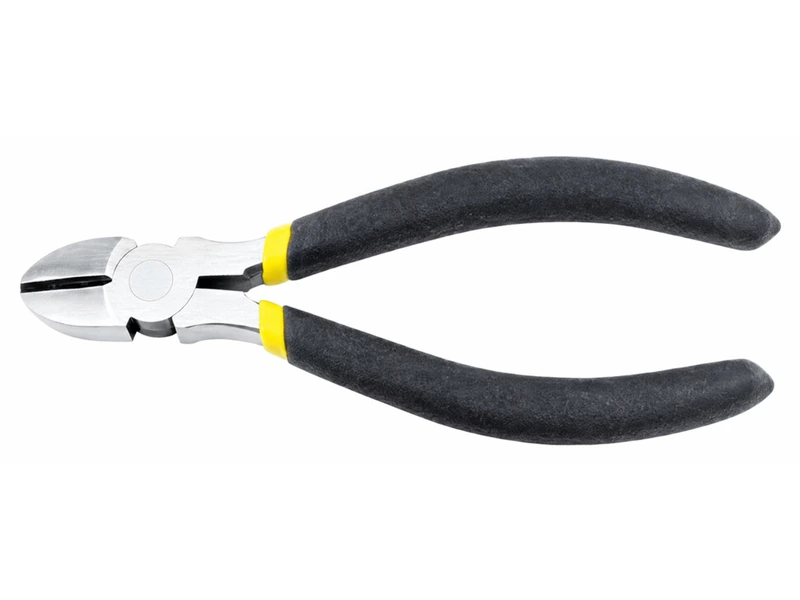
A usable specification sheet should connect every number with a condition. Length, weight, head width, edge hardness, joint type, handle material, and wire capacity help only when paired with material class and placement. A single maximum diameter without those details invites misuse.
Look for a drawing or photo that shows cutting-edge orientation. Check whether “insulated handle” means grip comfort or a certified live-work tool. KNIPEX notes that only handles marked for 1000 V carry that insulation meaning; colored grips alone do not establish it.
Every capacity number needs boundaries.
- Material and diameter.
- Cutting position near joint.
- Flush, semi-flush, or standard finish.
- Replacement or service parts.
Make those fields mandatory in your RFQ comparison sheet.
Specification table
| Field | Why it affects purchase | Missing detail |
|---|---|---|
| Edge form | Predicts cut face | “Flat” without drawing |
| Capacity | Protects edge and workpiece | Diameter without material |
| Head width | Predicts access | No clearance dimension |
| Handle marking | Defines electrical claim | Color-only insulation language |
| Joint construction | Affects feel and service | No spare-parts path |
7. How should distributors build an assortment?
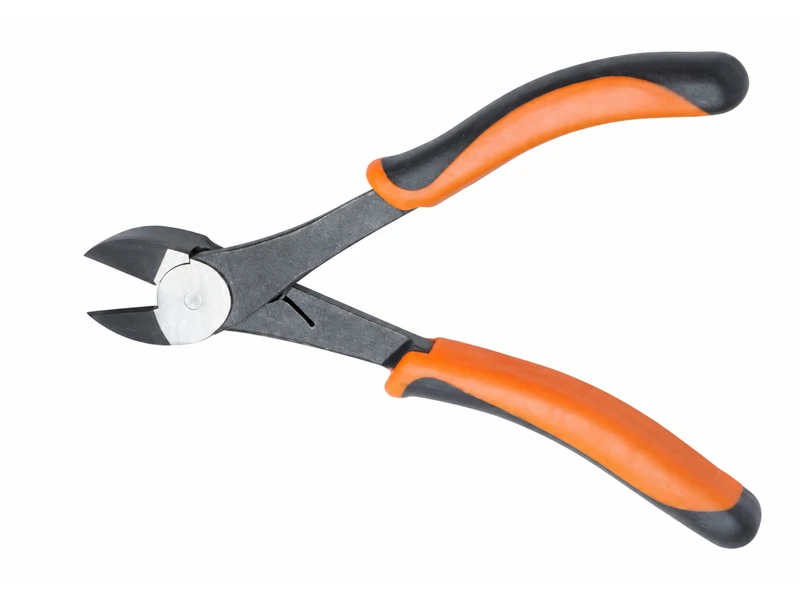
An assortment works better when each SKU has a clear job. A lean range might include a general diagonal cutter for soft and medium wire, a precision small-head cutter for fine access, and a flush plastic or tie cutter for visible trim. Add a hard-wire model only when buyers can state that demand.
Do not fill every size without a demand reason. Repeated variants confuse online shoppers and make substitution errors harder to detect. Product grouping can sit beside your hand tools product range and specialty pliers buying guide so buyers can compare use cases rather than handle colors.
Give every SKU one plain-language job.
- Lead with workpiece and finish.
- Put capacity beside material class.
- Link related types of crimping tools only where wire preparation is part of the workflow.
Audit each listing for one primary use, one exclusion, and one replacement path.
Assortment table
| Range tier | Core SKU role | Exclusion to show |
|---|---|---|
| General | Soft and medium wire | No hardened material unless rated |
| Precision | Fine wire, tight access | Small capacity |
| Flush | Plastic, ties, visible trim | Not a nail cutter by default |
| Heavy | Rated hard wire | Cut result may not be flush |
8. Which inspection points reduce returns?
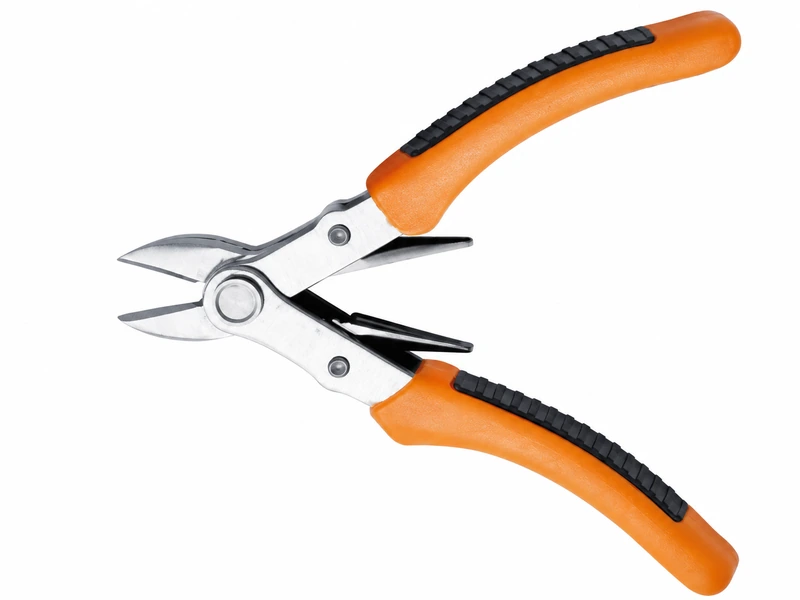
Incoming inspection should test function, finish, and identity against an approved drawing or tolerance record. Check jaw meeting, spring return, and hinge movement against that model’s documented geometry; do not impose a universal “no visible gap” or “no side play” rule on every cutter design. Then cut a stated sample material near the joint and inspect the retained part. A catalog image cannot show edge alignment across a complete closing cycle.
For private-label orders, ask for a golden sample approved against a drawing. Keep photographs of edge form, handle marking, and package label. That record helps separate a production variance from a user selecting an unsuitable cutter.
Write down what a passing cut looks like.
- Verify part number and edge family.
- Check jaw meeting and burrs.
- Cut approved material at approved diameter.
- Record any surface witness or strand damage.
Add retained-workpiece photos to your purchase approval file.
Inspection table
| Check | Pass condition | Evidence |
|---|---|---|
| Jaw closure | Matches approved model geometry and tolerance | Close-up photo and drawing |
| Hinge | Movement matches approved model condition | Inspector note and tolerance record |
| Cut finish | Matches stated family | Sample cut image |
| Handle claim | Marking matches document | Label photo |
| Packaging | SKU and warnings agree | Carton record |
9. How should a sample cut be evaluated?
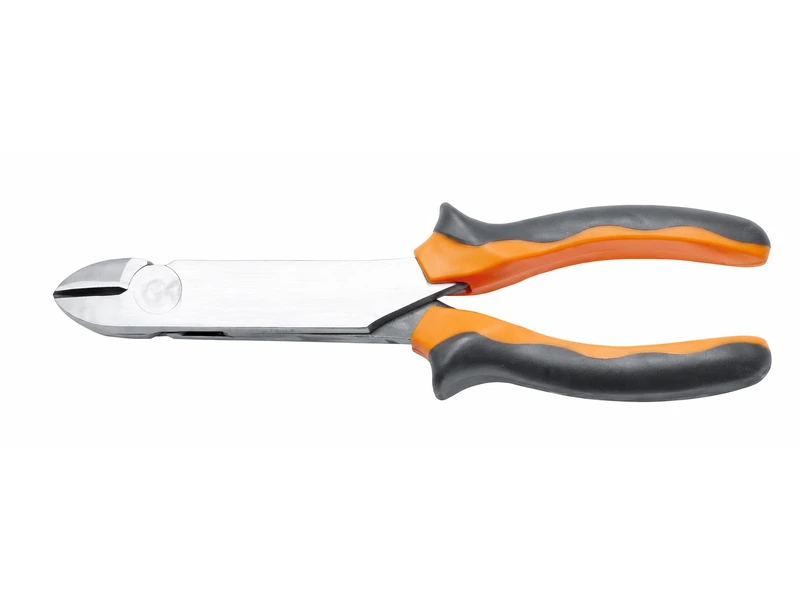
Use a small test matrix instead of one dramatic cut. Prepare each intended material at its normal size. Cut near the joint, then repeat at a realistic angle. Record the retained-part finish, offcut shape, hand force, and any edge change after repeated cycles.
For plastic, check whether the gate or sprue breaks cleanly without pulling a chunk from the part. For wire, inspect strand deformation and tail shape. A buyer comparing two models should photograph the same workpiece under the same light.
A useful sample proves repeatability on the real part.
- Use actual production material when permitted.
- Compare retained workpiece and offcut.
- Repeat enough cycles to reveal edge rolling.
Approve a model only after its sample record matches your listing language.
Sample table
| Sample item | Measure | Pass question |
|---|---|---|
| Plastic sprue | Burr or witness | Can finishing work be reduced? |
| Copper lead | Tail and strand shape | Can the next terminal operation proceed? |
| Cable tie | Sharp remaining tail | Can an operator handle the part safely? |
| Hard wire | Edge condition | Was this material within the rating? |
10. Which cutter should a buyer order?
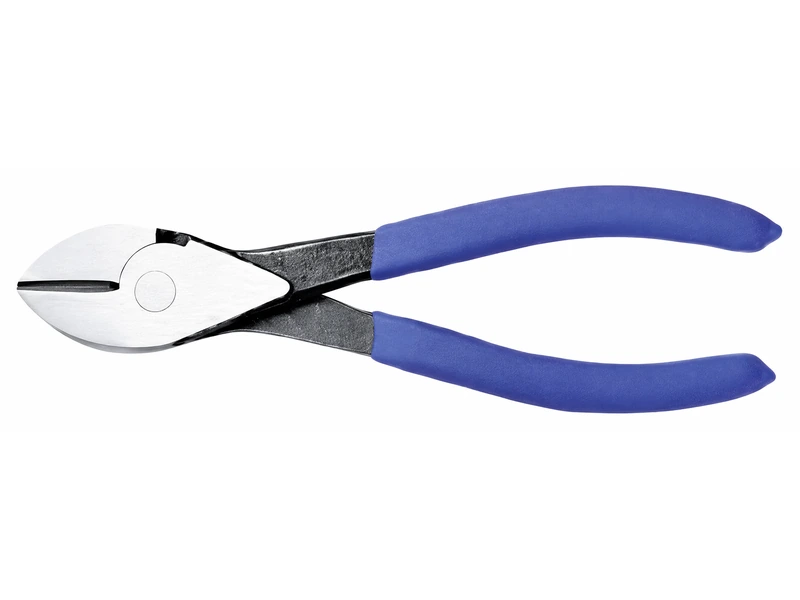
Choose a flush-ground cutter when a near-surface result on suitable soft material drives the purchase. Choose a conventional beveled diagonal cutter when general wire work or a broader rated material range matters more. If both edge types are needed, stock models with distinct jobs and label their workpiece, finish and capacity.
Keep the buying record specific. A short note such as “plastic sprue, low visible nub, 3 mm gate” tells a supplier more than “need flush pliers.” For broader maintenance planning, compare this choice with a wire stripping and cutting functions brief and the industrial maintenance repair tools buyers guide.
Put workpiece, finish, access, and capacity on the PO.
- Name the material.
- Name the acceptable leftover profile.
- State the tightest access condition.
- Ask for a sample or drawing.
Send suppliers a four-line application brief before selecting a replacement SKU.
If your range serves automotive work, review the automotive repair tools range for adjacent cutting tasks. For plant buyers, the industry application brief can help frame end-use context. A supplier review can then move through company background and the contact page once technical fit has been established.
Q1: Are flush cutters and diagonal cutters interchangeable? They can overlap. “Flush” usually describes edge geometry or cut result, while “diagonal” usually describes head orientation. A diagonal-head cutter can be flush-ground, so compare the model drawing, material rating, finish, and access condition.
Q2: Does flush mean completely mark-free? No. Workpiece support, approach angle, edge condition, and material behavior still affect the result.
Q3: Can a flush cutter cut nails? Only when a supplier explicitly rates that model for the nail or wire class. A plastic flush cutter should not be treated as a nail tool.
Q4: What should a distributor show online? Show edge form, material class, diameter, finish wording, head dimensions, and clear exclusions.
Q5: What sample should a buyer request? Request a retained-workpiece cut using your material and normal size, plus an edge close-up and capacity statement.
Looking for a reliable mechanic tools manufacturer in China?
If you are sourcing hand tools, socket tools, automotive repair tools, mechanic tool sets or OEM private label tools, contact KOLARWIN Tools for factory-direct quotation, customization support and product consultation.