Need OEM supplier support for this product type?
Contact KOLARWIN Tools for OEM mechanic tools, private label packaging, wholesale quotation and product range support. This gives overseas buyers a clear path from article reading to supplier discussion.
Utility knife blades differ by edge shape, tip, segment design, and holder fit. A two-notch trapezoid blade, hook blade, segmented snap blade, rounded-tip blade, and serrated blade serve different configurations and tasks. A product name alone cannot establish compatibility: buyers must compare blade width, thickness, notch position, overall profile, and the holder maker’s approved SKUs. This guide maps common blade types first, then gives distributors a practical way to match, pack, and replenish them without promising a universal fit or material result.
1. What are the common utility knife blade types?
Blade categories describe geometry or construction, not always the handle that accepts them. Two-notch blades have a rectangular or trapezoid profile with notches that engage a compatible holder. Hook blades curve at the cutting end. Segmented snap blades have score points for exposing a fresh section within a compatible snap knife. Rounded or blunt-tip blades change nose profile; serrated edges have teeth. Some products combine features, such as a hooked snap blade.
Use this quick map to separate the major profiles:
- Two-notch/trapezoid: detachable flat blade with holder-engagement notches.
- Hook: curved cutting edge; select only for maker-listed tasks.
- Segmented/snap-off: breakaway sections on a blade designed for a matching snap holder.
- Rounded/blunt-tip: altered nose profile; verify product terminology and application.
- Serrated: toothed edge; check exact holder and named material use.
Start with the blade itself. Excel Blades catalogs two-notch, straight-edge, segmented, and specialty forms. Stanley lists hook and rounded-tip utility blades, while OLFA lists solid serrated insulation blades and segmented hook snap blades for specified 18 mm knife families. These examples show variety, not a complete universal taxonomy. For broad toolkit context, see the hand tools for home repairs guide; blade selection depends on holder and application.
Quick blade-type map
| Blade type | Visible geometry | Buyer’s first check |
|---|---|---|
| Two-notch/trapezoid | Flat blade with notches | Holder width, thickness, notch positions |
| Hook | Curved or hooked cutting edge | Named task and holder approval |
| Segmented/snap-off | Score points along blade | Segment width and snap-knife fit |
| Rounded/blunt-tip | Modified front tip | Exact profile and intended use |
| Serrated | Teeth along cutting edge | Holder support and maker-listed material |
2. What distinguishes standard two-notch or trapezoid blades?
A common detachable utility blade has a flat body with notches along one or both sides. Buyers may see this form called standard utility, trapezoid, or two-notch, although naming varies. Excel Blades identifies #92 and #80 styles among its utility blade offerings, and Stanley lists its own model families. Similar shape does not guarantee interchangeable fit. Small changes in width, thickness, notch location, shoulder shape, or exposed length can affect seating and lock engagement.
When matching a blade to a holder, compare:
- Blade width and thickness against the holder’s product sheet.
- Number, position, and size of notches or engagement features.
- Overall blade length, tip profile, and supported extension.
- Holder brand, exact model, and approved replacement blade list.
- Package label or SKU that identifies the intended holder family.
Treat “standard” as a category label, not a fit guarantee. Excel’s blade guide notes particular two-notch references; Stanley describes some blades as fitting its standard utility knives and most other knives. Those statements are product-specific and do not establish that every two-notch blade fits every holder. For a replacement program, request an approved compatibility matrix and compare physical samples before listing cross-brand compatibility.
Two-notch fit comparison
| Fit field | Record | Do not assume |
|---|---|---|
| Width/thickness | Maker-published dimensions | Visual similarity means fit |
| Notches | Count, location, geometry | All holders use same notch pattern |
| Blade profile | Length, shoulders, nose shape | Every trapezoid blade has same outline |
| Holder approval | Exact knife model or approved SKU | “Standard” means universal |
3. When is a hook blade the relevant option?
A hook blade has a curved cutting edge or hooked nose. Manufacturers describe these shapes for selected tasks where hook profile suits cut path or keeps cutting edge oriented toward material. Stanley lists its large hook blade for roofing materials, linoleum, carpet, fabric, cartons, and sheet materials. OLFA lists hook snap blades for carpet, house wrap, shingles, and other named applications. Lists differ; use intended material from each selected product’s maker.
For sourcing or replenishment, check:
- Hook depth and overall profile.
- Whether the blade is a solid replacement or segmented snap blade.
- Holder family and approved model list.
- Named work materials and any stated thickness limits.
- Pack size and protected storage format.
The hook is a shape, not a promise. A manufacturer may describe a hook profile as helping protect material beneath a cut, but that does not make every hook blade damage-proof. Keep the exact model and intended work together in product copy. For leather-specific cutting tools, the leather hole punch buying guide covers a different way to make holes; it is not a substitute for blade compatibility or knife operating instructions.
Hook blade review
| Question | What to inspect | Buyer record |
|---|---|---|
| Profile | Hook depth, angle, tip shape | Drawing or approved sample ID |
| Construction | Solid or segmented | Blade type and SKU |
| Holder fit | Width, thickness, notches, lock support | Approved holder models |
| Use | Maker-listed material or task | Exact wording and limits |
4. How do segmented snap-off blades differ?
A segmented blade has score lines that divide its cutting edge into sections. A compatible snap knife holds the blade and advances it as sections are used. Segment count and blade width vary by product. OLFA, for example, lists 9 mm blades with thirteen segments and an 18 mm heavy-duty blade with eight segments; those figures apply to the cited blade families. Breakaway design changes replenishment and disposal needs, but blades must match knife channel and lock.
For a product review, check:
- Nominal blade width and thickness.
- Segment count, spacing, and break line design.
- Holder channel length and locking support.
- Maker instructions for exposing or refreshing an edge.
- Storage and disposal method for used segments.
A segment count is SKU data. Do not use one brand’s width or segment count as a universal rule. A snap blade might be offered for a 9 mm, 18 mm, or other holder class, and each class has its own shape and interface. For broad planning, see the homeowner hand tools guide; match each blade to its knife model before purchase.
Snap-off blade comparison
| Field | What varies | Buyer implication |
|---|---|---|
| Width | Narrow and wider blade families | Match channel and holder class |
| Segment count | Model-specific scored sections | Record exact replacement SKU |
| Blade thickness | May vary with blade duty and holder | Confirm holder support and lock engagement |
| Edge form | Plain or hook forms, depending on model | Check that holder accepts that segmented blade profile |
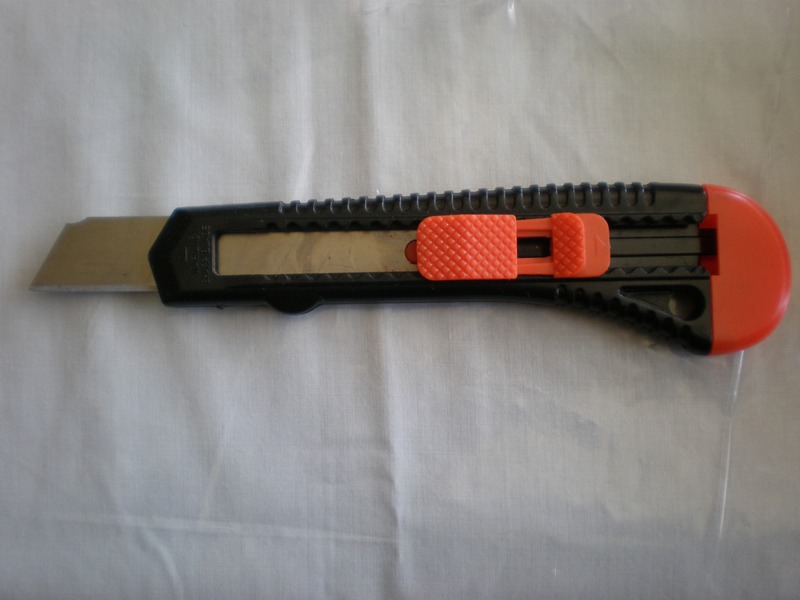
5. What are rounded-tip or blunt-tip blades for?
Rounded-tip and blunt-tip labels describe a modified blade nose, though manufacturers may use different terms. Stanley sells a rounded-tip replacement blade and states its rounded edges help reduce risk of accidental cuts and prevent damage to carton contents when opening boxes. This description applies to that product; it does not guarantee risk-free handling or prevent all content damage. Cutting edge remains sharp; holder must match blade dimensions.
Before adding rounded or blunt tips to an assortment, ask:
- Does the supplier mean a rounded nose, blunt point, or another profile?
- What holder models accept the blade?
- Which applications does the manufacturer name?
- Does the package clearly distinguish this blade from standard sharp-point types?
- What handling and disposal instructions accompany the product?
Do not treat “blunt” as “non-cutting.” Its nose may be altered while its edge remains designed to cut. Keep packaging and product-page language aligned with the maker’s description. If a buyer needs reduced point penetration for a named job, request the exact product data and sample; do not replace that evidence with a broad “safe blade” claim.
Rounded/blunt-tip checklist
| Attribute | Buyer check | Copy boundary |
|---|---|---|
| Tip name | Rounded, blunt, round point, or model-specific term | Use maker’s exact label |
| Edge | Confirm edge remains sharp | Never call it non-cutting without evidence |
| Holder | Notches and dimensions | Verify exact approved knife models |
| Application | Maker-listed use | Avoid generic safety promises |
6. When should buyers consider serrated utility blades?
A serrated blade has repeated teeth along the edge instead of a continuous straight edge. OLFA lists an 18 mm solid serrated insulation blade and says it is intended for porous materials. This LWB-3B example is not a segmented snap-off blade. The same maker names compatible snap knives and applications for that blade. That is a useful product example, not a general claim about all serrated blades. Tooth pitch, blade thickness, support, and material statement vary by SKU.
For review, collect:
- Tooth pattern and blade profile from the product drawing.
- Width, thickness, notches, and holder compatibility.
- Manufacturer’s named materials and any limitations.
- Whether blade is solid or segmented.
- Pack quantity and storage case details.
Use maker guidance for the material match. A serrated edge alone does not show what a blade will cut well or safely. OLFA’s named insulation blade includes a specific holder class and application list. Confirm the same details for any alternative supplier. For industrial range planning, consult the industrial maintenance tools buyer guide; tie blade-specific material claims to each SKU.
Serrated blade approval
| Field | Evidence to request | Why it matters |
|---|---|---|
| Tooth profile | Drawing, sample, or maker data | Distinguishes serrated forms |
| Holder fit | Exact knife model list | Prevents channel or lock mismatch |
| Material use | Maker-named application | Avoids generic cutting claims |
| Construction | Solid or segmented blade | Impacts replenishment and replacement handling |
7. How do blade and holder compatibility work?
Blade and holder compatibility depends on more than overall width. The holder’s channel, lock, blade length, notch location, tip shape, and permitted extension all matter. A blade may appear to fit while seating poorly or moving under load. Buyers should use a maker-approved SKU list or an explicitly verified compatibility table. The phrase “fits most” applies only where a manufacturer states it for a named blade and holder family; it is not permission to assume broad compatibility across brands.
Build a compatibility record with:
- Holder manufacturer, model, and revision where available.
- Blade width, thickness, full profile, and notch geometry.
- Lock or retention method and supported extension.
- Blade material/style and approved applications.
- Source of approval: maker documentation, not color or visual match.
Verify the whole interface. Excel and Stanley both identify blade fit in product information, while OLFA lists accepted blade families on individual knife pages. Those product-specific references are stronger than an informal “standard blade” description. For a replacement program, maintain holder-to-blade mapping in purchasing data and remove outdated cross references when a model changes.
Holder fit checklist
| Compatibility dimension | What to compare | Evidence |
|---|---|---|
| Width/thickness | Blade body dimensions | Maker data or approved sample |
| Notch location | Engagement points and notch outline | Technical drawing or model list |
| Length/profile | Tip, shoulder, and extension range | Product sheet and holder instructions |
| Retention | Channel and locking mechanism | Maker-approved blade SKU |
| Version | Holder model/revision | Current compatibility reference |
8. How should blade type be matched to material and task?
Start with a maker-published application, then check the specific material, thickness, holder, and cut depth. Excel, OLFA, and Stanley list different materials for particular blade designs. That does not mean another blade with a similar outline has the same approved use. Avoid claims such as “cuts anything,” “damage-proof,” or “safe for all packaging.” Use exact manufacturer language and keep the knife’s operating instructions available to end users.
A product match should account for:
- Workpiece material and any coating or layered construction.
- Thickness or cut depth stated by the maker.
- Edge profile and holder compatibility.
- Whether a fresh-edge, hook, rounded, or serrated form is specified.
- Handling, storage, and disposal instructions.
Match by documentation, not guesswork. For a related tool-kit decision, the mechanic tools list can support broader maintenance product planning. Its contents do not establish blade performance. If a project uses leather, foam, flooring, packaging, or insulation, request supplier confirmation for that exact material and knife configuration before presenting a recommended SKU.
Application validation table
| Application question | Required answer | Reject if… |
|---|---|---|
| Material | Named by maker | Only says “general material” without support |
| Thickness/depth | Within maker limits | Buyer must infer from blade shape |
| Holder | Approved model or compatible SKU | Fit depends on visual similarity |
| Expected result | Product wording supported by maker | Copy promises cut-proof/safe outcomes |
9. How should distributors plan packs and replenishment?
Blade sales often depend on repeat purchasing, so a clear pack structure matters alongside the blade profile. Separate blade geometry, holder compatibility, pack count, dispenser type, and replacement SKU in catalog data. Keep a record of approved models and review it when either knife or blade packaging changes. For customers buying blades as part of a kit, identify the included holder and replacement reference rather than relying on a family-level name.
For stock planning, consider:
- Pack quantity and unit of measure.
- Individual packs, dispensers, bulk cartons, or kit inserts.
- Blade type, width, notches, and holder approval on each label.
- Reorder SKU and substitute policy, if approved.
- Lot or batch identification when the supplier provides it.
Keep replenishment simple. Buyers should be able to reorder the same blade without guessing from an old photo. The mechanic tool set guide for distributors and auto mechanic tools must-haves guide provide broader kit context. Keep blade replenishment IDs and approved holders in the product record for each kit line.
Inventory and pack fields
| Field | Example of what to store | Review trigger |
|---|---|---|
| Blade SKU | Maker part number and profile | Supplier model or packaging revision |
| Fit | Holder models and interface details | Knife model changes |
| Pack | Count, dispenser, carton quantity | Retail or contract pack update |
| Replacement | Reorder code and approved substitute status | Discontinuation or substitution |
| Traceability | Lot/batch details if supplied | Quality issue or customer request |
10. What should a utility blade RFQ include?
An RFQ should define geometry, fit, intended material, pack format, and required documentation. State whether the buyer needs two-notch, hook, segmented, rounded/blunt-tip, or serrated blades. Include dimensions and notch locations where fit is critical. Name compatible knife model; request supplier confirmation of its blade SKU. For performance, request maker-listed applications and limits; do not ask suppliers to guarantee generic outcomes across unspecified materials.
Before sending a request, gather:
- Blade profile, width, thickness, length, and notch layout.
- Knife holder make/model and approved compatibility evidence.
- Named material, thickness, cut depth, and application.
- Package count, dispenser, label, and destination market.
- Required data sheets, product markings, and replacement references.
Pair application data with a drawing. Include current blade or holder reference and mandatory dimensions. Ask suppliers to flag deviations and confirm replacement SKU for replenishment. For broader consumer kit context, see the household tool kit buyer guide. Send project quantities, packaging, market, material, and documentation requirements through KOLARWIN’s contact page; confirm current commercial terms directly for that project.
Frequently asked questions
Q1: What are the main utility knife blade types?
Common profiles include two-notch or trapezoid blades, hook blades, segmented snap-off blades, rounded or blunt-tip blades, and serrated blades.
Q2: Do all two-notch utility blades fit every utility knife?
No. Width, thickness, notch location, blade shape, holder channel, and lock design can differ. Verify approved models.
Q3: What is a snap-off blade?
It has scored segments that can expose a fresh edge in a compatible snap knife. Follow the maker’s instructions for that knife and blade.
Q4: Are rounded-tip blades safe?
No blade should be treated as risk-free. A rounded tip may suit a specific maker-listed application, but the edge remains a cutting edge.
Q5: What should be included in a utility blade RFQ?
Specify profile, dimensions, holder model, material, pack format, approved application, documentation, and replacement SKU.
Looking for a reliable mechanic tools manufacturer in China?
If you are sourcing hand tools, socket tools, automotive repair tools, mechanic tool sets or OEM private label tools, contact KOLARWIN Tools for factory-direct quotation, customization support and product consultation.