Need OEM supplier support for this product type?
Contact KOLARWIN Tools for OEM mechanic tools, private label packaging, wholesale quotation and product range support. This gives overseas buyers a clear path from article reading to supplier discussion.
A distributor can stock plenty of driver bits and still leave customers stuck if the holder cannot reach the fastener, retain the bit, or fit the driver. A useful assortment begins with the connection at the tool end, then accounts for reach, retention and access. This guide organizes common bit-holder forms by those decisions, not by a catalogue’s product naming. Standards and manufacturer documentation help define interfaces; the buyer still needs to test representative samples against intended tools and screws. Use the selection matrix below to build an RFQ that specifies interface, length, retention style, access geometry and packaging.
1. What does a bit holder connect?
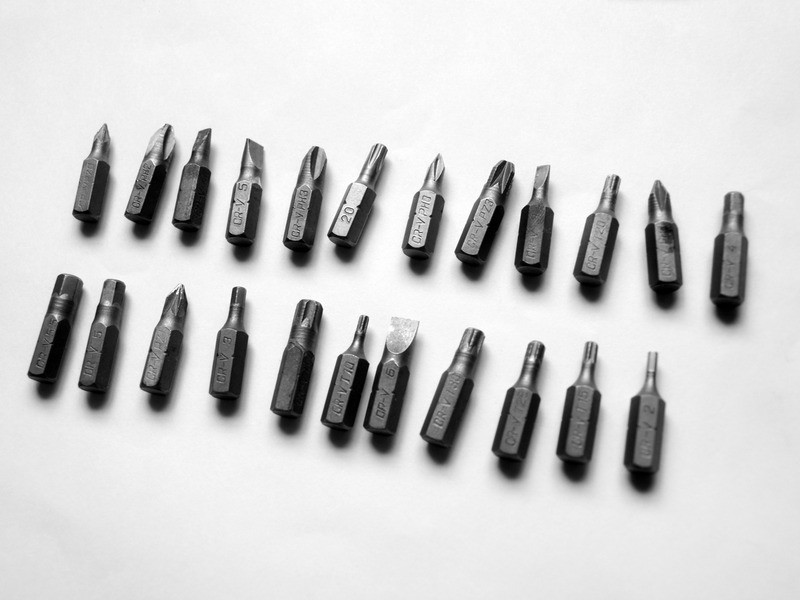
A bit holder joins a driver’s output to a replaceable screwdriver bit. That sounds simple, yet buyer specifications often mix three separate interfaces: the tool-side shank, the holder’s retention mechanism, and the bit-side socket. ISO 1173 covers drive ends for hand- and machine-operated screwdriver bits and connecting parts, including dimensions and torque testing. That standard gives procurement a useful vocabulary for identifying the hex connection; it does not automatically validate every holder as suitable for every powered driver or work condition.
Review types of screwdrivers when deciding whether a separate holder or a complete hand driver belongs in the kit.
Start with the interfaces. A common holder accepts a hex-shank bit at one end and fits a compatible driver at the other. Buyers should state both ends explicitly, including inch or metric designation where relevant. A common 1/4-inch hex format appears across a number of bit and holder products, but compatibility still depends on the particular holder design and tool connection. Confirm engagement depth, retention behavior and manufacturer use instructions rather than assuming similar-looking parts interchange.
For a distributor, the useful question is not merely “Which holder?” It is “Which customer’s process does this holder serve?” A field-service kit may need quick changes and compact storage. A production workstation may prioritize predictable bit seating and reach. A maintenance team may need access around obstructions. These jobs can justify distinct SKUs even when the holder-side drive looks identical.
- Record both tool-side and bit-side interfaces.
- Separate holder length from bit length in product data.
- Confirm intended driver type and stated use conditions.
| Buyer check | Why it matters | Evidence to request |
|---|---|---|
| Tool-side connection | Prevents mismatch at driver output | Dimensioned drawing and fit sample |
| Bit-side socket | Determines compatible bit shank | Stated interface and sample fit |
| Retention mechanism | Affects bit changes and pull-out behavior | Mechanism description and demonstration |
2. Which drive interface should buyers specify?
Most selection errors begin with a vague interface description. “Hex holder” may describe a form, but it does not provide enough information for a purchase order. The buyer should distinguish the shank inserted into a driver from the socket receiving a replaceable bit. ISO 1173 identifies drive-end dimensions and connecting parts; use its designation when the product claims alignment with that standard, then verify the supplier’s declaration and drawing.
The distinction between nut setter vs nut driver helps separate a bit receiver from a nut-driving attachment.
Here’s the practical distinction. Some holders connect through a hex shank, while other configurations may be designed for a different tool connection or include an adapter. A holder intended for a hand screwdriver, drill, or impact driver can share visual similarities without sharing performance limits. Ask the supplier which tool classes the model is designed for. Avoid extending a rating from one model to an entire family unless technical documentation supports that scope.
Buyers should also check whether the product is a holder, an adapter, or a combined accessory. A holder retains a bit; an adapter changes connection format; some products combine functions. Catalogue language can blur these roles. For procurement, a drawing with callouts for each end resolves ambiguity faster than a broad product-family label.
For private-label programs, specify the interface on packaging, product data and reorder codes. This reduces returns caused by a customer buying a holder that fits the bit but not the driver. Add a sample approval step for any interface change, even when the supplier says the new version is equivalent.
- Name the interface at each end separately.
- Ask for dimensions and tolerances, not only a nominal label.
- Confirm whether an adapter is integrated or sold separately.
| RFQ field | Example wording | Approval check |
|---|---|---|
| Driver connection | State applicable shank or socket format | Fit on named tool models |
| Bit connection | State compatible bit-shank format | Fit with sample bits |
| Standard claim | Identify standard and edition if claimed | Supplier declaration and drawing |
3. How do fixed and quick-change holders differ?
A fixed holder keeps its connection simple: insert a compatible bit and use the holder as a stable extension. Quick-change designs add a release feature so a user can exchange bits with less handling. The exact mechanism varies by model, and product descriptions use terms such as sleeve, collar, release or rapid change. Those terms should be translated into observable checks before buyers approve a supplier sample.
The difference shows up in workflow. In a job with frequent changes among several profiles, a release sleeve can reduce time spent pulling bits from a tight socket. In a low-change application, a simpler fixed holder may be easier to specify and maintain. A moving sleeve also introduces a component whose travel, return and engagement need inspection. Neither category wins in every use case; order volume, task cycle and maintenance practice determine value.
Run a simple bench check with the intended bit assortment. Insert and remove each representative bit repeatedly. Observe whether the mechanism releases without excessive force, whether the bit seats fully, and whether debris affects sleeve movement. Avoid assigning numeric life claims based on a brief incoming check. For durability or cycle-life claims, request the supplier’s test method, sample size and acceptance criteria.
A buyer can make the choice clearer by asking users how many profile changes occur per task and whether gloves, overhead work or limited visibility complicate release. Those operational details often matter more than the marketing label.
- Use fixed holders where the bit changes rarely and interface simplicity matters.
- Evaluate quick-change holders against the actual bit mix and work posture.
- Include sleeve action in incoming inspection criteria.
| Selection factor | Fixed holder | Quick-change holder |
|---|---|---|
| Bit changes | Manual removal | Release feature assists exchange |
| Mechanism | Fewer moving parts | Sleeve or release component needs checking |
| Best evaluation | Fit and seating | Fit, seating, release and return |
4. When does a magnetic holder make sense?
A magnetic holder uses magnetic attraction to help keep a bit or fastener positioned. Manufacturer catalogues show holders offered with magnet or ring-magnet features, while other models use mechanical retention. Magnetism can help during assembly, but buyers should not treat “magnetic” as a complete performance specification. Magnetic strength, location, geometry and compatibility affect practical behavior, and suppliers may use different constructions under the same label.
Magnetic pickup cannot correct a recess mismatch; Pozidriv vs Phillips explains one commonly confused pair.
Match the feature to the task. A magnetic holder may help keep a screw near the bit during placement, especially where the operator has limited access to the workpiece. It can also retain a bit in some designs. But a magnetic feature does not itself establish positive mechanical locking, and it may not suit every fastener, material or work environment. If the application involves small ferrous debris or sensitive components, ask the end user to evaluate whether magnetism creates a handling concern.
Do not assume magnetism will retain every fastener equally. Screw size, material, coating, head geometry and contact all influence pickup. Test the actual screw set and holder orientation. If the product is marketed as a bit-retaining magnetic holder, verify both functions: bit retention in the holder and fastener positioning at the tip. They are related but distinct buyer outcomes.
For assortments, magnetic holders can be a useful option rather than a universal default. Label them clearly and pair with use notes that describe intended function. Request product-specific evidence for claims about magnetic force or retention, and do not infer such values from another model’s datasheet.
- Test with the screw materials and sizes used by customers.
- Separate fastener pickup from bit retention in the specification.
- Ask users about magnetic sensitivity in their work process.
| Use condition | Potential value | Buyer validation |
|---|---|---|
| Fastener placement | Helps position compatible ferrous screws | Test representative screw samples |
| Bit changes | May aid retention, depending on design | Check pull-out and release behavior |
| Sensitive work area | Magnetism may be undesirable | Confirm customer process constraints |
5. What jobs call for a retaining ring or locking sleeve?
Mechanical retention holds a bit through a ring, detent, sleeve or related feature rather than relying only on magnetic attraction. Some holders combine mechanical retention and a magnet. The design details differ, so the phrase “locking holder” should trigger a request for an explanation of how the bit is captured and released. Ask whether the feature is intended to prevent accidental bit loss, to permit quick release, or to serve both purposes.
Mechanical retention also leaves the output profile unchanged. Compare Torx vs Allen for another interface distinction.
Separate retention from convenience. A retaining ring may keep the bit engaged when a tool is pointed downward or moved between fasteners. A release sleeve may make removal easier. Buyers need to understand the trade-off: a secure-feeling bit should still be removable without damaging the bit or holder. The desired level depends on use conditions, bit-change frequency and whether a user may need to recover a bit from a recess.
During sampling, check that the bit seats to its intended depth and that the retention feature engages consistently across the approved bit range. Measure or record the bit models used. A holder can behave differently with bits whose shank lengths, grooves or tolerances differ. Avoid approving only one sample bit if the target assortment includes several suppliers or shapes.
For an RFQ, request a mechanism description, compatibility list, material/finish description and any available retention test. If the supplier cannot provide a test, define a practical acceptance check with a sample and documented procedure. Keep claims proportional to evidence; “mechanical retention feature” is more defensible than a blanket promise of zero bit loss.
- Identify the exact retention mechanism.
- Test across the intended bit assortment, not a single sample.
- Define acceptable engagement and release behavior before production.
| Mechanism question | Buyer action |
|---|---|
| What captures the bit? | Request a cutaway, diagram or clear written description |
| How does release work? | Observe operation and record user feedback |
| Which bits fit? | Validate representative shanks and grooves |
6. How should buyers choose holder length?
Length affects reach, clearance, balance and access. A longer holder can help reach recessed fasteners, but it also increases the distance between driver and screw. That can make alignment harder in tight spaces or add leverage during a bind. A short holder reduces added reach and may fit compact kits, though the driver nose can obstruct access. Buyers should evaluate holder length as part of the complete driver-bit assembly.
Reach selection should accompany the profile checks covered in screwdriver sizes.
Mock up the working envelope. Use a sample holder, intended bit and driver to approach a representative fastener in a fixture or customer workpiece. Check whether the tool body clears nearby surfaces and whether the user can keep the bit aligned with the recess. Record overall reach from driver nose to tip; do not compare holder lengths alone when bits differ in length.
For assortments, a core length plus a limited extended-reach option may cover more tasks than a large, confusing range. Yet customers may require multiple lengths for repeatable work. Ask distributors which use cases recur and which items are replenishment staples. Keep product labels precise: holder length, bit length and overall assembly length are not interchangeable measurements.
If the supplier offers an extension with flexible or articulated movement, classify it separately from a rigid holder. Movement changes alignment and control, so buyers should not position it as a simple length variant. Request drawings and user evaluation for the actual task.
- Compare full assembly length, not holder body alone.
- Test clearance and alignment around real obstructions.
- Keep rigid holders distinct from flexible extensions in SKU data.
| Length decision | Benefit | Trade-off to evaluate |
|---|---|---|
| Short | Compact access and reduced projection | Driver body may block recessed work |
| Standard | General-purpose stocking option | May not reach deep fasteners |
| Extended | Reaches recessed locations | Alignment and clearance can become harder |
7. When are flexible and angled holders useful?
Flexible or angled accessories help reach a fastener when a straight driver cannot approach directly. They can improve access around obstructions, but articulation changes how force and alignment pass through the assembly. A buyer should treat these as access tools with defined limits, not as universal substitutes for straight holders. Verify whether the product is intended for hand use, powered use or a specific driver class.
Check whether the geometry solves a real problem. Identify the obstruction, approach angle and screw location before selecting an articulated holder. If a straight driver can reach with stable alignment, fewer joints may be easier to control. If access is blocked, ask users to test the angled tool in the actual working envelope. Observe whether the bit stays seated, whether the assembly wobbles, and whether the operator can maintain axial pressure.
For catalogue planning, label flexible holders and right-angle adapters clearly. They may have different connection interfaces and use restrictions. Do not infer impact-driver compatibility from a hex shank alone. The supplier must state intended use and applicable limitations. Any load or speed claim should be product-specific and supported by documentation.
A sample test should include several fastener positions, not only an easy demonstration. Users should report where access improves and where articulation adds unwanted movement. That feedback helps avoid stocking an accessory that appears versatile in a photograph but solves few customer tasks.
- Map the obstruction and approach angle before selecting a holder.
- Confirm intended tool class and stated limitations.
- Separate articulated accessories from rigid holder categories.
| Access condition | Candidate format | Evaluation point |
|---|---|---|
| Straight path, recessed screw | Extended rigid holder | Reach and axial alignment |
| Side obstruction | Angled adapter | Tool-body clearance and control |
| Irregular route | Flexible holder | Stability, movement and task-specific limits |
8. What should buyers check for impact-driver use?
A product with a hex connection is not automatically suitable for impact-driver use. Impact loading differs from steady hand pressure, and accessory construction may have specific limitations. Buyers should rely on the manufacturer’s stated application for the exact model. If a supplier offers both standard and impact-rated holders, keep their item codes, packaging and technical files separate to reduce substitution errors.
Compare impact bits vs regular bits before specifying a holder for powered applications.
Ask for model-level evidence. Request the product datasheet or catalogue entry naming compatible tool types. If a claim refers to impact use, ask what testing or design basis supports it. Do not infer a rating from alloy description, coating, color or resemblance to another product. Standards for bit drive interfaces help define geometry; they do not replace application-specific qualification.
Incoming inspection can confirm interface fit, sleeve movement, visual finish and marking. It cannot establish long-term resistance to repeated impact on its own. For performance claims, seek the supplier’s test method, sample count, failure criteria and limits. A distributor may choose to request independent testing for high-risk products, but any statement in marketing should match verified documentation.
Review packaging as carefully as the tool. Impact-driver use restrictions should appear where users make a selection, including product listing, carton and instruction sheet as applicable. This reduces the risk of a standard holder entering an impact-focused kit through SKU confusion.
- Confirm intended driver class for each model.
- Keep standard and impact-designated SKUs distinct.
- Require evidence before printing impact-performance claims.
| Check | Standard holder workflow | Impact-driver workflow |
|---|---|---|
| Application | Follow supplier designation | Confirm exact model designation |
| Documentation | Interface and basic product details | Application limits and supporting evidence |
| Labelling | Clear size and retention type | Prominent use classification |
9. How should an assortment and RFQ be built?
An assortment should reflect the tasks customers actually perform. A distributor may need simple fixed holders, quick-change models, magnetic options, mechanically retained variants and longer-reach choices. Stocking every combination can create dead inventory. Start with customer interviews, service categories and existing returns data, then choose a short core assortment with a documented reason for each SKU.
For a packaged driver assortment, use the specification questions in OEM impact bit sets alongside holder drawings.
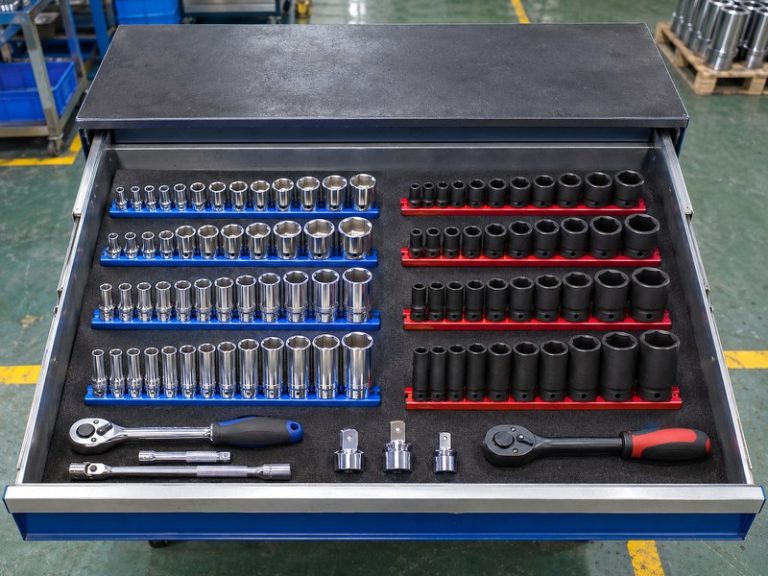
The layout decisions in custom socket set design also apply when allocating space for holders and replacement bits.
Build the RFQ around decisions. State tool-side interface, bit-side compatibility, holder length, retention style, use classification, finish, marking, packaging and required documentation. Add approved samples and acceptance checks. If a product will carry a private label, specify logo location, item code, barcode, language and packaging format. Request a change-control process for any design, material or supplier alteration after approval.
- List the customer task before choosing a holder type.
- Ask for drawings, sample approval and use limitations.
- Include SKU, packaging and change-control requirements in the RFQ.
| RFQ item | Required detail | Approval record |
|---|---|---|
| Interfaces | Tool end and bit end | Drawing and fit sample |
| Retention | Magnet, ring, sleeve or fixed | Demonstration and acceptance note |
| Application | Hand, drill, impact or other stated use | Supplier documentation |
| Packaging | Label, code, language and quantity | Artwork sign-off |
10. What should happen before approval?
A bit-holder programme should move from customer task to interface specification, then sample evaluation and documented release. Buyers should keep taxonomy and performance separate: the product category explains what the holder does, while model documentation establishes where it may be used. A general-purpose label cannot replace a model-specific drawing or application statement.
Before purchase, close the evidence gaps. Confirm the intended driver, bit range, holder length and retention behavior with actual samples. Record acceptance criteria in plain language so purchasing, quality and sales teams describe the same product. If an application claim remains unsupported, remove it from listings and packaging until the supplier provides adequate evidence.
For a sourcing inquiry, send the supplier your target tool interface, bit formats, preferred retention, length range, intended use, annual forecast if available, packaging needs and required test documents. Ask for a quotation against named SKUs and a sample matching production configuration. This creates a cleaner comparison than requesting “a universal bit holder” and hoping every bidder interprets it alike.
A product-specific request also makes later reorders easier. Keep approved drawings, sample photos, label files and revision identifiers together. When a supplier proposes a change, compare it against that approved baseline before acceptance.
- Approve only a named model and documented configuration.
- Keep sample, drawing and packaging revisions aligned.
- Send a product-specific RFQ before comparing quotations.
FAQ
Send a sourcing inquiry with the application, required sizes, order quantity and documentation needs. Ask for model availability and a written specification before approval.
Q1: What does a bit holder do? It connects a driver to a replaceable screwdriver bit and may add retention or reach features.
Q2: Are all 1/4-inch hex holders interchangeable? No. Confirm both interfaces, dimensions and intended use for the specific models.
Q3: Does a magnetic holder lock the bit? Not necessarily. Magnetic attraction and mechanical locking are separate retention methods.
Q4: Can a standard bit holder be used with an impact driver? Only when the supplier identifies that exact model for the application.
Q5: What should a buyer send with an RFQ? Specify interfaces, length, retention type, tool class, packaging and required evidence.
For a quotation, contact Kolarwin Tools with the target interface, bit formats, length range, retention preference, driver application, sample requirements, packaging details and expected order quantity. Ask us to confirm which product details require technical verification before approval.
Looking for a reliable mechanic tools manufacturer in China?
If you are sourcing hand tools, socket tools, automotive repair tools, mechanic tool sets or OEM private label tools, contact KOLARWIN Tools for factory-direct quotation, customization support and product consultation.