
Need OEM supplier support for this product type?
Contact KOLARWIN Tools for OEM mechanic tools, private label packaging, wholesale quotation and product range support. This gives overseas buyers a clear path from article reading to supplier discussion.
Catalogs may place profile, blade, and length codes beside each other. Buyers need separate fields for fit, reach, and holder connection. This guide explains common codes and dimensions using manufacturer specifications and sample checks.
1. What does “screwdriver size” refer to?
A catalog’s “size” may mean profile code, slotted width or thickness, blade length, overall length, or bit shank. These fields answer different questions. A PH2 or PZ2 marking identifies a cross-drive profile and size family. A slotted tool may be described by a blade width such as 5.5 mm. A 1/4-inch bit shank identifies its holder connection, not a screw recess.
Product pages may list all these dimensions together. Keep each measurement in its own labeled field. The home-repair hand-tool guide places screwdrivers in a broader set; fit depends on fastener and driver.
- Profile and code: which recess the tip enters.
- Blade width and thickness: especially relevant for slotted drives.
- Blade length and overall length: describe reach and tool envelope.
- Bit shank: describes how a bit connects to a holder.
Separate the dimensions first. A size written beside a screwdriver can describe its tip, blade, shaft, or connection.
Size fields buyers should separate
| Field | Example | What it describes | Do not confuse it with |
|---|---|---|---|
| Drive code | PH2, PZ2, T20 | Tip profile and code family | Screw thread diameter |
| Slotted width | 5.5 mm | Blade span across the slot | Blade thickness |
| Blade thickness | 1.0 mm | Blade thickness for slot fit | Slot length |
| Blade length | 100 mm | Reach from tip toward handle | Overall tool length |
| Bit shank | 1/4 in hex | Bit-to-holder interface | Screw recess size |
Practical action: split size data into separate profile, blade, length, and shank fields in the product master.
2. How are slotted screwdriver sizes measured?
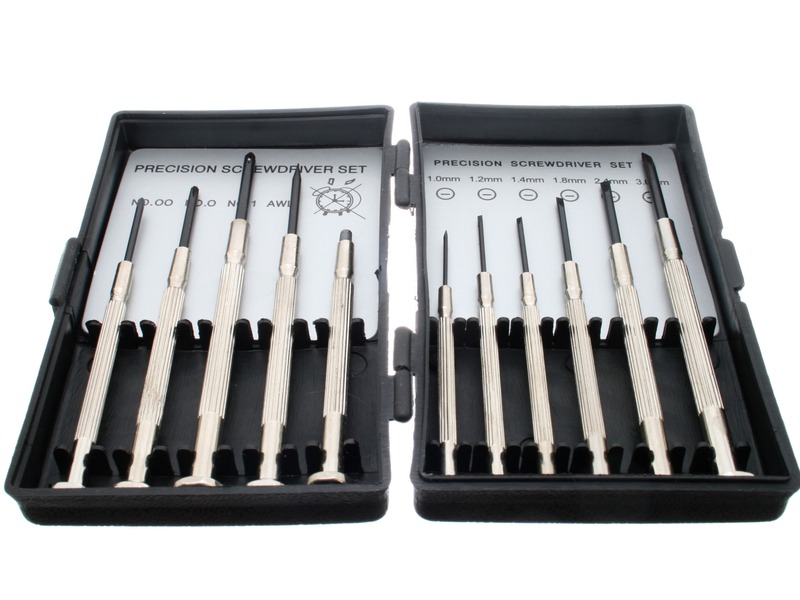
Blade width spans the slot length; blade thickness fits the narrow slot width. Engagement depth is checked separately. Manufacturers list width and thickness separately. Wera’s product data lists one model at 1.0 mm thick by 5.5 mm wide, with a 113 mm overall length. Wiha’s slotted chart lists metric sizes beside inch displays and cautions that a metric value may not match a common North American size exactly.
A nearby inch fraction may look close to 5.5 mm, yet fit can differ. Use the source unit and a sample recess before approving a replacement. Do not infer thickness from width or conversion displays.
- Record width and thickness separately.
- State the unit system and exact nominal dimension.
- Check blade length and tip geometry against the assembly.
Check all three dimensions. Blade width spans slot length; thickness fits slot width; engagement depth is separate.
Slotted blade specification
| Catalog field | Example | Fit question | RFQ evidence |
|---|---|---|---|
| Blade width | 4.5 mm | Does width span the slot length? | Drawing or sample |
| Blade thickness | 0.8 mm | Does thickness fit slot width? | Dimensioned end view |
| Blade length | 100 mm | Can the driver reach the screw? | Product sheet |
| Unit system | Metric | Does packaging show original units? | Label artwork |
Practical action: approve slotted tips for width along slot length, thickness across slot width, and engagement depth.
3. What do Phillips PH numbers mean?
PH codes identify a Phillips drive family and size, commonly written PH0, PH1, PH2, or larger sizes. They are profile codes rather than millimetre measurements. Wera product tables list PH codes beside separate blade dimensions. That layout shows why a buyer should not convert PH2 into a screw diameter or screwdriver shaft dimension.
The code alone cannot identify fit for every screw. Recess design, condition, and manufacturer specifications still matter. Confirm profile against samples from your product family.
- Preserve the “PH” prefix on labels and purchase orders.
- State PH code separately from blade length and overall length.
- Confirm tip seating with the specified fastener.
Read the whole marking. PH2 is a coded profile size, not a measurement in millimetres.
Phillips driver data
| Field | Example format | What to verify |
|---|---|---|
| Drive family | Phillips / PH | Exact profile family |
| Tip code | PH1 or PH2 | Match to fastener documentation |
| Blade length | 80 mm or 100 mm | Access and reach |
| Product length | Manufacturer’s overall dimension | Handle clearance and storage |
Practical action: request the screw family or a reference fastener alongside any PH-code quote.
4. How do Pozidriv PZ sizes differ from Phillips sizes?
Pozidriv uses its own PZ code family. A PZ numeral does not make its profile interchangeable with a PH driver carrying that numeral. Wera catalogs list Phillips and Pozidriv products separately, with PH or PZ markings. Keep those codes intact in product data, package labels, and customer drawings.
Broad labels such as “cross” or “star” may not identify a compatible recess. Preserve each code and link it with fastener specifications. A Pozidriv vs Phillips guide explains the profile distinction.
- Preserve PH and PZ as separate product attributes.
- Include the number after the family prefix.
- Do not substitute a same-numbered profile without approval.
Keep the letters attached. “PH2” and “PZ2” are different catalog identities even though both use the numeral 2.
Cross-drive code comparison
| Marking | Family | Example entry | Buyer rule |
|---|---|---|---|
| PH1 | Phillips | PH1 x 80 mm blade | Match a Phillips recess |
| PZ1 | Pozidriv | PZ1 x 80 mm blade | Match a Pozidriv recess |
| PH2 | Phillips | PH2 x 100 mm blade | Keep family code in label |
| PZ2 | Pozidriv | PZ2 x 100 mm blade | No same-number substitution |
Practical action: review every package and order sheet for the PH or PZ prefix before approval.
5. What does a Torx T size describe?
A T code identifies a Torx tip size; it is not a millimetre label for the screw’s outside diameter. Wiha’s Torx chart relates T codes to profile dimensions; driver listings retain T codes as their size field. Use the fastener maker’s code, then test a matching driver in its recess.
Security variants may add a center pin or hole, changing tip form while keeping a related code. Record that security feature explicitly. The Torx vs Allen guide covers another profile comparison.
- Preserve the T prefix and number.
- Record security features as a separate attribute.
- Check the exact screw recess before approving a substitute.
Keep code and dimension apart. A T20 marking names a profile size; it does not equal 20 mm.
Torx driver fields
| Field | Example | Buyer check |
|---|---|---|
| Drive code | T10, T15, T20 | Match screw maker’s code |
| Security feature | Standard or pin-compatible | Inspect recess center |
| Bit/screwdriver format | Driver or replaceable bit | Confirm holder interface |
| Blade length | Product dimension in mm | Confirm working reach |
Practical action: quote both T size and security form when a tamper-resistant recess is involved.
6. How should buyers specify hex, square, and security profiles?
Hex drivers may use metric or inch codes, while square-drive families use their own size labels. These values describe the recess profile, not a universal screw-thread diameter. Security versions can add a pin, hole, or alternate geometry. A catalog should record the family, nominal code, measurement system where applicable, and any security feature in distinct columns.
Wiha’s product catalog separates hex-inch, hex-metric, Torx, and security Torx families. Wera likewise lists PH, PZ, Torx, and hex bits separately. Keep separate size-family taxonomy fields. See nut setter vs nut driver for an adjacent tool distinction.
- Name the profile family before entering a size.
- Include mm or inch where hex dimensions require it.
- State security features and center-pin clearance.
- Do not equate shank size with tip size.
Make the label specific. “6 mm driver” needs a profile name before it can become an order line.
Profile naming checklist
| Family | Common label style | Additional field |
|---|---|---|
| Internal hex | 2 mm, 5/64 in | Metric or inch |
| Square drive | #1, #2, or maker code | Exact screw series |
| Security Torx | T code plus security form | Center-pin access |
| Spanner/security | Profile name and code | Pin spacing or tip design per drawing |
Practical action: keep profile, nominal size, unit system, and security feature as separate fields in the SKU record.
7. What does a 1/4-inch screwdriver bit shank mean?
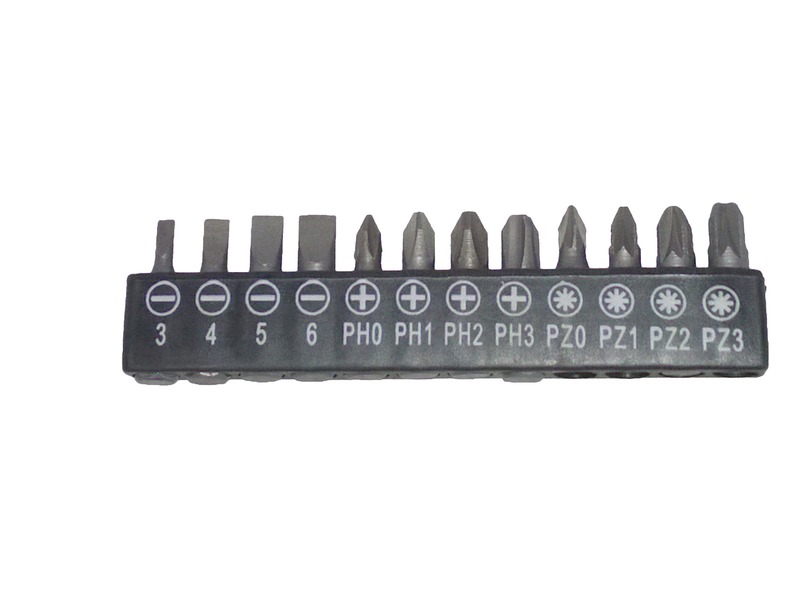
A replaceable bit’s 1/4-inch hex shank connects it to a holder; it does not name the tip size. Wera specifies 1/4-inch hex insert bits under DIN 3126-C 6.3 / ISO 1173. Wiha also lists holder size separately from each bit profile.
Record shank standard/form and tip code. Bit length matters when a screw sits in a recess. See impact bits vs regular bits and the OEM impact bit set guide for adjacent selection questions.
- Shank: holder connection and standard/form.
- Tip: fastener profile and code.
- Bit length: reach and clearance.
- Holder: retention and compatibility.
Keep the two ends separate. The shank fits a holder; the working tip fits a screw recess.
Bit and holder fields
| Item | Example | RFQ detail |
|---|---|---|
| Shank | 1/4-inch hex C6.3 | Standard/form and drive size |
| Tip | PH2, PZ2, T20, 5 mm hex | Profile code and exact size |
| Bit length | 25 mm | Working clearance |
| Holder | Magnetic or locking | Match to bit form and use |
Practical action: state shank standard, tip code, length, and holder type on separate purchase-order lines or columns.
8. Which blade and shaft lengths should buyers record?
Tip size and length answer different fit questions. Blade length measures working reach from tip toward handle; overall length includes the handle. Precision screwdrivers often use short blades for close work, while maintenance tools may need additional reach. Manufacturer sheets may also identify blade diameter, handle length, or a hex bolster. Use each maker’s exact field name; blade and overall lengths cover different spans.
A “5.5 mm x 125 mm” label may mean slotted width and blade length, not thickness and overall length. Wera and Wiha show these fields separately. The ratcheting vs standard screwdriver guide covers mechanism choice.
- Record blade width/thickness for slotted tools.
- Record blade length and overall length separately.
- Add blade diameter or handle clearance when the space is restricted.
- Confirm if the catalog uses visible blade length or another datum.
Name the endpoints. “Length” alone leaves room for different measurements.
Length and clearance data
| Dimension | Measurement span | Use in selection |
|---|---|---|
| Blade width | Along slot length | Slot span fit |
| Blade thickness | Across the narrow slot width | Slot-width fit |
| Blade length | Tip to blade/handle transition | Reach |
| Overall length | Tip to handle end | Storage and access |
| Bit overall length | Working tip to rear end | Reach and holder clearance |
Practical action: approve drawings with dimension arrows rather than relying on abbreviated catalog strings.
9. How should buyers check a screwdriver size against a fastener?
A code chart narrows choices; a fit check confirms the pair. Test an approved screw sample. Seat the driver straight and check for rocking or incomplete engagement. Reject substitutions that differ from the drawing. Do not force a near-size tip.
For slotted screws, check blade width along slot length, blade thickness against slot width, and engagement depth separately. For other drives, verify the code and fastener specification. Record the approved screw, driver, and test condition for replenishment.
- Test a sample fastener from the target product line.
- Record profile code, measurement system, and driver dimensions.
- Inspect engagement for side play or incomplete seating.
- Repeat the check after any proposed substitution.
Use the real fastener. A paper chart cannot reveal a damaged recess or application-specific clearance.
Fit approval record
| Check | Record | Acceptance evidence |
|---|---|---|
| Fastener identity | Part or drawing reference | Approved screw sample |
| Driver profile | PH/PZ/T/hex/slotted code | Matching product sheet |
| Blade/tip dimensions | Width, thickness, or code | Drawing or inspection |
| Access condition | Recess depth and clearance | Assembly fit check |
| Substitution | Proposed alternate | Written buyer approval |
Practical action: retain a matched screw-and-driver sample pair for each high-volume SKU family.
10. What should a screwdriver-sizes RFQ include?
An RFQ lists profile family and code, slotted width/thickness, blade and overall length, bit shank standard/form, holder type, and security details. State units for every numeric dimension. Attach a fastener drawing or sample when a chart cannot establish fit.
Separate technical requirements from quote options. For example, request PH2 drivers in two blade lengths and quote individual tools and boxed sets separately. Add quantity, market, brand, packaging, language, and document needs. Send the schedule through KOLARWIN’s contact page.
Make the size data auditable. Keep profile, dimension, length, unit system, and package count in named fields.
- Profile family and code
- Blade width/thickness, shaft/blade length, and overall length
- Bit shank size, standard/form, and holder type
- Fastener reference, security feature, and approved substitute rules
- Quantity, market, packaging, brand, language, and required documents
A marked drawing and matched fastener sample give both teams a clear basis for quotation.
FAQ
Q1: What does PH2 mean on a screwdriver?
PH2 identifies a Phillips tip-size code. It does not state blade length, slotted width, or screw-thread diameter.
Q2: Is PZ2 the same size as PH2?
Both use the numeral 2, but PH and PZ are separate drive families. Match letter prefix and number to fastener specifications.
Q3: What size is a 1/4-inch screwdriver bit?
That label commonly describes a hex shank that fits a compatible holder. The working tip still needs its own profile code and size.
Q4: How are slotted screwdriver sizes measured?
Manufacturers specify blade width and thickness separately. Blade length is another dimension and should be recorded independently.
Q5: Can a nearby metric or inch size be used as a substitute?
Do not assume interchangeability from a conversion display. Check the fastener’s stated profile and fit a matching driver to a sample.
Looking for a reliable mechanic tools manufacturer in China?
If you are sourcing hand tools, socket tools, automotive repair tools, mechanic tool sets or OEM private label tools, contact KOLARWIN Tools for factory-direct quotation, customization support and product consultation.



