
Need OEM supplier support for this product type?
Contact KOLARWIN Tools for OEM mechanic tools, private label packaging, wholesale quotation and product range support. This gives overseas buyers a clear path from article reading to supplier discussion.
Catalogs use “nut driver” and “nutsetter” inconsistently. For distributors, that gap can lead to the wrong interface or impact classification. Specify fastener fit, connection, access, and driver type. Major brands use both names for powered accessories, so check drawings and markings.
1. What do “nut setter” and “nut driver” usually mean?
A nut driver usually describes a hand tool with a handle, shaft, and hollow hex socket at its tip. A nutsetter often means an accessory with a hex shank for a drill or impact driver and a socket head for hex fasteners. That distinction helps buyers sort broad product families, but it is only a convention.
Some brands call their powered hex-shank accessories nut drivers. Others label hand tools nut drivers and powered accessories nutsetters. Either term may describe a tool for hex-head screws, bolts, or nuts. Review both ends: one engages the fastener, the other connects to a hand or power tool.
- A hand nut driver has an integral handle or a hand-tool interface.
- A powered nutsetter commonly has a 1/4-inch hex shank, though specifications vary.
Here’s the useful distinction: identify the drive interface and fastener size separately, then check each against the intended job. For a wider accessory context, compare the listing with KOLARWIN’s socket tools range.
Quick terminology check
| Catalog term | Common form | What to verify |
|---|---|---|
| Nut driver | Hand tool or powered bit | Handle or shank interface; fastener opening |
| Nutsetter | Commonly a powered accessory | Shank, opening size, length, use rating |
| Either name | Can overlap by brand | Drawing and packaging specification |
2. Why do manufacturers use the names differently?
Tool naming follows product families and regional catalogs, not one universal rule. A hand tool maker may use “nut driver” for a screwdriver-style handle with a hollow shaft. An accessory maker may use “nutsetter” for a hex-shank bit that chucks into a drill. Other brands list powered impact-rated products as nut drivers.
Official product catalogs show this overlap in practice. Milwaukee sells HOLLOWCORE™ hand nut drivers with hollow shafts for long bolts and threaded rod. Makita calls a magnetic accessory with a 1/4-inch hex shank a “nutsetter” and specifies use with impact drivers and driver-drills. DeWalt’s catalog, meanwhile, includes impact-ready items under “Nut Drivers.” These examples show naming overlap; they do not define every product in those families.
- Brand names can remain stable even when product design changes.
- Retail search filters may group hand tools and powered bits together.
So read past the label: confirm the interface, working size, length, and use statement on the exact item. For broader kit planning, see KOLARWIN’s mechanics tool sets.
What naming can and cannot tell you
| Listing information | Useful clue | Still needs checking |
|---|---|---|
| “Nut driver” | Hex-fastener application likely | Hand or powered interface |
| “Nutsetter” | Powered accessory often intended | Impact approval and shank details |
| Brand category | How seller organizes products | Actual geometry and working limits |
3. Which size refers to the fastener, and which to the shank?
A 5/16-inch nutsetter may have a 1/4-inch hex shank; these measurements describe different parts. The 5/16-inch figure usually describes the internal opening that fits the across-flats dimension of a hex fastener. The 1/4-inch figure usually describes the external shank that enters a quick-change collet or compatible chuck.
Confusing sizes can leave either end incompatible. Many powered tools use 1/4-inch quick-change hex collets; drill chucks may accept other shanks. Check manuals and markings for compatibility.
- Record fastener size in the correct system: metric or inch.
- Record shank profile and size as a separate field.
- Confirm usable shank length and any locking groove or retention feature.
A clean product record prevents a costly mix-up: show both dimensions in the SKU title or specification table. If buyers need a connection between a powered driver and socket, review the separate role of an impact socket adapter.
Two dimensions, two jobs
| Dimension | Measured at | Buyer question |
|---|---|---|
| Fastener opening | Internal hex head | Which hex fastener size must it engage? |
| Shank size | External tool connection | Which driver or chuck accepts it? |
| Overall length | Tip to end, per drawing method | Will it reach without obstruction? |
4. Can a nut driver be used with an impact driver?
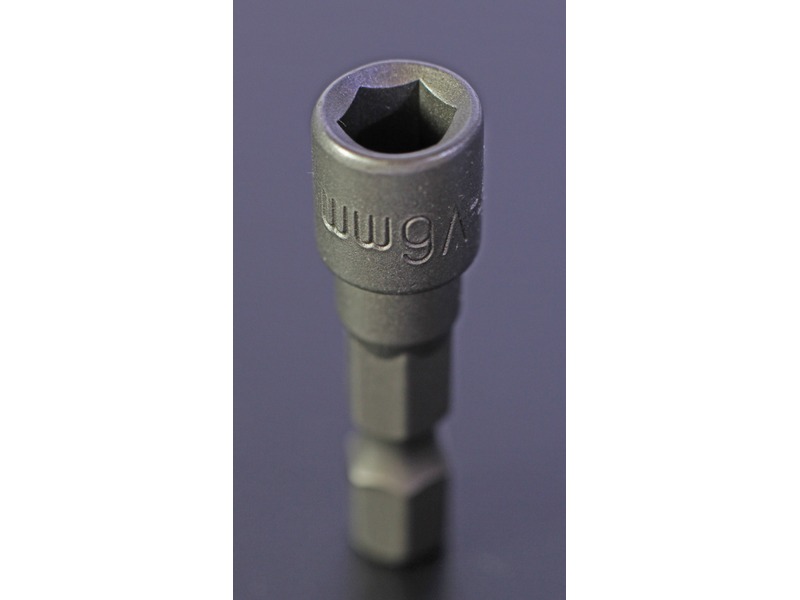
Only when the specific accessory is marked or documented for impact use. A hex shank may physically fit an impact driver, but fit alone does not establish that the accessory can handle repeated torque pulses. Standard drill-driver accessories and impact-rated accessories can share a similar shape while differing in intended service and construction.
Manufacturers commonly state intended compatibility in product pages, packaging, or catalogs. For example, DeWalt describes selected “Impact Ready” nut drivers for impact drivers and wrenches. Makita describes particular nutsetters for impact drivers and driver-drills. Classify every item individually; neither name guarantees impact approval.
- Match the accessory’s stated rating to the tool and operating mode.
- Inspect for cracks, deformation, or loose retention.
- Use controlled trigger pressure near final seating; a powered driver can overrun small fasteners.
Markings decide compatibility: if impact use is absent from product documentation, treat the rating as unconfirmed and ask the supplier for written clarification. KOLARWIN’s impact socket versus regular socket guide explains a related rating distinction for sockets.
Power-use check
| Intended source | Suitable product evidence | Buyer action |
|---|---|---|
| Manual hand use | Hand-tool construction and instructions | Check handle, shaft, and fit |
| Drill-driver | Compatible shank and stated use | Follow driver limits |
| Impact driver | Explicit impact-use statement | Keep rating visible in SKU data |
5. How do length and bolt clearance change the choice?
Length affects reach and stability. Short tools suit open access; longer versions may reach around a bracket or into a recess. Check outside diameter, head depth, shank length, and surrounding clearance.
Long bolts and threaded rod create another problem: the projecting end may bottom out inside a closed socket before the tool reaches the fastener. Some hand nut drivers address this with a hollow shaft. Milwaukee’s HOLLOWCORE™ range, for example, describes a shaft designed for long-bolt and threaded-rod applications. Other hand drivers may lack through-clearance, and powered nutsetters may not accept projecting bolts.
- Measure bolt projection beyond the nut, including expected variation.
- Check whether the socket head or shaft is hollow and how far the opening continues.
- Compare tool length with surrounding obstructions and approach angle.
Measure the installed condition: a side-view photo with a ruler and the fastener projection helps suppliers recommend the right geometry. For planning compatible components in a tool kit, see our custom socket set design guide.
Access dimensions to compare
| Feature | Why it matters | Sample check |
|---|---|---|
| Overall length | Reach into recesses | Measure against available approach |
| Head outside diameter | Clears adjacent parts | Check narrow pockets or rails |
| Hollow depth | Accommodates bolt projection | Compare with maximum stud length |
6. How should the hex opening fit the fastener?
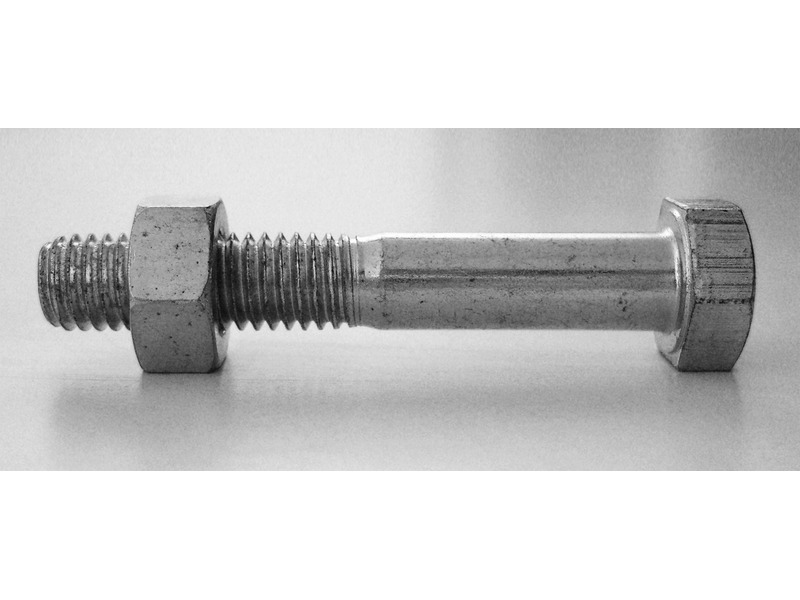
Match the opening to fastener across-flats size and shape. A loose head can rock, slip, or mark a fastener; a tight one may not seat fully. Check nominal size and fit on representative fasteners.
Many nutsetters use a six-point hex opening. Some designs shape internal contact areas to engage the flats rather than concentrating force at corners. Makita describes one nutsetter family with a lobular design that drives along flats to reduce rounding. That feature is product-specific, and results also depend on fit, alignment, fastener condition, and applied force.
- Confirm metric versus inch sizing; adjacent sizes can appear close by eye.
- Check opening depth and whether a washer or flange can seat against the head.
- Keep square, spline, twelve-point, and hex openings clearly separated in the catalog.
A sample test settles the fit question faster than a photo: pair the tool with the intended fastener and inspect engagement on several rotations. Buyers comparing socket geometry can use KOLARWIN’s 6-point versus 12-point socket guide.
Fit factors
| Check | Preferred observation | Concern |
|---|---|---|
| Across-flats fit | Seats fully with limited rocking | Loose or forced engagement |
| Opening depth | Fastener engages over sufficient surface | Bottoms before seating |
| Contact profile | Matches specified fastener geometry | Edge-only or partial contact |
7. Should you specify a magnetic or nonmagnetic head?
A magnet can hold a fastener during positioning, but metal debris may collect in its opening. Nonmagnetic designs may use a retaining ring or friction feature; confirm the actual construction.
Magnetism also depends on the fastener material. “Stainless steel” does not automatically mean nonmagnetic. Outokumpu notes ferritic, martensitic, and duplex grades are ferromagnetic, while stable austenitic grades are not magnetizable under stated conditions. A magnetic head may hold some stainless grades and not others.
- Choose magnetic retention when fastener pickup aids the operation.
- Consider debris exposure and cleaning access in metalworking environments.
- Test the actual fastener grade; do not rely on the stainless label alone.
Match retention to the material and workspace: include a short retention test in sample approval, especially for stainless fasteners or debris-heavy applications. KOLARWIN’s hand tools category can help buyers compare other manual tool families for a kit.
Retention choice
| Design | Potential benefit | Check before ordering |
|---|---|---|
| Magnetic | Holds compatible fasteners during positioning | Fastener response and debris buildup |
| Nonmagnetic retainer | Avoids reliance on magnetic attraction | Retention method and replacement needs |
| No retention feature | Simple head geometry | User handling and work orientation |
8. How should a distributor plan sizes and variants?
Build a range around customer demand and use cases. Start with fastener sizes, preferred measurement system, tool interface, access needs, and demand for hand or powered versions. A repair distributor may need a different mix from an electrical wholesaler or a building-products importer. Keep those audiences separate when forecasting stock.
Avoid duplicate SKUs that differ only by unclear naming. Catalog listings should distinguish hand, drill-compatible, and impact-rated items. Set naming conventions around objective fields: fastener opening, shank, length, retention, and impact status. Then decide whether a basic assortment needs individual sizes, a set, or both.
- Review sales history, customer inquiries, and target-market fastener standards.
- Separate SAE and metric sizes in storage and product data.
- Make hand, drill-driver, and impact-rated families easy to distinguish.
Keep the first assortment lean: validate core sizes with customers before adding low-turn variants. KOLARWIN’s socket set sourcing page shows how distributors can organize adjacent socket products into a clear retail or wholesale program.
Range-planning fields
| Field | Example of useful data | Why record it |
|---|---|---|
| Fastener size | 8 mm hex | Defines working end |
| Interface | 1/4-inch hex shank | Defines powered connection |
| Length and clearance | 2.5-inch overall; hollow depth stated | Supports access planning |
| Use and retention | Impact-rated; magnetic | Supports safe selection and listing |
9. What should buyers check on samples?
Check sample geometry, fit, finish, and use against the approved specification. Images rarely confirm shank tolerance, fit, magnet strength, hollow depth, or marking durability. Document the chosen sample and version so later bulk inspection compares against an agreed reference.
Confirm a powered shank locks in its driver; inspect hand-tool handle attachment and shaft alignment. Test the opening on representative fasteners without forcing it, then check whether the tool reaches the working position and clears the fastener’s bolt projection. For impact use, match markings and documents against the quoted classification.
- Measure fastener opening, shank, length, and hollow depth where specified.
- Check edge condition, finish, visible damage, and legibility of markings.
- Run a controlled functional test using the intended fastener and driver.
Approve against a written sample sheet: this turns a subjective “looks right” review into a repeatable check. For power-tool accessory limits and interfaces, compare your brief with the relevant socket accessory guidance.
Sample inspection record
| Inspection item | Record | Acceptance basis |
|---|---|---|
| Interface and dimensions | Shank, opening, length | Approved drawing or specification |
| Fit and reach | Test fastener and bolt projection | Agreed use case |
| Rating and retention | Marking, documentation, pickup test | Quoted product requirement |
10. What should buyers include in an RFQ?
A useful inquiry identifies the tool family and supports a comparable quote. “Nut driver, 10 mm” omits the shank, bolt projection, and driver type. Share dimensions and working conditions together.
Include fastener size and measurement system, unit quantity, shank, overall length, bolt projection, driver type, impact classification, retention, packaging, and destination market. Attach a fastener photo or simple drawing when geometry is unusual. Ask suppliers to list differences in interface, head profile, length, retention, and rating.
- Fastener hex size and metric or inch system.
- Required shank or handle interface, plus length and access limits.
- Bolt projection, hollow-shaft need, and driver type.
- Impact approval, magnetism or retention preference, and target quantity.
A specific RFQ reduces back-and-forth: send the list above with a representative fastener and your packaging requirement. For a combined tool program, use KOLARWIN’s contact page and share product interest, market, and quantity. Let drawings and use conditions guide final selection.
Q1: Is a nutsetter always impact-rated?
No. Check the exact product marking or manufacturer documentation for impact approval.
Q2: Are nut drivers always hand tools?
No. Some brands use “nut driver” for powered accessories, including impact-ready models.
Q3: Does a 1/4-inch shank mean a 1/4-inch fastener opening?
No. Shank size describes its tool connection; opening size gives fastener fit.
Q4: Will a magnetic nutsetter hold stainless fasteners?
Sometimes. Magnetic response varies by stainless grade, so test the specified fastener.
Q5: What detail matters most in a nutsetter RFQ?
Give fastener size, shank, bolt projection, driver type, quantity, and required rating.
Looking for a reliable mechanic tools manufacturer in China?
If you are sourcing hand tools, socket tools, automotive repair tools, mechanic tool sets or OEM private label tools, contact KOLARWIN Tools for factory-direct quotation, customization support and product consultation.




