
Need OEM supplier support for this product type?
Contact KOLARWIN Tools for OEM mechanic tools, private label packaging, wholesale quotation and product range support. This gives overseas buyers a clear path from article reading to supplier discussion.
Distributors often treat an impact socket adapter as a small add-on with little specification risk. That view can create a weak link between a powered tool and a fastener. A sound buying decision starts with drive geometry, intended impact use, retention, material, inspection evidence, and packaging clarity. This guide gives importers, wholesalers, and private-label buyers a practical specification path based on published tool standards and conservative factory-control logic.
Contents
- 1. What is an impact socket adapter?
- 2. How does a square-drive adapter transfer load?
- 3. Which adapter types should a buyer stock?
- 4. How do drive sizes and fastener systems match?
- 5. Why must an adapter be impact-rated?
- 6. What material and heat-treatment evidence matters?
- 7. How should geometry and retention be checked?
- 8. Which applications justify an adapter?
- 9. What inspection and documents should an RFQ require?
- 10. How should a buyer specify a private-label program?
1. What is an impact socket adapter?

An impact socket adapter connects one square-drive size with another, or links a powered driver with a socket system. Common examples reduce 1/2-inch drive for a 3/8-inch socket, or step 3/4-inch down for 1/2-inch. A second family uses a hex shank for a cordless impact driver.
Here is the working definition. An impact socket adapter is a drive-interface component explicitly approved for powered impact service. It keeps both ends aligned while transmitting torque pulses, with retention suited to tool and socket. A hand-use reducer may fit the same sockets yet lack suitable toughness or markings.
For a distributor assortment, record these fields before requesting price:
- input drive size and output drive size;
- square-drive geometry, ball detent, pin hole, or ring groove;
- impact classification and intended tool type;
- length, shoulder geometry, and clearance limits;
- packaging language that separates impact and hand use.
Buyer action: place each adapter in a dedicated impact-accessory SKU family. Link it with the impact socket product range after classifications match.
Adapter identity checklist
| Product identity | Typical purpose | Evidence a buyer should request | Main mix-up risk |
|---|---|---|---|
| Drive reducer | Use a smaller socket on a larger drive | Input/output drawing and impact classification | Hand-use reducer sold as impact accessory |
| Drive increaser | Use a larger socket on a smaller drive | Load limits, geometry, and tool compatibility | Excessive torque through a small input drive |
| Hex-shank adapter | Connect impact driver with sockets | Shank size, retention, and impact-use statement | Drill chuck accessory used for high shock |
| Universal-joint adapter | Provide a defined angled square-drive connection | Joint drawing, retention details, and use classification | Joint confused with a simple drive-size adapter |
2. How does a square-drive adapter transfer load?
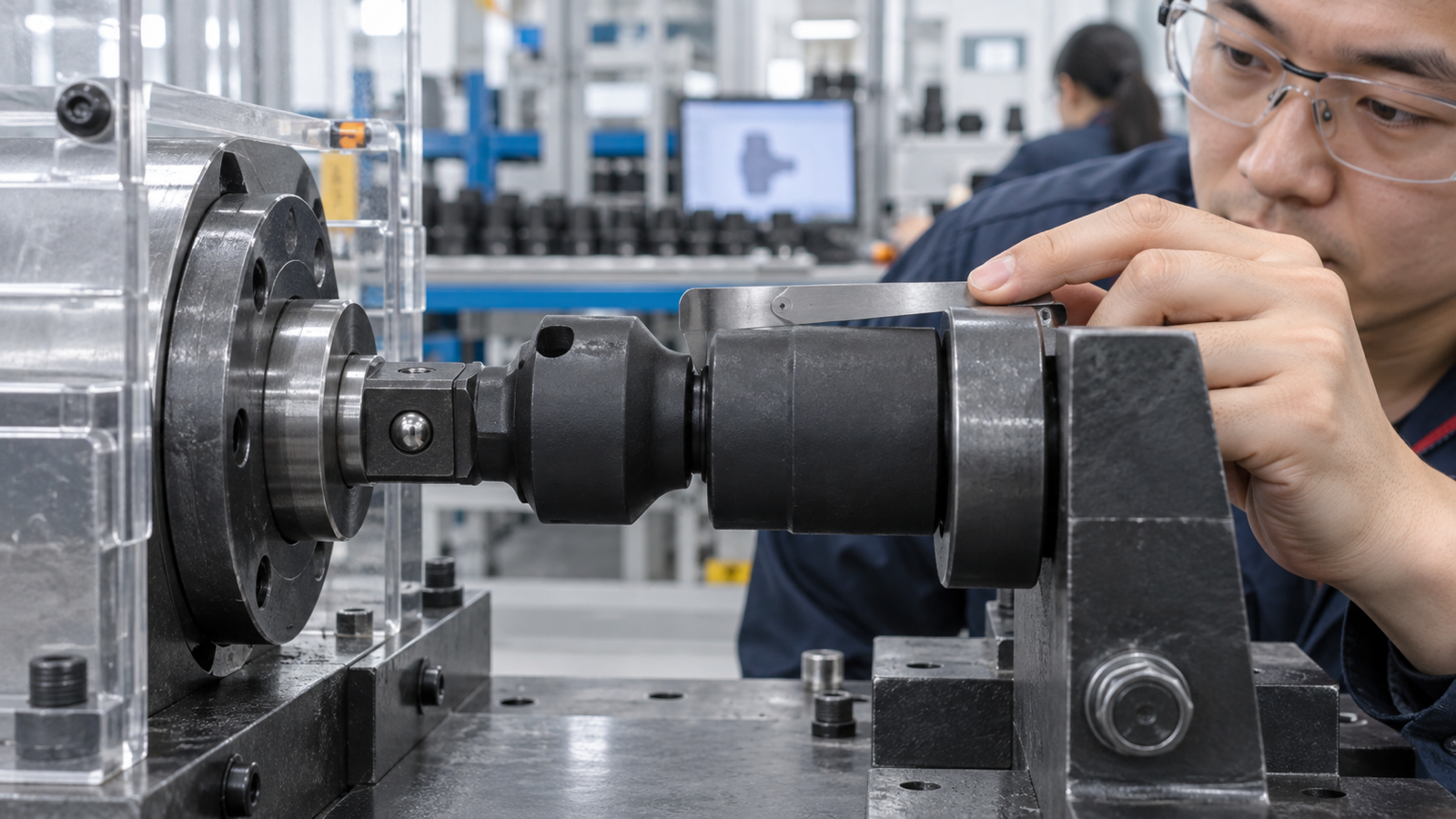
An adapter carries torque through a square interface, shoulder, and socket connection. Impact use delivers repeated pulses rather than smooth hand rotation. Stress can concentrate at corners, shoulders, detent holes, and section changes. Poor alignment adds bending when a long socket or extension hangs off one side.
That interface decides more than appearance. An adapter may look heavy yet lose control through a loose square fit or shallow engagement. A good specification names input and output drives separately, sets fit tolerances, and controls shoulder position. It also states whether a retaining ball, through-pin, friction ring, or another method holds the socket in place.
Review a proposed design through this load path:
- impact tool output enters the input square;
- material carries torsional and bending stress through the body;
- output square seats fully inside the socket drive;
- retainer prevents unintended separation during movement;
For buyers mapping adapters beside ratchets, the socket tools category shows wider system context. RFQ action: request a drawing with both drive ends.
Load-path review
| Design zone | What it carries | Buyer check | Failure signal |
|---|---|---|---|
| Input square | Tool-side torque pulses | Size, fit, corner condition | Rocking or visible peening |
| Main body | Torsion plus bending | Section thickness and transitions | Twist, crack, or permanent set |
| Output square | Socket-side torque | Engagement depth and tolerance | Socket wobble or slip |
| Shoulder | Axial location and clearance | Shoulder diameter and squareness | Socket binds or sits crooked |
3. Which adapter types should a buyer stock?
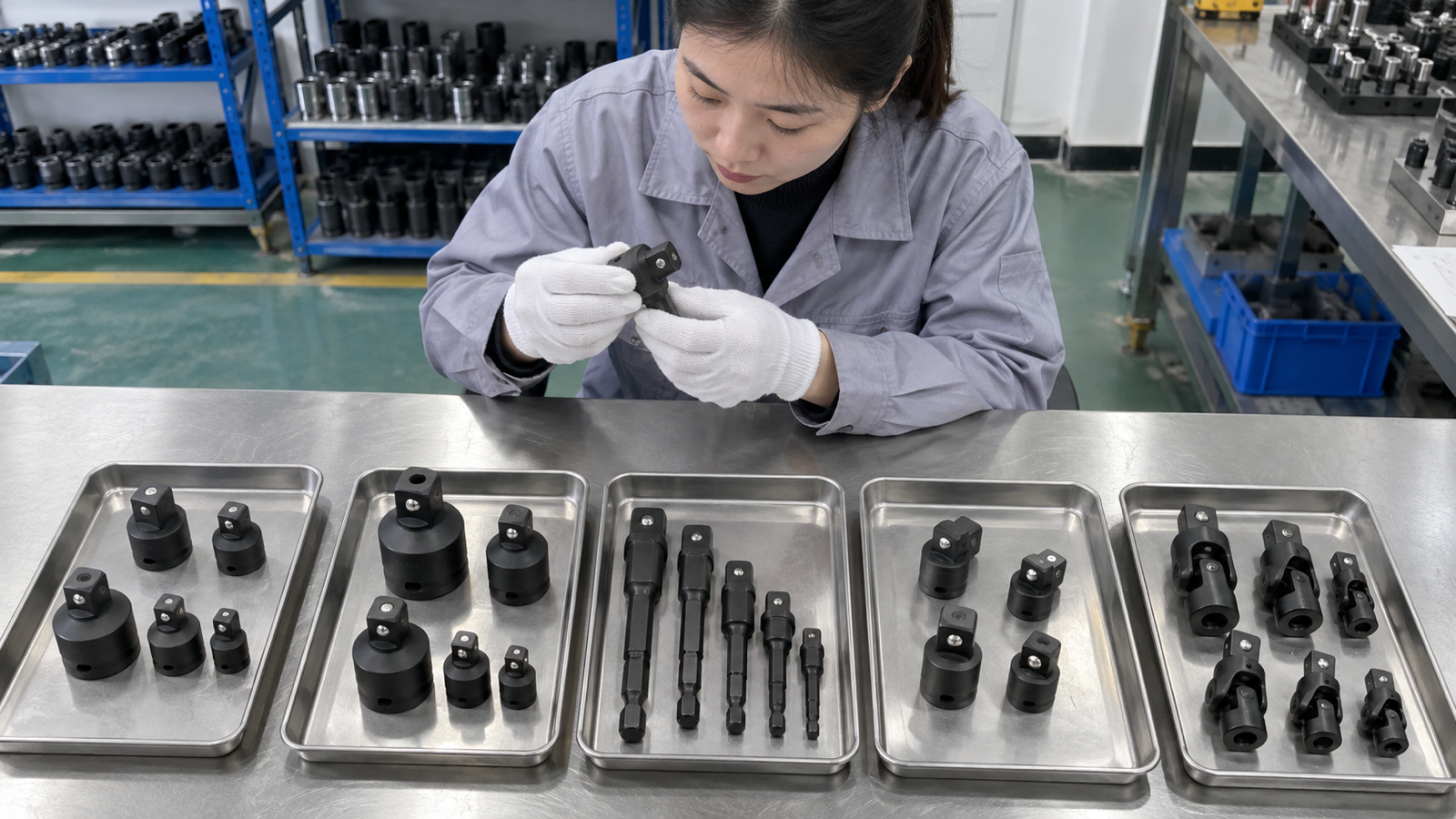
Drive reducers address workshops that own sockets in several drive sizes, but local demand must decide their assortment value. Drive increasers solve the opposite mismatch, yet need tighter load review. Hex-shank adapters serve cordless impact drivers and compact kits, with separate shank and retainer approval.
The product family should follow the mismatch. Do not combine reducers, increasers, hex-shank adapters, wobble adapters, and universal joints under one generic listing. Each part needs its own identity, dimensions, and warnings.
Stock planning should consider:
- drive combinations demanded by local socket sets;
- metric and SAE coverage without implying interchangeability;
- short versus extended body length;
- compact cordless use versus heavy vehicle service;
- retainer preference and replacement availability.
For assortment architecture, compare placement with OEM socket set options. Merchandising action: show input drive first, then output drive, length, and impact class.
Type-selection matrix
| Adapter type | Best-fit buyer need | Specification focus | Do not assume |
|---|---|---|---|
| Reducer | Smaller sockets on larger tools | Output fit and impact rating | Every reducer handles full tool output |
| Increaser | Larger sockets in limited cases | Input capacity and body strength | A larger socket makes a small tool stronger |
| Hex-shank | Cordless driver accessory kits | Shank retention and impact suitability | A hex shank proves impact service |
| Wobble style | Small angular access adjustment | Controlled angular movement | Wobble equals universal-joint capability |
4. How do drive sizes and fastener systems match?
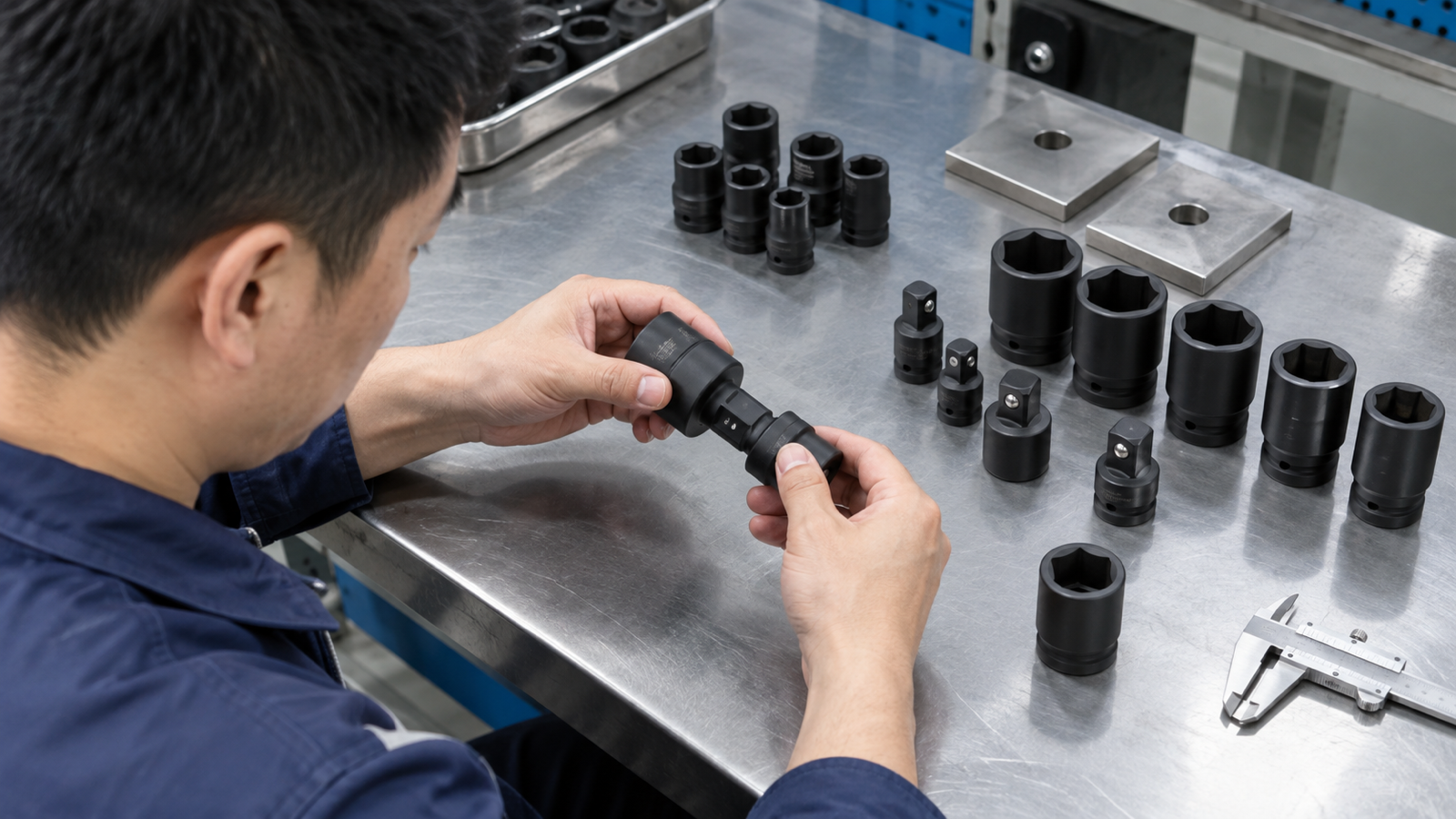
Drive size describes a tool interface. Socket opening describes fastener size and profile. An adapter cannot make an incorrectly sized socket safe. A 1/2-inch reducer may accept a 3/8-inch socket, yet that socket still needs the correct opening, depth, and point profile.
Keep those dimensions in separate columns. An RFQ should never compress drive, opening, length, and profile into one “size” field. ISO 2725-2:2017 addresses dimensions, designation, and marking for machine-operated impact sockets. It does not certify an adapter or replace product verification.
Before approving a configuration, check:
- input drive nominal size and mating tool;
- output drive nominal size and mating socket;
- metric or SAE opening family;
- six-point, twelve-point, bit, or special profile;
- shallow, deep, or extra-deep clearance;
- tolerance and retention requirements.
Use the metric-to-SAE conversion chart as planning reference, not permission for approximate substitutions. Product action: keep drive and fastener conversion as separate gates.
Interface-data table
| Field | Example entry | Why it matters | Approval evidence |
|---|---|---|---|
| Input drive | 1/2 in square | Defines tool-side fit | Drawing and gauge check |
| Output drive | 3/8 in square | Defines socket-side fit | Mating sample and dimension report |
| Opening system | Metric or SAE | Prevents wrong fastener selection | SKU and packaging review |
| Point profile | Six-point or twelve-point | Changes contact geometry | Socket sample inspection |
5. Why must an adapter be impact-rated?
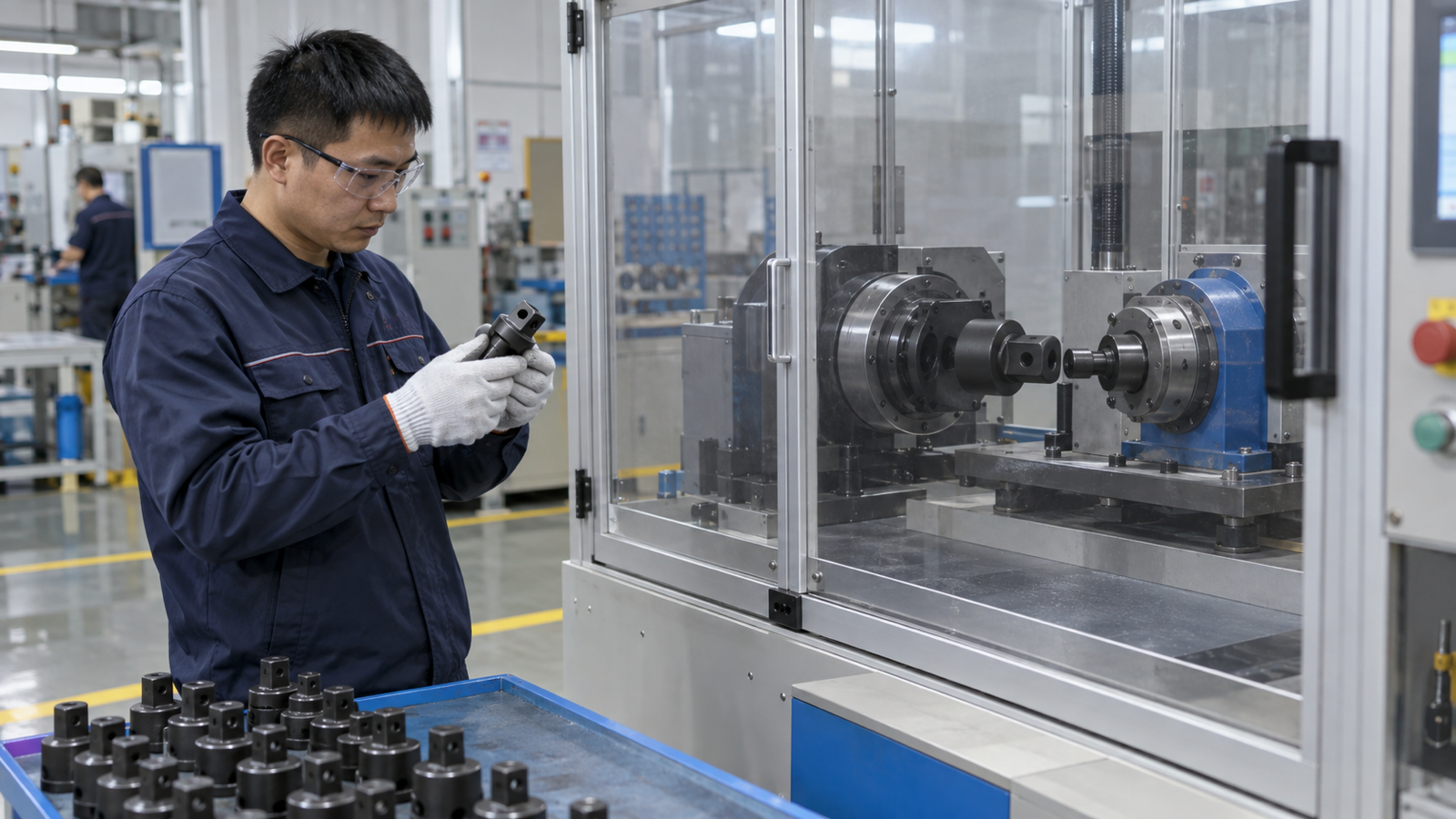
Powered impact tools create repeated shock loads unlike hand rotation. A hand-use adapter may have suitable dimensions yet lack a design margin for those pulses. Surface color cannot settle this question; dark finishes appear across products with different materials and controls.
Impact service needs its own approval gate. ISO 1711-2:2019 specifies hardness and minimum torsional strength for machine-operated sockets intended for impact wrenches. That scope concerns sockets. An adapter still needs its own design, test method, and use classification.
For an impact-socket adapter, request:
- explicit powered-impact classification;
- compatible tool type and drive range;
- finished-part torsion or functional test method;
- dimensional checks after heat treatment;
- inspection for cracks, notches, and detent holes;
- warnings for extensions, overload, or modification.
KOLARWIN’s impact sockets versus regular sockets guide gives category context. Safety action: keep hand-use adapters separate from impact products in bins, catalogs, and photography.
Impact-gate comparison
| Approval gate | Impact adapter evidence | Weak substitute |
|---|---|---|
| Intended use | Written powered-impact classification | Dark finish |
| Material | Named grade or agreed specification | “Alloy steel” only |
| Geometry | Controlled drawing and critical dimensions | Thick-looking silhouette |
| Retention | Defined ball, pin, or ring arrangement | Product photo alone |
| Validation | Agreed functional or torsion method | Unreferenced supplier claim |
6. What material and heat-treatment evidence matters?

CR-MO often appears in impact-tool programs because buyers seek a balance of hardness and toughness. The abbreviation alone does not identify chemistry, heat treatment, or finished properties. CR-V can appear in hand-tool families. The drawing, grade, process, and test must agree.
Material names are starting points, not acceptance criteria. Ask for each component’s agreed grade or material specification. Connect that grade with process records, hardness checks, and finished-part testing. A certificate without batch identity gives weak protection against substitution.
Procurement records should cover:
- steel grade or controlled material requirement;
- incoming certificate or agreed verification method;
- heat-treatment batch and process record;
- hardness method and sampling plan;
- crack inspection and change control where relevant.
For broader hand-tool context, see KOLARWIN’s hand-tool categories. RFQ action: specify material by component and require written approval for substitutions.
Material-control table
| Control item | Buyer question | Risk when missing |
|---|---|---|
| Grade | Which exact specification applies? | Chemistry varies between batches |
| Heat treatment | Which route and record identify the batch? | Hardness or toughness drifts |
| Hardness | Which method and sampling points apply? | Results cannot be compared |
| Change control | Who approves material substitutions? | Unapproved parts enter production |
7. How should geometry and retention be checked?
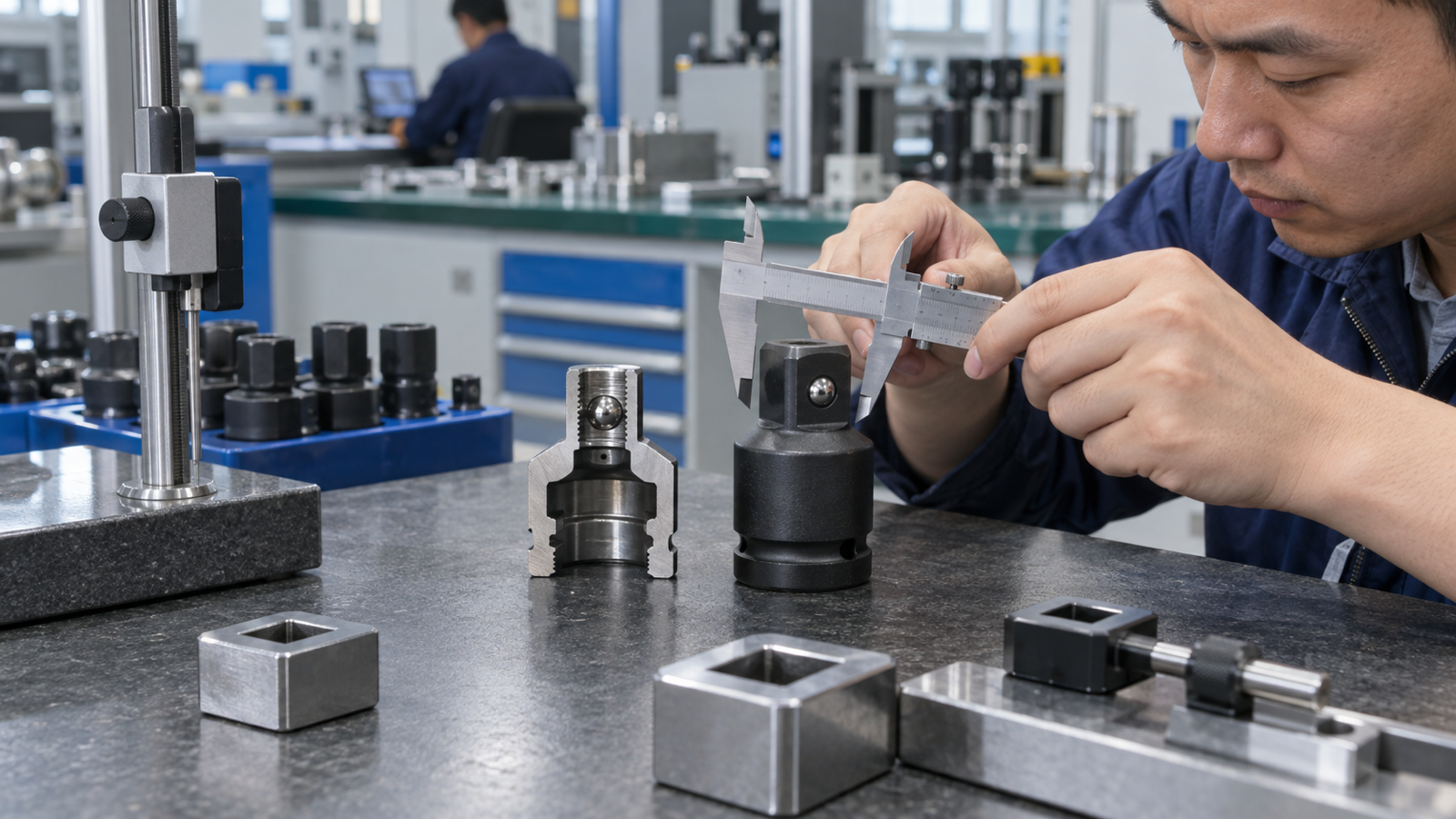
Adapter geometry controls fit and stress. A square can measure correctly at one point yet rock if corners, chamfers, or shoulder faces fall outside tolerance. Detent holes remove material from a loaded section, so location and edge condition deserve drawing control. Excessive clearance encourages peening; insufficient clearance prevents full seating.
Small features carry big consequences. Inspect input and output squares, shoulder squareness, body runout, length, and retainer position. Use mating master gauges or approved sockets rather than relying on caliper readings alone. A basic fit trial can reveal rocking, partial engagement, or a retainer that releases under ordinary handling.
Ask a supplier to show:
- input and output square dimensions;
- corner radii, chamfers, and shoulder faces;
- total length and minimum section thickness;
- retainer position and fit results with mating tools.
Use the 6-point versus 12-point socket guide for mixed socket programs. Inspection action: approve a control drawing before artwork or retail packaging.
Geometry-and-retention table
| Feature | Check method | Acceptance question | Common problem |
|---|---|---|---|
| Square drive | Master gauge or mating tool | Does it seat fully without rocking? | Loose fit or corner interference |
| Shoulder face | Flatness and squareness check | Does socket stop at intended location? | Partial engagement |
| Detent feature | Position and release check | Does retainer hold during handling? | Dropped socket |
| Body section | Drawing and sample measurement | Is clearance balanced with strength? | Thin weak neck |
8. Which applications justify an adapter?
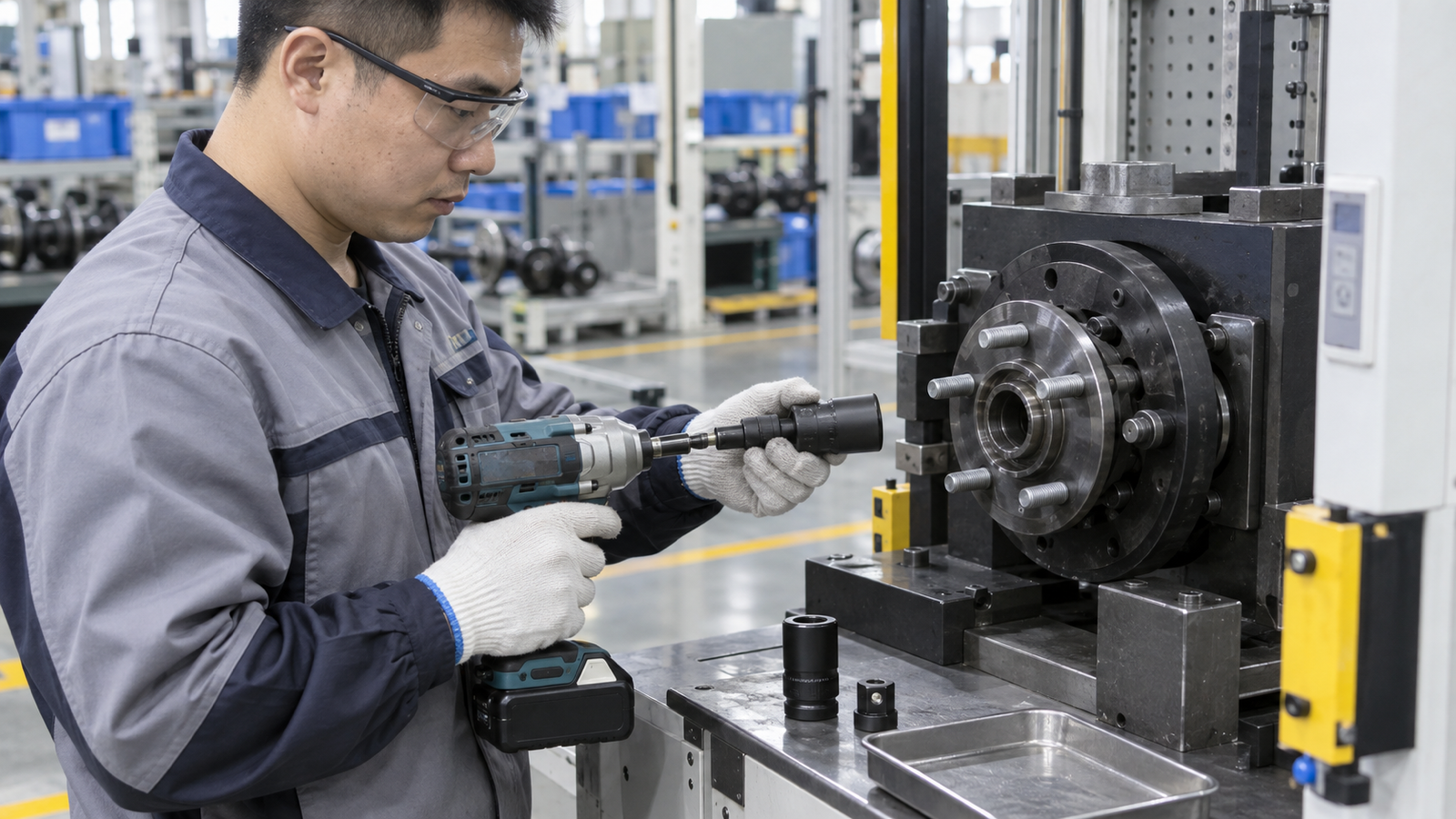
An adapter earns its place when it solves a documented interface gap. A mobile technician may carry a hex-shank adapter with a cordless impact driver. A repair shop may need a 1/2-to-3/8 reducer. Fleet programs may standardize several drives while keeping specialty sockets separate. Heavy industrial fastening may favor a direct-matched drive.
Match the adapter with the work envelope. Access, fastener size, tool output, duty cycle, and retention all matter. Extra interfaces add flexibility, yet also add length and another failure point. Stock adapters for known gaps, not as substitutes for primary tools.
Application review should ask:
- who uses the item and with which powered tool;
- whether work is automotive, fleet, workshop, or industrial;
- whether repeated impact or occasional service is expected;
- whether a direct-matched socket would be safer or simpler.
For category planning, KOLARWIN’s automotive repair tools range and mechanic tools list show adjacent assortment logic. Portfolio action: rank each adapter by a named use case, then remove configurations without a clear pairing.
Application-fit table
| Use case | Suitable adapter logic | Main control point | Better alternative when available |
|---|---|---|---|
| Cordless service kit | Hex shank to square drive | Shank and socket retention | Direct socket accessory |
| General automotive bay | Drive reducer within matched range | Tool output and socket fit | Correct drive socket |
| Fleet maintenance | Repeated use across planned sockets | Duty cycle and inspection | Standardized drive family |
| Industrial bolting | Minimize joints under high load | Product-specific rating | Direct large-drive socket |
9. What inspection and documents should an RFQ require?
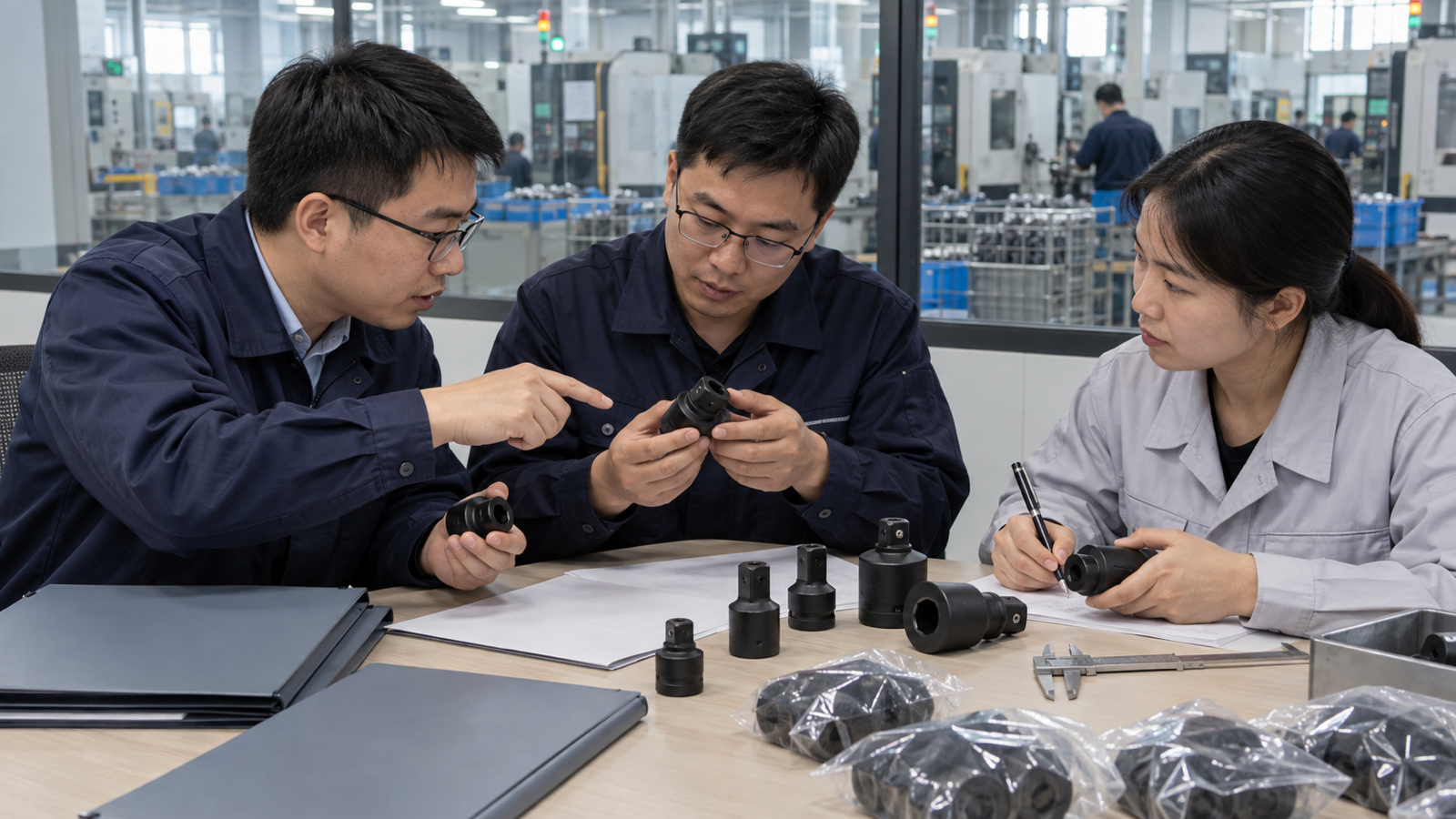
An RFQ should prove identity, fit, process, and use classification. An impact product deserves more than a catalog picture. Connect documents with SKU, drawing revision, batch, inspection lot, and shipment.
Paperwork earns trust through traceability. Ask for a document list before sample approval. Define mandatory files and tests by drive or duty class. Keep unsupported certificates out of marketing copy. A standard reference does not equal certification.
An RFQ can request:
- approved drawing and bill of materials;
- input/output drive and retainer data;
- material requirement and heat-treatment route;
- dimensional report with sample quantity;
- hardness or torsion method, finish, and packaging proof;
- nonconformance response and change-control process.
For distributor decisions, use the China OEM auto-tools sourcing guide beside your supplier questionnaire. RFQ action: add acceptance criteria beside every requested document.
RFQ evidence table
| RFQ line | Minimum content | Review owner | Hold point |
|---|---|---|---|
| Product identity | SKU, drives, length, retainer | Product engineer | Any mismatch |
| Material/process | Grade, heat route, batch link | Quality team | Missing traceability |
| Dimensions | Critical features and method | Inspection team | Out-of-tolerance result |
| Functional proof | Agreed test and result | Engineering/quality | Failed or undefined test |
| Packaging | Warnings, use class, configuration | Marketing/procurement | Mixed hand and impact claims |
10. How should a buyer specify a private-label program?

A private-label program should begin with a controlled adapter matrix. Name every drive pair, powered tool, socket family, length, retainer, material, finish, and package. Approve samples under a defined drawing. Keep hand and impact products separate in catalog copy and cartons.
The cleanest next step is a matched RFQ. Send drive combinations, application sketches, market requirements, inspection expectations, packaging needs, and reorder logic. A supplier can then flag details needing engineering review. Buyers can use KOLARWIN’s contact page for a quotation and document discussion.
Before issuing an order, confirm:
- each adapter has one unambiguous SKU;
- drive and socket dimensions are separated;
- impact use appears only where evidence supports it;
- drawings, samples, packaging, and batch records agree.
Program action: approve one pilot configuration, record its evidence, and use that file as the baseline. A small adapter supports a tool system when interface, impact class, and records stay visible.
Q1: Can any socket reducer be used with an impact wrench? No. Use only a reducer explicitly designed and approved for powered impact service. Fit alone does not prove toughness, geometry, or test evidence.
Q2: Does black phosphate prove an adapter is impact-rated? No. Finish identifies appearance or surface protection. Ask for intended-use classification, material evidence, drawing control, and product-specific validation.
Q3: Should a buyer use an adapter instead of buying the correct drive socket? Usually, a direct-matched socket reduces interfaces. An adapter can make sense for a defined assortment gap, compact kit, or planned service system.
Q4: What should a private-label buyer print on packaging? State input drive, output drive, compatible tool class, intended socket family, retainer type where useful, and clear warnings against hand-use or impact-use confusion.
Q5: Which material should an importer specify? Specify a named grade or agreed material requirement by component, then add heat treatment, geometry, finish, and acceptance tests. Avoid relying on “CR-MO” or “alloy steel” alone.
Looking for a reliable mechanic tools manufacturer in China?
If you are sourcing hand tools, socket tools, automotive repair tools, mechanic tool sets or OEM private label tools, contact KOLARWIN Tools for factory-direct quotation, customization support and product consultation.


