Need OEM supplier support for this product type?
Contact KOLARWIN Tools for OEM mechanic tools, private label packaging, wholesale quotation and product range support. This gives overseas buyers a clear path from article reading to supplier discussion.
A ratcheting screwdriver lets the user turn a fastener through short back-and-forth handle strokes without lifting the bit after each drive stroke. A standard screwdriver transfers each turn directly and requires the user to reset hand position between strokes. For repeated screwdriving or limited swing clearance, a ratcheting model can save repositioning. For simple work, precise feel, or high torque outside the ratchet’s rated limit, a standard model may be the more direct choice.
For distributors, the useful comparison is not a universal claim about speed or fatigue. It is whether the ratchet mechanism, bit system, handle, access, and workload suit the intended application. A ratchet screwdriver remains a manual tool; it does not multiply torque automatically, replace a torque-controlled process, or make an incorrect bit fit correctly.
1. What is the difference between a ratcheting screwdriver and a standard screwdriver?
A ratcheting screwdriver contains a one-way mechanism that drives the bit in a selected direction while allowing the handle to return without turning the fastener backward. A standard screwdriver has no such return action; the user turns, releases or repositions the grip, then turns again. Both need a properly matched tip and steady axial pressure.
Common distinctions include:
- Drive and return: A ratchet advances on one stroke and freewheels on the return stroke. A standard screwdriver transmits rotation in either direction as the user turns it.
- Hand repositioning: A ratchet can stay engaged while the handle rocks through a short arc. A standard tool usually needs a grip reset between partial turns.
- Controls: Many ratcheting models select clockwise, counterclockwise, or a locked position. Some designs use a reversing lever; others use a rotating collar. Follow the markings and instructions for the specific tool.
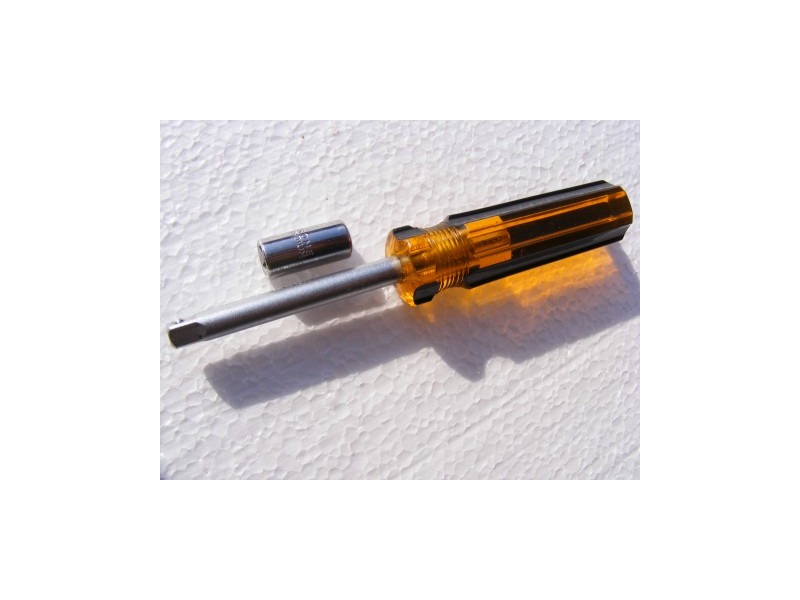
- Construction: Standard screwdrivers often have a fixed blade and tip. Many ratcheting screwdrivers use interchangeable bits, which adds a compatibility check.
That distinction is practical. Wera describes models with a neutral setting that disables the ratchet for conventional screwdriver use, while GEDORE describes a center position that locks the ratchet. Those features are examples, not universal design requirements.
For a first comparison, list fastener direction, available swing angle, required tip profiles, and whether operators need a locked mode. Then compare actual models against that list.
Quick comparison for a buyer
| Check | Ratcheting screwdriver | Standard screwdriver |
|---|---|---|
| Return stroke | Handle returns while bit stays engaged, when correctly set | User repositions grip or tool |
| Direction change | Usually a selector; layout varies by model | Turn the tool in the opposite direction |
| Tip arrangement | Often interchangeable bits; confirm holder interface | Fixed tip or replaceable blade, depending on design |
| Best screening question | Will short strokes reduce repeated repositioning? | Is direct feel and a simple fixed tool preferred? |
2. How does a screwdriver ratchet work?
Inside the handle or head, a pawl-and-gear or another one-way clutch arrangement couples the handle to the shaft in one direction. During the drive stroke, internal parts engage and transmit rotation. During return, the mechanism releases or indexes so the handle can move back while the bit stays in place. Exact construction differs by design.
A selector changes which direction engages, and some models add a center or neutral setting that locks the ratchet. Tooth count affects the mechanism’s return angle: a finer ratchet can engage after a smaller handle movement. Wera lists a 44-tooth model with an 8-degree return angle; a separate Wera T-handle model specifies 80 teeth and a 4.5-degree return angle. Those figures apply to those models only.
- Confirm selector markings before putting the bit on a fastener.
- Keep the bit fully seated and aligned with the screw recess.
- Use the drive stroke to turn; let the handle reset without twisting the bit backward.
- Stop if the selector slips, the mechanism skips, or the handle feels abnormal.
A small return angle helps in tight arcs. It does not mean the screwdriver can turn in zero clearance, nor does a high tooth count alone establish durability or torque capacity.
When sourcing, request the mechanism type, selector positions, return angle or tooth count if specified, and any manufacturer torque limit. Avoid comparing tooth counts without checking the return angle and intended use.
Mechanism details that affect use
| Mechanism detail | What it changes | Buyer check |
|---|---|---|
| Return angle | Minimum handle movement before another drive engagement | Compare with the actual available arc |
| Selector positions | Forward, reverse, and possibly ratchet lockout | Confirm direction convention and neutral behavior |
| Engagement feel | How positively the mechanism catches under load | Inspect samples in both directions and at low load |
| Published torque limit | Maximum stated load for that particular model | Match to the maker’s documentation; do not infer from tooth count |
3. When does a ratcheting screwdriver save time?
The ratchet’s clearest advantage appears when the operator must turn many fasteners and cannot swing a full circle. It reduces repeated hand repositioning because the tool can remain on the fastener during the return stroke. Wera’s product guidance also describes fast spinning on low-resistance screws for certain models. That behavior depends on the mechanism and should be verified on a sample.
Typical screening situations include:
- Assembly work with many similar screws.
- Access where a nearby wall, bracket, or housing limits handle travel.
- Service work that requires frequent direction changes, if the selector is easy to reach.
- Applications using a standardized interchangeable-bit assortment.
A ratchet may offer little benefit on one or two screws with unrestricted access. Long screws that bind, damaged fasteners, or tasks requiring controlled final torque may need a different tool or process. A ratcheting handle does not guarantee less fatigue; grip diameter, weight, hand posture, force, duration, and operator all matter.
Count the reset strokes, not just the screws. Observe a representative task and note how often the user lifts or regrips the standard screwdriver. Trial both tools on the same fastener type before making an assortment decision.
Ask evaluators to record access, time, selector handling, bit retention, and any discomfort in their own words. Treat that record as a task trial, not as a general performance claim.
Very loose screws may follow a ratchet’s return stroke if fastener or shaft resistance cannot overcome return drag. Check this behavior during sample trials.
Task-fit screen
| Work condition | Ratcheting option | Standard option |
|---|---|---|
| Many screws, limited swing | Strong candidate if selector and profile fit | Works, but needs repeated grip resets |
| Few screws, open access | Convenience choice | Often adequate and straightforward |
| Smooth, low-resistance fasteners | Check return drag and any spinner feature on the sample | Can be finger-spun where grip and access allow |
| Controlled final torque required | Use only if approved for the process and within model limits | May offer direct feel, but still is not a calibrated torque tool |
4. When is a standard screwdriver the better choice?
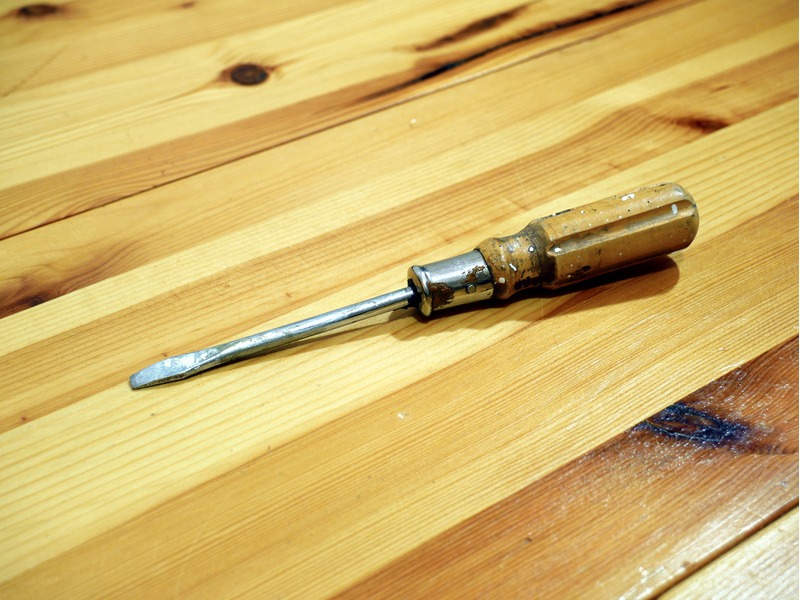
A standard screwdriver can be preferable when the task benefits from a direct, uncomplicated connection between hand rotation and bit rotation. Fixed-blade models also remove the bit-holder interface from the tool stack. That can matter where a buyer wants a specific reach, a dedicated tip, or fewer parts to inspect and replace.
Consider a standard tool when:
- Work volume is low and access allows a full or comfortable partial turn.
- A dedicated tip and blade length match the fastener and work area.
- The operator wants to feel changes in resistance directly.
- A ratcheting mechanism’s published load limit is below the application requirement.
- The environment or procedure calls for a particular tool configuration.
“Direct feel” does not make a standard screwdriver a torque measuring instrument. Human judgment varies, and either tool can damage a fastener if mismatched or overloaded. For electrical work, use a tool with explicit, applicable insulation approval and follow the relevant procedure; handle color alone does not indicate electrical insulation.
Simplicity still has a use case. Match the tool to the task’s access, required tip, and control method before comparing convenience features.
For a fixed-blade assortment, specify tip profile and size, shaft length, handle form, and any required insulation marking or documentation. Do not use color as a substitute for a documented rating.
Selection by task requirement
| Requirement | Standard screwdriver advantage | Confirm before ordering |
|---|---|---|
| Dedicated fastener profile | Tip remains part of the selected tool | Profile, size, tip geometry, and blade length |
| Direct rotation | No ratchet selector or return stroke | Whether this suits the user’s required feel |
| Fewer interfaces | No interchangeable bit holder on fixed-blade models | Replacement and assortment strategy |
| Electrical work | No automatic advantage | Explicit tool approval, markings, documentation, and procedure |
5. Which tool works better in confined spaces?
A ratcheting screwdriver can work well where the operator has room for a short arc but not a full turn. The relevant dimension is the handle’s required sweep around the fastener, not simply whether the tool is labeled “compact.” A fine-tooth mechanism may reduce that sweep, while a short or stubby body may improve access in a different direction.
The ratchet can also add length or diameter at the handle, and a bit holder adds an interface between handle and tip. A standard stubby screwdriver may fit where a full-size ratcheting handle cannot. Conversely, a slim shaft or interchangeable bit may reach a location that a fixed-blade tool cannot. Product dimensions and a physical sample settle this better than broad labels.
- Measure clearance around the fastener and behind the handle.
- Check the full tool length, handle diameter, and bit or blade projection.
- Confirm the selector remains reachable in the intended orientation.
- Test whether the hand can complete the ratchet’s return arc without hitting nearby parts.
Access is three-dimensional. A tool may clear the fastener yet still leave no room for a hand to turn or reset it.
Use a mock-up or representative assembly during evaluation. Record the tightest access point and the required handle arc, then compare candidate dimensions.
Access comparison
| Constraint | Ratcheting screwdriver check | Standard screwdriver check |
|---|---|---|
| Small available arc | Published return angle and selector orientation | Required grip reset angle |
| Shallow depth | Overall length and bit projection | Blade length and handle-to-tip reach |
| Narrow side clearance | Handle diameter and hand position | Handle diameter and shaft profile |
| Obstructed selector | Whether direction can be set before insertion | No ratchet selector to access |
6. Do ratcheting screwdrivers accept the same bits?
Many ratcheting screwdrivers use a 1/4-inch hex bit holder, but compatibility depends on the holder and bit standard stated by the manufacturer. Wera identifies specific holders that accept C 6.3 and E 6.3 style bits under DIN ISO 1173. That is an example of a published interface, not a guarantee for every ratcheting model or every bit.
Check the following before consolidating an assortment:
- Bit shank standard and length.
- Holder depth, retention method, and release design.
- Screw profile and size, such as Phillips, Pozidriv, slotted, Torx, or hex.
- Reach required by the fastener location.
- Whether an adapter changes the stack length or fit.
A secure bit holder does not correct a mismatched tip profile. Phillips and Pozidriv are distinct profiles; choose the tip that matches the fastener recess. For a profile comparison, see Pozidriv vs Phillips. Buyers comparing fastener drive profiles can also use Torx vs Allen as a separate identification guide.
The bit is part of the working system. Confirm holder compatibility and fastener fit together rather than ordering the handle first and assuming any bit will suit it.
Request a sample with the intended bit family, then check retention, reach, fit, and changeover on representative screws. For powered impact applications, see impact bits vs regular bits; a hand ratchet screwdriver is a different tool and does not make a standard bit impact-rated.
Bit and holder fit
| Interface or fit | What to verify | Common consequence of a mismatch |
|---|---|---|
| Hex shank standard | Holder and bit designations from both suppliers | Loose fit or inability to seat the bit |
| Bit length | Reach and holder engagement | Poor access or inadequate retention |
| Tip profile | Fastener recess type and size | Cam-out, damage, or incomplete engagement |
| Retention feature | Magnet, sleeve, lock, or other documented system | Bit movement or difficult changes |
7. Can a ratcheting screwdriver replace a torque screwdriver?
Not by default. A ratcheting screwdriver provides a return stroke mechanism; it does not automatically measure or limit tightening torque. Some models publish a maximum torque value for the tool, but a maximum structural limit is not the same as a calibrated torque setting for assembly control.
If the joint requires a specified torque, use the tool and process approved for that requirement. A calibrated torque screwdriver or another controlled method may be necessary. Confirm the required range, direction, tolerance, calibration status, fastener, and joint procedure with the responsible technical team. Do not infer capability from handle size, tooth count, or a ratchet label.
- Separate “maximum tool torque” from “target fastener torque.”
- Check whether the requirement applies to tightening, loosening, or both.
- Confirm whether the tool can operate in the required direction and mode.
- Keep a documented verification process for controlled assemblies.
A published limit answers only one question. It does not establish that a tool will deliver a specified torque repeatably.
If the application has a torque specification, include that value and its source in the RFQ. Ask the supplier for model-specific documentation and route approval through the process owner.
Torque requirement check
| Buyer question | Why it matters | Evidence to request |
|---|---|---|
| Is there a target torque? | Tool choice may be process-controlled | Drawing, work instruction, or specification |
| Is a model limit stated? | Prevents exceeding tool limits | Manufacturer datasheet or manual |
| Is calibrated output required? | A hand feel is not a measurement | Calibration and control method approved by the process owner |
| Is reverse loading expected? | Ratchet limits may differ by direction | Model-specific documentation |
8. What should distributors compare before sourcing either type?
Start with the end user’s actual work, then compare construction and supply requirements. A low unit price cannot resolve a mismatch in tip profile, access, or mechanism behavior. For ratcheting models, selector layout, return action, lockout, bit retention, and documented load limits deserve attention. For standard models, dedicated tip geometry, shaft length, handle dimensions, and replacement strategy may matter more.
Build the comparison around:
- Intended fastener profiles and sizes.
- Fixed blade versus interchangeable bit architecture.
- Overall length, handle diameter, and access constraints.
- Selector positions and ratchet return angle, if specified.
- Bit holder standard and retention design.
- Packaging, labeling, assortment mix, and target market requirements.
- Sample acceptance criteria and any required documents.
Related assortment context may come from complete mechanic tools list and best mechanic tool set for distributors. Those guides do not determine which specific screwdriver model fits a buyer’s application; the intended work and sample evaluation do.
A short specification prevents a long email chain. Put the required tip system, length, handle type, ratchet controls, and packaging expectations into one RFQ sheet.
If a buyer is considering a wider drive assortment, link the screwdriver program to its mechanic tool set exporter checklist and confirm how individual tools will be grouped and labeled.
RFQ comparison fields
| Field | Ratcheting screwdriver | Standard screwdriver |
|---|---|---|
| Tip supply | Bit profiles, sizes, and shank standard | Fixed or replaceable blade profile and size |
| Working dimensions | Handle, mechanism, holder, bit projection | Handle, shaft, blade, and overall reach |
| Operating details | Direction selector, lockout, return angle if specified | Fixed blade behavior and any special construction |
| Approval details | Model limits and required documentation | Material, marking, or application requirements |
| Commercial details | Assortment, packaging, target-market labels | Assortment, packaging, target-market labels |
9. How should a buyer test samples before approving an assortment?
Test both types on the same representative fasteners and in the same access conditions. A sample check should establish fit and handling; it should not be presented as a formal performance test unless the buyer defines a method, controls, sample size, and acceptance thresholds.
A practical review can include:
- Verify bit or tip profile against the fastener.
- Check the tool’s selector direction and lockout behavior, where fitted.
- Drive and remove representative screws without forcing a mismatched tip.
- Inspect bit retention, selector movement, and mechanism engagement.
- Repeat the task in the tightest intended work area.
- Record failures, access issues, and any dimensional concerns.
If evaluation includes measured time or torque, define the measurement method and conditions first. Do not generalize one operator’s sample experience into a universal claim about productivity or fatigue. For adjacent powered-bit selection, compare OEM impact bit sets separately from manual screwdriver programs.
Write the acceptance criteria before the sample arrives. That keeps approval tied to the application instead of preference alone.
Send the supplier the fasteners, target profiles, access constraints, requested sample configuration, and inspection record. Retain an approved sample or clear reference specification for repeat orders.
Sample approval record
| Check | Pass condition to define before testing | Record |
|---|---|---|
| Tip engagement | Correct profile and size seat properly | Fastener type and observed fit |
| Ratchet operation | Selector and return behavior match documented directions | Selector positions and any skip or slip |
| Access | Tool can be operated at the target location | Clearance and handle sweep |
| Bit or blade retention | Interface holds and releases as specified | Holder style and observed movement |
| Order match | Approved sample aligns with RFQ | Model reference, dimensions, and packaging |
10. Which screwdriver should you choose for your product line?
Choose a ratcheting screwdriver when repeated partial turns, limited handle swing, or a shared bit system makes the return action useful. Choose a standard screwdriver when a fixed tip, direct rotation, simple construction, or the application’s requirements point that way. Keep both where customers serve varied tasks; decide by application rather than assuming one type replaces the other.
Before selection, confirm:
- Fastener profile and size.
- Access and required reach.
- Work volume and frequency of hand repositioning.
- Ratchet selector positions, return behavior, and model-specific limits.
- Bit interface, retention, or fixed-tip requirements.
- Required torque control, insulation approval, marking, and packaging.
The most reliable assortment starts with the fastener and workspace. KOLARWIN buyers can use the contact-us page to discuss a product brief. Include the bit profile, shank interface, required length, handle and ratchet needs, order quantity, target market, and packaging expectations. This gives the team a concrete basis for checking fit and preparing a product inquiry.
Frequently asked questions
Q1: Does a ratcheting screwdriver turn screws faster?
It can reduce hand repositioning during repeated partial turns. The result depends on access, fastener resistance, mechanism, operator, and task. Compare samples in the intended work rather than assuming a fixed speed gain.
Q2: Can I use a ratcheting screwdriver as a regular screwdriver?
Yes, it can turn continuously in the selected drive direction. A locked setting, where fitted, permits direct turning in either direction without changing the selector. Check the model’s controls and load limits.
Q3: Does a higher tooth count always mean better performance?
No. Tooth count may relate to engagement spacing, but buyers should check the stated return angle, mechanism feel, dimensions, and limits. A higher count alone does not prove greater strength or longer life.
Q4: Can I use ordinary screwdriver bits in any ratcheting handle?
No. Confirm the shank standard, bit length, holder depth, and retention system. Match the tip profile and size to the fastener as well.
Q5: Is a ratcheting screwdriver suitable for electrical work?
Only when the specific tool has the required electrical insulation approval and the job procedure permits its use. Color or appearance alone does not establish an insulation rating.
Looking for a reliable mechanic tools manufacturer in China?
If you are sourcing hand tools, socket tools, automotive repair tools, mechanic tool sets or OEM private label tools, contact KOLARWIN Tools for factory-direct quotation, customization support and product consultation.