
Need OEM supplier support for this product type?
Contact KOLARWIN Tools for OEM mechanic tools, private label packaging, wholesale quotation and product range support. This gives overseas buyers a clear path from article reading to supplier discussion.
A small threaded fastener may need controlled tightening, but a torque wrench can be awkward for a compact screw and a torque screwdriver may not cover the required drive or range. Buyers should choose by specified torque, interface, access, cycle frequency and verification process. ISO 6789-1 distinguishes indicating and setting hand torque tools and covers conformance testing and marking; ASME B107.300 also covers manually operated torque instruments. This guide helps procurement compare tool classes without inventing torque ranges or treating calibration as a label-only exercise.
1. What is the core difference?
A torque screwdriver is designed for controlled tightening through a screwdriver-style tip or bit interface. A torque wrench commonly drives a socket, crowfoot or interchangeable head, depending on design. Both can be hand torque tools, and both may use indicating or setting mechanisms. The fastener interface is often the quickest distinction, but the task’s torque requirement and access can matter more. ISO 6789-1 defines hand torque tool categories and conformance requirements; model documentation determines the actual range.
The torque wrench guide outlines torque-wrench formats that may suit jobs outside a screwdriver-style tool’s access or working range.
The connection narrows the choices.
- Identify the fastener interface before choosing a tool.
- Match bit or square-drive output to the assembly.
| Tool class | Typical interface | Selection cue |
|---|---|---|
| Torque screwdriver | Driver bit / tip | Small screw or driver recess |
| Torque wrench | Square drive / head | Nut or bolt interface |
| Either | Model-specific | Check range and limits |
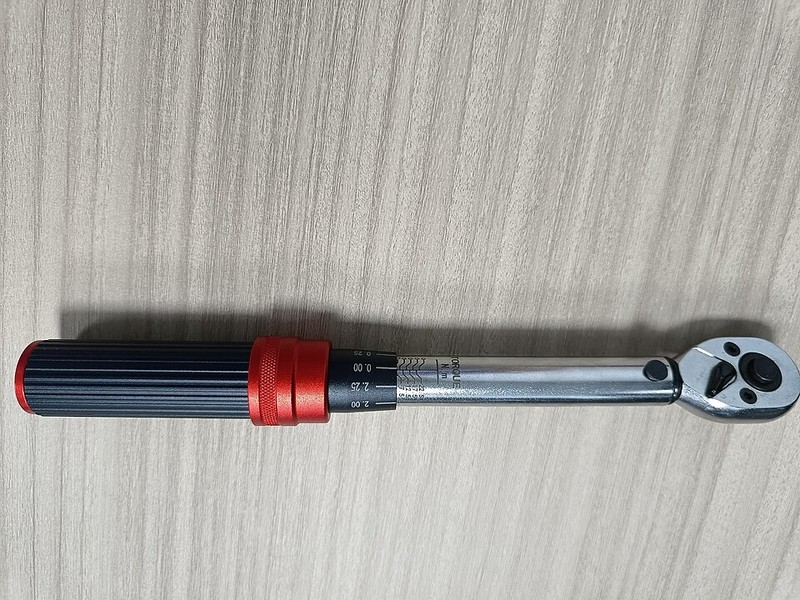
2. How does required torque shape selection?
Every candidate tool must operate within its documented torque range under the intended process. Do not assume a screwdriver always means low torque or a wrench always means high torque; designs vary. Obtain the engineering specification for the joint, then compare it with each candidate model’s marked range and instructions. If the required value sits near a tool’s limit, ask quality or engineering staff to assess suitability and measurement uncertainty.
Use the joint specification, not tool appearance.
- Obtain target torque and units from engineering.
- Compare each value with the exact model range.
| Evidence | Buyer needs | Reason |
|---|---|---|
| Joint target | Specified value | Sets tool requirement |
| Tool range | Model datasheet | Must include task value |
| Limits | Manufacturer instructions | Avoid misuse |
3. Which interface fits the fastener?
A driver recess on a screw may favor a torque screwdriver, while a hex nut or bolt often calls for a wrench and socket interface. Assemblies can complicate that choice: a slotted or hex-head fastener may accept different tools, and access can favor one format. Identify the fastener head, surrounding geometry, required bit or socket, and any extension. Confirm that adapters or crowfeet do not alter the setup assumptions.
For bit-driven fasteners, review screwdriver sizes independently of the torque range.
Confirm the square interface using socket drive sizes before selecting sockets or adapters.
Follow the whole torque path.
- Map output, adapter and working end in sequence.
- Check each connection against the model file.
| Chain element | Record | Check |
|---|---|---|
| Tool output | Bit / square / head | Compatibility |
| Working end | Profile and size | Full engagement |
| Adapter | If used | Effect on setup |
4. How do access and posture affect the choice?
A torque screwdriver can fit compact assemblies where a wrench and socket body cannot. A torque wrench may provide reach or leverage for a nut, but the head needs swing clearance and the operator needs a usable grip position. Compare overall tool length, grip, sightline and reaction space in the actual fixture. If the tool uses an interchangeable head, verify that the head and extension match the manufacturer’s instructions for configuration.
An offset attachment can change the tightening arrangement; review crowfoot wrench torque calculation where that configuration applies.
Access can rule out an otherwise suitable tool.
- Mock up the fixture with the full tool assembly.
- Check swing space, sightline and operator posture.
| Access factor | Screwdriver | Wrench |
|---|---|---|
| Narrow recess | Slim driver profile may fit | Socket / head may need space |
| Repeated stations | Driver workflow | Torque wrench workflow |
| Reach | Bit extension effects | Head / extension effects |
5. What tool types indicate or set torque?
Some hand torque tools indicate a value during application; others are set to signal or release at a chosen value. Digital models may display or store information, while mechanical tools use different mechanisms. These labels do not alone establish accuracy, repeatability or data integration. ISO 6789-1 covers Type I indicating and Type II setting tools and includes conformance testing and marking requirements. Buyers should use the applicable standard and supplier documentation to compare exact models.
Compare types of socket wrenches when choosing handle arrangements, then check the offered torque tool’s own instructions.
Match control behavior to the process.
- Decide whether users need indication or a preset action.
- Request model documentation for any data output.
| Process need | Tool capability | Question |
|---|---|---|
| Visual indication | Read value during use | Does operator record it? |
| Preset action | Signal / release design | How is setpoint controlled? |
| Data | Model-specific | What output is documented? |
6. How should accuracy and conformance be checked?
Ask for the model’s declaration of conformance, range, accuracy statement, test method and applicable standard. ISO 6789-1 addresses design and quality conformance testing and marking for hand torque tools. Calibration and measurement uncertainty have separate requirements under ISO 6789-2. A catalogue percentage without a model, range and method is not enough for an engineering approval. Keep the documents with the item code and revision.
Evidence should match each claim.
- Ask for conformance, range and test method.
- Keep calibration requirements in a separate record.
| Document | Question | Record |
|---|---|---|
| Conformance | Which standard / part? | Declaration |
| Accuracy | At what values / method? | Test data |
| Calibration | Which procedure? | Certificate if required |
7. How should calibration and verification be handled?
The required calibration interval depends on the organization’s quality system, use, risk and applicable requirements; do not invent one interval for every buyer. ISO 6789-2 covers requirements for calibration and determination of measurement uncertainty for hand torque tools. Procurement should ask what records accompany a tool, what service options exist, and how the user will verify performance. A tool label does not replace scheduled calibration or process checks where the customer requires them.
Our torque wrench calibration guide explains what buyers should ask about records and identification.
The customer’s system sets the interval.
- Let quality define calibration interval and records.
- Ask what verification process the user follows.
| Control | Procurement question | Evidence |
|---|---|---|
| Calibration | Can traceability be provided? | Certificate / record |
| Verification | What method is used? | Procedure |
| Interval | Who sets it? | Quality system |
8. What should users consider in repeated assembly?
For repeated work, evaluate cycle time, operator feedback, access, setpoint changes, documentation and error-proofing. A torque screwdriver may suit repeated small screw joints if the specified range and tip interface fit. A torque wrench may suit socket-driven joints or fasteners needing a different head. User trials should include representative operators and actual fixtures. Avoid claiming a tool prevents all over-torque; correct process, training and maintenance remain necessary.
Keep fastener release separate from controlled tightening, as discussed in torque wrench vs breaker bar.
Production trials reveal handling problems.
- Run representative fasteners with target operators.
- Record cycle, reset and access issues.
| Trial element | Observe | Data |
|---|---|---|
| Cycle | Time and reset action | Work study |
| Ergonomics | Grip and access | Operator notes |
| Error proofing | Setpoint control | Process review |
9. What should an RFQ and quotation compare?
Specify target torque values, required units, tool type, interface, range, indication or setting behavior, head or bit, accuracy documentation, calibration requirements, packaging and service expectations. Request a model datasheet and conformity declaration.
Use the professional torque wrench buyer guide to organize documentation and acceptance questions for a quoted wrench.
Equivalent scope matters.
- Quote range, interface, accessories and evidence together.
- Compare only configurations that meet the same task.
| RFQ field | State | Comparison |
|---|---|---|
| Torque | Values and units | Range match |
| Interface | Bit / socket / head | Accessory scope |
| Evidence | Standard / declaration | Technical review |
10. How should a buyer release a torque tool?
The release file should identify the approved tool model, range, interface, setting or indicating behavior, required documents, accessories and calibration plan. Confirm fit on the actual fastener and review with the customer’s engineering or quality owner. If adapters alter the configuration, follow the tool maker’s instructions and document any required correction. A product-specific quote should include target values, units, tool type, head, documentation, packaging, quantity and destination market.
Release the documented setup.
- Have engineering approve model and configuration.
- Retain the instrument record with the calibration plan.
FAQ
Send a sourcing inquiry with the application, required sizes, order quantity and documentation needs. Ask for model availability and a written specification before approval.
Q1: Is a torque screwdriver always lower range than a torque wrench? Not universally. Compare model-specific ranges and use instructions.
Q2: Which tool should tighten a screw? Use the interface and torque requirement specified for that joint.
Q3: Does ISO 6789-1 cover calibration certificates? It covers conformance testing and marking; ISO 6789-2 addresses calibration and measurement uncertainty.
Q4: Who sets calibration intervals? The buyer’s quality system and applicable requirements should determine them.
Q5: Can a torque wrench replace a torque screwdriver? Only if range, interface, access and process requirements all match.
For a quotation, send Kolarwin Tools the exact tool type, interface or fastener profile, intended use, required sizes, representative sample or drawing, packaging, order quantity, and document requirements. Request confirmation for each proposed model before approving a production configuration.
Looking for a reliable mechanic tools manufacturer in China?
If you are sourcing hand tools, socket tools, automotive repair tools, mechanic tool sets or OEM private label tools, contact KOLARWIN Tools for factory-direct quotation, customization support and product consultation.



