
Need OEM supplier support for this product type?
Contact KOLARWIN Tools for OEM mechanic tools, private label packaging, wholesale quotation and product range support. This gives overseas buyers a clear path from article reading to supplier discussion.
A seized fastener can stop a repair before it starts. A torque wrench may sit beside the socket, yet forcing it against rust or thread damage can harm its measuring mechanism. A breaker bar supplies leverage, yet cannot confirm final tightening. Use a breaker bar for controlled loosening, then a calibrated torque wrench for final tightening when a torque value is specified.
1. What does a torque wrench do compared with a breaker bar?
A torque wrench controls tightening torque, while a breaker bar supplies leverage for loosening resistant fasteners.
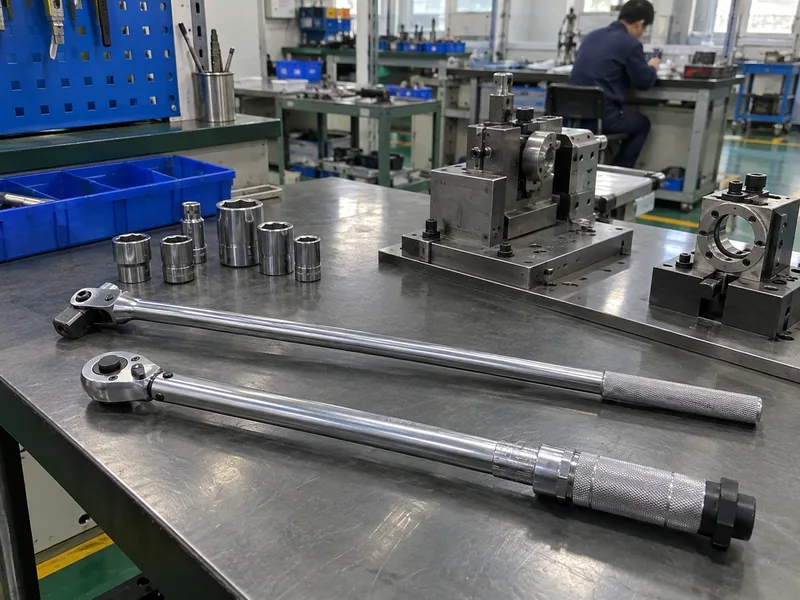
Why does each tool exist?
Choose by operation, not by appearance.
- Breaker bar: initial loosening or controlled removal
- Torque wrench: final tightening against a specified value
- Ratchet: repeated turning after a fastener has already loosened
Map each tool against a defined operation. Buyers can review torque wrench guidance before specifying models.
What should you check before choosing?
Check fastener size, direction, access, target torque, and service frequency.
Separate “can turn” from “can measure.”
What is the buyer takeaway?
Stock both tools where users loosen stubborn fasteners and reinstall them to a defined torque. Specify that sequence in the product brief.
| Tool | Primary job | Measures final torque? | Main buying check |
|---|---|---|---|
| Breaker bar | Loosen resistant fasteners | No | Drive, length, clearance, socket compatibility |
| Torque wrench | Tighten to a target value | Yes, by model design | Range, accuracy, direction, calibration process |
2. How does a breaker bar create leverage for loosening?
A breaker bar creates leverage through handle length and a rigid drive connection.
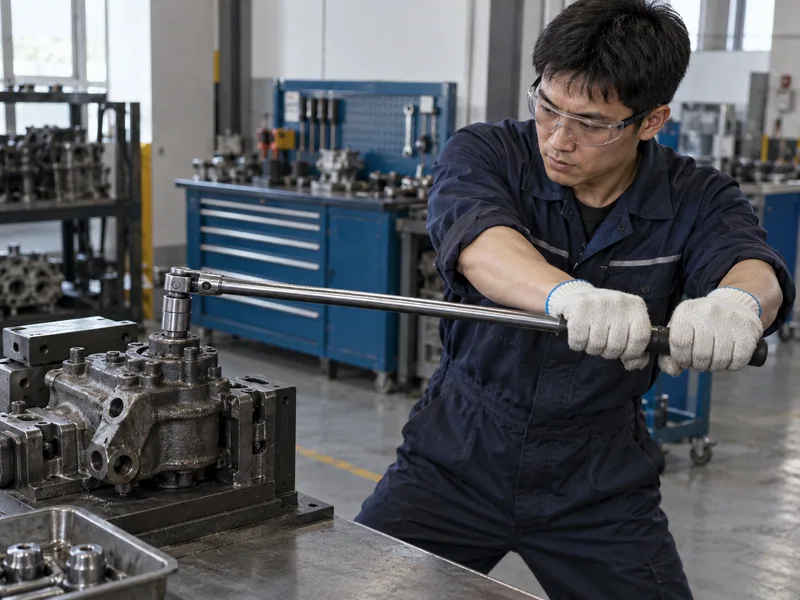
What parts affect loosening control?
Handle length, head geometry, drive size, grip, and socket engagement affect control. Fixed and pivoting heads offer different access. A longer handle needs more working room.
Leverage only helps when the socket stays square.
- Match drive size with a properly rated socket
- Keep the socket fully seated on the fastener
- Pull in a controlled direction with stable footing
- Stop when the fastener moves, then switch to a ratchet if suitable
Review socket tool options alongside bar specifications; usefulness depends on a sound socket connection.
When can extra leverage create risk?
Excess length or an improvised pipe extension can overload a drive, socket, fastener, or operator. Use an approved procedure for seized interfaces.
Apply steady force before changing method.
What should a buyer specify?
Specify drive, head movement, handle profile, finish, storage, and target applications.
| Selection factor | Why it matters | Limit to verify |
|---|---|---|
| Drive size | Controls socket compatibility | Do not infer capacity from size alone |
| Handle length | Affects leverage and access | Longer can reduce clearance |
| Head style | Affects positioning | Pivot range is model-specific |
3. How does a torque wrench apply controlled tightening?
A torque wrench applies tightening force through a calibrated mechanism, beam, or electronic sensor, depending on model.
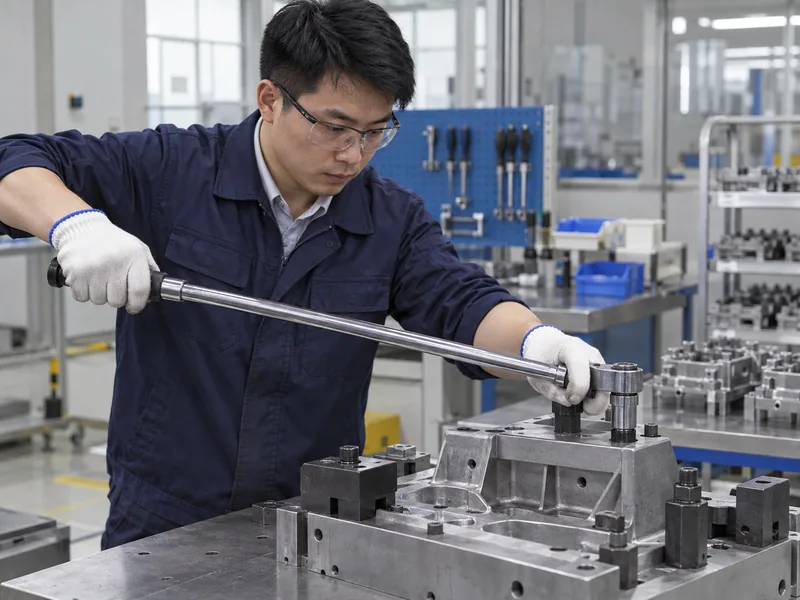
Which operating details affect the result?
Use the wrench inside its stated range with the correct grip. A click model needs a smooth pull and release; beam and electronic models need correct reading. Attachments can alter the result.
A torque reading only helps when the setup matches the instructions.
- Confirm target value and unit before use
- Inspect socket, fastener, and wrench condition
- Keep the wrench aligned as instructed
- Stop at the signal; do not continue pulling
Request model-specific range and calibration documentation.
Why does calibration matter?
Calibration connects an indicated value with a reference measurement.
Treat torque data as a controlled measurement, not a handle sensation.
What should a buyer request?
Ask for range, drive, direction, indication type, accuracy conditions, calibration method, storage guidance, and documentation. Put limits in product literature and approval files.
| Torque-wrench check | Buyer question | Why it protects use |
|---|---|---|
| Range | What target values does this model cover? | Prevents operation outside range |
| Indication | Click, beam, digital, or another system? | Sets user training needs |
| Accuracy | Under which conditions is it stated? | Avoids vague performance claims |
4. Can you use a torque wrench as a breaker bar?
Do not use a torque wrench as a breaker bar unless its manufacturer expressly permits that operation.
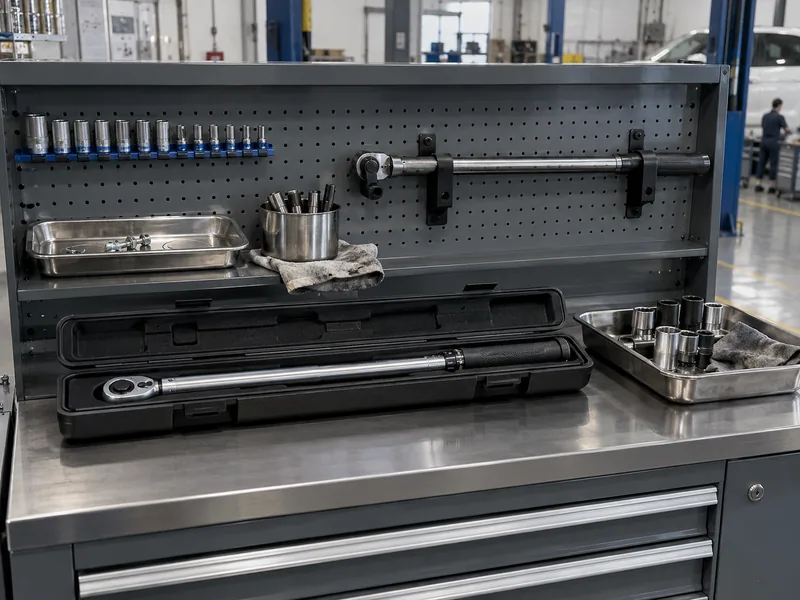
What can go wrong?
A stuck fastener can demand a sudden peak load that damages a spring, beam, ratchet head, sensor, or adjustment system. Damage may remain hidden while readings drift.
A tool that still clicks may no longer support a trustworthy process.
- Use a suitable breaker bar for initial loosening
- Keep a precision wrench away from impacts and improvised extensions
- Quarantine a wrench after suspected overload
- Follow the model manual before returning it to service
Buyers can cross-check impact-socket choices when powered tools enter the process.
Can a breaker bar replace a torque wrench?
A breaker bar cannot replace a torque wrench where a specified value controls clamp load or assembly quality. Hand feel varies with operator, access, lubrication, fastener condition, and position.
One tool moves the fastener; one tool verifies tightening effort.
What policy should a workshop use?
Separate loosening and tightening tools in work instructions, storage, and training. Label torque wrenches with direction and calibration status.
| Situation | Preferred tool | Reason |
|---|---|---|
| Stuck nut during removal | Breaker bar | Provides controlled manual leverage |
| Final tightening with specified value | Torque wrench | Applies a controlled target |
| Repeated spinning after loosening | Ratchet | Improves speed and access |
Write this sequence into training cards.
5. Which tool fits automotive repair and workshop work?
Automotive and workshop programs usually need both tools.
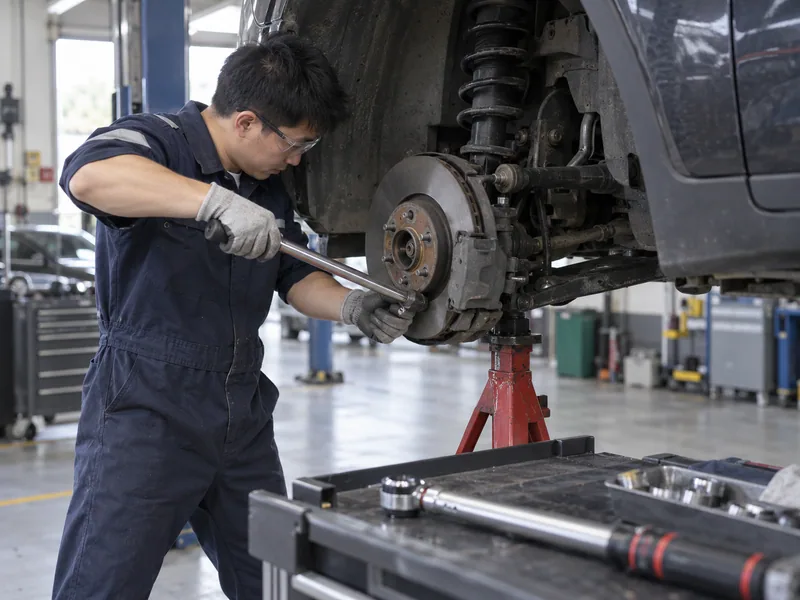
Where does a breaker bar help most?
It suits wheel fasteners, suspension hardware, equipment mounts, and other joints that resist movement, provided socket, clearance, and procedure match. Access may favor a pivoting head or different handle length.
Choose access before choosing extra force.
- Check clearance around the handle path
- Use the correct metric or inch socket
- Stabilize the vehicle or assembly before pulling
- Shift to a ratchet once resistance drops
Connect this selection with automotive repair tool ranges.
Where does a torque wrench belong?
It belongs during final tightening where documentation publishes a value. The value and sequence must come from applicable service documentation.
Loosen with a suitable tool, run the fastener down appropriately, then torque in the instructed sequence.
How should a buyer build a kit?
Pair bars and torque wrenches by drive family, socket system, and use case. Include extensions, adapters, storage, and instructions without implying identical torque behavior.
| Workshop need | Tool family | Product-range note |
|---|---|---|
| Initial removal | Breaker bar | Offer drive and access options |
| Fastener running | Ratchet and sockets | Match sizes and access |
| Specified installation | Torque wrench | State range and calibration limits |
6. What should distributors inspect before sourcing either tool?
Distributors should inspect construction, mechanism, markings, documentation, and packaging.
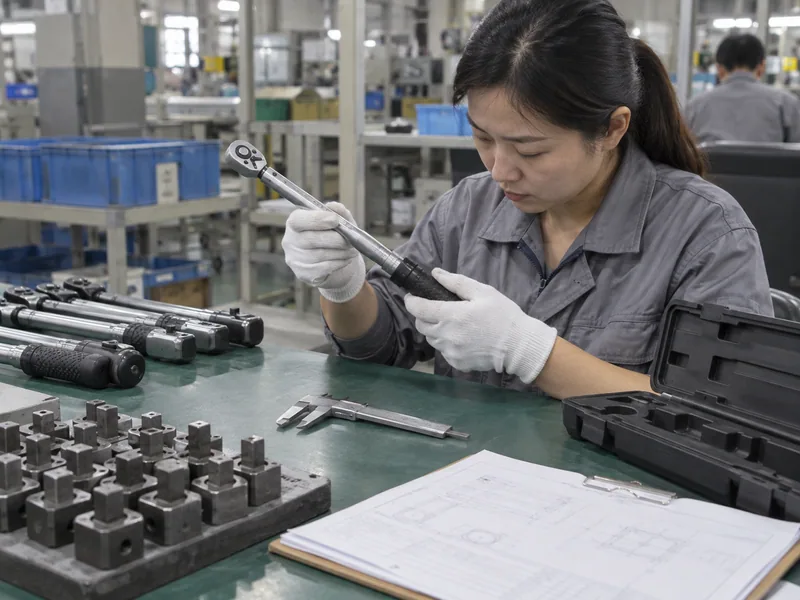
What quality points apply to breaker bars?
Inspect drive geometry, head movement, handle straightness, grip, finish, and retention. Support material and heat-treatment claims with records. Use a defined functional check.
Can a buyer repeat this result across batches?
- Verify dimensions against the approved drawing
- Check head movement and retention
- Inspect plating or coating for defects
- Record functional and visual results
Use mechanics tool set configurations in the assortment.
What quality points apply to torque wrenches?
Inspect display, adjustment lock, drive head, direction marking, mechanism, calibration documents, and packaging.
A calibration statement without an identified model and method leaves buyers guessing.
Do not advertise a family-wide accuracy percentage without verified coverage.
What should a sourcing checklist contain?
Include drawing, sample approval, material statement, inspection plan, artwork, marking location, instructions, spare-parts path, and claim review.
| Sourcing area | Breaker bar check | Torque wrench check |
|---|---|---|
| Construction | Head, shaft, grip, finish | Mechanism, head, scale or sensor |
| Function | Retention and controlled leverage | Indication and repeatable setting |
| Documents | Drawing and warnings | Manual, calibration, range, limits |
Make this checklist part of sample approval.
7. How do drive size, socket fit, and access affect selection?
Drive size, socket fit, and access determine whether either tool transfers force safely.
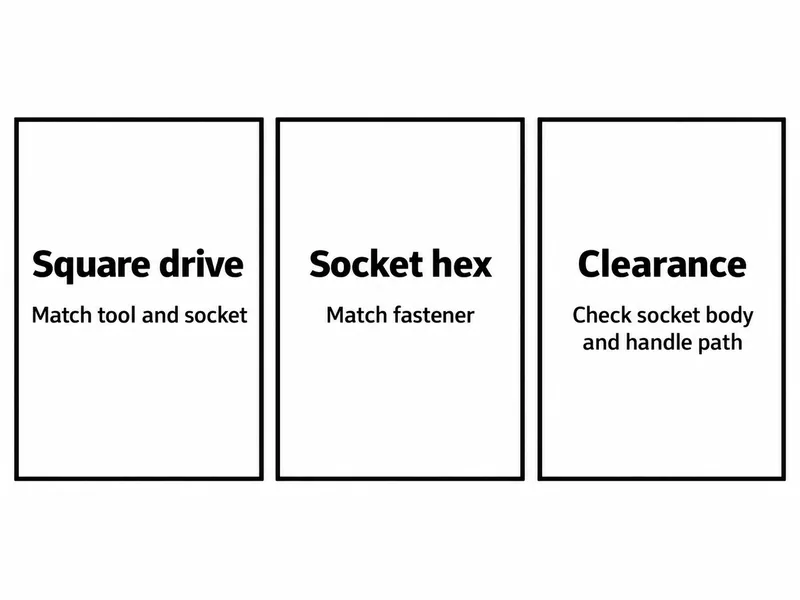
How should drive and socket match?
Square drive, socket, fastener profile, and load must form one system. Metric and inch sizes are not interchangeable because they look close. Worn corners and shallow engagement increase slip risk.
Verify the fastener and socket before comparing handle features.
- Confirm drive size and socket type
- Check full seating on the fastener
- Select impact-rated sockets for impact tools
- Keep adapters within their stated use
Buyers can use a metric and standard socket conversion chart as a reference, then confirm the specified socket size.
How does access change the choice?
Tight spaces may favor a shorter handle or a pivoting head, while open chassis work may accept a longer bar. Torque-wrench clearance also affects hand position and reading visibility. An extension can change access and may require a revised method under the manufacturer’s instructions.
Extra length only helps when the operator can control it.
Test samples around work positions and record clearance, swing arc, and retention.
What should a range planner compare?
Compare drive families, fastener systems, handle lengths, head styles, storage, and instructions. Avoid universal recommendations because end-use assemblies vary.
| Selection question | Breaker bar implication | Torque-wrench implication |
|---|---|---|
| Which drive? | Match bar and socket | Match wrench and socket |
| How much clearance? | Handle path controls safety | Grip and reading position matter |
| Which fastener system? | Metric or inch socket set | Match the socket to the fastener; choose torque units separately from service data |
8. How should teams maintain and store both tools?
Teams should clean, inspect, protect, and store each tool according to its design and instructions.
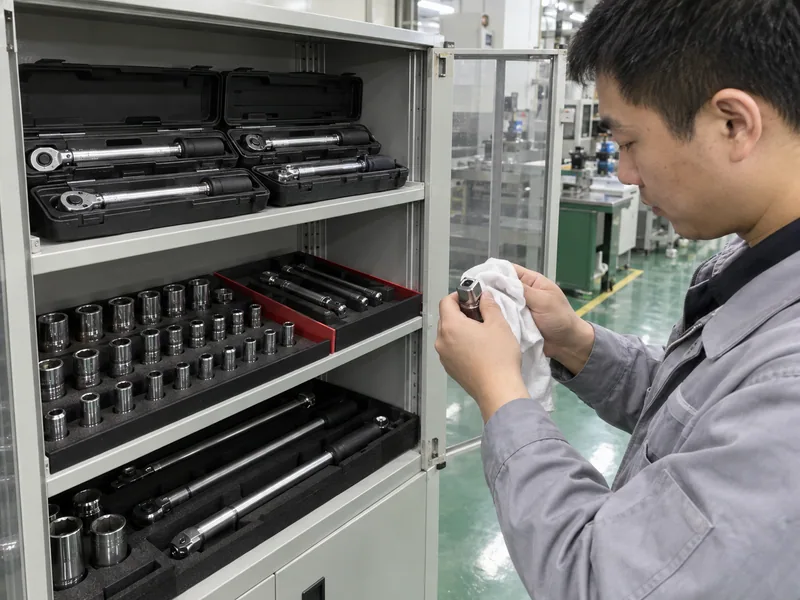
What care does a breaker bar need?
Wipe dirt and moisture, inspect the drive and head, and check any pivot. Store it dry and remove tools with cracks, distortion, or damaged retention.
A damaged drive should not enter a high-load job.
- Clean after heavy contamination
- Inspect drive corners and retention
- Check pivot movement where fitted
- Store away from standing moisture
Use KOLARWIN hand tools as a storage reference.
What care does a torque wrench need?
Follow its manual for storage, calibration, cleaning, and service. Click-type storage settings are model-specific.
A wrench can look clean while losing confidence after an overload or drop.
How can a buyer support after-sales use?
Provide manuals, calibration guidance, inspection steps, and replacement information.
| Maintenance point | Breaker bar | Torque wrench |
|---|---|---|
| Cleaning | Wipe and protect exposed surfaces | Clean as manual permits |
| Inspection | Drive, head, handle, pivot | Mechanism, scale, head, setting |
| Storage | Dry tool storage | Model-specific setting and case |
9. How can buyers compare supplier claims without overpromising?
Buyers can compare claims by tying each statement to a model, method, and condition.
Which claims need evidence?
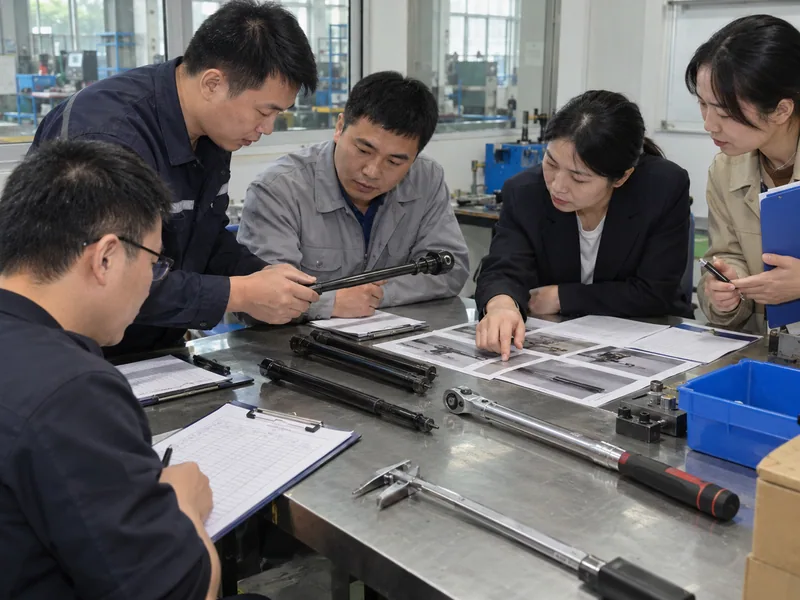
Claims about material, hardness, finish, accuracy, warranty, load, capacity, and certification need evidence. A claim for one SKU cannot automatically cover another.
“up to,” “designed for,” and “under specified conditions” each carry a different meaning.
- Name the exact model or SKU
- State the measurement or test method
- Record applicable range and conditions
- Separate factory inspection from field performance
Review complete mechanic tool sourcing guidance for an evidence file.
How should private-label claims be written?
Write claims supported by an approved sample, drawing, manual, or inspection record.
Precise wording survives translation, packaging review, and customer questions.
Do not add a certification mark, standard number, or test result without evidence.
What should an approval file contain?
Keep the approved drawing, sample photos, material records, inspection plan, packaging, instructions, claim sources, and revision history together. Separate facts by tool or set.
| Claim type | Evidence to request | Publication decision |
|---|---|---|
| Material or finish | Model record or supplier declaration | Use only for covered SKU |
| Torque accuracy | Calibration method and conditions | State limits clearly |
| Load or durability | Defined test and report | Avoid universal promise |
10. Which tool combination should a B2B buyer choose?
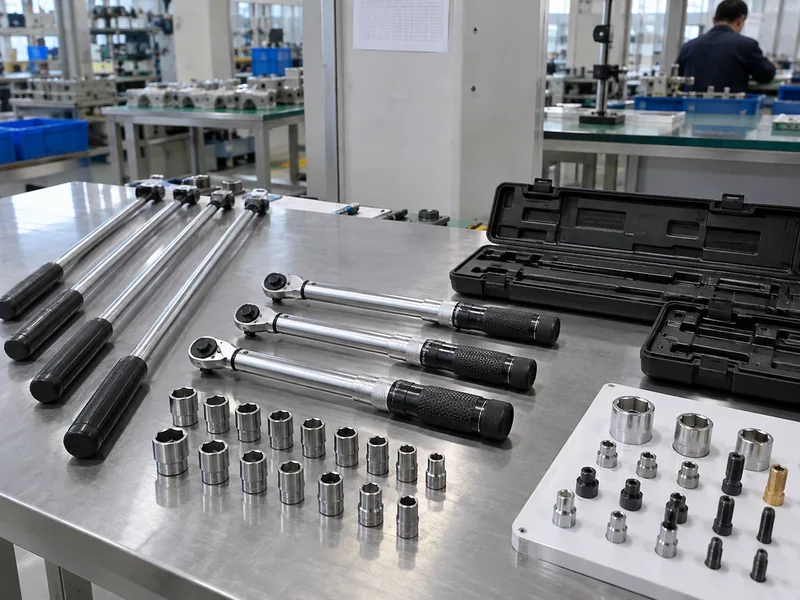
A B2B buyer should choose a breaker bar for controlled loosening and a calibrated torque wrench for final tightening, then build around drive, sockets, access, documentation, and service.
What should the final product brief say?
State application, fastener system, drive, access, users, torque targets, maintenance, packaging, and evidence. Build a wider line with mechanic tool sets and socket accessories.
Loosen with leverage, tighten with measurement.
- Define the loosening task and tightening target
- Match drive, socket, access, and storage
- Request model-specific evidence before approval
Ask for drawings, manuals, inspection records, and sample feedback before approving private label. For a range review, contact KOLARWIN Tools with target applications.
KOLARWIN’s position is practical: make correct work repeatable and keep claims within documented limits. Review the main tool range before discussion.
Can I use a breaker bar for final tightening?
Only when the approved procedure does not require a measured torque value. If a torque value controls assembly, use the specified torque method.
Can I use a torque wrench to loosen a stuck bolt?
Do not do so unless the exact manufacturer instructions permit it. A suitable breaker bar protects the precision tool from overload.
Does a longer breaker bar always work better?
No. Length can improve leverage, yet it also changes access and control. Select length around the fastener, workspace, socket, and service procedure.
Do all torque wrenches need the same storage setting?
No. Storage settings depend on mechanism and model. Follow the supplied manual and keep calibration records when required.
What should a distributor request before ordering?
Request exact specifications, drawings, manuals, sample inspection results, applicable accuracy or material evidence, packaging details, and after-sales support information.
Looking for a reliable mechanic tools manufacturer in China?
If you are sourcing hand tools, socket tools, automotive repair tools, mechanic tool sets or OEM private label tools, contact KOLARWIN Tools for factory-direct quotation, customization support and product consultation.


