Need OEM supplier support for this product type?
Contact KOLARWIN Tools for OEM mechanic tools, private label packaging, wholesale quotation and product range support. This gives overseas buyers a clear path from article reading to supplier discussion.
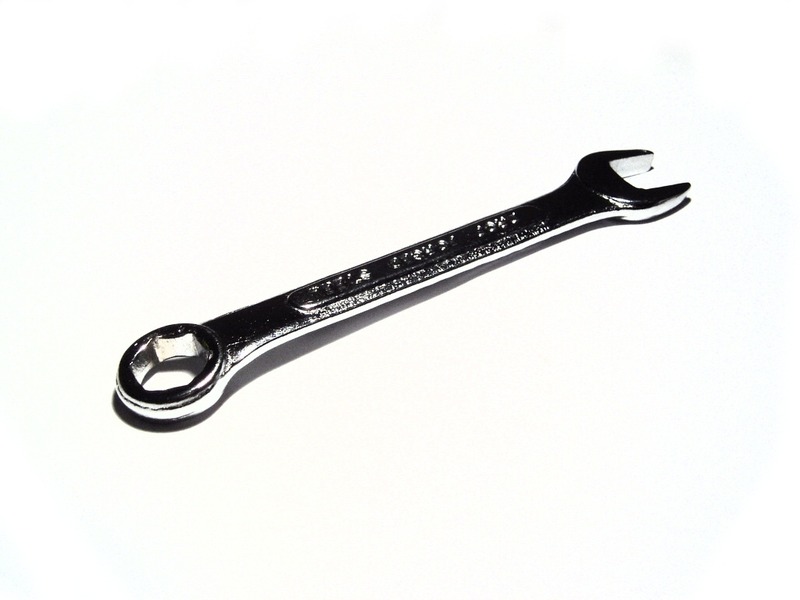
“Spanner” and “wrench” can name the same general hand-tool family, yet product listings do not always use them the same way. UK usage often favors spanner; North American catalogs usually say wrench. In US listings, “spanner wrench” can also mean a hook or pin tool for notched or drilled parts. For a clear purchase order, specify head style, fit, size system, units, and offset alongside the name.
1. Are a spanner and a wrench two names for the same tool?
Often, yes. Both terms can describe hand tools that grip and turn nuts, bolts, or other fasteners. Cambridge labels “spanner” as UK usage and pairs it with US “wrench”; Oxford also records spanner as British English and wrench as North American English, while allowing overlap. That gives a useful language pattern, not a universal naming law. Product catalogs may use both words for distinct products, especially where “spanner wrench” refers to a hook or pin design. Start by identifying what the tool engages: parallel flats, a hex head, a socket drive, holes, or notches. Then use the maker’s own product name as a secondary label. The types of wrenches guide can help compare broader families; this article focuses on naming and purchase clarity.
Treat the noun as a clue, not a full specification. Ask what feature contacts the fastener and what measurement defines fit. Record:
- Head or jaw shape.
- Fastener interface and nominal size.
- Maker’s catalog name and model code.
If the request says only “spanner” or “wrench,” ask for a photo or drawing before quoting.
Terminology at a glance
| Term | Common pattern | Detail still needed |
|---|---|---|
| Spanner | Often UK term for a hand tool turning fasteners | Fixed, adjustable, socket, or special head? |
| Wrench | Often North American umbrella term | What fastener interface and jaw style? |
| Spanner wrench | May name hook or pin tool in US catalogs | Hook, pin, diameter, and engagement pattern |
2. Is “spanner” British and “wrench” American?
That is a helpful shorthand, but it should not be treated as a strict border. Cambridge lists spanner as UK and gives US wrench as its counterpart. Oxford describes a spanner as British English and notes wrench in North American English and British English. Actual product names vary with maker, market, trade, and tool family. A UK supplier may list an adjustable spanner; a US catalog can use spanner for a specialty head. International procurement adds another layer because translation, legacy drawings, and regional catalogs may preserve different names. In a global RFQ, use both common terms if that helps search, then define the physical interface. The wrench sizes reference is useful for dimensional terminology, but size alone cannot resolve whether a buyer needs an open end, ring, socket, or special tool.
Keep regional wording in the description field. Let a drawing and fit dimension control the order. Buyers can check:
- Intended sales market and preferred search term.
- Manufacturer’s official family and SKU name.
- Whether local usage changes the term’s practical meaning.
For cross-border listings, include a regional synonym without replacing the model description.
Market wording checklist
| Use case | Suggested wording | Confirmation |
|---|---|---|
| UK-facing description | Spanner, plus exact head style | Local catalog convention |
| US-facing description | Wrench, plus exact head style | US catalog convention |
| International PO | Both terms plus drawing and model | Supplier acknowledges same configuration |
3. What does “spanner wrench” mean in a US catalog?
In some US tool listings, “spanner wrench” identifies a tool with a hook or pin that engages holes or notches on a round nut, collar, or retaining part. It is not necessarily a generic synonym for every wrench. PROTO groups pin and hook spanner wrenches in its wrench catalog. Park Tool describes a pin spanner for holes on an adjusting cup. These examples show why a buyer must specify engagement shape. A hook may catch a slot or outer notch; pins may enter matching holes. Tool names vary by maker, so a regional dictionary label alone cannot identify a model. If the component has no matching hole, notch, or profile, that spanner wrench may be wrong even if its name seems familiar.
Match the contact points to the part. Request a photo of both sides or a drawing with engagement details. For a hook or pin tool, specify:
- Hook profile or pin count and diameter.
- Hole spacing, notch shape, or compatible component family.
- Adjustable range or fixed engagement, if applicable.
Use the component manufacturer’s service description when an application-specific tool is required.
Hook and pin spanner details
| Tool end | Engagement | Buyer measurement |
|---|---|---|
| Hook | Outer notch or slot | Hook shape and target diameter |
| Pin | Hole or paired holes | Pin diameter and center spacing |
| Adjustable type | Range of hooks or pins | Adjustment limits and compatible part |
4. Does an adjustable spanner mean the same thing as an adjustable wrench?
Frequently, both labels refer to a tool with a movable jaw. Even so, do not assume range, jaw shape, or construction matches. A catalog may specify adjustable spanner for a shifting jaw and wrench for a similar design; another maker may use one term. “Adjustable” also describes pin or hook spanners, where adjustment changes pin spacing or hook position instead of jaw opening. RIDGID lists jaw opening for its adjustable wrench family, while Park Tool describes adjustable pin spacing for a pin spanner. Identify what moves and which dimension changes. The adjustable wrench sizes guide covers jaw openings; pin tools need pin spacing and engagement data.
Name the adjustment mechanism, not just its adjective. Confirm whether the product changes jaw opening, pin spacing, or hook diameter. Include:
- Maximum jaw opening or pin spacing.
- Jaw face profile and scale markings, if any.
- Adjustment screw or locking method shown by the maker.
Ask for a dimensional drawing when adjustment range affects fastener fit.
Adjustable tool fields
| Product style | Moving feature | Useful specification |
|---|---|---|
| Adjustable jaw wrench | Jaw opening | Maximum opening and scale units |
| Adjustable pin spanner | Pin spacing | Range and pin diameter |
| Adjustable hook spanner | Hook position or diameter | Compatible nut range and hook shape |
5. How should buyers distinguish open-end, combination, and ring tools?
These names describe head geometry more clearly than the broad terms spanner or wrench. An open-end head engages two flats; a ring or box end surrounds a compatible nut or bolt head; a combination wrench pairs an open end and a ring end on one handle. A maker may call these products open-end wrenches or open-ended spanners depending on market. Avoid implying that one term guarantees a particular head or standard. When a buyer wants two end styles, identify both and describe their sizes separately. Specify whether dimensions are metric or inch/SAE, then give the nominal across-flats value and unit. If the tool is offset, angled, or has a special profile, note that too. The flare-nut wrench versus open-end wrench comparison shows why a more specific head name can matter for contact and access.
Write the end configuration in plain language. For each end, say whether it is open, ring, flare nut, or another documented profile. Record:
- Head type at both ends.
- Size at each end and its unit system.
- Offset, angle, thickness, and access requirements.
For a replacement order, match the original drawing or part number where available.
Fixed-head description fields
| Head style | Contact shape | PO detail |
|---|---|---|
| Open end | Two flats | AF size, unit, head angle |
| Ring or box | Enclosing profile | Size, point count if specified, offset |
| Combination | One open end and one ring end | Both sizes and end orientation |
6. When does “wrench” mean a socket or a specialty tool?
Wrench can label many tool families beyond fixed open-end or ring tools. Socket wrenches use a socket and drive connection; pipe wrenches grip pipe; torque wrenches apply a specified torque through a calibrated mechanism. Some products serve a narrow fitting or access problem. A “spanner” label can also appear within specialty families, including hook or pin tools. For this reason, do not classify a product by noun alone. Identify whether the tool contacts flats, pipe, a drive recess, a pin hole, or a notched collar. The types of socket wrenches guide distinguishes socket-drive products, while our pipe wrench versus adjustable wrench comparison explains a separate jaw and use distinction. These are examples of naming overlap, not a complete wrench taxonomy.
State the driven interface explicitly. A socket order needs drive size and socket size; a pipe tool needs pipe range and jaw style; a torque tool needs the specified torque range and unit. Ask:
- What feature contacts or surrounds the workpiece?
- Does the tool use a square drive, fixed jaw, pipe jaw, hook, or pin?
- Does a special calibration or fit requirement apply?
Use the category page as a starting reference, then quote the exact model.
Naming by interface
| Tool category | Interface to identify | Example descriptor |
|---|---|---|
| Socket wrench | Drive square and socket profile | Drive size plus fastener size |
| Pipe wrench | Pipe contact and jaw arrangement | Pipe range and head style |
| Torque wrench | Drive, range, and torque unit | Model and calibration data |
| Spanner wrench | Hook or pin engagement | Profile and target component |
7. What do AF size, metric size, and inch size tell a buyer?
AF means across flats: the distance between parallel flat faces of a hexagonal fastener or matching wrench opening. A size number needs its unit system. A 13 mm opening and a 1/2-inch opening are different nominal sizes even if someone casually calls both “about half an inch.” Do not substitute sizes by visual estimate. Specify metric millimeters or inch/SAE notation, plus tolerances or fit rules if a drawing requires them. Some products display both scales, but a scale does not prove every size range or accuracy requirement. For specialty hook or pin tools, AF may not be the controlling measurement at all; component diameter, notch, hole spacing, and pin size may govern fit. Use the wrench sizes reference alongside the component drawing to avoid a name-only order.
Put the number and unit in the same field. Avoid bare values in spreadsheet columns or email subjects. Confirm:
- Metric or inch/SAE system.
- Across-flats size for hex engagement.
- Hole spacing, pin diameter, or component diameter for special heads.
If conversion is needed, preserve the original value and label any converted value.
Size notation examples
| Interface | Required notation | Avoid |
|---|---|---|
| Hex fastener | AF value plus mm or inch/SAE | Unlabeled number |
| Pin tool | Pin diameter and center spacing | “Small pin” |
| Hook tool | Component diameter and notch profile | “Large spanner” |
8. How should distributors label tools for different markets?
Use the buyer’s regional search term, then add physical descriptors that remain clear across markets. A US page might lead with wrench; a UK page may lead with spanner. Keep model code, head style, size system, units, and adjustment type consistent in titles, attributes, packaging, and quotation files. If a product is a hook or pin spanner wrench, retain that specific phrase where relevant rather than shortening it to “wrench.” Avoid duplicate SKUs created only because markets use different words. Conversely, do not merge two geometrically different products just because a translation maps both names to “spanner.” The types of wrenches guide helps shoppers browse by family; individual product data should resolve exact fit. Cross-reference synonyms in search metadata while keeping the display name tied to maker documentation.
Separate language from product identity. Use one shared SKU record and market-specific display text only when physical configuration is identical. For catalog control, store:
- Preferred term by market and approved synonyms.
- Maker name, model code, head style, and unit system.
- A drawing or photo that identifies the actual contact end.
Have a technical buyer review synonym mappings before import.
Catalog-language control
| Catalog field | Shared value | Market-specific value |
|---|---|---|
| SKU and model | Same physical product record | No change |
| Head and size | Maker-verified geometry and dimensions | No change |
| Display term | Maker’s official product title | Spanner or wrench synonym |
9. What should an RFQ say when the term is ambiguous?
Replace “need a spanner” with a description of the contact geometry and size. For an open-end or ring tool, state head type, AF dimension, unit, offset, and finish only if required. For a socket tool, include drive and socket size. For a hook or pin tool, identify the target component, engagement pattern, pin size, spacing, and adjustment range. Attach a drawing or clear photo with a scale reference. Cite a maker model or part number when replacing an existing product. Do not treat “wrench” as a complete specification or infer country of origin from the word. If a torque wrench is required, specify torque range, unit, drive, and calibration documentation needs. The torque wrench guide for professional buyers covers that separate measurement requirement. Send the final specification through KOLARWIN’s contact page for a product discussion.
Ask the supplier to confirm the same geometry back. A quote should name the model, interface, size system, and any special head dimension. Include:
- Region and preferred catalog term.
- Head style, fit dimension, and units.
- Drawing, sample, or model reference.
Approve a sample only against those written requirements.
RFQ terminology checklist
| Tool requested | Minimum description | Confirmation evidence |
|---|---|---|
| Fixed-head wrench or spanner | Head style, AF size, units, offset | Drawing or model code |
| Socket tool | Drive, socket profile, fastener size | Socket and drive specification |
| Hook or pin spanner | Engagement profile and dimensions | Component match or drawing |
| Torque wrench | Drive, torque range, unit | Calibration and model documents |
10. How can teams prevent spanner-versus-wrench confusion?
Treat the word as a regional label and the geometry as the buying specification. A UK listing may call a fixed-jaw hand tool a spanner; a US catalog may call the equivalent family wrenches. “Spanner wrench” may also identify a hook or pin tool in North American catalogs. Neither pattern applies to every supplier or specialty. For a clean handoff, pair the preferred market term with head style, fastener interface, size system, units, offset, and model code. Keep adjustable jaw opening separate from adjustable pin spacing. Use the manufacturer’s nomenclature where available and show the contact end in a drawing or product image. The practical next step is to revise ambiguous catalog records and RFQs so suppliers can confirm fit without guessing. Contact our team with one product drawing and intended market for a terminology and sourcing discussion.
Use both names only as searchable synonyms. Keep the specification precise. Review each SKU for a maker title, market term, head geometry, fit dimension, unit system, and source drawing.
- Add the regional synonym only where shoppers use it.
- Preserve the exact product family and model code.
- Make the interface and fit dimension visible in listing data.
Q1: Are spanner and wrench synonyms?
Often. Spanner is common in UK English, while wrench is common in North American English, but product names vary by maker and tool family.
Q2: What is a spanner wrench in the US?
Some US catalogs use it for hook or pin tools that engage notches or holes on round components. Confirm the exact contact profile.
Q3: Is an adjustable spanner the same as an adjustable wrench?
Often the terms refer to a movable-jaw tool. Check what adjusts and confirm the jaw-opening range or pin spacing.
Q4: What does AF mean on a wrench?
AF means across flats, the distance between parallel faces of a hex fastener or matching wrench opening. Include the unit system.
Q5: What should I include in an international wrench RFQ?
State head style, interface, size and units, offset, adjustment range if relevant, model code, and a drawing or photo.
Looking for a reliable mechanic tools manufacturer in China?
If you are sourcing hand tools, socket tools, automotive repair tools, mechanic tool sets or OEM private label tools, contact KOLARWIN Tools for factory-direct quotation, customization support and product consultation.