
Need OEM supplier support for this product type?
Contact KOLARWIN Tools for OEM mechanic tools, private label packaging, wholesale quotation and product range support. This gives overseas buyers a clear path from article reading to supplier discussion.
Starting a small screw one-handed can be awkward when a fastener falls from the tip or access is restricted. Screw-holding screwdrivers add a feature that helps position or retain a screw, but product designs vary: a clip, sleeve, magnetic element or dedicated holding geometry may act on the fastener in different ways. Buyers should identify what the feature actually holds and test it with customer screws. The goal is a clear fit specification, not a universal promise that every screw stays attached.
1. What is a screw-holding screwdriver?
A screw-holding screwdriver is a driver designed with a feature intended to help keep a screw at the tip during placement or initial engagement. Wiha’s official product categories identify screw-holding functions on selected models, but labels alone do not reveal the mechanism or compatible head sizes. Buyers should request model drawings, instructions and a sample. Confirm whether the feature supports positioning only or retains a screw through a particular motion.
Position this feature within the tool families covered in types of screwdrivers.
Define what must stay in place.
- Send representative screws with the profile and size marked.
- Ask whether the feature holds the head, shank or bit.
| Feature | Buyer question | Evidence |
|---|---|---|
| Fastener | Which profile and size? | Representative screw |
| Function | What does it retain? | Drawing or demo |
| Use | What motion is needed? | Application note |
2. Which retention mechanisms should buyers distinguish?
A magnetic tip relies on attraction to compatible material. Mechanical clips or sleeves apply physical contact to hold a screw head or shank. Some systems are integrated with the driver tip; others use an accessory. The mechanism changes compatibility and release behavior. A magnetic design may not suit nonferrous fasteners, while a clip may need a specific head geometry. Avoid grouping all of these products under one undifferentiated SKU description.
Mechanism names need a physical example.
- Request a diagram of the capture point.
- Test magnetic pickup separately from clip release.
| Mechanism | Potential action | Buyer test |
|---|---|---|
| Magnetic | Attracts suitable screws | Material compatibility |
| Clip / sleeve | Contacts a screw feature | Fit and release |
| Accessory | Separate component | Assembly compatibility |
3. How does screw profile affect holding?
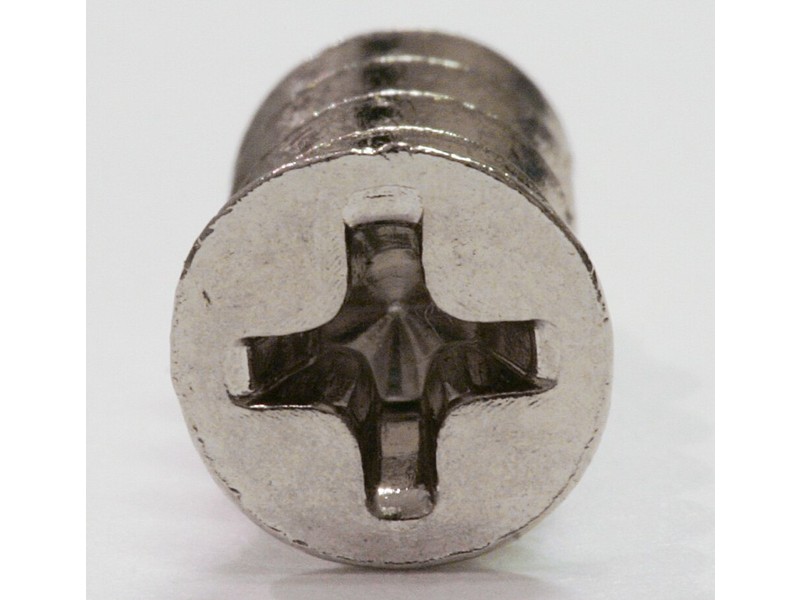
A holding feature may work with some head forms and sizes but not others. Phillips, Pozidriv, slotted, hex and Torx fasteners present different contact geometry. A screw-holding driver should not be assumed compatible across a profile family. Test each nominated size with the corresponding recess-matched tip. Evaluate whether the screw remains centered and whether the retention feature interferes with full driver engagement.
For hex and star recesses, compare Torx vs Allen before assessing retention.
The fit distinction in Pozidriv vs Phillips still applies when a device grips the screw mechanically.
Compatibility needs a matrix.
- Try every screw profile and size in the proposed range.
- Record centering and recess engagement for each pairing.
| Sample set | Check | Record |
|---|---|---|
| Profile | Match driver tip | Fit notes |
| Head size | Try smallest and largest | Retention result |
| Engagement | Check recess seating | Interference notes |
4. When does screw holding help a workflow?
A screw-retaining feature can help with overhead fastening, recessed placement, or assembly where the operator has limited ability to steady a fastener. It may have little value on an open bench where a second hand is available. Buyers should identify the actual lost-time or handling issue before adding a specialized product. The benefit depends on screw design, work angle and operator technique; a brief sample test offers better evidence than generic wording.
If the workpiece is a nut rather than a screw, review nut setter vs nut driver instead of adding a screw-retaining accessory.
Trial where the feature earns its place.
- Recreate overhead or recessed placement conditions.
- Compare against a standard driver on the same task.
| Task condition | Potential value | Trial setup |
|---|---|---|
| Overhead | May assist placement | Actual orientation |
| Recessed | Can keep fastener near tip | Representative depth |
| Open bench | Feature may add little | Compare standard tool |
5. What should a sample test measure?
Test pickup, alignment, insertion, release and screw-start performance separately. Use the intended screw lot and workpiece, and repeat the task with more than one operator if hand position varies. A screw that stays on during pickup may still tilt or block proper recess engagement. Record failures and the exact product revision. A small bench test supports fit selection; it does not establish durability, a retention-force rating or a safety claim.
A single pickup is only one observation.
- Record pickup, alignment, start and release separately.
- Use repeated trials without calling them life testing.
| Test phase | Observe | Evidence |
|---|---|---|
| Pickup | Does screw stay at tip? | Count / notes |
| Alignment | Does it enter straight? | Operator result |
| Release | Can user remove tool? | No damage / binding |
6. What are the trade-offs of a holding feature?
Holding mechanisms may add bulk near the tip, change access to a recessed screw, or make cleaning more involved. A magnetic feature may attract ferrous particles; clips may need a clear path around the screw head. These are application questions, not grounds for a blanket rejection. Compare a standard driver and holding version on the same task. If the feature blocks the recess or does not match screw supply, the specialized model can create more friction than it removes.
A holding feature does not establish powered-use suitability; compare impact bits vs regular bits when selecting replaceable bits.
Look beyond initial pickup.
- Check tip access around a recessed fastener.
- Inspect for debris attraction and cleaning constraints.
| Trade-off | Buyer check | Possible issue |
|---|---|---|
| Added tip geometry | Access to deep recess | Test reach |
| Magnet | Ferrous debris | Check work area |
| Clip | Head-size range | Test sample sizes |
7. How should product data describe compatibility?
List tip profile, tip size, holding mechanism, compatible screw-head range where documented, blade length, handle, and whether a separate accessory is required. Keep compatibility claims linked to evidence. If a manufacturer lists a holding function for a product family, confirm which exact models include it. Buyers should also note any changes in replacement tip or clip availability. Clear data helps sales teams avoid promising one holder will suit a customer’s full screw assortment.
Use screwdriver sizes to identify the working tip independently of the retaining mechanism.
A broad family label can mislead.
- Tie compatibility wording to a named model.
- List tip, size, mechanism and blade length.
| Listing field | State | Why |
|---|---|---|
| Profile / size | Tip fit | Avoid wrong screw match |
| Mechanism | Magnet / clip / sleeve | Clarify operation |
| Model | Exact identifier | Document scope |
8. How should distributors build an assortment?
Start with the customer’s common screw profiles and tasks. A small range may include a general holding screwdriver and selected sizes for frequently used fasteners. Do not add every tip size before customer demand is understood.
Plan stocking around actual service tasks in a complete mechanic tools list, then add holding features where those tasks justify them.
Build the range from real demand.
- Use actual screw consumption to select sizes.
- Avoid stocking profile-size pairs without customer use.
| Assortment axis | Separate SKU by | Sales use |
|---|---|---|
| Tip | Profile and size | Identification |
| Holding | Mechanism | Function match |
| Handle | Length and style | Task access |
9. What should an RFQ include?
Specify fastener profile and size, screw material, head shape, holding mechanism, driver tip dimensions, blade length, intended orientation, packaging and sample quantity. Attach fastener samples or a drawing if the screw is unusual. Ask for product-specific compatibility and care instructions. If the buyer expects a private-label claim such as “holds screws,” agree on a demonstration or test description and avoid adding an unverified numerical force.
Use the configuration questions in OEM impact bit sets when quoting a cased driver-and-bit assortment.
Make the task testable in the RFQ.
- Attach screw samples, work angle and retention objective.
- Ask for sample approval and claims documentation.
| RFQ field | Specify | Approval |
|---|---|---|
| Screw | Profile / material / size | Sample or drawing |
| Mechanism | Detailed type | Model documentation |
| Claim | Intended result | Approved wording |
10. How should a buyer release the product?
Approve the exact tool only after it holds the nominated screw in the intended position, permits full tip engagement and releases without unwanted binding. Retain the approved sample and product record. Recheck if the manufacturer changes the tip, sleeve, magnet, clip or source. For an inquiry, send screw details, profiles and sizes, work orientation, driver style, sample requirements, packaging, target quantity and requested documents.
Approve the demonstrated combination.
- Confirm screw retention and tip seating in one task.
- Retain sample and revision for future reorders.
FAQ
Send a sourcing inquiry with the application, required sizes, order quantity and documentation needs. Ask for model availability and a written specification before approval.
Q1: What does a screw-holding screwdriver do? It uses a feature intended to help keep a compatible screw positioned at the driver tip.
Q2: Do all holding screwdrivers use magnets? No. Some use mechanical clips, sleeves or other arrangements; verify the exact model.
Q3: Will one model hold every screw size? No. Test compatibility by profile, head geometry and size.
Q4: Can screw retention replace proper tip fit? No. The driver tip still needs to match the screw recess.
Q5: What should buyers send for a quote? Provide sample screws, profile and sizes, use position, desired holding function and packaging needs.
For a quotation, send Kolarwin Tools the exact tool type, interface or fastener profile, intended use, required sizes, representative sample or drawing, packaging, order quantity, and document requirements. Request confirmation for each proposed model before approving a production configuration.
Looking for a reliable mechanic tools manufacturer in China?
If you are sourcing hand tools, socket tools, automotive repair tools, mechanic tool sets or OEM private label tools, contact KOLARWIN Tools for factory-direct quotation, customization support and product consultation.



