Need OEM supplier support for this product type?
Contact KOLARWIN Tools for OEM mechanic tools, private label packaging, wholesale quotation and product range support. This gives overseas buyers a clear path from article reading to supplier discussion.
Parallel-action pliers keep jaw faces aligned through a linked motion. Buyers can use this guide to assess their applications, jaw profiles, sample behavior, and product specifications.
1. What are parallel-action pliers?
As Maun explains parallel jaw action, parallel-action pliers use a linkage that keeps opposing jaw faces parallel through at least part of their closing movement. That differs from ordinary scissor-action pliers, where the jaws pivot toward each other. Parallel motion can help distribute contact across a flat workpiece and hold parts with less edge-only contact. Actual jaw travel and parallelism vary by design, so buyers should inspect drawings or samples rather than assume identical performance across products. Place parallel-action models within a clearly labeled pliers category so buyers can distinguish motion from jaw shape.
Check the motion across the opening you will use.
- Observe both faces at narrow, middle and wide working positions.
- Ask the supplier to define the range over which its parallel-jaw description applies.
| Mechanism description | Observable motion | Buyer verification |
|---|---|---|
| Parallel linkage | Faces maintain orientation | Several working openings |
| Conventional pivot | Faces rotate toward each other | Contact on actual part |
| Adjustable gripping tool | Opening changes by joint setting | Do not infer parallel motion |
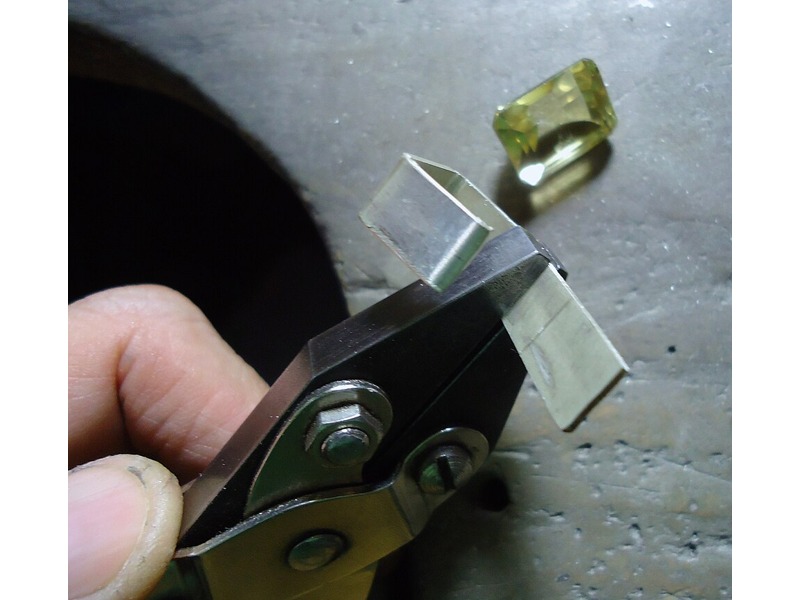
2. How does the parallel mechanism work?
A linkage coordinates jaw movement as handles close. Depending on construction, the mechanism may use multiple pivots or guided motion. It converts handle movement into jaw force while preserving jaw orientation. That geometry can help maintain contact on flat-sided parts, but does not make every parallel-action tool a precision clamp. Check joint play, full-range jaw alignment, and whether force changes noticeably at different openings. The manufacturer’s description and intended-use limits should guide claims.
Watch the linkage while the jaws move.
- Cycle the empty tool slowly and check for binding before loading a sample.
- Compare lateral play at each pivot without forcing the handles beyond their travel.
| Mechanism point | Inspect for | Effect worth recording |
|---|---|---|
| Pivot connections | Looseness | Jaw movement under light handling |
| Guided surfaces | Binding or contamination | Interrupted travel |
| Handle travel | Unexpected stop | Usable opening restriction |
3. Which jobs benefit from parallel jaws?
Parallel jaws can suit holding, positioning, straightening, or light assembly where broad face contact helps keep a part aligned. Examples may include small flat stock, fixtures, and components needing controlled handling. They are not substitutes for a vise, locking pliers, or calibrated gripping equipment when those tools are specified. Thin, delicate, or finished parts can still deform under excessive force. Match capacity and face shape to the actual workpiece before adding a model to a distributor assortment. Use the specialty pliers guide when the task needs a dedicated holding or forming tool.
Use the broad faces where they can seat fully.
- Identify the flat surfaces that will carry contact on your sample part.
- Reject a setup requiring unsupported tip loading or an operation reserved for a vise.
| Workpiece task | Potential benefit | Approval check |
|---|---|---|
| Flat stock positioning | Broad face contact | Alignment after release |
| Small-part assembly | Controlled orientation | Clearance around features |
| Finish-sensitive handling | Even seating | Surface damage trial |
4. How do they differ from conventional pliers?
Conventional pliers typically rotate around a central joint, producing scissor-like jaw travel. Parallel-action designs preserve a more parallel relationship between jaw faces, but often introduce more linkage components and a different feel. Buyers should compare jaw opening, travel, handle leverage, weight, reach, and joint maintenance. Terms such as “parallel” alone do not define precision, force, or tolerance. Ask for technical drawings and test a sample across intended opening positions. If approach angle dominates the decision, compare bent-nose and straight-nose pliers alongside the motion comparison.
Compare useful contact at matching openings.
- Hold the same sample between both tool styles and inspect where their faces touch.
- Check whether the extra linkage obstructs nearby parts before selecting by jaw motion alone.
| Comparison point | Parallel-action sample | Conventional sample |
|---|---|---|
| Contact on flat part | Inspect face seating | Inspect edge concentration |
| Body clearance | Check linkage envelope | Check pivot envelope |
| Service points | Inspect multiple joints | Inspect central joint |
5. What jaw faces and profiles are available?
Parallel-action tools may use smooth, serrated, narrow, broad, or shaped jaw faces. Each profile suits different work: smooth faces reduce tooth impressions on suitable surfaces, while serrations can engage compatible rough stock. Neither eliminates slippage or marks. Jaw width also changes pressure distribution, and a narrow tip may concentrate force. Specify jaw profile, width, opening range, and contact material in procurement documents. For a narrow profile, review needle-nose plier applications before assuming a small contact area suits delicate stock.
Choose jaw faces independently of jaw motion.
- Specify face width and texture alongside opening range.
- Trial narrow jaws on thin material before claiming they distribute pressure broadly.
| Face option | Potential task | Trial priority |
|---|---|---|
| Broad smooth | Flat finished parts | Dents and scratches |
| Serrated | Compatible unfinished stock | Mark acceptance |
| Narrow shaped | Confined component handling | Local pressure and access |
6. How should users apply force safely?
Seat both jaws squarely on the part and keep fingers clear of the linkage and pinch points. Apply only enough force to hold or position the work. If the part shifts, reassess alignment and jaw fit instead of squeezing harder. Do not use pliers as a hammer, pry bar, or clamp unless product instructions explicitly permit that task. Wear eye protection when work can release fragments, and follow the site’s process controls. Clear instructions reduce damage and returns. Where a workpiece must remain held without hand pressure, assess clamp types as a separate workholding option.
Keep hands clear of moving links.
- Identify linkage pinch zones during an empty-tool demonstration.
- Stop and reposition a part that shifts rather than increasing squeeze on an edge-only grip.
| During use | Check | Required response |
|---|---|---|
| Initial seating | Both faces contact | Reposition if uneven |
| Handle closure | Finger clearance | Move hands clear |
| Part movement | Grip stability | Stop and reset |
7. What should buyers inspect in samples?
Open and close each sample through its working range. Check whether jaw faces remain aligned, whether the linkage binds, and whether pivots show excessive looseness. Examine edges, surface finish, handle comfort, and any return spring or lock. Compare repeated samples for consistent movement. These observations do not establish a rated capacity; obtain supplier documentation for materials, tolerances, and intended load. Record acceptance criteria before production approval and retain a reference sample for later checks.
Turn motion checks into acceptance records.
- Inspect several samples at the same selected openings and photograph jaw alignment.
- Record binding and play separately from surface finish so cosmetic quality cannot hide mechanism issues.
| Sample check | Method | Record |
|---|---|---|
| Alignment | Inspect selected openings | Opening and observed gap |
| Movement | Slow repeated cycles | Binding location |
| Joint condition | Gentle lateral inspection | Visible play or damage |
8. How do parallel pliers compare with soft-jaw tools?
Parallel motion describes jaw movement; soft jaws describe contact material or protective covers. A parallel tool can have metal jaws, and a soft-jaw tool can use another motion. Where finish protection is the priority, specify replaceable polymer covers or other documented non-marring features. Covers can change grip, clearance, and maximum opening. Review compatibility and replacement availability with the supplier. Do not describe a tool as damage-proof; workpiece hardness, cleanliness, and operator pressure remain relevant. The pliers wrench and water-pump plier comparison helps separate contact geometry from protective jaw materials.
A protective cover changes the working opening.
- Confirm the cover fits the exact jaw profile and stays seated during closure.
- Remeasure clearance with covers installed before quoting a usable capacity.
| Configuration | Contact surface | Buyer check |
|---|---|---|
| Bare smooth jaws | Metal | Finish trial |
| Covered parallel jaws | Protective material | Cover retention and opening |
| Soft jaws with pivot motion | Protective material | Face seating through closure |
9. What details belong in an RFQ?
State the target operation, workpiece material and dimensions, jaw opening, face width, profile, reach, and desired finish. Include a sketch or sample part when shape affects fit. Ask for product drawings, material declarations, inspection points, packaging, and sample lead time only if confirmed by the supplier. Define how jaw alignment and smooth movement will be checked. This makes quotes easier to compare and helps prevent a generic plier model from being approved for a task it cannot perform. Include the intended parallel-jaw task when planning a mechanic tool kit, rather than adding a duplicate general-gripping tool.
Send the supplier a contact sketch.
- Mark where jaws may touch the part and where contact would damage a feature.
- Define the openings at which alignment must be inspected in the sample approval.
| RFQ detail | Useful evidence | Comparison basis |
|---|---|---|
| Contact geometry | Part sketch | Face width and access |
| Working opening | Dimension range | Alignment at named positions |
| Inspection scope | Agreed sample method | Repeatable movement checks |
10. How should distributors position this tool?
Describe the operation and geometry plainly. Explain parallel jaw movement, intended workpiece range, and any tested features without implying precision or load ratings absent documentation. Show the jaw faces and linkage in close-up photographs. Submit contact sketches and working openings through our sourcing contact when discussing a range.
Show the mechanism doing the named task.
- Use photographs with a representative flat part and visible jaw contact.
- Keep precision and force claims out of the listing unless tied to documented model data.
Q1: What makes the jaw action parallel? A linkage coordinates movement so opposing faces remain parallel over their working range.
Q2: Are parallel pliers precision clamps? Not by default. Check the model’s intended use and documented tolerances.
Q3: Can they replace ordinary pliers? Only where jaw motion and profile fit the work; scissor-action tools may suit other tasks better.
Q4: What should a sample inspection cover? Jaw alignment at several openings, pivot play, binding, edge finish, and handle movement.
Q5: Does parallel motion prevent damage? No. Workpiece material, jaw face, and applied force still govern marking or deformation.
Looking for a reliable mechanic tools manufacturer in China?
If you are sourcing hand tools, socket tools, automotive repair tools, mechanic tool sets or OEM private label tools, contact KOLARWIN Tools for factory-direct quotation, customization support and product consultation.