Need OEM supplier support for this product type?
Contact KOLARWIN Tools for OEM mechanic tools, private label packaging, wholesale quotation and product range support. This gives overseas buyers a clear path from article reading to supplier discussion.
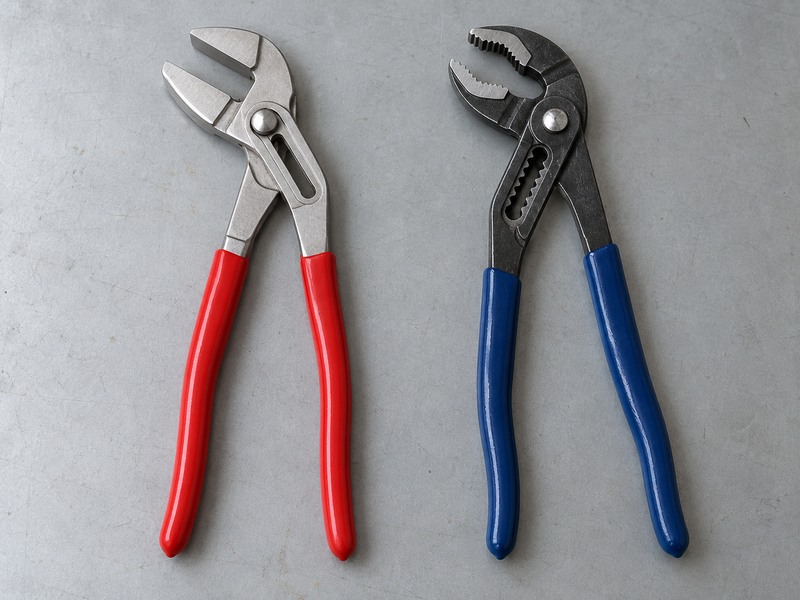
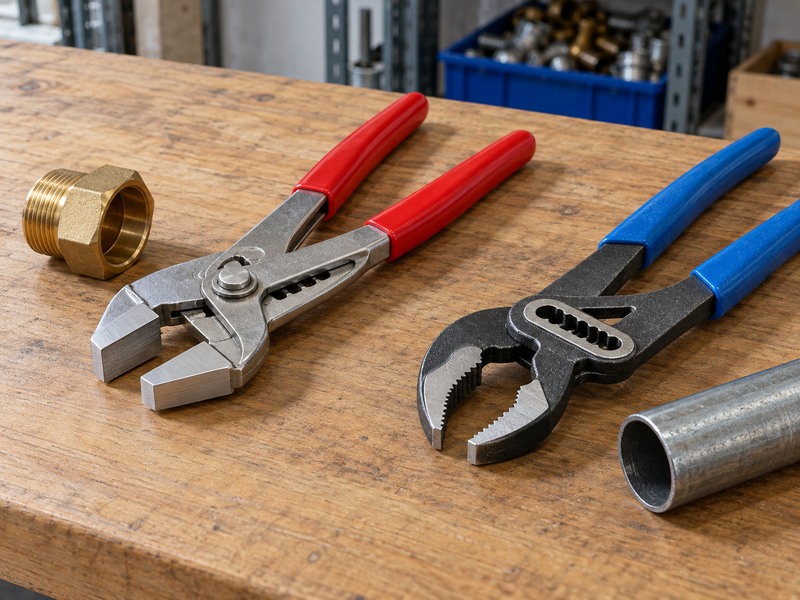
Conventional pliers wrenches use smooth, parallel jaws for flats. Water pump pliers commonly use toothed jaws for suitable round or irregular parts. Choose by workpiece shape, finish sensitivity, opening, and access. Then compare exact models on representative parts.
Contents
- 1. What separates a pliers wrench from water pump pliers?
- 2. Which jaw style suits flats, hexes, and round stock?
- 3. How should buyers weigh surface finish and marking risk?
- 4. How do opening and adjustment affect fit?
- 5. Which tool gives better access in a real assembly?
- 6. What grip behavior should buyers expect under load?
- 7. How can procurement compare models and samples fairly?
- 8. How should distributors plan an assortment?
- 9. What should an RFQ and supplier review include?
- 10. What is the practical selection rule?
1. What separates a pliers wrench from water pump pliers?
A conventional pliers wrench closes smooth, parallel jaws around a workpiece, often across opposing flats. Water pump or groove-joint pliers typically use an adjustable joint and toothed gripping surfaces for suitable round or uneven profiles.
- Pliers wrench: broad, smooth contact on flats or other compatible surfaces.
- Water pump pliers: toothed contact for suitable round, irregular, or varied profiles.
- Both: adjustable hand tools whose fit and performance depend on exact model geometry.
Start with the contact patch. A buyer selecting by category name alone can miss a jaw profile that does not fit the customer’s part.
Compare the working geometry
| Buyer criterion | Conventional pliers wrench | Water pump pliers |
|---|---|---|
| Jaw face | Smooth and typically parallel under intended contact | Toothed or serrated in common designs |
| Typical contact target | Flats, hexes, or compatible planar faces | Suitable round or irregular surfaces |
| Adjustment | Model-specific opening adjustment | Model-specific joint or position adjustment |
| Main question | Can both faces seat on the part? | Can teeth engage without slipping or damaging a critical surface? |
2. Which jaw style suits flats, hexes, and round stock?
Broad jaws can contact opposing flats when opening and jaw depth fit. Confirm intended use and fastener condition.
Round stock has no flats for smooth faces to capture. Toothed water pump pliers can engage suitable round or irregular surfaces when jaw size and tooth profile fit. On finished parts, decide whether marks are acceptable before specifying the tool.
- For hex fittings, check that both jaws seat on opposing flats.
- For round stock, review diameter range and whether toothed engagement suits its finish.
- For irregular parts, test the actual shape rather than assuming an adjustable joint guarantees fit.
Shape dictates the first shortlist. If the customer handles both flats and round stock, an assortment may need both tools instead of asking one model to cover incompatible contact needs.
Match profile to jaw contact
| Workpiece | First tool to evaluate | Fit check | Main caution |
|---|---|---|---|
| Hex fastener or fitting | Smooth parallel-jaw pliers wrench | Opposing faces seat evenly | Confirm fit and intended use; avoid rounded flats |
| Round bar or tube | Toothed water pump pliers | Teeth engage at suitable diameter | Surface marks may be unacceptable |
| Uneven casting or irregular part | Water pump pliers may suit | Stable contact across the actual contour | Inspect for local damage or slip |
| Finished flat surface | Pliers wrench may suit | Broad contact with clean jaws | Smooth jaws do not guarantee no marks |
3. How should buyers weigh surface finish and marking risk?
Smooth jaws remove tooth edges but cannot guarantee a mark-free finish. Dirt, pressure, poor fit, or soft material may still mark.
Toothed contact can suit workpieces that tolerate it, but may damage polished, plated, or painted surfaces. Some pliers-wrench models offer jaw covers; confirm model compatibility and replacement availability.
- Identify whether cosmetic marks, coating damage, or dimensional damage are unacceptable.
- Keep jaws and parts clean during sample review.
- Record any protective cover, sacrificial layer, or restricted-use instruction in the product specification.
Finish control belongs in the use case. “Smooth jaw” describes a surface feature; it is not a no-mark guarantee.
Specify finish risk controls
| Surface condition | Smooth-jaw option | Toothed-jaw option | Buyer control |
|---|---|---|---|
| Unfinished steel where marks are acceptable | Often suitable on compatible flats | May suit compatible round profiles | Confirm fit and safe work method |
| Plated or painted finish | Lower tooth-mark risk, still may mark | Higher risk of visible impressions | Test actual finish and consider approved protection |
| Soft metal or thin wall | Pressure can deform surface | Tooth edges can gouge or distort | Confirm contact area and acceptable force limits |
| Contaminated workpiece | Debris can scratch under either jaw | Debris plus teeth can damage finish | Clean both contact surfaces before use |
4. How do opening and adjustment affect fit?
An adjustable joint does not cover every size or shape. Compare opening, jaw depth, and clearance with intended workpieces; maximum opening alone may not show reach on recessed parts. Buyers comparing hand-tool openings can also review adjustable wrench sizes, while keeping wrench dimensions distinct from pliers-wrench geometry.
Adjustment mechanisms vary by model. Request instructions and drawings, and confirm opening using the maker’s stated measurement method and contact point.
- List minimum and maximum target workpiece dimensions.
- Check contact depth, jaw thickness, and adjustment positions for each candidate model.
- Confirm whether the adjustment can be changed safely in the expected working posture.
Fit is a geometry question. A tool may open far enough yet fail because the jaw profile cannot seat around the intended fitting.
Record opening and adjustment details
| RFQ field | What to request | Why it affects selection |
|---|---|---|
| Model identification | Exact model or proposed SKU | Prevents family-level assumptions |
| Jaw opening | Stated range and measurement method | Shows fit across target sizes |
| Jaw depth and thickness | Drawing or dimensioned specification | Affects reach and clearance |
| Adjustment system | Model-specific operation and limits | Determines repositioning and handling |
| Intended workpiece | Shapes and material examples | Links dimensions with real contact |
5. Which tool gives better access in a real assembly?
Access depends on the whole tool envelope: handle swing, head thickness, and approach angle. Crowded assemblies may call for a different tool than open-bench work.
A limited swing arc or nearby hose can block movement. Test a representative assembly before range approval. For a different holding task, see straight-jaw versus curved-jaw locking pliers.
- Check head width, jaw depth, handle length, and opening around obstructions.
- Test both approach direction and handle swing through the intended task.
- Note whether operators can see and control contact without awkward wrist position.
Bench fit can lie. Try each candidate in the tightest expected access condition before choosing a standard stock item.
Access review for samples
| Check | Pliers wrench | Water pump pliers | Evidence to record |
|---|---|---|---|
| Jaw seating | Can both smooth faces reach flats? | Can teeth engage the intended contour? | Photo or sketch of contact position |
| Head clearance | Can head enter without touching adjacent parts? | Do jaw contour and joint clear nearby parts? | Minimum available clearance |
| Handle swing | Is there room for controlled movement? | Can handles move without slipping off target? | Usable swing arc |
| Repositioning | Can the operator reset between strokes? | Can the joint be adjusted in place? | Number and difficulty of resets |
6. What grip behavior should buyers expect under load?
Smooth jaws contact compatible flats; toothed jaws engage suitable surfaces. Neither geometry establishes a universal torque rating or slip-free promise. Results depend on model, fit, condition, and instructions.
Do not describe every water pump plier as self-locking. Nor should buyers treat either category as a substitute for a correctly sized wrench or a specified torque tool in a controlled fastening process. For critical joints, use the tool and procedure required by the application.
- Read the exact model instructions for permitted uses and handling limits.
- Avoid adding a pipe or other extension unless manufacturer instructions explicitly allow it.
- Stop if jaws slip, deform a part, or cannot remain seated under the intended task.
Grip comes from fit and contact. A strong-looking handle does not establish a safe load limit.
Separate grip features from claims
| Question | Evidence to request | Do not infer |
|---|---|---|
| What surface can the jaw engage? | Jaw drawing and stated application | Universal grip on every material or shape |
| Does a model hold its setting? | Instructions and model feature description | Self-locking across the whole family |
| What load can it handle? | Applicable model-specific rating, if published | Torque multiplication or safe force from handle length |
| What happens if fit is poor? | Sample evaluation on target parts | Slip-free operation under all conditions |
7. How can procurement compare models and samples fairly?
Compare suppliers against one application. Request the exact model, drawing, opening, jaw details, and instructions. Test samples on the same part; photos cannot prove seating or clearance.
Inspect jaw alignment according to the model’s design. Some pliers-wrench designs may show a small gap at the rear when unloaded so jaw faces can achieve intended parallel contact under load. KNIPEX describes this behavior for a named model. That example means an automatic zero-gap rejection rule can be misleading; it does not mean every gap is acceptable. Compare the sample with its model drawing and instructions.
- Approve against a drawing revision, model identifier, and defined target workpiece.
- Record opening, fit, adjustment, finish outcome, and access observations.
- Agree how changes to jaw geometry or finish will be communicated before repeat orders.
Use one test card for every sample. It makes supplier comparisons easier to audit and keeps subjective impressions from replacing the actual requirements.
Sample approval checklist
| Approval item | Pass evidence | Record for follow-up |
|---|---|---|
| Identity | Sample matches quote and drawing | Model, revision, and date code if present |
| Fit | Seats on target parts as intended | Part dimensions and contact location |
| Adjustment | Operates as described in instructions | Any binding or unexpected movement |
| Finish | Workpiece remains within customer criteria | Surface before/after and protection used |
| Access | Reaches task without interference | Assembly and approach condition |
| Change control | Supplier confirms how revisions are notified | Approved drawing and sample reference |
8. How should distributors plan an assortment?
An assortment should make each SKU’s role plain to a buyer and end user. A smooth-jaw pliers wrench may serve flats; toothed water pump pliers may suit round or irregular profiles. Stock both when jobs differ and clarify overlap.
Different customer segments may need different jaw sizes and surface expectations. A wider industrial maintenance tool buyer guide can support range planning. Review customer requests and returns before expanding breadth. Keep slip-joint and combination pliers as separately specified items when expanding a gripping-tool range.
- Map each proposed SKU to workpiece shape, opening, access, and finish tolerance.
- Mark any overlap that needs a clear sales explanation.
- Use consistent naming so a pliers wrench is not confused with an adjustable wrench or pipe wrench.
A clean assortment answers “which job?” A buyer should be able to distinguish tools by contact and task without relying on an ambiguous product label.
Assign a role to each family
| Assortment role | Pliers wrench candidate | Water pump pliers candidate |
|---|---|---|
| Core customer task | Flats and compatible planar contact | Suitable round or irregular gripping |
| Finish expectation | Lower tooth-mark risk; still verify | Marks may be part of engagement |
| Range planning | Opening and jaw depth by application | Opening, tooth profile, and shape range |
| Cross-sell logic | Add where flat-contact work recurs | Add where rounded or uneven parts recur |
| Sales note | Explain parallel smooth contact | Explain teeth and surface considerations |
9. What should an RFQ and supplier review include?
An RFQ should define function and request model-specific drawing, opening, adjustment, jaw profile, finish, packaging, and sample details. State evidence and acceptance criteria for any required material, hardness, insulation, or certification claim. Use the contact page for supplier-specific questions.
Handle coverings deserve care. Plastic or dipped grips do not establish electrical insulation. Check the exact model’s technical specification and applicable certification documents for any electrical rating. Do not infer safety ratings from color, grip material, or a family name.
- Specify the workpiece shape, size range, finish, and operating access.
- Ask suppliers to identify the exact model and supporting technical documents.
- Include sample approval, packaging, labeling, and revision notification in purchasing records.
Evidence should match the SKU. A factory-wide statement cannot replace model-level documentation for a buyer’s requirement.
Put requirements into the RFQ
| RFQ topic | Buyer requirement | Supplier evidence |
|---|---|---|
| Product identity | Exact proposed model and configuration | Drawing, specification, product code |
| Jaw and opening | Shape, dimensions, and intended profiles | Dimensioned drawing and stated range |
| Materials and finish | Required properties, only where relevant | Model-specific declaration or test record |
| Safety | Explicit rating or certification if required | Applicable certificate and model match |
| Commercial details | Quote, MOQ, lead time, packaging | Current written offer for requested configuration |
| Quality control | Sample acceptance and change notice | Agreed approval record and revision process |
10. What is the practical selection rule?
Choose smooth parallel jaws for compatible flats when tooth marks concern buyers; consider toothed jaws for suitable round or irregular profiles. Follow model instructions.
Mixed applications may need both families; list their separate roles and model dimensions.
- Identify the part shape and finish tolerance.
- Confirm opening, jaw depth, adjustment, and access on the real application.
- Approve a sample against its drawing and instructions.
Make the decision on the workpiece. Send suppliers the target dimensions, surface requirements, and a photo or sketch, then request the exact model and a sample for review. For related context, browse water pump pliers versus pipe wrench, pipe wrench versus adjustable wrench, and the hand tools category.
Q1: Are pliers wrenches the same as adjustable wrenches?
No. A pliers wrench has plier-style handles; an adjustable wrench has a wrench head with a movable jaw.
Q2: Can water pump pliers grip hex fasteners?
Some may grip compatible shapes, but teeth can mark flats. Check instructions and test fit on the intended fastener.
Q3: Do smooth jaws guarantee a mark-free finish?
No. Dirt, pressure, poor fit, or soft material can still mark a surface. Inspect a sample against finish criteria.
Q4: Do all water pump pliers self-lock?
No. Holding features vary by model. Check its specification and instructions.
Q5: Should an unloaded rear jaw gap reject a pliers wrench?
Not automatically. A manufacturer documents an intentional gap on one model. Compare samples with their drawings; that does not make every gap acceptable.
Looking for a reliable mechanic tools manufacturer in China?
If you are sourcing hand tools, socket tools, automotive repair tools, mechanic tool sets or OEM private label tools, contact KOLARWIN Tools for factory-direct quotation, customization support and product consultation.