Need OEM supplier support for this product type?
Contact KOLARWIN Tools for OEM mechanic tools, private label packaging, wholesale quotation and product range support. This gives overseas buyers a clear path from article reading to supplier discussion.
A standard screwdriver and an insulated screwdriver may share a tip profile, yet buyers cannot treat their handles as equivalent when electrical hazards enter the work. The purchasing decision should begin with the job’s electrical safety procedure, not the color of a handle. IEC 60900 applies to specified insulated, insulating and hybrid hand tools for work live or close to live parts, while OSHA rules address tool use, protective equipment and worker qualifications. This article helps procurement evaluate documented models without implying that a rated tool alone makes energized work safe or permissible.
1. What separates insulated and regular screwdrivers?
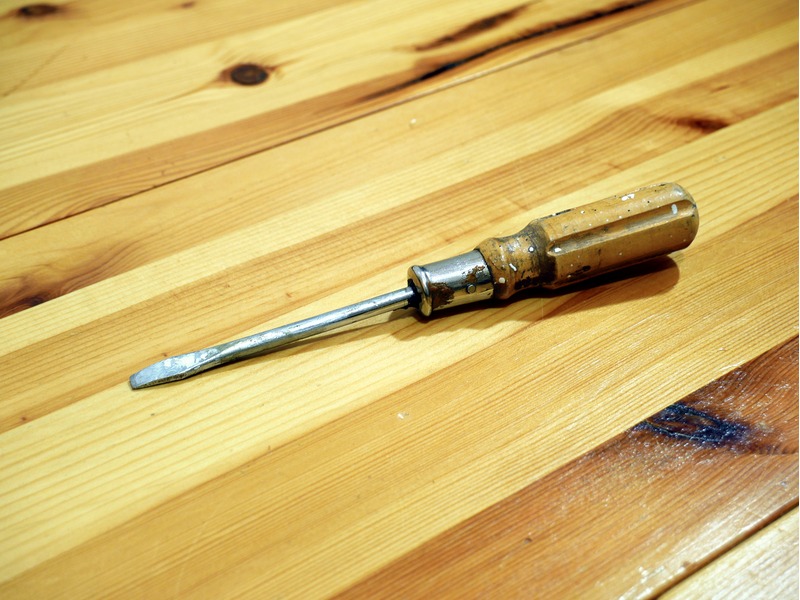
A regular screwdriver is specified for its drive tip, size, blade, handle, and intended mechanical use. An insulated screwdriver adds an insulating system intended for defined electrical work conditions. That distinction must be supported by product-specific construction, markings and applicable conformity documentation. A two-color handle, plastic grip or “electrician style” name does not prove a voltage rating. Buyers should inspect the exact model and its documentation before making an electrical-use claim.
The broader types of screwdrivers guide separates handle and mechanism families; none establishes an electrical rating by appearance.
Two separate checks decide suitability.
- Match tip profile and size to the screw.
- Verify insulation markings and documents by model.
| Buyer item | Regular model | Insulated model |
|---|---|---|
| Primary spec | Tip and mechanical fit | Tip plus documented insulation |
| Evidence | General product data | Model-specific standard / rating evidence |
| Use | Mechanical fastening | Electrical safety procedures govern |
2. What does IEC 60900 cover?
IEC 60900:2018 applies to insulated, insulating and hybrid hand tools used for work live or close to live parts at nominal voltages up to 1,000 V AC and 1,500 V DC. The IEC states that products designed and manufactured to the document contribute to user safety when used by skilled persons under safe work methods and applicable instructions. That scope is not a blanket permission for live work, and it does not replace an employer’s procedures or local requirements.
Scope matters more than the color scheme.
- Request a declaration covering each proposed SKU.
- Compare the cited IEC edition with instructions.
| Documentation item | Buyer request | Check |
|---|---|---|
| Standard | IEC 60900 claim | Exact model and evidence |
| Marking | Voltage marking if applicable | Legible and consistent |
| Instructions | Manufacturer guidance | Supplied with product |
3. What do OSHA rules mean for purchasing?
OSHA 1910.335 requires insulated tools or handling equipment when tools might contact exposed energized conductors or circuit parts, and calls for protective equipment appropriate to hazards. OSHA 1910.333 states that only qualified persons may work on parts that have not been deenergized under the required procedures. OSHA 1910.333(a)(1) establishes deenergizing exposed live parts before employees work on or near them as the default, with limited exceptions when the employer can demonstrate added hazards or infeasibility. The rule also reserves work on equipment that remains energized for qualified persons. These are work-practice requirements, not a product advertisement. Procurement should support the employer’s safety system by buying correctly documented tools; supervisors and qualified safety staff determine permissible work.
Do not transfer operating methods from manual impact screwdriver vs impact driver into electrical work without the applicable safe-work procedure and exact tool approval.
The tool is one part of a safety system.
- Give the employer’s safety owner the model file.
- Keep procurement separate from work authorization.
| Procurement role | What it can do | What it cannot do |
|---|---|---|
| Select | Documented model | Authorize energized work |
| Supply | Correct markings and files | Replace training / procedures |
| Inspect | Check condition | Guarantee safe use alone |
4. How should tip and insulation requirements be evaluated?
Electrical suitability does not remove ordinary fit requirements. Match the tip profile and size to the fastener, then inspect blade geometry and access. A poorly fitting tip can slip and damage the screw even if the handle has an insulation rating. For cross-recessed tips, ISO 8764 describes tip shapes, dimensions and test methods. For other profiles, use the relevant product documentation. Maintain a separate comparison for mechanical fit and electrical documentation.
Use Pozidriv vs Phillips to identify cross-head fit before selecting an insulated version.
Combine insulation requirements with the fit checks in screwdriver sizes.
Mechanical fit and electrical documentation both matter.
- Test tip seating with the actual fastener.
- Review insulation evidence independently of fit.
| Evaluation axis | Evidence | Sample check |
|---|---|---|
| Tip | Profile / size details | Fit with actual screw |
| Insulation | Model documents | Marking and condition |
| Clearance | Tool geometry | Access to fastener |
5. Which markings and records should accompany a model?
Record manufacturer, model identifier, stated voltage class, standard reference, batch or traceability markings, and instructions. Compare handle markings with the certificate or declaration and the product listing. A mismatch between packaging and tool can create a receiving and field-control problem. Ask the supplier how it identifies production lots and manages changes. Do not assume a certificate for one screwdriver covers an entire range unless its scope explicitly lists each model.
The duty classifications discussed in impact bits vs regular bits concern mechanical use and do not substitute for electrical documentation.
Keep the record model-specific.
- Match model code on tool, packaging and certificate.
- Record batch traceability and change-notice terms.
| Record | Question | Reason |
|---|---|---|
| Model list | Which SKUs covered? | Avoid overbroad scope |
| Traceability | How marked? | Support lot follow-up |
| Change notice | How communicated? | Protects approval baseline |
6. What condition checks belong in incoming inspection?
Insulating materials can be damaged by cuts, punctures, contamination, or wear. OSHA states that equipment must be maintained in safe, reliable condition and that insulating material subject to damage must be protected. Buyers should follow manufacturer instructions and applicable workplace procedures for inspection and removal from service. Incoming quality can check identification, packaging, visible damage, markings and document match. It should not claim to perform a formal electrical test unless the facility has an approved method and qualified personnel.
Inspection has to reflect real damage modes.
- Quarantine visible cuts, cracks or punctures.
- Follow site rules for inspection and removal from service.
| Inspection item | Check | Action |
|---|---|---|
| Surface | Cuts, cracks or punctures | Quarantine and review |
| Marking | Readable, correct model | Compare with documents |
| Cleanliness | Contamination or residue | Follow maker guidance |
7. How do handling and storage differ?
A documented insulated screwdriver may need controlled handling and storage to protect its insulating layers. A standard model can also be damaged, but electrical use raises the consequence of concealed or visible defects. Keep insulated tools separate from ordinary tools where the customer’s system requires, and prevent unapproved repairs or modifications. Follow supplier instructions for cleaning, inspection and service life. Do not invent an inspection interval; use applicable rules, maker guidance and site policy.
Mechanism choices described in ratcheting screwdriver vs standard screwdriver still require their own electrical-suitability evidence.
Protect the insulation after receiving.
- Store rated models where ordinary tools cannot replace them.
- Follow manufacturer cleaning and care instructions.
| Control | Practical buyer action | Reason |
|---|---|---|
| Storage | Protect surfaces | Reduce incidental damage |
| Identification | Separate rated models | Avoid substitution |
| Service | No unauthorized repair | Maintain traceability |
8. How should buyers compare cost and range?
The price comparison should include more than unit cost. Insulated models may require separate documentation, marking, inspection controls and training alignment. A standard screwdriver may cover mechanical maintenance where electrical hazards are absent, while insulated models belong in tasks identified by the employer’s risk assessment. Avoid bundling them as interchangeable replacements. Compare only configurations that meet the same documented task and approval requirements.
For hex and star-recess demand, Torx vs Allen helps define the profiles a range needs.
Price only comparable approved models.
- Compare unit cost with required records and controls.
- Do not bundle standard and insulated SKUs as substitutes.
| Cost dimension | Compare | Evidence |
|---|---|---|
| Unit price | Named model | Like-for-like quote |
| Documentation | Included files | Scope by SKU |
| Range | Profiles and sizes | Coverage by task |
9. What should an RFQ specify?
Name tip profile, size, blade length, handle format, model-level insulation requirement, cited standard, markings, packaging and document package. Include destination market and any customer-specific approval form. Request sample approval before bulk production and written notification of changes affecting materials, insulation construction or traceability.
If the order includes nut-driving tools, distinguish those attachments using nut setter vs nut driver and specify their electrical requirements separately.
Put the document scope in the RFQ.
- State standard, model, rating evidence and label requirements.
- Include destination market and sample approval.
| RFQ field | Specify | Proof |
|---|---|---|
| Electrical claim | Standard / class / model | Scope-matched document |
| Mechanical fit | Tip / size / length | Sample check |
| Change control | Material / model revisions | Written supplier process |
10. What is the buyer’s decision rule?
For ordinary mechanical fastening, specify a regular screwdriver that fits the fastener and operating conditions. Where the employer’s hazard assessment and procedure call for insulated tools, purchase a documented model whose scope matches the task and jurisdiction. Never select from handle color alone, and never describe a rated screwdriver as authorization to work energized. The user’s safety program, qualification and protective equipment remain controlling.
A rated tool does not authorize energized work.
- Obtain customer safety approval before product release.
- Keep training and work-practice rules with the employer.
FAQ
Send a sourcing inquiry with the application, required sizes, order quantity and documentation needs. Ask for model availability and a written specification before approval.
Q1: Does an insulated screwdriver make live work safe? No. A tool rating is only one part of a qualified worker’s safety practices, protective equipment and procedures.
Q2: What does IEC 60900 cover? It covers specified insulated, insulating and hybrid hand tools for defined work live or close to live parts.
Q3: Can a colored handle prove insulation? No. Verify model markings and scope-matched documentation.
Q4: Should every maintenance screwdriver be insulated? Selection should follow the employer’s hazard assessment and applicable work rules.
Q5: What should an RFQ request? Exact model, tip, rating evidence, markings, instructions, traceability and sample approval.
Contact Kolarwin Tools with the exact tip profile, size, blade length, model-level insulation documentation, destination market, packaging, target quantity, and customer approval requirements. Ask us to identify which technical documents match each proposed SKU before you approve a sample.
Looking for a reliable mechanic tools manufacturer in China?
If you are sourcing hand tools, socket tools, automotive repair tools, mechanic tool sets or OEM private label tools, contact KOLARWIN Tools for factory-direct quotation, customization support and product consultation.