
Need OEM supplier support for this product type?
Contact KOLARWIN Tools for OEM mechanic tools, private label packaging, wholesale quotation and product range support. This gives overseas buyers a clear path from article reading to supplier discussion.
A nut driver may fit the hex but still stop short when a threaded stud extends through the nut. A hollow shaft lets the stud pass into the tool body, but buyers need to verify bore depth, nut engagement and surrounding clearance on the actual assembly. Product pages describe hollow-bar designs for access to deeply threaded bolts; specifications vary by model. This guide helps importers and distributors define the clearance problem, evaluate sample dimensions, and request evidence without assuming that every hollow-shaft driver fits every stud or application.
1. What makes a nut driver hollow shaft?
A hollow-shaft nut driver has an open passage through some or all of its handle-side shaft, allowing a threaded stud to enter rather than bottom against a solid end. Manufacturer product documentation describes a model with pass-through access, but “hollow shaft” alone does not state the bore diameter, usable depth, socket size or handle construction. Buyers should request a drawing and check the path from socket opening through the shaft.
Start with nut setter vs nut driver to distinguish this integral hand tool from a powered-driver attachment.
Name the stud envelope first.
- Measure stud diameter and projection past the nut.
- Call out minimum bore and useful pass-through depth.
| Dimension | What to state | Why |
|---|---|---|
| Socket size | Hex across flats | Matches nut |
| Bore | Minimum clear diameter | Passes stud / thread |
| Depth | Usable insertion depth | Avoids bottoming |
2. When does pass-through clearance matter?
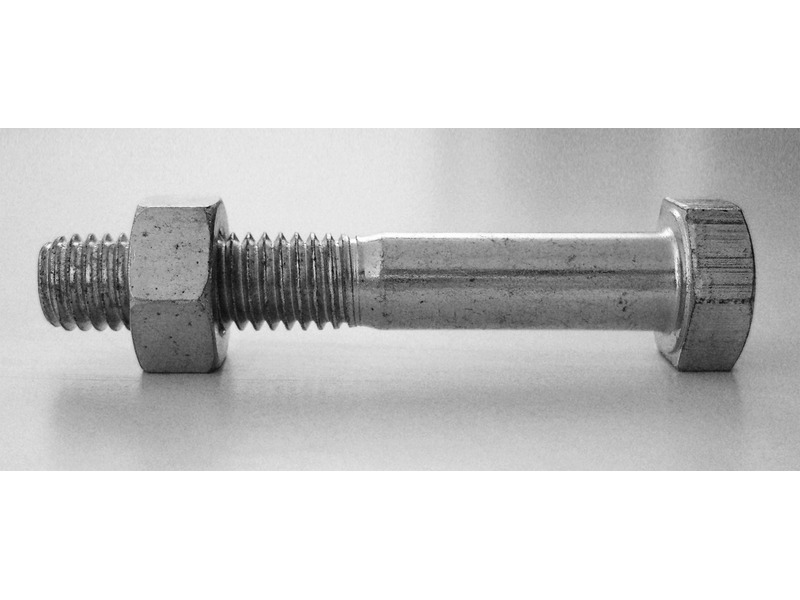
Pass-through clearance matters when a nut runs along a threaded stud, such as a mounting fastener or a threaded rod assembly. A solid driver can engage the nut initially and then stop as the stud reaches the closed end. A hollow design may allow continued access, subject to bore diameter, depth and tool geometry. Do not assume the feature is needed for every nut-driver customer; ask for the longest exposed stud and the expected tightening range.
The deep vs shallow sockets comparison helps explain why socket depth and through-stud clearance are separate purchasing questions.
Clearance begins with customer dimensions.
- Record the longest projection in the assembly.
- Include stud diameter and nut across-flats size.
| Customer input | Measurement | RFQ use |
|---|---|---|
| Stud projection | Length beyond nut | Sets bore depth |
| Stud diameter | Major diameter / variation | Sets bore size |
| Nut | Across-flats dimension | Sets socket |
3. How should bore diameter and depth be checked?
A nominal hole measurement does not guarantee practical clearance. Check the minimum bore along the complete pass-through route, including transitions, internal shoulders and any obstruction inside the handle. Compare usable depth with the stud projection after the nut reaches its working position. Request a sectional drawing or supplier measurement. If the route is not documented, use a sample and a gauge or representative threaded rod. Do not force a tool onto a stud to test fit.
The clearance questions in spark plug socket sizes illustrate why an outside fit and an internal opening must be checked separately.
The entrance diameter is not enough.
- Check the narrowest bore along the full shaft.
- Measure usable depth to the first obstruction.
| Clearance item | Method | Pass condition |
|---|---|---|
| Diameter | Gauge / drawing | Clears stud with agreed allowance |
| Depth | Measure insertion path | No bottoming at task limit |
| Interior | Inspect shoulders | No unexpected blockage |
4. How does socket engagement affect fit?
The socket must engage enough of the nut to transmit the intended manual turning force. A deep bore is not useful if the socket walls are too shallow or the handle hits nearby structure. Confirm hex size, internal depth, wall thickness and external socket diameter against the assembly. ISO 2236 and ISO 1711-1 provide relevant socket-wrench terminology and specification context, but the buyer’s actual product drawing and use requirements still govern fit approval.
Unlike the square interfaces covered in socket drive sizes, an integral nut driver combines its handle and working socket; identify that construction explicitly.
Review the complete geometry.
- Compare nut engagement with outside clearance.
- Check the socket body against nearby components.
| Geometry check | Buyer detail | Why |
|---|---|---|
| Hex size | Nut across flats | Fit and slip risk |
| Socket depth | Engagement length | Nut contact |
| Outside diameter | Nearby clearance | Tool access |
5. Which handle and shaft designs suit the task?
Nut drivers may use a fixed handle and shaft, a hollow bar, or other configurations. Handle shape affects grip, storage and access; shaft length affects reach and stud passage. A long shaft can help with recessed nuts but may flex or obstruct nearby components depending on construction and use. Ask the supplier to identify the intended application and available dimensions. Avoid claiming higher torque or durability from handle size or appearance without model-specific data.
The handle families in types of screwdrivers provide context for grip and access choices on manual drivers.
Compare types of socket wrenches if customers might instead need a socket and detachable handle.
Handle choice follows the work position.
- Select grip shape for the operator’s access.
- Confirm shaft length and bore on the same drawing.
| Design choice | Review | Sample criterion |
|---|---|---|
| Handle | Grip and marking | Comfort / identification |
| Shaft | Length and bore | Reach / pass-through |
| Socket | Profile and depth | Nut engagement |
6. How should a buyer test a sample?
Use a representative nut-and-stud assembly or a fixture with the same dimensions. Run the driver down the stud to the farthest required position, engage the nut fully, and check clearance around the handle and shaft. Test both near and deep positions, and note whether the tool can be removed without binding. This is a fit trial, not a torque qualification. Use controlled procedures if torque performance is part of the requirement.
Do not assume an adapter solves every access problem; impact socket adapter describes another connection that needs its own compatibility checks.
Use a real stud-and-nut assembly.
- Run the tool to the farthest required nut position.
- Check for bottoming, binding and full nut engagement.
| Trial | Action | Observation |
|---|---|---|
| Pass-through | Advance along stud | Bottoming or binding |
| Nut engagement | Seat socket | Full engagement |
| Access | Turn in actual space | Interference notes |
7. What material and finish details belong in review?
The buyer should request material and finish details for the exact model, especially if corrosion exposure, cleaning or appearance matters. Product listings may describe a finish or material, but those claims should not be extended to other sizes without documentation. Evaluate markings and size identification for readability. If the supplier claims a specific torque capability or high-torque design, request the test method and limits. A hollow construction is a clearance feature; it does not alone establish a performance class.
A hollow shaft describes clearance, not rating.
- Request material and finish details by model.
- Substantiate any torque or corrosion claim separately.
| Claim | What to verify | Evidence |
|---|---|---|
| Material | Exact model specification | Supplier document |
| Finish | Named process / coating | Drawing or datasheet |
| Performance | Rated application | Test basis and limits |
8. How should a range be built for distribution?
A distributor can organize the range around nut sizes, stud clearance, shaft length and package format. Start with recurring service or installation tasks; then add models only where bore depth, reach or handle access differs materially. Product data should distinguish nut size from shaft diameter and bore size. Include a range chart only when supplier measurements support every listed SKU.
Use customer tasks from a complete mechanic tools list to select nut sizes before multiplying shaft variants.
Range data must distinguish unlike dimensions.
- List size, bore, depth and shaft length separately.
- Use service data to decide which SKUs to stock.
| Range field | Catalog attribute | Avoid confusion |
|---|---|---|
| Nut size | Across flats | Not shaft bore |
| Bore / depth | Pass-through limit | Not socket depth |
| Shaft length | Overall reach | Specify endpoints |
9. What should the RFQ and inspection plan include?
Specify nut size, stud diameter and projection, minimum bore diameter, usable depth, socket engagement, shaft length, outside clearance, material, finish, marking, packaging and sample quantity. Attach a representative assembly drawing or sample. For incoming inspection, verify identity, key dimensions, marking and surface condition against approved documents. Define the inspection method and acceptance limits before production. If a supplier proposes another handle or shaft design, treat it as a configuration change rather than an automatic equivalent.
Make the internal path visible to the bidder.
- Attach an assembly sketch and dimensioned drawing.
- Define incoming checks for bore, depth and socket fit.
| RFQ line | Required detail | Receiving record |
|---|---|---|
| Clearance | Bore diameter / depth | Measured or sample checked |
| Nut fit | Across flats / depth | Fit trial |
| Identity | Model and revision | Label and item master |
10. How should the final selection be approved?
Approve a hollow-shaft nut driver only after it passes the actual stud, nut and access conditions. Confirm that the passage remains clear to the required depth and the socket fully engages the nut. Retain the approved sample, drawing, dimensions and product description together. Ask the supplier to report changes to bore geometry, shaft, socket or finish. Send an RFQ with nut size, stud dimensions, projection, required reach, material, finish, packaging and order quantity.
Let the customer assembly set the limit.
- Approve against the longest stud and final access condition.
- Keep drawing and sample revision in the item record.
FAQ
Send a sourcing inquiry with the application, required sizes, order quantity and documentation needs. Ask for model availability and a written specification before approval.
Q1: What is a hollow-shaft nut driver used for? It can allow a threaded stud to pass through the shaft while the socket engages a nut, subject to the model’s bore and depth.
Q2: How do I size the bore? Measure the stud diameter and verify the narrowest bore along the driver’s full pass-through path.
Q3: Does hollow shaft mean deep socket? No. Bore depth, socket depth and nut engagement are separate dimensions.
Q4: Can the tool fit any threaded rod? No. Confirm diameter, projection, socket size and access against a drawing or sample.
Q5: What should I include in an RFQ? Send nut size, stud diameter and projection, bore depth, shaft length, access conditions and sample needs.
For a product-specific quotation, send Kolarwin Tools the fastener profile and size, required dimensions, tool interface, intended application, sample or drawing, packaging needs, and expected quantity. Ask for a model-matched drawing and product documents before approving the configuration.
Looking for a reliable mechanic tools manufacturer in China?
If you are sourcing hand tools, socket tools, automotive repair tools, mechanic tool sets or OEM private label tools, contact KOLARWIN Tools for factory-direct quotation, customization support and product consultation.



