Need OEM supplier support for this product type?
Contact KOLARWIN Tools for OEM mechanic tools, private label packaging, wholesale quotation and product range support. This gives overseas buyers a clear path from article reading to supplier discussion.
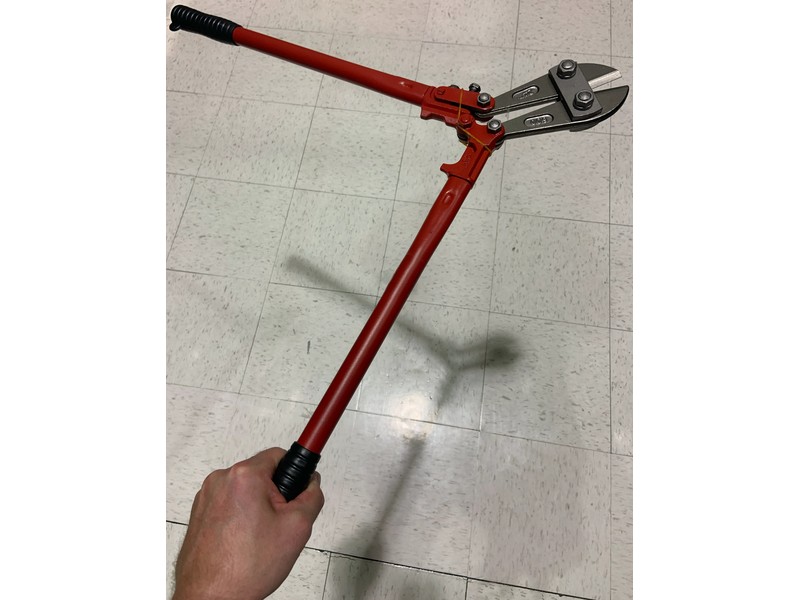
Compound-action bolt cutters use linked pivots to transmit force to cutting jaws. Selection depends on the stock material and size, model rating, access, and blade condition.
1. What are compound-action bolt cutters?
Compound-action bolt cutters use linked pivots to increase mechanical advantage from handle movement to cutting edges. They are designed for cutting compatible metal stock, such as certain bolts, chain, or wire, within a model’s stated capacity. Construction and cutting-edge geometry vary; KNIPEX publishes model-specific cutter information, including hardness-related limits. Buyers must use the maker’s material and size limits rather than assume every cutter handles hardened steel or any diameter. Our bolt cutter use guide covers the operating decisions that should accompany a capacity-based selection.
Read the material rating before the tool name.
- Identify the grade and diameter of the stock customers expect to cut.
- Match that combination to the exact cutter model instead of a generic bolt-cutter label.
| Stock form | Information needed | Selection gate |
|---|---|---|
| Bolt or rod | Grade and diameter | Published model limit |
| Chain link | Material and section size | Rating plus jaw access |
| Wire bundle | Construction and material | Appropriate cutter family |
2. How does compound leverage help?
A compound linkage transmits handle force through more than one pivot, increasing force at the jaws. This arrangement lets a hand tool deliver substantial cutting force, but the tradeoff includes linkage complexity and user effort. Cutting results still depend on material hardness, diameter, blade condition, and correct placement. Leverage does not make an out-of-range cut acceptable. Buyers should review model-specific capacity charts and avoid unsupported comparisons based only on handle length.
Extra leverage still loads the cutting edges.
- Inspect all linkage pivots for free movement before evaluating a sample cut.
- Reject force-multiplier claims that lack a stated model and comparison method.
| Linkage observation | Buyer concern | Check |
|---|---|---|
| Smooth coordinated travel | Usable motion | Full unloaded cycle |
| Sideways handle movement | Joint play or damage | Pivot inspection |
| Hard stop before seating | Access or adjustment | Model instructions |
3. What materials can they cut?
Capacity depends on cutter design and published specifications. Common categories include soft and medium-hard materials, while hardened stock may require a dedicated tool. Labels such as “bolt cutter” do not establish suitability for every lock shackle, chain, fastener, or rebar. Verify material class and diameter against manufacturer documentation. If a job involves hardened or high-strength material, select a rated tool designed for that material. Never extrapolate from a successful sample cut to a universal capacity claim. For stranded material, compare wire-rope and cable cutters before treating a bolt cutter as the default.
Separate material classes in the quotation.
- Obtain hardness or strength information when the supplier's capacity chart requires it.
- Leave a material unrated in catalog copy when the exact model has no supporting limit.
| Material description | Missing detail to resolve | Do not substitute |
|---|---|---|
| Soft stock | Actual grade and diameter | Hard-stock capacity |
| Hardened fastener | Hardness and section | Soft-steel rating |
| Stranded wire rope | Construction | Solid-wire rating |
4. How do jaw styles affect cutting?
Many bolt cutters use center-cut or other blade arrangements, with different access and cut characteristics. Jaw geometry determines where material sits relative to cutting edges and how force concentrates. Some designs allow adjustment or replacement, while others do not. Buyers should inspect blade alignment, edge condition, pivot movement, and access to the intended stock. Ask suppliers for diagrams and maintenance instructions. Product descriptions should specify cutter style only when confirmed by the model documentation. If the work is wire rope, use the wire-rope cutter selection guide to assess the correct enclosing cutting geometry.
Look at where the stock meets the blades.
- Check whether the specified cutting zone can reach the work without tilting the handles.
- Confirm adjustment and replacement instructions for the supplied head design.
| Head feature | Selection question | Evidence |
|---|---|---|
| Edge arrangement | Can blades reach the cut line? | Model diagram |
| Jaw opening | Can stock seat correctly? | Capacity and geometry data |
| Replaceable head | Can service restore the tool? | Compatible part number |
5. How do buyers choose cutter length?
Longer handles can provide greater leverage, but they also need more room and can be harder to control in a cramped area. Shorter tools may offer better access and portability, subject to lower capacity in some product families. Size alone does not prove cutting performance; linkage geometry and blade design also matter. Compare the space available, stock diameter, material class, operator reach, and storage needs. Compare dimensions and capacity categories with the bolt cutter size guide after identifying the stock.
Measure the handle sweep, not just stored length.
- Mock up the approach to the stock with enough room for both handles.
- Compare transport and storage space only after matching the material rating.
| Work location | Length consideration | Check |
|---|---|---|
| Open bench area | Handle sweep available | Operator stance |
| Confined installation | Restricted opening | Approach and closing clearance |
| Mobile service kit | Transport size | Rated option fitting storage |
6. How should a cut be set up?
Inspect the stock and identify the material before cutting. Secure loose work where appropriate, position the material deep enough in the intended cutting zone, and keep hands away from the blades and pinch points. Stand clear of the cut piece because it may move when severed. Wear eye protection and follow workplace procedures. Do not add a pipe extension or strike the handles unless the manufacturer explicitly permits that method. Stop if the tool binds or the handles twist. Use suitable workholding where the procedure calls for restraint; the clamp category guide helps specify that separate part of the setup.
Control the offcut before closing the handles.
- Check whether cutting will release tension or allow stock to move unexpectedly.
- Position hands and bystanders outside the blade, linkage and offcut paths.
| Setup point | Hazard to assess | Control |
|---|---|---|
| Stock support | Movement when severed | Suitable restraint |
| Cutting zone | Incorrect seating | Follow model instructions |
| Offcut path | Flying or falling fragment | Clear area and protect eyes |
7. What care keeps cutters in service?
Keep cutting edges clean and protect them from corrosion. Check pivot fasteners, blade alignment, handles, and return or adjustment mechanisms where fitted. Follow the maker’s guidance for lubrication, adjustment, and sharpening; unauthorized grinding can alter edge geometry or heat treatment. Remove damaged tools from service. Buyers should ask whether replacement blades or parts are available and how compatibility is identified. Document incoming checks for edge chips, misalignment, loose joints, and shipping damage.
A chipped edge changes the next cut.
- Inspect both blades after a difficult cut and remove damaged tools from service.
- Match replacement heads or adjustment parts to the exact model and revision.
| Wear finding | Service decision | Document needed |
|---|---|---|
| Chipped blade | Stop use | Replacement guidance |
| Uneven closure | Inspect adjustment and alignment | Model procedure |
| Loose pivot | Inspect before cutting | Fastener or service instructions |
8. What should sourcing teams verify?
An RFQ should state stock material, maximum diameter, expected cut frequency, access constraints, handle length, blade style, finish, and maintenance expectations. Request drawings, product limits, and sample units. Test only on agreed materials and sizes, with safe fixture arrangements. Record cut quality, handle movement, and visible damage after evaluation. Do not present a sample trial as a certified capacity test. Obtain the supplier’s published rating and align catalog copy with it. Document bolt-cutter inspection and replacement needs in the industrial maintenance tool brief.
Keep the test stock traceable.
- Record material identity and measured section size for every sample trial.
- Compare post-cut blade condition separately from whether the stock was severed.
| Evaluation record | Required observation | Purpose |
|---|---|---|
| Stock identity | Material class and dimension | Rating comparison |
| Cut behavior | Seating and handle movement | Application fit |
| Tool condition | Edges and pivots after trial | Damage detection |
9. How do bolt cutters differ from aviation snips?
Bolt cutters shear thicker stock with a levered jaw system. Aviation snips cut sheet material along a path and are selected by cut direction and blade design. Neither tool is a universal metal cutter. The stock shape and thickness determine which family suits the task. A buyer’s assortment should name the material and operation rather than group all cutters under an ambiguous label. For sheet stock, the aviation-snips and tin-snips comparison provides the relevant tool-family distinction.
Choose by stock form before choosing leverage.
- Route sheet-cutting requests to snips and verify their sheet-specific capacities.
- Keep wire-rope requests separate until a suitable cutter geometry is confirmed.
| Work material form | Tool family to evaluate | Main selection variable |
|---|---|---|
| Solid rod or bolt | Rated bolt cutter | Material hardness and diameter |
| Sheet metal | Snips | Sheet material and thickness |
| Stranded rope | Wire-rope cutter | Construction and diameter |
10. What should a B2B product listing include?
State verified length, cutting style, rated material and size limits, adjustment details, and replacement-part information when available. Show the jaws, pivot linkage, and full tool. Avoid vague claims such as “cuts anything” or force multipliers unsupported by the manufacturer. Provide use and inspection guidance alongside product data. Send stock grade, diameter and access drawings through our sourcing contact before requesting a cutter quotation.
Publish only limits that can be traced to the model.
- Place material categories beside their individual size limits rather than showing one universal capacity.
- Include blade-care and replacement information with the approved SKU record.
Q1: Does compound leverage mean a cutter handles any bolt? No. Use the model’s material and diameter ratings.
Q2: Can bolt cutters cut hardened stock? Only when the maker rates the specific model for that material and size.
Q3: Does a longer handle guarantee more capacity? No. Linkage geometry, blade design, and material limits also matter.
Q4: Can users add a pipe extension? Do not do so unless manufacturer instructions explicitly permit it.
Q5: What should sourcing documents include? Exact model, cut style, material category, rated size, and maintenance guidance.
Looking for a reliable mechanic tools manufacturer in China?
If you are sourcing hand tools, socket tools, automotive repair tools, mechanic tool sets or OEM private label tools, contact KOLARWIN Tools for factory-direct quotation, customization support and product consultation.