Need OEM supplier support for this product type?
Contact KOLARWIN Tools for OEM mechanic tools, private label packaging, wholesale quotation and product range support. This gives overseas buyers a clear path from article reading to supplier discussion.
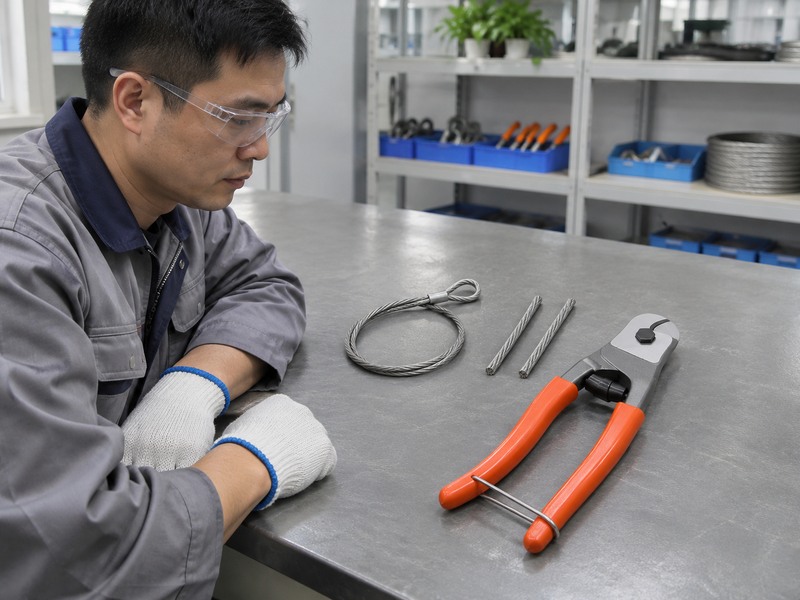
Choosing a wire rope cutter by length or a “heavy-duty” label leaves questions open. Buyers need a route from rope construction and measured diameter through blade geometry, access and sample approval. This guide serves distributors, importers and workshop procurement teams before quotation review.
Contents
- 1. What rope job and working condition must the cutter handle?
- 2. How do rope grade, construction, core and coating affect selection?
- 3. Should you use nominal diameter or measured outside diameter?
- 4. How should you match rope grade and diameter with a cutter rating?
- 5. What blade geometry should a buyer inspect?
- 6. Which cutter form fits the rope job: one-hand, compound, two-hand or powered?
- 7. What parts, maintenance and service evidence should you request?
- 8. How should you sample cutters and account for lot variation?
- 9. What should a distributor place in an approval pack?
- 10. What should the final wire rope cutter RFQ say?
1. What rope job and working condition must the cutter handle?
Start with the rope job, not a catalog adjective. A procurement team may cut new rope for terminations, trim a retained end before a fitting, or remove worn sections. Each job changes access, cut frequency, end shape and sample method. Record those conditions before comparing cutter lengths.
- New or used rope, including lubrication and visible deformation.
- Rope diameter range and construction used in daily work.
- Cut location, nearby fitting and available hand clearance.
- Expected cuts per shift, service call or batch.
- End condition required before a socket, clamp or splice.
A tool that fits a bench may lack clearance beside a termination.
The wire rope cutter vs cable cutter comparison gives family-level context. This process stays with steel wire rope and its buying evidence.
Job checkpoint
| Job detail | What to record | Why it decides fit |
|---|---|---|
| Rope condition | New, used, lubricated or deformed | Affects cut behavior and inspection |
| Diameter range | Nominal and expected measured range | Sets rating and sample size |
| Cut location | Free end, near fitting or in fixture | Sets head and handle access |
| Cut frequency | Occasional, batch or repeated service | Guides mechanism and service plan |
| End requirement | Square, controlled strands or fitting-ready | Defines sample acceptance |
Write one rope job per RFQ line before requesting prices.
2. How do rope grade, construction, core and coating affect selection?
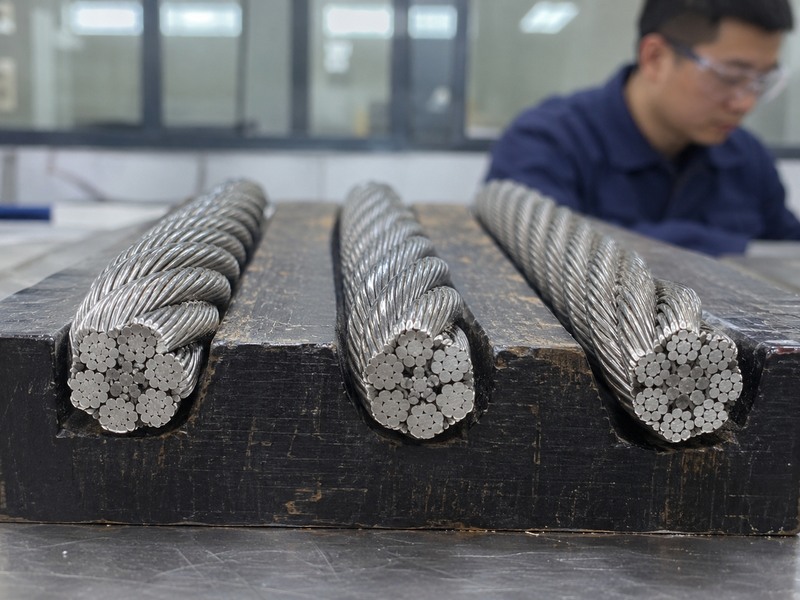
Equal diameter does not mean equal rope condition. Record rope grade or strength class, strand arrangement, core, lay, finish and coating. A fiber-core rope, steel-core rope, compacted rope or coated rope can present different resistance and strand movement at a blade. A cutter rating that names only diameter leaves this decision open.
Capture:
- Rope construction and strand count.
- Fiber, independent wire-rope or wire-strand core.
- Wire grade or strength class stated on the rope certificate.
- Galvanized, bright, coated or otherwise finished surface.
- Lay direction, compacting and special notes.
Keep a rope certificate or representative sample beside each proposed capacity.
Use the specialty pliers buying guide for assortment logic, but keep rope evidence specific. A general hand-tools range page cannot replace a rope record.
Rope-construction checkpoint
| Rope field | Supplier or buyer record | Selection question |
|---|---|---|
| Grade or strength class | Certificate or stated specification | Does rating cover this grade? |
| Construction | Strand count, compacted or special form | Was this construction sampled? |
| Core | Fiber, IWRC or strand core | Does the cutter keep strands controlled? |
| Surface | Bright, galvanized or coated | Does coating change cut result? |
| Lay | Direction and construction note | Is sample representative of production? |
Attach a construction description or representative rope sample to every RFQ row.
3. Should you use nominal diameter or measured outside diameter?
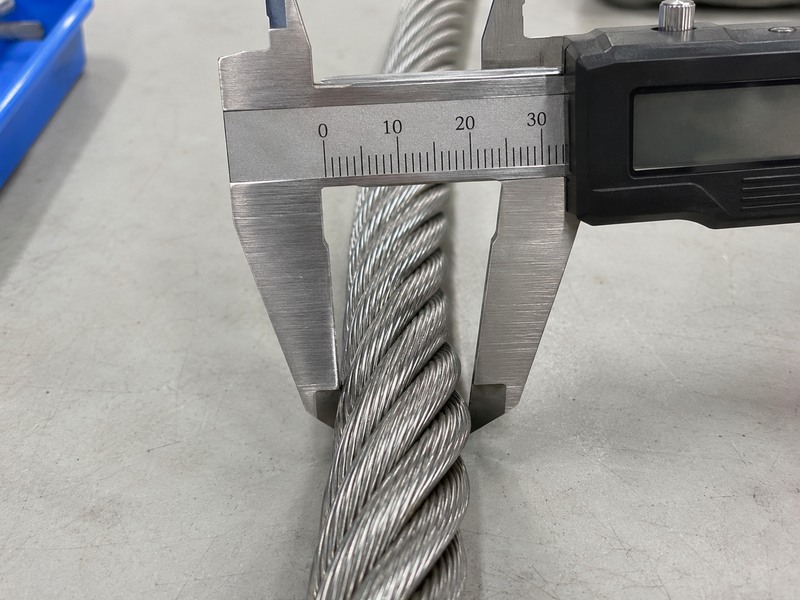
Record both, with separate purposes. Nominal diameter identifies rope in an order, drawing or certificate. Actual diameter describes a measured sample. The cutter supplier must state which diameter basis its rating uses; a measurement does not automatically redefine that rating.
Follow the rope supplier’s measurement method. Place suitable caliper jaws across opposite strand crowns, rather than between strand valleys. For an oval profile, manufacturer guidance may average perpendicular readings and specify further measurement positions. Record that acceptance average separately from the widest observed profile used for a jaw-clearance check.
Keep an acceptance average separate from the widest observed profile.
- Record nominal size and the supplier’s measurement method.
- Keep individual readings, any prescribed average and measurement condition.
- For coated rope, record total coated diameter and the stated underlying steel-rope diameter separately.
- Ask which coating and diameter basis the cutter rating covers.
- Perform cutting trials only on isolated, unloaded samples under the tool’s instructions.
Diameter checkpoint
| Diameter field | Meaning | Use in a rope selection file |
|---|---|---|
| Nominal diameter | Designated rope size | Purchase line and rating-basis question |
| Recorded average | Result under the rope supplier’s method | Rope acceptance record |
| Widest observed profile | Largest recorded sample width | Physical jaw-clearance check, not a new capacity rating |
| Coated and underlying rope diameters | Different material boundaries | Confirm which boundary the rating uses |
| Measurement condition | Method and condition supplied with readings | Makes records comparable |
Keep the measurement report with the sample, then confirm the cutter’s stated rating basis with its manufacturer.
4. How should you match rope grade and diameter with a cutter rating?
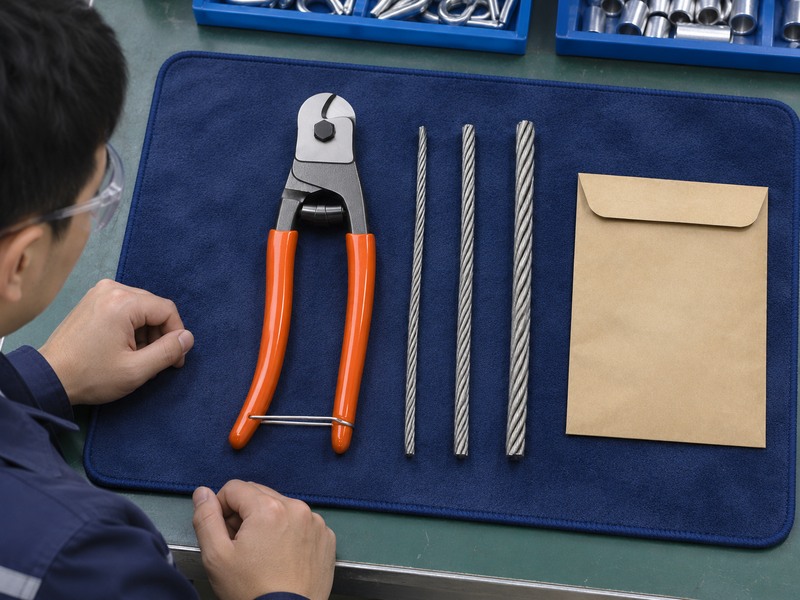
A rope capacity is conditional. Match named rope construction, grade and diameter against a cutter rating that states the same basis. A short tool may list a high-strength rope limit that differs from a general rope limit. Another model may list several rope conditions or a separate wire limit. Do not turn a single diameter headline into a universal working range.
Build a rope-only comparison sheet with separate columns for:
- Rope construction and core.
- Grade or strength class.
- Nominal diameter and measured sample range.
- Stated cutter capacity and any exclusions.
- Sample result, cut-end condition and evidence date.
Read the rating together with its named rope grade and construction.
The cable cutter versus diagonal cutter article can help staff separate adjacent categories, while this sheet remains rope-specific.
Rope-rating checkpoint
| Rating wording | What it establishes | What still needs proof |
|---|---|---|
| Rope diameter only | A size boundary | Construction and grade |
| High-strength rope | A named rope condition | Exact grade and sample |
| Wire rope and cable | More than one application family | Separate rope evidence |
| Heavy duty | No technical boundary | Model rating and method |
| Clean or low-fray cut | A stated design outcome | Rope, size and repeat sample |
Reject any quotation where capacity cannot be rewritten with rope construction, grade, diameter and condition.
5. What blade geometry should a buyer inspect?
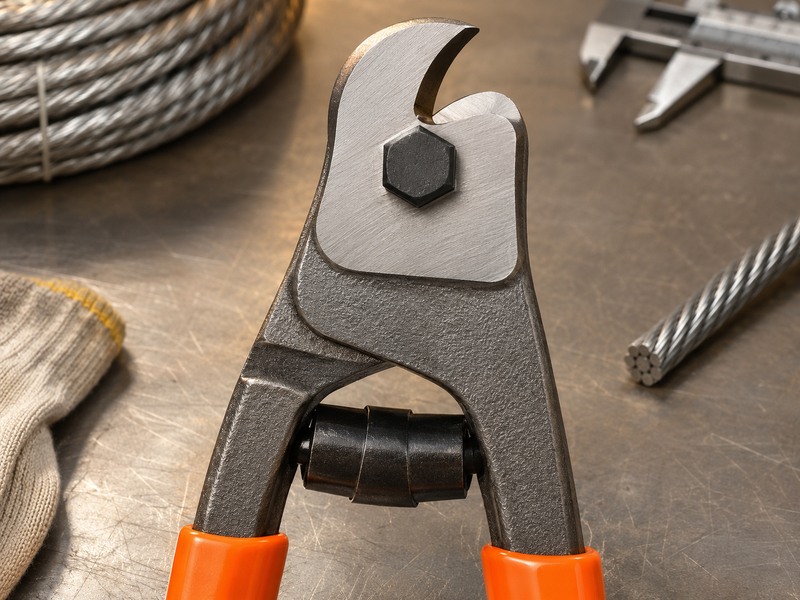
Blade geometry controls how rope strands enter, stay aligned and separate. Shear action can support a square cut on a named rope. A guided or angular edge can control strand movement. A triangular system can close around a rope while limiting flattening under its stated use. These are model-specific features, not universal promises.
Inspect both tool and result:
- Blade meeting across the full edge.
- Side play at the pivot and any adjustable tension feature.
- Rope strands after separation, including fan-out and loose wires.
- Burrs, crushed areas or an angled end that could affect a fitting.
- Retained-end stability before socket, clamp or splice work.
Compare the retained end with the fitting it must enter.
Add one approved sample photograph to your file. A low-fray result belongs to a named model, material and size. One sample cannot prove maximum capacity.
Geometry checkpoint
| Feature | What to inspect | Acceptance question |
|---|---|---|
| Shear or guided edge | Alignment and closure | Does material stay centered? |
| Angular edge | Strand control during separation | Do strands fan out after the cut? |
| Pivot or tension system | Play and repeatability | Does blade contact remain even? |
| Handle return or lock | Safe reset between cuts | Can operator repeat the motion? |
| Cut end | Squash, burrs and strand spread | Does result suit the next fitting? |
Ask for a cut-end image at requested size, then repeat that check on your retained sample.
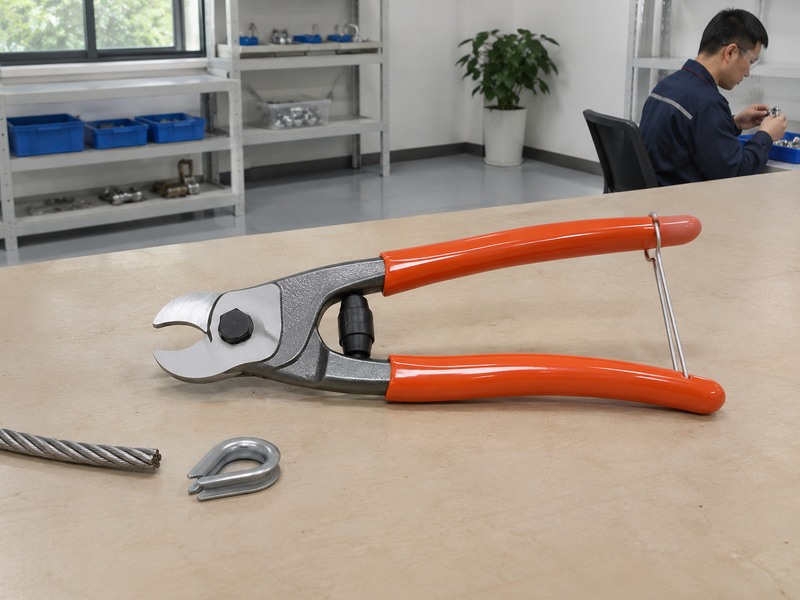
6. Which cutter form fits the rope job: one-hand, compound, two-hand or powered?
Choose a cutter form only after confirming a rope rating for the named construction and diameter. One-hand tools can suit compact service work. For compound tools, verify the named rope rating and the head geometry rather than assuming a mechanism increases capacity. Two-hand long-handle tools need more swing space. If a powered system is proposed, request steel-wire-rope compatibility, matching-head information and its operating instructions before adding it to a shortlist.
Map the actual work area before choosing a handle format:
- Clearance around rope, fittings, guards and fixtures.
- One-hand or two-hand operation requirement.
- Expected cut count per shift or per service call.
- Glove thickness, grip texture and operator reach.
- Carrying, storage and transport limits.
- Published rope rating for each form, not a rating borrowed from another model.
Every cutter form still needs a rating for the specified rope.
For a distributor range, separate compact service tools from long-handle production tools. The industrial maintenance repair tools buyer guide provides context. Do not infer rope capability from color, grip or mechanism.
Access checkpoint
| Cutter form | Selection concern | Sample check |
|---|---|---|
| One-hand | Compact rope service and limited swing | Verify published rope rating at job diameter |
| Compound manual tool | Head access and model-specific rope rating | Sample the named construction at the approved size |
| Two-hand long handle | Swing path, grip and operator reach | Test around the real fitting or fixture |
| Supplier-proposed powered system | Documented steel-wire-rope compatibility and matching head | Verify its manual and use an appropriate qualified operator |
| Crowded assembly area | Handle swing and head clearance | Cut around a representative fixture |
| Repeated bench work | Grip, return and operator fatigue | Repeat a defined cut sequence |
| Field service | Weight, lock and carrying size | Use with normal PPE and kit |
| Terminated rope | Jaw access near fittings | Test on the real end geometry |
Include a simple access sketch or fixture photograph in your sample request, then record whether handles and jaws clear it.
7. What parts, maintenance and service evidence should you request?
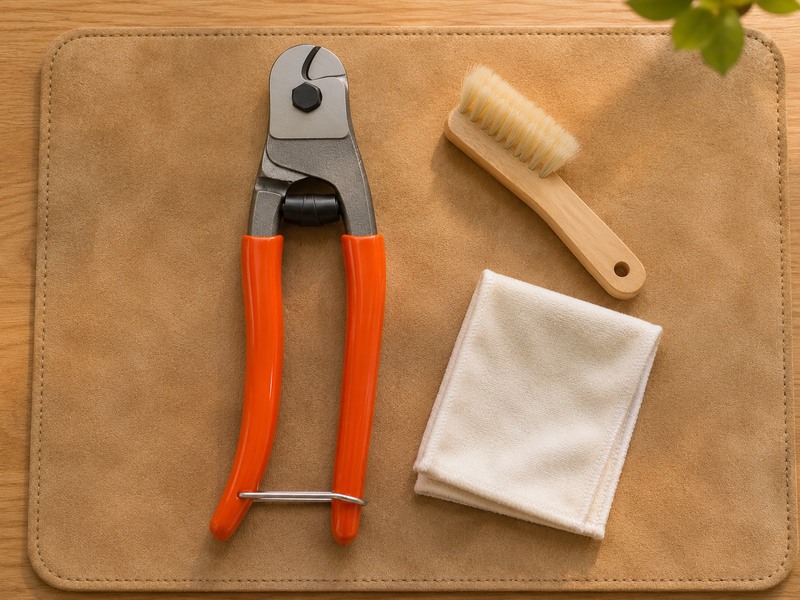
Service planning starts before shipment. Ask whether blades, cutter heads, springs, bolts, grips or pivot hardware can be ordered separately. A replaceable head may reduce downtime, while a compact fixed-head tool may be simpler for a low-volume workshop. Either choice needs a parts path and a clear revision identity.
Request these records:
- Exploded drawing or parts list with part numbers.
- Replacement blade or head availability and fit range.
- Pivot adjustment method and lubrication guidance.
- Wear limits or signs that require removal from service.
- Change-notification process for blade steel, geometry or handles.
A design change can leave old spare parts incompatible with a new tool.
Tie every spare part to a model code and revision. A complete mechanic tools list for distributors can place service parts inside a broader assortment plan. Keep replacement claims out of public copy until confirmed.
Service checkpoint
| Service item | Buyer request | Release question |
|---|---|---|
| Cutter head or blade | Part number and compatible models | Can buyer reorder by model? |
| Spring or pivot hardware | Drawing and fit detail | Is adjustment repeatable? |
| Grip or handle set | Replacement method | Can service avoid full-tool disposal? |
| Lubrication guidance | Product and interval | Is maintenance instruction supplied? |
| Change notice | Revision and effective date | Will buyer receive reapproval notice? |
Make parts availability a scored RFQ field before purchase.
8. How should you sample cutters and account for lot variation?
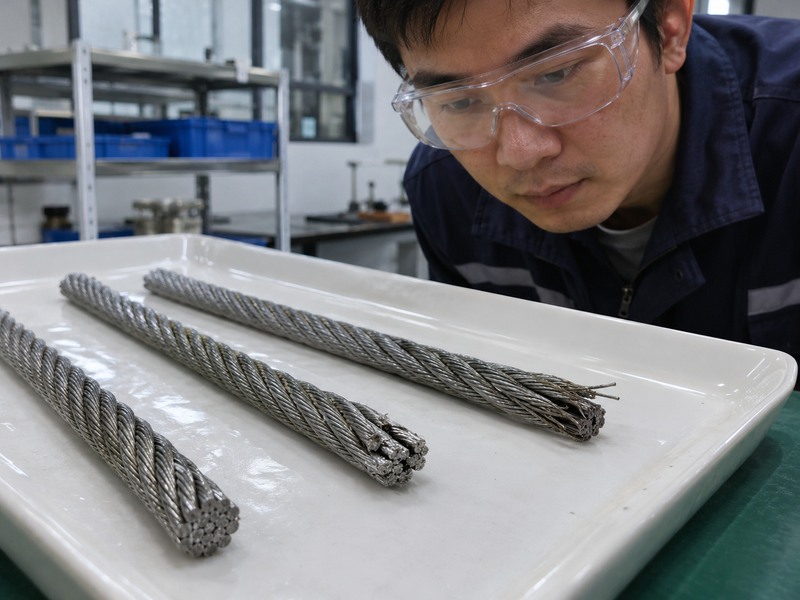
A sample proves one tool under one rope condition. It does not prove every future lot or rope construction listed in a catalog. Treat approval as a controlled comparison: identify the tool, measure key dimensions, prepare known rope and record cut results.
Rope supply varies within defined tolerances and between constructions. Tie samples to a lot or certificate when fit depends on diameter. For production, agree how many tools and rope pieces will be checked, who records failures and what happens after a tool or rope falls outside the agreed condition.
Test the largest routine rope size and tightest fitting access in your proposed range.
- Mark each tool with model and revision.
- Measure rope before cutting.
- Record cut count, force observations and end condition.
- Keep failed samples and photographs with the inspection record.
- Re-sample after blade, steel, pivot or handle changes.
Use the automotive repair tools category as a range bridge. It cannot replace a rope-cutter sample plan.
Sampling checkpoint
| Sample element | Record | Why it protects the buyer |
|---|---|---|
| Tool identity | Model, revision and lot | Prevents mixed samples |
| Work rope | Construction and measured size | Makes result repeatable |
| Cut method | Operator, fixture and motion | Controls handling differences |
| Result | End shape, fray, crush and strand spread | Converts opinion into evidence |
| Change trigger | New steel, blade, pivot or supplier | Defines when reapproval starts |
Write a sample protocol before tools arrive, then attach each result to it.
9. What should a distributor place in an approval pack?
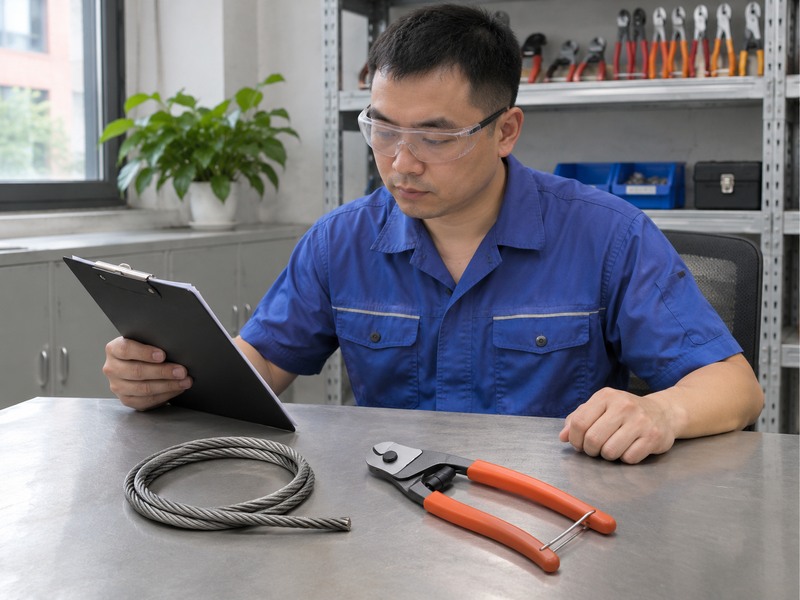
An approval pack should let another buyer understand why a rope-cutter SKU passed. Include drawing, model code, rope capacity matrix, sample record and packaging proof. Keep missing fields visible rather than filling them with broad adjectives.
Keep these files together:
- RFQ with rope grade, construction and diameter basis.
- Product drawing and critical dimensions.
- Capacity sheet with exclusions and test conditions.
- Sample cut records, photographs and measured rope.
- Parts list, revision history and change-notice agreement.
- Packaging and marking proof for the exact model.
Every published capacity needs a dated, model-specific source.
For a final RFQ, use Contact Us with rope construction, measured size, access limits and requested evidence. Distinguish supplier-declared from buyer-verified results.
Approval checkpoint
| Pack item | Buyer verifies | Hold point |
|---|---|---|
| Drawing | Length, head and pivot dimensions | Drawing missing or outdated |
| Capacity matrix | Rope grade, construction and diameter | Rating basis unclear |
| Sample record | Measured input and cut result | No repeatable method |
| Parts record | Spare identity and fit | Service path unknown |
| Change record | Reapproval triggers | Revision control absent |
Release a SKU only after capacity claims map to a dated approval record and sample.
10. What should the final wire rope cutter RFQ say?
Write one rope application per RFQ line. Name grade, construction, core, nominal diameter, measured range, access and desired cut result. Ask for rope rating, exclusions, drawing, parts list and sample evidence. For two rope families, request two lines and two samples.
Use this sequence before a purchase order:
- Confirm rope grade, construction and core.
- Separate nominal size from measured size.
- Match capacity to grade, construction and diameter.
- Inspect blade geometry and cut-end condition.
- Check access, handle motion and service parts.
- Approve a defined sample before printing a catalog claim.
Put the complete rope specification on each RFQ line.
If a supplier needs more detail, send sample description, photographs and requested documentation together. That reply beats a generic “heavy-duty” quotation.
FAQs
Q1: Can one wire rope cutter cover multiple rope constructions?
Sometimes. Accept broader coverage only when a supplier names each rope construction and diameter range. Do not infer one grade’s limit from another.
Q2: Should a buyer use nominal rope diameter for ordering?
Yes, use nominal diameter in the purchase specification. Record measured diameter during sample and incoming inspection, including measurement condition.
Q3: Does a longer handle always mean a better cutter?
No. Length affects cutting force, clearance, storage and operator motion. Match handle format with the work area and expected cut frequency.
Q4: What should a sample cut record include?
Record model and revision, rope construction, measured size, cut method, cut-end condition and photographs. Keep failed samples when possible.
Q5: When should a cutter be reapproved?
Reapprove after changes to blade geometry, steel, heat treatment, pivot parts, handle design, manufacturing location or stated capacity. Recheck when supplied rope construction changes.
Looking for a reliable mechanic tools manufacturer in China?
If you are sourcing hand tools, socket tools, automotive repair tools, mechanic tool sets or OEM private label tools, contact KOLARWIN Tools for factory-direct quotation, customization support and product consultation.