Need OEM supplier support for this product type?
Contact KOLARWIN Tools for OEM mechanic tools, private label packaging, wholesale quotation and product range support. This gives overseas buyers a clear path from article reading to supplier discussion.
A wire rope cutter and a cable cutter can look alike while serving different materials. Choose a wire-rope-rated model for steel strands. Choose a cable shear with a matching rating for copper or aluminum conductors. Some models cover both, with separate capacities. For distributors, the costly mistake is treating “cable cutter” as a universal specification. Compare material, construction, blade action and sample cuts before approving a replacement or printing a capacity claim.
Contents
- 1. What is the practical difference between a wire rope cutter and a cable cutter?
- 2. Which material fields should a buyer put in an RFQ?
- 3. How should you read cutter capacity ratings?
- 4. What does blade geometry change in a cut?
- 5. When does cable construction change the tool choice?
- 6. How should buyers review the two quoted 200 mm configurations?
- 7. What should incoming inspection record before approval?
- 8. How should distributors build a wire and cable cutter range?
- 9. What evidence belongs in a buyer approval pack?
- 10. What should you send in a final wire-rope cutter or cable-cutter RFQ?
1. What is the practical difference between a wire rope cutter and a cable cutter?
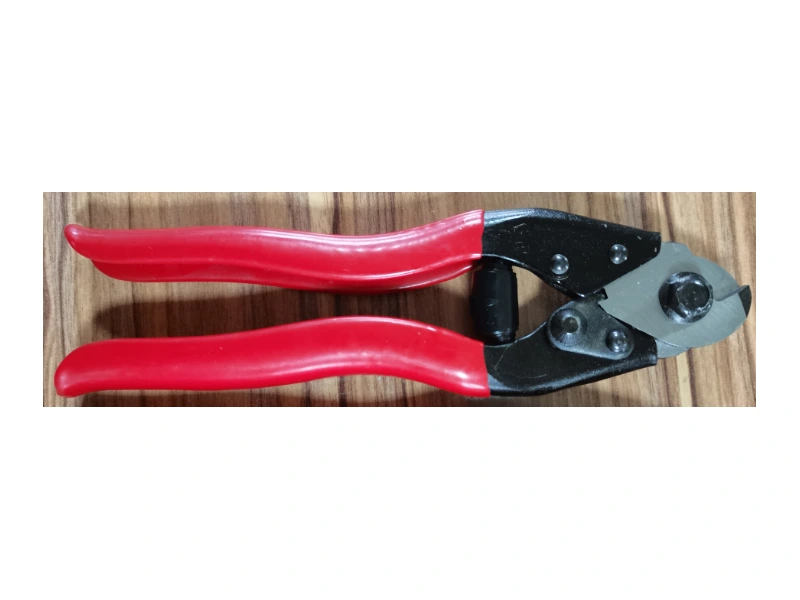
A wire rope cutter starts with steel wire rope as its working material. A cable cutter often targets stranded copper or aluminum conductors, insulated multicore cable or another named construction. A broad word such as “cable” cannot prove suitability for steel rope.
Published specifications show this split. Cable shears may list Cu/Al area or diameter, then exclude steel wire. Wire-rope tools list rope diameter separately. Those fields describe different loading conditions.
Here’s the useful filter: start with material and construction before handle length, finish or piece weight.
- Steel wire rope requires a rope rating and stated diameter.
- Cu/Al conductor cable requires conductor material, strand construction and area or diameter.
- ACSR or armored cable needs a named application rating.
KOLARWIN’s wire stripper vs wire cutter guide separates adjacent stripping and cutting evidence.
Reject any RFQ line that names only “heavy-duty cutter.” Add material, construction and maximum tested size before comparing offers.
Material-and-use decision table
| Work material | Starting tool family | Evidence required | Stop condition |
|---|---|---|---|
| Steel wire rope | Wire-rope cutter | Rope diameter, construction and sample cut | No rope rating |
| Stranded Cu/Al cable | Cable shear or cable cutter | Material, strand type and area/diameter | Material, construction or size outside rating |
| ACSR | Dedicated wire-rope/ACSR cutter | ACSR wording and separate capacity | ACSR absent |
| Armored or steel-containing cable | Rated armored-cable tool | Named cable construction and test method | Generic cable label only |
2. Which material fields should a buyer put in an RFQ?
Material names alone do not give a cutter its working limit. A useful RFQ identifies strand arrangement and blade contact. Separate steel wire rope, stranded Cu/Al, hard-drawn copper, ACSR and armored cable.
Record whether diameter means jacket, conductor or rope diameter. Cross-sectional area describes a conductor, while rope ratings normally use outside diameter.
Put every working condition on one line: buyers can then compare offers without guessing what a capacity headline means.
- Material: steel, copper, aluminum or mixed construction.
- Construction: stranded, fine-stranded, hard-drawn, ACSR or armored.
- Size basis: rope diameter, cable outside diameter, conductor area or AWG.
- Exclusions: steel wire, hard-drawn copper, fine-stranded cable or other limits.
- Acceptance: cut quality, strand spread and jacket condition.
KOLARWIN’s specialty pliers buying guide and crimping-tool assortment guide show why multifunction tools need separate compatibility fields.
Add a “working material and construction” column beside every cutter SKU in your sourcing sheet.
RFQ field table
| RFQ field | Example entry | Why buyers need it |
|---|---|---|
| Working material | Steel wire rope or stranded Cu | Sets blade and load family |
| Construction | ACSR, fine-stranded, armored | Separates similar-looking cables |
| Size basis | 5 mm rope or 50 mm² conductor | Prevents unit confusion |
| Exclusions | No steel wire or hard-drawn Cu | Defines a safe boundary |
| Acceptance result | Cut end, crush and strand condition | Makes sampling repeatable |
3. How should you read cutter capacity ratings?
Read capacity as a conditional statement, never as a universal diameter. A wire-rope rating refers to rope diameter under stated construction. A cable rating may use outside diameter, cross-sectional area or AWG. AWG describes conductor size, while rope diameter describes bundled steel.
Published examples illustrate this. One wire-rope cutter lists high-strength rope up to 4 mm and stranded copper cable up to 6 mm. Another lists 5 mm rope, 7 mm stranded copper and smaller values for harder wire. Those numbers belong to named models.
Read units beside material: a number without its construction field is incomplete evidence.
- Confirm whether diameter means outside diameter or working conductor diameter.
- Keep mm, mm² and AWG in separate columns.
- Check whether fine-stranded conductors or harder wire reduce capacity.
For broad planning, use one BOM row per SKU with exact size, job and evidence.
Require a supplier to write “capacity for [material] under [construction]” before approving a number.
Rating-reading table
| Rating shown | What it may describe | Buyer check |
|---|---|---|
| 5 mm | Wire-rope diameter or cable outside diameter | Ask which construction applies |
| 50 mm² | Conductor cross-sectional area | Confirm Cu/Al and strand type |
| AWG 1/0 | Conductor gauge system | Request metric equivalent from supplier |
| 4 mm high-strength rope | Specific rope condition | Confirm rope construction and test sample |
| “Heavy duty” | Marketing description | Treat as unverified until rated |
4. What does blade geometry change in a cut?
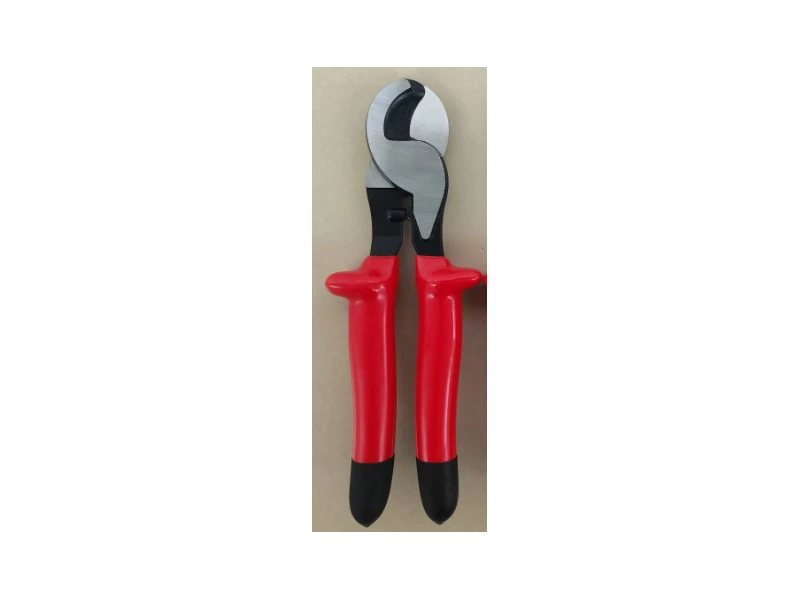
Blade geometry determines how material enters, stays aligned and separates. Cable shears may use a scissors action around rated conductor cable. Some wire-rope cutters use triangular or other guided blade systems that support strands during cutting. A diagonal cutter may leave an unsuitable cut on cable beyond its rating.
Published product pages describe clean or low-fray cuts for specific models. Such wording applies only under listed use and conditions.
Geometry sets the failure mode: inspect cut shape, strand spread and jacket damage rather than trusting a blade photo.
- Check whether blades guide or push material sideways.
- Inspect a cut end for crushed insulation or flattened strands.
- Look for loose rope strands and uneven separation.
- Check pivot adjustment and blade alignment.
KOLARWIN’s cable cutter vs diagonal cutter article can support an adjacent comparison, while this article keeps wire-rope and conductor construction as its main decision boundary.
Include one close-up cut-end photograph in every sample approval record.
Geometry table
| Geometry or feature | Likely benefit | Required check |
|---|---|---|
| Scissors action | Cleaner conductor cut with less crush | Jacket and conductor shape |
| Triangular wire-rope cutting system | Strand support on the rated rope | Rope construction, cut-end shape and full closure |
| Guided shear edges | Strand control on named rope | Fray and strand spread |
| Diagonal cutting edges | General wire cutting | Confirm cable use before approval |
| Adjustable pivot | Maintains blade contact | Recheck after repeated cuts |
5. When does cable construction change the tool choice?
Construction changes how force travels through a cable. Fine-stranded copper spreads differently from solid conductor. Hard-drawn copper can exceed a cable shear’s intended hardness. ACSR combines aluminum with a steel core. Armored cable may need a dedicated rated cutter.
A published cable shear may handle stranded Cu/Al but explicitly exclude steel wire and hard-drawn copper. A dedicated ACSR cutter may name steel rods, wire rope, Cu/Al cable and ACSR, while listing separate capacities. These examples show why application names belong in product data. They do not authorize a supplier to copy one model’s range onto another.
Name construction before capacity: that order keeps catalog language honest.
- Separate solid, stranded and fine-stranded conductors.
- Identify hard-drawn copper when a cable shear excludes it.
- Treat ACSR as its own field.
- Ask for an armored-cable rating rather than inferring one.
- Keep insulation and electrical safety questions separate.
For automotive buyers, the automotive repair tools range provides category context, not a cutter rating.
Create one approved material matrix, then map every proposed cutter against that matrix.
Construction table
| Cable or rope construction | Selection question | Evidence needed |
|---|---|---|
| Stranded Cu/Al | What area or diameter is approved? | Model capacity and sample |
| Fine-stranded conductor | Does flexibility reduce capacity? | Separate fine-strand rating |
| Hard-drawn copper | Is hardness outside cable-shear scope? | Explicit inclusion or exclusion |
| ACSR | Does model name ACSR? | ACSR capacity and test condition |
| Armored cable | Does model name armor construction? | Armored-cable rating |
6. How should buyers review the two quoted 200 mm configurations?
The approved quotation lists two entries named “200mm Heavy-Duty Wire Rope Cutter.” One shows 316G and “55 steel.” Another shows 276G and “65Mn.” These are supplier-quoted attributes only. They do not establish blade hardness, treatment or capacity.
Weight differences can reflect head geometry, handles, pivot parts or material allocation. A steel label also needs definition. “55 steel” may be a trade label rather than a complete standard designation. “65Mn” identifies a material family, but does not tell a buyer how an edge performs after processing.
Keep the quotation useful: record what it says, then list every missing proof beside it.
- Confirm wire-rope diameter and construction.
- Request blade hardness only with a test method and location.
- Ask for heat-treatment records when material performance matters.
- Compare cut samples at an agreed size.
- Keep configurations separate until testing supports consolidation.
KOLARWIN’s industrial maintenance repair tools guide supports wider range planning; do not transfer an unverified cutter rating.
Send suppliers a two-row clarification sheet instead of asking, “Which version is stronger?”
Quoted 200 mm configuration table
| Quoted attribute | Configuration A | Configuration B | Still required |
|---|---|---|---|
| Product name | 200 mm Heavy-Duty Wire Rope Cutter | 200 mm Heavy-Duty Wire Rope Cutter | Confirm model code |
| Piece weight | 316 g | 276 g | Verify actual sample weight |
| Material label | 55 steel | 65Mn | Define grade and treatment |
| Packing | Blister | Blister | Approve artwork and contents |
| Capacity | Not stated | Not stated | Rope diameter and construction |
| Hardness | Not stated | Not stated | Method, location and result |
7. What should incoming inspection record before approval?
Incoming inspection should connect identity, condition and use. Record model, material and weight. Check pivot movement and blade meeting, then cut approved samples under a written method. A clean result does not prove a maximum rating.
For rope, record diameter, construction and cut-end spread. For cable, record conductor material, strand type, area or diameter and jacket condition. Keep samples loose and de-energized. If a buyer needs a pull, electrical or fatigue test, define that method separately with a qualified party.
Write acceptance before sampling: a pass decision works only when another batch can face the same checks.
- Photograph tool identity and sample setup.
- Record measured dimensions and weight.
- Note burrs, gaps, edge damage and pivot play.
- Photograph cut ends from a repeatable angle.
- Record lot, date and disposition.
One passing cable sample may still support only a narrow SKU line.
Attach a one-page cutter inspection record to every approved sample and retained master.
Incoming-inspection table
| Check stage | Record | Release condition |
|---|---|---|
| Identity | Model, material label and lot | Matches approved file |
| Dimensions | Length, opening and pivot details | Within drawing tolerance |
| Sample cut | Material, size and cut-end condition | Meets written rule |
| Wear check | Edge contact and pivot play | No abnormal change |
| Traceability | Date, operator and disposition | Record complete |
8. How should distributors build a wire and cable cutter range?
Build a range around customer work. Rigging may need rope cutters, electrical channels Cu/Al shears and utility channels ACSR capability. A general mechanic range needs clear material and size boundaries.
One universal SKU can simplify a catalog while creating confusion at the counter. Separate listings make capacity, packaging and sample evidence easier to manage.
Build by job card: each SKU should answer “what material, what size and what result?”
- Segment by material family.
- Keep rope diameter separate from conductor area.
- Add replacement or service-part fields.
- Match packaging copy with approved ratings.
- Retire a claim when its supporting model changes.
KOLARWIN’s hand tools range and mechanic-tool range guidance provide category context. Keep cutter specifications precise.
Create a SKU matrix with one row per material family before asking for volume pricing.
Assortment table
| Customer job | Suggested SKU family | Catalog field that decides fit |
|---|---|---|
| Workshop rope repair | Wire-rope cutter | Rope diameter and construction |
| Electrical preparation | Cu/Al cable shear | Conductor area, strand type |
| Utility line work | ACSR-rated cutter | ACSR wording and capacity |
| Armored cable work | Armored-cable cutter | Armor construction rating |
| General hand-tool shelf | Narrow task-specific cutter | Approved material boundary |
9. What evidence belongs in a buyer approval pack?
An approval pack should show what passed: drawing, model code, material declaration, capacity sheet, sample photographs and inspection record. If a capacity remains open, mark it as a request.
For private-label programs, retain revision history. Ask suppliers to report blade, steel or pivot changes before repeat orders.
Make missing evidence visible: an open field should trigger a question, not a stronger adjective.
- Product drawing with critical dimensions.
- Material and heat-treatment declaration where applicable.
- Separate ratings for rope, Cu/Al, ACSR or armor.
- Sample cut record and acceptance photographs.
- Packaging, marking and change-notification record.
Use KOLARWIN’s contact page for a model-specific RFQ. State material, construction, size and evidence required before requesting a quotation.
Release a cutter SKU only when every public capacity claim links back to a dated approval record.
Approval-pack table
| Approval item | Buyer question | Missing-item response |
|---|---|---|
| Drawing | What dimensions control fit? | Hold technical approval |
| Material record | What does material label mean? | Request grade and treatment |
| Capacity sheet | What exact construction is rated? | Remove capacity claim |
| Sample record | What cut result passed? | Repeat controlled sample |
| Revision record | What changed since approval? | Review and re-sample |
10. What should you send in a final wire-rope cutter or cable-cutter RFQ?
Start with one application per RFQ line. Name material, construction, size basis and desired cut result. Ask for model code, capacity, exclusions and replacement parts. Keep rope diameter separate from Cu/Al area or AWG. Request ACSR or armored wording in its own field.
Attach a representative sample or clear description. Ask for a drawing and cut-test record. For two similar 200 mm configurations, request separate samples.
Use this decision rule: select a cutter only when working material, construction and tested capacity all match your customer’s job.
- Reject generic “heavy-duty” wording without a rating.
- Mark unknown hardness or steel grade as open evidence.
- Approve cut quality only for named sample conditions.
- Keep electrical insulation questions outside ordinary cutter claims.
- Recheck artwork after any material change.
That process gives importers a defensible catalog line and workshops a tool they can match.
Attach your material matrix and sample requirement to each RFQ before requesting a final quote.
Q1: Can a cable cutter replace a wire-rope cutter?
Only when its published rating names that wire-rope construction and size. A Cu/Al cable shear may explicitly exclude steel wire.
Q2: Can a wire-rope cutter cut copper cable?
Some models list both materials. Confirm each capacity separately because rope and conductor ratings may differ.
Q3: Can AWG be converted directly into wire-rope diameter?
No. AWG and mm² describe conductor sizing, while rope diameter describes a bundled steel construction.
Q4: Do 55 steel and 65Mn prove different cutter performance?
No. Supplier-quoted labels need grade definition, treatment records, hardness method and controlled sample results.
Q5: What should a distributor request before printing capacity?
Request a drawing, named material and construction, separate capacity fields, exclusions, sample cuts and a dated approval record.
Looking for a reliable mechanic tools manufacturer in China?
If you are sourcing hand tools, socket tools, automotive repair tools, mechanic tool sets or OEM private label tools, contact KOLARWIN Tools for factory-direct quotation, customization support and product consultation.