Need OEM supplier support for this product type?
Contact KOLARWIN Tools for OEM mechanic tools, private label packaging, wholesale quotation and product range support. This gives overseas buyers a clear path from article reading to supplier discussion.
A cable cutter and a diagonal cutter can both sever wire, yet they do not manage the same construction. Use a cable cutter for round copper or aluminum cable within its listed construction and capacity. Use a diagonal cutter for smaller individual wires or general shop work within its material rating. A diameter-only choice can crush strands, bruise insulation, overload a joint, and trigger returns. Greenlee manuals support these material and capacity limits; each private-label SKU still needs its own verified sheet.
Contents
- 1. What separates a cable cutter from a diagonal cutter?
- 2. How does cable construction change cutting?
- 3. Why does copper or aluminum matter?
- 4. When can a diagonal cutter damage cable?
- 5. Which tool fits a cramped work area?
- 6. How should capacity be specified?
- 7. What belongs in a distributor assortment?
- 8. Which details prevent misuse and returns?
- 9. How should a buyer run a sample cut?
- 10. Which cutter should a buyer put on the PO?
- What separates a cable cutter from a diagonal cutter?
- How does cable construction change cutting?
- Why does copper or aluminum matter?
- When can a diagonal cutter damage cable?
- Which tool fits a cramped work area?
- How should capacity be specified?
- What belongs in a distributor assortment?
- Which details prevent misuse and returns?
- How should a buyer run a sample cut?
- Which cutter should a buyer put on the PO?
1. What separates a cable cutter from a diagonal cutter?
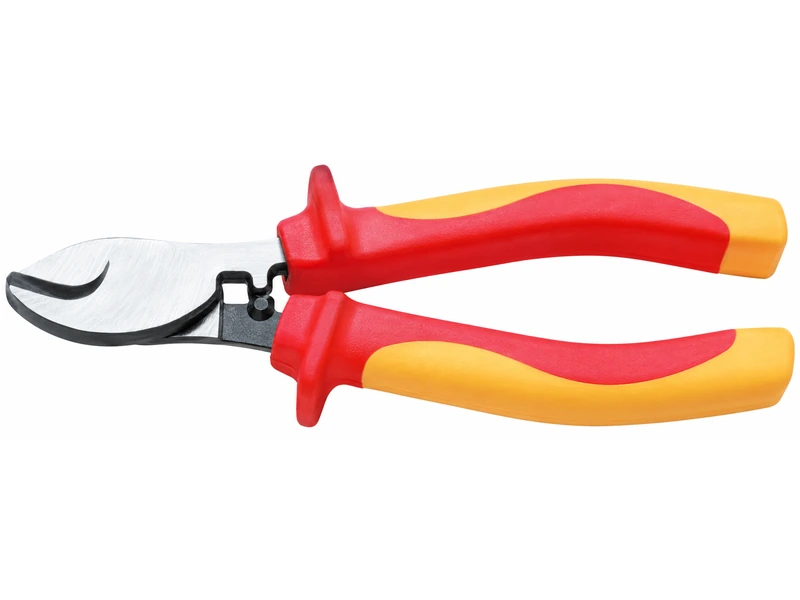
A cable cutter usually uses curved or scissor-style blades that surround a round cable and shear strands progressively. A diagonal cutter presents two edges from an angled head and bites through a smaller section. A diagonal tool can work well on single conductors, tie wire, and light harness work. A cable tool handles a larger round bundle with less tendency to flatten it when its capacity matches the cable.
The word “cable” covers many constructions. Fine-stranded copper, compact aluminum, communication cable, jacketed power cable, and armored products place different demands on blades. A distributor should state what the product cuts, not imply that every cable fits.
Construction comes before handle style.
- Single wire: diagonal cutter may fit.
- Round Cu or Al cable: cable cutter usually gives better control.
- Steel armor or wire rope: requires a separately rated product.
Put cable construction and approved material beside every capacity figure.
How the bite differs
Diagonal cutters concentrate force at a small point. That makes them nimble, but a thick multi-strand cable can spread the jaws or crush strands before separation. A curved cable blade supports the circumference while a ratchet or long handle builds force in steps. Neither mechanism excuses exceeding a rating.
Mechanism table
| Feature | Cable cutter | Diagonal cutter | Buyer question |
|---|---|---|---|
| Blade path | Progressive shear around cable | Angled bite from one side | Will strands stay round? |
| Typical work | Round Cu or Al cable | Wire, leads, light harness | What construction is listed? |
| Force control | Long handles or ratchet | Direct hand squeeze | Can the operator control closure? |
| Access | Needs cable entry space | Slim side approach | Which direction is available? |
2. How does cable construction change cutting?
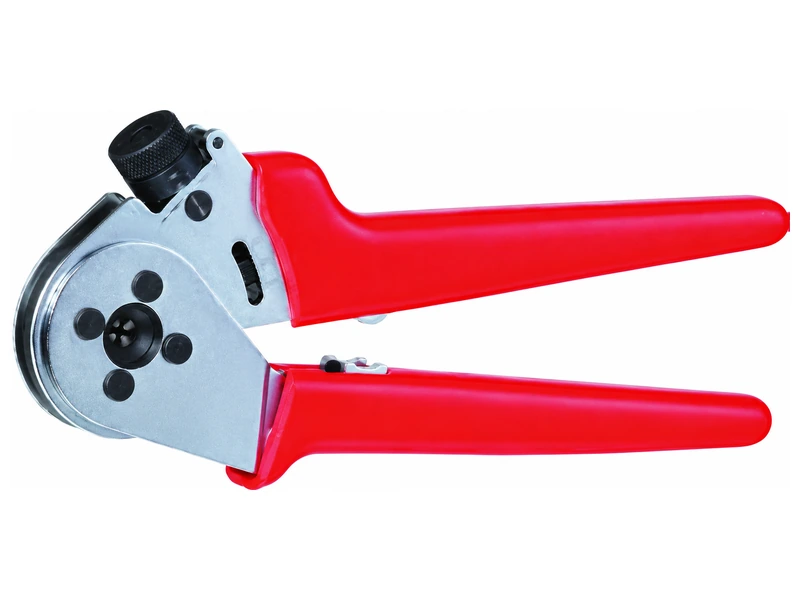
Cable behaves like a small bundle of springs. Strands move, jacket material resists, and a shield or filler can change blade contact. A fine-stranded flexible cable may need a blade shape that closes cleanly without pulling strands. A compact power cable may need more hand advantage. A diagonal cutter intended for a single conductor can leave a crushed oval when asked to cross a large bundle.
Greenlee’s cable products show why listings should name application. One product page specifies copper or aluminum cable, while another manual limits a model to certain cable types and warns against regular stranded cable or steel. Those limits are part of a safe buying decision.
List jacket, strand, and reinforcement before size.
- Count conductors when that information affects the blade path.
- Note fine or regular strand construction.
- Separate communication, power, and armored cable listings.
Ask suppliers for a cutaway description or approved cable family list.
A conditional installation example
If a telecom installer trims a round copper communication cable in a cabinet, a compact cable cutter may fit the entry and protect cable geometry. If a panel builder cuts a short soft copper lead before termination, a diagonal cutter may be faster. These examples depend on actual diameter and model rating.
Construction table
| Cable feature | Why it changes selection | Evidence to request |
|---|---|---|
| Fine-stranded copper | Moves under a blade | Fine-strand capacity |
| Aluminum conductor | Different softness and bulk | Cu/Al application line |
| Thick jacket | Adds resistance | Jacketed cable rating |
| Shield or armor | Harder layers | Explicit armor or steel rating |
3. Why does copper or aluminum matter?
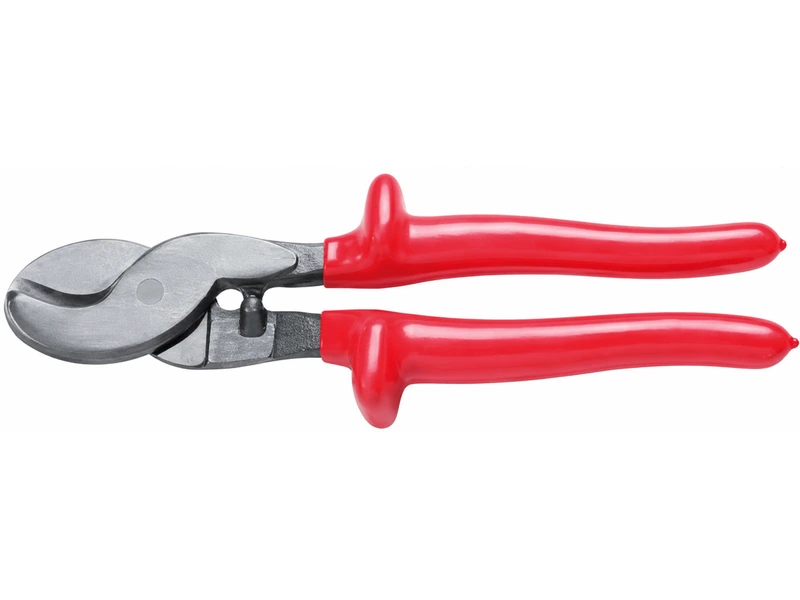
Copper and aluminum are common cable conductors, yet they do not make every cable equivalent. Greenlee lists products for copper and aluminum cable and publishes a diameter or kcmil limit. That pairing matters: a capacity number belongs to a named material and cable type. A buyer should not copy a copper rating onto steel, ACSR, wire rope, or a jacketed product unless documentation says so.
Aluminum may occupy more cross-sectional area for a given electrical purpose, while cable flexibility and strand count also change blade loading. The safest catalog language says “copper or aluminum cable up to [verified capacity]” only when a supplied data sheet supports it.
Keep copper, aluminum, and steel claims separate.
- Copper or aluminum: use a cable cutter rated for that application.
- Steel reinforcement: check a dedicated steel or ACSR rating.
- Plain steel wire: never infer permission from a Cu/Al line.
Require a material-specific capacity line in each product approval.
What about cable with reinforcement?
Some tools cover ACSR, guy wire, rebar, or wire rope. Those are distinct claims. A Greenlee manual lists several permitted materials while excluding EHS guy wire. That example shows why a broad “heavy-duty cable cutter” label cannot replace a product manual.
Material table
| Material | Use a Cu/Al-only cutter? | Buyer check |
|---|---|---|
| Copper cable | Yes, within rating | Diameter or kcmil |
| Aluminum cable | Yes, within rating | Diameter or kcmil |
| ACSR | Only if listed | Reinforcement specification |
| Steel wire rope | Only if listed | Rope construction and capacity |
4. When can a diagonal cutter damage cable?
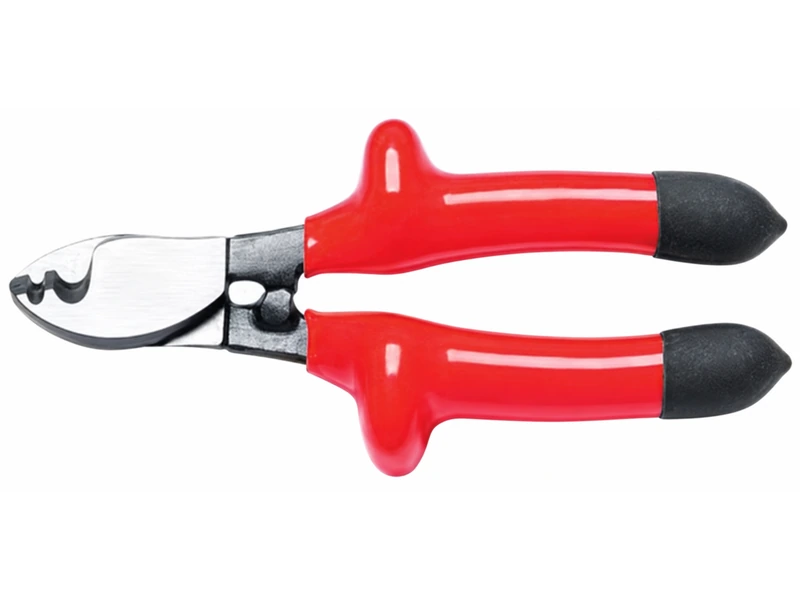
A diagonal cutter may nick insulation, flatten strands, or leave a sharp tail when its jaw shape or size mismatches a cable. An operator may also twist the handle to finish a cut after the blade stops. That action can open the joint, chip an edge, or pull strands from a retained conductor. Repeated misuse can create a tool return and damage a customer part.
The product page should state exclusions without drama. “For soft wire” cannot sit beside a large cable photograph. A user needs a plain boundary: maximum diameter, material, strand condition, and whether jacketed cable belongs within scope.
Inspect cable shape and blade condition together.
- Oval or crushed cable suggests poor support or excess size.
- Bird-caged strands suggest pulling rather than shearing.
- Rolled or chipped edge suggests material mismatch.
Add a misuse photo set to internal training and seller notes.
Return patterns worth tracking
A return could follow when a buyer cuts cable beyond a diagonal cutter’s rating. Another possible complaint could arise from a listing that says “wire and cable” without material limits. A third could come from a user who expects a flush electrical tail but receives a wedge-shaped end. Tag these possible failure modes by workpiece and listing language so a catalog revision can address them.
Damage table
| Result | Possible reason | Corrective selection |
|---|---|---|
| Flattened strands | Jaw too small or wrong path | Cable cutter with matching capacity |
| Pulled jacket | Blade angle or dull edge | Correct cable blade and condition |
| Chipped diagonal edge | Steel or hard reinforcement | Rated heavy cutter |
| Sharp tail | Beveled wire-cutter edge | Appropriate finish or secondary prep |
5. Which tool fits a cramped work area?
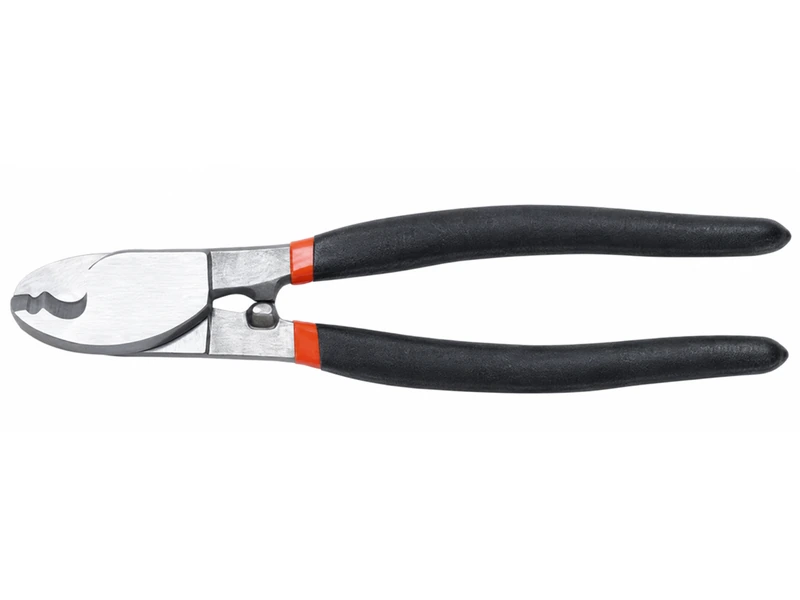
Access can reverse a good mechanism choice. A two-hand ratchet cable cutter may handle a large cable but need room for handle movement. A compact diagonal cutter may reach a panel corner but cannot safely cross the same cable. Some cable cutters use short handles, remote heads, or in-line designs to work around cabinets and trays.
Measure the cable entry, handle swing, and operator stance. Do not treat a published tool length as proof of access. Jaw opening, head width, blade release, and minimum bend radius around a cable can matter more.
Access belongs in the capacity decision.
- Measure opening and approach angle.
- Note one-hand versus two-hand operation.
- Check whether a ratchet can release mid-cut.
Include a cabinet or tray sketch with every large-cable inquiry.
Access table
| Location | Starting option | Watch point |
|---|---|---|
| Open bench | Two-hand ratchet cable cutter | Handle travel |
| Tight cabinet | Compact cable cutter | Jaw opening and swing |
| Panel lead | Slim diagonal cutter | Cable diameter limit |
| Remote head setup | Hydraulic or battery head | Pump, hose, and service path |
6. How should capacity be specified?
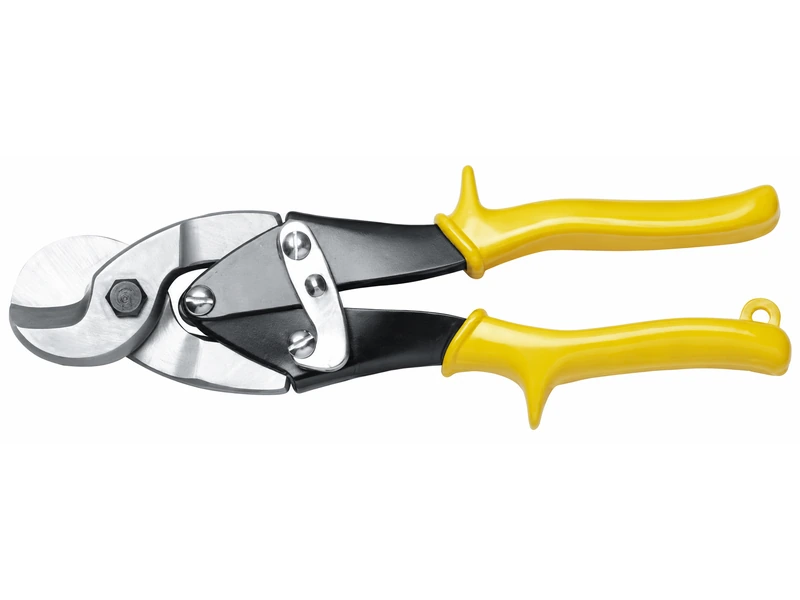
Capacity can appear as diameter, kcmil, square millimeters, or a named cable family. Buyers need the unit plus conditions. Greenlee pages provide examples such as 35 mm and 1000 kcmil copper or aluminum cable. Those values belong to named products; they are not generic cable-cutter limits.
A supplier should state whether capacity covers fine-stranded cable, regular stranded cable, communications cable, or a particular reinforcement. Ask whether the cable sits near the joint and whether a single cut or repeated production use defines the claim.
Tie every rating to its material and test condition.
- Use one unit consistently in each listing.
- Show equivalent units only after conversion review.
- Separate maximum diameter from recommended working range.
Reject specifications that show capacity without material and construction.
Capacity table
| Capacity field | Good listing | Weak listing |
|---|---|---|
| Diameter | 35 mm Cu/Al cable | 35 mm cable |
| Cross section | 1000 kcmil Cu/Al | 1000 kcmil wire |
| Construction | Fine-stranded, named | No strand detail |
| Exclusion | Not for steel | No warning |
7. What belongs in a distributor assortment?
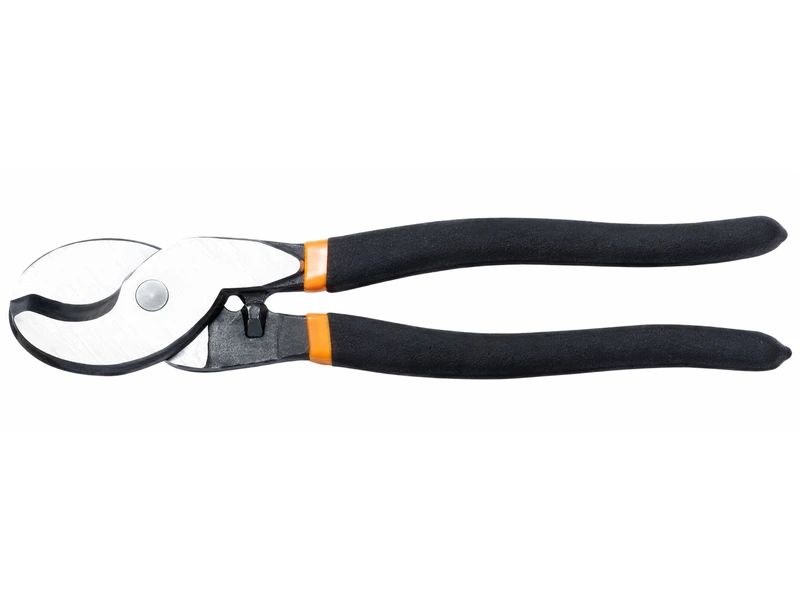
A practical range separates a compact diagonal cutter, a standard cable cutter, a ratchet cable cutter, and any specialty model for steel or reinforced cable. Each product needs a clear route through the catalog. Buyers comparing hand tools can start with the hand tools product range and specialty pliers buying guide before moving into automotive repair tools or the industry application page when end use changes.
Do not stock three similar cable cutters with unclear capacity language. Label by material, cable construction, access, and operation. For adjacent preparation tasks, link the wire stripper versus wire cutter guide so users do not ask a cutter to strip insulation.
Give every model a job in the assortment.
- Compact diagonal for small wire.
- Hand cable cutter for round Cu/Al cable.
- Ratchet or powered model for larger rated cable.
- Specialty model only where documentation supports it.
Write one exclusion beside every assortment entry.
Assortment table
| SKU role | Buyer need | Listing anchor |
|---|---|---|
| Fine diagonal | Small conductors and access | Wire diameter and finish |
| Hand cable cutter | Round Cu/Al cable | Cable construction and capacity |
| Ratchet cable cutter | Larger cable with hand advantage | Ratchet range and release |
| Specialty cutter | Reinforced or hard material | Exact approved material |
8. Which details prevent misuse and returns?
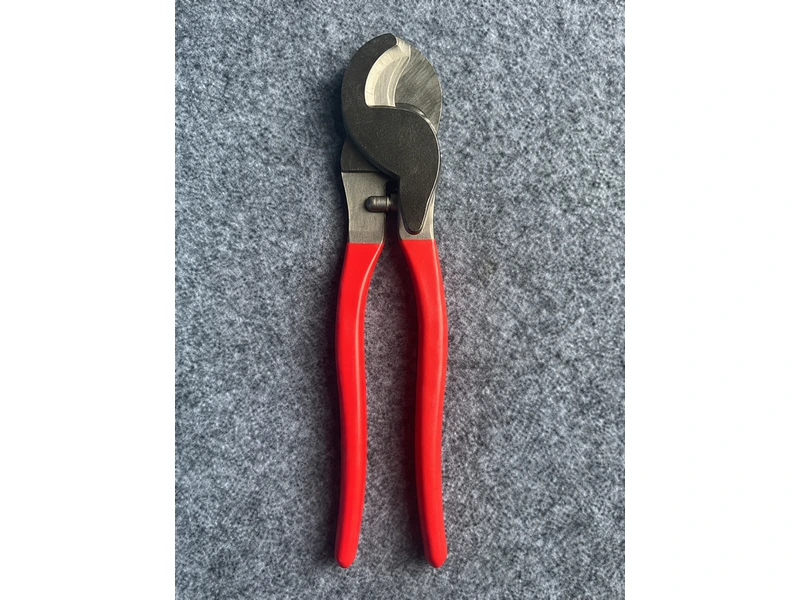
A useful product page shows the tool in a believable work position, then gives a short application statement. Mention whether the tool cuts cable, conductor, tie wire, or insulation. Put exclusions near the capacity instead of burying them in a manual link. Buyers actually check whether steel is allowed, whether a replacement blade exists, and whether the handle suits their workspace.
For industrial maintenance teams, connect this decision with an industrial maintenance repair tools buyers guide and give service contacts through the contact page. A sourcing team may also review supplier background after technical fit is clear.
Place every warning beside its return risk.
- State “copper and aluminum” only when verified.
- Name steel exclusions plainly.
- Show whether replacement blades are available.
- Give a real contact route for application questions.
Have sales staff repeat material and capacity before accepting a substitution.
Return-prevention table
| Buyer check | Page evidence | Return risk reduced |
|---|---|---|
| Material | Cu/Al, steel, or exclusion line | Misapplication |
| Capacity | Diameter plus construction | Overload |
| Access | Head and handle dimensions | Cannot reach cable |
| Service | Blade or parts information | Unsupported repair |
9. How should a buyer run a sample cut?
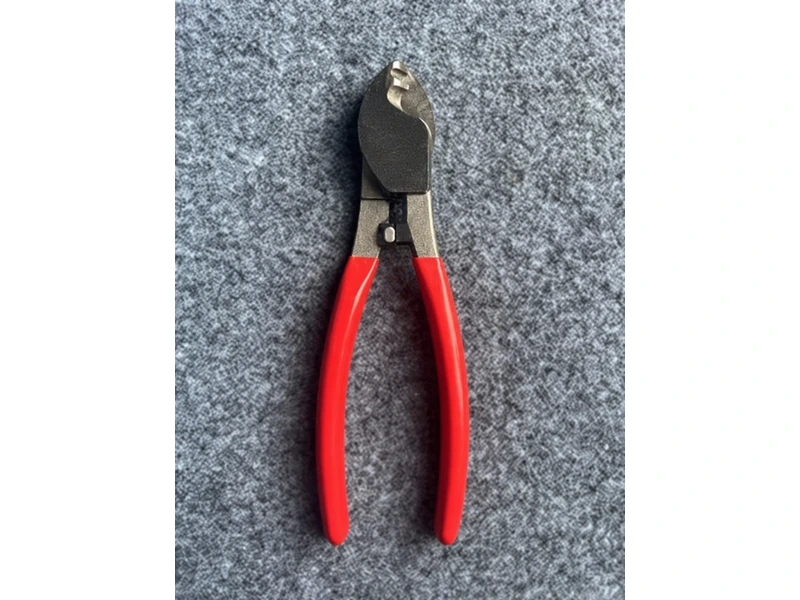
Use the cable that drives the purchase. Prepare a short length with normal jacket, strand, and reinforcement. Cut with the proposed tool in its normal position, then inspect the retained end, offcut, blade edges, and operator effort. If the listing claims both copper and aluminum, test both when procurement volume justifies that work.
For a diagonal cutter, include a smaller single conductor so the comparison remains fair. Do not compare a rated cable cutter against an undersized diagonal tool and call the result a universal performance ranking. Compare fit against task.
Record the cable, not only the tool.
- Photograph the cut end and jacket.
- Record diameter and material.
- Note handle travel and release behavior.
- Inspect blades after repeated cuts.
Approve capacity language from a documented sample or supplied technical sheet.
Sample table
| Sample detail | Record | Decision use |
|---|---|---|
| Material | Cu, Al, steel, or mixed | Confirms application |
| Construction | Fine, regular, shielded | Confirms blade path |
| Size | Diameter or kcmil | Confirms capacity |
| Result | Round end, strands, jacket | Predicts field acceptance |
10. Which cutter should a buyer put on the PO?
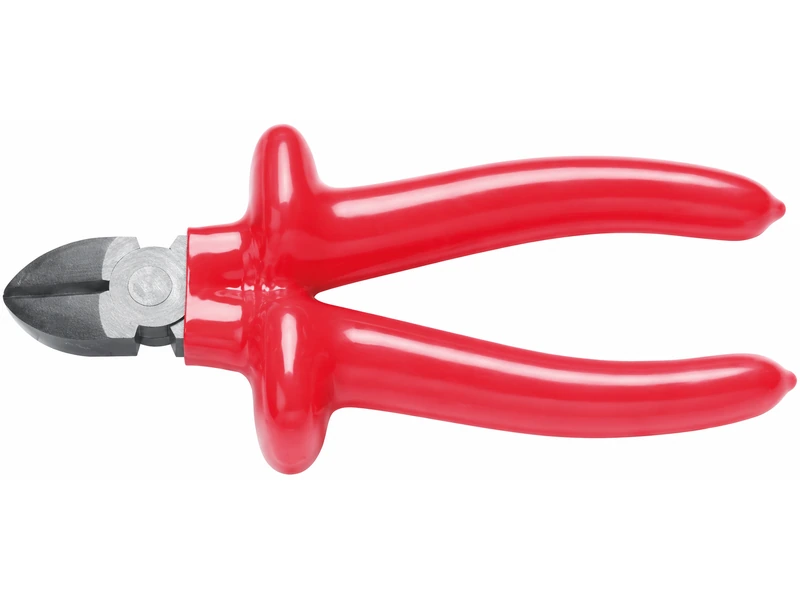
Put a diagonal cutter on the PO when work centers on smaller individual wires, side access, and a stated wire rating. Put a cable cutter on the PO when users cut round copper or aluminum cable and need a blade path that supports the bundle. Choose a ratchet, powered, or specialty tool only when cable size, access, and material justify it.
Write the request as a short application brief: “round aluminum cable, normal diameter, two-hand bench use, no steel.” That line gives a supplier something testable. For broader buying context, compare related types of crimping tools when cut cable will enter a terminal process.
Make the PO describe the cable.
- State conductor material.
- State construction and size.
- State access and operating method.
- State any steel or reinforcement exclusion.
Request a drawing, sample cut, and written capacity confirmation before approving an equivalent.
Q1: Can a diagonal cutter cut cable? Some can cut small cable within their stated rating. A larger round cable usually calls for a cable cutter designed for that construction.
Q2: Can a Cu/Al cable cutter cut steel? Not unless its documentation specifically rates steel or reinforcement. Copper and aluminum claims do not transfer automatically.
Q3: What matters more, cable diameter or AWG/kcmil? They describe different measurements. Outside diameter covers the complete cable, including jacket and strand arrangement, while AWG or kcmil describes conductor size or area. A cable-cutter diameter rating cannot be substituted for a conductor-area rating, and jacket or strand construction can change outside diameter.
Q4: Why do strands flatten under a diagonal cutter? A small angled bite can compress a large bundle before separation. A cable-cutter blade path may support it better.
Q5: What should a distributor print beside capacity? Print material, cable construction, units, exclusions, and any access or operating condition supplied by the manufacturer.
Looking for a reliable mechanic tools manufacturer in China?
If you are sourcing hand tools, socket tools, automotive repair tools, mechanic tool sets or OEM private label tools, contact KOLARWIN Tools for factory-direct quotation, customization support and product consultation.