Need OEM supplier support for this product type?
Contact KOLARWIN Tools for OEM mechanic tools, private label packaging, wholesale quotation and product range support. This gives overseas buyers a clear path from article reading to supplier discussion.
A bar clamp uses a dedicated rail; a pipe clamp mounts head and tail hardware on compatible pipe. Both hold woodworking assemblies, but rail, span, throat, and fit differ. Nominal pipe size is not outside diameter. These clamps are not plumbing or structural load devices.
1. What is the difference between a bar clamp and a pipe clamp?
A fixed-bar clamp has jaws that travel along a dedicated steel or aluminum bar. A pipe clamp uses separate head and tail fixtures mounted on a specified pipe, which acts as the rail. A pipe setup can allow different spans when its maker approves matching lengths. Both can hold a panel or glue-up, but their bars, heads, handles, and interfaces are not interchangeable.
Start with the clamp assembly. A fixed-bar clamp has a specified rail; a pipe clamp pairs heads with compatible pipe. Opening, throat, pads, profile, and access all affect choice. The woodworking clamps wholesale guide covers broader assortment planning.
For each quoted model, identify:
- Fixed bar clamp or pipe-clamp fixture set.
- Maximum opening and throat depth from manufacturer data.
- Rail type, pipe interface, and any required thread.
- Pad arrangement, handle style, and available accessories.
Do not treat “bar clamp” as shorthand for parallel jaws. Some bar clamps use a fixed profile and angled heads; parallel-jaw models form a separate subtype.
Construction comparison table
| Feature | Fixed-bar clamp | Pipe clamp fixture | Confirm from |
|---|---|---|---|
| Rail | Dedicated clamp bar | Compatible pipe supplied separately or as a kit | Exact model data |
| Moving parts | Sliding jaw and screw or trigger | Head, tail, and pipe interface | Assembly instructions |
| Span changes | Within model’s opening range | Pipe length, only where maker allows | Fit and thread spec |
| Core fit issue | Bar profile and opening | Pipe OD, thread, and head compatibility | Manufacturer guide |
Practical action: name the complete clamp construction in product data instead of grouping both as generic “long clamps.”
2. How does a fixed-bar clamp hold a workpiece?
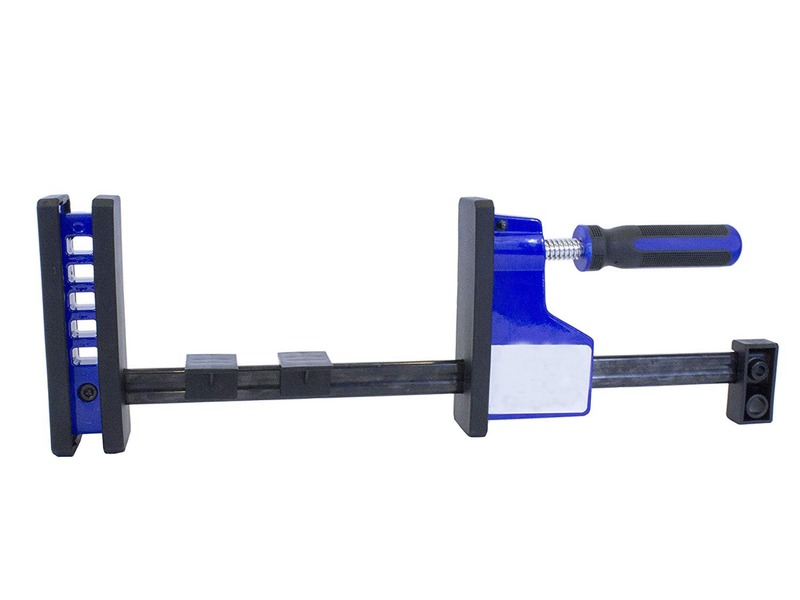
A fixed-bar clamp has a stationary jaw and a second jaw that slides or advances on a dedicated rail. A screw or quick-adjust mechanism applies pressure. Rail profile, throat, opening, and handle belong to the model. Appearance alone proves no force rating or stiffness.
Check rail and jaw together. Models suit different assembly tasks. BESSEY separates parallel, all-steel, clutch-style, and other bar-clamp families, so “bar clamp” alone does not define jaw behavior.
When reviewing a fixed-bar model, record:
- Rail material and cross-section as stated by its maker.
- Maximum opening and reach or throat depth.
- Jaw face angle, pad type, and adjustment method.
- Manufacturer’s safe-use and maintenance instructions.
Keep opening and clamp style as separate fields. The small home repair clamp options guide supports a different buyer context.
Fixed-bar review table
| Field | Why it matters | Approval check |
|---|---|---|
| Rail profile | Controls jaw travel and assembly fit | Match offered model drawing |
| Opening | Sets maximum workpiece span | Compare with actual assembly |
| Throat depth | Sets reach from rail to contact point | Check panel width and obstacle clearance |
| Jaw face | Affects pressure contact and alignment | Verify pad or swivel details |
Practical action: request a dimensional drawing for the rail, opening, and throat before approving a fixed-bar SKU.
3. What pipe fits a pipe-clamp fixture?
The clamp maker defines pipe compatibility. Nominal pipe designation differs from measured outside diameter. A model may also require a specific thread, material, and length. A 3/4-inch label alone cannot confirm compatibility.
Match the maker’s interface exactly. Pony’s manual specifies 3/4-inch NPT pipe for its #50 fixture and gives a model-specific maximum OD. Those values are not universal standards or pressure grades. BESSEY likewise specifies compatible diameters for its BPC heads.
Check before combining head and pipe:
- Exact clamp head model and its compatible pipe designation.
- Outside diameter and thread form for the supplied pipe.
- Whether one or both ends require threads.
- Minimum and maximum length allowed by instructions.
- Head, tail, stop, and pad components included in the kit.
Ask the supplier about missing fields. Plumbing pressure ratings do not define clamp-head compatibility.
Pipe compatibility table
| Pipe-clamp field | What to confirm | Source of truth |
|---|---|---|
| Nominal designation | Maker-approved pipe size and series | Clamp manual |
| Outside diameter | Actual pipe OD within model limit | Product data or drawing |
| Thread | Type, size, and which ends need threads | Assembly instructions |
| Pipe length | Span and any cut allowance | Manufacturer’s manual |
| Components | Head, tail, stop, pads, and accessories | Kit BOM |
Practical action: approve pipe, head, and thread as one matched clamp system, not as separate generic parts.
4. Are all bar clamps parallel-jaw clamps?
Bar clamp describes rail construction; jaw shape and alignment depend on subtype. Parallel-jaw models are designed for that behavior; other bars differ. Do not label every fixed-bar clamp “parallel jaw.”
Name jaw design separately. Jorgensen describes its Cabinet Master as a 90-degree parallel-jaw model. That feature does not apply to every bar clamp. Use the exact model name and instructions.
Review:
- Whether the jaws are specified as parallel or angled.
- How far jaw alignment may shift under the intended setup.
- Whether cauls, squares, or another fixture maintain geometry.
- Contact-pad size and pressure distribution for the workpiece.
On a wide panel, misaligned jaws can move parts or spoil a glue line.
Jaw geometry table
| Clamp description | Jaw behavior to verify | Buyer language |
|---|---|---|
| Parallel-jaw bar clamp | Model states parallel-jaw design | Use exact subtype name |
| General fixed-bar clamp | Face geometry varies by model | Specify rail and jaw form |
| Pipe clamp fixture | Heads fit a pipe; jaw behavior varies | State pipe system and pad configuration |
| Specialty clamp | May add angles or swivel pads | Name the model and application |
Practical action: reserve “parallel jaw” for models whose manufacturer documents that design.
5. How should I compare opening, reach, and access?
Maximum opening measures jaw separation. Throat depth measures reach from rail or pipe to work. A long opening does not guarantee throat clearance, and sufficient reach does not ensure the clamp clears nearby fixtures.
Measure the whole setup. Include workpiece, pads, cauls, fixture, and handle swing. Pipe clamps may extend span with compatible pipe; fixed bars arrive with a set rail. Assembly layout determines needed access.
Before selection, measure:
- Workpiece span and the intended clamp line.
- Required reach from rail or pipe to contact point.
- Clearance around handles, base feet, and nearby fixtures.
- Space for cauls or pad accessories.
For home-workshop kit context, see 14 hand tools for home repairs and the household tool kit buying guide.
Reach and opening table
| Dimension | Measures | Check against |
|---|---|---|
| Maximum opening | Jaw separation capacity | Workpiece plus pads and cauls |
| Throat depth | Reach from rail/pipe to jaw face | Panel depth and obstacles |
| Rail or pipe length | Clamp assembly span | Maker’s available/configurable system |
| Handle clearance | Working room around screw or trigger | Bench, wall, and adjacent clamps |
Practical action: draw the clamp line on a workpiece sketch and verify opening, reach, and handle clearance together.
6. What happens to alignment and bar deflection on long glue-ups?
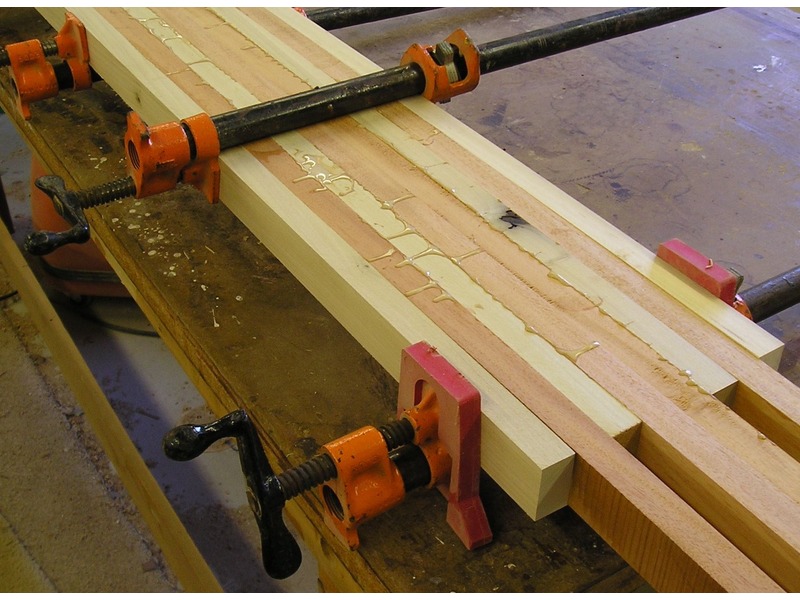
Long assemblies need more than a large opening. Rail or pipe stiffness, support, jaw contact, workpiece width, and clamp placement affect alignment. At greater span, check the actual setup for bow, lift, or skew. Do not promise “no bow” or equal pressure.
Trial the layout. Use model instructions and a sample glue-up to check alignment. Cauls can help control contact, but do not change the clamp’s rating.
For a long glue-up:
- Place clamps where the workpiece design and instructions call for support.
- Use cauls or spacers where needed to control alignment.
- Tighten gradually and inspect for movement or bow.
- Stop if components slip or the rail appears overloaded.
Do not add bars, power tools, or extensions unless instructions allow them. See the woodworking clamps wholesale hub for broader range planning.
Long-span review table
| Symptom | What to inspect | Response |
|---|---|---|
| Workpiece bows | Clamp placement, rail/pipe setup, caul use | Reduce span or revise support per instructions |
| Parts lift or skew | Jaw alignment and pressure direction | Reposition and retest before glue-up |
| Rail or pipe visibly flexes | Model limits and setup | Stop; use a model suited to the assembly |
| Pressure feels uneven | Jaw face and contact pads | Correct contact before proceeding |
Practical action: trial a representative long assembly with the intended clamp spacing and cauls before approving a set.
7. How do pads and jaw contact affect workpiece alignment?
Pads and jaw faces transfer pressure. Swivel pads or wider jaws may suit uneven or finished surfaces, but features vary. Glue, dust, narrow edges, and small contact faces affect seating. Pads do not guarantee mark-free results.
Keep contact square and controlled. Check the workpiece remains aligned as pressure builds. For long edge-glue operations, cauls may help keep faces even. Use them as part of the fixture plan instead of relying on clamp labels. BESSEY’s pipe-clamp product data lists pads on some models; other designs may differ.
Check:
- Pad material, width, replaceability, and fit.
- Whether jaw face can rotate or swivel.
- Workpiece finish and pressure-sensitive areas.
- Alignment before and after gradual tightening.
Contact and alignment table
| Contact feature | Possible benefit | Verify |
|---|---|---|
| Wide jaw face | Spreads contact area | Model dimensions and workpiece fit |
| Swivel pad | Meets an angled or uneven face | Pad travel and surface protection |
| Replaceable pad | Allows wear replacement | Exact part compatibility |
| Caul | Helps manage alignment | Material, placement, and clamping plan |
Practical action: protect finished faces and check alignment after each controlled tightening step.
8. When should I choose a fixed-bar or pipe-clamp system?
Choose a fixed-bar model when its rail, jaw form, opening, and reach suit the job. Choose a pipe fixture when its compatible pipe system provides useful span and the specified pipe is available. Storage and spare parts matter; neither design is universally stronger or cheaper.
Choose by application and compatibility. Parallel-jaw bars may suit square cabinet work when specified. Pipe clamps may suit long assemblies with a compatible pipe. Smaller repair tasks may need another style.
Match the style to:
- Typical workpiece span and throat needs.
- Bar, jaw, pipe, and thread compatibility.
- Repeat assembly versus occasional use.
- Storage, portability, replacement, and kit requirements.
Do not lift, pull, transport, or structurally support loads with these clamps. BESSEY’s safe-use guide excludes lifting. A pipe clamp is not a plumbing fitting or pressure-rated pipe use. Pipe clamps also differ from hand tools that engage pipe. See pipe wrench versus adjustable wrench and water pump pliers versus pipe wrench for those choices.
Choice table
| Requirement | Fixed-bar clamp | Pipe-clamp fixture |
|---|---|---|
| Ready-to-use rail | Included with model | Compatible pipe required |
| Adjustable span | Limited by model opening | Depends on maker-approved pipe setup |
| Storage | Store complete rail | Store heads and pipe separately |
| Best next check | Jaw style, opening, reach | Pipe OD, threads, head compatibility |
Practical action: select style only after matching workpiece span, jaw form, and pipe or rail specification.
9. How should distributors plan clamp SKUs and sets?
Build the range from customer projects. Keep fixed-bar models, parallel-jaw subtypes, pipe heads, compatible pipe, pads, and spares as separate fields. State whether pipe is included and list compatible specifications on product and order documents.
Make compatibility visible. List thread, OD, cut length, opening, throat, and included parts when applicable. Do not convert a model limit into a generic pipe-grade or force claim.
Review:
- Core fixed-bar opening lengths based on actual project data.
- Pipe-clamp head styles and compatible pipe selections.
- Pads, cauls, and replacement components.
- Package contents, storage, and replacement policy.
For channel planning, see hand tools for homeowners and complete mechanic tools for distributors.
Assortment field table
| SKU field | Fixed-bar clamp | Pipe-clamp fixture |
|---|---|---|
| Base configuration | Complete model and rail | Head/tail set and compatible pipe |
| Opening/reach | Model opening and throat | Pipe length and fixture throat |
| Interface | Bar profile and jaw | Pipe OD, thread, and head fit |
| Accessories | Pads, cauls, storage | Pipe stops, pads, compatible extras |
Practical action: show the complete pipe-head compatibility and package contents on every quote and carton.
10. What should a bar-clamp or pipe-clamp RFQ include?
An RFQ should describe the assembly and clamp style. State workpiece dimensions, clamp line, opening, reach, head type, pads, quantity, market, packaging, and sample plan. For pipe systems, identify head model and confirm pipe OD, thread, ends, and length. For fixed bars, specify rail and jaw subtype.
Send a drawing or sample. Name the workpiece and task. Ask suppliers to flag model-specific access or compatibility limits; do not request universal force or no-deflection claims.
State:
- Fixed bar or pipe fixture; exact model or desired configuration.
- Workpiece span, reach, thickness, and contact surfaces.
- Pipe OD/thread/end requirements or fixed-rail profile.
- Quantity, destination market, packaging, accessories, and documents.
- Sample or drawing used for fit and alignment approval.
Send details and a sample to the KOLARWIN quotation page. Request confirmation of every pipe/head pairing before ordering.
Q1: What is the main difference between a bar clamp and a pipe clamp?
A bar clamp uses a dedicated rail. A pipe clamp mounts its heads on a pipe that must match the maker’s specification.
Q2: Can any pipe fit any pipe-clamp head?
Use only a compatible pipe; check its outside diameter, thread, and end requirements against the fixture.
Q3: Are all bar clamps parallel-jaw clamps?
Parallel-jaw clamps are one subtype; check each model’s jaw design.
Q4: Can pipe clamps be used for lifting or plumbing pressure?
They are temporary workholding tools, not lifting devices or pressure-rated plumbing assemblies.
Q5: What should a clamp RFQ include?
State clamp type, workpiece dimensions, opening, reach, pipe compatibility or rail profile, quantity, market, and packaging.
Looking for a reliable mechanic tools manufacturer in China?
If you are sourcing hand tools, socket tools, automotive repair tools, mechanic tool sets or OEM private label tools, contact KOLARWIN Tools for factory-direct quotation, customization support and product consultation.