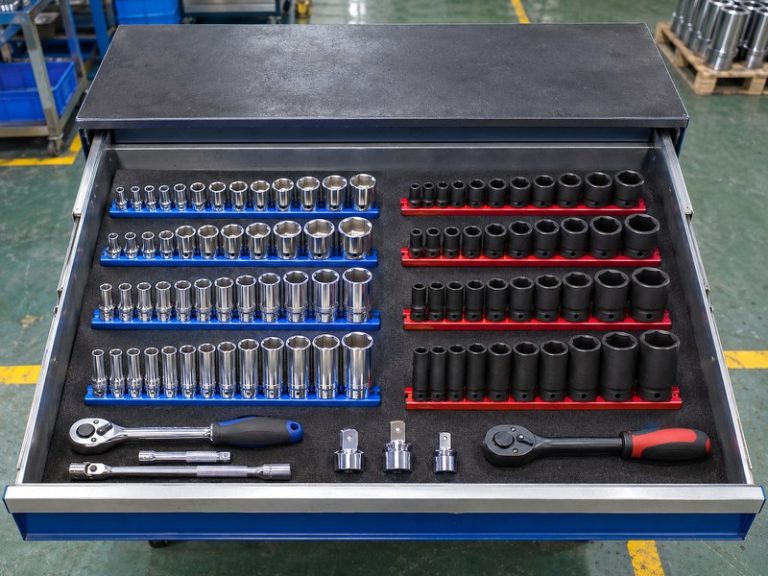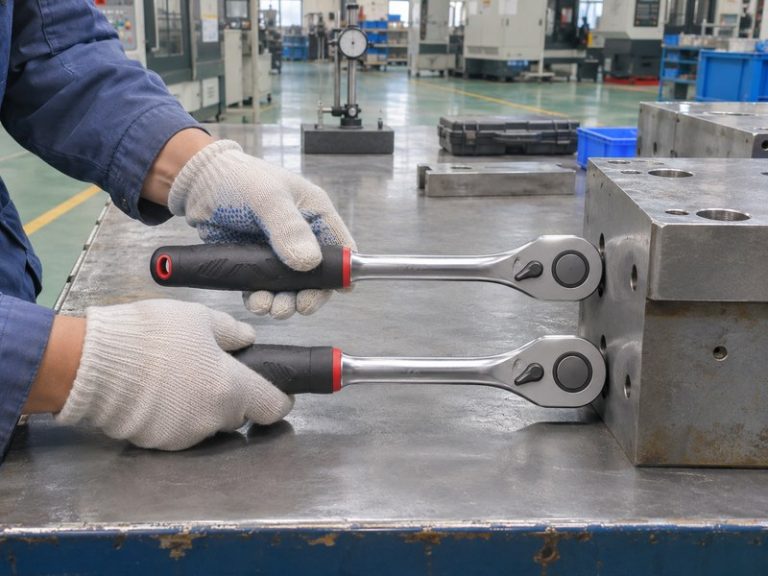
Need OEM supplier support for this product type?
Contact KOLARWIN Tools for OEM mechanic tools, private label packaging, wholesale quotation and product range support. This gives overseas buyers a clear path from article reading to supplier discussion.
A thread pitch gauge helps identify thread spacing. It does not independently establish diameter, fit class or full thread conformity. Buyers should specify the thread families, pitch range and access conditions their customers encounter. That information turns a vague request for a gauge set into a useful purchasing brief.
1. What does a thread pitch gauge tell a buyer?
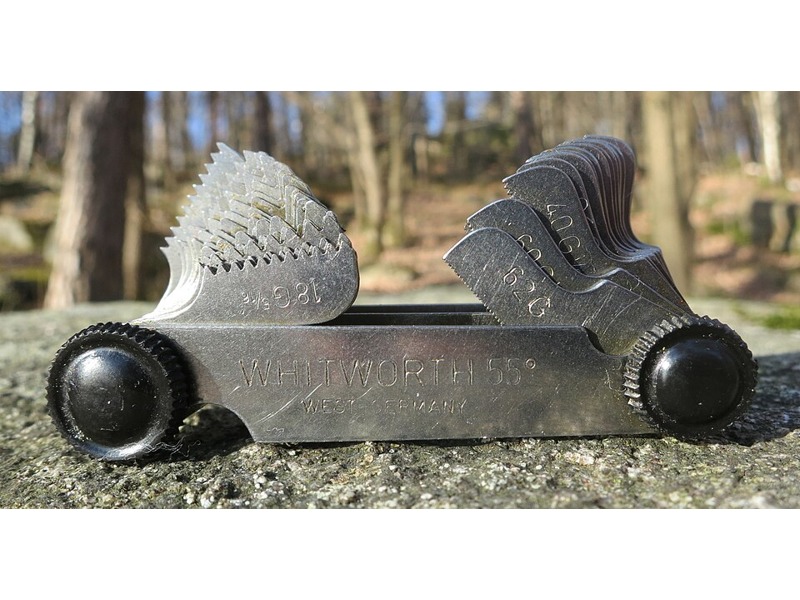
A folding pitch gauge contains leaves with different tooth spacings. A matching leaf helps identify the spacing of an accessible thread. The operator still needs other information before selecting a replacement fastener or accepting a threaded component.
Identify the missing dimensions. Ask whether a customer needs quick workshop identification or documented manufacturing inspection. Those tasks call for different purchasing decisions. A maintenance kit may need a compact pitch-reference set. A production inspection plan may require specified limit gauges and controlled procedures.
- Define identification versus acceptance work.
- Record thread families encountered.
- Specify whether internal access is needed.
Pair this discussion with digital and dial caliper selection when customers also need outside-diameter measurements. Do not describe either instrument as a complete substitute for application-specific thread inspection.
Define the required result
| Task | Pitch gauge contribution |
|---|---|
| Identify spacing | Compare a matching leaf |
| Determine diameter | Requires another suitable method |
| Accept thread conformity | Requires specified inspection controls |
2. How do metric pitch and threads per inch differ?
Metric thread pitch commonly expresses crest-to-crest spacing in millimetres. An inch thread designation commonly expresses threads per inch, abbreviated TPI. These numbers describe spacing in different ways. A larger pitch value and a larger TPI value do not indicate the same direction of change.
Keep units attached to numbers. Starrett's screw-pitch-gauge guidance describes this distinction. For procurement, record both the thread system and the required leaf markings. A quotation stating only a number range leaves room for an avoidable unit error.
- Write millimetres where metric pitch is intended.
- Label TPI sets explicitly.
- Keep conversion notes separate from product identification.
The broader issue also appears in metric and SAE tool sizing. Similar-looking dimensions do not authorize interchangeability. Check the actual thread specification rather than choosing a fastener because its pitch seems close.
Preserve the unit system
| Marking | Meaning |
|---|---|
| Metric pitch | Distance between successive crests |
| TPI | Threads within an inch |
| Unlabelled number | Insufficient purchasing description |
3. Why does thread form matter as well as spacing?
Matching spacing does not establish that every thread feature matches. Thread families can differ in profile, including flank angle. A leaf intended for one profile should not be treated as universal simply because its teeth appear close to another thread.
Specify the family before the range. Manufacturer catalogues distinguish gauge sets for different thread forms. Ask a supplier to identify the intended system for every quoted variant. Retain that information in warehouse descriptions so replacement orders reproduce the approved type.
- Identify metric, Unified or other required families.
- Request documented profile suitability.
- Separate visually similar variants in stock.
A distributor building mechanic tool sets should start with its customers' equipment population. An assortment for one market may omit a thread family routinely encountered elsewhere. That gap cannot be resolved by merely adding more leaves from the same system.
Review family coverage
| Buying detail | Evidence needed |
|---|---|
| Thread family | Supplier's intended-system description |
| Tooth profile | Applicable gauge specification |
| Mixed assortment | Clear separation and labels |
4. How should buyers specify the leaf range?
A maximum and minimum value do not describe a complete set. The intermediate pitch sequence determines which threads a user can compare directly. Obtain an itemized list rather than relying on leaf count or a broad range printed on a package.
Build the list around actual jobs. Collect representative fastener specifications from customer service records or approved maintenance documents. Compare those requirements against each proposed set. Mark omissions before sample approval and ask whether additional sizes are available separately.
- List the required pitch values.
- Check every quoted leaf against that list.
- Define handling for missing or duplicated leaves.
Avoid padding an assortment with sizes that no intended customer uses. Conversely, a compact set can create repeated inconvenience if a common pitch is absent. Balance actual coverage with portability and identification rather than selecting the highest advertised piece count.
Check set contents
| Requirement | Verification |
|---|---|
| Routine pitch coverage | Complete contents comparison |
| Uncommon service threads | Separate required-size list |
| Replacement continuity | Stable model and variant references |
5. What affects access to internal threads?
An external thread may be easy to approach while a small internal opening restricts leaf width and viewing angle. Ask for dimensions of the intended checking location. A catalogue statement about internal-thread suitability still needs confirmation against the customer's actual geometry.
Check the whole approach. Consider leaf width, reach, surrounding obstructions and whether the operator can see engagement clearly. A sample demonstration on a representative unpowered component provides more useful information than a product photograph alone.
- Record opening size and available clearance.
- Compare usable leaf dimensions.
- Assess visibility during comparison.
Keep access claims specific. Do not promise that a narrow leaf reaches every internal thread or can identify a damaged profile reliably. When access prevents a clear comparison, select another approved identification method rather than forcing a gauge into an unsuitable space.
Evaluate geometry
| Access feature | Sample question |
|---|---|
| Leaf width | Can it enter freely? |
| Working reach | Can it contact the intended area? |
| Viewing clearance | Can engagement be assessed? |
6. How should users evaluate a possible match?
The comparison should follow the gauge maker's instructions and the equipment owner's identification procedure. Clean accessible surfaces using an approved method and examine enough usable thread to judge the match. Dirt or damage can make a seemingly suitable leaf misleading.
Stop when the match remains uncertain. Buyers should request clear user instructions that explain the gauge's limits. An operator should not force engagement or treat partial contact as proof that a replacement fastener will fit correctly.
- Check identification and unit markings.
- Use sound, accessible thread features.
- Escalate uncertain results for further inspection.
This distinction also matters when choosing between a thread chaser and a tap. Identification does not authorize cutting, reshaping or repairing a thread. Those operations need separate tools, specifications and permission from the responsible maintenance or engineering process.
Control uncertain results
| Observation | Appropriate next step |
|---|---|
| Clear consistent match | Continue identification checks |
| Dirt obscures profile | Approved cleaning and recheck |
| Damaged or ambiguous thread | Further qualified assessment |
7. What should buyers inspect on a sample set?
Inspect tooth condition, leaf identification and holder operation before discussing customized packaging. A tidy case cannot compensate for unreadable markings or a damaged comparison edge. Record sample findings against an agreed specification so repeat inspection uses the same criteria.
Make defects easy to describe. Use photographs and item references when reporting a missing leaf, incorrect marking or bent component. Separate cosmetic observations from conditions that affect identification. Where dimensional verification is required, agree the method with competent measurement personnel.
- Check completeness against the supplied list.
- Inspect tooth edges and readable labels.
- Evaluate leaf selection and retention.
The same receiving discipline applies across a complete mechanic-tool assortment. Assign responsibility for inspection before shipment arrives. Avoid treating a supplier's general quality statement as a substitute for agreed acceptance evidence.
Structure incoming checks
| Check | Record |
|---|---|
| Leaf sequence | Actual contents |
| Identification | Markings and unit system |
| Condition | Defect photographs and disposition |
8. How should pitch gauges be stored and maintained?
Protect comparison edges from damage and keep leaves clean enough for reliable visual assessment. Follow the manufacturer's cleaning and corrosion-protection guidance. Do not introduce unapproved treatments that obscure markings or change how teeth contact a thread.
Separate gauges from cutting tools. A loose drawer containing files, extractors and measuring items creates avoidable contact damage. Use a designated compartment and check that folding leaves close without interference. Remove damaged items from routine use pending assessment.
- Keep the holder and leaves identified.
- Protect comparison edges during transport.
- Establish a replacement route for damaged parts.
Methods intended for hand-file material removal should not become improvised repairs for gauge teeth. A repaired-looking leaf may still provide an unreliable comparison. Ask the gauge supplier how damaged or questionable parts should be handled.
Plan care arrangements
| Condition | Control |
|---|---|
| Loose transport | Protective compartment |
| Unclear markings | Replace or assess before use |
| Damaged teeth | Remove from identification work |
9. What distinguishes identification from inspection certification?
A pitch match supplies one piece of information. It does not verify all thread dimensions, functional fit or conformity with a drawing. Buyers should be careful with terms such as inspection grade or certified when a quotation does not explain their scope.
Ask what the document covers. A material statement, catalogue specification and calibration document answer different questions. Where a customer requires formal records, specify item identification, measurement scope and acceptance requirements before ordering.
- Define what must be demonstrated.
- Ask which document supports that requirement.
- Review records against the offered item.
The purchasing questions resemble those used for torque-tool calibration reports, though methods and limits differ. Do not transfer one tool's standards, intervals or acceptance criteria to another. Let the responsible quality team define requirements for the intended thread-checking process.
Match evidence with purpose
| Evidence | Appropriate use |
|---|---|
| Catalogue contents | Confirm nominal range |
| Item identification | Connect records with supplied goods |
| Specified inspection results | Evaluate documented requirements |
10. What should a buyer include in a thread-gauge inquiry?
Send the thread families, required pitch sequence and intended application. Include access constraints for internal threads and explain whether users need identification only or controlled inspection support. Request a sample and relevant documents before approving branding or bulk packaging.
Require deviations in writing. A supplier should identify omitted sizes, alternative profiles and documentation limits. Ask for confirmed availability and quotation terms separately from technical acceptance. That keeps a convenient commercial offer from concealing an unsuitable configuration.
- Required thread systems and complete pitch list.
- Access dimensions and preferred holder format.
- Quantity, packaging, markings and record requirements.
Submit your thread-gauge sourcing brief with these details. Keep the approved sample reference and specification revision with the order so later replenishment can be checked against the same requirements.
Q1: Does a pitch gauge identify bolt diameter?
No. Use another suitable method to establish diameter.
Q2: Can metric and inch leaves be treated as interchangeable?
Do not assume interchangeability. Confirm spacing, profile and the complete thread specification.
Q3: Is a pitch match sufficient for accepting manufactured threads?
No. Follow the drawing and specified inspection process.
Q4: Can every pitch gauge check internal threads?
Access depends on leaf geometry and the actual opening. Confirm with a representative sample.
Q5: What makes two supplier quotations comparable?
Use the same thread families, leaf list, access requirements, documentation scope and packaging brief.
Looking for a reliable mechanic tools manufacturer in China?
If you are sourcing hand tools, socket tools, automotive repair tools, mechanic tool sets or OEM private label tools, contact KOLARWIN Tools for factory-direct quotation, customization support and product consultation.