
Home/Blog/ Thread Chaser vs Tap: A B2B Buyer Guide

Thread Chaser vs Tap: A B2B Buyer Guide

Get OEM Tool Catalog + Quote Back to Tool Sourcing Blog
Thread-restoring tool and cutting tap arranged beside separate threaded samples
This KOLARWIN Tools article is written for overseas distributors, wholesalers, importers and private label tool brands sourcing mechanic tools, automotive repair tools, socket tools, hand tools and OEM tool sets from China. Use this guide to compare product options, check supplier quality points and move from reading to a faster B2B inquiry.

Need OEM supplier support for this product type?

Contact KOLARWIN Tools for OEM mechanic tools, private label packaging, wholesale quotation and product range support. This gives overseas buyers a clear path from article reading to supplier discussion.

Thread-repair buyers often use “chaser” and “tap” as if they mean the same tool. That shortcut can create cross-threaded parts and wrong pitch coverage. A chaser follows or cleans an existing thread. A tap may cut material for a new or repaired internal thread. Geometry and damage decide which one belongs in a kit.

1. What is the repair difference between a thread chaser and a tap?

A thread chaser enters an existing thread while preserving its intended path. It can remove dirt, rust, paint or a raised burr. A cutting tap removes material to produce an internal thread. A forming tap displaces suitable material without cutting chips. Some chaser-style tools may cut limited damage, so a buyer should read the maker's description and inspect the nose, flutes and cutting edges. The name alone does not prove a tool only cleans.

A double-ended spark-plug-hole chaser can clean a defined existing thread. Hex dies can clean slightly damaged external threads, while taper taps serve new threads or repairs. If metal is missing, a chaser cannot put it back.

Define whether the tool cleans, cuts or forms threads.

  • Chaser: existing path, light damage or contamination.
  • Cutting tap: internal thread material needs controlled removal.
  • Insert or replacement: parent material cannot support the original form.

Place the repair verb beside every SKU in a catalogue and RFQ. Buyers can then compare tools by function rather than name.
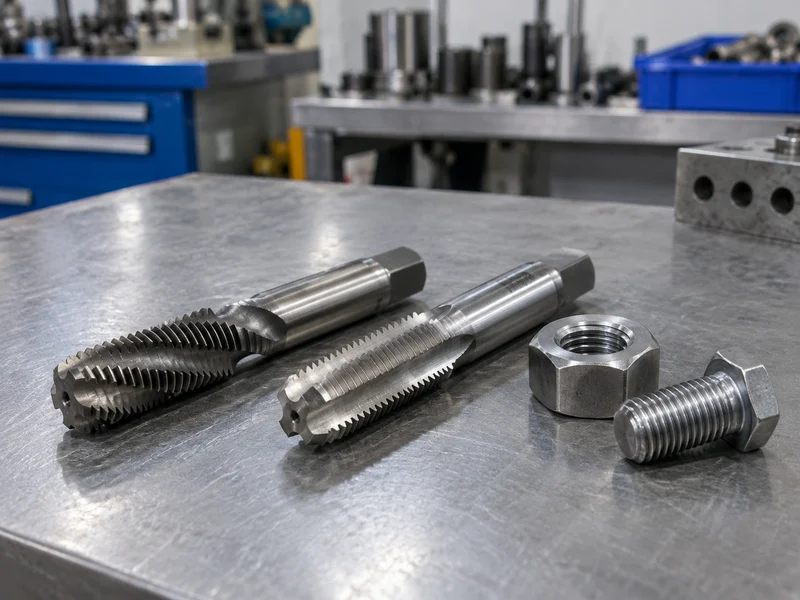
Thread-restoring tool and cutting tap arranged beside separate threaded samples
Product illustration; confirm actual model specifications and fit.

Decision table

Repair condition Likely tool family Boundary
Dirt or light burr Thread chaser Must still match pitch
Slight male-thread damage External chaser or die Guide and alignment matter
New internal thread Cutting or forming tap Material and hole size matter
Missing metal Insert or part repair Chaser cannot restore metal

For a related automotive repair tools range, place thread tools beside the fastener and inspection tools that complete the job.

2. How should a buyer inspect thread damage before choosing a tool?

Inspection begins with thread identity. Record diameter, pitch, thread form, standard and hole depth. A metric diameter can resemble a nearby inch size. A thread gauge, caliper and known mating fastener provide a starting point. Inspect entry damage, crest shape, flank contact and bottom condition.

Next, separate contamination from displaced or missing material. A wire brush may remove debris without changing a sound thread. A chaser may follow a thread that a cutting tap would enlarge. A cracked boss, pulled thread or distorted seat may require an insert, replacement part or engineering decision. Blind holes add a stop condition because chips and tool length need room below the intended thread.

Record pitch and depth before requesting a sample.

  • Measure before cleaning when damage could change the reading.
  • Use a known fastener only as a confirmation, not as the sole gauge.
  • Photograph access, entry burr and hole bottom.

Send suppliers one sample drawing with diameter, pitch, standard, depth and material before asking for a set recommendation.
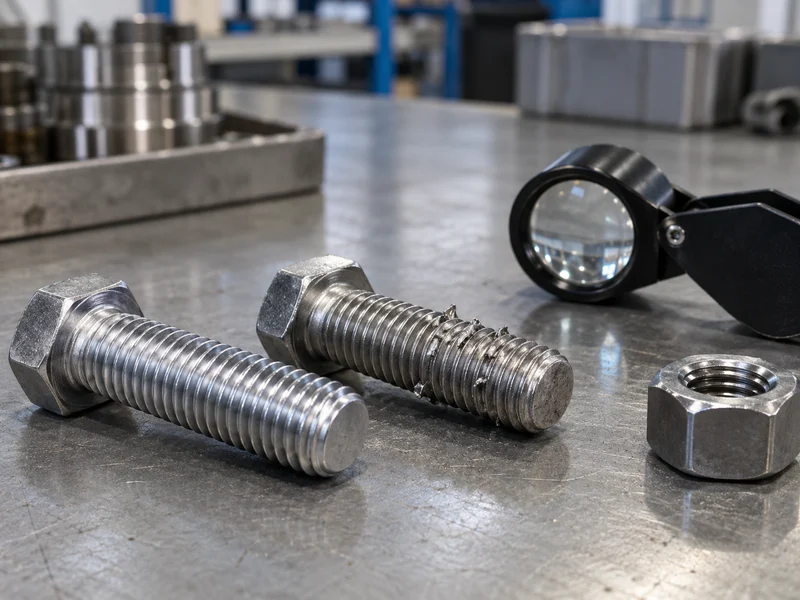
Threaded bolt and nut samples beside a magnifier for condition review
Product illustration; confirm actual model specifications and fit.

Decision table

Inspection item Why it changes choice Record
Diameter and pitch Prevents near-size mismatch Gauge result
Hole type Controls chip and nose clearance Blind or through
Material Changes cutting load Steel, aluminum or other
Damage state Separates clean-up from repair Photo and notes

3. When do internal thread chasers suit a repair?

Internal chasers suit an existing female thread with dirt, oxidation, paint, a raised entry edge or light deformation. The tool nose must find the original path. Pilot, lead length, flute shape and drive affect alignment. Blind holes need clearance below the thread. Through holes allow chips to exit more freely.

A sensor-hole or spark-plug chaser should tie its size to a defined repair location. That specificity helps a distributor build useful kits. A spark-plug chaser should not be presented as a general engine-thread repair tool merely because both applications use internal threads.

Chasers may be driven with a socket, T-handle or another stated interface. A drive that fits a common socket system can improve access, yet an extension can make alignment worse in a cramped hole. Keep the tool square. Reverse as instructed when chips load. Stop if torque rises sharply or the tool no longer follows the original flank.

Guide the chaser along the existing thread.

  • Identify the exact hole family.
  • Match lead geometry to entry condition.
  • Leave clearance for chips and tool reversal.

List chaser length, nose shape, drive and hole-depth limit on the product sheet.

For a socket-driven chaser, check the required socket drive size before adding service tools.
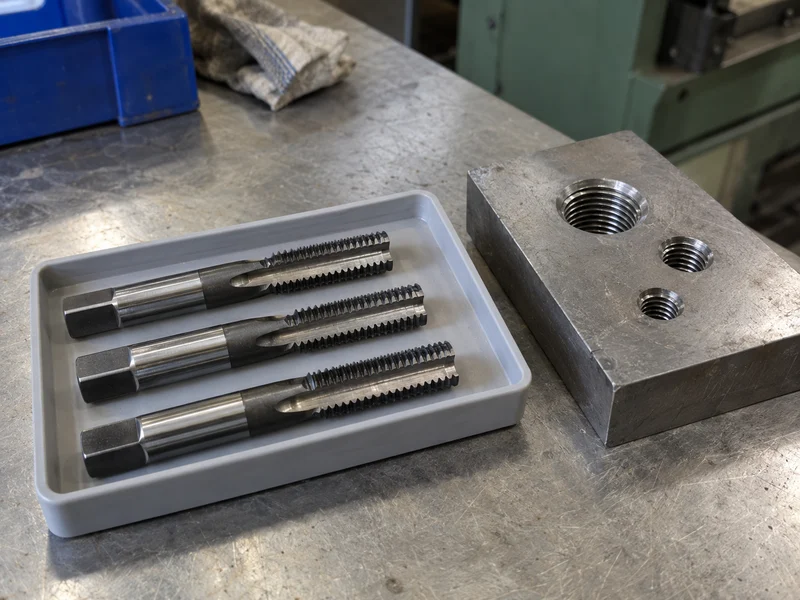
Internal thread-restoring tools and a separate threaded metal block
Product illustration; confirm actual model specifications and fit.

Decision table

Internal chaser check Buyer question
Nose and lead Does it find an existing thread?
Flute and chip path Can debris leave the hole?
Drive Can a technician stay square?
Depth Is there bottom clearance?

4. When do external thread chasers or dies suit a repair?

External chasers and dies work on studs, bolts, shafts and exposed male threads. A chaser follows existing crests and clears contamination. A die may cut or restore a male thread, depending on design. A guide face helps keep the tool square. A shoulder, flange or damaged entry can prevent full engagement.

Hex dies can clean slightly damaged threads and chase existing threads, while taper taps serve internal threads. Tool shape, drive and material should appear beside the size.

External work needs a safe stop. If a thread has lost a large section, forcing a die can reduce its diameter and weaken the fastener. A sample test should check mating nut fit after cleaning.

Confirm a square start before applying force.

  • Check shoulder, access and guide contact.
  • Confirm thread standard before starting.
  • Test the cleaned thread with an approved mating part.

Ask for external-tool drawings showing opening, guide length, drive and recommended material range.
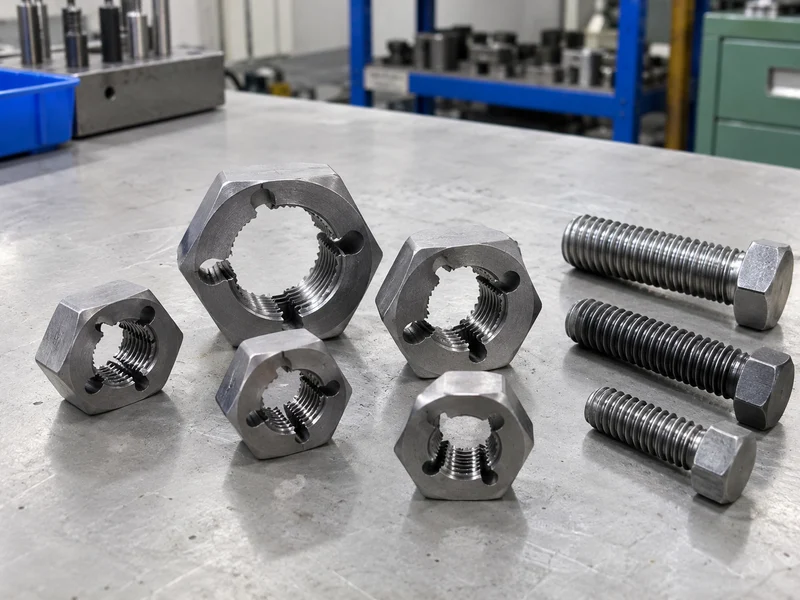
Hexagonal thread-restoring dies beside bolts with matching-looking thread forms
Product illustration; confirm actual model specifications and fit.

Decision table

External condition Tool decision Fit check
Rust or paint Chaser may clean Mating nut after cleaning
Light crest damage Die or chaser by maker guidance Diameter and pitch
Missing crest Escalate repair plan Part strength and replacement
Shoulder nearby Guided low-access tool Full engagement and square start

5. Which tap styles matter for new or damaged internal threads?

Taper taps have a longer lead that eases entry. Plug taps have a shorter lead for more full thread sooner. Bottoming taps reach closer to a blind-hole bottom, yet they demand a prepared, aligned start. Serial hand taps divide cutting across starter, intermediate and finisher tools. Forming taps displace material instead of cutting chips and require suitable ductile material plus a correct pre-tap hole.

Taper taps suit new threads or repairs, while plug taps can suit through holes, shallow holes and some soft metals. Tap selection separates hole type, thread standard, material and design. Forming taps need a larger pre-tap hole than cutting taps. Select by application rather than a generic “strong tap” claim.

The wrong style can bottom early, pack chips, start crooked or remove material from a sound thread. Buyers should state hand or machine use, hole depth and material. Each style needs a marked size.

Match tap geometry to the hole and material.

  • Taper for gradual entry.
  • Plug for faster full thread.
  • Bottoming for prepared blind holes.
  • Forming only where material and hole size support it.

Make tap style, hole type and material mandatory fields in your assortment file.
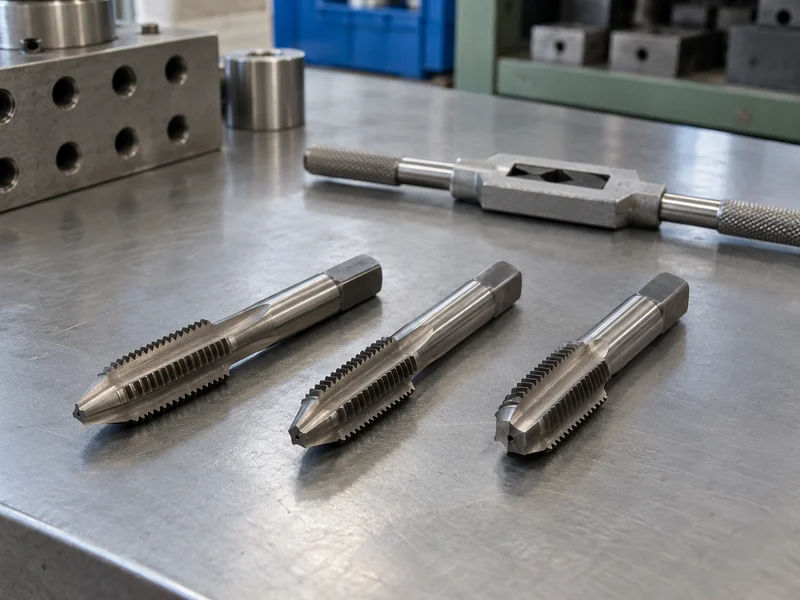
Three cutting taps with distinct lead lengths displayed for inspection
Product illustration; confirm actual model specifications and fit.

Decision table

Tap style Typical role Main check
Taper Easier starting Entry and depth
Plug General hand work Chip path and material
Bottoming Deep blind thread Prepared straight start
Forming Ductile material Pre-tap hole size

6. How do pitch, diameter, and thread standard affect tool choice?

Nominal diameter does not identify a thread. A 1/4-inch coarse thread and a 1/4-inch fine thread need different tools. Record metric pitch with diameter. Pipe threads add form and sealing considerations. A tap or die can appear close enough during a few turns, then cross-thread a costly part. A gauge reduces that risk.

SAE and metric ranges should include thread gauges. Check thread standards, hole types and preparation before ordering. Print standard, diameter, pitch and style together.

Thread direction and class matter. Tools may match diameter and pitch but fail a close fit. State whether a kit cleans threads or cuts a profile.

Print full thread identity beside each size.

  • Use SAE or metric gauges as stated.
  • Record fine or coarse pitch.
  • Separate pipe and special forms.

Require suppliers to submit a size chart and a mating-part fit result for every range.
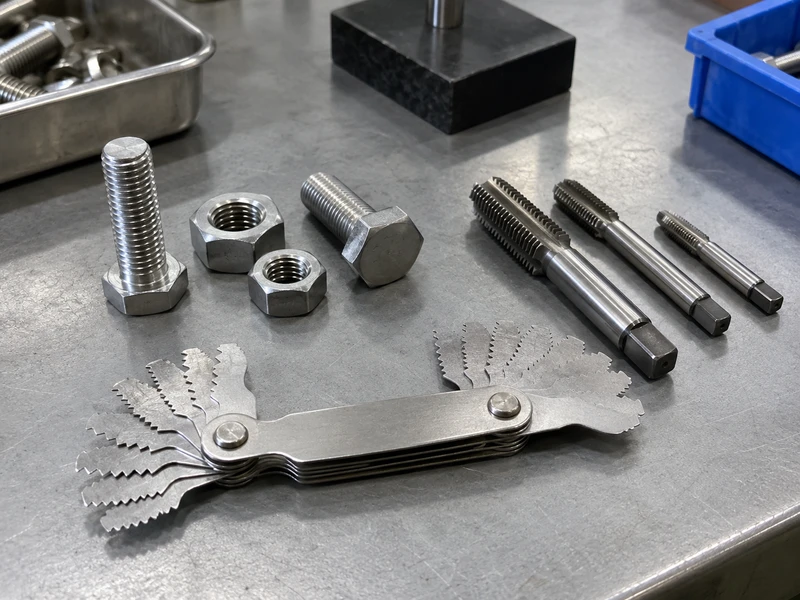
Thread pitch gauge beside sample bolts and taps
Product illustration; confirm actual model specifications and fit.

Decision table

Identity field Example use Risk if missing
Standard SAE or metric Near-size selection
Diameter Nominal tool size Wrong bore or crest
Pitch Coarse or fine Cross-threading
Style Taper, plug or chaser Wrong depth behavior

7. How do chips, lubrication, and application change results?

Cutting creates chips. Chip form, material hardness and hole geometry decide where chips go. A through hole gives an exit, while a blind hole can pack quickly. Lubricant reduces friction and carries heat, yet product and workpiece material decide suitability. A chaser still needs cleaning.

Hand tapping calls for a square setup, steady rotation and controlled reversal according to the tool maker's guidance. A rising torque signal deserves a stop and inspection. Do not force a tap through a bottom or use a long extension that hides alignment. Machine tapping adds spindle, speed, feed and coolant requirements, so a hand-tap listing should not imply machine authorization.

Hand tapping and forming-tap processes have different hole requirements. Keep speeds, feeds and torque values tied to exact tool guidance.

Allow space for chips in a blind hole.

  • State through or blind-hole use.
  • Include lubrication and cleaning notes.
  • Define a stop condition for torque or bottom contact.

Request a short operating sheet tied to each material and tap style, with unsupported speeds left out.

Select compatible hand drives from the hand tools range and keep machine-tapping requirements in a separate specification.
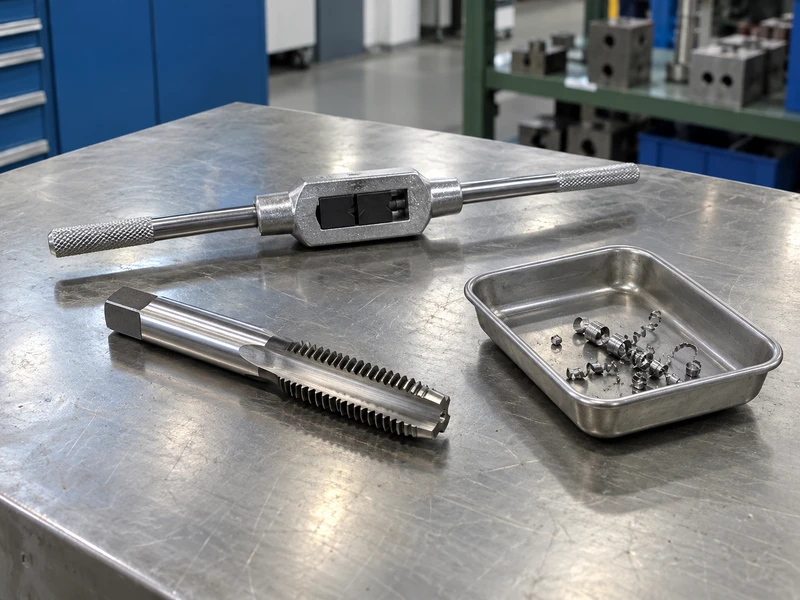
Hand tap tool and loose metal chips in a separate tray
Product illustration; confirm actual model specifications and fit.

Decision table

Application factor Tool implication RFQ field
Through hole Chip exit may be easier Hole type
Blind hole Need depth and chip room Usable depth
Tough material Cutting load rises Material and maker guidance
Forming process No chip, material displaced Pre-tap size

8. What QC and fit checks should a buyer require?

QC begins with visible geometry: size marking, lead, flute condition, drive and finish. Test the tool on a defined sample, then gauge the resulting thread against agreed criteria. A mating fastener may show assembly fit, yet it does not prove thread class or strength.

For chasers, a controlled clean-up sample should confirm that the original thread remains within the agreed fit. For taps, a sample should show the intended profile after cutting. Forming taps need a suitable material and pre-tap hole. External dies need a shaft or stud with known diameter and pitch. Record sample, operator, tool ID and result. If no meaningful test exists, remove a performance claim rather than adding a round number.

Gauge the thread produced by the sample tool.

  • Gauge size and pitch before use.
  • Test internal and external examples separately.
  • Keep tool ID tied to inspection records.

Approve a sample inspection sheet before production and attach it to every replacement order.
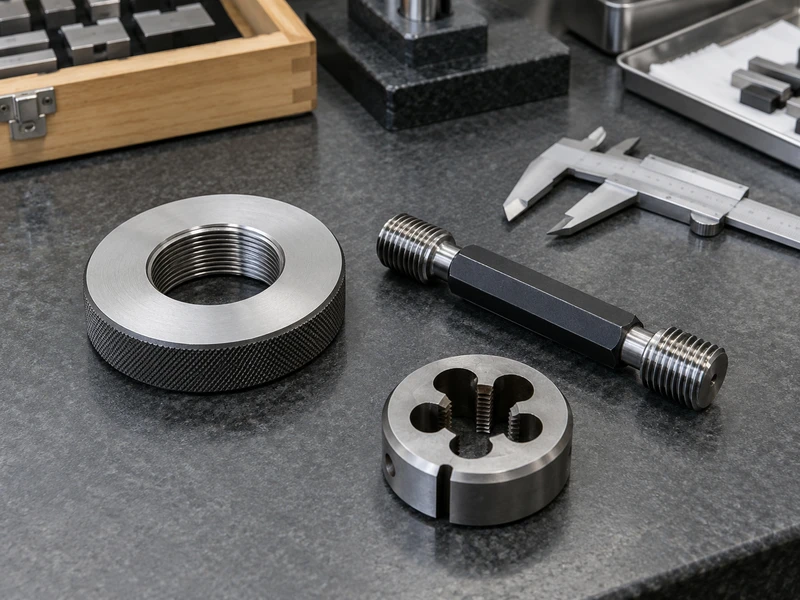
Thread gauges and thread chaser arranged for QC inspection
Product illustration; confirm actual model specifications and fit.

Decision table

QC item Test Acceptance focus
Marking Visual and size check Legible identity
Resulting internal thread Appropriate thread plug gauge Specified acceptance limits
Resulting external thread Appropriate ring gauge or agreed fit check Specified thread fit
Edge and finish Visual and dimensional No burr or damage

9. How should a kit include chasers, taps, dies, and spares?

A useful kit follows buyer jobs. An automotive assortment may need sensor-hole chasers, spark-plug chasers, internal taps, external dies, gauges, drives and replacements. A machine-shop assortment may need broader standards. Separate internal and external tools so users reach the right operation.

A large set can combine SAE and metric tools, adapters, gauges and storage. Count coverage by common jobs and replacements. Duplicated low-demand sizes can hide a missing fine-pitch or bottoming tool. Packaging should protect edges and show a size map.

Include a spare plan. Chasers and taps are consumable or damage-sensitive items. Private-label documents should list SKU, size, standard, style and application.

Plan replacement sizes alongside the initial kit.

  • Separate clean-up, cutting and external ranges.
  • Add gauges and drives that support the process.
  • Offer replacement positions for high-use sizes.

Build an assortment matrix by repair scenario, then remove pieces that have no defined customer job.

The complete mechanic tools list helps place thread tools in a wider service-bay range. Discuss the mechanics tool set range when planning case size and replenishment.
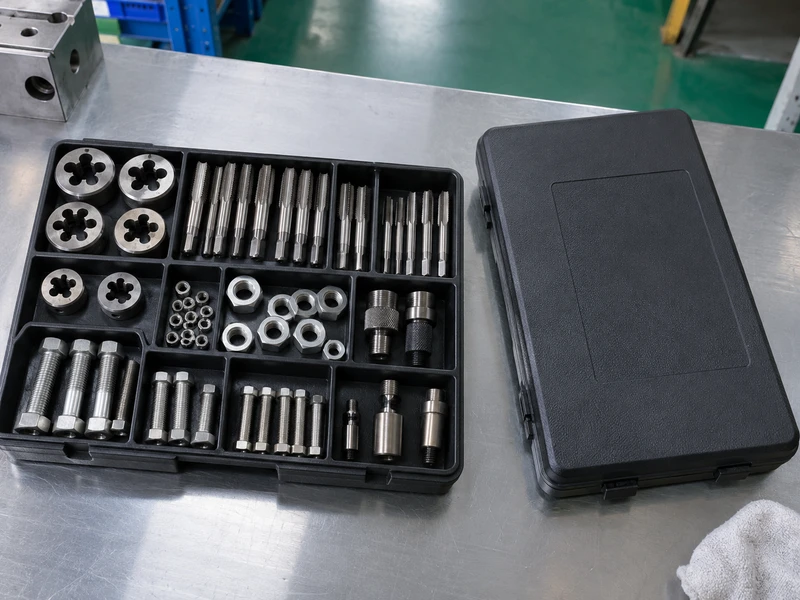
Organized thread-repair spare-parts kit
Product illustration; confirm actual model specifications and fit.

Decision table

Kit layer Contents Buyer benefit
Core Common chasers and taps Fast coverage
Standard SAE/metric and gauges Fewer size errors
Access Drives, extensions and case Better workshop reach
Service Spares and replacements Repeat orders

10. What should a thread-repair RFQ include?

An RFQ should name internal or external use, standard, diameter, pitch, material, hole type, usable depth, hand or machine operation, drive, finish and packaging. Add sample drawings when possible. Ask for tool geometry, marked sizes, operating limits, gauge or mating-part evidence and replacement policy.
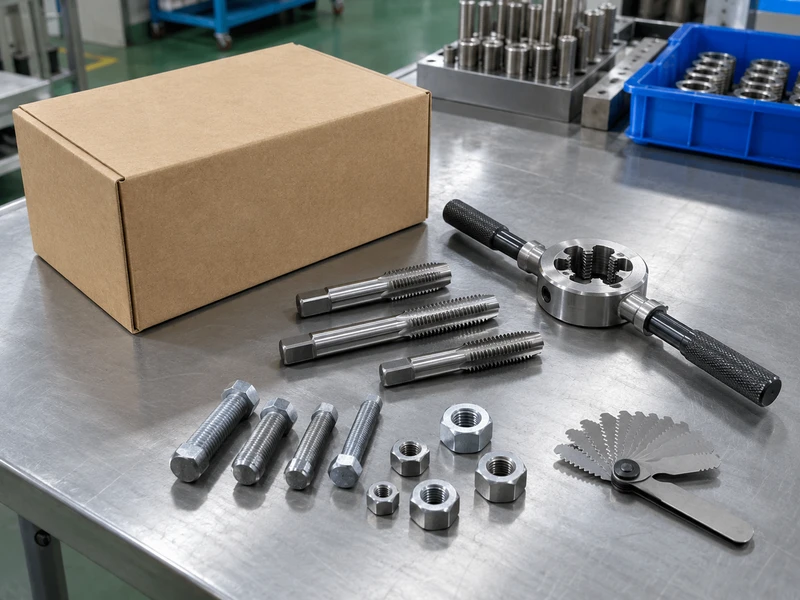
Blank carton and RFQ sample assortment for thread products
Product illustration; confirm actual model specifications and fit.

Do not accept “restores all threads” as a scope. Ask for one clean-up sample and one cutting sample with thread identity. For a blind hole, ask how the tool stops before bottom contact. Keep missing-metal cases outside a chaser promise.

Use a pilot kit to check markings, fit, chip control and replenishment. A short feedback loop reveals more than a catalogue review.

Define the thread and acceptance check in the RFQ.

  • Attach thread photos and measurements.
  • Separate cleaning from cutting claims.
  • Request sample test records.
  • Confirm spares and packaging.

Send your inspection sheet with the sample request and use the wholesale supplier checklist during supplier review. Contact the Kolarwin contact team for a scoped quotation. The supplier profile can support company review; request separate evidence for thread-tool production and inspection.

Q1: Does a thread chaser cut new threads?
Some chaser-style tools may cut limited damage, but buyers should follow the maker's geometry and application wording. A chaser cannot replace missing parent metal.

Q2: Can I choose a tap by diameter alone?
No. Standard, pitch, hole depth, thread form and material also affect selection.

Q3: Which tap suits a blind hole?
It depends on depth and preparation. A bottoming tap can reach closer to a blind bottom, yet it needs a straight, prepared start and chip clearance.

Q4: Do metric and SAE taps belong in one kit?
They can, if sizes, standards and markings stay separate. Include thread gauges and a clear map so users do not mix near sizes.

Q5: What evidence should a distributor request?
Request marked sizes, geometry drawings, sample fit results, material guidance, operating limits, inspection records and replacement availability.

Looking for a reliable mechanic tools manufacturer in China?

If you are sourcing hand tools, socket tools, automotive repair tools, mechanic tool sets or OEM private label tools, contact KOLARWIN Tools for factory-direct quotation, customization support and product consultation.


Thread-repair buyers often use “chaser” and “tap” as if they mean the same tool. That shortcut can create cross-threaded parts and wrong pitch coverage. A chaser follows or cleans an existing thread. A tap may cut material for a new or repaired internal thread. Geometry and damage decide which one belongs in a kit.

1. What is the repair difference between a thread chaser and a tap?

A thread chaser enters an existing thread while preserving its intended path. It can remove dirt, rust, paint or a raised burr. A cutting tap removes material to produce an internal thread. A forming tap displaces suitable material without cutting chips. Some chaser-style tools may cut limited damage, so a buyer should read the maker's description and inspect the nose, flutes and cutting edges. The name alone does not prove a tool only cleans.

A double-ended spark-plug-hole chaser can clean a defined existing thread. Hex dies can clean slightly damaged external threads, while taper taps serve new threads or repairs. If metal is missing, a chaser cannot put it back.

Define whether the tool cleans, cuts or forms threads.

Place the repair verb beside every SKU in a catalogue and RFQ. Buyers can then compare tools by function rather than name.

Thread-restoring tool and cutting tap arranged beside separate threaded samples
Product illustration; confirm actual model specifications and fit.

Decision table

Repair condition Likely tool family Boundary
Dirt or light burr Thread chaser Must still match pitch
Slight male-thread damage External chaser or die Guide and alignment matter
New internal thread Cutting or forming tap Material and hole size matter
Missing metal Insert or part repair Chaser cannot restore metal

For a related automotive repair tools range, place thread tools beside the fastener and inspection tools that complete the job.

2. How should a buyer inspect thread damage before choosing a tool?

Inspection begins with thread identity. Record diameter, pitch, thread form, standard and hole depth. A metric diameter can resemble a nearby inch size. A thread gauge, caliper and known mating fastener provide a starting point. Inspect entry damage, crest shape, flank contact and bottom condition.

Next, separate contamination from displaced or missing material. A wire brush may remove debris without changing a sound thread. A chaser may follow a thread that a cutting tap would enlarge. A cracked boss, pulled thread or distorted seat may require an insert, replacement part or engineering decision. Blind holes add a stop condition because chips and tool length need room below the intended thread.

Record pitch and depth before requesting a sample.

Send suppliers one sample drawing with diameter, pitch, standard, depth and material before asking for a set recommendation.

Threaded bolt and nut samples beside a magnifier for condition review
Product illustration; confirm actual model specifications and fit.

Decision table

Inspection item Why it changes choice Record
Diameter and pitch Prevents near-size mismatch Gauge result
Hole type Controls chip and nose clearance Blind or through
Material Changes cutting load Steel, aluminum or other
Damage state Separates clean-up from repair Photo and notes

3. When do internal thread chasers suit a repair?

Internal chasers suit an existing female thread with dirt, oxidation, paint, a raised entry edge or light deformation. The tool nose must find the original path. Pilot, lead length, flute shape and drive affect alignment. Blind holes need clearance below the thread. Through holes allow chips to exit more freely.

A sensor-hole or spark-plug chaser should tie its size to a defined repair location. That specificity helps a distributor build useful kits. A spark-plug chaser should not be presented as a general engine-thread repair tool merely because both applications use internal threads.

Chasers may be driven with a socket, T-handle or another stated interface. A drive that fits a common socket system can improve access, yet an extension can make alignment worse in a cramped hole. Keep the tool square. Reverse as instructed when chips load. Stop if torque rises sharply or the tool no longer follows the original flank.

Guide the chaser along the existing thread.

List chaser length, nose shape, drive and hole-depth limit on the product sheet.

For a socket-driven chaser, check the required socket drive size before adding service tools.

Internal thread-restoring tools and a separate threaded metal block
Product illustration; confirm actual model specifications and fit.

Decision table

Internal chaser check Buyer question
Nose and lead Does it find an existing thread?
Flute and chip path Can debris leave the hole?
Drive Can a technician stay square?
Depth Is there bottom clearance?

4. When do external thread chasers or dies suit a repair?

External chasers and dies work on studs, bolts, shafts and exposed male threads. A chaser follows existing crests and clears contamination. A die may cut or restore a male thread, depending on design. A guide face helps keep the tool square. A shoulder, flange or damaged entry can prevent full engagement.

Hex dies can clean slightly damaged threads and chase existing threads, while taper taps serve internal threads. Tool shape, drive and material should appear beside the size.

External work needs a safe stop. If a thread has lost a large section, forcing a die can reduce its diameter and weaken the fastener. A sample test should check mating nut fit after cleaning.

Confirm a square start before applying force.

Ask for external-tool drawings showing opening, guide length, drive and recommended material range.

Hexagonal thread-restoring dies beside bolts with matching-looking thread forms
Product illustration; confirm actual model specifications and fit.

Decision table

External condition Tool decision Fit check
Rust or paint Chaser may clean Mating nut after cleaning
Light crest damage Die or chaser by maker guidance Diameter and pitch
Missing crest Escalate repair plan Part strength and replacement
Shoulder nearby Guided low-access tool Full engagement and square start

5. Which tap styles matter for new or damaged internal threads?

Taper taps have a longer lead that eases entry. Plug taps have a shorter lead for more full thread sooner. Bottoming taps reach closer to a blind-hole bottom, yet they demand a prepared, aligned start. Serial hand taps divide cutting across starter, intermediate and finisher tools. Forming taps displace material instead of cutting chips and require suitable ductile material plus a correct pre-tap hole.

Taper taps suit new threads or repairs, while plug taps can suit through holes, shallow holes and some soft metals. Tap selection separates hole type, thread standard, material and design. Forming taps need a larger pre-tap hole than cutting taps. Select by application rather than a generic “strong tap” claim.

The wrong style can bottom early, pack chips, start crooked or remove material from a sound thread. Buyers should state hand or machine use, hole depth and material. Each style needs a marked size.

Match tap geometry to the hole and material.

Make tap style, hole type and material mandatory fields in your assortment file.

Three cutting taps with distinct lead lengths displayed for inspection
Product illustration; confirm actual model specifications and fit.

Decision table

Tap style Typical role Main check
Taper Easier starting Entry and depth
Plug General hand work Chip path and material
Bottoming Deep blind thread Prepared straight start
Forming Ductile material Pre-tap hole size

6. How do pitch, diameter, and thread standard affect tool choice?

Nominal diameter does not identify a thread. A 1/4-inch coarse thread and a 1/4-inch fine thread need different tools. Record metric pitch with diameter. Pipe threads add form and sealing considerations. A tap or die can appear close enough during a few turns, then cross-thread a costly part. A gauge reduces that risk.

SAE and metric ranges should include thread gauges. Check thread standards, hole types and preparation before ordering. Print standard, diameter, pitch and style together.

Thread direction and class matter. Tools may match diameter and pitch but fail a close fit. State whether a kit cleans threads or cuts a profile.

Print full thread identity beside each size.

Require suppliers to submit a size chart and a mating-part fit result for every range.

Thread pitch gauge beside sample bolts and taps
Product illustration; confirm actual model specifications and fit.

Decision table

Identity field Example use Risk if missing
Standard SAE or metric Near-size selection
Diameter Nominal tool size Wrong bore or crest
Pitch Coarse or fine Cross-threading
Style Taper, plug or chaser Wrong depth behavior

7. How do chips, lubrication, and application change results?

Cutting creates chips. Chip form, material hardness and hole geometry decide where chips go. A through hole gives an exit, while a blind hole can pack quickly. Lubricant reduces friction and carries heat, yet product and workpiece material decide suitability. A chaser still needs cleaning.

Hand tapping calls for a square setup, steady rotation and controlled reversal according to the tool maker's guidance. A rising torque signal deserves a stop and inspection. Do not force a tap through a bottom or use a long extension that hides alignment. Machine tapping adds spindle, speed, feed and coolant requirements, so a hand-tap listing should not imply machine authorization.

Hand tapping and forming-tap processes have different hole requirements. Keep speeds, feeds and torque values tied to exact tool guidance.

Allow space for chips in a blind hole.

Request a short operating sheet tied to each material and tap style, with unsupported speeds left out.

Select compatible hand drives from the hand tools range and keep machine-tapping requirements in a separate specification.

Hand tap tool and loose metal chips in a separate tray
Product illustration; confirm actual model specifications and fit.

Decision table

Application factor Tool implication RFQ field
Through hole Chip exit may be easier Hole type
Blind hole Need depth and chip room Usable depth
Tough material Cutting load rises Material and maker guidance
Forming process No chip, material displaced Pre-tap size

8. What QC and fit checks should a buyer require?

QC begins with visible geometry: size marking, lead, flute condition, drive and finish. Test the tool on a defined sample, then gauge the resulting thread against agreed criteria. A mating fastener may show assembly fit, yet it does not prove thread class or strength.

For chasers, a controlled clean-up sample should confirm that the original thread remains within the agreed fit. For taps, a sample should show the intended profile after cutting. Forming taps need a suitable material and pre-tap hole. External dies need a shaft or stud with known diameter and pitch. Record sample, operator, tool ID and result. If no meaningful test exists, remove a performance claim rather than adding a round number.

Gauge the thread produced by the sample tool.

Approve a sample inspection sheet before production and attach it to every replacement order.

Thread gauges and thread chaser arranged for QC inspection
Product illustration; confirm actual model specifications and fit.

Decision table

QC item Test Acceptance focus
Marking Visual and size check Legible identity
Resulting internal thread Appropriate thread plug gauge Specified acceptance limits
Resulting external thread Appropriate ring gauge or agreed fit check Specified thread fit
Edge and finish Visual and dimensional No burr or damage

9. How should a kit include chasers, taps, dies, and spares?

A useful kit follows buyer jobs. An automotive assortment may need sensor-hole chasers, spark-plug chasers, internal taps, external dies, gauges, drives and replacements. A machine-shop assortment may need broader standards. Separate internal and external tools so users reach the right operation.

A large set can combine SAE and metric tools, adapters, gauges and storage. Count coverage by common jobs and replacements. Duplicated low-demand sizes can hide a missing fine-pitch or bottoming tool. Packaging should protect edges and show a size map.

Include a spare plan. Chasers and taps are consumable or damage-sensitive items. Private-label documents should list SKU, size, standard, style and application.

Plan replacement sizes alongside the initial kit.

Build an assortment matrix by repair scenario, then remove pieces that have no defined customer job.

The complete mechanic tools list helps place thread tools in a wider service-bay range. Discuss the mechanics tool set range when planning case size and replenishment.

Organized thread-repair spare-parts kit
Product illustration; confirm actual model specifications and fit.

Decision table

Kit layer Contents Buyer benefit
Core Common chasers and taps Fast coverage
Standard SAE/metric and gauges Fewer size errors
Access Drives, extensions and case Better workshop reach
Service Spares and replacements Repeat orders

10. What should a thread-repair RFQ include?

An RFQ should name internal or external use, standard, diameter, pitch, material, hole type, usable depth, hand or machine operation, drive, finish and packaging. Add sample drawings when possible. Ask for tool geometry, marked sizes, operating limits, gauge or mating-part evidence and replacement policy.

Blank carton and RFQ sample assortment for thread products
Product illustration; confirm actual model specifications and fit.

Do not accept “restores all threads” as a scope. Ask for one clean-up sample and one cutting sample with thread identity. For a blind hole, ask how the tool stops before bottom contact. Keep missing-metal cases outside a chaser promise.

Use a pilot kit to check markings, fit, chip control and replenishment. A short feedback loop reveals more than a catalogue review.

Define the thread and acceptance check in the RFQ.

Send your inspection sheet with the sample request and use the wholesale supplier checklist during supplier review. Contact the Kolarwin contact team for a scoped quotation. The supplier profile can support company review; request separate evidence for thread-tool production and inspection.

Q1: Does a thread chaser cut new threads?
Some chaser-style tools may cut limited damage, but buyers should follow the maker's geometry and application wording. A chaser cannot replace missing parent metal.

Q2: Can I choose a tap by diameter alone?
No. Standard, pitch, hole depth, thread form and material also affect selection.

Q3: Which tap suits a blind hole?
It depends on depth and preparation. A bottoming tap can reach closer to a blind bottom, yet it needs a straight, prepared start and chip clearance.

Q4: Do metric and SAE taps belong in one kit?
They can, if sizes, standards and markings stay separate. Include thread gauges and a clear map so users do not mix near sizes.

Q5: What evidence should a distributor request?
Request marked sizes, geometry drawings, sample fit results, material guidance, operating limits, inspection records and replacement availability.

Why Partner with Kolarwin Tools?

Factory-Direct Pricing Skip the middleman — access competitive wholesale prices and protect your margins
Private Label & OEM Ready Your brand, our expertise — full customization from logo to packaging
Fast Global Shipping Reliable delivery to 60+ countries with full export documentation support
Low MOQ, High Flexibility Start small, scale fast — flexible order quantities to fit your business
Dedicated B2B Support One-on-one account management from quote to delivery, every time

Get Your Free Quote in 24 Hours

Tell us your sourcing needs — we'll respond with a tailored quote, product specs, and the best pricing for your market. No commitment required.

Chat on WhatsApp Email Us Directly
