Need OEM supplier support for this product type?
Contact KOLARWIN Tools for OEM mechanic tools, private label packaging, wholesale quotation and product range support. This gives overseas buyers a clear path from article reading to supplier discussion.
Round nose pliers use rounded, tapered jaws to form wire loops. Chain nose pliers use flat inner faces for holding and positioning small parts. That forming-versus-gripping difference should lead a round nose vs chain nose pliers comparison. Then check jaw dimensions, face finish, and model-specific material limits.
Contents
- 1. What is the basic difference?
- 2. How do round nose jaws form loops?
- 3. How do chain nose jaws grip small work?
- 4. Which jaw surface should buyers specify?
- 5. How do jaw length and tip size change results?
- 6. Which pliers suit common jewelry tasks?
- 7. What should distributors ask about durability?
- 8. How should a buyer test a sample?
- 9. What belongs in a private-label RFQ?
- 10. How should a buyer choose a starter assortment?
1. What is the basic difference?
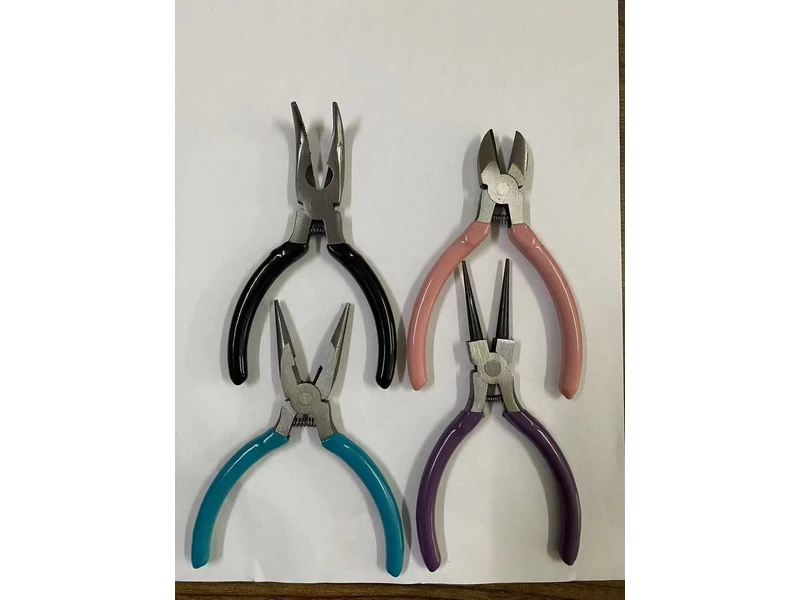
Round nose and chain nose pliers can look similar in a catalog, yet their jaw cross-sections produce different results. Round nose pliers use tapered, approximately round jaws for bending wire into loops. Chain nose pliers use a flatter inner gripping face with a rounded outer face for holding and manipulation. Both families appear in jewelry, beadwork, chainmaille, electronics rework, and fine-wire work, so the task should lead the listing.
- Specify round nose when loop shape and repeatable forming matter.
- Specify chain nose when grip, positioning, opening rings, or holding findings matters.
- Treat jaw finish, tip dimensions, and rated material limits as SKU fields.
Round jaws form curved wire while flat inner faces support controlled gripping.
Use that split in product copy. An ear-wire loop needs a moving contact point along a taper. A jump ring needs a firm inner face that can hold while the ring opens or closes. Both buyers may ask for “jewelry pliers,” so list the result before stating jaw profile, finish, tip dimensions, and documented limits.
Buyer summary
| Decision point | Round nose | Chain nose |
|---|---|---|
| Primary result | Loops and curved forms | Holding and manipulation |
| Jaw cross-section | Tapered and approximately round | Flat inner face, rounded outer face |
| Typical contact | Wire moves along taper | Part stays against gripping face |
| Main RFQ fields | Tip diameter, taper, jaw length | Face width, serration, tip alignment |
Put “loop forming” or “small-part gripping” beside each SKU in your assortment sheet. For other plier families, see the specialty pliers buying guide.
2. How do round nose jaws form loops?
Round nose pliers form loops through a direct relationship between wire position and jaw diameter. Near a tip, contact produces a smaller loop; farther along a taper, contact produces a larger loop. The operator rotates the pliers or wire while keeping pressure steady, then checks whether a batch matches. Exact range belongs to each model’s taper and dimensions, so avoid universal diameter claims.
- Match tip size with the smallest requested loop.
- Match jaw length with the largest repeatable loop in a sample.
- Check alignment after opening and closing the tool several times.
A consistent grip position helps buyers compare loop geometry on the same wire.
Give each round nose model a clear use boundary. Fine wire may need short, precise jaws, while a broader forming range may call for a longer taper within one product family. Neither layout wins every job. Use a sample protocol instead of copying a dimension from another catalog, and request a drawing or product sheet with tip geometry plus model-specific material guidance.
Buyer summary
| Forming variable | What to inspect | Why it matters |
|---|---|---|
| Tip diameter | Smallest contact area | Controls small-loop access |
| Taper length | Change in diameter along jaw | Affects loop range |
| Jaw alignment | Equal contact during closure | Supports repeatable shape |
| Surface finish | Smoothness and burr control | Helps reduce marking risk |
Add a loop sample to every round nose quotation request, with target loop size and acceptable visual variation written beside it.
3. How do chain nose jaws grip small work?
Chain nose pliers hold small wire, findings, and components against a flatter inner face. That face supports controlled bending, opening and closing rings, or positioning a part while another tool performs the next step. A rounded outer face helps the tool reach around small work without presenting a broad square shoulder. Tip meeting and face finish decide whether contact stays controlled.
- Use smooth faces for work where visible impressions are costly.
- Use serrated faces when defined grip matters more than a pristine surface.
- Check that narrow tips meet without a daylight gap or offset.
Chain nose selection depends on jaw contact, access, and acceptable surface marks.
Ask what the inner face is intended to hold. Jewelry wire, plated findings, and delicate components may show marks after pressure even when a jaw appears polished. Serrations can add bite, but they do not prove higher strength or permit heavy stock. State smooth or serrated contact in product copy, then attach task guidance for the exact model.
Buyer summary
| Chain nose feature | Smooth face use | Serrated face use |
|---|---|---|
| Contact goal | Controlled holding with lower mark risk | Firmer grip on a defined part |
| Surface caution | Pressure can still mark soft finish | Teeth can leave visible impressions |
| Good listing detail | Face finish and alignment | Tooth pattern and intended material |
Request a close-up jaw photograph plus a marked sample test before placing a mixed chain nose order.
4. Which jaw surface should buyers specify?
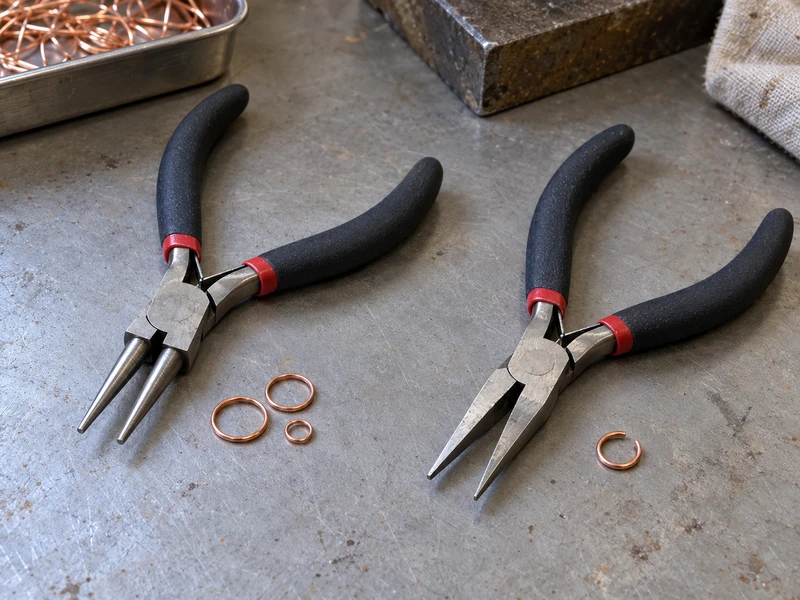
Jaw surface sets a tradeoff between grip and appearance. Smooth jaws are a sensible starting point for surface-sensitive wire because they remove tooth impressions from contact. Serrated or knurled faces can hold a defined part more firmly, yet they can leave marks. A polished finish does not guarantee mark-free work because pressure, alloy, coating, and tool condition still affect results.
- State smooth, serrated, or knurled in the purchase specification.
- Define whether minor contact marks are acceptable.
- Test plated, soft, and finished work separately when those materials matter.
Smooth and serrated jaws need separate contact-mark checks on the intended material.
For a private-label line, replace “professional grip” with a face description and a representative contact test. Assign smooth models to visible finishing work, then reserve serrated models for tasks with an accepted mark tolerance. If a customer needs a different access angle, consult the bent nose versus straight nose pliers guide before choosing a sample.
Buyer summary
| Surface | Best starting use | Main risk |
|---|---|---|
| Smooth | Finished wire and visible components | Slippage with inadequate grip; pressure can still mark the surface |
| Serrated | Holding parts that need bite | Visible tooth impressions |
| Knurled | Defined grip on selected parts | Finish damage if pressure is high |
Put an acceptable-mark standard in your QC sheet, with before-and-after photos from the same wire or finding used by your target buyer.
5. How do jaw length and tip size change results?
Jaw length and tip size affect reach, control, stiffness, and forming range within a specific family. A longer round nose taper may cover more loop diameters. A shorter jaw can feel more controlled near its tip, while a broader chain nose face can hold a larger finding. Treat these as design observations, not universal rankings.
- Ask for jaw length, tip width, tip thickness, and full tool length.
- Compare the same dimensions across samples before making a price decision.
- Keep long-reach features separate from heavy-force claims.
Jaw length and tip dimensions make vague precision labels testable.
Map dimensions against a real task. A small bead cap may need a narrow chain nose tip, while a larger loop sequence may benefit from a longer round nose taper. Bulky handles can block access even when jaw dimensions look suitable. Keep a readable part number on packaging so replacement orders do not depend on photographs alone.
Buyer summary
| Dimension | Buyer question | Sample check |
|---|---|---|
| Tip width | Can it enter the target opening? | Fit into a representative finding |
| Tip thickness | Does it create the required loop scale? | Form the smallest planned loop |
| Jaw length | Does it cover the planned work range? | Repeat three target shapes |
| Full tool length | Can users control it comfortably? | Run a short handling trial |
Build a dimensioned comparison card for each model, then attach the card to purchase orders and replacement listings.
6. Which pliers suit common jewelry tasks?
Task selection makes the round nose versus chain nose decision practical. Looping ear wires, eye pins, and decorative wire points usually favor round nose geometry. Holding a jump ring while opening it, positioning a finding, or making a controlled bend usually favors chain nose geometry. Chainmaille work may use both: one tool holds a ring while another shapes or closes it.
- Loop forming: start with round nose.
- Ring opening and component positioning: start with chain nose.
- Surface-sensitive finishing: begin with smooth contact and verify marks.
Match the forming or gripping motion with the component and available clearance.
Do not list either family as a replacement for cutters or dedicated crimpers. For terminal work, consult types of crimping tools and specify the terminal system separately. For controlled crimping cycles, compare ratcheting versus non-ratcheting crimping tools.
Buyer summary
| Task | Preferred starting family | Why |
|---|---|---|
| Form a closed loop | Round nose | Taper creates graduated curve control |
| Hold a finding | Chain nose | Flat face supports stable contact |
| Open a jump ring | Chain nose | Tip can enter and reposition ring |
| Close a loop after forming | Chain nose | Holds wire while alignment is corrected |
Build assortment bundles around tasks, such as one round nose plus one smooth chain nose, then offer serrated chain nose as a defined alternate.
7. What should distributors ask about durability?
Durability starts with intended load. Precision pliers can be damaged when users pry, twist stuck hardware, or work stock outside documented limits. Ask for rated capacities or material guidance for the exact model, then keep those limits in technical copy. A general “jewelry” label does not support a steel grade, hardness value, or heavy-wire promise.
- Request documented material limits and rated capacities.
- Check pivot smoothness, jaw alignment, and return action across samples.
- Separate corrosion appearance claims from surface polish descriptions.
Pivot fit and jaw alignment should be checked alongside surface finish.
Incoming QC can examine closure symmetry, tip burrs, spring behavior where fitted, and handle movement. Inspect representative wire or findings rather than relying on a bare visual check. If a model includes a cutter, record cutter limits separately. Never list a round nose or chain nose jaw as a pry tool without exact documentation.
Buyer summary
| QC item | Pass question | Escalate when |
|---|---|---|
| Jaw alignment | Do faces meet as designed? | Tips cross or leave a gap |
| Pivot action | Does movement stay smooth? | Binding or excessive looseness appears |
| Finish | Are burrs absent from contact areas? | Wire catches or scratches |
| Capacity | Is guidance supplied for this SKU? | Sales copy would require guessing |
Make model-specific capacity and inspection records part of your supplier approval file before listing a tool for professional use.
8. How should a buyer test a sample?
A short, repeatable sample test reveals more than a product photo. Use the same wire, finding, and work sequence expected by target customers. For round nose pliers, form loops at marked jaw positions. For chain nose pliers, hold and open sample rings, then inspect tool contact and workpiece finish.
- Record loop diameter or shape consistency.
- Record visible marks after normal hand pressure.
- Check tip alignment before and after repeated cycles.
- Note hand comfort without treating a soft grip as insulation.
Repeat the agreed sample task under recorded conditions before approving the model.
Separate tool performance from operator technique. Use a form with model number, workpiece, cycle count, and pass notes. If a supplier proposes a serrated face, compare it with a smooth face on the same workpiece. If electrical work enters the order, require a product explicitly marked and tested for the applicable insulation standard; a dipped handle alone does not qualify.
Buyer summary
| Test stage | Round nose | Chain nose |
|---|---|---|
| Setup | Mark jaw positions | Select smooth or serrated sample |
| Operation | Form repeated loops | Hold, open, and close sample rings |
| Inspection | Compare shape and center | Check grip and contact marks |
| Record | Loop range and alignment | Face finish and jaw meeting |
Keep one approved sample with your purchase file, so later shipments can be compared against a physical reference.
9. What belongs in a private-label RFQ?
An RFQ should turn a vague product name into fields a supplier can answer. State the task, workpiece, face finish, dimensions, package format, and inspection method. Ask whether each model includes a spring, cutter, or other feature instead of assuming a family includes it.
- Name the target wire or finding and its condition.
- Request jaw dimensions, finish, alignment, and full tool length.
- Ask for capacity guidance tied to the exact model.
- Define packaging, part-number continuity, and sample approval.
An RFQ should pair the intended result with model dimensions and a sample.
For cutting questions, use the wire stripper versus wire cutter guide or cable cutter versus diagonal cutter comparison. Neither tool should be implied as a function of every jewelry plier. Add carton labeling, replacement SKU mapping, and a clear jaw-contact photo to the RFQ.
Buyer summary
| RFQ block | Required detail |
|---|---|
| Function | Loop forming or gripping task |
| Geometry | Jaw profile, length, tip size |
| Surface | Smooth, serrated, or knurled |
| Verification | Sample workpiece and pass criteria |
| Commercial | Package, label, replacement part number |
Send one completed RFQ for a round model and one for a chain model, then compare answers field by field rather than comparing titles.
10. How should a buyer choose a starter assortment?
Start with the task mix customers request. A basic jewelry and fine-wire assortment often needs one round nose model for loops plus one smooth chain nose model for holding and alignment. Add serrated chain nose only when work benefits from defined grip and accepts contact marks. Add alternate tip sizes after samples show a real gap.
- Pick round nose by loop range and tip behavior.
- Pick chain nose by face finish, width, and grip task.
- Keep capacity, insulation, and material claims tied to each SKU.
- Use a sample approval record before expanding colors or pack sizes.
A starter assortment needs distinct forming and gripping roles with documented limits.
Use the hand tools collection for broader category planning and the contact page when a supplier needs a task sample or drawing. Jaw cross-section and work result should drive the comparison, then sample records should control repeat orders.
Approve a two-model starter set only after both tools pass task-specific samples, dimensional checks, and contact-mark review.
FAQs
Q1: Are round nose pliers and chain nose pliers interchangeable?
No. Round nose jaws shape loops through a taper, while chain nose jaws hold and manipulate small work with a flatter inner face.
Q2: Should jewelry buyers choose smooth or serrated chain nose jaws?
Choose smooth contact when visible marks are costly. Choose serrated contact when a defined grip matters and the workpiece can accept impressions.
Q3: Can round nose pliers form every loop size?
No. Loop range depends on jaw taper and dimensions for a specific model. Test representative wire before making a range claim.
Q4: Does a polished jaw guarantee mark-free wire?
No. Pressure, wire alloy, coating, finish, and tool condition all affect marks.
Q5: What should a distributor request before buying?
Request jaw dimensions, face finish, alignment, model-specific capacity guidance, sample testing, packaging details, and replacement part numbers.
Looking for a reliable mechanic tools manufacturer in China?
If you are sourcing hand tools, socket tools, automotive repair tools, mechanic tool sets or OEM private label tools, contact KOLARWIN Tools for factory-direct quotation, customization support and product consultation.