Need OEM supplier support for this product type?
Contact KOLARWIN Tools for OEM mechanic tools, private label packaging, wholesale quotation and product range support. This gives overseas buyers a clear path from article reading to supplier discussion.
Pliers capacity depends on material and size, not diameter alone. This guide shows how to read model-specific cutting tables and avoid applying a rating to the wrong wire.
1. What does pliers cutting capacity mean?
Cutting capacity describes the material and size a specific plier model is designed to cut under defined conditions. It is not a universal diameter for all wire. Manufacturers may list separate limits for soft iron, copper, stainless steel, or stranded conductor. Tsunoda, for example, publishes distinct capacities for several materials and warns against harder wire or sizes above rating. Buyers should read the model-specific table, not infer from tool length. Use the pliers category guide to identify the cutting family before comparing capacities.
Treat every capacity as a material-and-size pair.
- Copy the model identifier alongside each rating in the purchasing record.
- Check whether the published size describes diameter, cross-sectional area or another dimension.
| Capacity field | Meaning to confirm | Common mismatch |
|---|---|---|
| Material | Named wire or stock class | Copper value reused for steel |
| Size | Dimension and unit | Diameter confused with area |
| Model | Exact rated tool | Value copied from similar pliers |
2. Why does material type matter?
Hardness, tensile strength, construction, and work hardening change cutting resistance. A wire with the same diameter can demand different force depending on material and treatment. Stranded conductor may behave differently from solid wire. Tool edge geometry and heat treatment also affect performance. Therefore, a capacity stated for copper cannot be reused as a stainless-steel rating. Match each material to a manufacturer-published limit. Check whether the job requires insulation removal or conductor cutting; wire strippers and cutters serve different operations.
Identify the wire before comparing cutters.
- Request the material grade and construction from the wire supplier when labels are incomplete.
- Keep coated, hardened or stranded products separate until their applicable category is confirmed.
| Wire description | Question to resolve | Rating approach |
|---|---|---|
| Copper conductor | Solid or stranded? | Use matching construction |
| Stainless wire | Grade and condition? | Use published stainless limit |
| Hardened steel wire | Hardness category? | Use maker's defined class |
3. How does diameter affect the cut?
As diameter increases, more material must be sheared and the cutting load rises. A tool may cut a small diameter cleanly yet deform or chip when the work exceeds its rating. Positioning also matters: cutting near the pivot often produces more mechanical advantage than cutting near the tip, depending on design. Follow the tool maker’s instructions and rated zone. Never use a successful undersized cut as proof of a larger capacity. When nominal wire size is uncertain, choose a suitable measuring instrument using the caliper comparison.
Measure what the capacity table actually names.
- Measure solid-wire diameter with a suitable instrument when nominal size is uncertain.
- Check the specified cutting zone before positioning stock at a convenient jaw location.
| Size evidence | Useful for | Limit |
|---|---|---|
| Measured diameter | Solid round stock | Does not identify material |
| Nominal conductor area | Electrical conductor identification | Not automatically cutter diameter |
| Bundle outside size | Access planning | Not a solid-wire equivalent |
4. Do all pliers share one capacity rating?
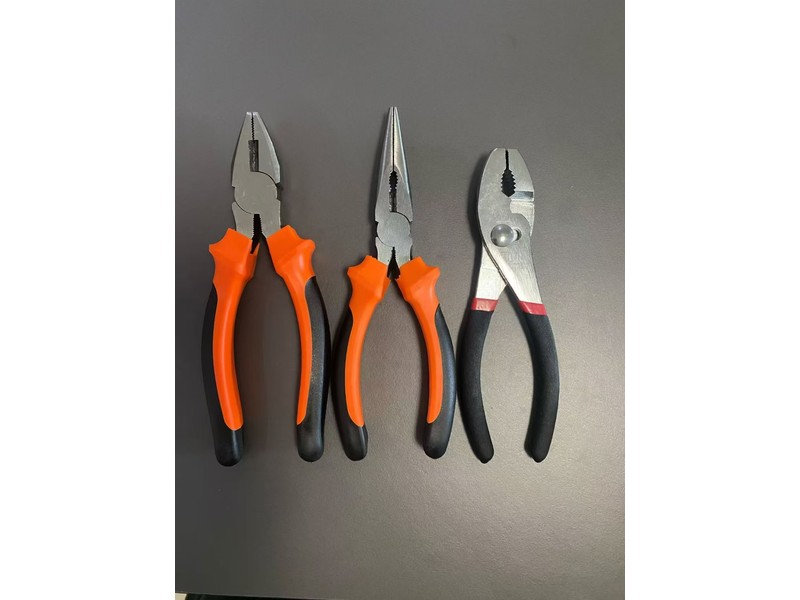
No. Combination pliers, diagonal cutters, end nippers, cable cutters, and specialty tools have different edges and intended materials. Even models in one family can carry separate capacity values. Check exact model identifiers and published tables. If data are absent, ask the manufacturer rather than transferring values from a similar-looking tool. Clear catalog specifications reduce misuse and help buyers compare equivalent products. Keep the capacities of end-cutting and diagonal-cutting pliers attached to their individual models.
Keep ratings attached to individual SKUs.
- Verify model suffixes and revisions when comparing apparently identical cutters.
- Separate end cutters, diagonal cutters and cable cutters in the capacity database.
| Tool family | Typical geometry concern | Rating source |
|---|---|---|
| Diagonal cutter | Bevel and cut position | Exact model table |
| End cutter | End access and edge loading | Exact model table |
| Cable cutter | Conductor enclosure and shear | Cable-specific data |
5. What do hardness and wire classes mean?
Some manufacturers classify wire by hardness or material category; exact definitions can vary. Confirm the referenced standard or supplier test method when a category is unfamiliar. Do not translate terms such as soft, medium, or hard into a diameter without model data. For critical applications, require technical documentation that identifies wire material, dimensions, and test conditions. If the evidence is missing, present capacity as unverified instead of guessing. Separate rope construction from conductor construction with the wire-rope and cable-cutter comparison.
Resolve the manufacturer's wire-class definition.
- Ask for the hardness or strength basis behind soft, medium-hard and hard labels.
- Preserve the maker's category wording when no reliable cross-reference exists.
| Label type | Evidence required | Catalog treatment |
|---|---|---|
| Material name | Specified material scope | Retain exact wording |
| Hardness class | Definition or test basis | Do not invent conversion |
| Strength range | Units and method | Quote only verified range |
6. How do jaw geometry and leverage matter?
Cutting edges, bevels, pivot position, handle length, and jaw access all influence force transfer and cut quality. A high-leverage model may reduce hand effort, but it remains limited by edge design and material rating. Flush-cut or end-cut shapes serve particular access needs and may have different limits. Choose the tool by material, geometry, and cut location together. Do not recommend a model from handle length alone. For stranded steel rope, follow the wire-rope cutter selection process rather than extrapolating from ordinary pliers.
Choose the edge for the required cut finish.
- Examine whether the task needs a flush end or merely separation of stock.
- Verify the material rating after selecting access geometry and handle arrangement.
| Edge or geometry | Selection question | Tradeoff to check |
|---|---|---|
| Flush-cut profile | How close must the cut finish? | Model material limits |
| End-cut profile | Is front access needed? | Permitted stock position |
| High-leverage design | Is hand effort acceptable? | Opening and rated material |
7. What happens when a tool is overloaded?
Overload can chip or roll cutting edges, misalign jaws, damage the pivot, or leave a crushed rather than clean cut. A damaged tool may later fail on rated material. Stop if handles flex unusually, jaws separate, or the cut does not progress normally. Do not add a pipe extension or strike the tool unless manufacturer instructions explicitly authorize that method. Inspect and remove damaged cutters from service. If the complaint concerns damaged rope ends, assess the tool and preparation described in cutting wire rope without fraying.
Stop before an abnormal cut becomes a damaged tool.
- Remove cutters with chips, rolled edges or jaw separation from service.
- Record the stock used during a failed cut so material misidentification can be investigated.
| Warning sign | Potential issue | Response |
|---|---|---|
| Handles twist | Misalignment or overload | Stop the cut |
| Edge chips | Material mismatch or damage | Quarantine tool |
| Stock crushes without severing | Wrong geometry or capacity | Recheck tool selection |
8. How should buyers verify ratings?
Use manufacturer product pages, technical sheets, and instructions tied to the exact model. Confirm material categories, diameter or cross-section, and any limitations. Compare sample cuts only under safe and repeatable conditions; visual success does not establish a rated capacity. Save source documents with the approved SKU record. Ask suppliers to resolve discrepancies between packaging, web pages, and product data before purchase.
Resolve conflicting numbers before ordering.
- Compare packaging, datasheet and product-page values for the same model.
- Ask the manufacturer to clarify discrepancies in writing and retain the response.
| Evidence | Check | Acceptance requirement |
|---|---|---|
| Datasheet | Model and revision | Current applicable document |
| Packaging | Material and units | Matches approved data |
| Sample trial | Actual stock identity | Within stated limits |
9. How should cutting capacity appear in a listing?
Use a compact table with material, maximum size, model identifier, and source note. Keep units consistent and distinguish solid from stranded wire where data do. Avoid broad lines such as “cuts steel wire” unless the product document supports a grade and size. Include an explicit reminder to follow tool limits.
Show separate rows for separate materials.
- Use consistent units while preserving distinctions between diameter and cross-section.
- Remove unsupported materials from a listing rather than leaving a broad cuts-metal promise.
| Listing element | Useful presentation | Avoid |
|---|---|---|
| Material rows | One rated class per row | One universal diameter |
| Construction | Solid or stranded where stated | Omitted qualification |
| Source record | Model-linked document | Untraceable copied value |
10. What should the procurement brief include?
State material, hardness or grade when known, diameter, solid or stranded construction, access, cut volume, and preferred edge style. Ask for capacity data for each material and model. Define sample acceptance and inspection criteria, and identify what documentation accompanies shipment. Send wire material, construction and size through our sourcing contact before requesting capacity confirmation.
Send the workpiece specification with the RFQ.
- Include material, condition, construction and size before discussing handle length.
- Require approval of the rating table and sample-cut criteria before finalizing catalog claims.
Q1: Can a copper rating be used for stainless wire? No. Use the specific material rating for the exact model.
Q2: Does wire diameter alone define capacity? No. Material hardness and construction also change cutting load.
Q3: Can users cut above a published size once? Do not exceed the maker’s stated limit; overload may damage the edges or joint.
Q4: Are stranded and solid wires equivalent? Not necessarily. Follow model-specific data for the stated wire construction.
Q5: What if a capacity table is missing? Ask the manufacturer for documented limits instead of inferring from a similar tool.
Looking for a reliable mechanic tools manufacturer in China?
If you are sourcing hand tools, socket tools, automotive repair tools, mechanic tool sets or OEM private label tools, contact KOLARWIN Tools for factory-direct quotation, customization support and product consultation.