
Home/Blog/ 3/4 vs 1 Inch Impact Sockets: A B2B Selection Guide

3/4 vs 1 Inch Impact Sockets: A B2B Selection Guide

Get OEM Tool Catalog + Quote Back to Tool Sourcing Blog
Four square-drive reducers in different body sizes
This KOLARWIN Tools article is written for overseas distributors, wholesalers, importers and private label tool brands sourcing mechanic tools, automotive repair tools, socket tools, hand tools and OEM tool sets from China. Use this guide to compare product options, check supplier quality points and move from reading to a faster B2B inquiry.

Need OEM supplier support for this product type?

Contact KOLARWIN Tools for OEM mechanic tools, private label packaging, wholesale quotation and product range support. This gives overseas buyers a clear path from article reading to supplier discussion.

Choosing between 3/4-inch and 1-inch drive impact sockets affects tool compatibility, range coverage, and the size of a stocked set. Drive size alone does not establish safe torque capacity or application suitability. Buyers should begin with the impact wrench already specified for the job, then compare fastener coverage, socket dimensions, access, and retention requirements. The examples below come from clearly visible catalogue tables and remain specific to those listed ranges.

1. What does 3/4-inch or 1-inch drive identify?

The drive designation refers to the square connection between socket and tool. It does not give the fastener size. A 3/4-inch drive socket may fit a metric fastener such as 24 mm, while a 1-inch drive socket can also fit 24 mm if that product is offered. Those combinations still require a matching anvil, suitable retention, and adequate clearance.
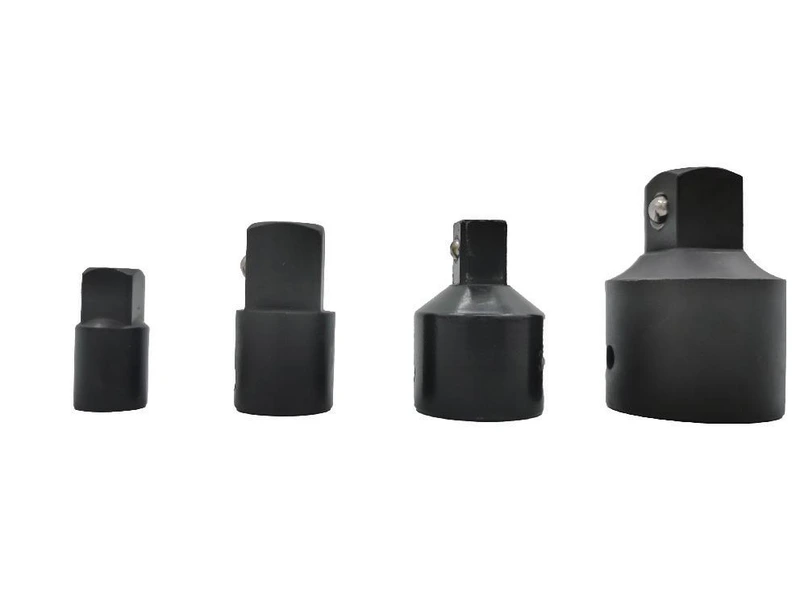
Four square-drive reducers in different body sizes
Supplier catalogue photo of square-drive reducers.

Keep three interfaces distinct during procurement: the tool-to-socket square, the socket opening-to-fastener profile, and the socket body-to-surrounding space. Mixing those checks leads to returns. A drive adapter may change the square connection, but it does not change the opening size or outside diameter.

  • Identify the impact wrench’s anvil size and retention style.
  • Specify fastener size and profile separately.
  • Check body diameter and length against the work area.

Start with the tool already in service. Then build the socket range around that connection. The socket drive size guide gives broader square-drive selection context.

Buyer summary

Term Describes Does not describe
3/4-inch or 1-inch drive Square tool connection Fastener size or torque rating
Metric or SAE size Fastener opening Tool anvil size
Standard or deep Socket length profile Drive interface

2. What differs in the catalogue’s 3/4-inch and 1-inch ranges?

The supplied catalogue shows separate metric tables for 3/4-inch and 1-inch drive sockets. Its 3/4-inch metric table lists sizes from 17 to 70 mm; its 1-inch metric table lists sizes from 17 to 100 mm. The table labels and available sizes describe those catalogue ranges only. They do not establish a market-wide size boundary or prove that every listed size suits every tool.
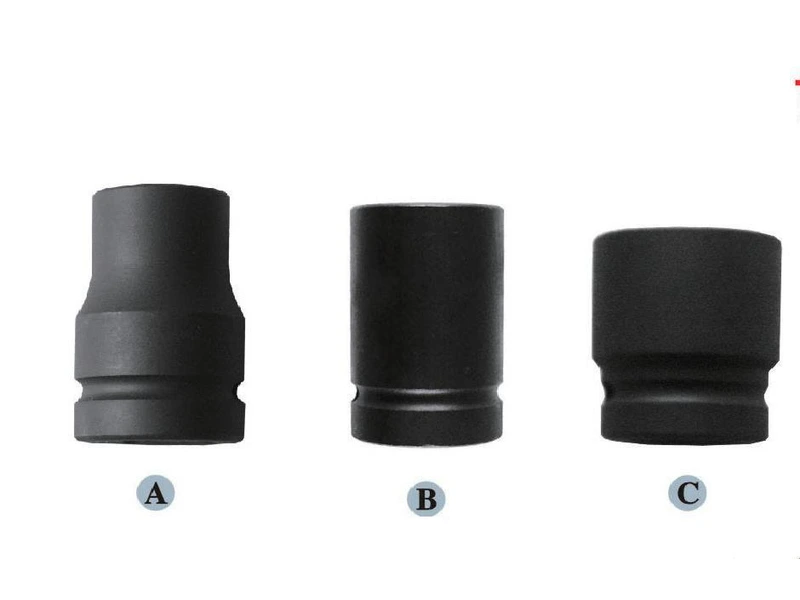
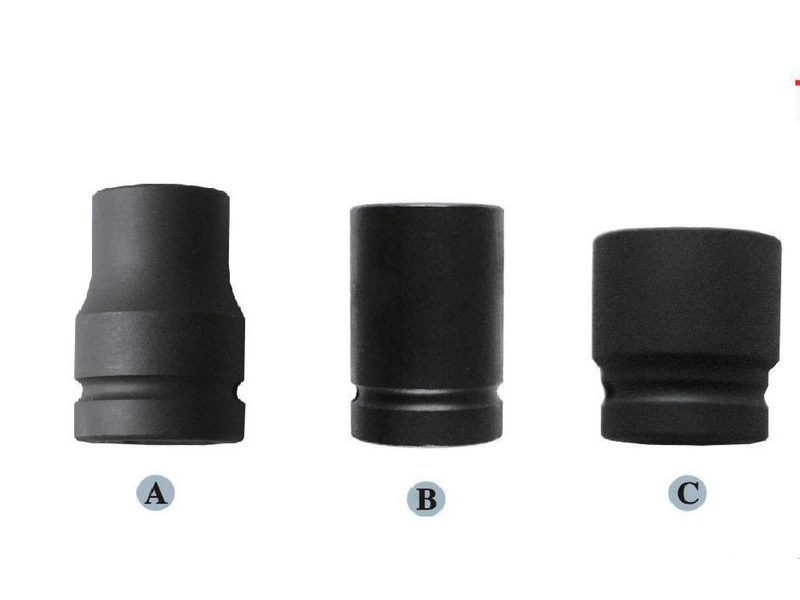
Three dark socket bodies in different stepped forms
Supplier catalogue photo of socket body profiles beside the 1-inch standard-socket table.

Both drive families include standard and deep forms in the visible tables. The 1-inch metric table shows 80 mm for standard pieces and 88 mm for deep pieces. In the 3/4-inch table, listed standard lengths vary by size, while many deep entries show 78 mm. Buyers should read the row for each size rather than assume one length applies across an entire family.

  • Compare sizes required by customer applications.
  • Compare standard and deep options by individual size.
  • Confirm current drawings and availability before publishing a range chart.

The page-level range is only a initial filter. Use the requested fastener list to identify exact pieces. For the metric/SAE boundary, see the socket conversion chart.

Buyer summary

Catalogue metric table Listed span Example length detail
3/4-inch drive 17–70 mm Many deep entries show 78 mm
1-inch drive 17–100 mm Standard 80 mm; deep 88 mm in shown table
Scope Supplied catalogue only Verify the individual row and revision

3. Does a larger drive automatically mean more torque capacity?

No. A square-drive label is an interface dimension, not a documented torque rating. Actual suitability depends on the complete tool, socket design, material, heat treatment, fastener, condition, and operating procedure. This guide has no verified test results or ratings for the supplied catalogue products, so it makes no capacity claim for either drive family.
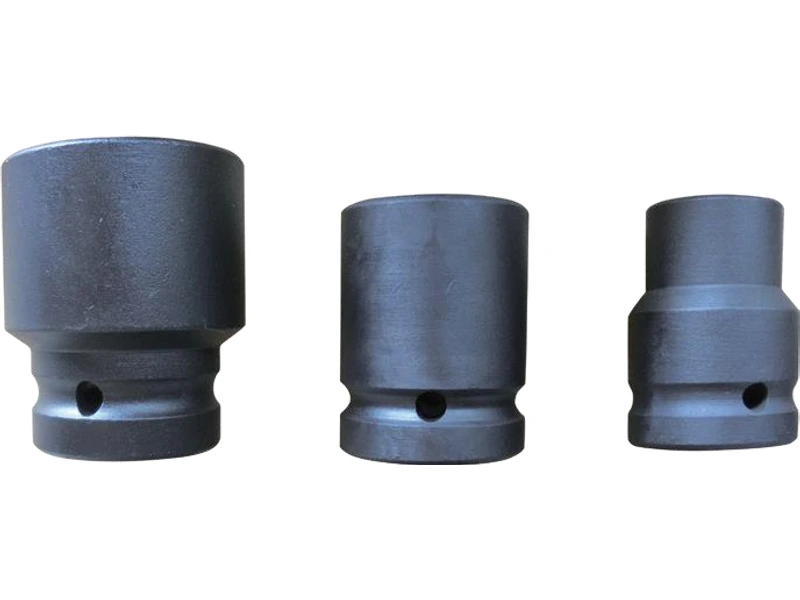
Three socket bodies with different stepped outer profiles
Supplier catalogue photo of socket body profiles beside the 3/4-inch standard-socket table.

A buyer should request evidence tied to the exact socket size and product specification. Ask which recognized test method applies, how the sample was identified, and whether results cover the particular size and production configuration. A rating for one size or product line cannot automatically be applied to another. Use the impact wrench maker’s instructions and approved socket specifications as the governing source for safe operation.

  • Match tool output and socket requirements using documented ratings.
  • Verify test scope by size, profile, and product revision.
  • Replace damaged sockets and follow the tool maker’s instructions.

Treat capacity as a documented specification, not a guess from drive size. An impact-wrench manual should guide socket selection; manufacturer guidance warns an incorrect size can cause inconsistent fastening torque or fastener damage. Review the impact socket range after documenting evidence for each product claim.

Buyer summary

Buyer question Evidence needed Unsupported shortcut
What rating applies? Exact size and test record Inferring rating from drive square
Which tool can use it? Tool manual and anvil fit Assuming larger drive means universal fit
Is a claim publishable? Traceable product-specific evidence Reusing another size’s result

4. When should a buyer consider 3/4-inch drive?

A 3/4-inch drive may fit a customer’s established tool platform and provide the required fastener sizes in a more suitable physical package. The right decision comes from actual service demand, tool availability, and application constraints. A distributor serving mixed fleets may stock 3/4-inch pieces where customer equipment already uses that interface. The drive label by itself does not prove which vehicle or job needs it.
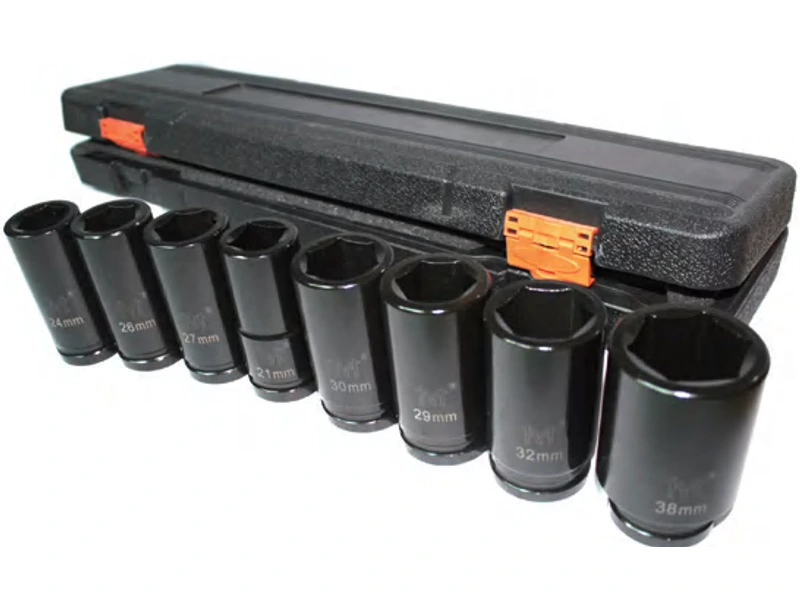
Long impact sockets arranged in front of an open black case
Supplier catalogue photo of a 3/4-inch drive deep-socket set.

Compare the full working envelope. Large fasteners can need a socket body with enough internal depth and outside diameter; surrounding components may restrict access. A longer socket can reach recessed hardware but may create handling or clearance issues. These questions should be answered against a specific service scenario, not generalized by vehicle class.

  • Confirm the installed impact wrench and anvil.
  • List required fastener sizes and openings.
  • Check full length and outside diameter on the actual assembly.

Use customer tool inventory as the primary commercial signal. Then validate fit with a sample and a current drawing. Buyers selecting general-purpose products can review impact sockets versus regular sockets.

Buyer summary

Evidence Supports a 3/4-inch choice when… Validation
Tool platform Customers already specify it Confirm anvil and retention
Fastener list Needed sizes exist in range Compare each SKU
Work envelope Socket clears and reaches Sample fit check

5. When does 1-inch drive make sense for an assortment?

A 1-inch drive may be appropriate when buyer demand, tool compatibility, and listed fastener sizes align with that interface. The supplied range table extends to 100 mm in metric sizes, while the 3/4-inch table shown extends to 70 mm. This is a source-specific difference, not a rule that every 1-inch family must offer more sizes or that all larger fasteners need a 1-inch drive.
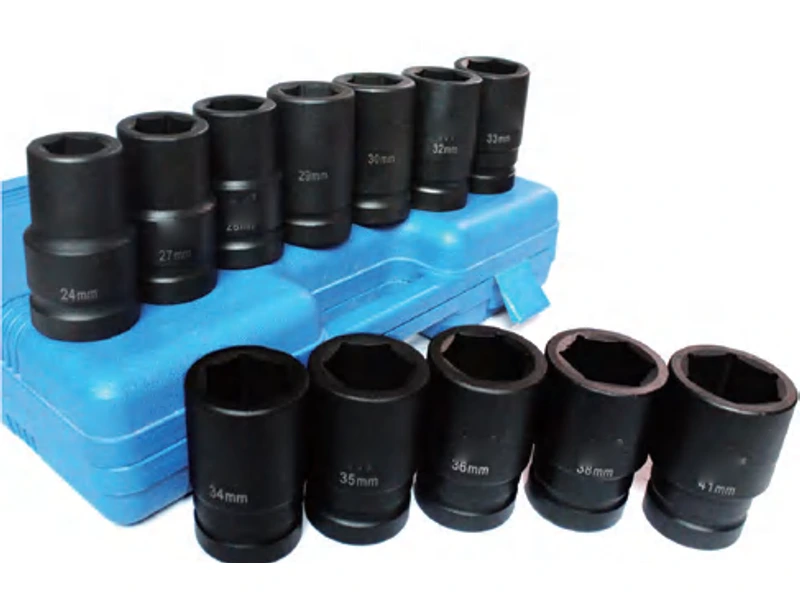
Large deep sockets arranged beside an open blue case
Supplier catalogue photo of a separate 1-inch drive deep-socket set.

A buyer should also account for equipment cost, space, weight, and customer readiness. Moving to a different drive means a different impact tool or a deliberately specified adapter. An adapter adds another component and may affect the approved tool connection; never treat it as a substitute for checking the tool maker’s setup.

  • Confirm which customers can use a 1-inch anvil.
  • Map demand by size, standard/deep length, and system.
  • Check storage, handling, replacement pieces, and adapter policy.

A wider range only helps when customers can use it. Review actual sales and repair data before adding low-turn pieces. The mechanic tool set guide for distributors offers a related assortment-planning framework.

Buyer summary

Range decision 1-inch drive may fit when… Confirm
Customer platform Anvil and tool match Tool specification
Size coverage Listed fasteners align Exact size rows
Stock plan Demand justifies depth Sales and replacement data

6. How should standard and deep lengths enter the comparison?

Drive size and socket length are separate choices. Standard length can reduce the total projection where access is open. Deep length can reach recessed fasteners or clear exposed studs, but it may not fit every confined space. The supplied catalogue lists multiple lengths across both drive families, and length can vary by size within a table.
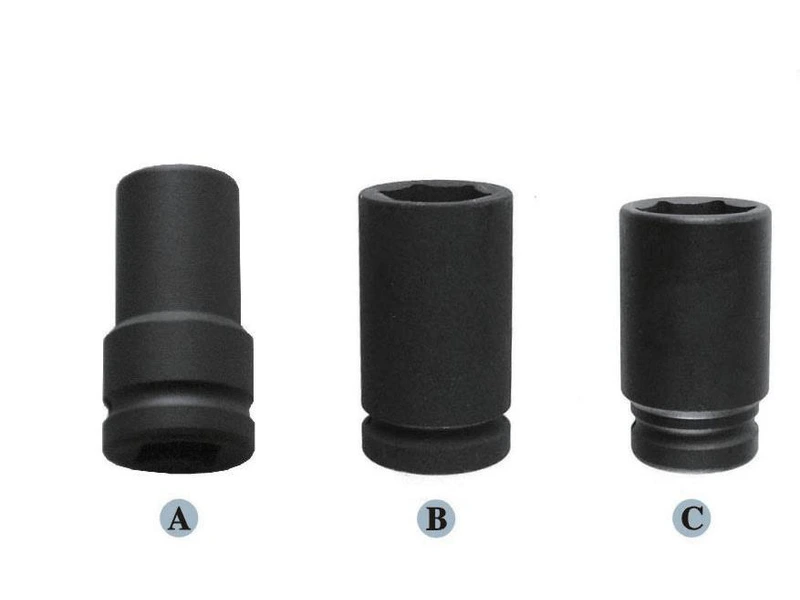
Three elongated socket bodies with different outer profiles
Supplier catalogue photo of socket body profiles beside the 3/4-inch deep-socket table.

Do not use “deep” as a substitute for a dimension. Ask for the actual full length, plus any relevant internal depth or clearance measurement. If a fastener sits inside a wheel or bracket recess, verify the entire socket path. An extension can move the wrench away from the work, but it does not reduce the socket’s outside diameter or change its working length.

  • List required length beside each fastener size.
  • Check recess depth and exposed stud length.
  • Confirm outside diameter at restricted points.

Compare piece by piece rather than by family label. The deep versus shallow socket guide helps distinguish access length from drive selection.

Buyer summary

Length choice Potential advantage Fit check
Standard Shorter projection Recess and stud clearance
Deep Added reach or stud room Body diameter and total length
Extension Moves tool farther away Connection, alignment, and instructions

7. Should a distributor buy a mixed 3/4-inch and 1-inch set?

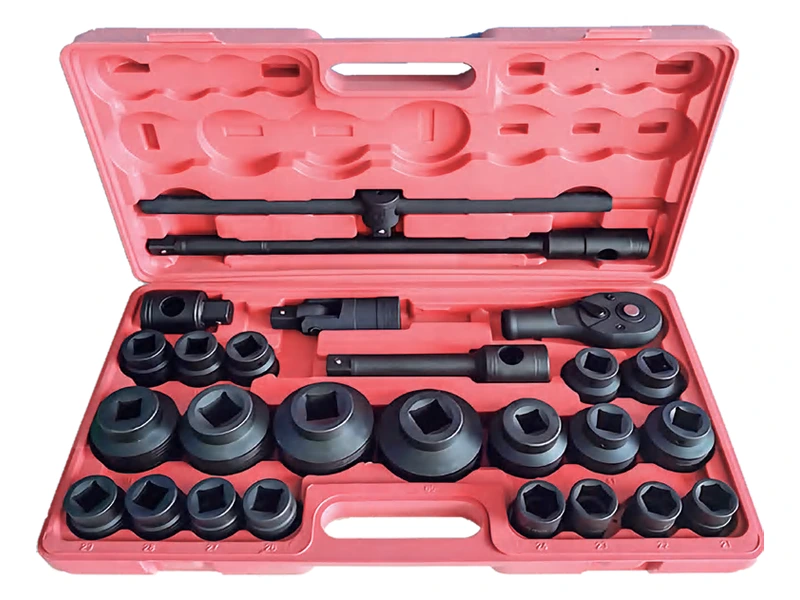
A mixed-drive set can combine coverage when the end user has both tool platforms. The supplied catalogue includes one 26-piece example: 17 listed 3/4-inch metric sockets from 21 to 50 mm, three 1-inch metric sockets at 55, 60, and 65 mm, plus six accessories. Those piece counts and size groupings belong to that catalogue example only. They do not establish a standard set composition.
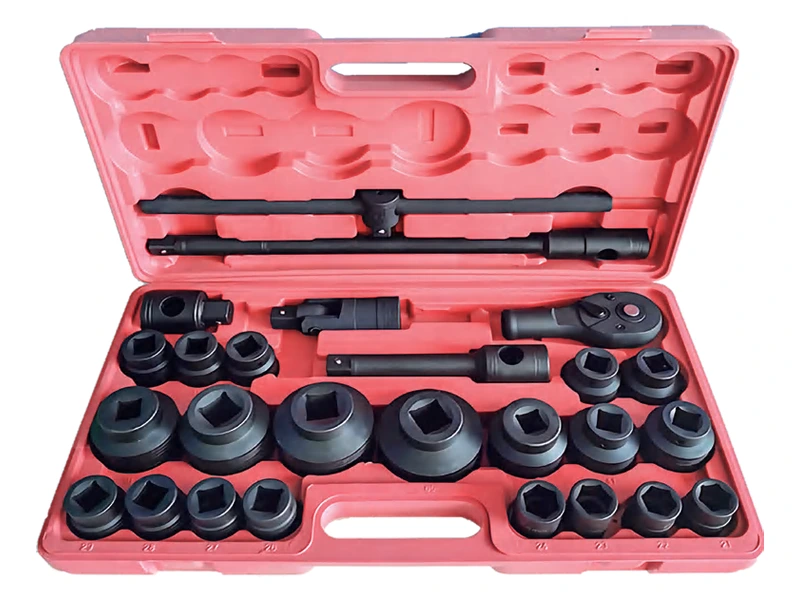
Mixed-drive sockets and accessories arranged in an open red case
Supplier catalogue photo of the listed 26-piece mixed-drive set.

Before buying, check whether customers actually stock both anvils and whether the accessory configuration suits their work. A mixed set can reduce separate purchasing if both groups are used; it can also leave pieces idle if one drive is uncommon. Confirm what each accessory does, its drive connection, and its documented application before listing it.

  • Match both drive groups to customer tools.
  • Confirm each included socket size and accessory.
  • Ask for replacement-piece availability and current packaging details.

Set contents should follow the installed tool base. Compare the catalogue list against real customer work orders. Buyers building a larger range can consult socket set manufacturer selection questions.

Buyer summary

Listed mixed-set component Catalogue example Buyer action
3/4-inch drive sockets 17 pieces, 21–50 mm Confirm every size
1-inch drive sockets 3 pieces, 55/60/65 mm Verify tool coverage
Accessories 6 pieces Confirm type and connection

8. What must the tool and socket interface match?

The socket drive opening must fit the impact wrench’s anvil, including its retention method. Impact tools commonly use detent-pin or friction-ring arrangements, while designs vary by manufacturer and model. Check the tool manual and socket drawing instead of assuming that the square dimension alone establishes retention compatibility.
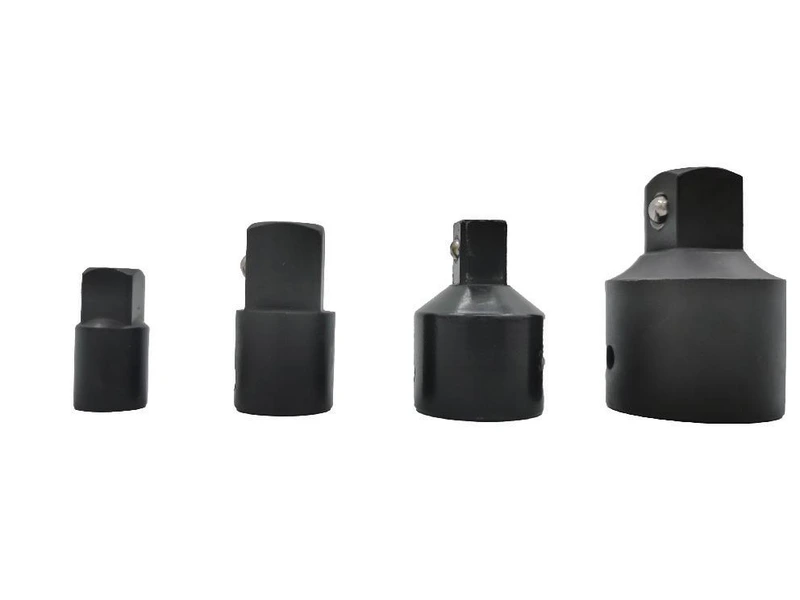
Four square-drive reducers in different body sizes
Supplier catalogue photo of square-drive reducers.

A reducer or adapter may connect different square sizes, but it changes the assembly. Buyers should identify each component, connection, and intended use; stacked adapters create extra interfaces and should be used only where permitted by tool documentation. Retention should be secure before use, and damaged or worn pieces should be removed from service.

  • Record square-drive size and retention style.
  • Verify the fit with the exact tool model.
  • Confirm adapter use from manufacturer instructions.

Check the assembled connection before checking the catalog price. See pin-detent versus friction-ring retention for the two common retention approaches.

Buyer summary

Interface detail Confirm Record
Square size Socket and anvil match Drive designation
Retention Pin, ring, or specified system Tool model and socket design
Adapter Permitted configuration Part and connection details

9. How can procurement compare quotations fairly?

A fair comparison holds the application constant. Two quotations may use the same drive size while differing in sizes, length, opening profile, dimensions, retention, case, or test evidence. A low headline price cannot show whether the set covers the buyer’s service list. Ask vendors to quote against one RFQ schedule with clear units and drawing revisions.
Mixed-drive sockets and accessories arranged in an open red case
Supplier catalogue photo of the listed 26-piece mixed-drive set.

Separate catalogue facts from claims requiring proof. A printed size list can show what a supplier offers. It cannot establish torque capacity, steel grade, certification, or interchangeability unless those items appear in traceable product documentation. If a buyer needs a performance statement, request evidence for the exact line and avoid transferring another manufacturer’s test data.

  • Normalize set contents and units.
  • Compare product-specific drawings and test documentation.
  • Identify exclusions, packaging, and acceptance criteria.

Make the comparison sheet answer the same questions for every quote. For accessory contents, compare each quotation with the impact socket adapter guide.

Buyer summary

Quote field Why it affects comparison Evidence
Size and length schedule Confirms coverage Dated product list
Interface and dimensions Confirms tool and work fit Current drawing
Performance claim Requires product-specific proof Traceable test record

10. What is the practical decision rule?

Choose the drive that matches the impact wrench platform required by customers. Then compare fastener sizes, standard/deep length, outside diameter, retention, and application-specific evidence. The drive size alone cannot settle capacity, safe torque, or fit. These details need their own specifications and review.
Three dark socket bodies in different stepped forms
Supplier catalogue photo of socket body profiles beside the 1-inch standard-socket table.

The supplied catalogue shows useful examples: its 3/4-inch metric table spans 17–70 mm, the 1-inch table spans 17–100 mm, and one mixed set combines the two drive families. Those are bounded catalogue examples. They do not guarantee current availability or define a universal division between drives.

  • Map customer tools and fasteners.
  • Approve exact set contents and dimensions.
  • Use the relevant tool instructions and product evidence for performance decisions.

Let the application schedule decide the drive family. If no current tool or fastener list exists, gather those requirements before choosing a stock assortment.

Q1: Does 1-inch drive always mean higher torque capacity?

No. Drive size alone does not establish a socket’s rating or safe application.

Q2: What metric sizes appear in the catalogue’s 3/4-inch table?

The visible table lists 17 to 70 mm for that specific range.

Q3: What metric sizes appear in its 1-inch table?

The visible table lists 17 to 100 mm for that specific range.

Q4: Is a mixed-drive set suitable for every workshop?

Only if users need both drive interfaces and the included sizes match their work.

Q5: Can an adapter replace a matching drive tool?

An adapter changes the connection; check tool instructions and the approved assembly before use.

Looking for a reliable mechanic tools manufacturer in China?

If you are sourcing hand tools, socket tools, automotive repair tools, mechanic tool sets or OEM private label tools, contact KOLARWIN Tools for factory-direct quotation, customization support and product consultation.


Choosing between 3/4-inch and 1-inch drive impact sockets affects tool compatibility, range coverage, and the size of a stocked set. Drive size alone does not establish safe torque capacity or application suitability. Buyers should begin with the impact wrench already specified for the job, then compare fastener coverage, socket dimensions, access, and retention requirements. The examples below come from clearly visible catalogue tables and remain specific to those listed ranges.

1. What does 3/4-inch or 1-inch drive identify?

The drive designation refers to the square connection between socket and tool. It does not give the fastener size. A 3/4-inch drive socket may fit a metric fastener such as 24 mm, while a 1-inch drive socket can also fit 24 mm if that product is offered. Those combinations still require a matching anvil, suitable retention, and adequate clearance.

Four square-drive reducers in different body sizes
Supplier catalogue photo of square-drive reducers.

Keep three interfaces distinct during procurement: the tool-to-socket square, the socket opening-to-fastener profile, and the socket body-to-surrounding space. Mixing those checks leads to returns. A drive adapter may change the square connection, but it does not change the opening size or outside diameter.

Start with the tool already in service. Then build the socket range around that connection. The socket drive size guide gives broader square-drive selection context.

Buyer summary

Term Describes Does not describe
3/4-inch or 1-inch drive Square tool connection Fastener size or torque rating
Metric or SAE size Fastener opening Tool anvil size
Standard or deep Socket length profile Drive interface

2. What differs in the catalogue’s 3/4-inch and 1-inch ranges?

The supplied catalogue shows separate metric tables for 3/4-inch and 1-inch drive sockets. Its 3/4-inch metric table lists sizes from 17 to 70 mm; its 1-inch metric table lists sizes from 17 to 100 mm. The table labels and available sizes describe those catalogue ranges only. They do not establish a market-wide size boundary or prove that every listed size suits every tool.

Three dark socket bodies in different stepped forms
Supplier catalogue photo of socket body profiles beside the 1-inch standard-socket table.

Both drive families include standard and deep forms in the visible tables. The 1-inch metric table shows 80 mm for standard pieces and 88 mm for deep pieces. In the 3/4-inch table, listed standard lengths vary by size, while many deep entries show 78 mm. Buyers should read the row for each size rather than assume one length applies across an entire family.

The page-level range is only a initial filter. Use the requested fastener list to identify exact pieces. For the metric/SAE boundary, see the socket conversion chart.

Buyer summary

Catalogue metric table Listed span Example length detail
3/4-inch drive 17–70 mm Many deep entries show 78 mm
1-inch drive 17–100 mm Standard 80 mm; deep 88 mm in shown table
Scope Supplied catalogue only Verify the individual row and revision

3. Does a larger drive automatically mean more torque capacity?

No. A square-drive label is an interface dimension, not a documented torque rating. Actual suitability depends on the complete tool, socket design, material, heat treatment, fastener, condition, and operating procedure. This guide has no verified test results or ratings for the supplied catalogue products, so it makes no capacity claim for either drive family.

Three socket bodies with different stepped outer profiles
Supplier catalogue photo of socket body profiles beside the 3/4-inch standard-socket table.

A buyer should request evidence tied to the exact socket size and product specification. Ask which recognized test method applies, how the sample was identified, and whether results cover the particular size and production configuration. A rating for one size or product line cannot automatically be applied to another. Use the impact wrench maker’s instructions and approved socket specifications as the governing source for safe operation.

Treat capacity as a documented specification, not a guess from drive size. An impact-wrench manual should guide socket selection; manufacturer guidance warns an incorrect size can cause inconsistent fastening torque or fastener damage. Review the impact socket range after documenting evidence for each product claim.

Buyer summary

Buyer question Evidence needed Unsupported shortcut
What rating applies? Exact size and test record Inferring rating from drive square
Which tool can use it? Tool manual and anvil fit Assuming larger drive means universal fit
Is a claim publishable? Traceable product-specific evidence Reusing another size’s result

4. When should a buyer consider 3/4-inch drive?

A 3/4-inch drive may fit a customer’s established tool platform and provide the required fastener sizes in a more suitable physical package. The right decision comes from actual service demand, tool availability, and application constraints. A distributor serving mixed fleets may stock 3/4-inch pieces where customer equipment already uses that interface. The drive label by itself does not prove which vehicle or job needs it.

Long impact sockets arranged in front of an open black case
Supplier catalogue photo of a 3/4-inch drive deep-socket set.

Compare the full working envelope. Large fasteners can need a socket body with enough internal depth and outside diameter; surrounding components may restrict access. A longer socket can reach recessed hardware but may create handling or clearance issues. These questions should be answered against a specific service scenario, not generalized by vehicle class.

Use customer tool inventory as the primary commercial signal. Then validate fit with a sample and a current drawing. Buyers selecting general-purpose products can review impact sockets versus regular sockets.

Buyer summary

Evidence Supports a 3/4-inch choice when… Validation
Tool platform Customers already specify it Confirm anvil and retention
Fastener list Needed sizes exist in range Compare each SKU
Work envelope Socket clears and reaches Sample fit check

5. When does 1-inch drive make sense for an assortment?

A 1-inch drive may be appropriate when buyer demand, tool compatibility, and listed fastener sizes align with that interface. The supplied range table extends to 100 mm in metric sizes, while the 3/4-inch table shown extends to 70 mm. This is a source-specific difference, not a rule that every 1-inch family must offer more sizes or that all larger fasteners need a 1-inch drive.

Large deep sockets arranged beside an open blue case
Supplier catalogue photo of a separate 1-inch drive deep-socket set.

A buyer should also account for equipment cost, space, weight, and customer readiness. Moving to a different drive means a different impact tool or a deliberately specified adapter. An adapter adds another component and may affect the approved tool connection; never treat it as a substitute for checking the tool maker’s setup.

A wider range only helps when customers can use it. Review actual sales and repair data before adding low-turn pieces. The mechanic tool set guide for distributors offers a related assortment-planning framework.

Buyer summary

Range decision 1-inch drive may fit when… Confirm
Customer platform Anvil and tool match Tool specification
Size coverage Listed fasteners align Exact size rows
Stock plan Demand justifies depth Sales and replacement data

6. How should standard and deep lengths enter the comparison?

Drive size and socket length are separate choices. Standard length can reduce the total projection where access is open. Deep length can reach recessed fasteners or clear exposed studs, but it may not fit every confined space. The supplied catalogue lists multiple lengths across both drive families, and length can vary by size within a table.

Three elongated socket bodies with different outer profiles
Supplier catalogue photo of socket body profiles beside the 3/4-inch deep-socket table.

Do not use “deep” as a substitute for a dimension. Ask for the actual full length, plus any relevant internal depth or clearance measurement. If a fastener sits inside a wheel or bracket recess, verify the entire socket path. An extension can move the wrench away from the work, but it does not reduce the socket’s outside diameter or change its working length.

Compare piece by piece rather than by family label. The deep versus shallow socket guide helps distinguish access length from drive selection.

Buyer summary

Length choice Potential advantage Fit check
Standard Shorter projection Recess and stud clearance
Deep Added reach or stud room Body diameter and total length
Extension Moves tool farther away Connection, alignment, and instructions

7. Should a distributor buy a mixed 3/4-inch and 1-inch set?

A mixed-drive set can combine coverage when the end user has both tool platforms. The supplied catalogue includes one 26-piece example: 17 listed 3/4-inch metric sockets from 21 to 50 mm, three 1-inch metric sockets at 55, 60, and 65 mm, plus six accessories. Those piece counts and size groupings belong to that catalogue example only. They do not establish a standard set composition.

Mixed-drive sockets and accessories arranged in an open red case
Supplier catalogue photo of the listed 26-piece mixed-drive set.

Before buying, check whether customers actually stock both anvils and whether the accessory configuration suits their work. A mixed set can reduce separate purchasing if both groups are used; it can also leave pieces idle if one drive is uncommon. Confirm what each accessory does, its drive connection, and its documented application before listing it.

Set contents should follow the installed tool base. Compare the catalogue list against real customer work orders. Buyers building a larger range can consult socket set manufacturer selection questions.

Buyer summary

Listed mixed-set component Catalogue example Buyer action
3/4-inch drive sockets 17 pieces, 21–50 mm Confirm every size
1-inch drive sockets 3 pieces, 55/60/65 mm Verify tool coverage
Accessories 6 pieces Confirm type and connection

8. What must the tool and socket interface match?

The socket drive opening must fit the impact wrench’s anvil, including its retention method. Impact tools commonly use detent-pin or friction-ring arrangements, while designs vary by manufacturer and model. Check the tool manual and socket drawing instead of assuming that the square dimension alone establishes retention compatibility.

Four square-drive reducers in different body sizes
Supplier catalogue photo of square-drive reducers.

A reducer or adapter may connect different square sizes, but it changes the assembly. Buyers should identify each component, connection, and intended use; stacked adapters create extra interfaces and should be used only where permitted by tool documentation. Retention should be secure before use, and damaged or worn pieces should be removed from service.

Check the assembled connection before checking the catalog price. See pin-detent versus friction-ring retention for the two common retention approaches.

Buyer summary

Interface detail Confirm Record
Square size Socket and anvil match Drive designation
Retention Pin, ring, or specified system Tool model and socket design
Adapter Permitted configuration Part and connection details

9. How can procurement compare quotations fairly?

A fair comparison holds the application constant. Two quotations may use the same drive size while differing in sizes, length, opening profile, dimensions, retention, case, or test evidence. A low headline price cannot show whether the set covers the buyer’s service list. Ask vendors to quote against one RFQ schedule with clear units and drawing revisions.

Mixed-drive sockets and accessories arranged in an open red case
Supplier catalogue photo of the listed 26-piece mixed-drive set.

Separate catalogue facts from claims requiring proof. A printed size list can show what a supplier offers. It cannot establish torque capacity, steel grade, certification, or interchangeability unless those items appear in traceable product documentation. If a buyer needs a performance statement, request evidence for the exact line and avoid transferring another manufacturer’s test data.

Make the comparison sheet answer the same questions for every quote. For accessory contents, compare each quotation with the impact socket adapter guide.

Buyer summary

Quote field Why it affects comparison Evidence
Size and length schedule Confirms coverage Dated product list
Interface and dimensions Confirms tool and work fit Current drawing
Performance claim Requires product-specific proof Traceable test record

10. What is the practical decision rule?

Choose the drive that matches the impact wrench platform required by customers. Then compare fastener sizes, standard/deep length, outside diameter, retention, and application-specific evidence. The drive size alone cannot settle capacity, safe torque, or fit. These details need their own specifications and review.

Three dark socket bodies in different stepped forms
Supplier catalogue photo of socket body profiles beside the 1-inch standard-socket table.

The supplied catalogue shows useful examples: its 3/4-inch metric table spans 17–70 mm, the 1-inch table spans 17–100 mm, and one mixed set combines the two drive families. Those are bounded catalogue examples. They do not guarantee current availability or define a universal division between drives.

Let the application schedule decide the drive family. If no current tool or fastener list exists, gather those requirements before choosing a stock assortment.

Q1: Does 1-inch drive always mean higher torque capacity?

No. Drive size alone does not establish a socket’s rating or safe application.

Q2: What metric sizes appear in the catalogue’s 3/4-inch table?

The visible table lists 17 to 70 mm for that specific range.

Q3: What metric sizes appear in its 1-inch table?

The visible table lists 17 to 100 mm for that specific range.

Q4: Is a mixed-drive set suitable for every workshop?

Only if users need both drive interfaces and the included sizes match their work.

Q5: Can an adapter replace a matching drive tool?

An adapter changes the connection; check tool instructions and the approved assembly before use.

Why Partner with Kolarwin Tools?

Factory-Direct Pricing Skip the middleman — access competitive wholesale prices and protect your margins
Private Label & OEM Ready Your brand, our expertise — full customization from logo to packaging
Fast Global Shipping Reliable delivery to 60+ countries with full export documentation support
Low MOQ, High Flexibility Start small, scale fast — flexible order quantities to fit your business
Dedicated B2B Support One-on-one account management from quote to delivery, every time

Get Your Free Quote in 24 Hours

Tell us your sourcing needs — we'll respond with a tailored quote, product specs, and the best pricing for your market. No commitment required.

Chat on WhatsApp Email Us Directly
