Need OEM supplier support for this product type?
Contact KOLARWIN Tools for OEM mechanic tools, private label packaging, wholesale quotation and product range support. This gives overseas buyers a clear path from article reading to supplier discussion.
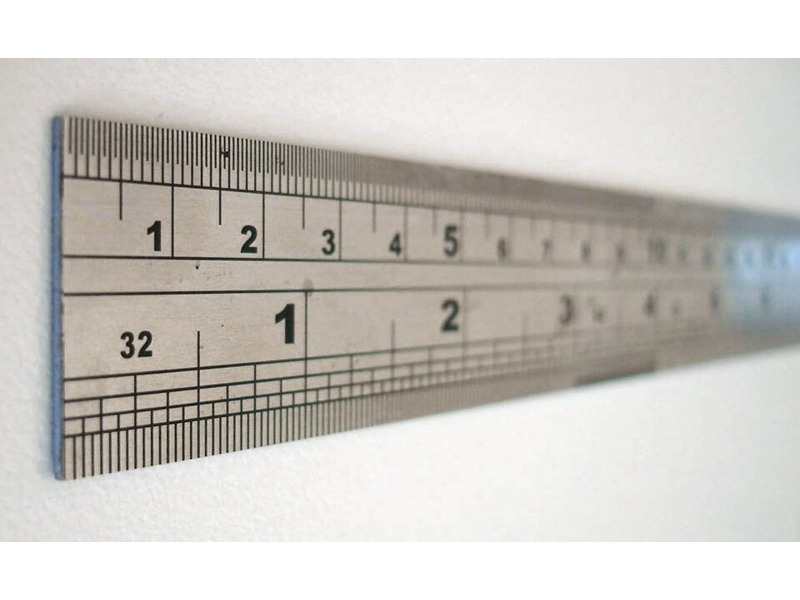
A steel rule suits many short, accessible measurements. A tape measure provides longer reach in a compact case. Buying decisions depend on the job's dimensions, reference surfaces and required accuracy. Compare those conditions before selecting lengths, graduations and packaging for a workshop assortment.
1. Which measurement tasks suit each tool?
Start with the distance being measured and how a user will reach both ends. A rule can sit close to a small workpiece and provide a convenient marking edge. A retractable tape can span distances that would make a long rigid rule awkward to carry.
Describe the actual job. A maintenance buyer checking a bracket faces different conditions from a team measuring a storage area. Neither task establishes a universal winner. Both tools may belong in the same assortment when their roles are clearly defined.
- Record usual measurement lengths.
- Identify accessible reference surfaces.
- State whether users measure, mark or compare parts.
For tighter dimensional work, consider whether a digital or dial caliper better fits the inspection requirement. Do not choose an instrument solely because its markings look detailed.
Match tool and task
| Tool | Useful selection context |
|---|---|
| Steel rule | Short accessible lengths and layout |
| Tape measure | Longer spans and portable reach |
| Other measuring instrument | Requirements outside either tool's capability |
2. How do rigidity and flexibility change use?
Steel rules come in different constructions, including flexible versions. Avoid describing every rule as a rigid straightedge. A tape blade also has a particular cross-section and support behavior. Its ability to remain extended depends on the offered product and working conditions.
Check the supported position. Ask how the tool will rest against the workpiece during measurement. A curved surface, narrow ledge or unsupported span changes handling. Request a sample that matches the quoted construction rather than judging performance from a catalogue silhouette.
- Specify rule thickness and flexibility where relevant.
- Check tape behavior at intended extension.
- Distinguish measuring from straightness inspection.
A rule intended for length measurement does not automatically qualify as a precision straightedge. Include that distinction in customer-facing descriptions so distributors do not promise a checking function unsupported by the supplied specification.
Describe construction clearly
| Property | Procurement question |
|---|---|
| Rule flexibility | Does it suit the contact surface? |
| Tape support | How will the span be supported? |
| Straightness checking | Is the tool specified for that purpose? |
3. What should buyers specify about graduations?
Graduations need to suit users, units and viewing conditions. Closely spaced lines can be harder to distinguish in poor lighting. A dual-scale tool may help a mixed market but also needs clear identification so an operator reads the intended edge.
Keep the scale readable. Request photographs and samples of actual production markings. Evaluate contrast under representative lighting, including reflections from the work surface. Check which end establishes zero and whether markings remain usable near that reference.
- Define metric, inch or dual-scale requirements.
- Compare line spacing and numbering.
- Check front and reverse scales separately.
Our metric and SAE sizing guide discusses unit distinctions in tool assortments. Apply the same identification discipline here while keeping measurement-tool tolerances separate from fastener-size selection.
Specify the scale
| Feature | Buyer check |
|---|---|
| Units | Match the intended market |
| Graduation interval | Suit the task and readability |
| Zero reference | Clear and usable location |
4. What should a buyer know about tape hooks?
Hook design affects how a tape establishes its starting reference. On many retractable tapes, controlled hook movement accommodates inside and outside measurement. That intended movement should not be confused with arbitrary looseness, wear or damage.
Inspect the reference mechanism. Obtain the offered model's instructions and check its actual arrangement. Assess hook condition, attachment and movement using an agreed sample procedure. Do not tighten, bend or modify a hook simply because movement is visible.
- Confirm intended inside and outside use.
- Check for bent contact surfaces.
- Compare movement with manufacturer guidance.
Ask suppliers how users should respond after a drop or suspected damage. A hook that still attaches to an edge may nevertheless require assessment. Include replacement and service guidance with the product where those options are available.
Review hook behavior
| Observation | Follow-up |
|---|---|
| Designed movement | Confirm normal operation |
| Bent contact area | Isolate and assess |
| Uncertain reference | Compare through an approved check |
5. What distinguishes graduation interval from accuracy?
The smallest marked division does not by itself establish accuracy. Buyers should ask for the offered tool's specification and any applicable conditions. Avoid assigning a tolerance based on length, material or a printed quality claim without supporting documentation.
Request a defined comparison. Where acceptance requires measurement checks, agree the reference, method, environment and limits with qualified personnel. Keep sample approval records connected with the exact model and specification revision.
- Obtain a documented accuracy statement where required.
- Define relevant measurement conditions.
- Separate readability checks from dimensional checks.
The document discipline used for torque-tool calibration offers a useful procurement comparison. Each instrument still needs its own appropriate method and requirements. A report for another model or tool family cannot establish conformity of a quoted tape or rule.
Separate the specifications
| Term | What to clarify |
|---|---|
| Graduation interval | Spacing of marked divisions |
| Accuracy claim | Stated performance and conditions |
| Verification record | Result for identified equipment |
6. How do viewing angle and support affect readings?
A user needs a clear relationship between the mark and the feature being measured. Viewing at an angle can make alignment harder to judge. A gap between scale and workpiece can also complicate reading. These issues deserve attention during sample evaluation.
Evaluate normal working positions. Ask users to demonstrate the intended task with appropriate support. Observe whether the scale remains visible and whether both reference points can be located consistently. An awkward posture can undermine an otherwise suitable tool choice.
- Check access to both measurement endpoints.
- Review lighting and reflected glare.
- Keep the scale aligned with the intended dimension.
For a mechanic-tool kit, consider a short rule for bench tasks and a separate tape for longer dimensions. Specify their purposes in the contents description rather than treating one as a spare version of the other.
Review working conditions
| Condition | Sample evaluation |
|---|---|
| Poor visibility | Scale contrast and lighting |
| Unsupported length | Stable support arrangement |
| Restricted access | Tool reach and viewing position |
7. Which handling features deserve a sample check?
For tapes, evaluate lock operation, controlled retraction and case grip under ordinary handling. Keep fingers clear of moving edges and follow manufacturer instructions. Do not turn a sample evaluation into an improvised overload or endurance test.
Make usability observable. Record whether a user can extend, hold, read and retract the tape as intended. For rules, check edge condition, portability and how the tool sits against a workpiece. Gloves and storage arrangements may affect selection.
- Evaluate controls with representative users.
- Inspect edges and accessible contact points.
- Confirm instructions for retraction and storage.
These checks complement the tool categories in our household tool-kit guide. A product sold for routine household measurements still needs clear instructions and a specification appropriate for its intended tasks.
Compare handling features
| Feature | Practical observation |
|---|---|
| Tape lock | Holds and releases as instructed |
| Retraction | User can control return |
| Rule edges | Suitable condition for handling |
8. What belongs in incoming inspection?
Receiving checks should cover model identity, length, units, markings and visible condition. A separate measurement check may be required by the purchasing specification. Decide those responsibilities before the shipment arrives so a warehouse inspection is not mistaken for calibration.
Use an approved reference sample. Retain the accepted markings, packaging and contents specification. Ask how changes to suppliers, components or scale artwork will be notified. Establish a clear route for quarantining questionable items.
- Verify the ordered length and scale.
- Inspect case, hook or rule condition.
- Record discrepancies against the approved revision.
When compiling a complete mechanic-tool assortment, keep measurement tools identifiable within receiving records. A missing tape and a tape with an incorrect scale are different defects and may require different corrective actions.
Allocate receiving checks
| Check | Record to retain |
|---|---|
| Identity and units | Model and scale details |
| Visible condition | Defect description and photographs |
| Measurement verification | Approved method and results |
9. How should these tools be stored in a kit?
Storage should protect measuring references and keep the selected instrument easy to find. A loose steel rule can become damaged among heavy tools. A tape case needs sufficient space for its shape and any clip without stressing a fitted insert.
Plan around actual dimensions. Use the approved sample when designing a pouch, case or insert. Check whether users can remove and replace the tool without forcing adjacent items. Include a storage position for instructions where needed.
- Protect rule edges and reference ends.
- Allow clearance around tape cases and clips.
- Identify replacement models clearly.
For foam-packed assortments, our EVA and polyethylene insert comparison addresses material selection. A material name alone does not confirm fit or transport protection. Approve the complete package using representative contents and the buyer's agreed checks.
Design the storage position
| Item | Packaging consideration |
|---|---|
| Rule | Protected length and easy removal |
| Tape | Case and clip clearance |
| Documentation | Accessible instructions and identifiers |
10. What should accompany a sourcing inquiry?
Send the intended jobs, measurement lengths, unit system and required documentation. State whether the assortment needs rules, tapes or both. Include packaging constraints and any customer-defined accuracy requirements rather than relying on a generic professional-grade label.
Compare the complete specification. Ask suppliers to flag differences in scale, reference design, handling features and supporting records. Evaluate a sample before finalizing artwork or kit layout. Confirm product availability and commercial terms directly for the requested configuration.
- Length, units and graduation requirements.
- Work conditions and intended measurement tasks.
- Quantity, packaging and acceptance documentation.
Send your measuring-tool sourcing brief with those details. Retain the approved model reference and specification so repeat purchases can be assessed against the same requirements.
Q1: Is a steel rule always more accurate than a tape?
No universal comparison applies. Review specifications, length, conditions and the measurement method.
Q2: Should a moving tape hook be tightened?
Do not modify it without manufacturer guidance. Controlled movement may be part of its design.
Q3: Does a smaller graduation guarantee better accuracy?
No. Graduation interval and accuracy are different specifications.
Q4: Can a steel rule serve as a precision straightedge?
Only where its specification supports that function and the intended requirement.
Q5: Should a workshop kit contain both tools?
Include both when customer tasks require short accessible measurements and longer portable reach.
Looking for a reliable mechanic tools manufacturer in China?
If you are sourcing hand tools, socket tools, automotive repair tools, mechanic tool sets or OEM private label tools, contact KOLARWIN Tools for factory-direct quotation, customization support and product consultation.